Author: vitorcherulli

  • Weekly Startup Funding Roundup: AI, Legal Tech, and Mobility Attract $5.8 Billion in Fresh Capital

    Weekly Startup Funding Roundup: AI, Legal Tech, and Mobility Attract $5.8 Billion in Fresh Capital

    Startup funding remained robust this week as investors poured capital into artificial intelligence, infrastructure, and specialized technology sectors. Five companies—Positron AI, Inspiren, Motive, The Boring Company, and Harvey—collectively announced nearly $5.8 billion in fresh funding, spanning AI chips, senior care, fleet management, underground transport, and legal technology.

    Positron AI Raises $875 Million at $5 Billion Valuation

    AI chip startup Positron AI secured $875 million in a new funding round, pushing its valuation to $5 billion, according to The Wall Street Journal. This marks a sharp increase from its $1.06 billion valuation earlier this year. Based in Reno, Nevada, Positron develops specialized processors for running AI models, focusing on inference. Its upcoming Asimov chip uses a memory-first architecture and can offer up to 2.3 terabytes of memory per chip. The company has already shipped around 50 Atlas servers to customers including Oracle, Jump Trading, and Parasail.

    Inspiren and Motive Bring AI into the Physical World

    Senior-living technology company Inspiren raised $70 million in Series C funding at a valuation exceeding $500 million. NewView Capital led the round, bringing Inspiren’s total funding to $225 million. The company develops technology that combines ambient awareness with resident data to help care teams identify emergencies and changes in residents’ conditions.

    Meanwhile, physical-operations platform Motive secured more than $1.3 billion in growth financing from General Catalyst’s Customer Value Fund. Motive said its annual recurring revenue has crossed $600 million, having grown 30% year over year. The company plans to use the capital to expand its AI platform, product development, and go-to-market operations.

    UAE Leads $3 Billion Round for The Boring Company

    Elon Musk’s tunneling company, The Boring Company, raised $3 billion in a Series D funding round led by the United Arab Emirates, taking the company’s valuation to $23 billion. Other participants included Andreessen Horowitz, Sequoia Capital, Human Capital, Vy Capital, and Valor Equity Partners. The funding will support plans to develop more than 150 kilometers of tunnels in the UAE, while also helping the company expand projects in Las Vegas, Nashville, and Dubai.

    Harvey Reaches $15.5 Billion Valuation

    Legal AI startup Harvey raised another $550 million, valuing the company at $15.5 billion. Diffusion and Lightspeed Venture Partners co-led the round, with existing investors including Sequoia, Kleiner Perkins, Andreessen Horowitz, and GIC also participating. According to Harvey, 80% of Am Law 100 firms now use its platform. The fresh funding will support its push to help legal and professional-services teams develop and control their own AI capabilities.

    Closing Note

    The week’s funding deals show investors continuing to back startups tackling large, specialized markets—from AI computing and senior care to fleet management, legal technology, and urban transport. With billions flowing into these companies, the focus is increasingly shifting from raising capital to turning ambitious technology into scalable businesses.

  • Global Crypto Intelligence Network: How Governments and Exchanges Are Tracking Digital Assets

    Global Crypto Intelligence Network: How Governments and Exchanges Are Tracking Digital Assets

    Cryptocurrency was once widely viewed as a financial system that could operate largely outside traditional government surveillance. That assumption is becoming increasingly difficult to maintain. Governments, cryptocurrency exchanges, blockchain analytics firms and stablecoin issuers are building infrastructure that can connect on-chain transactions to real-world identities. While public blockchains remain decentralized, the intelligence layer surrounding them is becoming increasingly interconnected.

    Blockchain Analytics is Becoming a Major Intelligence Tool

    Public blockchains such as Bitcoin and Ethereum permanently record transactions. Wallet addresses may be pseudonymous, but investigators can follow funds as they move between wallets, exchanges, bridges and other blockchain services. The scale of illegal cryptocurrency activity explains why governments are investing heavily in these capabilities. According to Chainalysis’ 2026 Crypto Crime Report, illicit cryptocurrency addresses received at least $154 billion during 2025, representing a 162% year-over-year increase. The surge was largely driven by sanctioned entities, which received 694% more cryptocurrency than in 2024. However, Chainalysis estimates that illicit transactions still represent less than 1% of attributed crypto transaction volume.

    Stablecoins are Increasingly Important to Investigators

    Bitcoin is no longer the dominant cryptocurrency used for illicit transactions. Stablecoins accounted for approximately 84% of illicit cryptocurrency transaction volume in 2025, according to Chainalysis. Sanctions evasion is one area receiving particular attention. The ruble-backed A7A5 stablecoin processed approximately USD 93.3 billion in transactions in less than one year, according to Chainalysis’ sanctions analysis. Iran-linked cryptocurrency activity has also expanded. Chainalysis estimates that Iran’s Islamic Revolutionary Guard Corps and associated networks received more than USD 3 billion during 2025.

    Exchanges Connect Wallets with Real-World Identities

    Blockchain analytics can identify where cryptocurrency travels, but centralized exchanges can provide another important piece of information: identity. Most regulated exchanges operate Know Your Customer (KYC) systems. When funds arrive at an exchange, investigators may potentially connect blockchain addresses with verified customer accounts through appropriate legal processes. This creates an intelligence chain combining blockchain transaction data with off-chain records.

    FATF is Looking Beyond Centralized Exchanges

    Regulators are now examining transactions that never reach traditional exchanges. In March 2026, the Financial Action Task Force (FATF) published recommendations addressing stablecoins and peer-to-peer transactions involving unhosted wallets. FATF said more than 250 stablecoins were circulating by mid-2025, with their combined market capitalization exceeding USD 300 billion. The report encouraged governments and private-sector companies to strengthen monitoring and risk controls around stablecoin transactions.

    What Does this Mean for Crypto Users?

    Cryptocurrency has not become completely traceable. Mixers, cross-chain transfers and privacy technologies can make investigations considerably more difficult. However, blockchain transactions create something cash often does not: a permanent digital trail. As blockchain analytics improves, exchanges, stablecoin companies and governments increasingly cooperate, making crypto’s surrounding infrastructure significantly more observable. The important distinction for users is therefore straightforward: pseudonymity should not be confused with guaranteed anonymity.

    Also Read: How Real-Time Blockchain Monitoring Could Change the Future of Crypto Security

    FAQs

    1. What is a global crypto intelligence network? A global crypto intelligence network combines blockchain transaction data, exchange records, compliance information and government investigations. It helps authorities trace cryptocurrency movements and potentially connect wallet addresses with real-world entities.
    2. How do governments track cryptocurrency transactions? Governments can use blockchain analytics tools to follow transactions between wallets, exchanges, bridges and other crypto services. Information from regulated exchanges can also help investigators connect blockchain activity with verified customer accounts.
    3. Why are stablecoins important for crypto investigations? Stablecoins have become a major part of global cryptocurrency transaction activity, including some illicit transactions. Regulators are therefore increasing scrutiny of stablecoin transfers, issuers and transactions involving self-hosted wallets.
    4. Can cryptocurrency transactions be completely anonymous? Most public blockchains are pseudonymous rather than fully anonymous. Wallet addresses may not directly reveal someone’s identity, but transaction histories are public and can sometimes be linked to individuals through exchanges or other data.
    5. What role does FATF play in cryptocurrency regulation? The Financial Action Task Force develops international standards aimed at reducing money laundering and terrorist financing risks. Its crypto guidance increasingly covers stablecoins, virtual asset providers and peer-to-peer transactions involving unhosted wallets.
  • 7 Top Cloud Computing Courses to Boost Your AWS and Azure Career in 2025

    7 Top Cloud Computing Courses to Boost Your AWS and Azure Career in 2025

    Cloud computing continues to dominate the tech industry, and professionals with AWS and Azure certifications are in high demand. Whether you’re starting fresh or looking to advance, these seven courses offer a clear path to mastering cloud platforms and landing high-paying roles.

    1. AWS Certified Solutions Architect – Associate

    This course teaches you how to design scalable, cost-effective AWS systems, covering essential services like compute, storage, and networking. It’s ideal for beginners aiming to build robust cloud infrastructures and pass the popular associate-level exam.

    2. Microsoft Azure Fundamentals (AZ-900)

    AZ-900 introduces core Azure services, cloud concepts, pricing, and support. It’s perfect for newcomers who want a foundational understanding before pursuing role-based Azure certifications in administration, development, or solutions architecture.

    3. AWS Certified Developer – Associate

    This course focuses on building, deploying, and debugging AWS applications using services like Lambda, DynamoDB, and API Gateway. It’s suited for developers who want to master serverless architectures and CI/CD pipelines on AWS.

    4. Microsoft Azure Administrator (AZ-104)

    AZ-104 trains you to manage Azure subscriptions, secure identities, implement storage, and configure virtual networks. It’s designed for IT professionals aiming to administer enterprise-grade cloud environments and pass the administrator certification exam.

    5. AWS Certified SysOps Administrator – Associate

    This program teaches monitoring, deployment, and security of AWS systems. Candidates learn to manage operations, optimize performance, and ensure compliance, preparing them for the SysOps certification and real-world cloud administration roles.

    6. Microsoft Azure Solutions Architect Expert (AZ-305)

    AZ-305 covers designing identity, governance, monitoring, data storage, and business continuity solutions on Azure. It’s targeted at experienced architects ready to plan and implement comprehensive cloud strategies for organizations.

    7. AWS Cloud Practitioner (CLF-C02)

    CLF-C02 offers a broad overview of AWS cloud concepts, services, security, and billing. It’s ideal for non-technical roles or beginners seeking foundational knowledge before diving into more specialized AWS certification paths.

    These courses are your ticket to a thriving career in cloud computing. Start with the one that matches your experience level, and you’ll be well on your way to becoming a certified cloud professional.

  • AI Demand Drives These Semiconductor Stocks: NVIDIA, TSMC, and More

    AI Demand Drives These Semiconductor Stocks: NVIDIA, TSMC, and More

    Artificial intelligence continues to reshape the semiconductor landscape, creating opportunities for investors across the chip supply chain. From GPU leaders to memory manufacturers and equipment providers, several stocks are positioned to benefit from surging AI demand. Below, we analyze the key players and the risks that accompany their growth.

    Key Takeaways

    • NVIDIA remains the dominant AI chip supplier, while Broadcom provides exposure to custom silicon and networking.
    • TSMC and Micron gain from advanced manufacturing and high-bandwidth memory demand.
    • Equipment firms like ASML, Lam Research, Applied Materials, and KLA offer indirect AI growth avenues.

    NVIDIA and Broadcom Lead the AI Chip Race

    NVIDIA’s position as the premier AI chipmaker is unshaken. With its stock near $218.36 and a market capitalization approaching $5.30 trillion, the company supplies GPUs and networking solutions for AI data centers. A 2.26% dip on September 10 reflected broader tech pressure from rising Treasury yields, but its long-term trajectory remains tied to AI deployment.

    Broadcom offers a complementary play. Trading around $360.83, it designs custom AI chips and networking hardware for large tech firms. This diversification allows investors to tap AI growth beyond the GPU market.

    AMD adds a third option. At roughly $521.10, it has gained over 143% year-to-date, competing with NVIDIA through its AI accelerators and EPYC server processors. However, such sharp gains introduce higher valuation risk.

    TSMC and Micron: Supply Chain Pillars

    TSMC is the linchpin of advanced chip fabrication. Its U.S.-listed shares trade near $435.36, valuing the company at $1.58 trillion. The foundry posted record August revenue of NT$514.806 billion, up 53.3% year-over-year, with July revenue also strong at NT$467.580 billion. TSMC forecasts Q3 revenue between $44.6 billion and $45.8 billion, and plans capital expenditure of $60–$64 billion in 2026.

    Micron focuses on high-bandwidth memory (HBM), essential for AI workloads. With shares around $1,028, the company aims to boost HBM output to 100,000 wafers per month by year-end. HBM shortages are raising chip costs, but new entrants and rapidly shifting memory markets add risk. Micron’s fiscal Q4 results on September 30 will be a key catalyst.

    Equipment Stocks Provide Alternative Exposure

    Lam Research, Applied Materials, and KLA supply tools for chip manufacturing. Lam Research trades near $301.06, Applied Materials at $469, and KLA at $177.18—each fell over 3% on September 10. Their fortunes rise with fab expansions, not AI chips directly, making them a different risk-reward proposition.

    Marvell sits at the intersection of custom silicon and connectivity, with a stock price of $235.01 and a 176.55% year-to-date gain. Its high valuation amplifies downside risk.

    ASML stands out as the sole supplier of EUV lithography systems, crucial for shrinking process nodes. Closing near $1,698 on September 10, ASML’s technology monopoly gives it a long-term edge, though its stock can swing with capital spending cycles.

    The AI Chip Trade Faces New Tests

    Strong AI demand does not immunity from broader market forces. Higher oil prices and rising Treasury yields pressured tech stocks, and the broader U.S. market fell on September 10. Yet TSMC’s sales and HBM demand underscore robust chip demand, providing a solid business foundation amid stock volatility.

    NVIDIA, Broadcom, and TSMC offer the widest AI exposure. Micron and AMD provide targeted plays on memory and GPU alternatives. Lam Research, Applied Materials, KLA, and ASML serve the equipment segment. Marvell carries higher potential but also higher risk.

    Investors should monitor chip sales, HBM supply, AI data center budgets, and capital expenditure plans. The critical question is whether supply, capacity, and profits can keep up with the lofty expectations already baked into these stocks.

    FAQs

    Which semiconductor stock has the strongest AI exposure?

    NVIDIA has the most direct AI exposure through its GPUs and data center products.

    Why is TSMC important to AI growth?

    TSMC manufactures advanced chips for major tech firms, forming the backbone of AI processor supply.

    Why has Micron gained attention?

    Micron is a key supplier of high-bandwidth memory, critical for AI data center performance.

    Which semiconductor stocks offer equipment exposure?

    ASML, Lam Research, Applied Materials, and KLA provide exposure to chip manufacturing equipment.

    Are semiconductor stocks low-risk investments?

    No. Even with strong chip demand, share prices can decline due to high valuations, market conditions, and changing expectations.

    Disclaimer: This article is for informational purposes only and does not constitute financial advice. Investing in stocks involves risk, including potential loss of principal. Always conduct your own research before making investment decisions.

  • Quordle September 11 Hints and Answers: Crack the Four Five-Letter Words

    Quordle September 11 Hints and Answers: Crack the Four Five-Letter Words

    If you’re stuck on today’s Quordle puzzle, don’t worry—we’ve got the hints and answers you need to finish the challenge. Quordle requires you to guess four five-letter words at once, making each guess count across a single board. The solutions for September 11 include a cuddly toy, a basketball court area, a competitor, and a word meaning to run into conflict.

    Today’s Quordle Hints

    Use these clues to narrow down the answers without spoiling the puzzle entirely:

    • Word 1 (Top Left): A word describing a cuddly children’s toy.
    • Word 2 (Top Right): The painted area of an NBA court right in front of the basket.
    • Word 3 (Bottom Left): A term for one’s competitor or opponent.
    • Word 4 (Bottom Right): An adverb meaning to enter into conflict or difficulty, commonly used in the phrase ‘to run ____ of the law’.

    Answers for September 11

    Spoiler alert: The four answers to today’s Quordle are:

    • PLUSH
    • PAINT
    • RIVAL
    • AFOUL

    How Difficult Was Today’s Quordle?

    Today’s puzzle features familiar words with everyday references. The first word identifies a cuddly toy made of plush fabric, while the second refers to the painted key area on an NBA basketball court. The third describes an opponent in a match, and the fourth is an adverb meaning to encounter conflict. The starting letters P, P, R, and A can help you narrow down each answer. One of today’s words contains a repeated letter, offering another useful clue. If you solved all four without checking, you’ve completed the challenge!

  • FTSE 100 Dips 9.70 Points to 10,618 as Strong UK GDP Fails to Counter Oil and Global Headwinds

    FTSE 100 Dips 9.70 Points to 10,618 as Strong UK GDP Fails to Counter Oil and Global Headwinds

    The FTSE 100 opened 9.70 points lower at 10,618.72 on Friday, despite stronger-than-expected UK GDP data that briefly lifted sentiment. The index struggled to hold gains as Brent crude futures fell 1.44% to USD 106.1 per barrel and US WTI dropped 1.36% to USD 101.1 per barrel, reflecting ongoing concerns over Iran-linked disruptions in the Strait of Hormuz.

    Sterling was quoted at USD 1.3513 early Friday, slightly lower than USD 1.3532 at the London equities close on Thursday. Against the euro, the pound edged up to EUR 1.1637 from EUR 1.1636 a day earlier.

    Gainers and Losers

    On the upside, Games Workshop Group climbed 1.21% to 17,540p, Standard Life advanced 1.15% to 921.50p, and Hiscox gained 1.14% to 1,871p. Lion Finance Group rose 1.12% to 13,530p, Barclays added 1.11% to 489.70p, and British American Tobacco increased 1.10% to 4,137p.

    On the downside, RELX fell 2.17% to 2,440p, London Stock Exchange Group declined 1.74% to 8,364p, and Experian dropped 1.44% to 2,739p. Antofagasta slipped 0.77% to 3,742p, Rio Tinto lost 0.67% to 7,316p, and Reckitt Benckiser Group edged 0.47% lower to 5,034p.

    UK GDP Surprise Growth in July

    The UK economy surprised markets with growth in July. Official figures from the Office for National Statistics (ONS) showed GDP expanded 0.4%, well ahead of economists’ forecast of zero growth. The services sector, which accounts for around 80% of GDP output, grew 0.4%. Production increased 0.2% and construction rose 0.1%.

    Liz McKeown, director of economic statistics at the ONS, noted: “Within the services sector, computer programming was the largest contributor, continuing the strong growth seen throughout the year, with evidence that businesses involved with AI and related technologies helped to boost the sector.”

    Oracle’s AI Spending Surges

    Oracle’s spending on AI infrastructure reached USD 28.5 billion (GBP 21 billion) in its latest quarter, underscoring the escalating cost of meeting booming demand for computing capacity. The software group expects capital expenditure to reach USD 90 billion to USD 95 billion this financial year as it invests heavily in data centers and hardware to compete with Amazon, Microsoft, and Google. Overall revenue rose around 30% to USD 19.35 billion, ahead of Wall Street forecasts, while earnings also topped expectations.

    Trainline’s H1 Revenue Beats Forecasts

    Shares in Trainline Plc rose over 3% on Friday after the company reported first-half net ticket sales and revenue ahead of analyst forecasts. Net ticket sales were 0.7% ahead of Visible Alpha consensus, and revenue was 2% ahead. UK net ticket sales were 3% ahead of consensus, while International was 5.5% behind and Solutions 1.2% behind. Group net ticket sales on a constant-currency basis were flat.

    Global Market Overview

    In the US, the Dow Jones Industrial Average closed down 316.56 points (0.6%) at 52,064.10. The S&P 500 fell 0.58% to 7,591.70, and the Nasdaq Composite slid 0.65% to 26,081.72. In Asia on Friday, Tokyo’s Nikkei 225 declined 1.93% to 64,011.34, China’s Shanghai Composite fell 1.18%, Hong Kong’s Hang Seng dropped 0.66%, and South Korea’s Kospi dipped 1.76%. In India, the Nifty 50 and the Sensex fell by 0.63% and 0.56%, respectively.

    Disclaimer: This article is for informational purposes only and does not constitute investment advice. Always conduct your own research before making any financial decisions.

  • Bitcoin Market Analysis: 7 Critical Signals Every Crypto Investor Should Monitor

    Bitcoin Market Analysis: 7 Critical Signals Every Crypto Investor Should Monitor

    Bitcoin investors are entering a pivotal macroeconomic period. Institutional demand continues to support the cryptocurrency, but rising Treasury yields, oil prices, inflation concerns, and shifting interest-rate expectations could create substantial volatility. After climbing to around USD 81,000, Bitcoin has slipped to approximately USD 77,000, even with support from spot Bitcoin ETF inflows and renewed strategic buying. Here are seven signals investors should track closely.

    1. Spot Bitcoin ETF Flows

    ETF flows have become one of the clearest indicators of institutional Bitcoin demand. Large, sustained inflows can create additional buying pressure, while extended periods of withdrawals may signal weakening demand. According to SoSoValue, Bitcoin ETFs drew USD 986.9 million in the week ending September 4, with the largest single-day inflow of USD 731 million on September 3 led by BlackRock’s IBIT at USD 454 million. Investors should monitor daily net flows rather than focusing solely on Bitcoin’s price.

    2. Federal Reserve Interest Rates

    Monetary policy could be especially important in September. As of September 11, markets priced a 72.4% probability of a 25-basis-point rate cut by the Federal Reserve, according to the CME FedWatch Tool. Higher interest rates tighten financial conditions and increase returns from lower-risk assets, potentially drawing capital away from cryptocurrencies.

    3. US Treasury Yields

    The benchmark US 10-year Treasury yield rose to approximately 4.965% on September 11, nearing the psychologically important 5% level. Higher yields can make non-yielding and speculative assets like Bitcoin less attractive.

    4. US Dollar Strength

    The US Dollar Index stood around 99.081 on September 11, supported by higher yields and geopolitical uncertainty. A persistently stronger dollar can create a more challenging environment for crypto markets.

    5. Corporate Bitcoin Accumulation

    Corporate buying remains a key demand indicator. Strategy purchased 4,603 BTC for roughly USD 369.7 million between August 24 and August 30, increasing its holdings to approximately 845,050 BTC acquired at an average price of USD 75,412. Such large purchases can reduce available supply and signal institutional confidence.

    6. Oil Prices and Inflation

    Brent crude climbed to around USD 108.96 per barrel on September 11 as Middle East tensions escalated. Higher energy prices can fuel inflation, potentially encouraging central banks to maintain tighter monetary policy for longer.

    7. Regulatory Developments

    Regulation remains a major variable. Rules covering stablecoins, crypto exchanges, custody, and digital-asset classification could determine how easily banks and institutional investors participate in the market.

    What Could Drive Bitcoin Next?

    Bitcoin currently faces competing forces. Institutional accumulation and ETF demand provide potential support, but rising yields, stronger inflation, and tighter monetary policy could pressure risk assets. Investors should therefore watch Bitcoin alongside ETF flows, interest rates, Treasury yields, the dollar, corporate accumulation, oil, and regulation rather than relying solely on price movements.

    FAQs

    1. What are the key signals Bitcoin investors should watch? ETF flows, Federal Reserve policy, Treasury yields, dollar strength, corporate BTC purchases, oil prices, and regulatory developments.
    2. How do Bitcoin ETF flows affect BTC prices? Strong inflows can increase institutional demand and buying pressure; persistent outflows may signal weakening investor appetite.
    3. Why do Federal Reserve interest rates matter for Bitcoin? Higher rates tighten financial conditions and make yield-generating assets more attractive; lower rates can boost liquidity and risk appetite.
    4. How does corporate Bitcoin accumulation affect the market? Large corporate purchases reduce available supply and demonstrate institutional confidence, acting as a positive demand signal.
    5. What could determine Bitcoin’s next major price move? The balance between institutional demand and macroeconomic pressure, including ETF flows, interest rates, inflation, Treasury yields, and regulatory changes.
  • Litecoin vs Bitcoin: Which Crypto Should You Hold, Spend, or Convert in 2026?

    Litecoin vs Bitcoin: Which Crypto Should You Hold, Spend, or Convert in 2026?

    Gold and silver. That’s the comparison everyone reaches for with Litecoin and Bitcoin, and it’s not wrong exactly – it’s just incomplete. Both have SEC-regulated ETFs now, in 2026. Both got classified as commodities by U.S. regulators. And yet their markets went in almost opposite directions. Network activity, liquidity, who’s actually buying and why – all of it diverged. What people use each coin for on a random Tuesday looks nothing alike either.

    Key Takeaways

    • Litecoin confirms blocks in 2.5 minutes, four times faster than Bitcoin’s 10. Doesn’t tell the whole story though – Bitcoin’s Lightning Network eats up most of that speed advantage for actual payments.
    • Both have spot ETFs. The money behind them doesn’t compare at all: Bitcoin’s ETFs hold tens of billions, Litecoin’s pulled in exactly zero during its first week and was still sitting around $5.5 million by mid-2026.
    • March 2026: Litecoin’s MWEB feature got exploited. Bitcoin’s base layer? Clean since 2009.
    • Moving LTC to BTC doesn’t require a centralized exchange account anymore. Non-custodial tools do it wallet-to-wallet.

    Bitcoin and Litecoin at a Glance

    Bitcoin. 2009. Proof-of-work, capped at 21 million coins, and a near-religious resistance to changing the protocol. That conservatism is arguably the whole reason Bitcoin ended up as crypto’s reserve asset. Early September 2026, it’s trading high-$70,000s to low-$80,000s, holding somewhere around 57-61% of total crypto market cap.

    Litecoin. Its story starts with Charlie Lee forking Bitcoin’s code back in 2011. Shorter blocks. Scrypt instead of SHA-256. A supply cap set four times higher, at 84 million coins. These days LTC sits around $50-55, market cap close to $4 billion – ranked anywhere from 18th to 26th, depending which tracker you trust.

    Head-to-Head: Where the Networks Actually Differ

    Speed and fees first. Four times faster by design, that part’s not in dispute. Fees are where it gets messy: Bitcoin can cost a few cents or several dollars, purely depending on how congested the network is that day. Litecoin stays cheaper across the board, fractions of a cent up to maybe fifteen cents. Don’t trust either number as gospel though – pull up something like mempool.space for the live rate. And remember Lightning Network exists; it handles a real chunk of Bitcoin’s payment volume instantly and almost free, off-chain.

    Security next. Bitcoin’s base layer: no network-level exploit, ever, since it launched. Litecoin can’t say the same anymore. March 2026, a bug in the MWEB privacy feature got used to fake a peg-out worth roughly 85,000 LTC. They caught it, recovered the funds, patched the hole. Good response. Doesn’t erase that it happened, though – something to weigh before parking serious money on either chain.

    Institutional access is where the gold/silver framing really falls apart. Canary Capital got the first spot Litecoin ETF (LTCC) trading on Nasdaq back in October 2025, right alongside the commodity classification that put Litecoin on equal regulatory footing with Bitcoin. So the setup was there. The demand wasn’t. Zero net inflows in LTCC’s first five trading days. Still just $5.5 million by mid-2026 – compare that to the $60+ billion BlackRock’s Bitcoin ETF pulled in alone. A couple of public companies bought in anyway (Lite Strategy, Luxxfolio), which counts for something. Just not a loud something.

    Use cases, finally. Litecoin’s lower fees make it the pick for smaller transfers you’re doing often. Bitcoin does something different – it sits there, mostly, backed by liquidity nothing else in crypto really matches. A lot of people just run both. Litecoin for whatever needs to move right now, Bitcoin for the position nobody touches.

    Moving Between LTC and BTC

    Nobody really picks one of these and locks the door on the other. Most people rebalance instead – build up Bitcoin, then peel off a slice into Litecoin the moment a payment needs to move fast. Works backwards too: fold Litecoin back into Bitcoin once volatility starts feeling uncomfortable. None of this needs a centralized exchange sitting in the middle anymore. A LTC to BTC swap on a non-custodial platform goes straight from your own wallet – no third-party custody involved first.

    Is Litecoin a Good Investment Right Now?

    Nobody has a clean answer to that, and anyone who claims they do is probably trying to sell you something. Litecoin’s been stuck well below its all-time high for years now; the ETF launch didn’t budge that. What it does have going for it: fifteen years without going down, a supply cap that can’t be changed, and a privacy feature (MWEB) that’s actually gaining traction – balances there passed 500,000 LTC by late 2025, up from under 100,000 just a year earlier. Resident’s guide to Litecoin as an investment digs into the case further, if you want the longer version.

    Verdict: Hold, Spend, or Convert?

    Liquidity and institutional weight – that’s Bitcoin’s case, and it’s still the default for anyone prioritizing those. Litecoin earns its spot for cheap, fast transfers, assuming you’re fine holding a smaller-cap asset that just had a rough security year. Most people don’t actually need to choose, though. Core position in Bitcoin, some Litecoin kept liquid for when speed matters, convert between the two as things change. That’s the boring, practical answer.

    FAQ

    Is Litecoin faster than Bitcoin? On the base layer, yes – roughly 2.5 minutes per block against Bitcoin’s 10. Though once you bring Lightning Network into it, Bitcoin can actually settle faster than either chain running alone.

    Is Litecoin cheaper to use than Bitcoin? Generally, yes, but congestion changes the math daily on both sides. Check a live fee tracker – don’t trust whatever number you read here or anywhere else as fixed.

    Does Litecoin have a spot ETF like Bitcoin? It does. Canary Capital’s LTCC has been on Nasdaq since October 2025. Size-wise, though, it’s nowhere close to Bitcoin’s ETF category.

    Can I convert Litecoin to Bitcoin without a centralized exchange? Yes – non-custodial swap services do direct wallet-to-wallet conversion. No third-party deposit required first.

  • How to Build a Sound-Driven Cat Mystery with an AI Video Generator

    How to Build a Sound-Driven Cat Mystery with an AI Video Generator

    A collar bell rings, a stopped pendulum swings, and Ash follows the sound toward the wrong clue. Using an AI video generator, you can create a four-scene cat mystery set in an antique clock shop. A winding key suggests one explanation; a tiny clockwork mouse supplies another. The story connects each sound to a visible event, so the final reveal answers the question raised by the first bell.

    Let Every Sound Change the Story

    The protagonist is Ash, an adult blue-gray British Shorthair in a closed antique clock-repair shop. He is not asked to act like a detective or perform human gestures. He walks, listens, sniffs, nudges, and steps back—ordinary cat behavior. The environment carries the fantasy.

    Ash’s collar bell starts one stopped pendulum. His next steps appear to wake more clocks. A brass winding key waits on a workbench, so the audience is encouraged to blame the key. Ash nudges it, but it stays at the edge. Silence. Then a tiny clockwork mouse rolls from a floorboard gap, and one pendulum starts again. The twist is legible with the sound muted, but sound makes the causal chain feel inevitable.

    Follow the Four Clues in Order

    Why Each Clue Must Change the Viewer’s Theory

    A sound-driven mystery holds attention when each clue forces the viewer to revise a theory. The first bell suggests coincidence, the second creates a pattern, and the silent brass key rules out the obvious explanation. The final clockwork mouse resolves the sound chain without changing the cat into a humanlike detective. Every clue is visible, audible, and tied to a specific object in the workshop.

    Scene One: Connect the Bell to the First Clock

    The opening shot has one job: connect a tiny sound to a large visual response. Ash stands beside a tall walnut clock. A cobalt-blue braided cord creates an unusual foreground clue. The collar bell moves; the previously stopped pendulum begins to swing. Nothing else should compete with that change. A dramatic camera move, a second cat, or several moving clocks would weaken the question. The first eight seconds work because the viewer can point to a before state, a trigger, and an after state. Prompt direction: lock the cat’s coat, eye color, collar, and bell; lock the shop, lighting, cord, and clock; allow only a head turn, one bell jingle, and one pendulum transition.

    Scene Two: Make the Pattern Larger

    The second shot turns a coincidence into a pattern. Ash takes a few natural steps. Each jingle is paired with another pendulum starting farther back in the room. The low workbench enters the frame near the end, and one winding key becomes the next target. This is not “more motion” for its own sake. The shot adds one variable—the number of moving pendulums—while holding the character and setting steady. A viewer now has a theory and a destination. Cut rule: leave the first shot only after the first pendulum has visibly changed state. Enter the second while Ash is already oriented toward the cord’s direction. The action feels continuous even though each eight-second segment was generated separately.

    Scene Three: Rule Out the Obvious Answer

    Ash reaches the workbench, sniffs the brass key, and tests it with his nose. The key shifts along the edge but does not fall. The camera stays close enough to make the single prop readable, while Ash’s lowered head holds attention on the unresolved clue. The important beat is the quiet after the scrape. Without it, the shot is merely an object interaction. With it, the audience gets a failed hypothesis: the key is visible, but touching it does not restart the room. The close side view keeps Ash’s head, front paws, and the single key readable. A small nose nudge changes the key’s position, then the pause leaves the mystery unresolved.

    Scene Four: Reveal the Clockwork Mouse

    The final shot moves to floor level. A small brass clockwork mouse rolls from the gap. Ash steps away, then lowers his head to inspect it. A pendulum behind them resumes. That last pendulum matters. A random toy would be a surprise; the toy plus the renewed swing is an explanation. It connects the reveal to the first frame and turns four clips into one story. The mouse was described with a rounded brass body, two gear wheels, round ears, a pointed nose, and a short blue cord tail. Concrete silhouette words proved more useful than simply requesting “a detailed clockwork mouse.”

    Write Each Prompt as a Five-Line Sound Plan

    To create an AI video from a script without losing the plot inside visual adjectives, reduce every shot to the same five functional lines:

    1. Identity: one adult blue-gray British Shorthair, copper eyes, green collar, brass bell.
    2. Room: closed walnut clock shop, cool window light, one warm lamp.
    3. Audible trigger: bell jingle, metallic scrape, silence, or clockwork ticking.
    4. Visible consequence: one pendulum starts, a key shifts, the cat reacts, or the toy appears.
    5. Exclusions: no extra cat, duplicate prop, human hand, injury, warped anatomy, text, logo, or cut.

    Identity and location connect the scenes; the trigger and response create the mystery. Write the actions chronologically, such as “Ash sniffs, nudges the key once, then looks down.”

    Track Every Prop Across the Four Scenes

    A story can preserve the cat and still break continuity if its props teleport. Use a simple prop plan that supports the joins between scenes. It shows which details must be present, what must be absent, and what is allowed to change in each generation.

    Give Each Scene One Sound and One Response

    Divide the mystery into four clear events: the first pendulum starts, the pattern grows, the key offers no answer, and the mouse appears. Each prompt can then focus on one audible cue and its visible consequence. Carry Ash’s gray coat, bell collar, blue cord, brass key, and walnut clocks across the sequence. Place the cuts after completed actions, where the next clue can take over.

    Build the Clock Shop Mystery in CapCut

    Use CapCut’s AI video generator to create the four clock-shop scenes from their scripts or prepared reference images. Keep the portrait format and visual style consistent. Arrange the clips in the order of the clues, then use CapCut’s editing controls to refine the pace and sound. The first bell needs a clear response from the clock, the key needs a quiet pause, and the mouse needs time to connect the ending to the opening.

    Add Sound Effects That Match Visible Events

    Sound should confirm visible events, not rescue unclear ones. For this story, build the final pass from four restrained families: a dry single bell, wooden-clock ticks, a faint brass scrape, and a small wound-spring mechanism. Room tone can carry the silence between them. First, watch whether the cause and response are visible. Then add sound effects at the bell’s swing, the key’s scrape, and the mouse’s first wheel rotation. Precise timing keeps each sound attached to the right object. Avoid wall-to-wall music during the reveal. A brief reduction in ambience before the mouse enters creates more tension than a loud sting and preserves the handmade clock-shop mood.

    Connect the Last Clue to the First Bell

    Use these five questions to test your mystery: Is Ash the only living animal in every selected frame? Can a viewer identify the current clue without reading a caption? Does each sound have a visible source or consequence? Are the key and mouse absent until their scheduled introduction? Does the last pendulum connect the ending back to the opening?

    Summary

    Every sound in a compact mystery should change what the audience expects. Ash’s bell starts the question, the key delays the answer, and the clockwork mouse brings the clues together. Try CapCut’s AI video generator to create a sound-led story of your own, pairing each audible cue with a visible response and letting the final event explain the opening.


  • Why Enterprise AI Projects Fail: The Real Challenge Is Execution, Not Innovation

    Why Enterprise AI Projects Fail: The Real Challenge Is Execution, Not Innovation

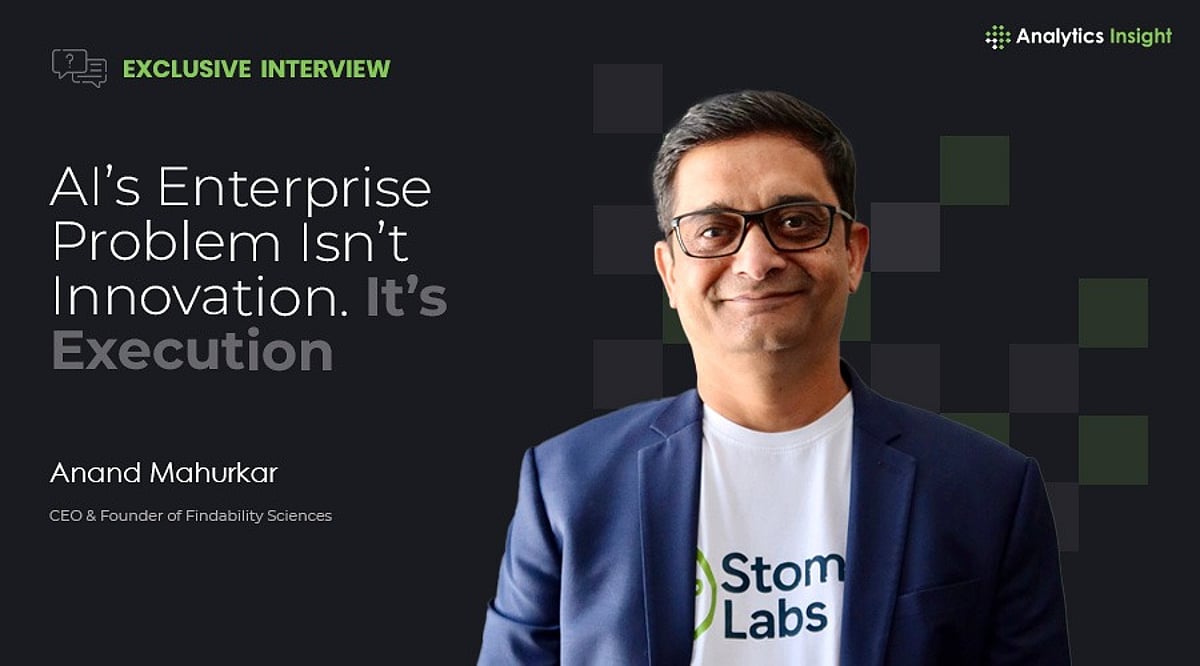
    Enterprises are pouring billions into artificial intelligence, yet a staggering number of AI initiatives never graduate from pilot to production. According to Anand Mahurkar, CEO and Founder of Findability Sciences, the problem isn’t a lack of innovative technology—it’s a failure of execution. In this interview, Mahurkar explains why most AI projects stall, how to bridge the pilot-to-production gap, and why predictive and prescriptive AI deserve more attention in the shadow of generative AI hype.

    The Pilot-to-Production Gap: A Design Problem, Not a Technology Problem

    Mahurkar argues that the gap between a successful pilot and a live business system is fundamentally a design flaw. Most organizations build pilots to prove a model works in isolation, not to survive the pressures of a real profit-and-loss environment. He cites sobering statistics: Gartner predicts that by the end of 2025, at least 30% of generative AI projects will be abandoned after proof of concept due to poor data quality, unclear business value, or escalating costs. MIT’s Project NANDA goes further, finding that 95% of organizations deploying generative AI saw zero measurable return. “That’s not a model failing,” Mahurkar says. “That’s an organization that never defined what ‘working’ meant before it started building.”

    His solution is straightforward but demanding: pick a use case with a named P&L owner from day one, instrument the return before writing any code, and treat data readiness as a prerequisite—not an afterthought. At Findability Sciences, no pilot is greenlit unless there is a specific business metric it must move and an accountable person in the room.

    Turning AI into an Operating System, Not a Lab Experiment

    Findability Sciences helps industries from agriculture to financial services treat AI as an operating system for the business. Mahurkar highlights the AI Factory for Sugar, built with Grupo Pantaleon, and work with the Agricultural Development Trust in Baramati using Stoma Sense and Stoma Insight. These tools move mills and farms from reactive decision-making to predictive planning—yield forecasting, crop stress detection, harvest scheduling—all tied to metrics the CFO already tracks.

    The same architecture applies to manufacturing (predictive maintenance, quality drift detection), retail and QSR (Serva Insight for store-level operational intelligence), and financial services (risk scoring, fraud pattern detection). The common thread: start where data already lives, attach a hard number, and scale only once that number moves. “Deploy AI against the handful of decisions in a business that actually move revenue, cost, or risk, and ignore the rest until those are working,” Mahurkar advises.

    Don’t Overlook Predictive and Prescriptive AI

    While generative AI dominates headlines, Mahurkar warns that enterprises risk overlooking the quieter, more impactful work of predictive and prescriptive AI. Forecasting demand, optimizing supply chains, flagging machine failures before they happen—these are closer to where the balance sheet lives. A 2–3% accuracy improvement in high-stakes decisions compounds into real money faster than any chatbot conversation. “GenAI helps you communicate a decision well. Predictive and prescriptive AI help you make a better one in the first place,” he says. The most successful enterprises run both deliberately, against different problems, rather than picking a side.

    From Experiments to Enterprise-Wide Adoption: Practical Advice

    Mahurkar offers four unglamorous but effective steps for business leaders:

    • Consolidate. Pick three to five use cases with the clearest line to revenue or cost, and kill the rest. A portfolio of twenty pilots dilutes budget and attention.
    • Build the data foundation once, centrally. Findability’s ICUPP model—Infrastructure, Collect, Unify, Process, Present—ensures that every subsequent AI use case gets faster and cheaper to ship.
    • Put a single senior owner on AI outcomes, not a committee. Someone who reports a number, not a roadmap.
    • Hold every AI initiative to the same standard as any capital investment: a defined return, timeline, and owner.

    He notes that S&P Global research shows the share of enterprises abandoning most AI initiatives jumped from 17% in 2024 to 42% in 2025—a governance failure, not a technology failure.

    One Piece of Advice for CEOs

    Mahurkar’s final advice for CEOs planning a five-year AI strategy is philosophical: “Don’t let AI become another line item you manage. Let it become the way your company sees itself more clearly than it ever has before.” He urges leaders to ask themselves annually: if we saw our business with total clarity, what would we do differently—and are we brave enough to do it? The real promise of AI, he says, is not efficiency for its own sake, but the chance to run a business with friction and guesswork finally removed.