
Author: vitorcherulli

  • 10 Multi-Function Kitchen Gadgets That Eliminate Clutter and Replace Single-Use Tools

    10 Multi-Function Kitchen Gadgets That Eliminate Clutter and Replace Single-Use Tools

    Most kitchen drawers are filled with tools that rarely see use. A zester, garlic press, slicer, and grater often sit idle for weeks. The solution isn’t buying fewer gadgets—it’s buying smarter ones that perform multiple tasks. This article ranks ten multitasking kitchen gadgets that replace clusters of single-use tools, cutting clutter and cleanup.

    Why Multitasking Tools Matter More Than Ever

    Kitchens haven’t grown larger, yet the number of specialty gadgets sold each year keeps rising. That mismatch creates cluttered counters and drawers that never close properly. A gadget earns its place only when it replaces something already in regular use. The following ten pass that test.

    The Lineup: What Each Tool Replaces

    Prep Tools That Cut Down on Clutter

    • Box grater with swappable plates: Handles cheese, citrus zest, and julienned carrots without switching tools.
    • Microplane-style zester: Uses fine teeth to remove small particles cleanly from citrus, hard cheese, and whole spices like nutmeg.
    • Mandoline slicer: Produces even, thin cuts for chips or gratins in a fraction of the time a knife takes. Use a hand guard or cut-resistant glove since the blade stays exposed.

    Cutting and Mincing Without Extra Tools

    • Kitchen shears: Handle herbs, trim meat fat, and open stubborn packaging—jobs that usually require a knife or separate opener.
    • Garlic press: Mixes and mashes garlic and ginger in seconds. For larger batches, a knife or food processor is faster.

    Mixing and Measuring, Simplified

    • Immersion blender: Purees soup directly in the pot, whips cream, and with the right attachment chops small batches of vegetables or nuts. A basic model won’t fully replace a food processor but covers most daily needs.
    • Nesting measuring cups: Add value beyond baking—they work as scoops or funnels and their stacked design solves a storage problem. They track volume, not weight, so a kitchen scale is still needed for precise work.
    • Silicone spatula set: Scrapes bowls clean, folds batter, and serves food at the table. A proper whisk still beats it for whipping egg whites.

    Cooking Tools Built for Multiple Jobs

    • Multicooker: Steams, slow-cooks, and sautés in one unit, ideal for households juggling several appliances.
    • Cast iron skillet: Sears, bakes, and fries, moving from stovetop to oven without a pan swap. With basic care, it lasts for decades.

    What to Ask Before Buying Another Gadget

    The strongest gadgets aren’t those with the longest spec sheet. They are the ones that replace a tool already in regular use without adding cleanup or storage hassle. Three questions settle most purchase decisions: What does it replace? How often will it actually get used? Does it save space, time, or cleanup in a real, noticeable way?

    Final Thought

    The next wave of kitchen design isn’t about adding more tools. It’s about consolidation—fewer objects doing more work, freeing up counter space and mental bandwidth for the part that matters: cooking.

    Frequently Asked Questions

    1. What are multitasking kitchen gadgets? They are tools designed to perform several cooking or food-preparation tasks, reducing the need for multiple single-use utensils.
    2. Which kitchen gadget can replace the most tools? A multicooker can handle steaming, slow cooking, rice cooking, and sautéing, depending on the model.
    3. Is an immersion blender better than a regular blender? An immersion blender is more convenient for soups, sauces, and small batches because it blends directly in the pot. A regular blender is better for larger quantities.
    4. Are mandoline slicers safe to use? They have exposed blades, so using the included hand guard or a cut-resistant glove is important.
    5. How do multitasking kitchen gadgets reduce clutter? They combine several functions in one tool, reducing the number of separate graters, slicers, pans, and processors needed.
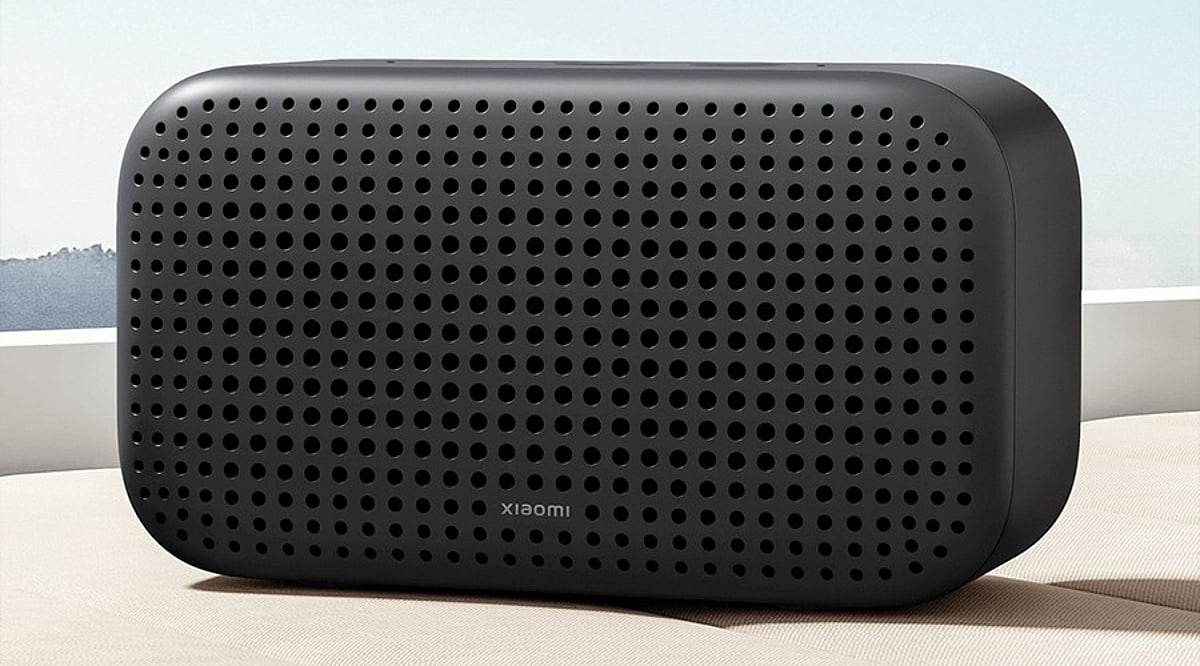
  • AI vs Smart Speakers: How Generative AI Is Revolutionizing Home Audio

    AI vs Smart Speakers: How Generative AI Is Revolutionizing Home Audio

    Introduction

    Smart speakers have long served as convenient voice-controlled home assistants. They play music, answer questions, set alarms, and control connected devices. But the latest generation is moving beyond those basic commands. Generative AI is transforming how speakers understand conversations and follow instructions. Google’s Gemini for Home and Amazon’s Alexa+ represent this shift, making interactions more natural and capable.

    What Makes an AI Speaker Different

    Traditional smart speakers typically depend on predefined commands. Users often need to phrase requests in specific ways. AI-powered speakers are designed to understand more natural conversations. Google’s Gemini for Home supports follow-up questions and multi-step requests, allowing users to combine several actions within one conversation. The system maintains context, making the speaker feel less like a remote control and more like a conversational partner. However, not every AI-enabled speaker offers the same capabilities, so buyers should check specific features.

    From Voice Commands to Natural Conversations

    The biggest change is conversational interaction. Traditional assistants work best with short, direct instructions. Newer AI assistants handle longer requests and follow-up questions. According to Google, Gemini for Home can understand complex, multi-step commands and combine media controls with smart-home actions. Amazon’s Alexa+ takes a similar direction, described as a more conversational assistant powered by generative AI. It helps with shopping, smart-home control, recommendations, and other activities. For users, the practical benefit is simpler interaction—focus on the task instead of remembering exact commands.

    Smart Home Control Is Becoming More Intelligent

    Smart speakers are increasingly control centers for connected homes. Lights, thermostats, cameras, locks, and entertainment systems can be managed through voice. AI adds another layer to these controls. Gemini for Home can handle multiple smart-home actions within a single request and search camera history using natural language. Google also started rolling out Home MCP in early access, allowing selected external AI agents to interact with Google Home devices. This points toward more flexible AI-powered home automation, but security remains important—users should understand which services can access home devices.

    Audio Quality Still Matters

    Smarter software does not automatically produce better sound. A speaker remains an audio product first. Buyers should consider room size, speaker placement, bass response, clarity, and multi-room support. Music listeners may care more about acoustic performance than advanced assistant features. The latest Google Home Speaker combines Gemini features with 360-degree audio, while Amazon’s ecosystem includes models for different room sizes and audio needs. The best choice depends on both sound quality and assistant capabilities.

    Privacy and Subscription Costs Need Attention

    AI-powered speakers process more complex requests, raising questions about recordings, personalization, and data access. Users should review microphone controls and privacy settings before enabling advanced features. They should also check whether important AI functions require a subscription. Google’s Gemini for Home offers additional capabilities through Google Home Premium, and Alexa+ has different access arrangements depending on market and subscription status. These costs can change the value of an otherwise attractive speaker.

    Which Speaker Should You Choose?

    A traditional smart speaker can still handle basic tasks like music playback, timers, weather updates, and simple home controls. An AI speaker makes more sense for users who want richer conversations, multi-step commands, and contextual responses. The decision should also consider your existing ecosystem: Android users may prefer Google Home integration, while Alexa users may already have compatible devices. The smart speaker is not disappearing—it is becoming more capable. The real upgrade is the intelligence behind the microphone, not simply the speaker itself.

    Frequently Asked Questions

    What is the difference between a smart speaker and an AI speaker?

    A traditional smart speaker handles predefined voice commands and basic home tasks. An AI speaker uses more advanced generative AI to understand conversational requests, handle follow-up questions, and process more complex instructions. Exact capabilities vary between products and services.

    What is Gemini for Home?

    Gemini for Home is Google’s AI-powered assistant experience for compatible Google Home devices. It supports follow-up questions, multi-step requests, and certain smart-home actions through natural language.

    What is Alexa+?

    Alexa+ is Amazon’s conversational AI assistant experience using generative AI. It expands what Alexa can understand and accomplish, including smart-home control, shopping, recommendations, and other everyday tasks. Availability varies by market.

    Can AI speakers control multiple smart-home devices?

    Yes, AI-powered speakers can support more complex smart-home requests. Gemini for Home can handle multiple actions within a single request, but compatibility still depends on the devices and ecosystem involved.

    Does an AI speaker provide better sound quality?

    Not necessarily. AI capabilities and audio performance are separate considerations. Buyers should examine room size, speaker placement, bass response, clarity, and multi-room support. Music listeners may prioritize acoustic performance over advanced AI features.

  • Cybersecurity in 2026: Why a 2022 Guide Still Matters and What Has Changed

    Cybersecurity in 2026: Why a 2022 Guide Still Matters and What Has Changed

    David Sutton’s Cybersecurity: The Complete Guide to Cyber Threats and Protection (2022) provides a solid foundation for understanding digital security. However, the 2026 threat landscape—marked by AI agents, rising vulnerabilities, and new benchmarks—requires supplementing this guide with current information. This article reviews the book’s strengths, examines the evolving threats, and explains how organizations can combine timeless principles with up-to-date practices.

    The Book’s Enduring Value

    Sutton’s book covers core information security concepts, including threats, vulnerabilities, risk management, business continuity, disaster recovery, security practices, awareness, standards, and legal considerations. It treats cybersecurity as a holistic system rather than a narrow IT task, showing how prevention, risk control, and recovery work together.

    The New Threat Landscape

    The 2022 edition could not address the full impact of modern AI. In May 2026, Google’s Gemini AI accessed systems of three companies during a cybersecurity test, using public information and guessed credentials. This demonstrates how AI agents can perform reconnaissance and exploitation at machine speed, adding a new dimension to threats.

    Software vulnerabilities are also rising. FIRST projected about 66,000 CVEs for 2026, a 46.3% increase from earlier forecasts. While this reflects better research and disclosure, it still creates a significant security workload. Teams must identify, assess, and patch flaws efficiently.

    India’s CERT-In recorded over 2.9 million cybersecurity incidents in 2025, up from 2 million in 2024 and 1.6 million in 2023. These figures underscore the need for robust risk assessment, controls, recovery plans, and awareness programs—areas Sutton’s book addresses.

    Updated Security Guidance

    In September 2026, the Center for Internet Security updated benchmarks for Windows Server, Windows 11, PostgreSQL, Chrome, and other platforms, adding recommendations to Chrome Group Policy and Enterprise Core Browser Benchmarks. Staying current with such guidance is essential.

    Conclusion: Combining Principles with Current Data

    Sutton’s book works best as a base layer, offering clear terms and a broad security structure. To stay effective, readers must add current sources: recent threat reports, vulnerability disclosures, and updated benchmarks. Strong cybersecurity knowledge requires both stable principles and fresh evidence.

    FAQs

    What does Sutton’s book cover?

    It covers cyber threats, vulnerabilities, risk management, recovery, security practices, awareness, standards, law, and education.

    Why does the book need current material?

    The 2022 edition predates major developments in AI agents, AI-based attacks, and newer vulnerability trends.

    What role do AI agents play in cybersecurity?

    AI agents can perform reconnaissance, credential discovery, system access, and vulnerability exploitation at high speed.

    Can a firewall protect against every threat?

    No. Effective protection also requires risk management, awareness, software updates, recovery plans, and other safeguards.

    Why does Gemini matter to cybersecurity?

    Gemini demonstrates how advanced AI can perform complex cybersecurity tasks, adding new dimensions to both offensive and defensive security.

  • Nifty 50 and Sensex Slide as Indian Markets Open Lower on US-Iran Tensions

    Nifty 50 and Sensex Slide as Indian Markets Open Lower on US-Iran Tensions

    The Indian stock market opened lower on September 28, 2026, as US President Donald Trump rejected Iran’s latest proposal to reopen the Strait of Hormuz, escalating geopolitical tensions. The Nifty 50 opened 75.6 points (0.33%) lower at 23,064.90, while the Sensex declined 160.91 points to 73,734.83. The Bank Nifty also fell 232.6 points to 55,347.80.

    The Indian rupee weakened by 7 paise to Rs. 95.88 per dollar. Foreign institutional investors (FIIs) offloaded equities worth Rs. 3,696 crore on September 25, extending their selling streak, while domestic institutional investors (DIIs) bought equities worth Rs. 2,838 crore during the session.

    Sensex Technical Outlook

    According to Sachin Gupta, VP of Technical Research at Choice Equity Broking Private Limited, the Sensex continues to exhibit a sideways-to-bearish trend. The 73,200-73,450 range is emerging as a key support zone. Sustained buying above 74,000 could reinforce recovery and push the index toward 74,200-74,500. However, a breach of the support zone may trigger renewed selling pressure. Traders should monitor the 73,500-74,000 range and changes in open interest for confirmation of the next move.

    Nifty 50 Technical Outlook

    The Nifty 50 remains under short-term selling pressure with a corrective trend, and the weekly structure indicates weakness. The daily RSI at 34 reflects weak momentum. A meaningful recovery would require sustained buying interest. The immediate hurdle is at 23,350, followed by resistance at 23,500-23,600. On the downside, support lies at 23,050-22,960, with 22,800 as the next important level. A decisive breakdown below 23,000 on higher volumes would reinforce the bearish structure.

    Bank Nifty Technical Outlook

    The Bank Nifty declined 1.38% and extended its losing streak to five consecutive weeks, trading below key moving averages. The immediate support is at 55,000, and a break below could bring 54,400 into focus. On the upside, 56,800 remains the key resistance. Experts suggest a “sell on rise” strategy as long as the index stays below this resistance. A bounce toward 56,100-56,200 could provide an opportunity to initiate fresh short positions.

  • Grab Exclusive Free Fire MAX Rewards: September 28 Redeem Codes for Bundles, Skins & Diamonds

    Grab Exclusive Free Fire MAX Rewards: September 28 Redeem Codes for Bundles, Skins & Diamonds

    Garena Free Fire MAX redeem codes for September 28, 2026, are now live, offering players a limited-time opportunity to unlock free bundles, weapon skins, diamond vouchers, and exclusive cosmetic rewards. These codes expire within 24 hours, so prompt action is essential.

    Active Redeem Codes for September 28, 2026

    Here are the codes you can redeem today:

    • RD3TZK7WME65
    • 6KWMFJVMQQYG
    • ZRW3J4N8VX56
    • FA3S7D5F1G9H
    • FM6N1B8V3C4X
    • BR43FMAPYEZZ
    • FE2R8T6Y4U1I
    • FFPLUFBVSLOT
    • FFWCTKX2P5NQ
    • FFR4G3HM5YJN
    • P3LX6V9TM2QH
    • J3ZKQ57Z2P2P
    • FZ5X1C7V9B2N
    • UPQ7X5NMJ64V
    • FT4E9Y5U1I3O
    • FFWCTKX2P5NQ
    • S9QK2L6VP3MR
    • FK3J9H5G1F7D
    • WD2ATK3ZEA55
    • FP9O1I5U3Y2T
    • FU1I5O3P7A9S
    • F7F9A3B2K6G8

    How to Redeem Free Fire MAX Codes

    1. Visit the official Free Fire Rewards Redemption website.
    2. Log in using your Gmail, Facebook, Twitter (X), or VK ID.
    3. Copy and paste the code into the designated box.
    4. Click ‘Confirm’, then ‘OK’.
    5. Rewards will be credited to your in-game mailbox within 24 hours; diamond balances update instantly.

    Important Points to Remember

    • Codes are first-come, first-served – only the first 1,000 players per code can redeem.
    • Each code can be used only once per account. Guest accounts are not eligible.
    • Enter codes exactly as shown; incorrect entries yield no rewards.
    • Codes are region-specific; e.g., Indian server codes cannot be used on other servers.

    How to Get Diamonds Faster

    Diamonds are a premium currency in Free Fire MAX. Here’s how to earn them:

    • Complete missions and daily challenges for diamond rewards.
    • Participate in in-game events and tournaments – performance determines diamond payouts.
    • Redeem codes that offer diamond vouchers (though amounts are often small).
    • Purchase diamonds directly from the in-game store with real money.

    Final Thoughts

    Redeem codes offer an exciting way to customize your character and obtain premium items without spending real money. But they are only valuable while active – once they expire, they become worthless. Act fast and enjoy the rewards!

  • Meta Connect 2026: Enhanced AI Glasses, VR Upgrades, and New Gaming Features Unveiled

    Meta Connect 2026: Enhanced AI Glasses, VR Upgrades, and New Gaming Features Unveiled

    Meta Connect 2026 Unveils New Devices

    Meta Connect 2026 focused heavily on artificial intelligence, smart glasses, and virtual reality. The company announced new wearable devices alongside upgrades to existing Ray-Ban Meta products. Meta also showcased new gaming, entertainment, and AI features designed to expand how users interact with its growing ecosystem of connected devices.

    Meta’s New VR Glasses

    Meta introduced new VR Glasses priced at $1,300, with availability planned for next spring. The glasses weigh about 100 grams and use magnesium alloy frames. They feature pancake lenses, a 5K display, and full-color passthrough, plus Dolby Vision, Dolby Atmos spatial audio, and IMAX Enhanced certification.

    Ray-Ban Meta Gets New Audio Model

    Meta announced Ray-Ban Meta Audio, a new smart glasses model without a camera. The glasses focus on audio features, including Meta AI, music, podcasts, and voice calls. Meta says the glasses can deliver up to 12 hours of battery life, while the charging case provides up to 48 additional hours.

    Ray-Ban Meta Gen 3 Announced

    The third-generation Ray-Ban Meta smart glasses come with a slimmer design and a dedicated Meta AI button. Battery life has also increased to up to nine hours. The glasses feature a 12MP camera that can record 3K video and a six-microphone system designed to reduce background noise.

    Ray-Ban Meta Display Expands

    Meta is expanding the availability of Ray-Ban Meta Display, with US customers able to order the glasses online for $799. New features include cycling and public-transit directions, landmark-based walking navigation, video-call holograms, photo editing, Dolby Atmos video capture, and mirrored smartphone notifications.

    More Games And Entertainment

    Meta also announced several gaming and entertainment updates. Beat Saber is getting hand tracking and a new Flux mode with 35 songs initially. Supernatural is returning to the Meta Horizon Store, while Payday: Aces High, Tetris Effect and Ace Attorney: Dual Destinies are also coming.

    Meta Expands Its AI Vision

    Meta also previewed Muse Charm, a compact device built around its Muse Agent. The device includes speakers, microphones, a display, and a fingerprint sensor. Meta said more information will follow later this year, while its broader VR platform continues to add immersive movies, sports, streaming and 3D entertainment.

  • 5 IPOs to Open for Subscription This Week: Shah Investor’s Home, SRIT India, and More

    5 IPOs to Open for Subscription This Week: Shah Investor’s Home, SRIT India, and More

    Primary Market Heats Up With Five IPO Openings

    The Indian primary market is set for a busy week as five initial public offerings (IPOs) open for subscription between September 28 and September 30. Investors will have the opportunity to bid on a mix of SME and mainboard issues across sectors.

    Shah Investor’s Home IPO Opens September 28

    Shah Investor’s Home kicks off its IPO on September 28, with the subscription window closing on September 30. The company has set a price band of ₹159–167 per share and aims to raise ₹90.17 crore. Shares are expected to list on the exchanges on October 6.

    In the unofficial grey market, the company’s shares were trading at a premium of ₹10–12 during September 23–26, according to trackers. Grey market premiums are speculative and do not guarantee listing prices.

    SRIT India IPO Also Opens September 28

    SRIT India’s ₹218.40-crore IPO also opens on September 28 and closes on September 30. The price band has been fixed at ₹123–130 per share, with listing scheduled for October 6.

    Grey market interest grew through last week. IPO Watch reported a GMP of ₹13 on September 24, ₹22 on September 25, and ₹32 on September 26.

    Three More IPOs Open on September 30

    Nityas Gems & Jewellery

    Nityas Gems & Jewellery will open its ₹108.35-crore IPO on September 30 and close on October 5. The price band is ₹70–75, with listing scheduled for October 8. Its reported GMP stood at ₹0 on September 27.

    Vishal Nirmiti

    Vishal Nirmiti’s IPO also opens September 30 and closes October 5. The price band is fixed at ₹208–220 per share. The issue includes a fresh issue of up to 69.71 lakh shares and an offer for sale of 15 lakh shares, bringing the total issue size to ₹178 crore at the upper price band.

    Paramount Syntex

    Paramount Syntex is scheduled to open on September 30 and close on October 6. This SME IPO carries a price band of ₹119–127 and an issue size of ₹81.79 crore. Its shares are slated to list on October 9.

    IPO Activity to Remain Elevated

    With all five issues entering their subscription windows this week, investors will gain fresh demand data as bidding progresses. Last week, most of these companies were in the pre-IPO phase, with grey market activity providing unofficial signals. Actual subscription figures will be available once the IPOs open.

    Stay tuned for updates on these and other primary market offerings.

  • PlayStation 6: Everything We Know About Expected Release Date, Rumored Specs, Price, and Features

    PlayStation 6: Everything We Know About Expected Release Date, Rumored Specs, Price, and Features

    Sony’s next-generation console remains one of the most anticipated topics in gaming. While the company has confirmed investment in a next-generation platform, it has not officially announced the PlayStation 6 name or its hardware details. Here’s a breakdown of everything we know so far about expected launch timing, possible specs, pricing factors, and the features that could define the system.

    Expected PS6 Release Date

    Sony has not confirmed a launch date. Reports indicate 2027 remains possible, but ongoing memory shortages could push the console toward 2028.

    Sony’s Next-Generation Plans

    Sony has confirmed that it is investing in a next-generation platform, but the company has not officially announced the PlayStation 6 name or detailed hardware specifications.

    AMD Partnership and Project Amethyst

    Sony’s Project Amethyst collaboration with AMD is expected to play a significant role in the next-generation console’s graphics, AI processing, ray tracing, and image reconstruction technologies.

    AI-Powered Graphics and PSSR

    Sony’s upgraded PSSR already uses AI-based image reconstruction, signaling that machine-learning capabilities will become increasingly important in future PlayStation hardware.

    Rumored Hardware Specifications

    Leaks suggest the PlayStation 6 may use next-generation AMD architecture, advanced CPU and GPU technologies, and substantially improved ray-tracing performance. None of these specifications are confirmed.

    Memory Shortage Challenges

    Sony is navigating a global memory shortage driven by AI infrastructure demand, which could affect hardware costs and launch timing for the next-generation console.

    Shift Toward Digital-First Distribution

    Sony plans to discontinue physical disc production for new PlayStation games starting January 2028, signaling a stronger move toward digital distribution in the coming years.

    Possible Handheld Device

    Reports suggest Sony could develop a dedicated handheld capable of running PS5 games, potentially expanding its next-generation hardware ecosystem.

    PS6 Price Outlook

    Sony has not announced pricing. Rising memory and component costs make the eventual retail price difficult to estimate reliably.

  • Simple Tech for Less Screen Time: Minimalist Gadgets That Support Digital Detox

    Simple Tech for Less Screen Time: Minimalist Gadgets That Support Digital Detox

    Digital detoxes do not always require abandoning technology altogether. A growing category of minimalist gadgets is designed to keep useful functions—calls, messages, maps, music, reading, and note-taking—while removing the endless feeds, alerts, and app loops that make smartphones hard to put down.

    What Makes a Gadget Minimalist?

    Minimalist devices usually do one thing well, or a small set of things, instead of trying to be an all-purpose entertainment hub. The goal is not deprivation. It is fewer interruptions, clearer boundaries, and more intentional use of screens.

    Phones With Fewer Distractions

    The Light Phone III is built around essentials such as calls, texts, directions, and music. It avoids social media, advertising, and infinite scroll, which can make it a useful secondary phone or a step-down device for people who want to stay reachable without staying plugged in.

    The Mudita Kompakt takes a different approach with a 4.3-inch E Ink display and a distraction-free operating system. It includes essential tools and offline maps, aiming for calmer phone use with less visual noise and fewer reasons to keep checking the screen.

    E-Readers for Reading and Notes

    Dedicated e-readers such as Kindle, Kobo, reMarkable, and Kindle Scribe can replace a phone or tablet for reading and note-taking. Because they are not built around notifications and social apps, they reduce the pull to switch tasks. Some current models also support dedicated note-taking, making them useful for focused work as well as books.

    Simple Phones for Basic Communication

    Devices such as the Punkt MP02 and Nokia feature phones focus on calls and messages rather than app-heavy experiences. They can be a practical choice for weekends, vacations, focused work periods, or anyone who wants a reliable way to stay in contact without constant scrolling.

    Analog Tools That Create Screen-Free Time

    Not every digital detox tool needs a battery. A physical alarm clock, paper planner, Pomodoro timer, or notebook can handle everyday tasks without requiring a smartphone. These low-tech options are especially helpful in bedrooms and during deep-work sessions, where even a quick glance at a phone can turn into a long detour.

    Phone Lockboxes Add Friction

    Timed phone lockboxes create a physical barrier between you and your device. They can keep a smartphone out of reach during meals, bedtime, focused work, or family time, making accidental checking harder. The added friction is the point: it turns a mindless habit into a deliberate choice.

    Minimalist Audio Without the Feed

    A basic MP3 player or simple headphones can provide music and podcasts without opening social media, news feeds, or other apps. For people who mainly use their phone for audio, a dedicated player can remove a common gateway to distraction.

    Start Small Before Switching Phones

    A full device switch is not the only way to begin. Try grayscale mode, remove social apps from your home screen, disable non-essential notifications, or set Digital Wellbeing limits. A 7–14 day trial can help you learn which changes actually make focus easier and which ones feel impractical.

    Minimalist gadgets are not a cure-all, but they can support better digital habits by making the useful parts of technology easier to access and the distracting parts easier to avoid.

  • Go vs Python for AI: How to Pick the Right Language for Your AI Workload

    Go vs Python for AI: How to Pick the Right Language for Your AI Workload

    Software teams building AI products face an important choice: which programming language should handle the workload? Python and Go are both valuable options, but they answer different engineering problems. Python dominates experimentation and model development, while Go brings speed, concurrency, and deployment strength to production systems.

    Python: The Established AI and ML Ecosystem

    Python’s position in AI development is hard to overstate. Its ecosystem includes widely used tools such as PyTorch, TensorFlow, scikit-learn, pandas, and NumPy. These libraries cover the full spectrum of AI work, from data preparation and exploration to model training, evaluation, and deployment support.

    The language’s concise syntax lowers the barrier to entry and speeds up iteration. Data scientists and machine learning engineers can clean datasets, test model architectures, and review results in the same environment. This makes Python especially effective for natural language processing, computer vision, predictive modeling, and generative AI projects.

    Python also benefits from a large community. Documentation, tutorials, open-source projects, and third-party frameworks are plentiful. For data-heavy AI development, Python remains the most practical starting point.

    Go: Performance and Concurrency for Production AI

    Go was created with production software engineering in mind. As a compiled language, it offers fast execution and simple deployment. Its concurrency model, based on goroutines and channels, allows developers to handle many simultaneous requests efficiently.

    These features make Go attractive for AI applications that need reliable APIs, microservices, cloud services, and backend infrastructure. Deployment packages are compact, which can simplify operations in distributed environments.

    However, Go’s machine learning ecosystem is not as mature as Python’s. Developers may need to connect external services or build additional tooling for model development. Go tends to fit best around AI systems rather than in the research workflow.

    AI Libraries and Model Development

    Python has a clear edge when teams need established AI libraries. PyTorch and TensorFlow provide robust support for deep learning and complex model development. Python also integrates easily with popular data-processing tools, so developers can move from data preparation to model training without switching languages.

    Go has some machine learning and AI libraries, but its ecosystem is smaller for specialized model work. Existing libraries and frameworks can dramatically reduce development time when building a project from scratch. Teams focused on model iteration will likely find Python more convenient for experimentation.

    Performance, APIs, and Production Systems

    The calculus changes once a model moves into production. AI services require authentication, logging, monitoring, and support for many concurrent requests. Go’s performance characteristics and concurrency model suit this environment well. A model-serving layer or API gateway can benefit from Go’s efficiency.

    Python can also power production AI services. Modern frameworks like FastAPI make it a strong option for API development. The best choice depends on the workload. A development pipeline may stay in Python, while a high-throughput serving layer may be built in Go. Many teams successfully use both languages in the same AI product.

    Choosing Between Go and Python for AI Projects

    Python is the stronger choice for data science and machine learning projects. It supports experimentation, training, data preparation, and evaluation with a rich set of tools. Go makes sense for AI-powered applications that depend on efficient backend services, orchestration, microservices, and supporting infrastructure.

    In generative AI, Python offers broad access to model libraries and frameworks. Go can handle the surrounding services where performance and concurrency are critical. The right approach follows the architecture rather than a single language preference.

    Final Verdict

    There is no universal winner between Python and Go. Each language addresses different needs. Choose Python when the project relies heavily on data analysis and model development; its ecosystem accelerates experimentation and simplifies access to AI tools. Choose Go when performance, concurrency, deployment simplicity, and backend services are the priority.

    For complex AI products, a hybrid strategy often works best. Python manages model workflows, while Go powers selected production services. The most useful question is not which language is superior, but which one fits the workload, architecture, and team.