Author: vitorcherulli

  • Ethereum Stalls, Litecoin Edges Up, BlockDAG Surges: CLAIM50 Bonus Ends in 48 Hours with 50% Extra BDAG

    Ethereum Stalls, Litecoin Edges Up, BlockDAG Surges: CLAIM50 Bonus Ends in 48 Hours with 50% Extra BDAG

    Picking the best crypto to buy today comes down to reading three very different stories. The Ethereum price forecast 2030 is under fresh debate as ETH slips near $1,860 and hunts for a true market bottom. The Litecoin price prediction has turned brighter after a 16% jump, but bulls still need to defend the newly won levels. Both coins carry weight, and both carry waiting. BlockDAG is running a completely different clock. With only 2 days left to use code CLAIM50 for 50% extra BDAG, and a buyback deal letting buyers enter at $0.0000077 and exit at $0.02, the noise around BDAG is only getting louder.

    Ethereum Price Forecast 2030: A Bottom in Sight but Not Yet Confirmed

    The Ethereum price forecast 2030 hinges on whether ETH can finally find a firm floor. Right now, ETH sits near $1,960 after falling from an all-time high of $4,946 to a low of $1,400 in June. On-chain data shows ETH trading about 17% below its realized price of $2,304, which means most holders are underwater. That kind of pressure often exhausts sellers over time. As an option for the best crypto to buy today, ETH looks cheap but risky. A drop below the 20- and 50-day EMAs near $1,830 could send it back toward $1,800, while the Ethereum price forecast 2030 needs a clean break above $2,019 to turn bullish.

    Litecoin Price Prediction: Breakout Builds Slowly Toward $49.50

    The Litecoin price prediction is looking better after a 16% jump pushed LTC to $47.64. The move came from growing ETF hopes and steady buying from big investors. What matters more is that Litecoin turned an old resistance level into fresh support, showing buyers are slowly taking back control. The chart tells a calm story too: LTC is making higher lows step by step, not one wild pump. Binance and Bybit are leading the way in LTC futures, which backs the shift. Among the best cryptos to buy today, LTC is getting a second look. Still, the Litecoin price prediction only holds if buyers defend the new support. A move above $49.50 opens more upside, while a drop below wipes out recent gains.

    Only 2 Days Left: BlockDAG’s CLAIM50 Bonus Is About to Vanish

    Two days. That is all that is left before code CLAIM50 quietly disappears, and with it the chance to walk away with 50% extra BDAG. Anyone still scanning for the best crypto to buy today needs to look at the raw numbers on the table right now. Here is the deal in plain terms: buy BDAG at $0.0000077 and sell at $0.02 through the buyback program with code BUYBACK. No chart theory, no analyst forecast, just a clear entry and exit price. Now stack CLAIM50 on top: complete three purchases with the code, and 50% extra BDAG lands on both new qualifying buys and eligible existing claim batches. So the buyer is not just entering at $0.0000077; they are entering with more coins than they actually paid for, and every extra coin points at the same $0.02 exit.

    BlockDAG nodes are currently being reinforced to make the network stronger than ever. During maintenance, some temporary delays with transfers, balance updates, and on-chain transactions may appear as the network keeps scaling. That is what real growth looks like under the hood. BlockDAG is stacking new pillars into the ecosystem at full speed. The BlockDAG Super App is on the runway, wrapping mining, wallet, swaps, staking, and dApps into a single mobile experience — one app that turns a phone into a full crypto command center. The BDAG Exchange is preparing to open its doors, giving the community a fast, secure, and native trading venue built for BDAG and the wider ecosystem. On every serious list of the best crypto to buy today, BDAG is the only name pairing a stacked bonus, a defined exit price, and a pipeline of products landing back-to-back.

    Final Say: Weighing the Options for the Weeks Ahead

    Every Ethereum price forecast 2030 sits on a “close but not confirmed” bottom, and every Litecoin price prediction leans on a breakout that still has to prove itself. Real coins, real potential, real waiting — and waiting is the one thing this market rarely rewards fast enough. BlockDAG hands over something completely different: only 2 days remain to stack 50% extra BDAG through CLAIM50 on top of an entry priced at $0.0000077, all sitting inside a buyback that pays out at $0.02. That is why so many are calling BDAG the best crypto to buy today. The countdown is loud now, and buyers are rushing in before the door closes.

    After-Sale: https://purchase.blockdag.network
    Website: https://blockdag.network
    Telegram: https://t.me/blockDAGnetworkOfficial
    Discord: https://discord.gg/Q7BxghMVyu

    Disclaimer: Analytics Insight does not provide financial advice or guidance on cryptocurrencies and stocks. Also note that the cryptocurrencies mentioned/listed on the website could potentially be risky, i.e. designed to induce you to invest financial resources that may be lost forever and not be recoverable once investments are made. This article is provided for informational purposes and does not constitute investment advice. You are responsible for conducting your own research (DYOR) before making any investments. Read more about the financial risks involved here.


  • Top Metaverse Platforms to Watch in 2026: Key Features and Use Cases

    Top Metaverse Platforms to Watch in 2026: Key Features and Use Cases

    The metaverse has evolved far beyond gaming, now serving as a hub for social interaction, virtual commerce, enterprise collaboration, education, and digital ownership. According to Grand View Research, the metaverse market is projected to grow at a compound annual growth rate (CAGR) of over 37% by 2030, driven by advancements in AI, VR, AR, and blockchain technology. As companies continue to invest in immersive experiences, several platforms are emerging as leaders in the space. Here are the top metaverse platforms to explore in 2026.

    Decentraland: Virtual Real Estate and Community Events

    Decentraland remains one of the largest blockchain-based virtual worlds, allowing users to buy, create, and sell virtual land using MANA tokens. It is a popular destination for creators and businesses exploring Web3 experiences, hosting virtual concerts, conferences, fashion shows, and brand activations. Its decentralized governance model, powered by a Decentralized Autonomous Organization (DAO), enables users to vote on platform upgrades, giving the community a direct say in future developments.

    The Sandbox: Gaming Meets Digital Ownership

    The Sandbox continues to expand its gaming ecosystem through user-generated content and NFT-based digital assets. No-code creation tools allow players to build interactive experiences, while creators can monetize virtual land and in-game objects via the platform’s marketplace. The Sandbox has collaborated with hundreds of world-renowned brands, entertainment providers, and celebrities to create immersive experiences, solidifying its role in blockchain gaming.

    Roblox: Beyond Traditional Gaming

    Roblox has evolved into a multi-purpose platform, enabling developers to create learning content, virtual offices, concerts, and branded experiences. With tens of millions of daily active users globally, it is one of the largest user-generated virtual environments. Its creator economy allows developers to monetize content through virtual items, subscriptions, and premium experiences.

    Horizon Worlds: Meta’s Social Metaverse

    Meta’s Horizon Worlds focuses on social interaction in VR. Using Meta Quest headsets, users can build their own worlds, attend live events, share projects, and participate in interactive games. The platform integrates AI-powered tools that make virtual content creation more accessible and user-friendly for non-technical audiences.

    Spatial: Enterprise and Creative Collaboration

    Spatial positions itself as a collaborative virtual environment for designers, artists, educators, and businesses. It supports 3D meetings, digital exhibitions, product demonstrations, and educational workshops across VR, desktop, and mobile platforms. Its cross-platform compatibility means organizations can host immersive events without requiring everyone to own specific VR equipment.

    Outlook

    Beyond entertainment, digital commerce, remote collaboration, education, and the creator economy are becoming major facets of the metaverse. The integration of AI, blockchain, and immersive technologies continues to drive growth. Despite challenges like interoperability, regulation, and user acceptance, these platforms are shaping how individuals and enterprises interact in the virtual world.

    Frequently Asked Questions

    1. What are the top metaverse platforms to explore in 2026?
    Leading platforms include Decentraland, The Sandbox, Roblox, Horizon Worlds, and Spatial. Each serves different audiences, from blockchain investors and gamers to creators, educators, businesses, and social VR users.

    2. How is Decentraland different from other metaverse platforms?
    Decentraland is a blockchain-based virtual world where users can buy, develop, and sell digital land using MANA tokens. Its DAO allows the community to participate in governance and platform development.

    3. Can users earn money through metaverse platforms?
    Yes, several platforms support creator economies through virtual assets, subscriptions, digital land, premium experiences, and branded content. Earnings depend on user demand, platform rules, asset values, and participation levels.

    4. Are metaverse platforms only designed for gaming?
    No. They increasingly support virtual meetings, education, product demonstrations, concerts, digital exhibitions, commerce, and professional collaboration alongside entertainment.

    5. Is a VR headset necessary to access the metaverse?
    Not always. Platforms like Spatial, Roblox, and Decentraland can be accessed via desktops or mobile devices, while Horizon Worlds primarily focuses on immersive experiences using Meta Quest VR headsets.

  • How to Become a CFO in 2026: A 7-Step Career Roadmap

    How to Become a CFO in 2026: A 7-Step Career Roadmap

    The role of Chief Financial Officer (CFO) has evolved far beyond managing financial statements. Today’s CFOs are expected to lead business strategy, oversee digital transformation, manage risk, and drive long-term growth. According to the World Economic Forum’s Future of Jobs Report 2025, analytical thinking, AI literacy, financial management, and leadership are among the most sought-after skills in senior executive ranks.

    7 Foundations to Become a CFO

    1. Build a Strong Educational Foundation

    Start with a bachelor’s degree in accounting, finance, economics, or business administration. Many aspiring CFOs also earn professional credentials such as Chartered Accountant (CA), Certified Public Accountant (CPA), Chartered Financial Analyst (CFA), or an MBA in Finance to strengthen both technical and leadership skills.

    2. Gain Practical Finance Experience

    Most successful CFOs accumulate years of experience across various finance roles, including financial planning and analysis (FP&A), accounting, auditing, taxation, treasury, compliance, and corporate finance. Working with different business units provides a comprehensive understanding of the organization’s operations.

    3. Develop Leadership Skills

    Technical knowledge alone is not enough. CFOs are responsible for managing the finance department, collaborating closely with CEOs and boards, and making decisions that affect the entire company. Communication, negotiation, teamwork, and decision-making are critical for executive-level positions.

    4. Learn Digital Finance and AI Tools

    Technology drives finance in 2026. Professionals need familiarity with enterprise resource planning (ERP), business intelligence platforms, automation software, cloud accounting solutions, and AI-powered financial analytics. Gartner reports that finance leaders continue to focus on leveraging AI and automation to improve forecasting and operations.

    5. Understand Business Strategy

    Modern CFOs contribute directly to business growth by evaluating investments, managing capital allocation, assessing mergers and acquisitions, and identifying financial risks. To become a strategic business partner rather than a mere financial controller, leaders must grasp market dynamics and industry trends.

    6. Build Executive-Level Experience

    Most CFOs move through roles such as Finance Manager, Financial Controller, Head of Finance, Director of Finance, or Vice President of Finance. These positions provide experience in budgeting, investor relations, governance, compliance, and strategic planning.

    7. Continue Learning and Expand Your Network

    Finance regulations, accounting standards, tax policies, and technology change constantly. Executive education courses, advanced certifications, industry events, and networking with finance leaders can unlock new career opportunities and keep professionals competitive.

    Outlook

    Demand for skilled finance professionals remains strong as organizations navigate economic uncertainty, digital transformation, and evolving regulatory requirements. While becoming a CFO requires years of experience and continuous learning, developing a strong combination of financial expertise and technology skills can significantly accelerate the path to executive leadership.

    Frequently Asked Questions

    What qualifications are required to become a CFO?

    Most CFOs hold a bachelor’s degree in finance, accounting, economics, or business administration. Professional credentials such as CA, CPA, CFA, or an MBA in Finance can further strengthen technical and leadership capabilities.

    How many years of experience are needed to become a CFO?

    There is no fixed timeline, but most CFOs build several years of experience across accounting, FP&A, auditing, treasury, taxation, compliance, and corporate finance before moving into senior leadership roles.

    Which skills are most important for a CFO in 2026?

    Financial expertise, analytical thinking, communication, leadership, risk management, strategic planning, and decision-making remain essential. Knowledge of AI, automation, ERP systems, and financial analytics is also increasingly important.

    Which roles can lead to a CFO position?

    Common stepping-stone roles include Finance Manager, Financial Controller, Head of Finance, Director of Finance, and Vice President of Finance. These positions provide exposure to budgeting, governance, investor relations, and strategy.

    Can someone become a CFO without a CA qualification?

    Yes, a CA qualification is valuable but not mandatory in every organization. Professionals with strong finance experience, business knowledge, leadership skills, and credentials such as an MBA, CPA, or CFA can also reach CFO positions.

  • Top 7 Water Heaters Under ₹8,000 in India: Best Storage & Instant Geysers for Small Families (2026)

    Top 7 Water Heaters Under ₹8,000 in India: Best Storage & Instant Geysers for Small Families (2026)

    Finding the right water heater under ₹8,000 requires balancing capacity, safety, and long-term durability. This guide compares top storage and instant geysers for small families based on real-world needs. We explain the key features that matter before you buy, helping you avoid common mistakes.

    How to Choose in This Price Band

    • Match capacity to routine, not headcount. A working couple needing two quick showers before 9 am is better served by a 5L instant unit than a 15L tank that takes twenty minutes to reheat.
    • Check pressure rating for apartment buildings with overhead tanks. An 8‑bar rating is built for high‑rise plumbing; homes on normal municipal supply rarely need it.
    • Look at the heating element material. Incoloy generally resists scaling and corrosion better in hard water conditions than copper or nickel‑coated alternatives.
    • Confirm ISI marking on the heating element and thermostat – it signals compliance with Indian safety standards. Thicker PUF insulation cuts reheating frequency and running costs.

    Instant vs Storage

    Storage geysers hold water and reheat continuously, suiting families showering back to back. Instant units heat only what passes through, consuming less energy but may not provide enough hot water for consecutive showers. A household of three or more usually needs a storage tank; one or two rarely does.

    Our Top Picks

    Crompton Arno Neo 15L – Best Overall

    2000W, 5‑star BEE‑rated, nickel‑coated copper heating element. Three‑level safety: capillary thermostat, automatic thermal cut‑out, and multi‑function valve. 8‑bar pressure rating for high‑rise use. Magnesium anode targets hard water corrosion. Mid‑pack warranty compared to competitors.

    V‑Guard Divino DG 15L – Best for Hard Water

    Incoloy 800 heating element and vitreous enamel tank coating built for mineral‑heavy water. Magnesium sacrificial anode, 8‑bar pressure rating, digital display, 5‑year tank warranty. Priced around ₹7,999.

    Activa 15L Heat‑Max – Best Budget Storage

    2000W copper element, 5‑star BEE rating, 8‑bar safety valve. Undercuts most 15L competitors on price. Trade‑off: smaller brand service network.

    Havells Signa 5L – Best Instant

    3000W unit claims under‑5‑minute heating (buyer reviews report ~7‑8 minutes). Twin LED indicators, fire‑retardant power cord. Ideal for kitchens and quick‑shower routines. Priced around ₹3,790.

    Kenstar Radix 5.9L – Runner‑Up Instant

    Four‑level safety: thermostat, thermal cut‑out, pressure release valve, fusible plug. Pressure rating 6.5‑8 bar. Stainless steel inner tank for kitchen use.

    AO Smith VAS Plus 15L – Best Brand Trust

    2000W copper element, corrosion‑resistant tank engineering, strong after‑sales network. Priced at the top edge of budget. BEE star rating – confirm with current listing.

    Buying Mistakes to Avoid

    • Undersizing the tank for sequential family bathing causes the most regret.
    • Skipping hard water protection in mineral‑heavy areas shortens tank life.
    • Choosing a pressure rating below what an overhead‑tank building delivers leads to weak flow and premature valve wear.

    Final Thought

    The right geyser under ₹8,000 is the one whose tank material matches the water coming out of the tap – not the one with the lowest number on the price tag.

    Frequently Asked Questions

    1. What is the best water heater under ₹8,000 for a small family?

    A 10L to 15L storage water heater for a family of two to four members, offering balanced performance, safety, and energy efficiency.

    2. Should I choose an instant or storage water heater?

    Instant for quick tasks or a single shower; storage for consistent hot water with multiple users or back‑to‑back bathing.

    3. What capacity for a family of three to four?

    10L to 15L storage heater, depending on bathing habits and number of bathrooms.

    4. Which features should I look for in a budget water heater?

    ISI‑certified design, thermostat, thermal cut‑off, pressure compatibility, durable inner tank coating, corrosion‑resistant heating element, efficient insulation.

    5. Does a higher‑priced water heater always perform better?

    Not necessarily. The best heater matches your family’s needs and water quality, not just price.

  • Claude AI Shared Links Exposed: Why Your Public Conversations Could Appear in Google Search

    Claude AI Shared Links Exposed: Why Your Public Conversations Could Appear in Google Search

    An emerging privacy concern has placed AI chatbots under renewed scrutiny after some publicly shared Claude AI conversations became discoverable via Google search results. The incident, which affected only chats deliberately shared using Anthropic’s Share Chat feature, has raised questions about how users perceive public sharing and the risks of sensitive data exposure.

    What Happened with Claude AI Shared Chats?

    Anthropic’s Claude AI includes a Share Chat feature that allows users to generate public links for their conversations. While useful for collaboration and research, some of these links were indexed by Google’s search engine, making them findable through standard search queries. Anthropic clarified that private conversations stored within user accounts remained secure; only the content shared via public URLs was affected.

    Why Search Engines Indexed These Links

    Search engines automatically crawl publicly accessible webpages unless website owners implement measures such as noindex directives or robots.txt configurations to prevent indexing. According to security experts, Claude’s shared links lacked the necessary settings to block indexing, so Google and other search engines treated them like any other public webpage.

    What Kind of Information Was Exposed?

    Reports indicate that indexed pages contained various sensitive data, including resume details, software development notes, legal documents, business records, API keys, and other personal information users had entered during conversations. Although users voluntarily shared these chats via public links, many did not expect them to become searchable on Google or Bing.

    How Users Can Protect Their AI Conversations

    To safeguard private data when using AI chatbots, follow these best practices:

    • Treat all public share links as if they could be viewed by anyone, anywhere.
    • Before sharing an AI chat, thoroughly review and remove any personal information, financial data, passwords, API keys, customer details, or proprietary business content.
    • Regularly review and delete shared links that are no longer needed.
    • Avoid using public sharing features altogether when dealing with confidential information.

    By adopting these simple habits, users can significantly reduce the risk of accidental data exposure.

    A Broader Lesson for All AI Platforms

    This incident is not unique to Claude. Similar issues have been observed on other generative AI platforms where public sharing features or search engine indexing have exposed user content. As AI assistants become integral to work, study, and coding, platforms must implement stronger privacy safeguards. For users, the key takeaway is clear: always assume that any content shared via a public link may eventually reach unintended audiences.

    Frequently Asked Questions

    What happened with Claude AI shared chats?

    Some chats shared using Claude’s Share Chat feature became discoverable via Google search results. Only chats that users intentionally made public were affected; private conversations remained secure.

    Were private Claude AI conversations exposed?

    No. Anthropic confirmed that private chats remained safe throughout the incident. Only content shared through publicly accessible URLs was potentially indexed by search engines.

    Why did Google index Claude AI shared chats?

    Google and other search engines automatically crawl and index publicly accessible webpages unless the website owner uses technical measures to block indexing. Claude’s shared links did not have such measures in place.

    How can I protect my Claude AI conversations?

    Always treat shared links as public webpages. Remove sensitive information before sharing, regularly delete outdated links, and avoid sharing confidential content via public features.

    Should I stop using Claude AI’s Share Chat feature?

    Not necessarily. The feature remains useful for collaborative and educational purposes. However, only share conversations that are appropriate for public viewing. For sensitive discussions, do not create a public link.

  • Top-Paying AI Certifications Employers Want in 2026: Google, AWS, NVIDIA, Microsoft

    Top-Paying AI Certifications Employers Want in 2026: Google, AWS, NVIDIA, Microsoft

    Artificial intelligence continues to reshape the job market at an unprecedented pace. Across every major industry, companies are leveraging AI to enhance products, automate operations, and solve complex business challenges. To stand out, professionals increasingly seek trusted AI certifications from leading technology firms. These credentials validate practical skills in machine learning, cloud platforms, large language models, AI strategy, and business transformation — and they often lead to high-paying roles.

    Here are the top AI certifications that employers value most in 2026, along with exam fees, salary ranges, and career insights.

    Google Cloud Professional Machine Learning Engineer

    This certification focuses on designing and building production-grade machine learning systems using Google Cloud. Topics include Vertex AI, MLOps, and model deployment. The exam costs $200. Certified professionals in the U.S. earn between $160,000 and $250,000 annually.

    AWS Certified Machine Learning Engineer – Associate

    Targeting ML engineers who use Amazon Web Services, this exam covers Amazon SageMaker, data pipelines, AWS AI services, and MLOps. The fee is $150. Salaries range from $145,000 to $210,000, with experienced specialists earning more.

    NVIDIA Certified Generative AI Professional and Infrastructure

    NVIDIA certifications emphasize deep learning frameworks, large language models, CUDA, GPU clusters, and AI infrastructure. Exam fees vary from $125 to $135. U.S. professionals typically earn $160,000 to $300,000, with senior roles commanding higher compensation.

    Microsoft Certified AI Transformation Leader

    This non-technical certification targets leaders responsible for enterprise AI strategy, governance, responsible AI, and digital transformation. Pricing varies by region. The typical salary range is $140,000 to $220,000, and senior consultants can earn more.

    AWS Certified AI Practitioner

    Designed for beginners without deep programming skills, this certification covers AI fundamentals, generative AI, responsible AI, and AWS AI services. The exam costs $100, making it the most affordable option. Salary range: $110,000 to $180,000 in the U.S.

    Why These Certifications Matter

    Employers across technology, healthcare, finance, retail, and manufacturing increasingly require certified professionals who can apply AI to real business problems. These high-paying AI certifications boost job prospects, enhance credibility, and open doors to senior roles in one of the fastest-growing fields globally.

    Final Thoughts

    AI certifications from Google Cloud, AWS, NVIDIA, and Microsoft validate practical knowledge and help professionals stand out in a competitive market. While a certification alone does not guarantee a high salary, it strengthens credibility and improves career opportunities in the fast-evolving AI industry.

    Frequently Asked Questions

    1. Which AI certification offers the highest salary potential? Google Cloud Professional Machine Learning Engineer and NVIDIA certifications can lead to total compensation above $300,000 for experienced professionals.
    2. Which AI certification costs the least? The AWS Certified AI Practitioner exam at $100 is the most affordable.
    3. Is coding required for every AI certification? No. Certifications like Microsoft Certified AI Transformation Leader and AWS Certified AI Practitioner focus on strategy and business knowledge.
    4. Which certification suits cloud AI careers? Google Cloud Professional Machine Learning Engineer and AWS Certified Machine Learning Engineer – Associate are ideal for cloud AI roles.
    5. Does an AI certification guarantee a high salary? No — experience, technical skills, successful projects, and location also matter.
  • NYT Connections Puzzle #1143 for July 28, 2026: Hints, Answers, and Full Solution

    NYT Connections Puzzle #1143 for July 28, 2026: Hints, Answers, and Full Solution

    The New York Times Connections puzzle for July 28, 2026 (Puzzle #1143) offers a rewarding mix of leadership terms, popular apple varieties, well-known shoe brands, and a clever palindrome-based wordplay category. While the early groups are approachable, the purple category delivers today’s biggest challenge.

    How NYT Connections Works

    Connections is a daily puzzle from The New York Times where you sort 16 words into four groups of four. Each group shares a subtle link—a theme, phrase, or category. Groups are color-coded by difficulty:

    • Yellow — easiest, most direct
    • Green — requires logical thinking
    • Blue — tests cultural or linguistic knowledge
    • Purple — trickiest, often involves wordplay or pop culture references

    You get three wrong guesses before the game ends, so every pick matters.

    Today’s 16 Words: July 28, 2026

    Here is the complete word list: BOBSLED, CAPTAIN, EMPIRE, FUJI, GALA, CONVERSE, CROCS, DIRECT, HEAD, LEAD, EVEREST, HONEYCRISP, CAMPER, CLARKS, OTTOMAN, ANNAPOLIS.

    Hints for Each Group

    Yellow Group Hint

    Think of terms used when talking about a designation that has the right to command.

    Green Group Hint

    These are fruits that keep the doctor away.

    Blue Group Hint

    These are some of the best shoe brands available—all begin with ‘C’.

    Purple Group Hint

    Look for words that begin with letters that mean the same backward as well.

    One-Word Hints for Each Group

    • Yellow: CAPTAIN
    • Green: FUJI
    • Blue: CONVERSE
    • Purple: OTTOMAN

    Full NYT Connections Answers for July 28, 2026

    If you’re ready for the complete solution, here are the four groups:

    • Yellow group (COMMAND): CAPTAIN, DIRECT, HEAD, LEAD
    • Green group (HOW DO YOU LIKE THEM APPLES): EMPIRE, FUJI, GALA, HONEYCRISP
    • Blue group (SHOE BRANDS STARTING WITH “C”): CAMPER, CLARKS, CONVERSE, CROCS
    • Purple group (STARTING WITH PALINDROMIC NAMES): ANNAPOLIS, BOBSLED, EVEREST, OTTOMAN

    Today’s edition delivers a well-balanced challenge. From simple words that mean ‘command’ to fruit varieties and shoe brands, the puzzle builds momentum as you move from easier groups to trickier ones. The final palindrome connection adds a playful twist that requires sharper observation. This mix of familiarity and surprise keeps Connections engaging day after day.

    Written by Antara | Reviewed by Ankitha Phulare

  • Key Big Data Integration Strategies for Modern Data Teams

    Key Big Data Integration Strategies for Modern Data Teams

    Define Clear Data Goals

    Start every integration project with well-defined objectives. Clear goals help teams prioritize data sources, streamline workflows, and consistently measure successful outcomes.

    Ensure High Data Quality

    Clean, accurate, and complete data prevents errors downstream. Regular validation and deduplication improve analytics, reporting, and decision-making across business operations.

    Standardize Data Formats

    Use consistent formats for dates, names, and values. Standardization reduces conflicts and simplifies integration across multiple systems and platforms.

    Automate Data Pipelines

    Automated workflows reduce manual effort, minimize mistakes, and ensure timely data movement between applications, databases, warehouses, and cloud environments.

    Prioritize Data Security

    Protect sensitive information using encryption, access controls, and monitoring. Strong security safeguards customer trust while meeting compliance and regulatory requirements.

    Monitor Integration Performance

    Track pipeline health, latency, and failures continuously. Performance monitoring helps teams identify bottlenecks early and maintain reliable data operations.

    Use Scalable Integration Tools

    Choose platforms that handle growing datasets efficiently. Scalable tools support expanding business needs without sacrificing speed, reliability, or performance over time.

    Maintain Strong Documentation

    Document data sources, mappings, and workflows clearly. Comprehensive documentation improves collaboration, troubleshooting, onboarding, and long-term maintenance across data teams.

    Review and Improve Regularly

    Evaluate integration processes frequently using feedback and metrics. Continuous improvement ensures better efficiency, accuracy, scalability, and long-term business value for organizations.

  • Claim Your WhatsApp Username Early: Step-by-Step Guide to Secure It Before Everyone Else

    Claim Your WhatsApp Username Early: Step-by-Step Guide to Secure It Before Everyone Else

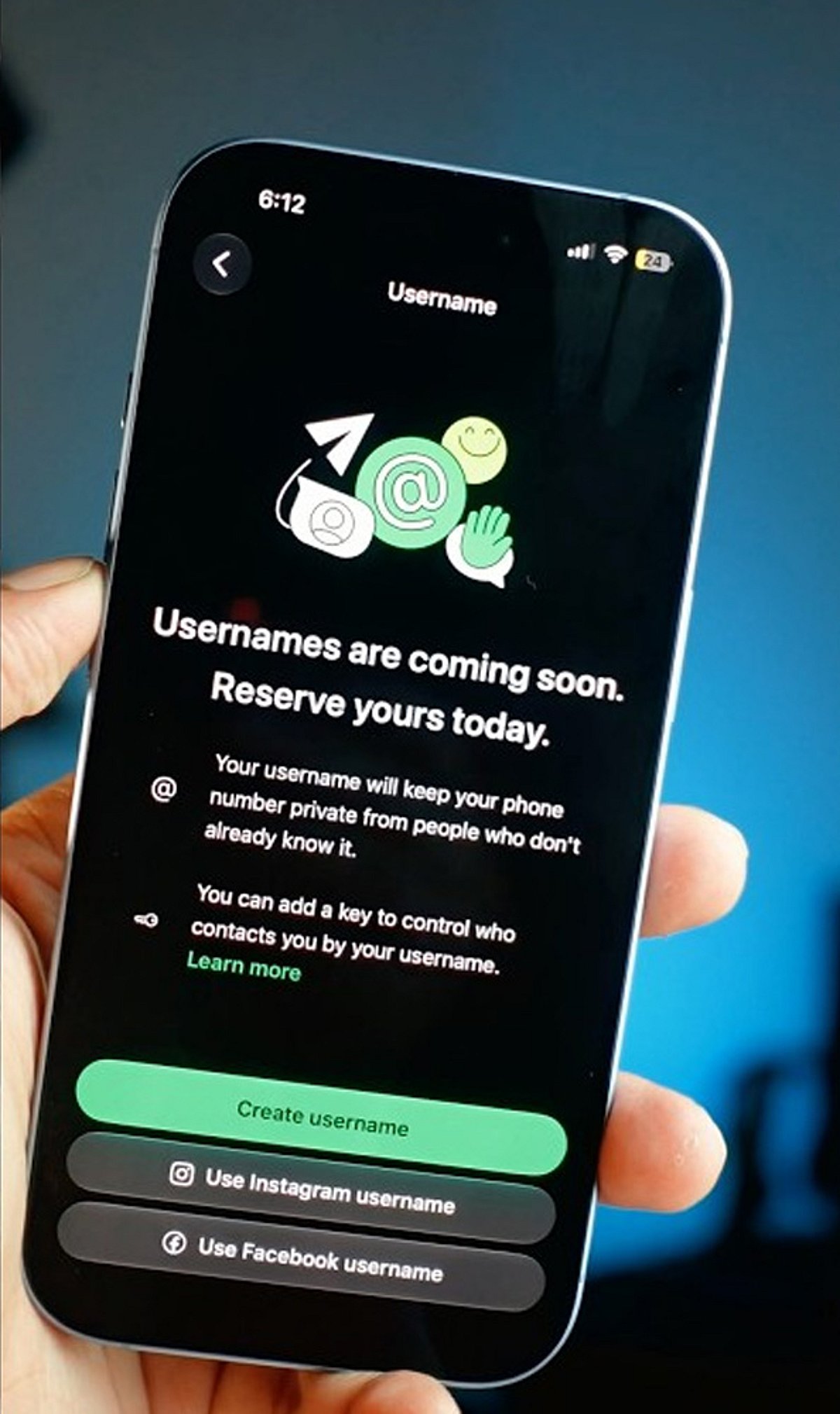
    WhatsApp is rolling out a new feature that allows users to reserve a unique username, giving you a more personalized way to be found on the platform. With demand likely high, acting quickly can help you secure the name you want. Follow these steps to reserve your WhatsApp username before everyone else.

    Update WhatsApp

    Install the latest WhatsApp version from your app store to ensure you have access to new features as soon as username support becomes available.

    Open Settings

    Launch WhatsApp and tap the Settings menu. Once the feature reaches your account, a username option will appear here.

    Find the Username Option

    Look for the Username section below your profile information. It appears only after Meta enables the feature for your account, so keep checking regularly.

    Choose a Unique Name

    Pick a memorable username using letters, numbers, and permitted symbols that reflects your identity without revealing personal information publicly.

    Check Availability

    WhatsApp instantly verifies whether your preferred username is available. If your first choice is already taken, try alternative spellings or variations.

    Follow Username Rules

    Avoid restricted words, special characters, or usernames that violate WhatsApp guidelines to ensure successful registration without unnecessary delays or errors.

    Save Immediately

    Once your preferred username is accepted, save it immediately to prevent someone else from claiming the same username first.

    Join the Beta Program

    Beta users often receive new WhatsApp features before the public release, increasing your chances of securing a preferred username early.

    Keep Checking Updates

    If the feature is unavailable today, regularly update WhatsApp and check Settings because the rollout may happen in phases worldwide.

  • Secure Your Online Banking: 10 Best Antivirus Software for Financial Safety

    Secure Your Online Banking: 10 Best Antivirus Software for Financial Safety

    Online banking has become a cornerstone of modern finance, but it also presents a prime target for cybercriminals. Phishing attacks, malware, ransomware, and identity theft are constant threats. To safeguard your financial transactions and personal data, a robust antivirus solution is essential. Below is a curated list of the top 10 antivirus software that offer specialized features for secure online banking, including encrypted browsing, real-time threat detection, and identity protection.

    1. Bitdefender Total Security: Provides multi-layer ransomware protection, a secure banking browser, phishing defense, and real-time malware detection for safer online financial transactions.
    2. Norton 360 Deluxe: Includes a secure VPN, dark web monitoring, banking protection, and advanced threat detection to safeguard sensitive financial information during online transactions.
    3. Kaspersky Premium: Offers anti-phishing, secure payment technology, identity protection, and real-time malware defense to create a safer online banking experience.
    4. McAfee Total Protection: Combines identity monitoring, secure browsing, malware protection, and firewall security to defend online banking sessions against evolving cyber threats.
    5. ESET Smart Security Premium: Delivers banking and payment protection through encrypted browsing, ransomware defense, and proactive malware detection without affecting system performance.
    6. Trend Micro Maximum Security: Blocks malicious websites, phishing scams, and banking malware while providing AI-powered threat detection for secure online financial activities.
    7. Avast One Gold: Protects banking sessions using real-time malware scanning, firewall security, VPN access, and anti-phishing technologies for enhanced financial safety.
    8. Malwarebytes Premium: Detects advanced malware, ransomware, and phishing attacks while offering continuous protection against cyber threats targeting online banking users.
    9. F-Secure Total: Combines antivirus, VPN, identity monitoring, and banking protection features to secure financial transactions and safeguard personal information effectively.
    10. Sophos Home Premium: Provides AI-driven malware protection, web filtering, ransomware defense, and remote security management for secure online banking across multiple devices.