Author: vitorcherulli

  • Top Curved Display Smartphones Under ₹25,000: Best Picks for 2025

    Top Curved Display Smartphones Under ₹25,000: Best Picks for 2025

    Curved display phones are no longer limited to flagship devices. A growing number of mid-range smartphones now offer stunning curved AMOLED panels, smooth performance, and excellent value for under ₹25,000. Whether you prioritize display quality, camera performance, or clean software, there is a curved-screen phone for you. Below, we break down the best options available today.

    1. Motorola G96 – Best Overall

    The Motorola G96 combines a premium curved AMOLED display with smooth performance, clean software, and strong everyday usability. It is an excellent all-rounder that delivers a near-stock Android experience without unnecessary bloatware.

    2. TECNO POVA Curve 5G – Best Value & Display Experience

    The TECNO POVA Curve 5G stands out with a high-refresh-rate curved AMOLED display (144Hz) that offers fluid scrolling and vibrant visuals. It also brings 5G connectivity and capable performance at an aggressive price, making it the best value pick for budget-conscious buyers.

    3. Realme 13 Pro+ 5G – Best Camera Experience & Balanced Performance

    The Realme 13 Pro+ 5G shines with a premium curved display and versatile cameras, making photography its biggest strength. It balances performance, display quality, battery life, and design, resulting in a well-rounded mid-range smartphone.

    4. Realme 11 Pro+ 5G – Best Premium Design

    The Realme 11 Pro+ 5G offers an elegant curved AMOLED panel, premium styling, capable cameras, and smooth performance – often available at discounted prices. It is an excellent choice for users who want a flagship-like look without spending a fortune.

    5. Realme 11 Pro 5G – Best for Premium Looks

    The Realme 11 Pro 5G brings a curved AMOLED display and premium design language, making it stylish without demanding flagship-level spending. It is a solid option for those who prioritize aesthetics and build quality.

    6. Motorola G96 – Best for Clean Software

    Motorola’s near-stock Android experience keeps the interface simple, responsive, and free from unnecessary bloatware and distracting pre-installed applications. For users who value a clutter-free software experience, this is the top pick.

    7. TECNO POVA Curve 5G – Best Budget Curved Phone

    For buyers who prioritize a curved display and 5G connectivity above all else, the TECNO POVA Curve 5G offers impressive specifications at an aggressive price point. It is the most affordable way to enjoy a curved screen in 2025.

    All of these smartphones deliver exceptional value under ₹25,000, with curved displays that enhance both aesthetics and usability. Choose the one that best fits your priorities – whether it’s camera quality, display smoothness, software cleanliness, or overall design.

  • Top Smart HR Platforms Driving Global Business Success

    Top Smart HR Platforms Driving Global Business Success

    Human resources technology has evolved significantly, with cloud-based platforms enabling companies to manage payroll, talent, compliance, and workforce planning across borders. The following platforms are at the forefront of this transformation, each offering unique capabilities for global enterprises.

    Workday

    Workday delivers a comprehensive suite of cloud-based HR, finance, payroll, talent management, and workforce planning solutions tailored for large enterprises operating in multiple countries.

    SAP SuccessFactors

    SAP SuccessFactors offers extensive human capital management features, including recruitment, employee experience, learning, performance tracking, and global workforce administration.

    Oracle HCM Cloud

    Oracle HCM Cloud combines AI-powered HR management, payroll, talent acquisition, workforce analytics, and employee lifecycle management within a single integrated platform.

    ADP Workforce Now

    ADP Workforce Now simplifies payroll, tax compliance, benefits administration, workforce management, and HR operations for businesses of varying sizes.

    BambooHR

    BambooHR provides intuitive HR software with employee records, onboarding, performance management, time tracking, and reporting, ideal for growing organizations.

    Rippling

    Rippling integrates HR, IT, payroll, benefits, and device management into one automated platform that efficiently supports globally distributed workforces.

    UKG Pro

    UKG Pro enables workforce scheduling, payroll, talent management, people analytics, and employee engagement through AI-enhanced human capital management tools.

    HiBob

    HiBob is designed for modern workplaces, offering employee engagement, performance reviews, compensation planning, onboarding, and people analytics for dynamic organizations.

    Deel

    Deel simplifies international hiring with global payroll, compliance, contractor management, employer-of-record services, and workforce administration across numerous countries.

    Darwinbox

    Darwinbox is an emerging global HR platform delivering recruitment, payroll, employee engagement, performance management, and workforce automation with AI-driven capabilities.

    These platforms empower organizations to streamline HR operations, ensure compliance, and foster a productive workforce across borders, making them indispensable tools for global companies.

  • Top Budget Noise-Cancelling Headphones with Premium Audio Quality

    Top Budget Noise-Cancelling Headphones with Premium Audio Quality

    Finding affordable noise-cancelling headphones that deliver premium sound is easier than ever. We’ve rounded up the best budget-friendly options that combine effective active noise cancellation (ANC), impressive audio performance, and comfortable designs—without breaking the bank.

    Best Overall: Sony WH-CH720N

    The Sony WH-CH720N strikes an excellent balance between effective noise cancellation, balanced sound, comfortable design, and reliable battery life. It’s a top choice for anyone seeking a well-rounded budget headphone.

    Best for Sound Quality: Sennheiser Accentum Wireless

    For music-focused listeners, the Sennheiser Accentum Wireless delivers detailed audio with strong bass, excellent battery life, and effective noise cancellation. It’s a standout for audio fidelity at this price point.

    Best Battery Life: Anker Soundcore Space Q45

    The Anker Soundcore Space Q45 offers powerful ANC, impressive battery endurance, comfortable earcups, and customizable sound through its companion app. Ideal for long listening sessions.

    Best for Everyday Use: JBL Tune 770NC

    With punchy bass, adaptive noise cancellation, lightweight comfort, and long battery life, the JBL Tune 770NC is perfect for daily commutes and travel.

    Best for Premium Comfort: Soundcore Life Q30

    The Soundcore Life Q30 features comfortable memory-foam earcups, hybrid ANC, customizable EQ settings, and impressive audio performance at an affordable price.

    Best for Bass Lovers: Sony WH-CH520 Alternative

    Budget-conscious listeners who crave energetic sound can explore Sony’s affordable wireless range. Note that dedicated ANC models provide stronger isolation and immersion.

    Best for Travel: Anker Soundcore Space One

    The Soundcore Space One provides effective adaptive noise cancellation, comfortable cushioning, strong battery life, and a foldable design—perfect for frequent travelers.

    Best for Calls: JBL Live 770NC

    JBL Live 770NC offers clear voice pickup, adaptive noise cancellation, rich sound, and comfortable long-duration wear for work and entertainment.

    Best Value Pick: Soundcore Q20i

    The Soundcore Q20i delivers hybrid ANC, deep bass, customizable audio, and extended battery life—a compelling affordable headphone option.

    Whether you prioritize sound quality, battery life, comfort, or value, these budget noise-cancelling headphones prove you don’t have to spend a fortune for premium audio experiences.

  • Leading US Tech Giants: Apple, Microsoft, NVIDIA, and More Dominate 2025

    Leading US Tech Giants: Apple, Microsoft, NVIDIA, and More Dominate 2025

    The United States continues to be the global epicenter of technological innovation, housing some of the most influential companies that shape industries ranging from consumer electronics to enterprise software and artificial intelligence. Here is an overview of the top 10 tech companies in the US, highlighting their core strengths and market impact.

    1. Apple

    Apple leads consumer technology with premium iPhones, Macs, and wearables. The company is expanding its AI capabilities, developing powerful silicon chips, and maintaining a thriving global ecosystem that keeps users engaged across devices.

    2. Microsoft

    Microsoft dominates enterprise software with Azure cloud services, AI innovation, productivity tools like Office 365, gaming through Xbox, cybersecurity solutions, and business applications used by millions worldwide.

    3. NVIDIA

    NVIDIA powers the AI revolution through advanced GPUs, data center technologies, autonomous driving platforms, and high-performance computing infrastructure that are critical for modern AI workloads.

    4. Amazon

    Amazon combines global e-commerce leadership with AWS cloud services, AI innovations, logistics expertise, and smart consumer devices like Alexa and Echo, reaching consumers and businesses across markets.

    5. Alphabet (Google)

    Alphabet, the parent company of Google, drives internet search, AI breakthroughs, cloud services, the Android ecosystem, and cutting-edge digital advertising technologies that underpin much of the web.

    6. Meta

    Meta connects billions through Facebook, Instagram, and WhatsApp, while investing heavily in AI research, virtual reality, and metaverse initiatives that aim to shape future digital interactions.

    7. Oracle

    Oracle specializes in enterprise databases, cloud infrastructure, AI-powered business applications, and mission-critical software that serve governments and multinational corporations worldwide.

    8. IBM

    IBM focuses on hybrid cloud, artificial intelligence, quantum computing, consulting services, and enterprise technology solutions tailored for regulated industries such as finance and healthcare.

    9. Intel

    Intel develops advanced processors, semiconductor technologies, AI accelerators, networking solutions, and manufacturing innovations that support global computing infrastructure from PCs to data centers.

    10. Cisco

    Cisco provides networking hardware, cybersecurity solutions, collaboration platforms like Webex, and enterprise connectivity that power businesses, governments, and digital transformation initiatives around the world.

    These ten companies not only drive technological progress but also create millions of jobs and generate trillions of dollars in market value, solidifying the US position as a leader in the global tech landscape.

  • NYT Connections Puzzle #1137: Hints and Answers for July 22, 2026

    NYT Connections Puzzle #1137: Hints and Answers for July 22, 2026

    About Today’s Puzzle

    Welcome to your Wednesday evening puzzle break! The New York Times Connections puzzle for July 22, 2026 (Puzzle #1137) blends allergy symptoms, golf scorecard terms, social media posts, and zebra features into one clever grid. The yellow and green groups are easy to identify, but the purple category adds today’s biggest twist.

    How NYT Connections Works

    If you’re new to it, Connections is a daily puzzle game where you group 16 words into four sets. The connections can be straightforward or totally hidden, from synonyms and themes to pop culture references. Each group has a difficulty tier: yellow (easy), green and blue (moderate), and purple (hardest). You get a maximum of four mistakes, so precision matters. The twist? Some words fit into more than one category, and that’s where the real challenge begins.

    Hints for July 22, 2026

    Here are your hints, color-coded by difficulty (but no answers just yet):

    • Yellow Group (Easiest): These words are related to allergy symptoms.
    • Green Group (Medium): Love sports? These are terms you can find on a golf scorecard.
    • Blue Group (Moderate): Try to find words that are associated with platform-specific posts.
    • Purple Group (Hardest): The words are related to a specific animal we can find in a zoo.

    One Word Per Group

    Need a quick push? Here’s one example from each group:

    • Yellow: HIVES
    • Green: PAR
    • Blue: TWEETS
    • Purple: WHITE STRIPES

    Answers for July 22, 2026

    Still confused? Here are the exact categories for today’s puzzle:

    • Yellow (SYMPTOMS OF AN ALLERGIC REACTION): HIVES, ITCHING, RASH, REDNESS
    • Green (ON A GOLF SCORECARD): HOLE, PAR, SCORE, STROKES
    • Blue (PLATFORM-SPECIFIC POSTS): PINS, SNAPS, TWEETS, VINES
    • Purple (FEATURES OF A ZEBRA): HOOVES, MANE, TAIL, WHITE STRIPES

    Final Thoughts

    NYT Connections never gets old. Today’s challenge presents common words in a twisted way that makes them challenging to connect without a bit of help. The purple group may stump some, especially if wordplay isn’t your forte, but the rest of the puzzle plays fair. Whether you solved it in one go or had to peek at a few hints, the real win is that burst of satisfaction at the end. Come back tomorrow for a new grid, new clues, and more of that Connections magic!

  • Everyday Digital Footprints: How Your Online Activities Reveal Personal Data

    Everyday Digital Footprints: How Your Online Activities Reveal Personal Data

    Every time you search, like, shop, or stream, you leave behind a digital footprint that companies and platforms use to build detailed profiles of your behavior. Understanding these traces is the first step toward protecting your privacy.

    Search History

    Each search query helps search engines compile a comprehensive profile of your interests, habits, preferences, and future purchasing intentions.

    Social Media Activity

    Every like, comment, share, and follow reveals personal interests, relationships, opinions, and behavioral patterns to platforms and advertisers.

    Location Services

    Smartphone GPS continuously records your movements, creating location histories used for navigation, targeted advertising, analytics, and personalized recommendations.

    Online Shopping

    Every purchase, wishlist item, and browsing session provides retailers with valuable insights into your spending habits, product preferences, and future buying behavior.

    Streaming Platforms

    The movies you watch, songs you play, and viewing duration help streaming services personalize recommendations while tracking your entertainment preferences over time.

    Fitness Apps

    Health trackers collect information about steps, sleep, workouts, heart rate, and wellness routines, generating highly detailed personal health profiles.

    Smart Home Devices

    Connected speakers, cameras, and appliances gather usage patterns, voice commands, and automation preferences to improve personalized home experiences.

    Email Activity

    Email providers analyze communication patterns, subscriptions, and interactions to filter spam, personalize services, and improve user engagement.

    Public Wi-Fi Usage

    Connecting to public networks may expose your browsing habits and device information, highlighting the importance of secure internet practices.

  • Meta Tests AI-Powered StoryKit App for Personalized Children’s Stories

    Meta Tests AI-Powered StoryKit App for Personalized Children’s Stories

    Meta is testing StoryKit, an AI-driven storytelling app designed to create personalized children’s stories complete with custom characters, settings, lessons, illustrations, narration, and music. The tech giant aims to bring AI into your child’s bedtime storytelling routine.

    Currently in pilot phase in select countries, StoryKit explores how parents respond to AI-generated storybooks. The app helps users create personalized tales without requiring them to write the content themselves. Meta explained in its official blog, “StoryKit is designed to help users create personalized and imaginative storybooks for children using AI. The app includes built-in safety filters, does not offer any social networking features, and is restricted to users aged 18 and above.”

    The new feature allows you to choose a character, build a setting, and select a lesson or value for the story. The app then generates an entire story with visuals and audio elements. Meta has positioned StoryKit as a creative storytelling tool rather than a social platform.

    The app can also create a story based on your child’s favorite toy. Another person can become part of the story through an uploaded photo. This gives parents multiple ways to use the content, including screen-free storytelling. StoryKit supports different formats such as illustrated picture books, audiobooks, read-aloud stories, and printable PDFs.

    While StoryKit will help parents who struggle to create unique stories each night, it also raises ethical concerns about AI’s role in traditional human activities. Bedtime stories have long been a core part of bonding with children and creating memories with grandparents. The invasion of AI might hamper that emotional aspect. According to Meta’s experiment, AI will just help people with bedtime storytelling and not replace the human touch.

  • Big Tech’s Hidden AI Debt Surpasses $1.65 Trillion, Report Reveals

    Big Tech’s Hidden AI Debt Surpasses $1.65 Trillion, Report Reveals

    A new report by Nikkei Asia reveals that the world’s largest technology companies—Microsoft, Alphabet, Amazon, Meta, and Oracle—have collectively taken on approximately $1.65 trillion in off-balance-sheet debt tied to artificial intelligence investments. This “invisible debt” figure exceeds their combined official liabilities, highlighting the scale of their commitments to AI infrastructure.

    The hidden debt stems from future payment obligations such as long-term operating leases for data centers not yet built, bulk GPU supply contracts, and joint ventures. These tech giants are not required to record these as liabilities on their balance sheets until the assets are delivered or the facilities become operational.

    Meta and Oracle carry the largest hidden debts. Meta’s off-balance-sheet debt is estimated at $420 billion—three times its official debt—while Oracle’s stands at approximately $273.3 billion. The remaining three companies collectively hold around $1.45 trillion in off-balance-sheet obligations for cloud services and other business commitments as of March 2026.

    What Does ‘Off-Book’ Spending Mean?

    The term ‘off-book’ spending refers to agreements where a company commits to future payments that are not listed on its regular debt sheet. For example, long-term rentals for data centers, AI chips, and cloud services allow Big Tech companies to secure critical resources before demand escalates further.

    Why These Commitments Matter

    These future payments could become a financial burden if the AI market slows. Companies would still be obligated to pay for contracts they have signed, even if their AI business underperforms. Agencies like Morgan Stanley and Moody’s have warned about these rising debt commitments. While AI creates new opportunities, it also pushes companies into massive financial commitments that could shape their future growth.

  • XRP Surges Past $1.15 as Whale Buying, ETF Inflows, and Clarity Act Optimism Drive Rally

    XRP Surges Past $1.15 as Whale Buying, ETF Inflows, and Clarity Act Optimism Drive Rally

    XRP climbed more than 3% this week as large holders accumulated tokens, spot exchange-traded funds attracted fresh inflows, and regulatory optimism strengthened across the crypto market. The token reached an intraday high of $1.1511 before settling near $1.1485. Its market value remained close to $68 billion.

    The move followed reports that President Donald Trump accepted an ethics provision linked to Senate negotiations over the Clarity Act. Bitcoin also rose above $66,000, while stronger Asian technology stocks supported broader demand for risk assets.

    Whales Build Positions as Retail Wallets Exit

    Santiment data showed that wallets holding between 100,000 and 100 million XRP increased their combined balances by 2.8% during the past five weeks. These wallets accumulated while XRP traded between roughly $1.05 and $1.12. Meanwhile, wallets holding less than 0.01 XRP reduced their balances by 5.2% during the same period. The shift created a clear divide between large holders and the smallest retail accounts.

    Santiment said XRP has historically followed large-holder activity more closely than movements among small wallets. Still, accumulation alone does not guarantee further price gains. XRP later broke above the $1.13 resistance level that had limited several rallies since late June. The advance also triggered about $2.93 million in leveraged short liquidations.

    The token gained around 3.5% during the day. Among the 50 largest cryptocurrencies, only Ondo and Cardano posted stronger gains during the reported period.

    ETF Inflows, Ledger Upgrades Add Support

    XRP spot ETFs recorded $5.09 million in net inflows on July 21. They also attracted $2.27 million on July 20 and $6.10 million on July 16. Those inflows followed a brief period of withdrawals earlier in July. ETF demand remains one factor that could influence institutional participation and short-term market liquidity.

    Meanwhile, XRP Ledger validators expect to vote on a major upgrade package within the coming weeks. The proposed amendments would add batch transactions and confidential transfers. The package also includes improvements to the network’s Multi-Purpose Token standard. These changes would expand how developers issue and manage different token types on the ledger.

    Broader market conditions also supported XRP’s advance. Five-day Bitcoin ETF inflows exceeded $700 million, while gains in Asian artificial intelligence and semiconductor shares strengthened the risk-on environment.

    Clarity Act Talks Renew Regulatory Focus

    The Clarity Act carries direct implications for XRP because the legislation would classify the token as a digital commodity. This designation could reduce regulatory uncertainty surrounding institutional use.

    Senate Democrats have sought an ethics provision that would restrict the president and his family from directly benefiting from cryptocurrency businesses. The provision delayed negotiations for several months. Reports said the White House, Senator Cynthia Lummis, and Senator Bernie Moreno reached an agreement on the issue Sunday. The exact language has not yet emerged.

    Democratic support also remains uncertain. The Senate must act before its August recess, leaving lawmakers with a narrow period for further negotiations and a possible vote. Polymarket participants raised the estimated chance of Clarity Act passage to 43%. The figure had recently fallen as low as 32%.

    Conclusion

    XRP’s rise above $1.15 reflects whale accumulation, renewed spot ETF inflows, planned XRP Ledger upgrades, and improving Clarity Act prospects. Still, broader market conditions and Senate progress remain critical factors to watch.

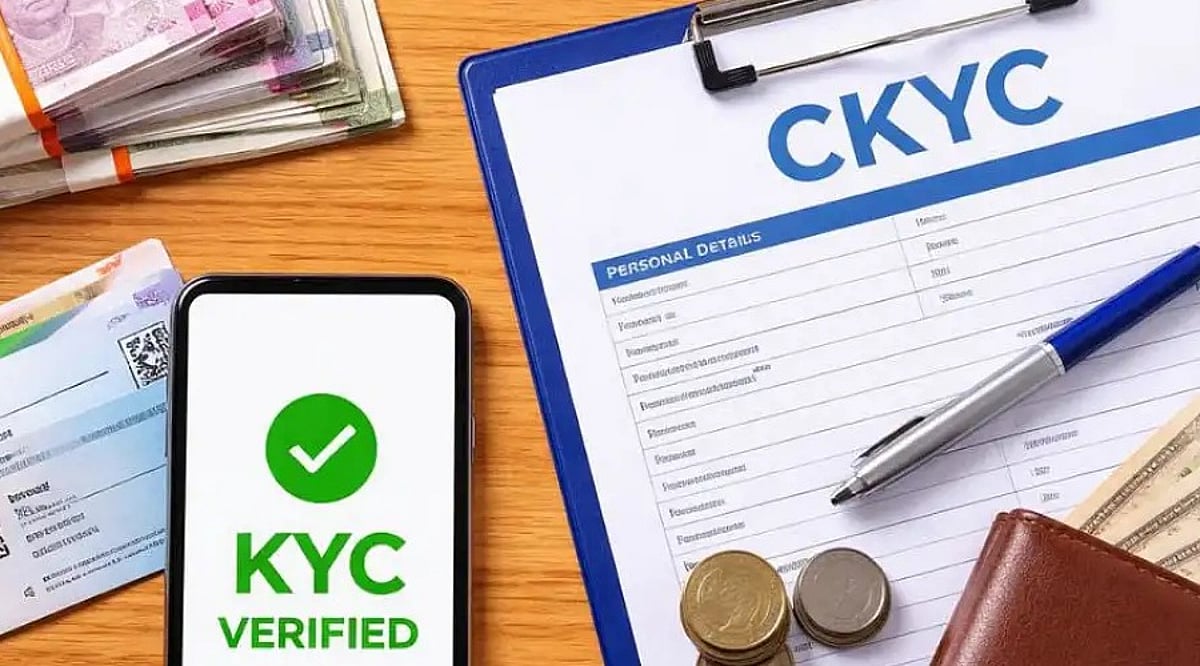
  • CKYC Number: How a Single 14-Digit ID Streamlines Banking and Reduces Paperwork

    CKYC Number: How a Single 14-Digit ID Streamlines Banking and Reduces Paperwork

    The Central Know Your Customer (CKYC) Number is revolutionizing the way Indians access banking and financial services. This unique 14-digit identifier stores verified KYC records in a single centralized registry, eliminating the need to repeatedly submit documents like PAN, Aadhaar, and address proof when opening accounts or applying for financial products.

    What Is the CKYC Number?

    Issued under the Central KYC Records Registry (CKYCR), the CKYC Number acts as a permanent ID linked to an individual’s verified identity documents. Once a bank, NBFC, mutual fund, or insurance company completes the initial KYC process, the verified data is uploaded to the central database. With the customer’s consent, any other regulated financial institution can access the same record, making subsequent verifications instant and paperless.

    Key Benefits

    The CKYC system dramatically cuts down on paperwork and reduces account opening times from days to minutes. It also enhances security by ensuring that only authenticated records are used across institutions. For customers, this means faster access to banking, loans, insurance, and investments without the hassle of submitting the same documents repeatedly.

    How to Find Your CKYC Number

    According to the Reserve Bank of India (RBI), customers can obtain their CKYC Number by contacting their bank, giving a missed call to 7799022129, or visiting the official CKYC portal. The central bank continues to promote financial awareness through its campaign, “RBI Kehta Hai, Jaankar Baniye, Satark Rahiye” (RBI Says, Be Informed, Stay Alert).

    Experts view the CKYC framework as a major step toward a more efficient and secure financial ecosystem in India. By centralizing KYC records, it benefits both consumers and institutions, paving the way for smoother digital transactions and broader financial inclusion.