Author: vitorcherulli

  • FTSE 100 Opens Lower Amid Mixed UK Jobs Data and Falling Oil Prices

    FTSE 100 Opens Lower Amid Mixed UK Jobs Data and Falling Oil Prices

    The FTSE 100 opened 22 points lower at 10,502 on Tuesday as investors weighed a proposed 10-day US-Iran ceasefire against fresh attacks in the Strait of Hormuz. Stronger-than-expected UK jobs data and lower June public borrowing offered a mixed picture for markets.

    Market Overview

    Brent crude futures fell 0.54% to $88.74 per barrel, while US West Texas Intermediate (WTI) declined 0.19% to $82.32 per barrel. Sterling strengthened to $1.3446 early Tuesday, up from $1.3418 at the London equities close on Monday. Against the euro, sterling rose to 1.1767 from 1.1755 a day earlier.

    Gainers & Losers

    On the upside, Babcock International Group surged 6.65% to £11.07, Antofagasta advanced 3.58% to £35.89, and BAE Systems gained 3.17% to £19.35. Endeavour Mining climbed 3.15% to £35.32, while Fresnillo rose 2.89% to £25.28. Glencore also added 2.19% to £5.23.

    On the downside, Games Workshop Group fell 1.44% to £198.50, London Stock Exchange Group declined 1.31% to £87.28, and Unilever slipped 1.19% to £45.84. Diploma lost 1.02% to £72.95, Admiral Group dropped 1.51% to £35.22, and Next edged 0.61% lower to £147.90.

    UK Unemployment Declines

    UK unemployment fell to 4.9% in the three months to May, down 0.1 percentage points on the quarter and below the 5% forecast, the Office for National Statistics (ONS) reported Tuesday. Employment rose by 148,000 in the quarter, well above analysts’ estimate of 80,000, pushing the employment rate to 75.1%. Average weekly earnings grew 4.3% year-on-year, just shy of the 4.5% forecast, while pay excluding bonuses rose 3.4%, in line with expectations.

    Private-sector regular pay growth was 2.9%, compared with 5.5% in the public sector. Vacancies fell by 7,000 to 712,000 in the second quarter.

    MHA’s Pre-Tax Profit Rises

    Professional services firm MHA posted double-digit revenue growth in its first year as a London-listed company. The group’s pre-tax profit jumped 11% to £39 million as revenue grew 12% to £251 million. Over the past year, listed client fees surged 16%, driven largely by 15% organic growth within that client base. Since its IPO, MHA has completed two key acquisitions: Baker Tilly South-East Europe and MS UAE in the Middle East. The firm aims to double its current size, targeting annual revenues of over £500 million.

    Key Fiscal Target Missed

    Official data on Tuesday showed the current budget deficit exceeded forecasts from the Office for Budget Responsibility (OBR). The ONS reported that borrowing to fund day-to-day public sector spending was £11.8 billion in June, around £1.3 billion above the OBR’s estimate. Government borrowing was slightly lower than expected at £16 billion in the month, though total borrowing in the current financial year reached £57.6 billion. Public sector debt was higher than the same point last year at 94.9% of GDP.

    Global Market View

    In the US, the S&P 500 fell on Monday as oil prices advanced, dropping 0.19% to close at 7,443.28. The Nasdaq Composite lost 0.05%, and the Dow Jones Industrial Average fell 307.16 points, or 0.59%. In Asia, Tokyo’s Nikkei 225 rose 3.26% to 66,232.19, while China’s Shanghai Composite advanced 1.79%. Hong Kong’s Hang Seng fell 0.094%, and South Korea’s Kospi gained 3.56%. In India, both the Nifty 50 and the Sensex fell by 0.33% and 0.41%, respectively.

  • How Data-Driven Security Is Transforming Online Payment Safety for Businesses and Consumers

    How Data-Driven Security Is Transforming Online Payment Safety for Businesses and Consumers

    With online payment transactions moving faster and more efficiently than ever, ensuring their safety for all users is a top priority. By examining how big data is leveraged across various industries, we can see how a secure, real-time infrastructure has been maintained. This article explores the shift from static fraud filters to adaptive risk scoring, the role of iGaming platforms in payment security, and the rise of behavioral biometrics.

    From Static Fraud Filters to Adaptive Risk Scoring

    Traditional payment systems relied on rigid, binary rules—for instance, declining a transaction if the billing address didn’t match the IP. Today, sophisticated data engines aggregate information from multiple sources, allowing machine learning models to generate real-time analytics. These models consider factors like historical user velocity and network latency, giving genuine users a frictionless experience tailored to their payment behavior. Adaptive risk scoring has become popular in cross-border e-commerce, digital wallets, and the on-demand economy, where instant, low-value transactions are common.

    iGaming Platforms Analyze Payment Data to Verify Bonus Eligibility

    In the iGaming sector, operators must balance speed with security due to high transaction volumes and often large sums. They instantly verify details from various payment methods—bank cards, e-wallets, or bank transfers—using fraud prevention techniques like device fingerprinting and pre-authorization, alongside KYC processes and constant monitoring. A critical moment occurs when new players claim welcome bonuses. To prevent multiple-account abuse, operators immediately cross-reference payment details against other accounts linked to the same method, ensuring bonuses go only to eligible users.

    Behavioral Biometrics Analyze User Interactions

    Beyond where money comes from, how payment details are entered is now crucial. Advanced financial platforms map user interactions with behavioral biometrics during checkout. They analyze keystroke dynamics and touchscreen metrics to distinguish human users from bots. Additionally, delays in mobile transactions can be cross-referenced to flag potential payment scams where the user is coerced. These methods ensure online payments remain fast and secure, even as the behind-the-scenes data work goes unnoticed.

    All these approaches demonstrate how smart data use helps maintain speed and security in online payments, even when customers are unaware of the intricate assessments happening in real time.

  • Indian Stock Market Ends Lower: Sensex Drops 316 Points, Nifty Closes at 24,172 as IT and Financial Stocks Weigh

    Indian Stock Market Ends Lower: Sensex Drops 316 Points, Nifty Closes at 24,172 as IT and Financial Stocks Weigh

    Indian equity markets ended Tuesday’s session on a subdued note, with benchmark indices witnessing a volatile trading day before recovering most of their intraday losses. Investors remained cautious amid the ongoing June-quarter earnings season, global geopolitical developments, and uncertainty surrounding crude oil prices. While select financial and IT stocks attracted buying interest, weakness in banking and healthcare counters kept the broader market range-bound.

    At 3:00 pm, the Sensex was at 77,392.41, down 316.11 points or 0.41% lower. The Nifty was at 24,172.30, down 65.65 points or 0.27% lower.

    Top Gainers Lead a Mixed Session

    The buying was seen in selected financial and tech stocks, wherein the day’s biggest gainer turned out to be Shriram Finance, which was up more than 2.5 percent. In addition to this, HCLTech and Bajaj Finserv were also seen in the list of top gainers of the day.

    Banking and Healthcare Stocks Weigh on the Market

    On the flip side, the HDFC Bank was the worst performer in terms of affecting the Nifty performance, followed by Dr. Reddy’s Laboratories, Max Healthcare, Cipla, TCS, Infosys, and SBI. The profit-taking in banks and pharmaceuticals companies prevented the index from closing in positive territory.

    Also Read: Stock Market Update: Nifty Opens 0.09% Lower, Sensex Falls 91.25 points Amid Tensions in the Middle East

    What Today’s Market Trend Signals

    The trading activity on Tuesday also highlighted a trend that has become very apparent in the earnings season; the markets are being moved more on an individual stock basis rather than as a result of any sectorial momentum. Instead of following the indices, investors have been buying selective stocks with potential for earnings growth while selling those that look expensive.

    The erratic performance in the stock market is also a function of continued uncertainty surrounding global developments such as the crude oil prices and geopolitical tensions, which continue to pose risk for emerging economies like India. However, the fundamentals domestically will continue to offer support to keep any correction at bay.

    In the coming days, the direction of the market may well depend on earnings and management statements, FII flows, and global macroeconomic signals. Till then, volatility will rule the markets and the action will be largely specific to stocks.

    Disclaimer: Analytics Insight does not provide financial advice or guidance on cryptocurrencies and stocks. Also note that the cryptocurrencies mentioned/listed on the website could potentially be risky, i.e. designed to induce you to invest financial resources that may be lost forever and not be recoverable once investments are made. This article is provided for informational purposes and does not constitute investment advice. You are responsible for conducting your own research (DYOR) before making any investments. Read more about the financial risks involved here.

  • Bitcoin Holds Above $65,886 as Bulls Set Sights on $66,000 Breakout

    Bitcoin Holds Above $65,886 as Bulls Set Sights on $66,000 Breakout

    Bitcoin traded near $65,886 on July 21, 2026, after touching an intraday high of $65,978. The session opened at $65,868, dipped to $65,843, and recovered to close near the day’s high, signaling sustained buyer confidence. The price maintained support above $65,700, keeping the short-term trend bullish.

    The Relative Strength Index (RSI) stood at 68.5, with its average at 66.0, indicating strong momentum without a confirmed reversal. The upward price movement aligns with rising RSI, supporting the bullish outlook. A breakout above $66,000 could pave the way toward $66,300 and $66,500, provided buying pressure continues.

    Support levels are established at $65,725 (immediate), $65,470 (secondary), and $65,000 (psychological floor). Resistance is at $65,980, just below the key $66,000 barrier. Trading volume increased during the breakout above $65,700, suggesting institutional interest rather than short-term speculation. Volume later stabilized, indicating holders are not eager to take profits.

    Institutional demand remains a key driver, with spot Bitcoin ETFs continuing to attract fresh inflows. Positive global market sentiment and large holder accumulation also support the recovery. Traders are monitoring upcoming economic data and central bank decisions, which could influence both traditional and crypto markets.

    The short-term outlook remains positive as long as Bitcoin stays above $65,700. A successful push above $66,000 could lead to targets of $66,300 and $66,500 within the coming week. Conversely, increased selling pressure might pull prices back to $65,725 or $65,470 before a recovery attempt.

    Frequently Asked Questions

    1. What is Bitcoin’s current price? Bitcoin trades near $65,886 after reaching an intraday high of $65,978. Strong support near $65,700 reflects continued buyer confidence and a steady short-term trend.

    2. Is Bitcoin still in an uptrend? Yes. The cryptocurrency shows higher highs and higher lows, holding above its moving average and key support levels, reinforcing active buying interest and upward momentum.

    3. What are the key support levels? Immediate support is at $65,725. Below that, secondary support sits at $65,470, while $65,000 serves as the primary psychological floor.

    4. What is the next resistance level? The nearest resistance is at $65,980, just below the critical $66,000 barrier. Clearing this zone could open the path toward $66,300 and $66,500.

    5. Why is Bitcoin rising today? The rise stems from positive global market sentiment, persistent institutional interest, and ongoing spot ETF inflows, which together reinforce underlying demand and stabilize price action.

  • XRP Holds Steady Near $1: XRPL Expansion and US Regulatory Progress Fuel Investor Optimism

    XRP Holds Steady Near $1: XRPL Expansion and US Regulatory Progress Fuel Investor Optimism

    XRP remains stable near the $1 mark as the XRP Ledger (XRPL) gains traction and US regulatory advancements boost market confidence. Despite broader crypto volatility, the token has held above key support levels, with whale accumulation and enterprise growth shaping the outlook.

    Key Takeaways

    • XRP maintains support above $1 amid market fluctuations.
    • XRPL adoption continues to strengthen long-term sentiment.
    • Progress on US crypto regulation improves investor confidence.

    Price Action and Market Overview

    XRP has traded in the $1.10–$1.12 range after recent market swings. At press time, the asset is around $1.11–$1.12, posting a daily gain of roughly 1–2%. With a market cap near $70 billion and daily trading volume of about $1.2 billion, XRP’s resilience has caught the attention of traders. A sharp pullback from earlier highs was met with buying interest near $1, reinforcing this level as a crucial pivot.

    XRPL Expansion Drives Confidence

    The XRP Ledger continues to evolve beyond simple payments. Its sub‑five‑second transaction finality and ultra‑low fees make it attractive for remittances, tokenization, and stablecoin projects. More enterprises are exploring XRPL for digital asset custody and decentralized finance applications. Ripple’s focus on enterprise solutions—such as payment rails, custody services, and tokenization infrastructure—has cemented XRPL as a blockchain with real‑world utility rather than pure speculation.

    US Regulatory Tailwinds

    Regulatory clarity in the United States is a major catalyst. The CLARITY Act has advanced in the legislative process, raising hopes that the crypto industry will soon receive clear guidelines. For XRP, which has been entangled in legal debates, this development is especially significant. Clearer rules could unlock institutional participation and broaden adoption across financial sectors.

    Whale Accumulation and On‑Chain Trends

    On‑chain data reveals that large holders have been accumulating XRP during the consolidation phase, signaling conviction in future price performance. The derivatives market has also stabilized after a wave of liquidations, reducing excessive speculation. Analysts note that the $1.10 support zone is being defended by buyers, with order books showing healthy demand at current levels.

    Technical Levels to Watch

    The immediate support sits at $1.10; a break below $1.00 could trigger bearish sentiment. On the upside, resistance is at $1.17, followed by the $1.20–$1.25 range. A decisive breakout above $1.17 would likely reignite bullish momentum. For now, the market remains in a consolidation phase, with traders waiting for a catalyst.

    Risks Remain

    Potential headwinds include profit‑taking after recent gains, a broader crypto downturn (particularly if Bitcoin stumbles), economic uncertainty, and any delay in US crypto legislation. Despite the improved outlook, these factors could dampen the rally.

    Why This Matters

    Holding key support at $1.10 while expanding the XRP Ledger positions XRP as a practical payment solution. Growing whale accumulation and US regulatory progress boost institutional confidence, providing strong support for long‑term market stability.

    Outlook Remains Positive

    Recent developments in the XRP ecosystem—ledger growth and regulatory advancements—have bolstered optimism. Large investors continue to accumulate, and the token’s stability near $1 reflects underlying confidence. However, a sustained rally will require fresh buying interest and broader market improvement. Until then, XRP is likely to trade within its current range.

    Frequently Asked Questions

    Why is XRP staying close to the $1 price level?

    Strong support near $1, steady investor confidence, and positive market sentiment have helped XRP remain stable.

    What is driving optimism around XRP?

    The main factors include XRPL expansion, clearer US crypto regulations, and continued accumulation by large investors.

    Why is the XRP Ledger important?

    XRPL offers fast transactions, low fees, and supports payments, tokenization, stablecoins, and enterprise blockchain solutions.

    Which price levels should traders watch?

    Support remains near $1.10, while resistance stands around $1.17 and the $1.20–$1.25 range.

    What risks could affect XRP in the near term?

    Profit‑taking, weakness across the crypto market, economic uncertainty, and delays in US crypto legislation could impact the price.

  • Top Hiring Platforms for AI Engineers in 2026: A Strategic Guide for Businesses

    Top Hiring Platforms for AI Engineers in 2026: A Strategic Guide for Businesses

    Finding experienced AI engineers has become a strategic challenge for businesses investing in artificial intelligence. Today’s hiring platforms range from enterprise-focused talent networks to flexible freelance marketplaces, each serving different needs. Comparing these options helps companies hire faster and build stronger AI teams.

    Almost every business wants AI. Fewer know how to hire the people who can actually build it. Experienced AI engineers are hard to find, cost more to recruit, and often juggle several offers at once. Lemon.io’s 2026 benchmark, which looked at over 2,500 real developer contracts across 71 countries, found that AI engineers now out-earn every other mainstream software role, with some earning up to 41% more than traditional developers.

    Companies that hire well don’t start with a job post. They start by picking the platform that actually fits their project, budget, and timeline. That raises a more important question: which hiring platform is better suited for the work your business needs done?

    Match the Platform to the Job, Not the Job to the Platform

    Not every AI role calls for the same hiring platform. An AI researcher, an ML engineer, and a developer building a chatbot need different skills and different levels of vetting. Premium platforms earn their keep on business-critical projects. Smaller projects usually don’t need that kind of spend. Define the role first, then pick the platform. Doing it backwards wastes time, money, and a lot of hiring effort.

    Five Platforms Compared

    Toptal: Paying for Vetting Upfront Instead of Chasing It Later

    Toptal is built for businesses that want hiring certainty more than hiring speed. Engineers get screened before a company ever sees a profile, which cuts down on the need for endless internal technical interviews. That level of vetting comes at a price. AI and ML specialists typically run $100 to $200 an hour, plus a $500 refundable deposit and a $79 monthly membership fee. The platform works best for business-critical AI projects, where hiring the wrong engineer gets costly. For small pilots or short experiments, that premium is a harder sell.

    Lemon.io: Built for Startup Speed

    Lemon.io pre-filters engineers who already work inside LLM stacks, vector databases, and agent frameworks, so a founder is not explaining what LangChain is on a first call. Its own 2026 benchmark, drawn from thousands of real contracts, puts senior AI engineers at roughly $50 to $80 an hour. The talent pool leans heavily toward Eastern Europe and Latin America, and there is no upfront deposit. Pricing stays well below Toptal at comparable seniority, though daily overlap with a US team usually runs four to six hours rather than a full working day.

    Andela: Built for Teams, Not Single Hires

    Andela leans toward assembling a distributed engineering squad rather than filling one seat, while Toptal generally suits a single senior contributor better. The company has stopped publishing rates on its own site, but recent third-party reviews put senior seats at $6,000 to $15,000 a month per engineer. That comes bundled with a 12-month minimum term and a $50,000 fee to convert an engineer into a direct hire later. The model fits a company scaling AI features across an entire product. It aligns poorly for a business that just needs one contractor for six weeks.

    Upwork: Flexibility, with the Screening Handed Off

    Upwork’s talent pool is the widest of any platform here, and posted rates for AI work run anywhere from $25 to $200 or more an hour. The catch is that Upwork does almost none of the technical vetting itself. A company without someone technical enough to review code samples and run a real test task will struggle to tell a strong AI engineer from a well-written resume. Treating every Upwork hire as a paid trial, rather than a decision made off a profile, closes most of that gap.

    SecondTalent: The Offshore Staffing Route to AI Talent

    SecondTalent works less like a freelance marketplace and more like an offshore staffing partner, drawing on AI engineers across Southeast Asia at rates typically 40 to 60 percent below equivalent US hires. Monthly costs run roughly $2,700 to $7,500 per engineer depending on seniority, with no upfront fee, and the platform promises a shortlist within 24 hours. Unlike Toptal or Andela, neither hourly billing nor a long minimum term applies here. This model suits a company that wants a full-time-equivalent AI engineer without US salary bands or a year-long contract. The trade-off is a shorter public track record than platforms that have been around for a decade, which makes reference checks worth the extra effort.

    Before Signing Off on Any Platform Hire

    A handful of checks matter no matter which platform a company chooses:

    • Review production code or shipped projects, not just a portfolio or resume.
    • Run a paid trial task before committing to a longer contract.
    • Confirm hands-on experience with the specific AI stack the role requires, not AI experience in general.
    • Check references for any engagement expected to run past a few months.

    Choosing Without Guessing

    High stakes and a real budget point toward Toptal. Startup speed on a leaner budget points toward Lemon.io. A long-term distributed team points toward Andela, with its 12-month terms weighed in from the start. A company that wants a full-time-equivalent AI engineer without US payroll costs fits SecondTalent’s model. Tight budgets paired with strong internal technical review can still work well on Upwork.

    Final Thoughts

    Hiring AI engineers will stay hard for the next few years, maybe getting harder. As demand climbs and specialized skills get scarcer, a bad hire costs more every year that passes. The companies that build strong AI teams won’t be the ones posting the most job ads. They’ll be the ones who pick the right platform, define the role clearly, and judge candidates against the actual work in front of them.

  • Why AI Literacy Must Start in Childhood: An Interview with Devshree Golecha

    Why AI Literacy Must Start in Childhood: An Interview with Devshree Golecha

    Devshree Golecha is the founder and CEO of AI Made Fun, an education technology company dedicated to building AI literacy for every K–12 learner. After 17+ years as a data and analytics executive leading enterprise data strategy, AI transformation, and governance, she left corporate leadership to focus on a mission she believed could not wait: helping children understand the technology that is already shaping their lives.

    Her journey to this work is anything but conventional. It began with door-to-door sales in India, where she learned how to earn trust by listening before speaking. It continued through a chapter as a homemaker in the United States, followed by a reinvention into an award-winning data and AI leader. Across each phase, one belief remained constant: technology only matters when it empowers people.

    That belief became the foundation for AI Made Fun. The company is building a comprehensive K–12 AI literacy curriculum with 60 interactive modules delivered through its own LMS, giving schools a structured and sequenced way to teach AI rather than relying on disconnected one-off activities. At the heart of the experience is an animated video universe featuring three mascots—two dogs and a child—who help students explore AI through stories, humor, and relatable real-world moments.

    Inside the curriculum, students engage through role play, case studies, interactive decision making, and a Socratic approach that encourages them to ask questions, challenge assumptions, and think critically about how AI works and how it should be used. The goal is not just to teach children what AI is, but to help them become thoughtful, creative, and ethical participants in an AI-powered world.

    In addition to building AI Made Fun, Devshree is the award-winning co-author of Data Made Fun for Kids, written with her daughter Kiara. The book has received the International Impact Book Award for Best in STEM, was named Best Math & Data Book 2025 by DataCamp, featured on Great Day Houston (KHOU 11), and adopted in more than 50 charter schools across Texas. Her work has also been recognized with honors including Global Data Power Women, 40 Under 40, Responsible AI Leader Award, High Flyer 50, Extraordinary Women in Tech, and Leading Academic Data Leaders.

    Today, she also serves as an adjunct professor of Data Science, a keynote speaker at global data and AI conferences, a WiDS Ambassador with Stanford University, and a Global CDO Ambassador and Editorial Board Member with CDO Magazine. Her goal is simple but urgent: to make it easy for schools and families to bring a rigorous, engaging AI literacy curriculum to every child.

    Q&A with Devshree Golecha

    Q: What motivated you to launch AI Made Fun?

    After years in data and AI leadership, one thing became impossible to ignore: AI was advancing quickly, but most people—especially children—were not being taught how it worked, how to question it, or how to use it responsibly. I was helping organizations adopt AI at scale while watching kids grow up surrounded by AI-powered tools with almost no real understanding of what was happening behind the screen. That gap is what motivated me to launch AI Made Fun. I wanted to take everything I had learned in enterprise data and AI and turn it into something children, families, and schools could actually use—something joyful, practical, and built for the real world.

    Q: What sparked the idea for AI Made Fun and your book Data Made Fun for Kids?

    It started with simple but powerful questions from children: How does this app know what I like? Why am I seeing this result? Is the machine really thinking? Those questions made it clear that kids were already interacting with data and AI every day, but no one was explaining it to them in a way that felt accessible or age-appropriate. Data Made Fun for Kids was the first step. It turned complex ideas into stories and relatable examples. As the book reached more families and schools, it became clear that the need was much bigger than one book. That is what sparked AI Made Fun—a full K–12 curriculum that helps students build AI literacy over time.

    Q: Why is it important for children to understand AI at an early age?

    Children are already growing up in an AI-shaped world. AI influences what they watch, what they buy, how they learn, and sometimes even how they are assessed. If we wait too long to teach AI literacy, we leave them vulnerable to systems they use every day but do not understand. Early AI literacy gives children the language and confidence to ask better questions: Who built this? What data trained it? Could it be biased? What should I trust? Those habits of thinking are essential not just for future careers, but for informed citizenship.

    Q: How does your platform help children learn AI in a fun and engaging way?

    We make AI feel human, relatable, and interactive. Our platform includes 60 modules across K–12 delivered through our LMS, and our animated video IP features three mascots—two dogs and a child—who guide students through AI concepts using stories and everyday scenarios. Students learn through role play, case studies, interactive decision-making, and a Socratic approach that constantly invites them to reflect, respond, and debate. Instead of passively receiving information, they actively step into the learning experience.

    Q: Why are human-centered skills becoming even more important in the age of AI?

    Because AI can generate answers, but it cannot replace judgment, empathy, values, or imagination. The more powerful AI becomes, the more important it is for children to know how to think critically, solve problems creatively, and make ethical decisions. That is why our curriculum focuses so intentionally on critical thinking, creativity, ethical reasoning, and problem-solving. We are not just teaching students how AI works—we are helping them understand how humans should work with AI.

    Q: What leadership lessons have remained constant throughout each chapter of your career?

    The biggest lesson is that listening comes first. Door-to-door sales taught me that trust is earned, not assumed. That same lesson has guided me in every role since—whether I was leading enterprise teams, teaching students, or building a company. The second lesson is resilience. Reinventing myself across countries, roles, and life stages taught me that a non-linear journey can still lead to meaningful impact. I have learned to see every chapter not as a detour, but as preparation.

    Q: What impact stories have been most meaningful to you?

    The stories that stay with me most are the ones where a child suddenly sees themselves differently. When a student realizes, “I can understand this,” or “I can question this,” that is powerful. It is not just about learning vocabulary; it is about building confidence and identity. Hearing that Data Made Fun for Kids has been adopted in more than 50 charter schools has been deeply meaningful, but even more meaningful are the moments when educators tell me their students are starting to question fairness, bias, and decision-making in the technology around them. That tells me the learning is sticking in a real way.

    Q: How do you envision AI reshaping K–12 education, and what role does AI Made Fun play?

    AI will absolutely reshape K–12 education, from personalization to content creation to teacher support. But the real question is whether students will simply use AI tools, or whether they will truly understand them. That is where AI Made Fun comes in. Our role is to give schools a structured, age-appropriate curriculum they can adopt across K–12 so students are not just consumers of AI, but thoughtful participants who know how to question, evaluate, and use it responsibly.

    Q: What advice would you give to aspiring entrepreneurs and young professionals?

    Start with a real problem, not just an exciting technology. AI is moving fast, but the strongest ideas come from understanding people deeply and building something that genuinely helps them. Also, do not wait for the perfect moment or a perfectly linear path. Some of the most meaningful work begins when you decide to take one small step with conviction, even before you feel fully ready.

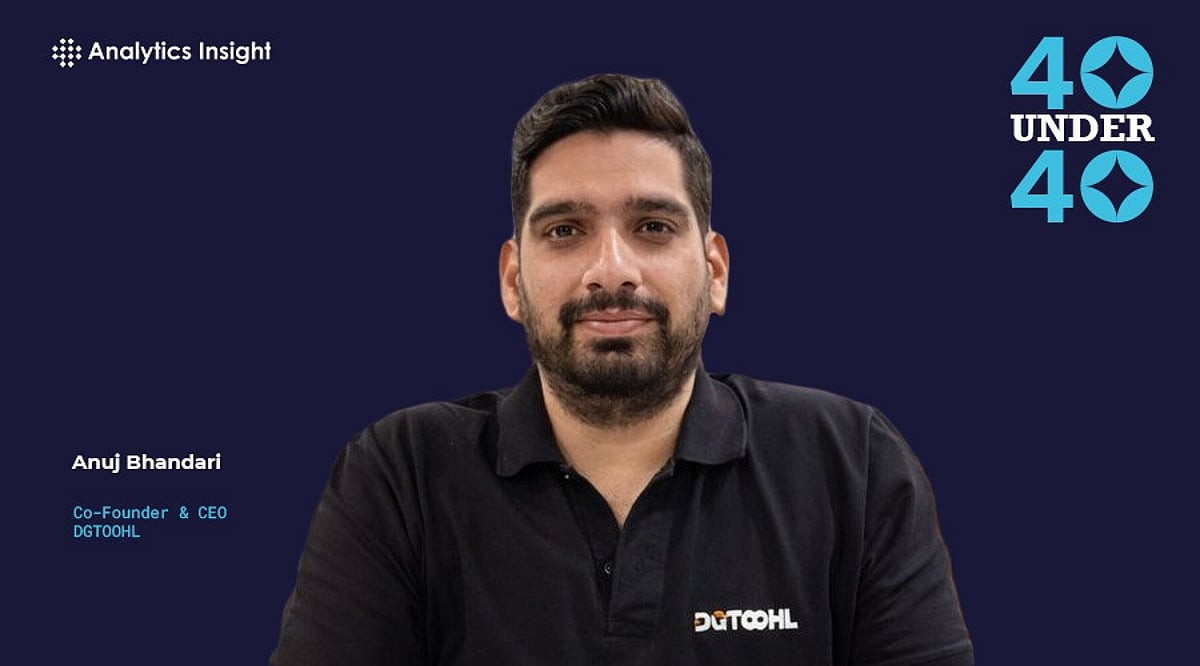
  • How Anuj Bhandari and DGTOOHL Are Revolutionizing India’s Outdoor Advertising with Programmatic DOOH

    How Anuj Bhandari and DGTOOHL Are Revolutionizing India’s Outdoor Advertising with Programmatic DOOH

    Anuj Bhandari is redefining outdoor advertising through data and automation. His vision for DGTOOHL focuses on making digital out-of-home (DOOH) campaigns smarter, measurable, and transparent. By combining technology with audience intelligence, he is helping shape the future of India’s advertising ecosystem.

    Interview with Anuj Bhandari

    Q: Can you briefly introduce yourself and your entrepreneurial journey?

    My entrepreneurial journey started early in my career. I was fortunate to work with leaders who entrusted me with entrepreneurial responsibilities from the outset, encouraging me to think like a business owner rather than just an employee. Those experiences gave me the confidence to build, innovate, and take ownership. Later, I became the Co-founder and Business Head of my previous organization, where I was responsible for driving business operations across multiple verticals. That role deepened my understanding of building scalable businesses, nurturing client relationships, and leading high-performing teams.

    One belief has consistently guided my journey: that technology has the power to transform even the most traditional industries. The COVID-19 pandemic accelerated digital adoption across sectors and reinforced this conviction. Having spent over two decades in the media, advertising, and Out-of-Home (OOH) industry, I witnessed how digital transformation reshaped almost every advertising medium, while outdoor advertising remained largely untapped.

    That realization inspired me to launch DGTOOHL. Our vision is to build an intelligent, programmatic Digital Out-of-Home (pDOOH) platform that empowers advertisers, agencies, and media owners with automation, data-driven decision-making, and measurable outcomes. Every milestone we’ve achieved has strengthened my belief that meaningful innovation comes from solving real industry challenges while creating long-term value for the entire ecosystem.

    Q: What inspired you to launch DGTOOHL?

    The inspiration to launch DGTOOHL came from recognizing the immense untapped potential of the outdoor advertising industry. While digital advertising had evolved into a highly automated, measurable, and audience-driven medium, Out-of-Home (OOH) advertising continued to rely largely on manual processes. The COVID-19 pandemic became a defining moment in my career. It fundamentally changed the way advertisers evaluated media investments, with accountability, verification, and measurability becoming essential across every channel.

    I saw an opportunity to bridge this gap by building a platform that connects advertisers with digital screens in real time, making outdoor advertising smarter, more accessible, transparent, and measurable. DGTOOHL was founded with the vision of accelerating the adoption of programmatic Digital Out-of-Home (pDOOH) in India while empowering media owners to maximize the value of their inventory and enabling brands to execute more intelligent, data-driven campaigns.

    Q: What problem is DGTOOHL solving in the outdoor advertising industry?

    DGTOOHL was founded to address one of the biggest gaps in the outdoor advertising industry: the lack of measurability, transparency, and data-driven decision-making. While digital advertising has long enabled marketers to target specific audiences, optimize campaigns in real time, and measure performance, traditional OOH has largely relied on estimates, manual planning, and static inventory. DGTOOHL bridges this gap by transforming outdoor advertising into an intelligent, measurable, and programmatic medium. Its platform combines geospatial intelligence, audience movement data, real-time inventory, and automation to help brands identify the right locations, reach the right audiences, and accurately measure campaign outcomes.

    Beyond improving campaign effectiveness, DGTOOHL is also solving the industry’s accountability challenge. By providing verified impressions, real-time performance insights, audience analytics, and attribution models, the platform gives marketers greater confidence in their media investments and allows them to connect offline exposure with business outcomes. Ultimately, DGTOOHL is redefining outdoor advertising from a static branding medium into a dynamic, data-driven communication channel that integrates seamlessly with omnichannel marketing strategies.

    Q: How has your experience in OOH advertising shaped your leadership style?

    My experience in the OOH industry has primarily taught me resilience. It is an industry that has traditionally evolved at a slower pace, where change often requires challenging long-established practices and mindsets. Building something new in such an environment demands patience, persistence, and the ability to keep moving forward despite setbacks. These experiences have shaped my leadership style. I believe in staying focused on the larger vision rather than short-term competition. While competition is inevitable, I strongly believe that the industry’s real opportunity lies in creating a larger, technology-driven ecosystem that benefits advertisers, agencies, media owners, and consumers alike.

    Q: What makes DGTOOHL stand out from other players in the market?

    What truly differentiates DGTOOHL is our ecosystem-first approach. Our vision has never been to build just another DSP or SSP; we believe that technology alone is not a differentiator anymore. Many companies today have similar capabilities. Our focus is on accelerating the growth of the programmatic Digital Out-of-Home (pDOOH) ecosystem in India through collaboration rather than isolation. We actively work towards integrating with multiple DSPs and industry partners to ensure advertisers have access to the most relevant, high-quality, and impactful inventory across the country.

    Q: What has been the biggest challenge in building DGTOOHL, and how did you overcome it?

    One of the biggest challenges has been driving industry adoption. Since programmatic Digital Out-of-Home (pDOOH) is still an emerging space in India, convincing publishers to view it as a sustainable, mainstream revenue channel rather than an occasional source of incremental income required significant education and engagement. Similarly, encouraging advertisers and agencies to embrace a new way of planning and buying outdoor media took time. We addressed these challenges by staying consistent, demonstrating measurable value, and building strong partnerships instead of simply selling technology. Today, the conversation has shifted. We regularly receive inbound enquiries from publishers, agencies, and brands looking to explore programmatic opportunities.

    Q: What achievement in your career are you most proud of so far?

    I believe the biggest achievement is still ahead of me. As an entrepreneur, I don’t think the journey is ever complete; every milestone simply becomes the foundation for the next one. That said, earning the confidence and trust of global technology leaders like Google is certainly among the achievements I value the most. It validates our vision, our technology, and the work we’ve put into building DGTOOHL. More importantly, it reinforces our belief that an Indian company can build world-class solutions that contribute meaningfully to the global evolution of programmatic Digital Out-of-Home (pDOOH).

    Q: What advice would you give to aspiring entrepreneurs looking to build a technology-driven business?

    If I had to give just one piece of advice, it would be this: always have a business co-founder. Technology can build a great product, but building a successful business requires much more than that. You need someone who complements your strengths, challenges your thinking, shares the highs and lows of entrepreneurship, and focuses on customers, partnerships, and growth while the product continues to evolve.

  • Understanding Context Management in AI: An Enterprise Guide

    Understanding Context Management in AI: An Enterprise Guide

    Many AI agents look flawless in a demo—clear answers, correct citation, obedient behavior. Yet once deployed, they drift: answers become inconsistent, hard to trace, and sometimes simply wrong.

    The gap is often context. An AI agent can only reason over the information it sees, and enterprise data lives across scattered systems with different owners, policies, and formats.

    Context management is the discipline of delivering the right, governed information to a model exactly when it needs it. When done well, it makes AI outputs more reliable and auditable.

    What Context Management Actually Means

    Start with the context window: the working memory a model uses for a single request—filled with instructions, history, references, and tool outputs.

    Context management is the enterprise capability that decides what enters that window. As defined by TechTarget, a context layer sits between enterprise data systems and AI orchestration, supplying decision rationale, business rules, and relationships at inference time.

    In short, context management is about sourcing, authorizing, and delivering trustworthy context at runtime—not just writing a better prompt.

    Context Management vs. Context Engineering

    Context engineering is prompt-level work. It selects and shapes what a single request contains to improve the answer.

    Context management is broader. It covers where context comes from, how it is governed, who can see it, and how it reaches the model.

    DataHub describes context management as an organization-wide capability that delivers relevant, governed context to AI context windows, separate from one-off prompt tweaks. This distinction matters because it separates reusable governance from ad hoc prompt tuning.

    Why This Matters Now

    Interest in agentic AI is high, but production maturity remains low. Several developments explain the urgency:

    • Native context layers are arriving. AWS introduced AWS Context, which maps data and business logic into a knowledge graph with identity-aware queries and built-in governance.
    • Governance gaps stall projects. A Deloitte survey found that only 25% of organizations have moved 40% or more of AI pilots to production, and just 21% report mature agent governance.

    How a Context Layer Works

    A governed context layer is less a single product and more a set of capabilities. Common components include:

    Context Graph

    Captures relationships, definitions, and lineage across your data estate. It helps an agent understand what an entity is and how records connect.

    Policy-Aware Retrieval

    Retrieval should respect identity and access rules. The agent only sees what the requesting user is authorized to see.

    Provenance and Audit

    Every piece of delivered context must be traceable, enabling review after the fact.

    Delivery Through a Standard

    The Model Context Protocol (MCP) is an open-source standard for connecting AI applications to external data, tools, and workflows. Its documentation describes MCP as a “USB-C port for AI applications,” defining tools, resources, and prompts for governed context delivery.

    An Implementation Playbook

    1. Inventory context sources and owners. Know what exists, who owns it, and its sensitivity.
    2. Pick one high-stakes workflow. Choose a pilot where accuracy and auditability are critical.
    3. Model definitions first. Agree on shared definitions and entity resolution before scaling retrieval.
    4. Enforce identity-aware retrieval and logging. Build access rules and audit trails from the start.
    5. Standardize delivery. Use MCP so agents connect consistently.
    6. Build evaluation loops. Test for accuracy and watch for context drift.
    7. Plan for federated ownership. Distribute responsibility to the teams closest to each domain.

    Strong AI governance threads through every step, because access control and audit are what let teams trust agent output.

    Tooling Landscape and What to Evaluate

    Several product categories address context management. Consider them complementary:

    • Context platforms – deliver governed context to agents.
    • Data catalogs – add semantic definitions, lineage, and AI governance.
    • Orchestration frameworks – coordinate agents and tool calls.
    • MCP servers – expose sources through a common protocol.

    When comparing options, check for: governance at retrieval, lineage tracking, access control, drift detection, and MCP support.

    Where to Start

    Context management is not a single tool you buy once. It’s a capability you build around the data and workflows that matter most.

    Begin with one workflow, model your definitions, enforce identity-aware retrieval, and log everything. Standardize delivery through MCP so you don’t rebuild connections for every agent.

    The payoff: agents that behave predictably and can be explained after the fact. That reliability turns a promising pilot into a production-ready system.

    FAQ

    What is the goal of context management in AI?
    To give an AI system the right approved information for a task while keeping access, lineage, and audit controls visible.

    Is context management the same as prompt engineering?
    No. Prompt engineering shapes one request; context management governs the reusable data, rules, and delivery paths that feed many AI workflows.

  • Dan Moore on AI, Robotics, and the New Frontier of Creative Expression

    Dan Moore on AI, Robotics, and the New Frontier of Creative Expression

    Introduction

    Dan Moore is an artist, designer, technologist, and educator working at the intersection of art, technology, and culture. His practice explores what it means to create alongside machines, treating AI not simply as a tool, but as a collaborator in the production of images, objects, performances, and systems.

    Moore is a Senior Technical Artist at NVIDIA, where he works with real-time graphics, generative AI, robotics, simulation, and creative production technologies. In this role, he bridges artistic practice and advanced technical systems, helping translate emerging tools into workflows for artists, designers, and creative teams.

    Moore’s independent work spans painting, textiles, time-based media, robotics, and interactive installations. His projects examine distributed authorship, machine agency, and the shifting relationship between human intuition and computational process. Among his notable works are AI-generated painting series, live generative fashion through GLITCHWEAR, robotic performance works, and The Great American Pastime: Berra and the Bronx Legends, an AI-driven infinite baseball broadcast commissioned by the Yogi Berra Museum.

    Moore also teaches creative technology at The New School, helping students understand code, AI, and digital systems as expressive materials.

    The Interview

    Q: Please introduce yourself and tell us about your journey.

    A: I am Dan Moore, an artist, technologist, and educator working with AI, robotics, and generative systems. I am also a Senior Technical Artist at NVIDIA. My journey has always moved between engineering and art. Early in my career, I became fascinated by tangible interaction and computational media, leading to projects involving robot arms, large-scale interactive installations, real-time graphics, and later generative AI. My practice has expanded from building tools into making cultural works that question authorship, agency, and collaboration between humans and machines. I also teach at The New School, where I work with students to think critically about software, AI, and the social impact of technology.

    Q: What inspired you to pursue a career in creative technology?

    A: I’m bored by technology that’s just functional. I’m drawn to the expressive, the strange, and the emotionally resonant. Creative technology lets me smash engineering discipline into artistic curiosity. The most interesting moment is when a machine does something I didn’t predict. In most fields, that’s an error; in mine, it’s the point. That discovery keeps me moving. Whether at NVIDIA, in my studio, or in the classroom, I treat creative technology as a way for artists to hijack the future of tools and culture before they’re handed to us as finished products.

    Q: What achievement are you most proud of?

    A: I’m proud of building a practice that refuses to sit still. The Great American Pastime series is a highlight. It won the 2025 AI Creative Future Award for turning fictional baseball into an infinite, AI-generated radio broadcast. I also value my time as an educator. Teaching students that code and AI are raw, expressive materials is as vital to me as the work I hang on a gallery wall.

    Q: What has been the most exciting project you’ve worked on so far, and why does it stand out?

    A: GLITCHWEAR. It’s a live generative system that knits one-of-one garments from a visual stream that never repeats. The project stands out because it rethinks fashion as a time-based medium. A garment is no longer just designed, selected, and reproduced—it is encountered, coming from a specific moment in a system that will never repeat in the same way. GLITCHWEAR brings together generative art, real-time graphics, textile production, e-commerce, and physical craft.

    Q: How do you see AI and real-time technologies changing the future of creative industries?

    A: AI and real-time technologies are shifting the role of the creator from someone who only makes final artifacts to someone who designs systems, behaviors, prompts, constraints, and relationships. The future of creative work will involve building living systems that can generate, respond, adapt, and evolve. At NVIDIA, I see how real-time tools, simulation, and generative AI are already changing creative production, making it more immediate, iterative, and performative. AI will not replace creativity, but it will change where creativity happens.

    Q: What advice would you give to aspiring innovators?

    A: Do not wait for permission. The best way to understand emerging technology is to use it, break it, misuse it, and push it into places it was not designed to go. Don’t define yourself too narrowly—learn enough engineering to build your ideas, enough art to question them, and enough culture to understand why they matter. Innovation is not just using the newest tool; it’s asking a better question. Protect your curiosity and stay open to surprise.

    Q: What emerging technology excites you the most?

    A: I’m most excited by the convergence of AI, robotics, and real-time simulation. The next major shift will happen when intelligent systems move more directly into physical space. Robotics forces AI to deal with the material world—movement, balance, force, timing, and failure. Combined with real-time simulation and generative models, we can create machines that improvise behaviors, not just execute instructions. This convergence opens incredible possibilities for performance, installation, manufacturing, fashion, and public art.

    Q: What is one challenge you’ve faced in your career, and how did you overcome it?

    A: One challenge has been learning to work in fields that do not always share the same language—art, engineering, fashion, education, and technology all have different expectations. I overcame that by treating translation as part of the practice. Innovation is not only about making something new; it’s also about helping people understand why the new thing matters. Communication, framing, and storytelling are as important as the technical execution.

    Additional Insight

    One thing I would add is that the future of creative technology depends on artists being deeply involved in the development of emerging tools. AI and robotics should not only be shaped by efficiency and automation—they should also be shaped by questions of meaning, authorship, beauty, culture, and human experience. Artists reveal what a technology is really doing beneath its surface, exposing assumptions and turning failures into new forms of expression. As AI becomes more embedded in daily life, creative practitioners will be essential in helping society understand not only what machines can do, but what we want them to become.