
Author: vitorcherulli

  • Colossal Biosciences Eyes $20 Billion Valuation as De-Extinction Efforts Gain Investor Momentum

    Colossal Biosciences Eyes $20 Billion Valuation as De-Extinction Efforts Gain Investor Momentum

    Colossal Biosciences, the U.S. biotechnology company working to resurrect extinct species such as the woolly mammoth and the dire wolf, is reportedly in talks to raise new capital at a valuation of at least $20 billion. According to a report by Axios, the funding round could value the Dallas-based startup between $20 billion and $30 billion, nearly doubling its $10.2 billion valuation from early 2025. While the lead investor has not been disclosed, discussions have been ongoing for months and are said to be nearing completion.

    From Ambitious Science to Commercial Growth

    Founded in 2021 by entrepreneur Ben Lamm and Harvard geneticist George Church, Colossal is known for its “de-extinction” technology, which uses gene-editing techniques to recreate the traits of species that vanished thousands of years ago. Unlike its previous funding round when the company was pre-revenue, Colossal is now generating income — a significant shift in its business model. Investors view its technology as applicable beyond wildlife conservation, extending to pharmaceuticals, biodiversity preservation, climate adaptation, and longevity research.

    Recently, Colossal announced it had successfully hatched chicks from artificial eggs, a step toward reviving the extinct giant moa bird. CEO Ben Lamm has stated that the company plans to develop an artificial womb for mammals within the next year.

    Conservation Mission Draws Investor Interest

    Beyond de-extinction, Colossal collaborates with governments and research institutions to preserve the genetic material of endangered species. It has also spun off two businesses focused on plastic degradation and DNA analytics, broadening its commercial portfolio. The fundraising effort comes amid growing investor appetite for deep-tech startups, driven by advances in artificial intelligence, biotechnology, and climate innovation.

    Critics Urge Caution

    Despite billions in funding, Colossal remains under close scrutiny from scientists and conservation experts. Some critics argue that bringing back extinct animals generates headlines but does little to address the immediate threats facing living species. Others worry about ecological ripple effects: if genetically engineered animals are reintroduced into current ecosystems, they could disrupt food webs or compete with existing species. Colossal maintains that the technologies developed for de-extinction are also designed to bolster protection programs for species that still exist.
  • Google’s ‘Frozen v2’ Chip Targets Gemini AI Efficiency Gains, Deployment Targeted for 2028

    Google’s ‘Frozen v2’ Chip Targets Gemini AI Efficiency Gains, Deployment Targeted for 2028

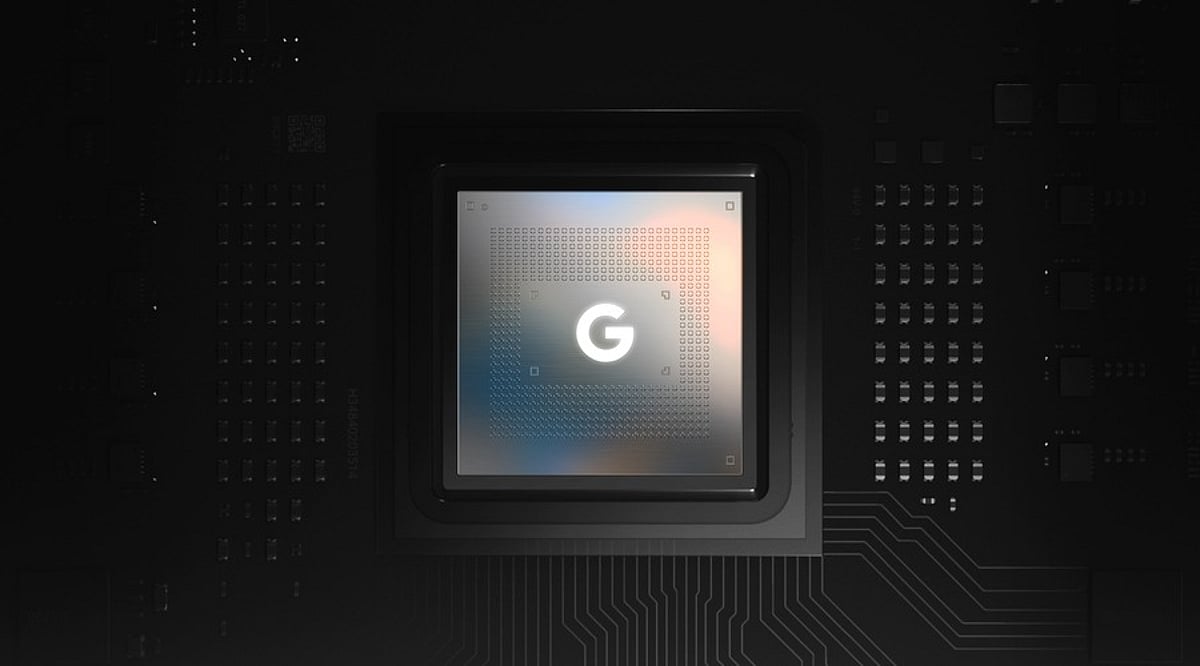
    Google is reportedly developing a new server chip optimized specifically for its Gemini artificial intelligence models. Internally referred to as ‘Frozen v2’, the chip is designed to integrate core elements of Gemini’s architecture directly into the hardware, according to a report from The Information.

    This initiative underscores Google’s strategy to build bespoke infrastructure for its AI services. As demand for Gemini accelerates, the company aims to increase AI output while reducing computing power and electricity consumption.

    Frozen v2 Could Deliver Major Efficiency Gains

    The proposed chip is expected to minimize data movement and processing decisions during AI inference. These improvements would enhance the efficiency of serving Gemini models to users.

    According to the report, “Frozen v2 could deliver six to 10 times greater efficiency than Google’s latest custom AI chips when measured by the number of AI tokens generated per unit of power. Engineers are still working on the final design and deciding how much of the Gemini model architecture should be hardwired into the chip.”

    Google may deploy the new chip as early as 2028, though the timeline could shift as development continues. The company has not made any official statement. Notably, the Frozen project is intended to complement Google’s existing Tensor Processing Units (TPUs) rather than replace them, potentially creating a family of chips for AI processing.

    AI Computing Shortage Drives Infrastructure Push

    The chip development comes amid mounting pressure on Google’s AI computing capacity. Surging demand for Gemini services has reportedly caused internal strain and forced Google Cloud to turn down some external deals.

    A semiconductor chip based on Gemini would allow Google to perform more AI tasks with fewer computing resources, and also reduce the energy costs associated with generating AI tokens.

    Google’s overall strategy involves custom TPUs and other in-house semiconductors. The Frozen v2 version would be even more specialized by embedding architectural elements into the chip.

  • Trump Accepts Ethics Framework for Crypto CLARITY Act, Potentially Unlocking Senate Vote

    Trump Accepts Ethics Framework for Crypto CLARITY Act, Potentially Unlocking Senate Vote

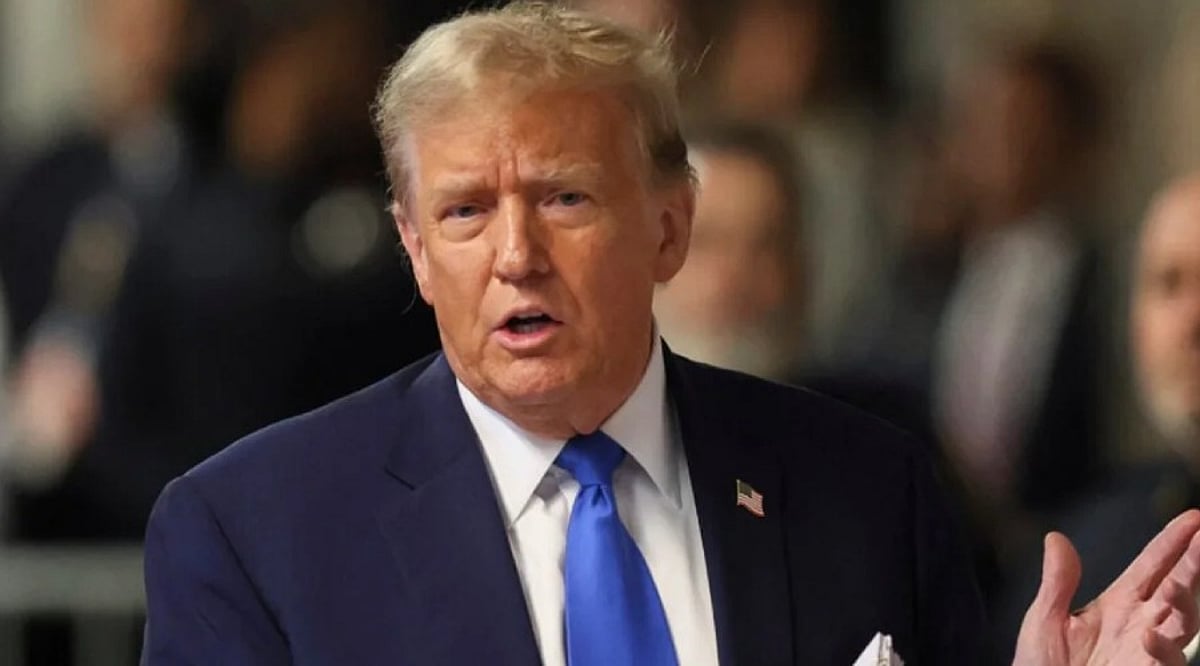
    Former President Donald Trump has reportedly accepted an ethics framework tied to the Digital Asset Market Clarity Act (CLARITY Act), a move that could break a key deadlock in Senate negotiations. However, as of late July, the agreement remains unconfirmed and its language has not been publicly released, leaving a potential vote uncertain before the August recess.

    Ethics Rules Aimed at Conflicts of Interest

    Negotiators have proposed restrictions covering senior federal officials—including presidents, vice presidents, and lawmakers—to prevent them from profiting personally from digital assets while shaping industry policy. The reported framework would address profits from crypto ventures, but without the published text, the scope remains unclear. It is unknown whether the rules would apply to family members, existing holdings, new token launches, promotional income, or assets held in trusts. Enforcement mechanisms also remain undefined, including which agency would investigate violations and what penalties would apply.

    Trump’s Crypto Income Fuels Ethics Debate

    The ethics dispute intensified after Trump’s latest financial disclosures revealed that his family’s crypto ventures generated approximately $1.4 billion of his income in 2025. Senior Senate Democrats argued that the legislation could expand the value of crypto businesses linked to senior officials, calling for stronger conflict-of-interest safeguards. Trump dismissed the concerns in a July 2 CNBC interview, stating that his children manage his businesses and that the income was ‘nothing illegal.’ The White House has maintained that Trump does not oversee daily operations, though critics counter that transferring management does not remove his financial interest.

    Senate Faces Tight Timeline

    The House passed H.R. 3633 on July 17, 2025, by a 294-134 vote, and the Senate Banking Committee advanced its version on May 14, 2026, by a 15-9 vote. The legislation would split crypto oversight between the Securities and Exchange Commission (SEC) and the Commodity Futures Trading Commission (CFTC) and establish federal rules for exchanges and intermediaries. Senate leaders have not yet scheduled a floor vote, and the August state work period begins August 10, leaving a narrow window. Even with an ethics agreement, lawmakers still face disputes over decentralized finance, illicit-finance controls, and developer protections. Any changes to the House version would require approval from both chambers before the bill can reach Trump’s desk.

    What’s Next

    The next critical step is the publication of revised legislative text. If the reported ethics framework is converted into enforceable provisions and garners bipartisan support, the Senate could move forward. Until then, the agreement remains a political understanding rather than a completed amendment.

  • Meesho Denies GST Allegations, States No SEBI Notice Received

    Meesho Denies GST Allegations, States No SEBI Notice Received

    Meesho has denied allegations concerning its Goods and Services Tax (GST) treatment, following reports that proxy advisory firm InGovern had asked the Securities and Exchange Board of India (SEBI) to review the company’s tax practices. The e-commerce platform clarified that it has not received any notice or communication from SEBI or any other regulatory body.

    The controversy emerged after ET Now reported that InGovern raised concerns about Meesho’s GST treatment. The representation to SEBI reportedly highlighted potential financial, disclosure, and regulatory risks linked to the company’s tax position. However, there is no confirmation that SEBI has initiated an investigation or requested clarification from Meesho.

    A Meesho spokesperson stated, “Meesho rejects the claims in this representation, which reflects no finding by SEBI or any tax authority. We have not received any communication from SEBI or any regulator on this matter.” The spokesperson added that the company remains confident in its tax position, asserting that its GST treatment complies with the existing legal framework and that it continues to meet all disclosure requirements.

    Meesho also questioned the authenticity of the documents attached to the representation. According to the company, the sample invoice included in the complaint appears to belong to an Amazon employee whose LinkedIn profile identifies the person as a finance manager. This raises questions about the credibility of the supporting material.

    The issue arises at a time when Meesho is already contesting a separate GST demand of Rs. 14.29 crore. Despite the latest allegations, the company reiterated that it has received no communication from any regulator. SEBI has not yet issued any public statement on the matter.

  • Google Employees Mobilize: 4,500+ Sign Petition to CEO Sundar Pichai Over AI-Driven Job Security Fears

    Google Employees Mobilize: 4,500+ Sign Petition to CEO Sundar Pichai Over AI-Driven Job Security Fears

    More than 4,500 Google employees have formally petitioned CEO Sundar Pichai, urging the company to implement stronger job protections as it ramps up investment in artificial intelligence. The petition, delivered by members of the Alphabet Workers Union, represents one of the largest employee-led movements in the company’s recent history.

    The workers’ concerns center on the growing disconnect between Google’s aggressive AI expansion and the ongoing layoffs affecting staff worldwide. The petition demands concrete measures, including guaranteed severance packages, voluntary buyout options before any compulsory layoffs, and reforms to Google’s performance review system.

    Alphabet Workers Union President Parul Koul criticized the company’s priorities, stating, "These layoffs and cuts are not difficult decisions, but simply profit being put over the people that make this company run." Koul accused Google of valuing shareholder returns above employee welfare, despite the company’s rising share price.

    Google has not announced any new layoffs directly linked to the petition. In previous statements, the company has maintained that AI is designed to enhance worker productivity, not replace human roles. However, the petition underscores persistent anxiety among employees as Google deepens its AI commitments.

    The movement gained further visibility when approximately 100 employees gathered outside Google’s campus to show solidarity. The petition has been delivered to Pichai’s office, signaling a clear demand for leadership to address job security in the age of AI.

  • London Stock Exchange to Launch Overnight Trading Platform LSE 24 in 2027

    London Stock Exchange to Launch Overnight Trading Platform LSE 24 in 2027

    The London Stock Exchange (LSE) has announced plans to launch a new overnight trading platform called LSE 24 in the first half of 2027. The initiative aims to provide global investors with extended access to exchange-traded products (ETPs), offering greater flexibility and enhanced liquidity across different time zones.

    LSE 24 will operate as a separate trading venue, with sessions running from 5:00 PM to 7:50 AM GMT, including a 30-minute intermission at 6:30 PM and 7:00 PM for end-of-day processing. The main exchange will continue its regular trading hours from 8:00 AM to 4:30 PM. Initially, the platform will focus on ETPs that track UK and US equity indices, with potential expansion to other asset classes in the future.

    The move comes as global exchanges increasingly extend their trading hours to meet investor demand for round-the-clock access to financial markets. Nasdaq is planning to expand trading to 23 hours on weekdays, while CME already offers 24-hour trading for cryptocurrency futures and options. LSE’s decision reflects a broader trend toward continuous market access, particularly driven by retail investors from Asia who seek the same flexibility as cryptocurrency markets provide.

    By enabling trading outside regular hours, LSE 24 allows investors to respond to overnight news and events, manage risk more effectively, and participate in global markets regardless of their time zone. The exchange expects the platform to strengthen its competitive position and attract a wider range of international participants.

  • Redmi 17 4G Appears on EU Database with 7,500mAh Battery and 45W Fast Charging

    Redmi 17 4G Appears on EU Database with 7,500mAh Battery and 45W Fast Charging

    The Redmi 17 4G has been spotted on the European Union’s European Product Registry for Energy Labelling (EPREL) database, giving the clearest preview yet of Xiaomi’s upcoming budget smartphone. Although the company has not officially announced the device, the listing reveals key details about its battery, charging speed, and durability.

    Certification listings often disclose specifications before a launch, and the Redmi 17 4G is no exception.

    Massive Battery Could Be the Star Feature

    According to the EPREL entry, the Redmi 17 4G carries the model number 2606FRN72Y. The certification suggests the phone will pack a 7,500mAh battery with support for 45W fast charging, delivering up to 73 hours and 54 minutes of battery life on a single charge.

    Additionally, the battery is expected to retain 80% of its original capacity after 1,000 charge-discharge cycles, ensuring consistent performance over years of use. This long-lasting battery could be the device’s biggest selling point.

    Durability Details Emerge

    The Redmi 17 4G appears to be dust- and splash-proof, earning an IP65 rating. Under EU testing requirements, the phone received a ‘B’ rating for free-fall durability and energy efficiency, and a ‘C’ rating for ease of repair.

    What Else to Expect

    Earlier reports indicate the Redmi 17 4G may feature a 6.9-inch display with a 120Hz refresh rate and be powered by the MediaTek Helio G91 Ultra chipset. The phone is expected to come with up to 6GB of RAM and 256GB of internal storage. For photography, it is rumored to include a 50MP rear camera and an 8MP front-facing sensor.

    Launch Timeline Still Unknown

    Xiaomi has not yet announced a launch date for the Redmi 17 4G. However, devices typically appear in certification databases shortly before release, suggesting an official announcement could be imminent. Based on the EPREL listing, this appears to be a budget-oriented device focused on delivering exceptional battery life.

  • Nigeria Establishes Virtual Asset Council to Regulate Crypto Market and Curb Fraud

    Nigeria Establishes Virtual Asset Council to Regulate Crypto Market and Curb Fraud

    Nigeria has taken a major step toward bringing order to its rapidly expanding cryptocurrency market. President Bola Tinubu signed an executive order on July 17, establishing a Virtual Asset Council that will coordinate regulatory efforts across multiple government agencies, protect digital asset users, and crack down on fraudulent activities.

    The newly formed council brings together key regulatory bodies, including the Central Bank of Nigeria (CBN), the Securities and Exchange Commission (SEC), the Nigeria Revenue Service, the Nigerian Financial Intelligence Unit, and the Office of the National Security Adviser. A dedicated Virtual Asset Office within the CBN will oversee the council’s daily operations and facilitate rapid information sharing among agencies.

    Under the new framework, crypto businesses will register based on the specific services they offer—such as trading, payments, or custody. The SEC will oversee crypto assets classified as securities, while the CBN will supervise crypto payment systems and related services. This clear division of responsibilities is designed to close legal loopholes and simplify compliance.

    “Too often, unregistered and fraudulent operators have exploited these gaps to prey on unsuspecting Nigerians, costing families their savings,” the Presidency stated, explaining the need for the new system.

    Nigeria also plans to release new tax guidelines for digital assets and launch a regulatory sandbox where blockchain companies can test new products under government supervision. The Virtual Asset Council is tasked with preparing detailed rules within 30 days. Meanwhile, lawmakers are considering a new bill that could introduce stricter licensing and compliance requirements for crypto businesses.

  • Bitcoin Surges Past $65K as Chip Stocks Rebound and ETF Inflows Resume

    Bitcoin Surges Past $65K as Chip Stocks Rebound and ETF Inflows Resume

    Bitcoin climbed to a two-week high near $65,500 on Tuesday, fueled by a recovery in Asian chip stocks and renewed demand for U.S. spot Bitcoin ETFs. The cryptocurrency rose about 1% during the session and 5% over the past seven days, with daily trading volume approaching $33 billion as risk appetite improved across global markets.

    Asian Markets Lead the Recovery

    The MSCI Asia-Pacific gauge gained approximately 2%, snapping a three-session losing streak. Semiconductor shares led the rebound after a broad technology selloff. South Korea’s Kospi surged more than 3%, with Samsung Electronics and SK Hynix advancing. Taiwan’s Taiex climbed over 4% as Taiwan Semiconductor Manufacturing Company (TSMC) recovered. Japan’s Nikkei 225 also rose more than 3%, with chip-related companies like Kioxia, Advantest, and SoftBank among the strongest performers. The recovery followed concerns about high valuations in artificial intelligence and a pullback in global tech stocks.

    Major Cryptocurrencies Follow Bitcoin Higher

    At the time of writing, Bitcoin traded near $65,245, gaining 1.23% in 24 hours and 5.02% over the week, with daily volume around $32.18 billion. Other major cryptocurrencies also advanced: Ethereum hovered near $1,901, XRP stood at about $1.11, Solana traded near $77.73, BNB around $571, and Hyperliquid near $62.49. Dogecoin traded near $0.073 as the broader market recovered.

    ETF Inflows Add Momentum

    U.S. spot Bitcoin ETFs recorded $226.9 million in net inflows on Monday, marking the fifth consecutive session of positive flows and bringing total inflows to approximately $727.3 million over that period. This renewed buying comes after a difficult stretch in which more than $4 billion exited the funds during June, and a 13-session outflow streak removed about $4.37 billion between May and early June. During those outflows, large Bitcoin wallets accumulated roughly 270,000 BTC (valued at about $16.7 billion), providing additional demand support. The combination of ETF inflows and whale accumulation has reinforced Bitcoin’s recovery from the June low near $58,000–$60,000.

    Oil Prices and Geopolitics Support Risk Sentiment

    Oil prices also supported risk appetite. Brent crude fell about 1% toward $88 after reports of a proposed 10-day ceasefire between the United States and Iran. Although fighting remained active with no confirmed agreement, lower oil prices eased some market pressure that had weighed on sentiment over the previous two sessions.

    Outlook

    Bitcoin’s rise near $65,500 follows stronger chip stocks, lower oil prices, and renewed spot Bitcoin ETF inflows. Large wallet accumulation also supported demand after months of withdrawals. Investors should monitor ETF activity and broader risk markets for signs that the recovery can continue.

  • Apple A20 Pro Chip Leak: 2nm Process and WMCM Packaging Could Power iPhone 18 Pro

    Apple A20 Pro Chip Leak: 2nm Process and WMCM Packaging Could Power iPhone 18 Pro

    Apple’s next-generation A20 Pro chip could be one of the biggest upgrades coming to the iPhone 18 Pro lineup, according to a new report. While Apple has not confirmed any details, early leaks suggest the chipset will introduce two major architectural changes aimed at improving performance, battery life, and on-device AI capabilities.

    2nm Process Could Improve Speed and Efficiency

    The A20 Pro is expected to be built using TSMC’s 2nm manufacturing process. If the report is accurate, it will be the first iPhone chip to move beyond the 3nm process used in Apple’s current-generation processors. A smaller fabrication process allows more transistors to fit within the same chip area, which typically translates into better performance while consuming less power. Users could see faster app launches, smoother gaming, and improved battery life during everyday use.

    WMCM Packaging May Be the Bigger Change

    The second upgrade mentioned is the adoption of Wafer-Level Multi Chip Module (WMCM) packaging technology. Unlike traditional PoP packaging, WMCM brings important elements such as processors, memory, and the Neural Engine into close proximity. This is expected to minimize communication delays, improve memory bandwidth, and better manage heat dissipation.

    Designed for the Next Phase of Apple Intelligence

    Apple has continued to enhance its Apple Intelligence technology, and the A20 Pro is believed to include hardware to support future AI applications. By enabling quicker memory access and better processing efficiency, it would be possible to handle more AI tasks directly on the device without relying on cloud servers.

    Apple Yet to Announce the Chip

    The A20 Pro processor remains a rumor, and Apple has not announced any specifications or confirmed the iPhone 18 Pro series. If the leaks turn out to be true, it would be one of the biggest architectural advancements in Apple’s iPhone processors in recent years. More information can be expected once Apple officially reveals the iPhone 18 Pro series.