Author: vitorcherulli

  • India’s First Hydrogen Train to Launch on July 17 with PM Modi Inauguration

    India’s First Hydrogen Train to Launch on July 17 with PM Modi Inauguration

    India is set to mark a significant milestone in green mobility as Prime Minister Narendra Modi is expected to flag off the country’s first hydrogen-powered passenger train on July 17. The train will operate on the Jind-Sonipat route in Haryana, under the Northern Railway zone, showcasing Indian Railways’ commitment to clean energy and sustainable transport.

    The hydrogen train utilizes fuel cell technology, where electricity is generated through a chemical reaction between hydrogen and oxygen. Unlike conventional diesel locomotives, this system emits only water vapor and heat, making it a zero-emission solution during operation. This technology is gaining traction globally, particularly for routes where full electrification is not feasible.

    The train will be equipped with modern passenger amenities, though specific details regarding speed and passenger capacity have not yet been disclosed by Indian Railways. Given hydrogen’s high combustibility, the project incorporates dedicated systems for fuel storage, handling, and onboard safety measures. Officials have confirmed that the hydrogen used will be produced through environmentally sustainable methods.

    The July 17 launch serves as a pilot for the technology. If the trial yields positive results, Indian Railways plans to expand hydrogen-powered services to additional routes in the coming years. This initiative aligns with the national transporter’s broader strategy to reduce reliance on fossil fuels and increase the use of cleaner energy across its network.

  • WhatsApp Communities Update Hides Numbers from Strangers but Not Admins

    WhatsApp Communities Update Hides Numbers from Strangers but Not Admins

    WhatsApp’s latest update for Communities introduces a privacy feature that allows users to hide their phone numbers from strangers in large groups. However, the feature does not offer complete anonymity. Community admins, saved contacts, and anyone with a previous chat history can still view members’ phone numbers.

    Meta launched this privacy update in July 2023, aiming to protect users during large community discussions. The feature works exclusively within Communities, which can support thousands of members. In standard WhatsApp groups, all participants can still see each other’s phone numbers unless separate privacy settings are applied.

    Meta designed the update to reduce unnecessary exposure while maintaining moderation tools for administrators. Every community admin retains full access to member phone numbers, enabling them to moderate, manage, and communicate as needed. Saved contacts and individuals who have had direct conversations with a member also continue to see phone numbers without restrictions.

    The privacy feature has important limitations that users should consider before joining a Community. If a user joins a standard WhatsApp group, these protections are removed. Additionally, Community privacy never hides numbers from administrators or existing contacts. Members cannot choose specific people who should or should not view their numbers; the system operates under fixed visibility rules rather than custom controls.

    Privacy experts have raised concerns as WhatsApp expands identity protection features. Reporting indicates that username-based messaging, currently under development, could further reduce phone number sharing. However, Indian regulators have expressed concerns about potential impersonation and online fraud risks before a wider rollout.

    WhatsApp’s Community-based privacy rules offer stronger protection than traditional group chats, but the feature should not be viewed as complete anonymity. Members still share phone numbers with admins, trusted contacts, and previous chat connections. This update represents a practical privacy improvement rather than a full identity shield.

  • Realme C100x 4G Debuts in India with Massive 8,000mAh Battery and 120Hz Display at ₹14,999

    Realme C100x 4G Debuts in India with Massive 8,000mAh Battery and 120Hz Display at ₹14,999

    Realme has officially launched the C100x 4G in India, expanding its budget-friendly C-series with a device that packs flagship-level battery life. The smartphone is built around an enormous 8,000mAh Titan Battery, a 120Hz LCD display, and a 50MP AI rear camera, all at an introductory price of ₹14,999.

    Price and Availability

    The Realme C100x 4G is available in a single 4GB RAM + 64GB storage variant for ₹14,999. Buyers can also avail of a ₹500 introductory discount until July 20. Sales begin on July 16 via Flipkart, Realme.com, and authorized retail stores.

    Battery and Charging

    The standout feature is the 8,000mAh battery with 45W fast charging. Realme claims the battery can last up to 1,600 charge cycles and maintain good health for up to seven years. The phone also supports 6W reverse charging for other devices and comes with AI Battery Protection for enhanced safety.

    Display and Durability

    The C100x features a 120Hz LCD panel with 900 nits peak brightness and DC Dimming. The phone measures 8.78mm thick and weighs 219g. It is available in Golden Coast and Deepblue Tide colors. Durability is a key focus: the device boasts ArmorShell Protection, has passed MIL-STD 810H military-grade shock resistance tests, and can withstand front drops onto marble from up to two meters. An IP64 rating for dust and water resistance adds further protection. Additional features include Rain Touch Mode for wet-hand use and a Speaker Cleaner that uses sound vibrations to expel dust and water from the speaker grille.

    Camera and Performance

    On the imaging front, the Realme C100x is equipped with a 50MP AI rear camera and a 5MP front-facing camera. Under the hood, a 12nm octa-core processor scoring 373,800 on AnTuTu handles everyday tasks. The 4GB RAM and 64GB storage configuration is aimed at users who prioritize battery life and essential features over high-end specs.

  • XRP Bullish Sentiment Surges as XRP Ledger Exceeds 8 Million Active Accounts

    XRP Bullish Sentiment Surges as XRP Ledger Exceeds 8 Million Active Accounts

    The XRP Ledger (XRPL) has achieved a significant milestone, surpassing 8 million activated accounts for the first time. This growth comes amid rising bullish sentiment, increased DeFi activity, and a notable shift in stablecoin liquidity toward alternative Layer-1 networks.

    Market Rotation Fuels Altcoin Interest

    Current market data indicates conditions typical of an altcoin season. While Bitcoin dominance has risen above 59% for three consecutive weeks, Ethereum dominance has also gained, lifting the ETH/BTC ratio by over 10% in the past three weeks. This suggests capital is rotating beyond Bitcoin, spreading to other major cryptocurrencies.

    According to AMBCrypto, fear of missing out (FOMO) surrounding XRP and Ethereum has reached its highest level in five weeks, while Bitcoin sentiment remains neutral. XRP currently leads Ethereum in bullish discussions, with a 3.02-to-1 bullish-to-bearish comment ratio compared to Ethereum’s 2.31-to-1.

    On-Chain Activity Strengthens

    The XRP/BTC ratio has been consolidating around the 0.000015 level for nearly 10 weeks, indicating potential long-term accumulation rather than short-term speculation. Meanwhile, on-chain metrics are improving. DeFiLlama data shows total value locked (TVL) on XRPL increased by over 3% in the last 24 hours, while stablecoin supply on the network grew by more than 6%, bringing nearly $1 billion back into the ecosystem.

    In contrast, over $2 billion in stablecoins left the Ethereum network during the same period, suggesting liquidity is shifting toward XRPL and other Layer-1 alternatives. If this trend continues, XRP could benefit from stronger network participation beyond mere sentiment.

    XRPL Crosses Historic User Milestone

    The XRP Ledger has officially exceeded 8 million activated accounts, reaching 8,000,688 wallets. According to XRPScan, these wallets collectively hold 67.526 billion XRP, representing the token’s circulating supply. Unlike previous reports that counted all ever-created wallets (including deleted ones), this milestone counts only activated accounts, marking the first official time the network has achieved this level of active participation.

    With improving DeFi metrics, growing stablecoin liquidity, and extended XRP/BTC consolidation, the network is drawing increased attention. Investors will watch closely to see if these fundamentals translate into sustained market strength.

  • 5 Key Downside Risks Every Bitcoin Investor Must Watch in 2026

    5 Key Downside Risks Every Bitcoin Investor Must Watch in 2026

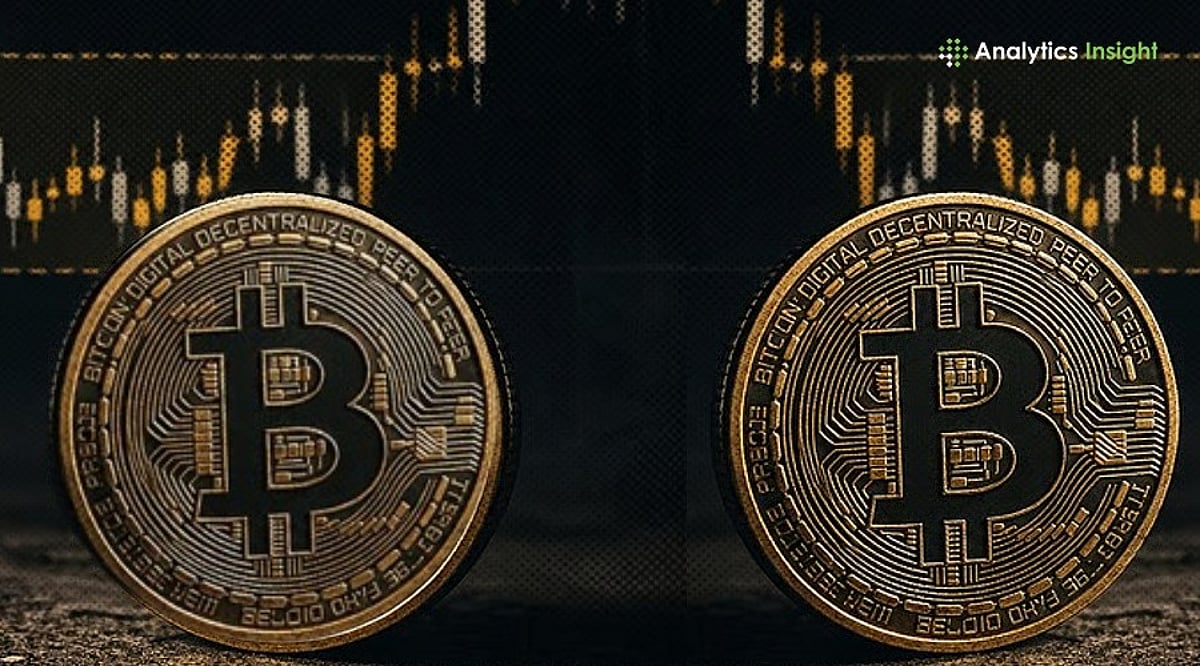
    Bitcoin trades near $64,700–$65,000 in mid-July 2026 after a recovery fueled by better-than-expected US inflation data and strong institutional interest. Yet several downside risks continue to hover over the market. Understanding these factors helps investors prepare for sudden volatility.

    1. Global Economic Pressure

    Macroeconomic conditions heavily influence Bitcoin. Lower inflation expectations recently boosted prices, but any reversal—such as renewed inflation or the Federal Reserve maintaining high interest rates—could drive investors toward safer assets, pulling capital out of crypto.

    2. ETF Money Flows

    Spot Bitcoin ETFs have become a major short-term price driver. Inflows push prices up; outflows pull them down. Recent sessions saw $143 million in inflows after outflows, demonstrating how institutional fund movements can swing the market within hours.

    3. Geopolitical Tensions

    Events in the Middle East have caused temporary sell-offs, pushing Bitcoin to near $62,000. Geopolitical uncertainty often drives investors into traditional safe havens, triggering volatility in cryptocurrencies.

    4. Options Expiry and Profit Booking

    The derivatives market has grown rapidly. A recent $1.4 billion options expiry created sharp price swings as traders adjusted positions. Additionally, profit booking after strong rallies increases selling pressure and can slow upward momentum.

    5. Regulatory Uncertainty

    Governments worldwide continue to develop new rules for taxes, exchanges, stablecoins, and anti-money laundering. Unexpected announcements can quickly shift market sentiment, keeping investors cautious despite improved clarity in some regions.

    Why It Matters: Bitcoin remains an emotional market. Positive catalysts attract buyers; negative headlines spark panic. Institutional adoption and a fixed supply support long-term optimism, but short-term risks demand vigilance.

    Disclaimer: This article is for informational purposes only and does not constitute financial advice. Always conduct your own research before investing.

  • 5 Essential SSD Upgrade Tips to Revitalize Your Laptop’s Speed

    5 Essential SSD Upgrade Tips to Revitalize Your Laptop’s Speed

    Why Upgrade to an SSD?

    Upgrading to a solid-state drive (SSD) is one of the most impactful enhancements you can make to your laptop. Unlike traditional hard disk drives (HDDs), SSDs use flash memory, delivering faster boot times, quicker application launches, improved multitasking, and overall snappier responsiveness. Even an older laptop can feel like new with this simple upgrade.

    1. Check SSD Compatibility

    Before purchasing an SSD, ensure your laptop supports the correct interface and form factor. Older laptops typically require 2.5-inch SATA SSDs, while modern models often accommodate M.2 NVMe drives. Consult your laptop’s specifications or service manual to confirm the maximum storage capacity supported.

    2. Choose the Right SSD Type

    Selecting the appropriate SSD depends on your device and performance needs. SATA SSDs offer excellent value for older systems, while NVMe SSDs provide significantly higher read and write speeds for current laptops. If your laptop supports NVMe, opt for it to enjoy faster boot times, smoother multitasking, and quicker file transfers.

    3. Clone Your Existing Drive

    Rather than reinstalling Windows and all applications, clone your current hard drive to the new SSD. Cloning preserves your operating system, software, settings, and personal files, making the upgrade seamless and time-efficient. Use reliable cloning software and a compatible USB adapter or external enclosure for a safe migration.

    4. Optimize SSD Performance

    After installation, optimize your SSD for long-term performance. Enable TRIM support, update the SSD firmware, and keep at least 10–20% of storage free. These practices help maintain high read/write speeds, improve reliability, reduce performance degradation, and extend the drive’s lifespan.

    5. Buy a Trusted SSD Brand

    Invest in SSDs from reputable manufacturers such as Samsung, Western Digital, Crucial, Kingston, or SK hynix. Reliable brands offer consistent performance, higher endurance ratings, better firmware support, and longer warranties. Choosing a quality SSD ensures dependable operation, especially for users handling large files or intensive workloads.

    Key Takeaways

    An SSD upgrade is a cost-effective way to make your laptop faster and more efficient. Check compatibility, choose the right SSD type, clone your existing drive, optimize system settings, and invest in a trusted brand. Following these five practical tips ensures a smooth upgrade and delivers lasting improvements in speed and productivity.

  • Apple MacBook Neo Review: Budget Laptop with A18 Pro Chip and 13-Inch Liquid Retina Display

    Apple MacBook Neo Review: Budget Laptop with A18 Pro Chip and 13-Inch Liquid Retina Display

    MacBook Neo: Affordable Power for Everyday Use

    The MacBook Neo is Apple’s latest budget-friendly laptop, designed for portability and everyday productivity. It features a compact 13-inch Liquid Retina display, a lightweight build, and the Apple A18 Pro chip, delivering efficient performance and long battery life. Aimed at students, professionals, and everyday users, the MacBook Neo offers a reliable Mac experience at an accessible price point.

    General Specifications

    • Display: 13-inch Liquid Retina
    • Processor: Apple A18 Pro chip
    • Design: Lightweight and travel-friendly
    • Battery: Long-lasting battery life
    • Target Audience: Students, professionals, and everyday users

    Pros and Cons

    Pros

    • Affordable price point
    • Portable and lightweight design
    • Powerful A18 Pro chip
    • Excellent battery life
    • High-quality Liquid Retina display

    Cons

    • Limited to 13-inch screen (no larger option)
    • No dedicated graphics card

    Pricing and Availability

    The MacBook Neo is competitively priced for the budget segment. Check the latest prices and availability:

  • Indian Markets Edge Higher: Nifty Holds 24,112, Sensex Gains 150 Points Amid Mixed Global Cues and US-Iran Tensions

    Indian Markets Edge Higher: Nifty Holds 24,112, Sensex Gains 150 Points Amid Mixed Global Cues and US-Iran Tensions

    Indian benchmark indices opened with modest gains on Wednesday, as traders navigated mixed global cues and ongoing US-Iran tensions. The Nifty 50 opened at 24,112, up 34 points, while the Sensex added 150 points. However, the Bank Nifty slipped 60 points in early trade.

    On the previous day, the Sensex rose 130.49 points, or 0.17%, to close at 77,185.43, and the Nifty 50 gained 26.45 points, or 0.11%, to settle at 24,078.50. The rupee opened at Rs. 96.25, nearly unchanged from Wednesday’s close of Rs. 96.26. Domestic institutional investors (DIIs) bought equities worth Rs. 704.93 crore on July 15, while foreign institutional investors (FIIs) turned net sellers, offloading Rs. 735.83 crore.

    Sensex Outlook

    Technically, the Sensex formed a Doji candle on the daily chart, indicating indecisiveness among traders.

    “On the positive side, 77,500 would act as a key resistance zone for traders, while 77,000 remains the crucial support zone for the bulls. Above 77,500, the market could move up to 77,800-78,000. On the flip side, dismissing the 77,000 level could accelerate selling pressure. Below this, the market could retest the level of around 76,300-76,000,” said Shrikant Chouhan, Head of Equity Research at Kotak Securities.

    Nifty 50 Outlook

    The Nifty 50 formed a long doji candle on the daily chart with shadows on both sides, reflecting intraday indecision.

    “Nifty 50 is currently hovering within a narrow range of around 24,200-24,000 levels and is showing a lack of strength to sustain the highs. A decisive move beyond the range could open sharp movement on either side,” said Nagaraj Shetti, Senior Technical Research Analyst at HDFC Securities.

    The sideways movement is expected to continue for the next 1-2 sessions, with support at 24,000 and 23,800 below that. Traders must clear the intraday hurdle of 24,200 to stage a larger breakout toward 24,500-24,600.

    Bank Nifty Outlook

    Bank Nifty has been consolidating on the daily chart over the past few sessions. The index formed a small-bodied candle with an upper wick, highlighting its inability to sustain at higher levels.

    “Going ahead, the immediate support for Bank Nifty is placed in the 57,300-57,200 zone. Any sustainable move below this zone could result in the index extending its weakness towards 56,800, followed by 56,400 in the short term. On the upside, the immediate resistance is placed in the 58,200-58,300 zone,” said Sudeep Shah, Head of Technical and Derivatives Research at SBI Securities.

  • Why India Must Replace Crypto Prohibition with a Clear Regulatory Framework

    Why India Must Replace Crypto Prohibition with a Clear Regulatory Framework

    For nearly a decade, India has debated cryptocurrency as a binary choice: ban it or allow it. That framing has outlived its usefulness. With roughly 39 million Indians holding an estimated $2.1 billion in digital assets, according to Indian tax-department estimates cited by Reuters in July 2026, the country now ranks among the world’s largest crypto markets by user base.

    The debate flared again this month when the Reserve Bank of India told a parliamentary panel that it favors prohibition, warning that a formal framework might lend crypto legitimacy. It’s an understandable instinct from a central bank guarding monetary sovereignty. But it misreads the problem. Prohibition does not erase demand; it relocates it. Push activity underground and it flows to precisely the channels regulators fear most: offshore exchanges, private wallets, and peer-to-peer transfers that are far harder to trace than a registered domestic platform.

    Uncertainty Is the Real Cost

    The status quo—legal to trade, but unregulated as a product, taxed heavily, and periodically threatened with a ban—is the worst of all worlds. It punishes everyone who plays by the rules while rewarding those who route around them.

    Startups feel it first. A founder cannot raise capital, hire, or build a compliance function around a policy that has been drafted, shelved, and redrafted more times than anyone can count. India’s own crypto discussion paper has reportedly been postponed on multiple occasions. Talent and companies that could have built here have simply incorporated in Dubai, Singapore, or elsewhere. That is innovation leaving, not innovation being contained.

    Consumers feel it too. Without a licensing regime that sets standards for custody, disclosure, and how exchanges use client funds, users have little protection when a platform fails or a scam unfolds. “Buyer beware” is not a consumer-protection strategy; it is the absence of one.

    Indians Will Use Crypto Regardless

    Here is the fact that should anchor the entire policy conversation: Indian users will be pushed further into international platforms if there is a ban or if a regulatory grey area persists. The tax department has already flagged this. In the year ending March 2023, fewer than one in four Indians who transacted in crypto reported it on their returns—largely because overseas exchanges and non-custodial wallets make beneficial owners nearly impossible to identify.

    A ban does not fix that gap; it widens it. Every user driven off a compliant, FIU-registered Indian exchange and onto an anonymous foreign one is a user the taxman can no longer see. Prohibition would hand the government the compliance nightmare it claims to be solving.

    Regulation Is the Visibility the State Actually Wants

    The paradox is that a clear framework serves the government’s own goals better than a ban ever could. Regulation is what produces visibility, accountability, and tax compliance.

    India already has the scaffolding. Exchanges must register with the Financial Intelligence Unit and follow KYC and anti-money-laundering rules. A 30% tax on gains and a 1% TDS are in place. From April 2026, stricter transaction-reporting standards carry real penalties. What is missing is the connective tissue: a licensing regime, a token-classification system that separates payment tokens from securities and utility tokens, and clarity on who regulates what. SEBI has already floated a multi-regulator model—a far more workable path than an outright ban.

    Onshoring is the prize. If compliant domestic platforms operate under clear, enforceable rules, capital and trading volume return to where they can be taxed and traced. That is how India protects consumers and revenue at the same time.

    The world is not waiting. Institutional adoption abroad keeps accelerating, and the OECD’s cross-border reporting framework arrives in 2027. India can shape sensible rules now, or inherit someone else’s later. A ban is a decision to look away. A policy is a decision to govern. India should choose to govern.

  • Bitcoin Holds Near $64,600 as Cooling Inflation Boosts Crypto Sentiment; Ethereum Leads Gains, Solana Recovers

    Bitcoin Holds Near $64,600 as Cooling Inflation Boosts Crypto Sentiment; Ethereum Leads Gains, Solana Recovers

    Bitcoin traded near $64,637 on Thursday, extending a steady recovery after softer U.S. inflation data eased concerns about further Federal Reserve tightening. The cooler-than-expected producer price index (PPI) and consumer price index (CPI) readings pulled Treasury yields lower, reviving appetite for risk assets across the board.

    Bitcoin Price Today

    Bitcoin was last seen at $64,636.95, up 0.10% in the past 24 hours, according to CoinMarketCap. The $64,000 zone remains key support, while $65,500 is the immediate resistance level. A sustained close above $65,500 could open the path toward $67,200, with some analysts eyeing $70,000 if momentum continues.

    Ethereum and Altcoins Rally

    Ethereum stood out among large-cap cryptocurrencies, gaining 2.5% and extending its weekly advance to over 10%. XRP added 1.22%, and Solana rose 1.28%, reflecting broad altcoin strength. The rally was driven by improved risk appetite following the inflation data and fresh inflows into spot Bitcoin and Ethereum ETFs.

    Inflation Data and Fed Outlook

    U.S. producer inflation fell 0.3% month-on-month, reinforcing Tuesday’s softer CPI print. The data reduced expectations of further rate hikes, though Fed officials struck a cautious tone. The Beige Book showed price growth flattening or slowing across all districts. Markets now await upcoming producer price data and Fed commentary for the next directional cues.

    ETF Flows Stabilize

    U.S. spot Bitcoin ETFs pulled in roughly $181 million on Tuesday, rebounding from a $425 million outflow the previous day. Ethereum ETFs added nearly $58 million in the same session. Analysts view consistent inflows as critical for Bitcoin to sustain a move above $65,000.

    Japan and South Korea Move on Crypto Regulation

    Japan reclassified crypto as a financial asset, paving the way for lower taxes. South Korea is also modifying its laws to formally classify crypto as a national asset and is piloting tokenized government bonds. These moves signal growing regulatory comfort and institutional adoption in Asia.

    CLARITY Act Stalled

    In the U.S., the Digital Asset Market CLARITY Act remains stuck in the Senate without a floor vote, as disputes over stablecoin provisions and ethics rules continue. Regulatory uncertainty persists, but the broader global trend is shifting toward clearer frameworks.

    Outlook

    Bitcoin holds near $64,600 as cooling inflation offsets geopolitical risks. A sustained close above $65,500 would strengthen the case for a retest of $67,200. A slip below $63,500 risks exposing the $62,500 support zone. Ethereum’s outperformance suggests rotation toward institutional-grade altcoins, and fresh ETF inflows point to steadier institutional participation this week.