Author: vitorcherulli

  • Apple’s Biggest AI Upgrade Yet: Smarter Siri Arrives Across 5 Platforms

    Apple’s Biggest AI Upgrade Yet: Smarter Siri Arrives Across 5 Platforms

    Apple Intelligence is getting its most significant update to date, with a smarter Siri now spanning iPhone, iPad, Mac, Apple Watch, and Vision Pro. The upgrade brings enhanced conversational abilities, deeper app integration, and new features like Visual Intelligence, Live Translation, and stronger privacy protections.

    Originally introduced alongside iOS 18 in 2024, Apple Intelligence has evolved to deliver on its promise of an AI-powered personal assistant. The latest software cycle—iOS 27, iPadOS 27, macOS 27, watchOS 27, and visionOS 27—finally rolls out the previously delayed Siri improvements. Apple now positions Siri as a digital companion that understands personal context, moving beyond simple voice commands.

    Siri Gets Smarter

    The redesigned Siri can search across messages, emails, calendars, photos, and supported apps, then perform actions spanning multiple apps simultaneously. For example, it can pull restaurant recommendations from old texts, retrieve hotel confirmations from email, and locate travel photos without manual searching. For broader questions, Siri now pulls current information from the web.

    Apple Intelligence also integrates intelligent tools throughout the operating system. Writing tools offer proofreading, rewriting, summarizing, and content generation, alongside faster dictation. Image Playground generates original artwork in various styles, while Genmoji creates custom emoji from text prompts. The Photos app now includes object removal, natural language search, and AI-assisted memory creation.

    New Features Across Devices

    Visual Intelligence lets users interact with whatever appears on screen—screenshots, photos, and webpages all become searchable through plain-language prompts. Apple is also adding receipt recognition, aimed at simplifying bill-splitting in future updates. Live Translation adds real-time translation to Messages, FaceTime, and Phone calls. Shortcuts now builds automations from plain-English descriptions. Accessibility tools gain richer image descriptions, smarter Voice Control, and instant reading summaries.

    Hardware limitations remain, as the underlying models require significant processing power. Support covers iPhone 15 Pro and newer, iPad models with A17 Pro or M-series chips, and Apple Silicon Macs. Apple’s most capable on-device model is reserved for select premium hardware with higher memory.

    Privacy and Availability

    Rollout timing varies by region. Siri’s upgraded features won’t launch immediately in the European Union, citing privacy considerations, and China remains outside the initial rollout. Apple says it continues expanding language support elsewhere. Privacy remains a central focus: most requests are processed on-device, while heavier tasks route through Private Cloud Compute without retaining personal data.


  • Dogecoin Holds Critical Support Level as Traders Await Next Breakout Signal

    Dogecoin Holds Critical Support Level as Traders Await Next Breakout Signal

    Dogecoin is currently trading at a key support zone, with buyers and sellers locked in a tug-of-war that will determine whether the meme coin rallies or slides further. Instead of a sharp decline, DOGE has pulled back into a familiar safety area, giving bulls a clear line to defend. However, the market lacks decisive breakout momentum, leaving traders focused on volume and price action for confirmation.

    Support Zone Keeps Buyers Engaged

    Dogecoin remains above a known support level, allowing buyers to stay active despite recent cooling. The pullback has not triggered widespread selling, keeping the price within a range that traders continue to monitor closely. Without a clear breakout, the market is debating whether this range represents accumulation or a temporary pause before another decline.

    Dogecoin has historically recorded sharp moves after consolidation periods, drawing attention to the current setup. Yet momentum has not delivered the clear signal many participants are waiting for.

    Volume Remains the Critical Factor

    Despite holding support, Dogecoin risks weakening momentum if trading activity does not pick up. Meme-based cryptocurrencies rely on sustained market participation, making fresh volume essential for any recovery attempt. Without stronger buying interest, a rebound from support could quickly lose steam. Traders are treating the current structure as a level-driven setup rather than confirmation of a sustained rally.

    Traders Focus on Verifiable Market Signals

    Beyond price action, market participants are evaluating developments through measurable activity rather than headline-driven speculation. Traders are monitoring confirmed filings, integrations, regulatory updates, wallet activity, and other verifiable data before adjusting their outlook. The broader crypto market is responding to multiple catalysts—exchange listings, ETF flows, legal developments, protocol upgrades, and changing liquidity conditions—rather than a single dominant narrative.

    Each confirmed development provides another data point instead of guaranteeing an immediate price reaction. Traders are watching whether follow-up information supports the initial signal or weakens the narrative.

    What’s Next?

    Dogecoin continues to trade above a key support level as traders monitor resistance, volume, and momentum for confirmation of the next move. While the current range has not produced a breakout, verified market signals and price action remain the primary indicators to watch in the coming sessions.

  • DeepSeek Weighs New Funding Round Weeks After Record $7 Billion Raise

    DeepSeek Weighs New Funding Round Weeks After Record $7 Billion Raise

    Chinese artificial intelligence startup DeepSeek is already exploring another funding round, barely a month after completing its first-ever external fundraising. The move underscores the soaring capital demands of the global AI race, where companies are spending aggressively on computing infrastructure and custom chips to stay ahead.

    According to a Financial Times report, DeepSeek has begun preliminary discussions with potential investors for a new funding round that could value the company at about $71 billion before the investment. If completed, the proposed valuation would mark a sharp rise from the roughly $52 billion post-money valuation it secured after raising nearly $7 billion in late May.

    The fresh capital is expected to support expansion plans, particularly the construction of proprietary data centers and the purchase of additional AI processors needed to power next-generation models and AI agents.

    New fundraising efforts can be viewed as a large amount of money needed to build the complex infrastructure that would enable the development of cutting-edge artificial intelligence technology. Due to increased competition, more money will be spent on building computational power, not only via third-party cloud infrastructure.

    DeepSeek also builds AI chips for the inference stage, which involves the reaction of already-trained models to user queries. The firm intends to reduce its dependence on foreign hardware, optimize performance, and lower costs. It was previously reported that DeepSeek used Huawei Ascend processors alongside its existing hardware.

    DeepSeek has quickly gained a reputation as one of the most-watched Chinese AI startups because of the attention and appreciation of V3 and R1 models both internationally and among experts in the field. This success raised doubts about China’s ability to compete with leading US-based AI companies and made the startup a representative of China’s AI developers.

    With the successful completion of the proposed fundraising, DeepSeek will have significantly more financial resources to invest in infrastructure construction and chip development in the competitive AI environment.

  • Ethereum Faces Renewed Pressure as Robinhood Chain Revenue Debate Intensifies

    Ethereum Faces Renewed Pressure as Robinhood Chain Revenue Debate Intensifies

    Ethereum (ETH) remains under pressure after ARK Invest analyst Lorenzo Valente questioned the network’s revenue model following the rapid rise of Robinhood Chain. The analyst said Ethereum received only $1,538 in revenue from Arbitrum despite Robinhood Chain generating $816,000 since its July 1 launch.

    At the same time, Ethereum continued trading below the key $1,840 resistance level, while renewed spot ETF outflows and geopolitical tensions added to market uncertainty.

    Analyst Questions Ethereum Revenue Share

    Valente said Robinhood Chain has become the fifth-largest blockchain by decentralized exchange trading volume, according to DeFiLlama. The network gained traction after introducing a 90-day gas subsidy designed to encourage user adoption.

    According to the analyst, Robinhood Chain generated $816,000 in revenue after launching on July 1. He said 10% of that amount went to Arbitrum, while Ethereum collected only $1,538.

    That distribution means Ethereum received roughly 0.15% of Robinhood Chain’s revenue. Valente said such figures challenge the view that ETH serves as a meaningful revenue-generating asset. He added that the model should change so Ethereum receives 15% of revenue, while Arbitrum and Robinhood receive 10% and 75%, respectively.

    Meanwhile, ConsenSys founder Joe Lubin defended the current fee structure. He said lower fees encourage more companies to build on Ethereum, which could support ETH’s long-term value.

    Ethereum Price Tests Key Resistance

    Ethereum continued facing resistance near $1,840 after failing to break above that level for three consecutive days. The repeated rejection suggested buyers remained cautious at higher prices.

    Even so, technical indicators continued showing constructive momentum. The MACD line turned positive, while the Relative Strength Index stood at 55, indicating bulls still held the advantage.

    If ETH closes above $1,840, it would break above a rising parallel channel. Such a move would also complete a double-bottom pattern and could open the path toward $2,244, representing a potential 22% gain.

    On the other hand, failure to clear resistance could send Ethereum back toward support at $1,725. That decline could occur if investors reduce exposure as geopolitical tensions between the United States and Iran intensify after President Donald Trump reinstated the blockade at the Strait of Hormuz.

    ETF Outflows Return as Market Watches Inflation Data

    Investor sentiment also weakened after spot Ethereum exchange-traded funds recorded net outflows on July 13. Data from SoSoValue showed ETFs lost $15 million after attracting $84 million in inflows between July 6 and July 10.

    At the same time, crude oil prices climbed above $80 as tensions between the United States and Iran increased. Rising oil prices often reduce demand for risk assets, creating another challenge for cryptocurrencies.

    In addition, traders turned their attention to U.S. inflation data scheduled for July 14. The report could influence expectations for Federal Reserve interest rate decisions and, in turn, affect demand for spot Ethereum ETFs and the broader cryptocurrency market.

    What’s Next?

    The Ethereum price remains below the crucial $1,840 resistance as debate grows over its revenue share from Robinhood Chain. Meanwhile, ETF outflows, technical indicators, and rising geopolitical tensions continue shaping market sentiment. Investors will closely watch upcoming price action and macroeconomic developments.

  • Cyberpunk 2077 Board Game Coming in 2027: What to Expect from Night City’s Tabletop Adventure

    Cyberpunk 2077 Board Game Coming in 2027: What to Expect from Night City’s Tabletop Adventure

    Cyberpunk 2077 is returning to Night City in a whole new way—not with a video game sequel, but with a board game set to launch in 2027. The announcement has excited fans who have followed the franchise since its rocky 2020 debut. Thanks to major updates and the Phantom Liberty expansion, the video game has become one of the most beloved RPGs, and now CD Projekt Red is expanding the universe into tabletop gaming.

    Cyberpunk 2077: The Board Game – What We Know So Far

    CD Projekt Red has confirmed that Cyberpunk 2077: The Board Game is in development and scheduled for release in 2027, though an exact date has not yet been announced. The board game is based on the hit anime series Cyberpunk: Edgerunners, placing players in the role of edgerunners exploring Night City, taking on dangerous jobs, and making tough choices. Cooperation and careful planning are essential to survive the city’s many threats.

    One of the most intriguing features is the Sequential Timed Action Phase Fight system, which is managed through a companion app. After an app signal, players look at their hands, select an active player, and take turns one after another until time runs out. This mechanic adds a real-time pressure element to the strategy.

    The developers have also promised detailed miniature figures, story-driven missions, and multiple ways to play. More details on gameplay and release are expected in the coming months.

    Cyberpunk Expands Beyond One Game

    Cyberpunk is no longer limited to a single video game. The Cyberpunk: Edgerunners anime brought in a wave of new fans, and the franchise now includes comics, the original tabletop RPG, and this upcoming board game. CD Projekt Red is clearly building a multi-format entertainment universe, keeping the world of Night City alive while fans await the next mainline Cyberpunk game.

    Night City Still Has Stories to Tell

    Night City itself remains one of the most compelling settings in gaming—a sprawling metropolis full of unique districts, characters, and conflicts. This board game proves there is still plenty of room to explore new narratives without repeating old ones. If future projects maintain this level of quality, Cyberpunk could remain a dominant franchise for years to come.

    Stay tuned for more updates on Cyberpunk 2077: The Board Game as CD Projekt Red reveals additional details.

  • Sen. Elizabeth Warren Blasts UAE Chip Export Rule as ‘Corrupt’ Over Crypto-Linked Deal

    Sen. Elizabeth Warren Blasts UAE Chip Export Rule as ‘Corrupt’ Over Crypto-Linked Deal

    Senator Elizabeth Warren has accused the Trump administration of granting favorable chip export treatment to United Arab Emirates companies tied to a disputed foreign crypto arrangement. Her criticism followed a Commerce Department rule that gives selected UAE entities easier access to advanced computing equipment.

    Commerce Eases UAE Chip Export Controls

    The Bureau of Industry and Security published the final rule in the Federal Register on July 14, taking effect on July 10. The measure removes the UAE from two restricted country groups and places it in Country Group A:5, opening access to more license exceptions. Under the change, UAE government agencies and named companies may receive certain advanced AI chips and servers without separate licenses. G42 and Core42 appear on the approved list. Amazon, Apple, Google, Meta, Microsoft, OpenAI, Oracle, and xAI also receive streamlined treatment for eligible operations in the UAE.

    Commerce said the policy supports military and commercial cooperation between Washington and Abu Dhabi, citing UAE trade controls, its regional security role, and a May 2025 technology framework. Existing end-user and end-use checks still apply to covered shipments.

    Warren Links Chip Rule to USD1 Stablecoin Deal

    Warren, the ranking Democrat on the Senate Banking Committee, called the arrangement a ‘corrupt deal.’ She said Commerce Secretary Howard Lutnick and Under Secretary Jeffrey Kessler should testify before the committee about the rule and related national security concerns. Her statement linked the policy change to UAE investments involving World Liberty Financial, a crypto company associated with Trump and members of his family. Warren cited reports that a UAE royal connected to G42 and MGX acquired a 49% interest in the business.

    MGX announced a $2 billion minority investment in Binance in March 2025. World Liberty co-founder Zach Witkoff later said MGX would settle the transaction with USD1, the company’s dollar-linked stablecoin. Warren also cited a reported $263 million gain for Trump linked to the wider UAE arrangement, presented as part of his reported crypto income.

    Security Questions Drive Hearing Calls

    Warren raised doubts about whether advanced US technology could reach China through UAE-linked entities. She said the policy moves forward ‘despite reported concerns’ about technology diversion and other security risks. Commerce has not accepted her claim that the rule reflects improper conduct.

    The final rule states that US officials will keep monitoring sensitive exports. BIS maintains an export-control officer in the UAE, while listed approvals do not cancel restrictions tied to prohibited users or uses. G42 and Core42’s current authorizations expire on April 6, 2027, unless BIS issues another notice.

    Meanwhile, Warren urged Senate committees to examine whether foreign crypto holdings influenced administration decisions. She also tied the dispute to pending cryptocurrency legislation, saying Congress should address presidential and family profits from digital assets before approving new rules. The Commerce Department based its decision on the UAE’s security partnership, technology safeguards, and investment ties with the United States. The published rule does not mention USD1, World Liberty Financial, or Trump family income.

  • Shiba Inu Whales Withdraw 174.8 Billion SHIB as Price Holds Key Support

    Shiba Inu Whales Withdraw 174.8 Billion SHIB as Price Holds Key Support

    Shiba Inu whales have pulled a massive 174.8 billion SHIB tokens from exchanges over the past 24 hours, signaling accumulation despite the meme coin’s ongoing price decline. Data from CryptoQuant reveals a negative exchange net flow as SHIB successfully defended the $0.0000040 support level. At the current price of $0.00000417, the withdrawn tokens are valued at approximately $792,002.

    Such transfers typically move coins into self-custody or third-party wallets, reducing the supply available for immediate sale. The total SHIB balance on exchanges has slipped to 86.6 trillion tokens. If demand increases while exchange reserves continue to fall, supply conditions could tighten, potentially supporting price recovery.

    Derivatives activity also picked up, with open interest in SHIB futures rising 5.7% to $28.8 million (representing about 6.52 trillion SHIB). However, open interest remains about 80% below its January peak of $145.5 million, reflecting cautious trading amid broader market weakness.

    From a technical perspective, SHIB continues to trade above the $0.0000040 support zone after touching $0.00000408 on Monday. Buyers have defended this level repeatedly, and attention now turns to the descending resistance trendline that has capped gains since May 10. A breakout above that line would clear the next technical barrier.

    The number of SHIB wallets has surged to a record 1,676,535, with nearly 75,000 new holders added between July 5 and July 6. While some observers suggest the sudden spike could stem from a technical glitch, the overall trend underscores growing retail interest.

    Market participants will watch whether these on-chain trends—whale accumulation, declining exchange supply, rising open interest, and record wallet counts—translate into price momentum in the coming days.

  • IBM Revenue Warning Sparks Widespread Decline in Software Stocks

    IBM Revenue Warning Sparks Widespread Decline in Software Stocks

    IBM shares plunged more than 22% in premarket trading Tuesday after the company issued a preliminary second-quarter earnings warning, citing weaker software and infrastructure results as customers redirected spending toward AI hardware. The warning triggered a broad sell-off across major software stocks, including Microsoft, ServiceNow, Salesforce, and Intuit, which fell between 3% and 5%.

    IBM expects second-quarter revenue of $17.2 billion, up 1% year-over-year but below the analyst consensus of $17.86 billion compiled by LSEG. Adjusted earnings are projected at $2.93 per share, compared to the forecast of $3.02 per share. The company attributed the shortfall to a significant shift in customer spending during the final weeks of June, as businesses accelerated capital expenditures on servers, storage, and memory chips for artificial intelligence systems ahead of anticipated price increases and supply constraints.

    CEO Arvind Krishna acknowledged that while IBM anticipated some supply-chain pressure, it “did not anticipate the magnitude” of the spending shift. He also noted that rapidly evolving cybersecurity concerns distracted clients and impacted purchasing decisions. Preliminary figures show software revenue rose 5% in the quarter, consulting revenue remained flat, and infrastructure revenue declined 7%, driven by weaker Z mainframe performance and related transaction-processing software.

    Despite the overall miss, several business areas posted gains. Red Hat revenue increased 11%, while recent acquisitions HashiCorp and Confluent delivered stronger results. Distributed infrastructure revenue rose 37%, supported by demand for Power systems and storage products. The z17 mainframe program reached nearly 130% of the comparable z16 stage, and the distributed infrastructure backlog stood at approximately $500 million at quarter-end.

    IBM reported a GAAP gross profit margin of 57.7%, down one percentage point year-over-year, and an adjusted gross margin of 59.4%, down 0.7 percentage points. GAAP earnings were $2.27 per share, while adjusted earnings rose 5% to $2.93. Operating cash flow through June totaled $7.8 billion, and free cash flow reached $4.8 billion.

    The earnings warning pressured the broader software sector before Tuesday’s market open. The iShares Expanded Tech-Software Sector ETF dropped more than 4%. Analysts noted that IBM’s update reflects a broader shift in corporate technology budgets toward data centers, chips, storage, and networking equipment, leaving less quarterly spending available for traditional software purchases.

    IBM plans to release its complete second-quarter financial results on July 22, with an earnings call scheduled for 5 p.m. Eastern Time. Management stated that current figures are preliminary and may differ slightly from the final numbers. The company will provide further detail and discuss full-year expectations during the call.

  • Samsung Teases AI-Powered Galaxy Watch 9 with Advanced Health Tracking Ahead of Unpacked 2026

    Samsung Teases AI-Powered Galaxy Watch 9 with Advanced Health Tracking Ahead of Unpacked 2026

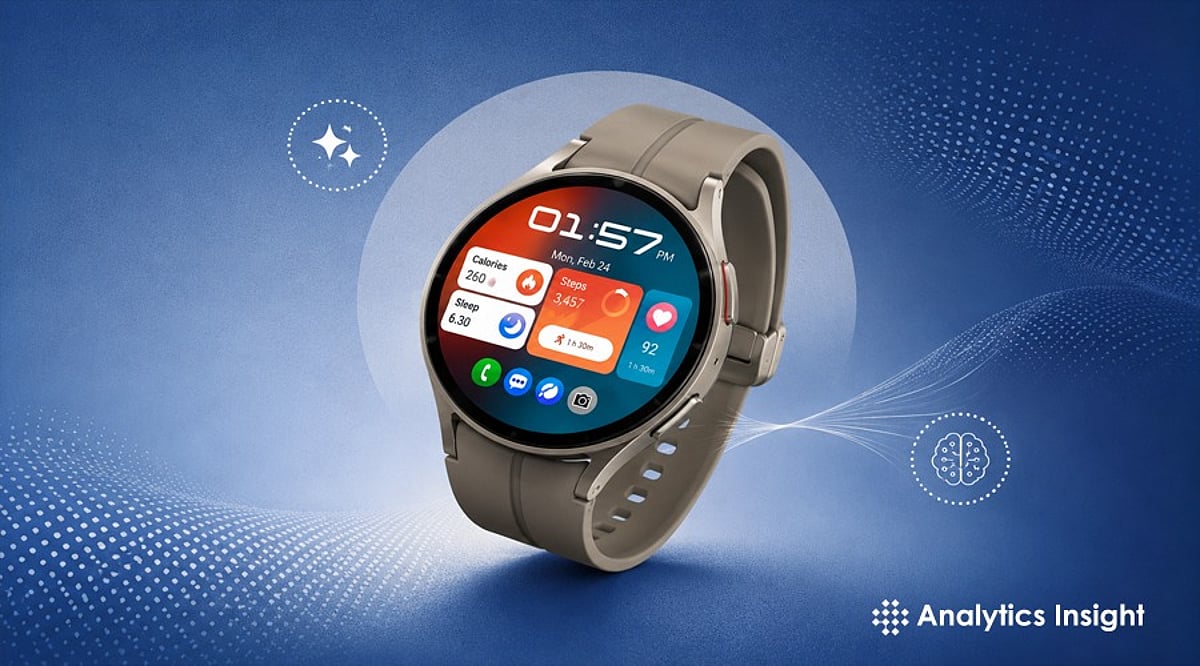
    Samsung has begun building anticipation for its next-generation smartwatch by teasing an AI-powered wearable ahead of the Galaxy Unpacked 2026 event scheduled for July 22. While the company has not officially confirmed the product name, industry speculation strongly points to the Galaxy Watch 9 series. The teaser highlights artificial intelligence, redesigned internal hardware, and improved battery performance, indicating Samsung’s continued push to strengthen its position in the premium smartwatch market as AI becomes central to wearable technology.

    AI Takes Center Stage in Samsung’s Wearable Strategy

    In the teaser, Samsung seems to focus on health-centric artificial intelligence rather than new innovations in hardware. According to the teaser, the smartwatch will be an advanced version of the Galaxy Watch, which provides health insights through a new level of intelligence about individual health. By incorporating Galaxy AI into the health-centric watch, Samsung will use its intelligence to evaluate a person’s activities, sleeping habits, heart health, and fitness levels.

    Analysts consider this a move to a larger trend in the smartwatch industry, whereby software intelligence becomes the competitive edge, more than any new innovations in hardware.

    Hardware Upgrades Could Improve Performance and Battery Life

    While Samsung has been tight-lipped about technical specifications, it has stated that the upcoming wearable device will contain “all-new internal components” in addition to improved battery life. According to reports, the Galaxy Watch 9 might get a new processor, which can provide better performance along with less consumption of energy, thus ensuring battery longevity without enlarging the physical size of the device.

    Leaks have also pointed out that Samsung will most likely continue with its signature round design but will include some improvements in the internal structure and health sensors. Improved biometric sensing, processing, and energy efficiency could help in providing the AI-based features demonstrated by Samsung. These enhancements might help Samsung gain an edge over competitors like Apple, Google, and Garmin, who are also increasingly focusing on providing health-related AI-based features in their wearables.

    Galaxy Unpacked Expected to Showcase a Broader AI Ecosystem

    The announcement of the smartwatch is expected to be held during the Galaxy Unpacked event, where Samsung will reveal its next-generation foldable smartphones like Galaxy Z Fold 8 and Galaxy Z Flip 8. As seen by Samsung’s recent actions, Galaxy AI is expected to become the uniting element for smartphones, tablets, wearables, and any connected devices.

    The CEO of Samsung TM Roh has recently pointed out that the future of AI development lies in devices that can recognize individual user preferences and provide more personal experiences rather than just perform some commands. Such an approach is likely to be applied to wearable devices, where AI is also expected to ensure excellent privacy through Samsung Knox technology.

    Smarter Wearables Signal Samsung’s Next Growth Phase

    With the competitive space becoming heated up in the realm of high-end smartwatches, Samsung is more and more relying on AI as the unique element that is supposed to define future wearable gadgets. Although the Galaxy Watch 9 is not officially released yet and should be revealed on July 22, the recent teaser by Samsung indicates that the emphasis is going to shift from technical aspects to more advanced health management and battery performance.

  • Samsung Refutes US Share Listing Rumors After SK Hynix’s Record NASDAQ Debut

    Samsung Refutes US Share Listing Rumors After SK Hynix’s Record NASDAQ Debut

    Samsung Electronics has officially denied recent reports that it is considering a United States share listing via American depositary receipts (ADRs). The denial follows a media report suggesting the company had held preliminary discussions with banks about a potential offering. In a statement, a Samsung spokesperson said, “Samsung Electronics is not reviewing the possibility of issuing American Depositary Receipts,” directly challenging the earlier account. The company did not elaborate on any past discussions or its reasoning.

    The earlier report indicated that any talks were at a very early stage and that Samsung had not decided whether to proceed. It also noted that the review “may not result in a listing.” Samsung had previously explored a similar plan but ultimately chose not to move forward. ADRs allow foreign companies to list shares on U.S. exchanges, making them more accessible to American retail investors. Currently, Samsung Electronics trades primarily on the Korea Exchange, limiting direct access for U.S. investors.

    The speculation gained momentum after SK Hynix, Samsung’s main competitor in memory chips, completed a massive U.S. share offering. SK Hynix priced its ADRs at $149 each, raising approximately $26.5 billion — the largest U.S. listing by a foreign company, according to Reuters. The shares began trading on NASDAQ on July 10 and surged more than 12% on their first day, reflecting strong investor demand for exposure to memory chips used in AI data centers.

    Both Samsung and SK Hynix compete in the DRAM, NAND, and high-bandwidth memory markets, and both have benefited from surging demand for chips powering artificial intelligence servers. However, memory stocks remain volatile. SK Hynix shares later fell as some investors took profits, and market participants are closely watching production growth, chip supply, and the pace of AI infrastructure spending.

    Samsung recently released preliminary second-quarter results, estimating sales of about 171 trillion won and operating profit of approximately 89.4 trillion won — a dramatic increase from 4.68 trillion won a year earlier. Despite the strong profit growth, Samsung shares declined after the update, as investors weighed high expectations against concerns about future AI spending and potential oversupply. The company plans to publish detailed quarterly results on July 30.

    In June, Samsung and the SK Group announced major manufacturing expansions, each planning to build two new chip plants in South Korea. The combined investment totals 800 trillion won (about $536 billion). Additionally, South Korean companies including Naver have committed 550 trillion won to build 8.4 gigawatts of data-center capacity by 2029. For now, Samsung’s public denial leaves no active ADR plan confirmed. Any future U.S. listing would require a new official announcement or regulatory filing.