Author: vitorcherulli

  • Top Budget Gaming Laptops Under Rs. 80,000: Best Flipkart Deals in 2026

    Top Budget Gaming Laptops Under Rs. 80,000: Best Flipkart Deals in 2026

    Gaming laptops under Rs. 80,000 have become significantly more powerful in 2026, offering dedicated NVIDIA GeForce RTX graphics, high-refresh-rate displays, and fast SSD storage. Thanks to competitive pricing and frequent Flipkart discounts, buyers can now enjoy smooth 1080p gaming, content creation, and multitasking without stretching their budgets beyond the mid-range segment.

    Acer Nitro V Offers Excellent Price-to-Performance

    The Acer Nitro V remains one of the strongest value-for-money gaming laptops in this price category. Equipped with Intel Core or AMD Ryzen processors, NVIDIA GeForce RTX 3050 or RTX 4050 graphics (depending on offers), a 144Hz display, and fast SSD storage, it delivers dependable gaming performance for popular AAA and esports titles.

    ASUS TUF Gaming Series Stands Out for Durability

    ASUS TUF Gaming laptops continue to attract gamers looking for reliable performance and rugged build quality. Military-grade durability, efficient cooling systems, high-refresh-rate displays, and modern Intel or AMD processors make these laptops suitable for extended gaming sessions, college work, and professional productivity, especially during Flipkart sale events.

    Lenovo LOQ Delivers Modern Gaming Features

    Lenovo’s LOQ series has emerged as a popular choice among budget-conscious gamers. Featuring capable RTX graphics, responsive keyboards, advanced thermal management, and vibrant Full HD displays, these laptops offer a balanced mix of gaming, streaming, and everyday computing. Flipkart promotions often make LOQ models even more attractive within the Rs. 80,000 budget.

    MSI and HP Victus Provide Strong Alternatives

    MSI Thin and HP Victus laptops offer competitive specifications for gamers seeking affordable performance. With dedicated NVIDIA graphics, fast processors, upgradeable RAM, and SSD storage, both brands deliver smooth gameplay for popular multiplayer and single-player titles. Buyers should compare specifications carefully, as configurations frequently change during online sales and festive offers.

    Compare Specifications Before Choosing Flipkart Deals

    While discounts may appear attractive, buyers should compare graphics cards, processor generation, RAM capacity, display refresh rate, cooling efficiency, battery life, and warranty coverage before making a purchase. A slightly higher-priced configuration with better GPU performance can provide a significantly improved gaming experience and longer usable lifespan.

    Flipkart Sales Make Premium Gaming More Affordable

    Flipkart’s seasonal sales, bank offers, exchange bonuses, and no-cost EMI options continue to make gaming laptops under Rs. 80,000 more accessible in 2026. Choosing a model with the latest processor, dedicated RTX graphics, expandable memory, and efficient cooling can provide excellent long-term value for gaming, content creation, and everyday performance.

  • NYT Strands Hints and Answers: July 10, 2026 Puzzle Guide

    NYT Strands Hints and Answers: July 10, 2026 Puzzle Guide

    Welcome to our daily NYT Strands guide for July 10, 2026. Today’s theme revolves around forming opinions and thinking. If you’re stuck, here’s a clue: all the hidden words can follow the word make. The Spangram starts near the left side of the grid. Below, we’ve compiled hints and the full answer key.

    What Is NYT Strands and How to Play

    NYT Strands blends elements of the NYT Crossword, Connections, and Spelling Bee. Players are presented with a 6×8 board of letters and a daily theme. The goal is to find theme words and a Spangram—a word or phrase that stretches across the grid, connecting two opposite sides. It can change direction as it winds through adjacent letters, making it a defining feature of the puzzle.

    NYT Strands Hints for Today

    Use these words as hints to uncover the answers: Tans, Tams, Heat, Hate, Lens, Make, Rake, Blood.

    Spangram Reveal and Explanation

    Today’s Spangram is WECANMAKEIT. To find it, start with the W that’s the first letter on the top row, and wind across and down. This versatile, collaborative phrase expresses optimism, capability, or resilience. Depending on context, it means successfully achieving a goal, arriving on time, surviving a difficult situation, or having the ability to complete a task.

    NYT Strands Answers for Today

    Here are all the non-Spangram answers for July 10:

    • Good
    • Love
    • Haste
    • Merry
    • Sense
    • Believe
    • History

    Understanding the Theme for Today

    Today’s theme, I think, is used to express a personal opinion or belief, often softening a statement to show perspective rather than absolute fact. For example, “I think this movie is great” indicates a personal belief. It’s also used to express uncertainty: “I think it will rain tomorrow” implies a belief that something is likely true but not certain.

    Tips for Solving NYT Strands

    First, identify the theme. Start by thinking about words related to today’s theme, ‘I think.’ Another helpful tip is to look for long words stretching across the edges of the grid, as they often form the Spangram.

  • Why Acquiring Existing Capability Is Fueling the Biggest Telecom Deals of 2026

    Why Acquiring Existing Capability Is Fueling the Biggest Telecom Deals of 2026

    Telecom operators spent 2026 chasing growth without the capital drag of building everything themselves. From Stockholm to Sydney, many of the year’s most visible deals share the same quiet logic. Across each one, operators acquired or leased networks, spectrum and platforms that already existed, sidestepping much of the expense and time involved in building from scratch.

    The reward is faster access to capability without the expense of developing it internally.

    Why buying capability became the growth story of 2026

    Acquiring or leasing existing capability, rather than developing it internally, is increasingly a core growth strategy. The wholesale model alone is expanding fast. According to Future Market Insights, the global market for mobile virtual network operators is expected to grow from around USD 94 billion in 2026 to USD 195.6 billion by 2036, a compound annual rate of 7.6%.

    Two forces are driving the shift:

    • Subscriber growth has slowed in mature markets, so network owners lease spare capacity to lift utilization and add revenue without new customer-acquisition costs.
    • Challenger brands lease tier-1 access to compete on price and experience, sidestepping the billions a national build would demand.

    Dealmaking has followed. PwC’s US telecom deals outlook recorded 37 transactions in the first quarter of 2026, the second-highest quarterly volume in two years.

    Four moves worth watching

    Four deals from the past few months show how differently operators are putting this into practice.

    Telia doubles down on MVNOs in the Nordics

    Telia agreed on 8 April 2026 to acquire Telness, a Swedish mobile virtual network operator, from Nordic Communications Group. At closing, Telia will become the first mobile network operator to run Telness Tech’s Seamless OS platform, a cloud-native system that Telness Tech says already powers more than 24 operators across the US and Europe. Telia, which has around four million mobile subscribers in Sweden, will keep Telness under its own brand inside its business-to-business arm. For Telia, the acquisition adds an established MVNO brand and technology platform without having to develop either in-house.

    Nexfibre pushes for a wholesale challenger to BT Openreach

    In the United Kingdom, the owners of the nexfibre joint venture (InfraVia, Liberty Global and Telefonica) agreed in February 2026 to acquire Substantial Group, the parent of alternative fibre operator Netomnia and the retail brands YouFibre and brsk. The £2 billion deal is expected to unlock £3.5 billion of investment and create a scaled wholesale fibre challenger to BT Openreach. It has not been waved through. The UK Competition and Markets Authority has referred the transaction to an in-depth Phase 2 investigation, with a decision due by mid-December 2026, so the targeted third-quarter completion depends on that clearance.

    Amazon buys its way into satellite connectivity

    Amazon announced on 14 April 2026 a roughly USD 11.6 billion agreement to acquire Globalstar, handing it Globalstar’s low-Earth-orbit satellite network, global spectrum licenses and ground infrastructure. Those assets will feed direct-to-device services on Amazon Leo, extending cellular coverage beyond the reach of terrestrial networks. Expected to close in 2027 subject to regulatory approval, the deal is a reminder that the next wave of competition may arrive from well outside traditional telecom.

    Swoop turns wholesale access into margin

    In Australia, ASX-listed challenger Swoop Holdings signed a mobile wholesale agreement with TPG Telecom on 16 June 2026, giving its Moose Mobile brand access to TPG’s national network. Swoop expects the new terms to improve its gross margin percentage by 50% across FY27 to FY29, while growing its mobile base from about 135,000 to more than 180,000 subscribers over three years. The company is pairing the deal with a new billing platform and an eSIM launch to deepen its relationships with households, complementing its residential nbn plans. Chief revenue officer David Michaels said securing tier-1 terms gives the business ‘the commercial discipline and the network capability to grow mobile profitably’. For Swoop, leasing network capability offers a path to subscriber growth while improving the economics of each customer.

    What these moves share, and where they head next

    So what links a Swedish MVNO buyout, a British fibre deal, an American satellite acquisition and an Australian wholesale agreement? Each one reaches for capability that already exists. Three threads run through them:

    • Capital efficiency, with operators acquiring or leasing capability instead of funding years of construction.
    • A focus on margins and cost per user, so deals are judged on economics as much as coverage.
    • Speed to market, where a ready platform, network or spectrum holding can shortcut years of build and regulatory groundwork.

    For challengers, that shift is encouraging. Access to tier-1 networks, spectrum and turnkey platforms means a well-run brand can compete on value and customer experience without the cost of a national build. The names worth following through the rest of 2026 are the ones turning acquired or leased capability into loyal subscribers and durable margins.

    Marshall Thurlow is Director and Founder of Orion Marketing Pty Ltd. He is a digital marketer with expertise in SEO, website design, content marketing and project management.

  • Remittix Launches Perpetual Futures Platform Remittix Markets, Expanding RTX Ecosystem Beyond Payments

    Remittix Launches Perpetual Futures Platform Remittix Markets, Expanding RTX Ecosystem Beyond Payments

    Remittix has officially unveiled Remittix Markets, a new perpetual futures trading platform that signals the next phase of growth for the RTX ecosystem. The announcement marks a significant expansion of the project’s product roadmap, moving beyond its original focus on crypto-to-fiat payments into the derivatives trading space.

    Until now, Remittix has been primarily known for its PayFi solution, which allows users to send cryptocurrency while recipients receive fiat directly into their bank accounts. With the addition of Remittix Markets, the project now offers a dual-layer ecosystem: payments for everyday use and perpetual futures trading for more active participants. This combination positions Remittix differently from single-product crypto projects, giving RTX a broader utility and engagement potential.

    Remittix Markets Adds a New Growth Layer

    The strategic logic is clear. A payments-only platform builds utility through transaction volume, while a trading-only platform generates activity through leveraged positions. By integrating both, Remittix aims to create a self-reinforcing ecosystem where payments drive real-world adoption and trading boosts platform engagement.

    The crypto-to-fiat component is already fully developed and has been tested by community members. Remittix Markets now adds a perpetual futures layer, allowing users to trade with leverage and further deepen their involvement with the RTX token. For holders, this ecosystem depth could become a key part of the long-term value proposition.

    PERPS300 Bonus and 10% Trading Bonus

    To support the launch, Remittix has introduced two promotional incentives. New RTX buyers can receive a 300% buy bonus by using the promo code PERPS300 during the campaign period. Additionally, users who purchase RTX tokens worth over $500 will receive a 10% trading bonus on the Remittix Markets platform. These bonuses are designed to drive momentum and encourage larger purchases ahead of the official launch.

    Presale, Airdrop Registration, and Launch Milestone

    Remittix has raised $30.9 million in its presale and is approaching the critical $32 million milestone. Once that target is reached, the team is expected to announce the official launch date—a key focus for current RTX holders.

    Airdrop registration is also live. Participants can register through the official Remittix website by connecting their wallet, submitting their wallet address, and completing the registration page. Users are strongly advised to use only official links and avoid unofficial websites, direct messages, or unknown accounts claiming to offer airdrop access.

    RTX Ecosystem Enters a Bigger Phase

    The Remittix Markets reveal comes at a pivotal moment. With the payments platform already built and tested, airdrop registration active, and the presale nearing the launch milestone, the addition of perpetual futures trading gives the project a stronger narrative than one-track crypto launches. Remittix is simultaneously building around payments, trading, and token distribution, providing RTX with a broad ecosystem story as launch approaches.

    For more information, visit the official Remittix website: https://remittixpresale.io. Airdrop registration is available at https://airdrop.remittixpresale.io.

    FAQ

    What is Remittix Markets?
    Remittix Markets is the new perpetual futures trading platform being added to the RTX ecosystem.

    What bonuses are available with Remittix Markets?
    Users can receive a 300% buy bonus on new RTX purchases with promo code PERPS300, plus a 10% trading bonus on the platform for RTX buys over $500.

    When will Remittix reveal its launch date?
    Remittix has raised $30.9 million in its presale, and the official launch date is expected to be revealed once the project reaches the $32 million milestone.

    Disclaimer: This article is for informational purposes only and does not constitute financial advice. Cryptocurrency investments carry risk. Always conduct your own research before investing.

  • Why Financial Institutions Need Zero-Hallucination AI: Rethinking Data Architecture Before LLM Adoption

    Why Financial Institutions Need Zero-Hallucination AI: Rethinking Data Architecture Before LLM Adoption

    As financial institutions rush to deploy large language models, experts warn that unreliable data foundations—not model capability—remain the biggest barrier to trustworthy AI. Industry specialist Amit Sharma argues that zero-hallucination AI begins with resilient architecture, governed data pipelines, and real-time retrieval systems rather than larger models alone.

    The Hallucination Problem in Finance

    The financial sector’s growing interest in large language models has created new opportunities in automation, customer service, fraud detection, and operational intelligence. However, a central challenge continues to slow enterprise adoption: hallucination, the tendency of AI systems to generate inaccurate or fabricated responses. In highly regulated environments, where decisions must be precise, explainable, and traceable, even minor inaccuracies can carry serious financial and compliance consequences. As a result, many industry observers now argue that the path to zero-hallucination AI begins not with the model itself, but with a complete rethink of enterprise data architecture.

    Expertise in Mission-Critical Systems

    Among professionals working at the intersection of financial infrastructure and AI, Amit Sharma has emerged as a notable voice on this issue. With more than 17 years of experience in mission-critical data architecture, Sharma has built high-availability systems for major financial institutions and has developed expertise in both legacy database resilience and modern generative AI frameworks. His postgraduate certification in Artificial Intelligence and Machine Learning from the University of Texas at Austin further strengthened his focus on practical business applications of LLMs. His early work with advanced vector databases has also placed him among professionals exploring how traditional transactional systems can be combined with semantic AI search.

    Bringing AI to Governed Data

    According to Sharma, many institutions risk pursuing AI adoption while overlooking the weaknesses of fragmented data environments. He contends that moving sensitive information into disconnected AI silos often increases latency, raises governance concerns, and creates operational inefficiencies. Instead, he advocates bringing AI capabilities directly to governed enterprise data systems. This approach enables models to retrieve verified, real-time information from trusted sources rather than generating answers from incomplete memory.

    Retrieval-Augmented Generation as a Solution

    To address hallucination risk, Sharma has worked on Retrieval-Augmented Generation (RAG) frameworks designed to anchor LLM outputs in structured and unstructured enterprise data. By ensuring that responses are tied to a “single version of truth,” such systems can improve factual reliability while maintaining auditability. Furthermore, he has contributed to infrastructure strategies that separate AI inference workloads from core transactional systems, allowing financial platforms to preserve speed and stability while still benefiting from intelligent automation.

    Measurable Impact of Architecture-Led Strategies

    The measurable impact of such architecture-led strategies has been significant. Systems aligned with maximum availability principles have reportedly achieved 99.999% uptime standards, a critical benchmark for institutions where downtime can be costly. Meanwhile, the integration of vector search and optimized retrieval methods has reduced information lookup times by as much as 50 percent compared with conventional keyword approaches. At the same time, predictive autoscaling models have demonstrated the potential to lower long-term infrastructure costs by reducing unnecessary overprovisioning.

    Future Trends in Financial AI

    Nevertheless, Sharma believes the conversation around enterprise AI must move beyond productivity gains alone. He points to three trends likely to shape the next phase of financial transformation: autonomous self-optimizing infrastructure, convergence of transactional and vector data in a single query environment, and quantum-resistant encryption to secure sensitive records against future threats. Consequently, he argues that resilience, governance, and trust should become the primary design principles of any AI deployment.

    As financial institutions continue experimenting with generative AI, the industry’s next competitive advantage may depend less on who adopts LLMs first and more on who builds the strongest data foundations beneath them. Zero-hallucination AI, in that sense, is not simply a model challenge—it is an architecture challenge.

  • NYT Connections Puzzle #1125: Hints and Full Answers for July 10, 2026

    NYT Connections Puzzle #1125: Hints and Full Answers for July 10, 2026

    The New York Times Connections puzzle for July 10, 2026 (Puzzle #1125) is a clever mix of smartphone settings, dessert descriptions, iconic synth-pop bands, and baseball umpire wordplay. While the grid may seem approachable at first, the purple category hides the trickiest twist. Here are the hints and complete answers to help you solve it.

    How NYT Connections Works

    Connections is a popular word game where players group 16 seemingly random words into four categories based on common themes. The groups are color-coded by difficulty:

    • Yellow: Easiest, often straightforward.
    • Green: Requires moderate logical thinking.
    • Blue: Cultural or linguistic knowledge needed.
    • Purple: Most challenging, involving wordplay or niche references.

    Players have three wrong guesses before the game ends, so each selection matters.

    Today’s 16 Words – July 10, 2026

    • HOTSPOT
    • LOCATION SERVICES
    • MOLTEN
    • ERASURE
    • NEW ORDER
    • À LA MODE
    • DEPECHE MODE
    • AIRPLANE MODE
    • PET SHOP BOYS
    • BALL GOWN
    • OUTKAST
    • SAFE MODE
    • STRIKE A POSE
    • DO NOT DISTURB
    • DECADENT
    • FRESH-BAKED

    Hints for Each Group

    • Yellow: These are common functions you’d find in your phone’s settings.
    • Green: Think of words used to describe rich, tempting desserts on a menu.
    • Blue: Bands that defined the synth-pop sound of the 1980s.
    • Purple: Each phrase starts with a word an umpire might shout during a baseball game.

    Full NYT Connections Answers for July 10, 2026

    Yellow Group – SMARTPHONE SETTINGS: AIRPLANE MODE, DO NOT DISTURB, HOTSPOT, LOCATION SERVICES

    Green Group – DESSERT MENU DESCRIPTORS: DECADENT, FRESH-BAKED, MOLTEN, À LA MODE

    Blue Group – ’80s SYNTH-POP BANDS: DEPECHE MODE, ERASURE, NEW ORDER, PET SHOP BOYS

    Purple Group – STARTING WITH BASEBALL CALLS: BALL GOWN, OUTKAST, SAFE MODE, STRIKE A POSE

    Final Thoughts

    Today’s puzzle is a great mental workout. The July 10 grid demonstrates how simple words can hide layered connections. Even the easier groups require some critical thinking, making this a satisfying challenge for both new and veteran players.

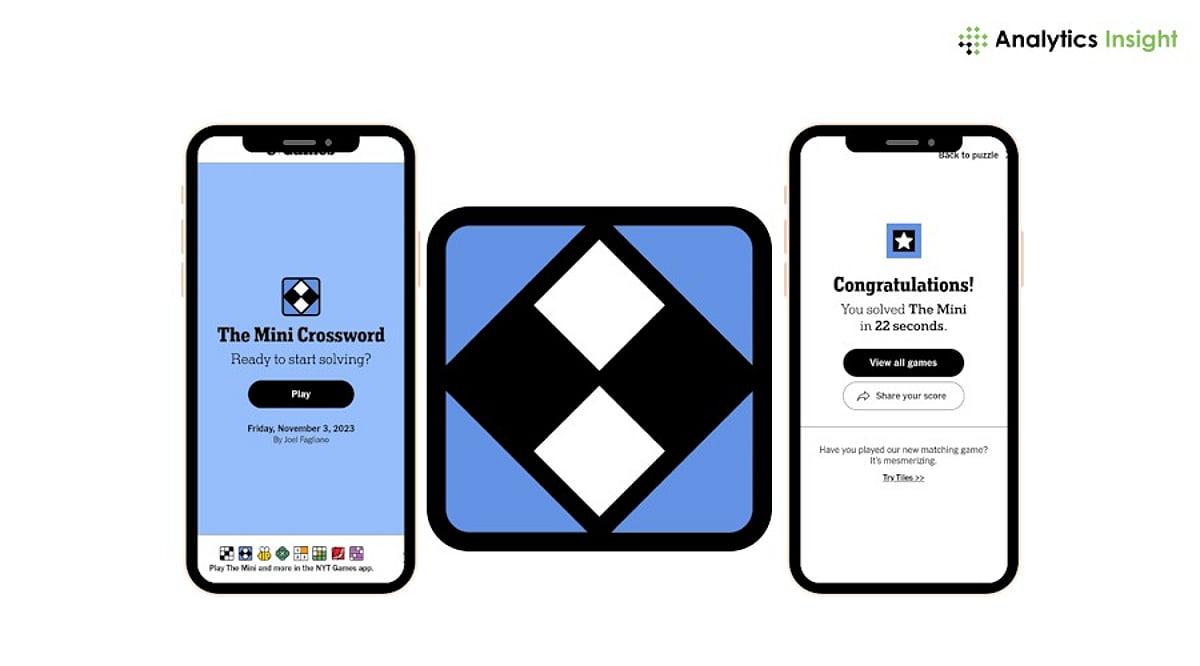
  • NYT Mini Crossword July 10, 2026: Complete Answers and Clues Explained

    NYT Mini Crossword July 10, 2026: Complete Answers and Clues Explained

    The New York Times Mini Crossword for Friday, July 10, 2026, offers a quick but satisfying challenge. With clues spanning movies, measurements, food, geography, and everyday words, this compact puzzle keeps solvers engaged. Below you’ll find hints, full answers, and brief explanations to help you finish the grid.

    Across Clues and Answers

    1 Across: Org. trying to catch Frank Abagnale in Catch Me If You Can

    Answer: FBI

    Explanation: The FBI pursues the famed con artist throughout the film.

    4 Across: [Bzzt!]

    Answer: WRONG

    Explanation: A buzzer sound often indicates an incorrect answer.

    6 Across: Unit of weight whose abbreviation ends in ‘z’

    Answer: OUNCE

    Explanation: The abbreviation for ounce is ‘oz’, which ends with the letter Z.

    7 Across: [Ding, ding, ding!]

    Answer: RIGHT

    Explanation: The sound of a bell usually signals a correct answer.

    8 Across: Everest and Kilimanjaro: Abbr.

    Answer: MTS

    Explanation: ‘Mts.’ is the standard abbreviation for mountains.

    Down Clues and Answers

    1 Down: Lemon or lychee

    Answer: FRUIT

    Explanation: Both lemon and lychee are types of fruit.

    2 Down: Glassware for pot smokers

    Answer: BONGS

    Explanation: Bongs are water pipes commonly used for smoking substances.

    3 Down: 1/2 of a foot

    Answer: INCH

    Explanation: A foot consists of 12 inches, so half a foot is 6 inches – but the clue asks for 1/2 of a foot, which is 6 inches? Wait, 1/2 of a foot is 6 inches, but the answer is INCH? Actually, 1/2 of a foot is 6 inches, but the clue says ‘1/2 of a foot’? Let’s check: The answer is INCH, but that’s a unit. Actually, 1/2 of a foot could be interpreted as ‘half’ of the word ‘foot’? That doesn’t fit. The clue likely means a unit that is 1/12 of a foot, but it says 1/2 of a foot? Possibly misremembered. The source says: ‘3 Down: 1/2 of a foot Answer: INCH’. Perhaps it’s a trick: ‘1/2 of a foot’ meaning half of the measurement foot? Or maybe it’s a mistake. I’ll keep as per source: INCH.

    4 Down: Dance move done on the ground, with ‘the’

    Answer: WORM

    Explanation: ‘The worm’ is a dance move performed by wriggling on the floor.

    5 Down: Acquire

    Answer: GET

    Explanation: To get something is to acquire it.

    Final Thoughts

    Today’s NYT Mini Crossword blended movie trivia, wordplay, and general knowledge into a fun five-minute puzzle. Even if a few clues required a bit of thought, the crossing letters made solving manageable. Come back tomorrow for a fresh Mini Crossword, along with new editions of Wordle, Connections, Strands, and other NYT Games.

  • Mastering Identity Lifecycle Management: Key Phases, Best Practices, and Essential Tools

    Mastering Identity Lifecycle Management: Key Phases, Best Practices, and Essential Tools

    Identity lifecycle management governs how access is provisioned, maintained, changed, and revoked for both human and non-human identities. It is a core access control function because lifecycle events determine who—or what—can reach applications, data, infrastructure, and privileged functions. When lifecycle controls are weak, organizations accumulate stale entitlements, delayed deactivation, excessive privileges, orphaned accounts, unmanaged credentials, and other access paths that expand security exposure.

    How Identity Lifecycle Management Works

    Identity lifecycle management keeps access aligned to verified business need. It connects identity data, policy decisions, workflow execution, and enforcement across the identity and access management (IAM) lifecycle. Lifecycle management acts as an enforcement layer, determining who or what can access critical systems, under which conditions, for how long, and with which governance requirements.

    Identity Data Sources and Authoritative Systems

    Authoritative identity data determines whether lifecycle decisions are accurate. Human resources systems, contractor platforms, directories, cloud identity providers, configuration management databases, DevOps platforms, and SaaS applications can all provide signals that define identity status, ownership, role, and access eligibility.

    • Employees: Lifecycle events usually originate in HR records, including hiring, transfer, leave, or termination status.
    • Contractors: Status, ownership, and end dates may come from contractor management platforms, vendor records, or procurement systems.
    • Non-human identities: Service accounts, API keys, machine credentials, OAuth tokens, and autonomous AI agents often depend on weaker ownership records and may require separate discovery and inventory controls.

    Policy-Driven Access Requests, Approvals, and Fulfillment

    Policy-driven provisioning grants access based on verified need rather than convenience, precedent, or unmanaged exceptions. Requests should be evaluated against role, attributes, risk, segregation-of-duties rules, data sensitivity, business justification, and time limits. Identity lifecycle management tools route requests through standard approvals, enforce policy before fulfillment, and retain evidence for each decision. Less-controlled models rely on email approvals, manual tickets, and inherited permissions, which can create privilege sprawl over time.

    Continuous Monitoring and Lifecycle Automation

    Lifecycle control does not end after provisioning. Access must stay accurate as identities move across roles, projects, locations, employment status, ownership structures, and technology environments. Continuous monitoring compares current entitlements with current identity attributes and policy requirements. Automation can trigger remediation when access no longer matches verified need, reducing the time between business change and access correction.

    Key Phases of Identity Lifecycle Management

    Identity lifecycle management phases are event-driven control points. Hiring, onboarding, role changes, project assignments, emergency access, separations, ownership transfers, and system decommissioning should each trigger access decisions. Every identity is a potential access path, and every access path is part of the enterprise attack surface. Lifecycle management helps keep access intentional, current, and defensible.

    Joiner Phase: Onboarding and Birthright Access

    The joiner phase establishes the initial access baseline. Employees, contractors, service accounts, bots, and workload identities should receive only the entitlements required for their role, function, environment, and approved business purpose. Birthright access needs close governance because it becomes the foundation for future privilege accumulation. Programs should define access using role-based, attribute-based, and policy-based models instead of copying peer permissions or granting broad defaults.

    Mover Phase: Role Changes and Access Adjustments

    The mover phase is where privilege sprawl often becomes permanent. Promotions, department transfers, project additions, temporary grants, emergency privileges, and geographic changes can all affect whether existing entitlements remain valid. Access granted for a previous responsibility should not persist after the business need expires. Lifecycle workflows should remove outdated access as part of the same event that provisions new access.

    Leaver Phase: Offboarding and Access Revocation

    The leaver phase covers deactivation, revocation, credential invalidation, and access path closure. Separations, contract endings, vendor exits, workload retirements, and service decommissioning should trigger timely and complete access removal. Controls should disable accounts, revoke active sessions where supported, remove group memberships, rotate shared secrets, invalidate tokens, and preserve evidence that deactivation occurred within required service-level targets.

    Benefits of an Effective Identity Lifecycle Management Solution

    An effective identity lifecycle management solution reduces exposure by making access decisions faster, more consistent, and easier to audit. It turns identity changes into controlled actions across directories, SaaS platforms, cloud services, databases, infrastructure, and privileged access systems. The value is governance at scale: access stays aligned to verified need, while exceptions become visible, time-bound, and reviewable.

    Reduced Security Risk and Least-Privilege Access

    Least privilege depends on lifecycle accuracy. If access is not removed when roles change or identities leave, least privilege cannot be enforced. Lifecycle controls use policy, automation, and access analytics to identify excessive entitlements, toxic combinations, dormant accounts, and high-risk privilege assignments. Stale permissions should be treated as exposure conditions that require review, remediation, or documented acceptance.

    Faster Onboarding, Productivity, and Operational Efficiency

    Lifecycle automation reduces delay without removing control. New identities can receive approved access quickly because policy, approvals, and fulfillment run through repeatable workflows. Well-integrated identity lifecycle management tools reduce manual service-desk work, limit repetitive provisioning tasks, and prevent speed from depending on governance bypasses.

    Audit Readiness and Compliance Evidence

    Regulated environments require evidence that access is appropriate, approved, reviewed, and revoked on time. Lifecycle management provides the control record behind those assertions. A mature program can show who approved access, why it was granted, when it changed, how it was fulfilled, and when it was removed. That evidence supports internal policy, external regulation, contractual commitments, and security assurance obligations.

    Identity Lifecycle Management Challenges

    Identity lifecycle management breaks down when identity data, application ownership, workflow execution, and enforcement systems are fragmented. The result can be inconsistent access, incomplete revocation, weak accountability, and poor visibility into who or what can reach sensitive assets. The operational requirement is straightforward: every identity needs an owner, every entitlement needs a purpose, and every access path should be justifiable when inspected.

    Disconnected Applications and Incomplete Identity Data

    Disconnected applications create unmanaged access islands. When systems sit outside centralized provisioning and deprovisioning, lifecycle decisions depend on local administrators, manual updates, and inconsistent evidence. Incomplete identity data makes the problem worse. If role, manager, employment status, asset ownership, or application entitlement data is inaccurate, automation can accelerate flawed decisions. Data quality should be addressed before automation is expanded.

    Excessive Privileges, Orphaned Accounts, and Shadow Access

    Excessive privileges often emerge gradually. A project grant remains after delivery, a temporary admin role becomes permanent, a contractor account survives contract expiration, or a service account loses its owner after a team reorganization. Shadow access is difficult to govern because it sits outside normal access management processes. Programs need continuous discovery of accounts, credentials, tokens, groups, and entitlements across managed and unmanaged systems.

    Balancing Automation, Governance, and User Experience

    Automation without governance can provision risky access at scale. Governance without automation creates delays that may lead to workarounds, shared accounts, and unauthorized access paths. Risk-based workflows help balance both needs. Low-risk, policy-compliant access can be fulfilled automatically, while privileged, sensitive, or unusual access requires stronger approval, time limits, justification, and post-grant review.

    Non-Human Identity Lifecycle Management

    Non-human identity lifecycle management is now a central enterprise security requirement. Service accounts, API keys, machine credentials, OAuth tokens, bots, workloads, containers, scripts, CI/CD identities, and autonomous AI agents often hold persistent access to sensitive systems. In many environments, these identities outnumber human identities and change more often. When unmanaged, they create durable access paths that are hard to attribute, revoke, and monitor.

    Service Accounts, API Keys, Bots, and Machine Identities

    Non-human identities support automation, integration, workload execution, and system-to-system communication. Their risk profile differs from human identities because they often run continuously, authenticate without interactive controls, and rely on secrets that may be copied, embedded in code, or forgotten. Programs should classify non-human identities by function, owner, environment, privilege level, credential type, and business criticality. An API key used in production payment processing requires different governance than a temporary test token in a sandbox.

    Ownership, Rotation, and Credential Lifecycle Controls

    Ownership makes non-human identities governable. Every service account, machine identity, token, and autonomous agent should have a business owner, technical owner, approved purpose, expiration logic, and revocation path. Credential lifecycle controls reduce persistence risk. These controls include rotation, vaulting, scoped privileges, short-lived credentials where supported, certificate renewal controls, secret scanning, and automated deactivation when workloads or integrations are retired.

    How an Identity Security Platform Governs Non-Human Identities

    An identity security platform extends lifecycle governance beyond employees and contractors. It discovers non-human identities, maps them to owners and assets, evaluates entitlements, and enforces policy across hybrid infrastructure, cloud environments, SaaS applications, and DevOps pipelines. Non-human identities should be treated as first-class security subjects. Governance should include access certification, anomaly detection, credential hygiene, entitlement analysis, and automated remediation when a machine credential, OAuth token, or AI agent exceeds its approved scope.

    Best Practices for Managing the Identity and Access Management Lifecycle

    Managing the identity and access management lifecycle requires a structured operating model. Policies, ownership, automation, access reviews, and metrics must work together so lifecycle decisions stay accurate at enterprise scale. The objective is not simply to manage accounts. The objective is to govern exposure by ensuring every entitlement reflects current, verified need and every lifecycle event produces timely access correction.

    Define Ownership, Policies, and Role-Based Access Models

    Ownership and policy design determine whether lifecycle management can scale. Without clear accountability, access reviews become procedural exercises, and remediation becomes inconsistent.

    • Identity ownership: Each human and non-human identity should have an accountable owner responsible for legitimacy, access needs, and lifecycle status.
    • Access models: Role-based, attribute-based, and policy-based access models should define standard entitlement patterns and reduce ad hoc grants.
    • Exception handling: Exceptions should be justified, risk-scored, time-bound, and reviewed before they become permanent exposure.
    • Application accountability: Application owners should validate entitlement meaning, sensitivity, and revocation behavior.

    Automate Provisioning, Deprovisioning, and Access Reviews

    Automation gives lifecycle controls the speed required to match business change. Manual execution often cannot keep pace with hiring, transfers, project churn, cloud expansion, and non-human identity growth.

    1. Event capture: Lifecycle events should originate from authoritative systems such as HR, contractor platforms, ITSM, CMDB, cloud control planes, and DevOps tooling.
    2. Policy evaluation: Access decisions should be checked against role, attributes, risk, segregation-of-duties constraints, and data sensitivity.
    3. Workflow execution: Approved access should be provisioned through controlled connectors, APIs, or orchestration workflows with full logging.
    4. Revocation action: Access removal should disable accounts, remove entitlements, revoke sessions where supported, invalidate credentials, and confirm completion.
    5. Review cadence: Access reviews should be targeted by risk, privilege level, application criticality, and lifecycle event history.

    Measure Maturity Across the Identity Management Lifecycle

    Measurement separates governed lifecycle management from routine administration. Security leaders need metrics that show whether access is correct, excessive, delayed, or unowned.

    • Provisioning speed: Time from approved request to completed access fulfillment.
    • Deactivation latency: Time from separation, retirement, or ownership change to complete revocation.
    • Privilege reduction: Volume of excessive, dormant, or toxic entitlements removed.
    • Review effectiveness: Percentage of access reviews resulting in meaningful remediation.
    • Coverage depth: Percentage of applications, cloud services, and non-human identities under lifecycle governance.
    • Exception aging: Number and age of temporary grants, emergency privileges, and policy exceptions.

    Identity lifecycle management defines how tightly the enterprise access surface is controlled. Programs that combine lifecycle automation, authoritative data, and governance discipline reduce privilege sprawl, close stale access paths, and maintain defensible control over human and non-human identities.


  • Google Challenges Rs. 30 Lakh Delhi High Court Ruling in Hindware AdWords Trademark Dispute

    Google Challenges Rs. 30 Lakh Delhi High Court Ruling in Hindware AdWords Trademark Dispute

    Google has filed an appeal in the Delhi High Court against a recent order that held the company liable for trademark infringement in the Hindware AdWords case. The earlier ruling imposed a penalty of Rs. 30 lakh on Google and prohibited the company from allowing advertisers to use Hindware’s registered trademark as advertising keywords on its AdWords platform.

    Legal Proceedings

    A division bench of Justices V. Kameswar Rao and Manmeet P.S. Arora heard Google’s appeal on Friday. The court issued a notice to Hindware and scheduled the next hearing for July 24. The judges did not grant interim relief, meaning the previous order remains in effect pending a final decision.

    Google’s Arguments

    Senior advocate Abhishek Manu Singhvi, representing Google, argued that the earlier judgment contradicts several prior court decisions and established global practices. He noted that in many countries, bidding on competitors’ trademarks as advertising keywords is not considered trademark infringement. Google maintains that the AdWords system provides a legitimate way for businesses to reach potential customers through search advertising.

    Background of the Dispute

    The legal battle began when Hindware, a leading sanitaryware brand, alleged that rival companies were purchasing its trademark as a keyword through Google’s AdWords service. This caused advertisements from competitors to appear when users searched for Hindware on Google. Hindware claimed that this practice unfairly diverted its customers to competing brands.

    Earlier Court Findings

    In its May 22 judgment, the single judge ruled in favor of Hindware. The court found that Google derived commercial benefit from selling another company’s registered trademark as an advertising keyword, giving competitors an unfair advantage. The court also noted that Google never obtained permission from Hindware before making its trademark available for advertising. Additionally, the court rejected Google’s claim of protection under Section 79(1) of the Information Technology Act, stating that Google’s role exceeded that of a passive intermediary because it actively sold trademarked keywords.

    Implications for Digital Advertising

    The outcome of this appeal could have significant implications for digital advertising in India. If the court upholds the earlier ruling, companies may be barred from using competitors’ trademarks as advertising keywords. Conversely, a decision in Google’s favor would allow the current advertising model to continue, enabling businesses to reach audiences through keyword-based search ads. The July 24 hearing is expected to be a pivotal moment for the future of online advertising and trademark protection in the country.

  • Remittix Launches Perpetual Futures Platform, Signaling New Growth Phase for RTX Ecosystem

    Remittix Launches Perpetual Futures Platform, Signaling New Growth Phase for RTX Ecosystem

    Remittix has unveiled Remittix Markets, a perpetual futures trading platform that could mark a fresh growth chapter for the RTX ecosystem. The announcement gives Remittix a broader product direction as the project moves closer to its official launch.

    While its original focus has been PayFi and crypto-to-fiat payments, Remittix Markets introduces a trading product designed to boost activity, user engagement, and utility around the RTX token. Instead of relying on a single use case, Remittix is now building across two major categories: real-world payments and perpetual futures trading.

    This dual approach gives RTX a stronger ecosystem narrative at a time when the project is already gaining traction through presale momentum, airdrop registration, and an upcoming launch date milestone.

    Remittix Markets Adds a Trading Growth Layer

    The Remittix Markets reveal changes how the project can be viewed. A payments-only platform typically depends on transfer volume and real-world usage, while a trading platform depends on market activity and user liquidity. Remittix is now bringing both under one ecosystem, with PayFi forming the base and perps trading becoming the next growth layer.

    The crypto-to-fiat platform is already fully developed and has been tested by community members. It allows users to send crypto while recipients receive fiat directly into their bank accounts. Remittix Markets now adds a second product route, giving users another way to interact with the ecosystem beyond holding RTX or using the payments platform.

    PERPS300 Bonus and 10% Trading Bonus

    To support the Remittix Markets announcement, Remittix has introduced two incentives for users. New RTX buyers can receive a 300% buy bonus by using promo code PERPS300. This gives users an added incentive to make a purchase while the Remittix Markets campaign is active. Users who make RTX buys over $500 will also receive a 10% trading bonus on the Remittix Markets platform, designed to reward larger buyers and support early interest in the new perps trading product.

    Together, these offers give the platform a stronger promotional push and add urgency around the current Remittix launch window.

    Presale, Airdrop Registration, and $32M Milestone

    Remittix has raised $30.9 million in its presale and is moving closer to the key $32 million milestone. Once the project reaches $32 million, the team is expected to reveal the official launch date. This makes the current phase important for RTX holders, especially with Remittix Markets now part of the wider ecosystem story.

    Airdrop registration is also live. The registration process is connected to the distribution of RTX tokens purchased during the presale. Holders can register through the official Remittix site by connecting their wallet, submitting their wallet address, and completing the registration page. Users should only use official Remittix links when registering and avoid unofficial websites, fake direct messages, or unknown accounts claiming to offer airdrop access.

    A Broader RTX Story Takes Shape

    The Remittix Markets reveal gives RTX a stronger comparison against single-product crypto projects. Instead of relying only on presale momentum, Remittix is now building around payments, trading, token distribution, and launch preparation. Its crypto-to-fiat platform has already been developed and tested, the presale is nearing a major launch date milestone, and Remittix Markets now adds a fresh trading angle.

    For RTX holders, this could be the start of a new growth chapter as Remittix expands from PayFi into a wider ecosystem built around both payments and perps trading.

    Discover the future of PayFi with Remittix by checking out their project here: Website | Airdrop Registration

    FAQ

    What is Remittix Markets?
    Remittix Markets is the new perpetual futures trading platform being added to the wider RTX ecosystem.

    What bonuses are available with Remittix Markets?
    Users can receive a 300% buy bonus on new RTX purchases with promo code PERPS300, plus a 10% trading bonus on Remittix Markets for RTX buys over $500.

    When will Remittix reveal the official launch date?
    Remittix has raised $30.9 million in its presale, and the official launch date is expected to be revealed once the project reaches the $32 million milestone.

    Disclaimer: This article is provided for informational purposes only and does not constitute investment advice. You are responsible for conducting your own research (DYOR) before making any investments. Cryptocurrencies are risky and may result in loss of capital.