Author: vitorcherulli

  • Top Desk Fans for Home Offices and Workspaces in 2026: Expert Picks

    Top Desk Fans for Home Offices and Workspaces in 2026: Expert Picks

    A reliable desk fan can make long work hours more comfortable without significantly increasing electricity bills. Whether you need a compact USB fan for your workstation or a high-speed table fan for a home office, today’s options combine quieter motors, energy-efficient operation, and portable designs.

    Why a Desk Fan is a Must-Have for Your Home Office

    Desk fans have evolved beyond simple cooling devices. In 2026, buyers increasingly prioritize low noise levels, energy efficiency, USB-C charging, and rechargeable batteries over sheer airflow. While compact USB fans are ideal for personal cooling, full-sized table fans remain the better choice for larger rooms. We have listed the best desk fans you can buy based on performance, features and overall value.

    Atomberg Renesa 400mm Table Fan

    The Atomberg Renesa 400mm Table Fan uses a BLDC motor. It uses around 50%–65% less energy than a conventional induction motor while maintaining consistent airflow. The three ABS blades are aerodynamically designed, and the fan offers various speed settings and oscillation options. It runs quite silently and is therefore ideal for video conferencing and working.

    Best for: Professionals seeking an energy-efficient, low-noise desk fan for daily home office use.

    USHA Maxx Air Ultra

    The USHA Maxx Air Ultra features a copper motor that delivers high air thrust for fast cooling. With a sweep length of 400 mm and a wide oscillating angle, the fan provides airflow in all areas of the room. It comes with a tilting feature for proper direction of the airflow.

    Best for: Users who prioritize strong and consistent airflow in medium-sized rooms.

    Bajaj Frore Neo

    Bajaj Frore Neo is a cost-effective model with reliable functionality. It is equipped with a fast motor and a blade sweep of 400 mm and efficient blades capable of providing effective airflow within the unit’s small size. Moreover, the robust base ensures low vibrations when it is working, and the adjustable head facilitates customized airflow.

    Best for: Students, small home offices and budget-conscious buyers looking for reliable everyday cooling.

    Portronics CoolCube Mini Rechargeable

    Portronics CoolCube Mini is a personal cooling device with a lithium-ion rechargeable battery, enabling the fan to run for several hours without being plugged into the mains. It is charged via USB Type-C and therefore works with computers, power banks, and chargers. It has different speed settings that let users adjust airflow, and its compact size allows it to fit well on a busy desk.

    Best for: Remote workers, students and travelers who need portable cooling.

    AGARO Signify USB Desk Twin

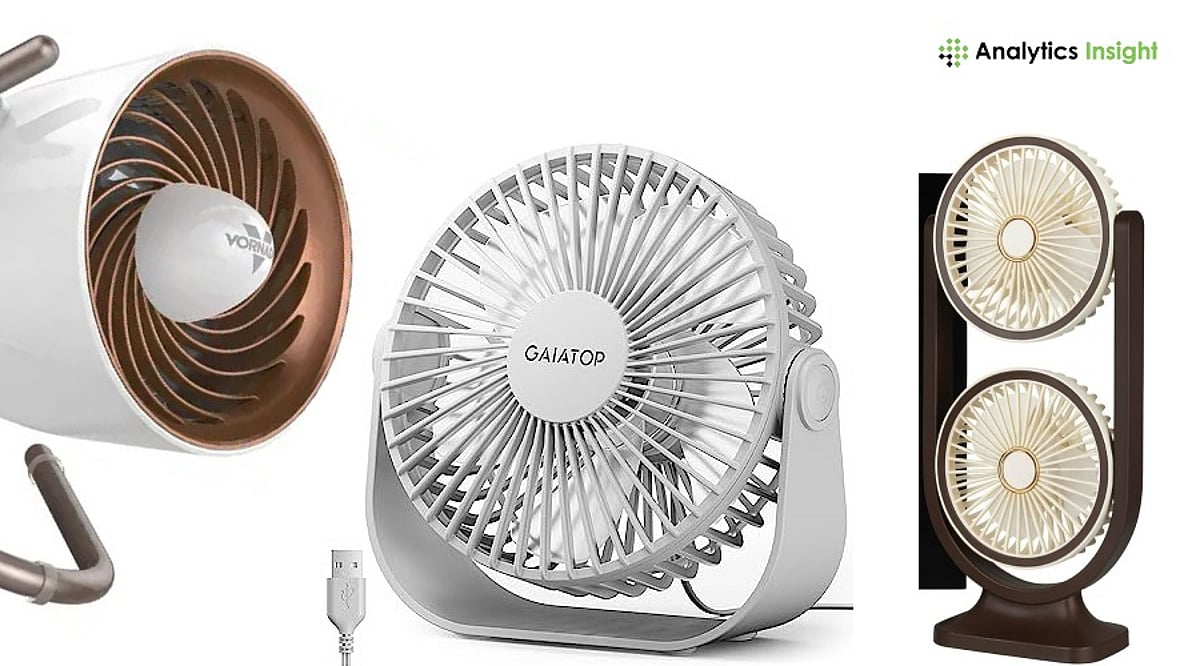
    The AGARO Signify USB Twin Fan has two individual adjustable fan heads that allow the direction of airflow to be adjusted in two directions at once. Being powered by USB, it is compatible with both laptop and desktop computers as well as docking stations and portable chargers without needing an additional power socket. The brushless engine ensures quiet operation but keeps high air performance.

    Best for: Professionals using dual-monitor setups or shared workstations.

    Portronics Aero Breeze 2-in-1 Fan

    The Portronics Aero Breeze works as both a table fan and a hanging fan. This provides greater flexibility and portability. This includes having a rechargeable battery, variable fan speed, and a portable frame that makes it easy to carry from room to room and outdoors. USB charging makes it easy to recharge the fan using a laptop, power bank, or USB adapter.

    Best for: Hybrid workers, campers, and users seeking a multipurpose cooling solution.

    Crompton HighSpeed Torpedo

    The Crompton High Speed Torpedo Table Fan is made for those users who want a fan providing high air volume. This fan has a heavy-duty copper motor along with high-lift blades to provide good airflow in large rooms. There are features such as oscillation, tilting, and durable body construction that make it more durable.

    Best for: Larger home offices or workspaces that require high-velocity cooling.

    What to Consider Before Buying a Desk Fan

    The ideal desk fan depends on workspace size and usage. Compact rechargeable models suit personal desks and remote workers, while high-speed table fans provide better cooling for larger home offices. Experts also recommend adjustable tilt and oscillation to improve air circulation without increasing power consumption. Attributes like strong performance, adjustable airflow, energy-saving motors, and battery backup are preferred over low prices. An appropriate model will always offer greater productivity.

    FAQs

    1. Which desk fan is the best choice for home office use?
      The Atomberg Renesa is a strong choice as it combines an energy-efficient BLDC motor, quiet performance, multiple speed settings and consistent airflow for long working hours.
    2. Are rechargeable desk fans worth buying in 2026?
      Yes. Rechargeable desk fans provide cordless operation, USB-C charging and battery backup, making them ideal for remote work, travel, outdoor use and temporary power interruptions.
    3. What is the advantage of choosing a BLDC motor fan?
      BLDC motor fans consume significantly less electricity, produce less noise, generate efficient airflow and typically last longer than fans powered by conventional induction motors.
    4. How do I choose the right desk fan for my workspace?
      Select a fan based on room size, airflow requirement, portability, power source, oscillation, adjustable tilt, noise level and whether battery operation is necessary.
    5. Are table fans better than compact USB desk fans?
      Table fans offer stronger airflow and wider coverage for larger rooms, while USB desk fans are better suited for personal cooling at individual workstations and study desks.

  • Satellite Congestion Threatens Ground-Based Astronomy: A Growing Challenge for Telescopes

    Satellite Congestion Threatens Ground-Based Astronomy: A Growing Challenge for Telescopes

    The night sky, once a pristine canvas of stars and galaxies, is increasingly crisscrossed by artificial satellites. Thousands of these spacecraft now orbit Earth daily, providing essential services like global internet, communication, and navigation. However, this rapid proliferation is creating a significant problem for astronomers: satellite crowding is blinding telescopes and threatening our ability to explore the universe.

    While satellites have revolutionized modern life—enabling faster internet, precise GPS, weather monitoring, and emergency communications—their growing numbers come with a cost. Every satellite reflects sunlight, leaving bright streaks across telescope images. These streaks can obscure faint celestial objects, corrupting valuable data and making astronomical observations slower, more difficult, and more expensive.

    Radio telescopes face an additional challenge: satellites emit radio signals that interfere with the weak cosmic signals scientists are trying to detect. This interference can render observations useless, especially for projects studying distant galaxies, exoplanets, and the early universe.

    The problem is accelerating. Lower launch costs and the demand for global connectivity have spurred companies and governments to deploy massive satellite constellations. Without careful planning, the number of satellites in orbit could exceed 100,000, a threshold that some experts warn could make ground-based astronomy nearly impossible.

    Scientists are not opposed to satellite technology, but they advocate for a balance. Proposed solutions include using darker materials on satellites to reduce reflectivity, better coordination between satellite operators and observatories to avoid imaging conflicts, and responsible space policies that prioritize both technological progress and scientific discovery.

    The night sky belongs to everyone. Protecting it for future generations requires immediate action. By adopting smarter satellite designs, fostering collaboration, and implementing thoughtful regulations, we can preserve our ability to study the cosmos while still reaping the benefits of satellite technology.

    Key Takeaways

    • Satellite crowding creates bright streaks and radio interference that disrupt astronomical observations.
    • Modern telescopes, designed to study faint objects, are particularly vulnerable to these disruptions.
    • Proposed solutions include darker satellite materials, improved coordination, and responsible space policies.
    • Balancing technological growth with astronomical research is essential for future discoveries.
  • 7 Legendary Automobiles That Define Global Automotive Excellence

    7 Legendary Automobiles That Define Global Automotive Excellence

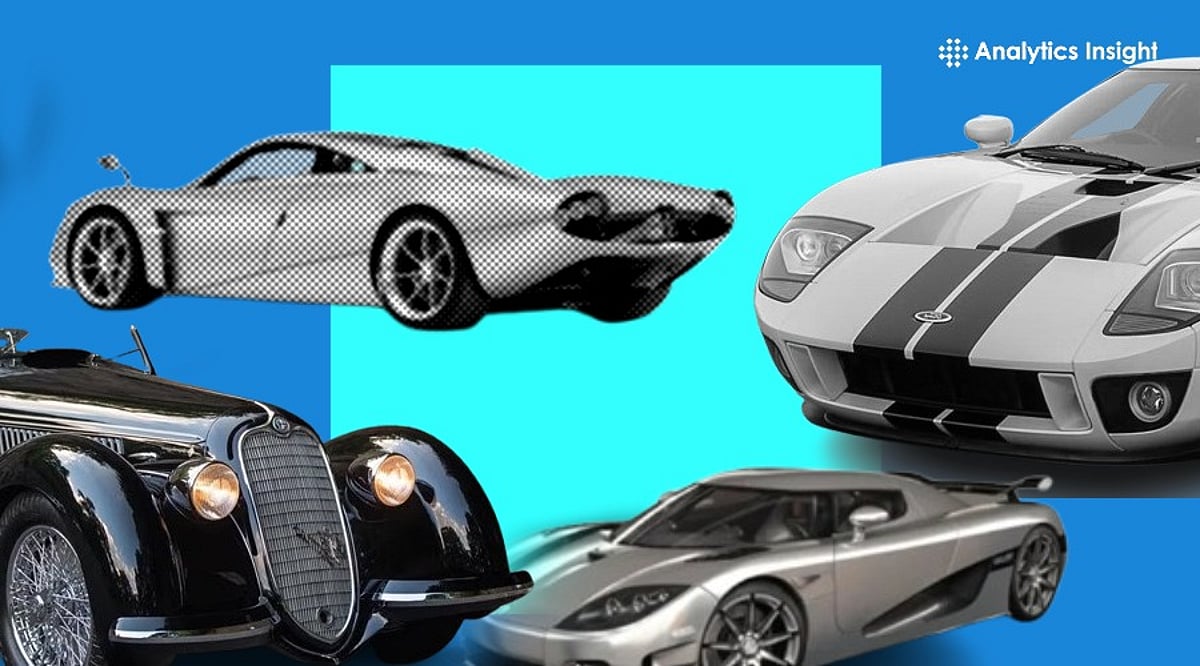
    Some cars transcend transportation, becoming timeless legends through groundbreaking engineering, unforgettable design, and a lasting influence on the global automotive industry. Models like the Ferrari 250 GTO and Porsche 911 remain highly sought after for their rarity, racing heritage, exceptional craftsmanship, and enduring value. These legendary automobiles continue to inspire enthusiasts and collectors worldwide, proving that true automotive excellence never goes out of style or loses its significance.

    Whether they introduced groundbreaking engineering, dominated motorsport, or defined an era, these iconic cars continue to command extraordinary prices decades later. Their rarity, technological innovation, racing pedigree, craftsmanship, and historical significance make them some of the most sought-after collector’s items in the world.

    These qualities drive the global collector car market. The Ferrari 250 GTO, for example, has sold at auction for tens of millions of dollars, making it one of the most expensive cars ever sold. Meanwhile, the Porsche 911 has continued to evolve while staying true to its original identity and is currently priced between Rs. 1.99 crore and Rs. 4.26 crore in India. Another enduring icon, the Mercedes-Benz 300SL Gullwing, remains highly coveted, regularly fetching millions of dollars in the collector market.

    Legendary Cars That Continue Inspiring Collectors Around the World Today: Top 7

    Ferrari 250 GTO

    No other car has really taken on that legendary reputation as the Ferrari 250 GTO did. It was manufactured from 1962 to 1964 and used in Grand Touring races. The car arrived with a 3.0-liter naturally aspirated V12 engine, and it was exceptionally strong but also quite reliable, not just fast on paper. Only 36 of these were made by the company, so it ends up being one of the rarest collector vehicles you can actually find in the timeline of cars.

    Porsche 911

    Porsche 911 shows how a well-designed thing can keep evolving while still holding onto its original character. The 911 stayed loyal to its rear-engine layout and that iconic silhouette while quietly absorbing the engineering upgrades of each new period in which it launched. It is well known for its balance, steering feel, and overall engineering strength, so it continues to rank among the best sports cars you can buy today. In India, the latest variants are often listed in the range of Rs. 1.99 crore to Rs. 4.26 crore.

    Ford Mustang

    With the introduction of the Ford Mustang in 1964, Ford opened up a whole new category known as the ‘pony car’. Sporty looks, V8 engine, and affordable price made the Mustang a huge success amongst young people. Its fame from Hollywood movies and participation in motorsport made it a household name. Even today, early-model Mustangs are the most desirable American classics worldwide.

    Lamborghini Miura

    Known as the first true supercar, the Lamborghini Miura revolutionized the concept of performance in the late 1960s. This car was equipped with a revolutionary mid-mounted V12 engine and featured a very low-slung body style that set new standards for supercars. The Miura produced around 350 horsepower in its early models and proved that engineering and design could be beautifully combined, inspiring practically all subsequent supercars.

    Jaguar E-Type

    The Jaguar E-Type is considered to be one of the most beautiful cars in the world. Released in 1961, this car offered beautiful styling along with remarkable technical characteristics. This car gained recognition for its beautiful lines and excellent performance, all at a reasonable price. Many years have passed since then, but the Jaguar E-Type remains one of the most famous British automotive exports.

    Mercedes-Benz 300SL Gullwing

    Mercedes-Benz 300SL Gullwing is remembered mostly for those gull-wing doors that open sort of upward, but there was more going on underneath it too. It had real innovation packed in, not just styling. People often point out that it was the first car ever to rely on fuel injection, and that choice gave it great performance for its era. Even today, you can still see why it’s often mentioned as one of the more technologically advanced classics.

    Toyota 2000GT

    Toyota 2000GT kind of flipped the script on how many folks viewed Japanese cars. It arrived in the late 1960s and looked stunning, but it wasn’t just a pretty body. The engineering of the period shows in the way it drives, with solid performance and a design that still feels attractive. In a broader sense, it proved that Japanese automakers could go head-to-head with the best European sports car makers, not just chase them from the sidelines. Since it’s rare and historically important, it has become one of the most valuable Japanese classics, the kind people collect with serious care.

    Final Takeaway

    Automotive icons are not only about performance but also about the meanings they represent and the contributions they have made. Ferrari 250 GTO, which holds an all-time auction record, the Porsche 911 that remains popular today, and the Mercedes-Benz 300SL Gullwing, which is technologically advanced- all these cars have found a place in automotive history for these attributes. Given their success in racing, popularity in pop culture, and exceptional craftsmanship, these cars are likely to remain sought after by automotive fanatics worldwide. Long past the time they were taken off the production line, these cars have proven themselves to be excellent examples of engineering; it goes without saying that real automotive icons do not diminish in value.

    FAQs

    Why is the Ferrari 250 GTO considered the world’s most valuable collector car?

    The Ferrari 250 GTO is prized for its extreme rarity, with only 36 examples built, along with its racing success, iconic V12 engine, and record-breaking auction prices.

    What makes the Porsche 911 a timeless sports car?

    The Porsche 911 has retained its signature rear-engine layout and classic design while continuously evolving with modern technology, performance upgrades, and exceptional driving dynamics over decades.

    Why is the Lamborghini Miura called the first true supercar?

    The Lamborghini Miura introduced a mid-mounted V12 engine and revolutionary styling, setting new standards for performance and inspiring generations of supercars that followed.

    Which legendary car changed the perception of Japanese sports cars?

    The Toyota 2000GT showcased Japan’s engineering excellence, stylish design, and strong performance, proving Japanese automakers could compete with Europe’s finest sports car manufacturers.

    Why do classic legendary cars continue appreciating?

    Limited production, historical significance, engineering innovation, racing heritage, and strong collector demand make legendary classic cars highly desirable and increasingly valuable in the global collector market.

  • Dogecoin Price Forecast: Can DOGE Reach $0.12 After Defending the $0.077 Support Level?

    Dogecoin Price Forecast: Can DOGE Reach $0.12 After Defending the $0.077 Support Level?

    Dogecoin (DOGE) is currently holding strong near the critical support level of $0.077, sparking renewed optimism among traders and analysts. The question on everyone’s mind: Can this meme coin rally to $0.12 and beyond? Let’s dive into the technical and market factors that could drive a potential breakout.

    Why the $0.077 Support Matters

    In technical analysis, support levels are crucial areas where buying interest typically emerges, preventing further price declines. For Dogecoin, the $0.077 region has been a reliable demand zone during recent trading sessions. Each time DOGE approached this level, buyers stepped in, pushing the price back up. This repeated defense suggests that sellers have not yet gained full control, providing a strong foundation for a potential recovery.

    While a support level doesn’t guarantee higher prices, it does offer a base for future upward movement. As long as DOGE holds above $0.077, traders will remain watchful for a breakout.

    Resistance Levels Stand in the Way

    Despite the solid support, Dogecoin faces several hurdles before a rally to $0.12 becomes viable. The first significant resistance lies between $0.078 and $0.081. A decisive move above this area would indicate fresh buying strength. Next, the $0.082 to $0.09 range poses a psychological barrier where sellers may emerge.

    According to analysts, a clean break above $0.09 could open the door to $0.10. If bullish momentum persists, the next major target would be $0.12. However, each resistance level requires confirmation through strong trading volume to validate the breakout.

    Strong Volume and Market Sentiment

    Price increases backed by weak volume often fizzle out. For Dogecoin, a sustainable rally requires both higher prices and increased trading activity. Strong volume signals genuine buyer conviction, reducing the risk of a sudden pullback. Market participants are closely watching volume patterns as a key indicator of the rally’s health.

    Broader Crypto Market Influence

    Dogecoin rarely moves in isolation. The broader cryptocurrency market, particularly Bitcoin’s direction, often dictates DOGE’s trajectory. Recent positive sentiment across the crypto sector—boosted by optimistic comments from U.S. political leaders—has helped DOGE maintain stability near its support level. A strong overall market environment would provide tailwinds for Dogecoin’s potential rally.

    Whale Activity Boosts Confidence

    Large holders, or “whales,” have been accumulating Dogecoin, indicating confidence in future price appreciation. Whale accumulation typically occurs after careful market analysis, making it a bullish signal. Additionally, network activity remains healthy, with active wallet addresses showing consistent participation—a positive sign for long-term adoption.

    What Could Derail the Rally?

    The primary risk is a breakdown below $0.077. If that happens, selling pressure could escalate, leading to a decline toward $0.072 and potentially $0.06. A break below key support would invalidate the bullish setup and signal a deeper correction.

    Outlook and Key Takeaways

    Dogecoin stands at a critical juncture. Holding the $0.077 support keeps the bullish case alive, while successfully breaching resistance levels—especially with strong volume—could pave the way for a rally to $0.12. Traders should monitor the $0.081 to $0.082 area as the first major test. Until a confirmed breakout occurs, the market remains in a waiting phase. Nonetheless, improved sentiment, whale activity, and market strength provide a positive backdrop.

    Frequently Asked Questions

    1. Can Dogecoin realistically rally to $0.12? Yes. Maintaining support at $0.077 and breaking above $0.081 and $0.09 with strong volume makes the $0.12 target achievable.
    2. Why is the $0.077 level so important? It serves as a crucial demand zone where buyers have repeatedly stepped in, proving sellers lack control and establishing a recovery base.
    3. What are the key resistance levels? Initial resistance is between $0.078 and $0.081, followed by $0.09 and $0.10 psychological barriers.
    4. How do whales and volume impact DOGE? Increased volume confirms buyer conviction during breakouts, while whale accumulation signals professional investor confidence.
    5. What happens if Dogecoin falls below $0.077? A breakdown would invalidate the bullish structure and likely lead to a sell-off toward $0.072 and potentially $0.06.
  • XRP Price Outlook: Could the Token Climb Back to $2 in 2026?

    XRP Price Outlook: Could the Token Climb Back to $2 in 2026?

    Key Takeaways

    • XRP requires a stronger crypto market to revisit the $2 level.
    • Institutional ETF demand could be a major price catalyst.
    • Ripple’s business expansion and legal clarity support long-term confidence.

    XRP remains one of the most closely watched assets in the cryptocurrency market. After a strong rally in previous years, the token entered 2026 with lower prices as the broader market lost momentum. A return to $2 is possible, but not guaranteed. The coming months will determine whether XRP starts another significant recovery or stays near current levels.

    Current Price Situation

    As of July 2026, XRP trades around $1.30 to $1.35. The token has fallen about 26% since the start of the year and remains nearly 63% below its July 2025 peak of roughly $3.65. Despite this decline, XRP still ranks among the largest cryptocurrencies by market capitalization. Its strong community, established use case, and connection to Ripple’s payment business keep traders attentive. The current price leaves room for a major recovery if market conditions improve.

    The Broader Crypto Market Will Lead the Way

    XRP’s future value depends heavily on the overall cryptocurrency market. Historically, XRP has performed well during bullish cycles, often gaining momentum alongside Bitcoin. When Bitcoin rallies, investor confidence typically spreads across the market, creating favorable conditions for XRP. If Bitcoin sees a new rally, XRP could attract renewed buying interest. Conversely, if Bitcoin trades sideways or weakens, XRP may struggle to break above the key $2 resistance level. Market sentiment remains the most important factor.

    Institutional Demand Could Be a Game Changer

    Institutional investors are far more important in the crypto market than in previous years. A major development for XRP in 2026 is easier access through exchange-traded funds (ETFs). These products allow professional investors to gain exposure to XRP via regulated financial markets. Strong inflows into XRP ETFs could increase liquidity and attract new capital. Greater institutional participation may also reduce price swings driven by short-term retail trading. If ETF demand continues to grow, XRP could receive the support needed for another major price move.

    Regulatory Clarity Boosts Confidence

    Regulation has been one of the biggest challenges for XRP over the past several years. Legal uncertainty created hesitation among individual and institutional investors. However, that situation has improved significantly. Much of the major legal dispute surrounding Ripple has reached a resolution, giving XRP a clearer regulatory position than many other cryptocurrencies. This removes an important source of uncertainty. A stable legal environment could encourage more financial companies and large investors to consider XRP as part of their digital asset strategy.

    Ripple’s Business Growth Matters

    XRP’s success also depends on Ripple’s business expansion. Ripple continues to build payment solutions focused on faster and cheaper international money transfers. More business partnerships could increase real-world use of the XRP ecosystem. Banks, payment companies, and financial institutions remain important targets for Ripple. New agreements, higher payment volumes, and continued business expansion could strengthen confidence in XRP. Any major acquisition or technology upgrade could also improve the long-term outlook. Strong business growth often creates positive sentiment around the cryptocurrency linked to the Ripple network.

    Market Activity Offers Clues

    Trading activity often provides useful signals about future price direction. ETF flows, whale transactions, exchange balances, and blockchain data are important indicators for XRP. Large investors, often called whales, control significant amounts of XRP. Periods of whale accumulation have often preceded strong price rallies. While this does not guarantee higher prices, it remains one of the signals that many market analysts follow closely. Healthy trading volume and rising market activity could also support a stronger recovery.

    Risks Remain

    Several challenges could prevent XRP from reaching $2 during 2026. A weak crypto market would make a recovery much harder. Low demand for XRP ETFs could reduce fresh investment. Slower adoption of Ripple’s payment services may weaken long-term confidence. Profit-taking by large holders could place extra selling pressure on the market. Global economic uncertainty, higher interest rates, or lower demand for risk assets could also affect cryptocurrency prices across the board.

    Why This Matters

    This analysis outlines a realistic roadmap for XRP’s 50% recovery to the $2 milestone. For digital asset investors, XRP’s current consolidation represents a critical turning point heavily reliant on institutional capital from newly launched ETFs and post-litigation regulatory clarity.

    Can XRP Reach $2 Again?

    A rise from about $1.33 to $2 would require an increase of roughly 50%. Such a move falls within the normal price swings that XRP has shown in previous market cycles. Several market analysts continue to publish positive long-term forecasts for XRP, some even expecting prices well above $2 under favorable conditions. However, these predictions depend on stronger crypto market performance, continued institutional investment, Ripple’s business expansion, and stable economic conditions.

    For now, XRP still has a realistic chance to return to $2 during 2026. Success will depend on several important developments rather than a single event. If market confidence improves and Ripple continues to strengthen its business, XRP could regain lost ground and move closer to that important price level.

    Frequently Asked Questions

    1. Can XRP reach $2 again in 2026? Yes. Reaching $2 requires a 50% increase from current levels. This is highly achievable if broader crypto market momentum recovers and institutional interest through ETFs remains steady.
    2. What is the biggest factor behind XRP’s price? The overall direction of the crypto market, especially Bitcoin’s price action, remains the primary catalyst. General investor sentiment dictates whether XRP can break through key resistance levels.
    3. Why are XRP ETFs important? ETFs provide regulated access for institutional investors. This opens the door to massive professional capital inflows, which boosts market liquidity and helps stabilize extreme price volatility.
    4. How does Ripple affect XRP? XRP is the liquidity bridge for Ripple’s payment network. New bank partnerships and higher cross-border transaction volumes directly increase the token’s real-world utility and long-term investor confidence.
    5. What could stop XRP from reaching $2? A prolonged crypto bear market, weak ETF demand, slow enterprise adoption by financial institutions, aggressive whale profit-taking, or broader global economic downturns could easily cap price growth.

    Disclaimer: This article is for informational purposes only and does not constitute investment advice. Cryptocurrency investments are risky; always do your own research (DYOR) before making any financial decisions.

  • Top Generative AI Certification Courses for 2026: From Beginner to Advanced

    Top Generative AI Certification Courses for 2026: From Beginner to Advanced

    Generative AI has become one of the most transformative technologies in today’s digital landscape. Businesses across industries are leveraging AI to enhance customer service, automate workflows, generate content, analyze data, and boost productivity. As demand for AI expertise grows, employers actively seek professionals who understand generative AI and can apply it effectively.

    Learning AI has never been more accessible. Numerous trusted platforms now offer certification programs tailored to both beginners and seasoned professionals. Some courses focus on foundational concepts, while others dive into advanced topics like large language models, prompt engineering, AI agents, and application development. Choosing the right certification depends on your career goals, current skill level, and the knowledge you need to succeed.

    Below are some of the best generative AI certification courses to consider in 2026.

    Coursera – Generative AI: Introduction and Applications

    This introductory course is ideal for anyone wanting to understand generative AI from the ground up. It explains core concepts in simple language and illustrates how different industries apply AI in real-world scenarios. Topics include popular AI tools, foundation models, prompt engineering basics, and responsible AI practices. Real-world examples make the material accessible even to non-technical learners.

    Coursera – Generative AI for Everyone Specialization

    Designed for business professionals, students, managers, and educators, this specialization emphasizes practical uses of generative AI in the workplace. It covers how organizations use AI to improve productivity and decision-making, along with prompt design, responsible AI, ethical considerations, and digital transformation. No programming knowledge is required.

    Coursera – Generative AI for Content Creation

    Content creation is one of the most common applications of generative AI. This course focuses on leveraging AI to produce blogs, marketing copy, social media posts, presentations, emails, and more. Lessons cover writing effective prompts, refining AI-generated content, maintaining quality, and the ongoing importance of human creativity.

    Udemy – Complete Generative AI Course with LangChain and Hugging Face

    This advanced, hands-on course is perfect for developers. It covers developing modern applications using LangChain and Hugging Face, including retrieval-augmented generation, vector databases, embeddings, prompt engineering, AI agents, and large language models. Numerous practical exercises help you build real AI-powered apps.

    BITS Pilani Digital – Generative AI and Agentic AI Course

    Offered by BITS Pilani Digital, this certification blends generative AI with the emerging field of agentic AI. The structured curriculum combines theory with practical business applications, covering foundation models, AI agents, autonomous workflows, prompt engineering, and enterprise AI solutions. Industry case studies and projects reinforce learning.

    FutureSkills Prime – Fundamentals in Generative AI and Machine Learning

    This beginner-friendly certification builds a solid foundation in machine learning and generative AI. It starts with simple concepts and gradually introduces more advanced topics like neural networks, foundation models, and responsible AI. The course prepares learners for future advanced certifications.

    Microsoft Learn – Generative AI for Beginners

    Microsoft provides a free, self-paced course featuring tutorials and learning materials for hands-on learners. Topics include large language models, prompt engineering, semantic search, vector databases, AI agents, and responsible AI. The course is regularly updated to reflect the latest trends.

    Great Learning – IIT Bombay Certificate in Generative AI

    This certification combines academic rigor with practical experience. It covers fundamentals before progressing to advanced topics like prompt engineering, large language models, and industry applications. Expert guidance, live sessions, and project-based learning help learners understand real-world AI use cases.

    How to Choose the Right Generative AI Certification

    The best certification depends on your career goals and background. Beginners may prefer introductory courses from Coursera, Microsoft Learn, or FutureSkills Prime. Business-oriented learners who want to understand AI’s impact may benefit from “Generative AI for Everyone.” Developers and technical professionals should consider courses covering LangChain, Hugging Face, and agentic AI. Before deciding, compare curricula, practical projects, instructor expertise, certification value, and how often content is updated.

    Final Thoughts

    Generative AI is now an essential skill across many industries. Certification programs provide a clear path to learning this technology, but hands-on projects are what truly build expertise. The demand for AI skills continues to grow, making now a great time to invest in your education.

    Frequently Asked Questions

    1. Which is the best Generative AI certification course for beginners? Courses from Coursera, Microsoft Learn, and FutureSkills Prime provide a strong foundation.
    2. Are Generative AI certifications worth it in 2026? Yes. They help build practical AI skills and improve career opportunities across many industries.
    3. Which course is best for developers? The Udemy course with LangChain and Hugging Face is a strong choice for developers seeking hands-on experience.
    4. Do these courses require coding knowledge? Not all of them. Many are suitable for non-technical learners, while others focus on programming and AI development.
    5. What should I consider before choosing a certification? Compare the curriculum, practical projects, certification value, instructor expertise, and how often the content is updated.
  • Siemens’ Smart Factory Blueprint: Integrating IoT, AI, and Digital Twins for Next-Gen Manufacturing

    Siemens’ Smart Factory Blueprint: Integrating IoT, AI, and Digital Twins for Next-Gen Manufacturing

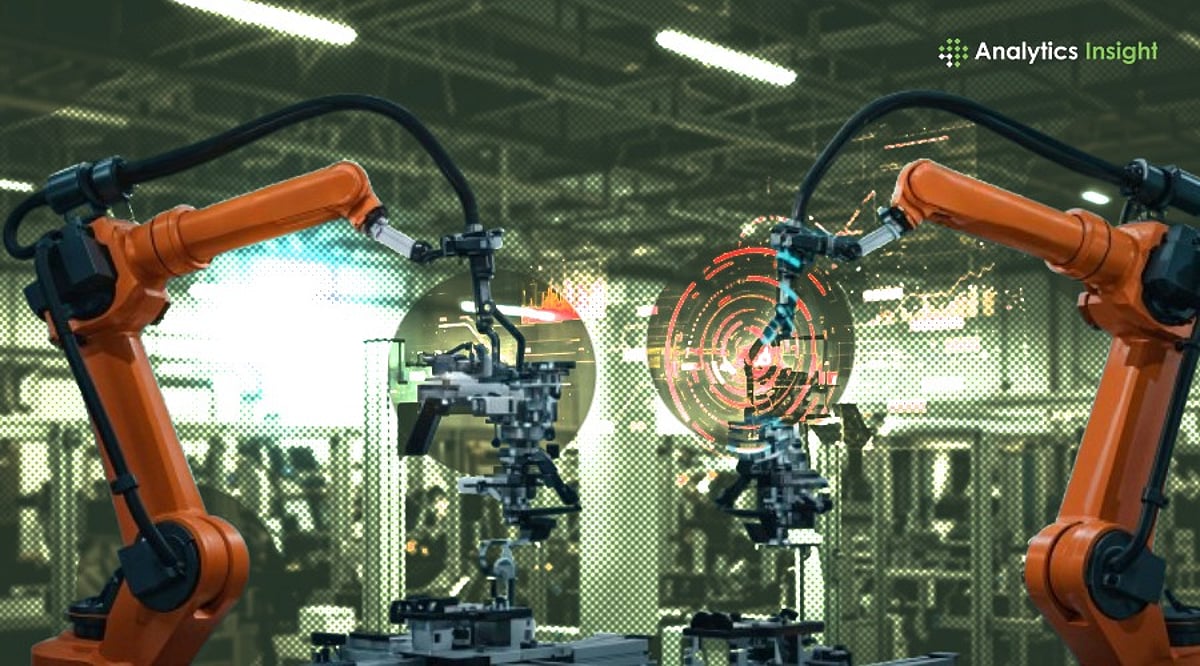
    Manufacturers need smarter ways to increase productivity while reducing downtime and operational complexity. Siemens is building next-generation factories by combining IoT connectivity, AI-driven insights, and digital twin technology into a unified digital ecosystem. This approach enables continuous monitoring, virtual testing, and data-driven optimization across production.

    The Three-Part System Behind the Strategy

    Siemens leans on three technologies: Industrial IoT, AI, and digital twins. IoT sensors and connected machines log real-time data from the factory floor. This raw data feeds into the AI layer, which identifies bottlenecks, flags equipment likely to fail, and runs production scenarios before commitments are made. The digital twin—a working copy of the factory—lets engineers experiment without touching physical assets. Siemens has bundled all three into a single platform called Digital Twin Composer.

    Digital Twin Composer: A Unified Platform

    Unveiled at CES 2026, Digital Twin Composer merges 2D and 3D digital twin data with live operational information from manufacturing execution systems, plus physics-based simulation built on NVIDIA Omniverse libraries. The output is a photorealistic virtual environment mapping an entire plant, not just a single machine. This marks the point where an industrial digital twin stops being a design tool and begins functioning as a live operational model.

    Where the Tool Lives Inside Siemens’ Stack

    Digital Twin Composer sits within Siemens Xcelerator, the company’s broader software portfolio, and will be available on the Xcelerator Marketplace in mid-2026. One Xcelerator tool, Tecnomatix, handles manufacturing directly—optimizing material flow, equipment use, and supporting virtual commissioning to validate automation logic and production workflows before physical deployment. This cuts commissioning time and engineering risk.

    What Early Numbers Show

    PepsiCo offers the clearest evidence. Using Digital Twin Composer to transform select U.S. manufacturing and warehouse facilities, the company recreated machines, conveyors, pallet routes, and operator paths with physics-level accuracy. The pilot identified up to 90 percent of design issues in advance and lifted throughput by 20 percent before construction began. PepsiCo plans to scale globally.

    The Bigger Platform Siemens is Building

    Siemens ties all of this to what it calls the industrial metaverse—a unified environment where engineering, operations, and AI teams share the same live, contextualized model of the factory. Together with NVIDIA, Siemens is working toward an Industrial AI Operating System, a shared foundation linking design, engineering, and daily operations across a plant’s full lifecycle.

    Analysts at Verdantix note that large-scale digital twin adoption has moved slowly, with barriers outside the technology itself. Manufacturers need IT and OT data convergence, stronger cybersecurity, proper data governance, and core systems like MES and MOM in place before a digital twin can generate real value.

    Final Thoughts

    The competitive edge in manufacturing is shifting from who collects the most data toward who can act on it fastest and with the least risk. Siemens has built a platform designed for that shift, and PepsiCo’s early numbers give other manufacturers a concrete benchmark. The next test will be whether that performance holds once Digital Twin Composer moves from early access into wide industrial use.

  • How Carbon Nanotubes Are Poised to Transform AI Chips, EV Batteries, Healthcare, and Future Tech

    How Carbon Nanotubes Are Poised to Transform AI Chips, EV Batteries, Healthcare, and Future Tech

    Carbon nanotubes are one of the most extraordinary materials ever discovered. Despite being invisible to the naked eye, these tiny carbon structures possess remarkable strength and electrical properties that could reshape entire industries. As production techniques advance, carbon nanotubes are set to enhance AI chips, electric vehicle (EV) batteries, healthcare, and a wide array of future technologies.

    What Makes Carbon Nanotubes Special?

    A carbon nanotube is formed when a thin sheet of carbon atoms rolls into a hollow tube. Some nanotubes consist of a single layer, while others have multiple concentric layers. They are just a few nanometers wide but can grow to several centimeters in length. These structures are incredibly lightweight yet about 100 times stronger than steel on a weight-for-weight basis. They also conduct electricity exceptionally well—some behave like metals, others like semiconductors—and efficiently transfer heat, helping electronic devices stay cool during operation.

    Revolutionizing AI Chip Performance

    Artificial intelligence demands powerful computer chips, and traditional silicon is nearing its physical limits. Smaller silicon chips generate more heat and consume more electricity. Carbon nanotubes offer a solution through transistors that move electricity with minimal resistance, enabling AI chips to operate faster and more efficiently. Their superior heat dissipation also helps chips run cooler, extending lifespan and reducing energy consumption in large data centers. While commercial adoption is still in development, carbon nanotubes are emerging as a leading candidate for next-generation computing.

    Advancing Electric Vehicle Batteries

    In EV batteries, carbon nanotubes don’t replace lithium but significantly improve battery performance. They facilitate better electrical flow, leading to faster charging, increased capacity, and longer cycle life. Because only tiny amounts are needed, more space remains for energy storage, potentially allowing larger batteries without added weight. Carbon nanotubes also stabilize silicon anodes, which can store more energy than traditional graphite anodes, further boosting battery efficiency and durability.

    Transformative Healthcare Applications

    Medicine stands to benefit greatly from carbon nanotubes. They can serve as targeted drug delivery vehicles, carrying medicine directly to diseased cells while sparing healthy tissue and reducing side effects. In cancer treatment, nanotubes absorb near-infrared light and convert it to heat, which can destroy tumors with minimal collateral damage. Additionally, carbon nanotube-based sensors are highly sensitive, enabling early disease detection through tiny changes in the body. Flexible health monitors made from these materials could track heart rate, blood sugar, and other vital signs continuously.

    Remaining Challenges

    Despite their promise, several hurdles must be overcome. High-quality carbon nanotubes remain expensive to produce, and manufacturing methods need to scale while ensuring uniformity. Long-term safety studies are essential before medical applications become routine, and industry-wide quality standards are still being developed.

    The Road Ahead

    Carbon nanotubes are already used in some batteries, electronics, and composite materials. As production improves, their adoption will accelerate. Experts project the global carbon nanotube market will grow from approximately $8.8 billion in 2026 to nearly $24.5 billion by 2034, driven by AI, EVs, healthcare, electronics, and energy storage. Though tiny, carbon nanotubes hold immense potential to power faster AI, smarter medical devices, and more efficient energy systems.

    Frequently Asked Questions

    1. What are carbon nanotubes?

    Carbon nanotubes are minuscule hollow tubes made of carbon atoms. They are extraordinarily strong, lightweight, and excellent conductors of electricity and heat.

    2. Why are carbon nanotubes important for AI chips?

    They enable transistors that switch faster and generate less heat, leading to AI chips that are more powerful and energy-efficient than current silicon-based designs.

    3. How do carbon nanotubes improve EV batteries?

    They enhance electrical conductivity inside the battery, supporting faster charging, higher energy density, and longer lifespan, and also help stabilize advanced anode materials.

    4. Can carbon nanotubes be used in healthcare?

    Yes, research is exploring them for targeted drug delivery, thermal cancer ablation, ultra-sensitive disease detection, and wearable health monitors.

    5. What are the main challenges?

    High production costs, scalability issues, quality control, and rigorous safety testing are the primary barriers to widespread adoption.

  • World’s Most Expensive Luxury Cars: Rankings by Price (2026)

    World’s Most Expensive Luxury Cars: Rankings by Price (2026)

    Overview: The Pinnacle of Automotive Luxury

    The Rolls-Royce La Rose Noire Droptail is the most expensive new car in the world, with an estimated price of $30 million to $32 million. Most vehicles on this list are produced in extremely limited numbers, driving their value sky-high. Luxury materials, bespoke designs, and powerful engines combine to create these automotive masterpieces.

    These cars transcend mere transportation—they embody luxury, beauty, and exceptional design. Costing millions of dollars and built in tiny quantities, they are coveted by wealthy collectors for their rarity and exclusivity. Every component receives meticulous attention, justifying their staggering price tags.

    1. Rolls-Royce La Rose Noire Droptail – $30–32 Million

    Topping the list, the Rolls-Royce La Rose Noire Droptail is the most expensive new car ever built. Priced between $30 million and $32 million, only four examples exist. Created by the Rolls-Royce Coachbuild division, its design draws inspiration from the Black Baccara rose. The interior features over 1,600 handcrafted wood pieces, lending the cabin a rich, organic feel. A removable hardtop offers two distinct driving experiences. Power comes from a 6.75-liter twin-turbo V12 engine producing about 593 horsepower, with a top speed of 155 mph (250 km/h).

    2. Rolls-Royce Boat Tail – ~$28 Million

    The Rolls-Royce Boat Tail ranks second, with an estimated price of $28 million. Only three units were built. Its standout feature is the rear deck, which opens like two wings to reveal a luxury picnic set complete with a table, chairs, and a parasol. Each Boat Tail was custom-built to the owner’s exact specifications, ensuring no two are identical.

    3. Bugatti La Voiture Noire – ~$18.7–19 Million

    Bugatti La Voiture Noire is valued at roughly $18.7 million to $19 million, and it is a one-of-a-kind model. It pays homage to the legendary Bugatti Type 57 SC Atlantic. The car is powered by an 8.0-liter quad-turbo W16 engine delivering 1,479 horsepower. Its combination of speed, luxury, and stunning design makes it an icon.

    4. Pagani Zonda HP Barchetta – ~$17–18 Million

    The Pagani Zonda HP Barchetta holds fourth place with a price range of $17 million to $18 million. Only three cars were ever made. It features a 7.3-liter V12 engine and a distinctive design with partially covered rear wheels. Its extreme rarity and unique styling make it one of the most valuable Pagani models ever produced.

    5. SP Automotive Chaos – ~$14 Million

    In fifth place, the SP Automotive Chaos has a top-tier version priced at around $14 million. The company claims it can produce up to 3,000 horsepower. Designed in Greece, it uses advanced materials and modern technology. Production is extremely limited, adding to its exclusivity.

    Other Highly Expensive Cars

    Several other ultra-luxury vehicles command high prices: the Rolls-Royce Sweptail (approx. $13 million, one-of-a-kind), Bugatti Centodieci (approx. $9 million, 10 units), Mercedes-Maybach Exelero (approx. $8 million, single unit), Pagani Huayra Codalunga (approx. $7.4 million, 5 units), and Bugatti Divo (approx. $5.8 million, 40 units).

    Most Expensive Production Cars

    Even production models with limited runs are extremely costly: Bugatti Tourbillon (~$4.6 million), Koenigsegg CC850 (~$3.7 million), Aston Martin Valkyrie (~$3 million), Pagani Utopia ($2.5–3 million), and Zenvo Aurora (~$2.8 million). These cars combine advanced technology, blistering speed, and rarity.

    Why These Cars Cost So Much

    Their astronomical prices stem from extremely limited production runs, handcrafted construction, and the use of premium materials like carbon fiber, titanium, rare wood, and fine leather. Many owners commission one-off designs, further boosting value. Rare components, luxury features, and powerful engines all contribute to their high price tags.

    Final Thoughts

    The Rolls-Royce La Rose Noire Droptail currently reigns as the world’s most expensive new car, priced between $30 million and $32 million. It is followed by the Rolls-Royce Boat Tail, Bugatti La Voiture Noire, Pagani Zonda HP Barchetta, and SP Automotive Chaos. While other ultra-expensive cars exist, all share breathtaking beauty, luxury, and uniqueness.

    Frequently Asked Questions

    1. Which is the most expensive car in the world? The Rolls-Royce La Rose Noire Droptail is the most expensive new car, with an estimated price of $30 million to $32 million. Only four examples exist.
    2. Why are some luxury cars so expensive? They are produced in very limited numbers, feature custom designs, use premium materials like carbon fiber, titanium, rare wood, and fine leather, and are often handcrafted to individual customer specifications.
    3. How many Bugatti La Voiture Noire cars were made? Only one Bugatti La Voiture Noire was ever produced, making it one of the rarest and most valuable cars globally.
    4. Which car is the second most expensive in the world? The Rolls-Royce Boat Tail ranks second, at around $28 million. Just three units were built, each customized for its owner.
    5. What makes the Rolls-Royce La Rose Noire Droptail unique? Its bespoke Coachbuild design inspired by the Black Baccara rose, interior with over 1,600 handcrafted wood pieces, removable hardtop, and powerful twin-turbo V12 engine.
  • How AI Agents Are Transitioning from Assistants to Autonomous Digital Workers

    How AI Agents Are Transitioning from Assistants to Autonomous Digital Workers

    Artificial intelligence has entered a new stage. In the past, most AI systems answered questions, wrote text, or helped users complete small tasks. Today, AI plays a much larger role. Modern AI agents can understand a goal, create a plan, use different software tools, check results, fix mistakes, and complete entire jobs with minimal human support. This evolution moves AI from a simple assistant to a digital worker that can handle complex tasks from start to finish.

    Key Takeaways

    • Reasoning models help AI solve complex problems through careful step-by-step decisions.
    • Autonomous workflows allow AI agents to complete entire business tasks with limited human support.
    • Memory, software tools, and multi-agent teamwork make AI more capable, reliable, and useful for enterprises.

    Reasoning Models Bring Better Decisions

    The latest AI models focus more on reasoning than on larger size. Earlier models mostly predicted the next word in a sentence. New reasoning models spend more time before they respond. They study the problem, divide it into smaller parts, test different solutions, and verify the final answer. This method helps them solve difficult problems with greater accuracy. Such models perform well in software development, mathematics, scientific research, legal work, and business planning because they can think through each step before acting.

    AI Agents Work Until the Goal Is Complete

    A normal language model usually gives one answer and stops. An AI agent works very differently. It first understands the goal, then creates a plan, selects the right tools, completes one task after another, checks the outcome, and makes changes if something goes wrong. The process continues until the final objective is achieved. This ability makes AI agents useful for long and complicated work rather than just simple conversations.

    Autonomous Workflows Change Business Operations

    Businesses now look beyond basic automation. Older automation systems followed fixed rules and worked well only when every step stayed the same. Autonomous workflows offer much more flexibility. AI agents can study new situations, collect information from different sources, use business software, connect with online services, create reports, and verify results before delivering the final output. This approach reduces manual effort and allows companies to complete many business processes with greater speed and accuracy.

    Teams of AI Agents Solve Bigger Problems

    Many organizations now use several AI agents instead of one large system. Each agent has a special role. One agent may collect information, another may write code, another may study data, while another may check quality or prepare documents. A manager agent coordinates all of them and combines their work into one final result. This teamwork enables faster task completion and better quality because every agent focuses on a specific responsibility.

    Software Tools Become Part of AI Work

    Modern AI agents do much more than produce text. They can use web browsers, databases, spreadsheets, cloud platforms, programming tools, email services, calendars, and customer management systems. Instead of only giving advice, they can complete real work inside these applications. This ability has become one of the biggest changes in AI because it allows agents to operate software just as a human employee would.

    Memory Makes AI More Useful

    Memory has turned into a significant aspect of modern AI agents. Short-term memory retains information about the present task, while long-term memory holds information about user preferences, company knowledge, and experiences from previous jobs. Some agents also maintain records of past mistakes and accomplishments. Thus, AI agents can leverage stored knowledge and experience to enhance future work rather than starting from scratch each time.

    New Enterprise Systems Support AI Agents

    Large companies now build special platforms to manage AI agents. These systems control task planning, memory, security, software access, and performance checks. They also monitor every action so that organizations can maintain safety and follow business rules. Human approval remains an important part of many business processes, especially when AI handles financial, legal, or sensitive information.

    Software Development Leads AI Adoption

    Software development has become one of the fastest areas for AI agent use. Modern agents can write code, test software, identify errors, review updates, prepare technical documents, and assist with system maintenance. Developers now spend less time on repetitive work and more time on design, innovation, and difficult technical problems. This change has improved productivity across many software teams.

    Why This Matters

    There are still some prominent challenges facing AI agents today. They can generate false information, misinterpret commands, and take wrong actions in tough situations. Safety and security remain key areas of concern, as AI agents may work on sensitive business systems or handle personal information. Companies must develop solid procedures for protecting data, monitoring AI agent behavior, validating outcomes regularly, and documenting every action taken.

    The Future of Autonomous AI

    The future of AI agents will focus less on conversation and more on completed work. Businesses already expect AI to research information, create reports, manage projects, analyze data, communicate with customers, and support daily operations. Better reasoning, stronger memory, smarter planning, and closer cooperation between multiple AI agents will make these systems even more capable. Over the next few years, AI will become an essential part of many industries, not because it can answer questions, but because it can complete valuable work from beginning to end with greater reliability and efficiency.

    Frequently Asked Questions

    1. What is an AI agent?
    An AI agent is a system that can plan, use tools, make decisions, and complete tasks instead of only answering questions.

    2. How are reasoning models different from traditional AI models?
    Reasoning models spend more time analyzing problems before they respond, which improves accuracy for complex tasks.

    3. What are autonomous workflows?
    Autonomous workflows allow AI to manage complete business processes by planning, executing tasks, checking results, and making corrections when needed.

    4. Why is memory important for AI agents?
    Memory helps AI remember user preferences, previous tasks, and useful knowledge, which leads to more personalized and efficient results.

    5. Which industries benefit the most from AI agents?
    Software development, healthcare, finance, customer service, legal research, marketing, sales, human resources, and business operations are among the industries that benefit the most.