Author: vitorcherulli

  • Big Data Essentials: Hadoop, Spark, Hive, and Kafka Explained Simply

    Big Data Essentials: Hadoop, Spark, Hive, and Kafka Explained Simply

    Data pours in from websites, mobile apps, online shopping platforms, banks, hospitals, factories, and smart devices. To make sense of it all, companies rely on powerful tools that store, process, analyze, and move massive datasets efficiently. Among the most popular are Hadoop, Spark, Hive, and Kafka. This guide breaks down what each tool does and how they work together.

    What Is Big Data?

    Big data refers to datasets so large that traditional software cannot handle them effectively. Every online payment, video stream, and message generates data. Businesses study this data to understand customers, improve products, detect fraud, predict trends, and make smarter decisions.

    Apache Hadoop

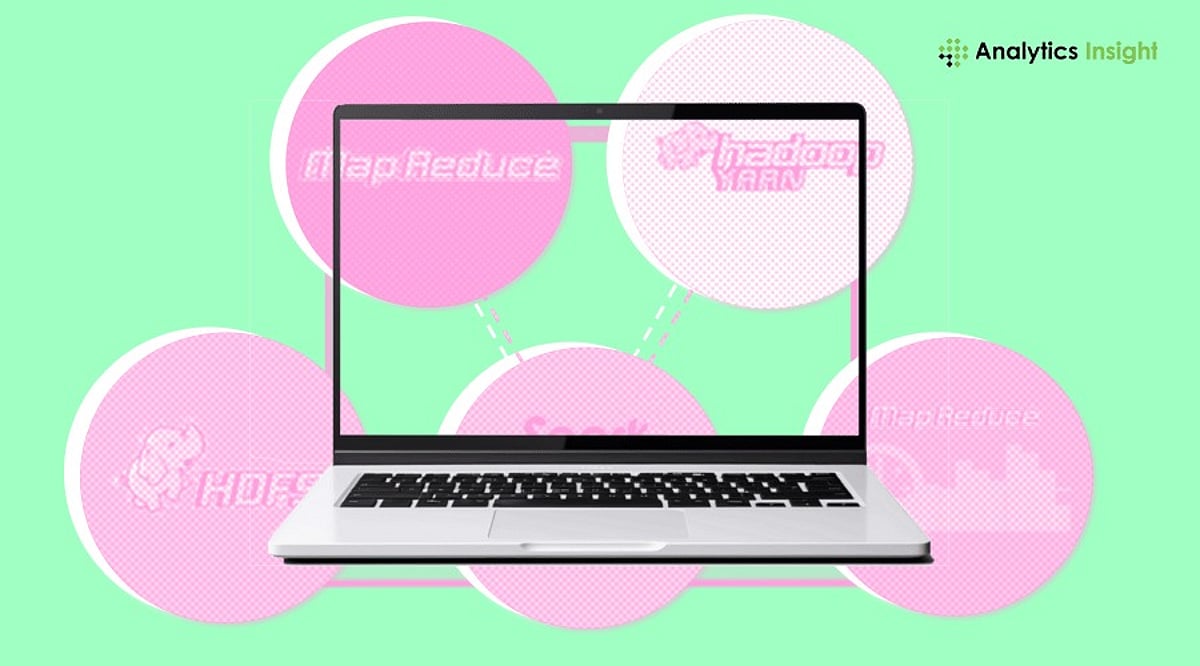
    Apache Hadoop is an open-source framework that stores and processes enormous datasets. Instead of saving everything on one computer, Hadoop spreads data across many machines, making the system faster and more resilient. Hadoop has three core components:

    • HDFS (Hadoop Distributed File System): Stores large files across multiple computers and keeps duplicate copies. If one machine fails, data remains safe.
    • YARN: Manages cluster resources, allocating memory and processing power to each task to ensure smooth execution.
    • MapReduce: Breaks a large task into smaller pieces, processes them simultaneously across machines, and then combines the results.

    Companies use Hadoop to store historical records, build data lakes, run ETL jobs, analyze application logs, and generate reports. It can handle petabytes of data—an almost unimaginable volume.

    Apache Spark

    Apache Spark is a lightning-fast data processing engine. It outperforms MapReduce by keeping most data in memory (RAM) rather than repeatedly reading from disk. Spark works with both stored and live data, letting organizations use one tool for diverse workloads.

    Key Spark components include:

    • Spark SQL: Enables SQL queries on structured data.
    • Spark Streaming: Processes real-time data streams.
    • MLlib: Provides machine learning algorithms.
    • GraphX: Analyzes relationships within data.

    Spark is widely used for fraud detection, customer analytics, recommendation engines, predictive modeling, and AI projects. It supports Java, Scala, Python, and R, making it accessible to many developers.

    Apache Hive

    Apache Hive is a data warehouse system built on top of Hadoop. It lets users analyze large datasets using SQL-like commands called HiveQL, which closely resembles standard SQL. This means anyone familiar with SQL can query big data without learning a new language.

    Hive uses a schema-on-read approach: data doesn’t need a predefined structure before storage. The structure is applied only when reading, offering flexibility. Organizations rely on Hive for reporting, dashboard preparation, historical analysis, and business intelligence.

    Apache Kafka

    Apache Kafka is a real-time data streaming platform. It moves data from one system to another almost instantly, triggered by events rather than batch schedules. Kafka’s architecture includes:

    • Producers: Send messages into Kafka.
    • Topics: Organize related messages.
    • Brokers: Store messages reliably.
    • Consumers: Retrieve messages when needed.

    Kafka handles enormous data volumes with minimal delay, ensures data durability, and scales easily. Common use cases include real-time analytics, online payments, website activity tracking, IoT sensor data, application logs, and event-driven architectures.

    How They Work Together

    In a typical big data pipeline, Kafka captures live data from websites, apps, machines, and devices. Hadoop stores that data safely for long-term retention. Spark processes both stored and streaming data at high speed. Hive lets business teams and analysts query the processed results using simple SQL. Together, these tools form a powerful ecosystem for managing and extracting value from massive datasets.

    Latest Developments

    The big data market continues to expand. In April 2026, Apache Hadoop released version 3.5.0, featuring hundreds of bug fixes, performance improvements, and enhanced stability. Another major trend for 2026 is the rapid growth of AI and real-time data processing. More organizations are using Spark for machine learning projects and Kafka as the backbone for fast, event-driven systems. Cloud-native data platforms, lake house architectures, improved data governance, and better monitoring are becoming standard in modern enterprises.

    Final Thoughts

    Hadoop, Spark, Hive, and Kafka each solve a distinct big data challenge. Hadoop stores massive amounts of information securely. Spark processes data with remarkable speed. Hive simplifies analysis with SQL-like commands. Kafka moves live data between systems instantly. Together, they empower businesses to manage vast information, understand their data, and make better decisions in today’s digital world.

    Frequently Asked Questions

    1. What is Hadoop used for? Hadoop splits and stores massive datasets across multiple computers. It is primarily used for long-term data storage, building data lakes, and handling heavy batch-processed workloads securely.
    2. Why is Apache Spark faster than Hadoop MapReduce? Spark processes data directly in memory (RAM) instead of constantly reading and writing to disk. This memory-first architecture can make it up to 100 times faster.
    3. What is Hive used for? Hive acts as a data warehouse layer on top of Hadoop, letting data analysts query massive stored datasets using familiar SQL-like commands called HiveQL.
    4. What is Apache Kafka? Kafka is a real-time data streaming platform that acts as a digital pipeline, instantly moving continuous streams of data from sources like apps or devices to other systems.
    5. Can Hadoop, Spark, Hive, and Kafka work together? Yes. In a typical pipeline, Kafka captures live data streams, Hadoop stores that data safely, Spark cleans and processes it rapidly, and Hive allows teams to query the final results.

  • A Practical Guide to Evaluating AI Agent Performance with Benchmarks and Key Metrics

    A Practical Guide to Evaluating AI Agent Performance with Benchmarks and Key Metrics

    Strong AI agents are defined by consistent performance, not impressive demonstrations alone. Benchmarks and evaluation metrics measure task completion, efficiency, cost, and reliability in practical scenarios. Together, they provide a dependable framework for assessing AI agent performance.

    A high benchmark score does not guarantee a high-performing AI agent. Many agents perform well in controlled tests but struggle with real users, changing conditions, and complex workflows. That is why organizations now focus on performance evaluation, not just benchmark rankings.

    Evaluating an AI agent means looking beyond the final answer. It requires measuring how the agent plans tasks, uses the right tools, handles errors, and completes tasks. A correct answer alone is not enough if the process is slow, expensive, or unreliable. Benchmarks show potential, but performance metrics reveal whether an AI agent is truly ready for production.

    Metrics Operate in Three Layers

    AI agent performance can be measured using three types of metrics: outcome, trajectory, and system metrics. Each highlights a different aspect of performance. Outcome metrics track whether the agent achieved its goal, such as booking a flight, resolving a support ticket, or updating a record correctly. Trajectory metrics track how it got there, including tool selection quality, unnecessary retries, and policy adherence. System metrics cover operating costs: latency, token spend, and infrastructure load. Measuring outcomes alone can hide inefficient or unsafe steps that still produce the correct result. Measuring only trajectories does not show whether the agent actually achieved the user’s goal.

    A Benchmark is Not the Same as a Metric

    The two terms are often used interchangeably, but they mean different things. Understanding the difference is important when evaluating AI agents. A benchmark is a standardized evaluation suite that uses a defined set of tasks and scoring criteria to compare AI agents. A metric is the value used to measure an agent’s performance during benchmark testing or in production. SWE-Bench is a benchmark. Task success rate is a metric. A strong benchmark score confirms good performance on that fixed test set. However, it does not guarantee the same performance on different tasks or real-world workloads.

    What a Single Evaluation Run Reveals

    Consider a customer support AI agent handling 100 support tickets. It successfully resolves 93 tickets, makes incorrect tool selections in 5 cases, and transfers 2 tickets to a human agent. Average resolution time is 14 seconds per ticket, for 18 cents per resolution. These results provide a broader view of the agent’s performance. They highlight task success, tool performance, speed, and cost in a single evaluation. When the same 100 tickets are tested on a newer version, the comparison becomes clear. If success improves without increasing cost or response time, the update is ready for wider deployment. If performance improves but costs increase significantly, organizations can decide whether the improvement justifies the additional cost.

    Public Benchmarks and Private Golden Sets

    Public benchmarks such as SWE-Bench Verified, GAIA, WebArena, and Tau-Bench are widely used to evaluate AI agents. They test coding skills, general problem-solving, web navigation, and customer service tasks. These benchmarks help compare AI models, but scores can vary depending on the testing setup. That is why benchmark results alone should not be used to judge an AI agent.

    Organizations should also create a golden set, a private collection of 50 to 200 real-world tasks with known correct answers. This dataset should include everyday tasks, difficult scenarios, and edge cases such as unclear instructions or API failures. Many teams use an LLM as a judge to score responses against a predefined rubric and manually review a sample of results for accuracy. Running the same golden set after every model or prompt update makes it easier to compare performance over time.

    Several common evaluation mistakes can lead to misleading results. Measuring only accuracy without considering cost, testing on only a few simple tasks, ignoring edge cases, or relying only on public benchmark scores can give a false picture of performance. Testing AI agents on real business tasks provides more reliable insights.

    A structured evaluation process delivers better results. Start by defining what success looks like for the use case. Build a golden set using real tasks with known outcomes. Measure task success, agent behavior, and system performance after every major change. Add new test cases whenever new failure patterns appear. Finally, validate the AI agent with live traffic and continue monitoring it after deployment to ensure consistent performance.

    Final Thoughts

    Public benchmarks only show part of the picture. They show how an AI agent performs on standardized tests, but not how it performs in real-world environments. To truly know if an agent is reliable, organizations need to go further. Test it with real business tasks, not just generic ones. Track the metrics that matter to daily operations. And check every update before it goes live, since even small changes can affect performance. Done consistently, this leads to an AI agent that can be trusted.

  • How Retrieval-Augmented Generation (RAG) Boosts AI Agent Accuracy and Reliability

    How Retrieval-Augmented Generation (RAG) Boosts AI Agent Accuracy and Reliability

    Retrieval-Augmented Generation (RAG) helps AI agents deliver accurate, up-to-date, and reliable responses by combining language models with external knowledge sources, making AI more useful for businesses and everyday applications.

    What Is Retrieval-Augmented Generation and Why It Matters

    Retrieval-Augmented Generation is an AI method that employs two distinct processes to produce written content. The first process finds useful information by searching documents, databases, web pages, or company records; the second process creates a full response using the information obtained from the first process. This combines two systems, providing the AI agent with knowledge that exists outside the language model. RAG allows AI systems to generate responses based on real documents instead of guessing.

    Key Benefits of RAG

    Better Accuracy

    Traditional AI models may answer questions with outdated or incomplete information because they cannot check new sources. RAG solves this issue by searching trusted documents before it creates a response, producing answers that are more correct and useful.

    Fewer Wrong Answers (Hallucinations)

    AI models sometimes create information that sounds correct but has no factual support—a problem known as hallucination. RAG greatly lowers this risk because the AI checks reliable information before responding, making AI agents far more dependable.

    Access to the Latest Information

    Knowledge changes daily with new laws, research, policies, and product updates. RAG removes the limitation of relying only on static training data by searching for current information whenever a question is asked, without requiring another training cycle.

    Better Use of Company Knowledge

    Organizations store vast amounts of information in reports, manuals, emails, and databases. RAG helps AI agents find the correct information from these resources within seconds, saving time, improving productivity, and enabling better decisions.

    Stronger Problem Solving

    Modern RAG systems search several sources before preparing a response, giving AI agents a broader understanding of complex questions. This leads to more complete answers based on multiple trusted sources.

    Lower Costs for Businesses

    Training a large language model requires powerful computers, expert teams, and a large budget. RAG offers a more affordable solution: companies only need to update their knowledge base instead of retraining the entire model, reducing costs while improving performance.

    Real-World Uses of RAG

    Many industries already depend on RAG-powered AI agents. Hospitals use these systems to find the latest medical guidelines. Financial institutions search market reports and compliance documents. Software companies help developers find technical documentation. Customer support teams search product manuals before answering questions. Legal professionals review contracts, regulations, and court cases much faster than traditional methods.

    Latest Industry Developments

    Industry reports from late 2025 show that AI agents have moved beyond testing into real business use. Google Cloud reported that 52% of companies using generative AI already operate AI agents in production, with 88% achieving positive returns on investment. Agentic RAG has played a major role in this success by improving accuracy, reliability, and response quality. Research in 2026 shows major progress in RAG technology, including better time-based knowledge management, improved document search, and support for structured database retrieval. Large technology companies have expanded enterprise AI platforms with stronger retrieval tools that connect AI agents directly to company knowledge bases.

    Challenges of RAG

    The quality of the final answer depends on the quality of retrieved information. Poor documents or weak search methods can still produce incomplete answers. Organizations need clean, accurate, and well-organized knowledge bases to maintain reliable results.

    Retrieval-Augmented Generation has changed how AI agents work. Instead of depending only on old training data, these systems search trusted sources before answering questions, leading to better accuracy, fewer mistakes, access to current information, lower costs, and stronger decision-making. Continuous research and new enterprise tools will make RAG even more powerful, helping AI agents become smarter, faster, and more dependable across many industries.

  • Top AI Visibility Tracking Tools for SEO and GEO Rankings in 2026

    Top AI Visibility Tracking Tools for SEO and GEO Rankings in 2026

    The search function has changed massively in recent years. Most businesses previously focused on keyword rankings and website traffic from search engines. However, AI search tools have now become an important part of how people find information online. Platforms such as ChatGPT, Google AI Overviews, Gemini, Perplexity, Claude, and Microsoft Copilot often provide direct answers instead of a list of websites. This shift has prompted brands to know how often these AI systems mention or recommend their content.

    This change has created the need for AI visibility tracking tools. These platforms help businesses measure brand mentions, citations, prompt coverage, and AI Share of Voice across different AI search systems. The right tool also helps marketers understand how content performs in the new search environment.

    Top AI Mode Tracking Tools

    Profound

    Profound stands out as one of the strongest enterprise platforms for AI visibility tracking. The platform supports ChatGPT, Google AI Overviews, Gemini, Perplexity, Claude, and Microsoft Copilot. It provides detailed reports that show brand mentions, citations, prompt tracking, competitor analysis, and AI Share of Voice.

    Many large companies choose Profound because it handles thousands of prompts across different industries and regions. Executive dashboards also make it easier for marketing teams and business leaders to understand overall AI search performance. For enterprise organizations that need deep insights, Profound remains one of the best choices.

    AthenaHQ

    AthenaHQ focuses on one important area that many platforms overlook. Instead of only tracking visibility, it measures the business value behind AI search results. The platform shows which AI systems mention a brand, which prompts create those mentions, and which citations bring traffic.

    This approach helps businesses connect AI visibility with real marketing results. Companies that want clear data about return on investment often select AthenaHQ for its strong attribution features.

    Peec AI

    Peec AI has become one of the fastest-growing GEO platforms in recent years. The platform tracks AI visibility, brand mentions, citation frequency, competitor presence, and AI Share of Voice. It also monitors prompts across several AI search platforms.

    The dashboard offers a clean layout that suits both experienced SEO professionals and new users. This balance between advanced features and simple reports has made Peec AI a popular option for many businesses.

    Otterly.AI

    Otterly.AI offers one of the easiest ways to begin AI visibility tracking. The platform checks brand mentions across Google AI Overviews, ChatGPT, and Perplexity. It also provides daily reports and brand alerts that help businesses stay informed about changes in AI search results.

    Freelancers, consultants, and small agencies often prefer Otterly.AI because it delivers useful information without unnecessary complexity. The platform suits teams that need reliable monitoring without a large learning curve.

    Ahrefs Brand Radar

    Ahrefs has expanded beyond traditional SEO with Brand Radar. This feature combines AI visibility tracking with the company’s well-known SEO tools. Businesses can monitor AI brand mentions, citations, Share of Voice, competitor performance, and prompt coverage from a single platform.

    The biggest advantage comes from the combination of classic SEO data and AI search insights. This complete view helps marketers understand how both search systems work together.

    Semrush AI Toolkit

    Semrush has also entered the AI search market through its AI Toolkit. The platform tracks AI Overview visibility, brand mentions, competitor performance, and content opportunities that may increase AI citations.

    Businesses that already use Semrush for keyword research, audits, and SEO campaigns can easily add AI tracking without changing platforms. This makes the AI Toolkit a practical choice for existing Semrush users.

    Nightwatch, SE Ranking, Rankshift, and Dageno AI

    Nightwatch began as a traditional rank tracker but now includes AI search monitoring. The platform tracks AI answers, keyword rankings, SERP features, local SEO, and AI visibility reports. It serves SEO teams that want both traditional and AI search data in one place.

    SE Ranking has also added AI visibility tools alongside website audits, competitor research, backlink monitoring, and rank tracking. The platform offers good value for agencies and growing businesses with limited budgets.

    Rankshift focuses mainly on AI search. The platform tracks prompt rankings, AI citations, competitor visibility, and AI crawler activity. Its specialized approach suits businesses that want dedicated AI search monitoring.

    Dageno AI combines monitoring with optimization. Besides AI visibility tracking, the platform provides citation analysis, content recommendations, workflow automation, and prompt monitoring. This complete approach helps marketing teams improve content as well as measure performance.

    Important Metrics That Matter

    Modern AI tracking platforms measure much more than simple rankings. AI Share of Voice shows how often a brand appears compared with competitors. Brand mentions reveal how frequently AI systems recommend or discuss a company. Citation rate measures how often AI platforms use a website as a trusted source.

    Prompt coverage identifies which questions trigger brand mentions. Competitor visibility compares market presence across AI systems. Sentiment analysis shows whether AI responses describe a brand in a positive, neutral, or negative way. Source attribution identifies the websites that AI systems use, while AI referral traffic measures visits that come from AI search experiences.

    Best Choices for Different Business Sizes

    Different businesses require different solutions. Freelancers and solo SEO professionals often find Otterly.AI together with Google Search Console is more than enough for daily work. Small businesses can benefit from the combination of SE Ranking and Ahrefs. Agencies may find Peec AI and Nightwatch suitable because both support client reporting and competitor tracking.

    Mid-sized SaaS companies often prefer Ahrefs Brand Radar with the Semrush AI Toolkit. Large enterprises usually choose Profound together with AthenaHQ because these platforms offer advanced reporting, attribution, and large-scale AI visibility analysis.

    Final Thoughts

    AI search has become an important part of digital marketing. Businesses can no longer depend only on traditional keyword rankings because AI systems now influence how people discover products, services, and information. AI visibility tracking tools help brands understand how often AI platforms mention, recommend, or cite their content.

    Profound remains the strongest option for enterprise organizations. Ahrefs Brand Radar offers an excellent mix of traditional SEO and AI search data. Peec AI performs well for AI Share of Voice analysis, while AthenaHQ delivers valuable attribution insights. Otterly.AI serves as an excellent starting point for smaller businesses. As AI search continues to grow, these platforms help marketers stay visible, competitive, and prepared for the future of search.

    FAQs

    1. What is an AI Mode tracking tool? An AI Mode tracking tool measures how often a brand appears in AI-powered search platforms such as ChatGPT, Google AI Overviews, Gemini, and Perplexity.
    2. Why are AI visibility tools important for SEO? These tools help businesses understand how AI systems mention, recommend, and cite their content, which supports better search visibility.
    3. Which tool is best for enterprise businesses? Profound is widely considered one of the strongest choices for enterprise AI visibility tracking, with its advanced reporting and large-scale monitoring.
    4. Which AI tracking tool is suitable for beginners? Otterly.AI is a popular option for beginners because it offers simple reports, daily monitoring, and an easy-to-use interface.
    5. What metrics do AI SEO tools track? Most platforms track AI Share of Voice, brand mentions, citations, prompt coverage, competitor visibility, sentiment, source attribution, and AI referral traffic.
  • Undervalued Stocks to Watch in July 2026: Indian and Global Opportunities

    Undervalued Stocks to Watch in July 2026: Indian and Global Opportunities

    July 2026 presents compelling opportunities in undervalued stocks across Indian and global markets. Strong earnings, reasonable valuations, and clear business growth make these companies worth watching for long-term investors.

    Overview

    Strong companies can become attractive investments when market prices stay below their true value. Indian banking, pharmaceuticals, logistics, and financial services offer several promising value opportunities. Global technology, financial, industrial, and gold companies also present attractive long-term potential.

    July 2026 has brought a new phase for stock markets. Many companies have delivered solid business results, but their share prices have not fully reflected that progress. This gap between business value and market price has created fresh opportunities for long-term investors. Instead of broad market rallies, experts now believe careful stock selection offers better chances for success.

    In India, foreign institutional investors have reduced their holdings in several large companies. Their ownership in the country’s ten biggest stocks has fallen to the lowest level seen in almost twenty years. This decline has pushed the prices of some strong businesses below their usual valuation levels. Market experts believe this situation has opened the door for investors who focus on company fundamentals instead of short-term market movements.

    Strong Indian Stocks with Attractive Valuations

    Several Indian companies stand out for their healthy financial performance and reasonable share prices. ICICI Bank is one of the strongest names in the banking sector. The bank has reported steady profit growth and continues to expand its lending business. Even after this progress, its valuation is below that of many leading international banks. Strong credit demand and retail loan growth could support future gains.

    Axis Bank also looks attractive. The bank has improved its asset quality over the last few years, while profits have continued to rise. Better operating margins have added further confidence. Despite these improvements, the stock still trades at a valuation that many analysts consider attractive.

    Sun Pharmaceutical Industries continues to show strength through stable earnings and healthy cash flow. The company’s specialty medicine business has also added new growth opportunities. Even with these positives, the stock is reasonably priced compared with its long-term potential.

    Adani Ports and Special Economic Zone is an important player in India’s logistics sector. Trade activity and cargo movement continue to support business growth. After a correction in valuation, the company now appears more attractive for long-term investors.

    Motilal Oswal Financial Services has also attracted attention. The company has delivered strong earnings and continues to expand its presence in financial services. Growth in capital market activity may support future business performance.

    Godawari Power and Ispat has maintained a healthy balance sheet and strong earnings. Infrastructure development across the country could increase demand for steel products, which may benefit the company in the coming years.

    Can Fin Homes has continued to report stable loan growth. The housing finance sector is an important part of India’s economic expansion, and the company’s current valuation appears reasonable.

    Tamilnad Mercantile Bank also deserves attention. The bank combines solid profitability with a comparatively low market valuation. Continued growth in regional banking could provide additional support for future performance.

    Global Companies Worth Watching

    Several international companies also appear undervalued based on current market conditions. Charles Schwab is a leading financial company in the United States. Market experts believe its current valuation does not fully reflect its earnings potential. As financial activity improves, the company could benefit from stronger business performance.

    Bank of America also trades below its historical valuation levels. The bank continues to report stable earnings and is one of the largest financial institutions globally. Many analysts expect future improvements as economic conditions stay stable.

    Intel continues to attract attention as a turnaround opportunity. The company has faced challenges in recent years, but investments in advanced chip manufacturing and technology development may strengthen its long-term position.

    Accenture also appears attractive despite its leadership in technology consulting. Demand for artificial intelligence services continues to rise, and the company is well placed to benefit from this trend. Many analysts believe its current valuation offers meaningful upside.

    Opportunities Beyond Technology

    The industrial and mining sectors also offer attractive opportunities. Regal Rexnord has gained attention for its role in AI infrastructure. Market experts, including Kerrisdale Capital, estimate that the company could deliver about 81% upside based on a detailed valuation study. Growing demand for data centers and industrial equipment may support future growth.

    Gold producers have also entered the spotlight. Newmont is one of the largest gold mining companies in the world. Strong cash flow and healthy gold prices continue to support its business.

    Equinox Gold also appears attractive. Stable production and supportive commodity prices have improved investor confidence. Both companies could benefit if demand for gold stays strong.

    Stocks That Analysts Currently Prefer

    Recent market reports have also highlighted CreditAccess Grameen and Lodha Developers as stocks to watch during the first week of July 2026. Analysts believe these companies offer attractive opportunities with healthy earnings expectations and supportive technical indicators. These stocks suit investors who prefer short- to medium-term market opportunities rather than deep value investing.

    Final Thoughts

    July 2026 has created several attractive opportunities across both Indian and global markets. Strong businesses with healthy earnings, stable cash flow, and solid growth plans now trade at valuations that many experts consider reasonable. Indian names such as ICICI Bank, Sun Pharmaceutical Industries, Adani Ports and Special Economic Zone, Motilal Oswal Financial Services, and Godawari Power and Ispat continue to receive positive attention.

    Among global companies, Accenture, Charles Schwab, Regal Rexnord, Newmont, and Intel are popular choices for their long-term growth potential and attractive valuations. While every investment carries some level of risk, these companies combine strong business fundamentals with clear future growth opportunities. Careful research and a long-term approach are important when evaluating any investment decision.

    FAQs

    1. What is an undervalued stock? An undervalued stock trades below its estimated true value based on business performance and financial strength.
    2. Why are undervalued stocks attractive? They may offer better long-term returns if the market later recognizes their true value.
    3. Which Indian sectors look attractive in July 2026? Banking, pharmaceuticals, logistics, housing finance, financial services, and steel stand out.
    4. Which global sectors offer value opportunities? Financial services, technology, industrial companies, and gold mining companies appear attractive.
    5. Are undervalued stocks risk-free? No. Every investment carries risk, so careful research and a long-term approach remain important.
  • Best Bosch Front-Load Washers: Anti-Vibration, Steam Hygiene & AI Water Efficiency

    Best Bosch Front-Load Washers: Anti-Vibration, Steam Hygiene & AI Water Efficiency

    Overview

    Bosch front-load washing machines focus on quiet performance, AI ActiveWater efficiency, and fabric care across 7 kg to 9 kg capacities for modern households. Anti-vibration design, steam hygiene, and antibacterial technology improve stability, cleanliness, and the everyday washing experience across selected Bosch models. Higher variants offer automatic detergent dosing and larger drum capacity, making them suitable for heavy laundry loads and convenience-driven family use.

    Quick Comparison

    • WAJ24266IN – 7 kg capacity, antibacterial technology, AI ActiveWater, 53-liter drum
    • WAJ28260IN – 8 kg capacity, steam hygiene, AI ActiveWater, 15 wash programs
    • WAJ2826CIN – 8 kg capacity, Zero Vibration technology, steam hygiene, AI ActiveWater
    • WGA242IRIN – 9 kg capacity, automatic detergent dosing, extra-large 53-liter drum
    • WGA242ISIN – 9 kg capacity, automatic detergent dosing, extra-large 53-liter drum

    Quiet Operation is One of the Biggest Strengths

    Loud washing machines can be annoying when the laundry area is near sleeping areas or living rooms. Bosch offers the solution with Anti Vibration technology that increases stability at high spin speeds. The WAJ2826CIN is distinguished by its Zero Vibration technology. Another model, WAJ28260IN, also concentrates on stability during regular operation. The two 9 kg models, WGA242IRIN and WGA242ISIN, are designed for heavy laundry loads and stable performance with Bosch’s reinforced cabinet structure. Even the small-sized WAJ24266IN benefits from Bosch’s engineering for smoother washing performance.

    Steam Cleaning Adds an Extra Layer of Hygiene

    Steam functions are appearing more often in top-end washing machines, ensuring better hygiene and helping minimize wrinkles. In Bosch models WAJ28260IN and WAJ2826CIN, steam hygiene technology eliminates up to 99.9% of germs, according to the company. Moreover, it reduces tangles and wrinkles, making clothes easier to manage – especially useful for baby clothes, work clothes, or frequently used items.

    AI ActiveWater Focuses on Efficient Water Use

    Water efficiency is a critical factor in buying decisions. Bosch features AI ActiveWater technology across all models in this lineup. It automatically regulates water usage based on laundry load size: less water for smaller loads, more for larger ones. This technology is standard on the WAJ24266IN, WAJ28260IN, WAJ2826CIN, WGA242IRIN, and WGA242ISIN.

    Automatic Detergent Dosing Reduces Everyday Effort

    Adding the right amount of detergent every time is not always easy. Bosch addresses this with automatic detergent dosing in its premium 9 kg models. The WGA242IRIN and WGA242ISIN automatically dispense the required amount for each wash cycle, reducing manual measurement. This feature is not included on the 7 kg or 8 kg models, making it a key differentiator in the lineup.

    Drum Size Makes a Noticeable Difference

    Capacity is often the first parameter consumers consider, but drum size also matters. The WGA242IRIN and WGA242ISIN feature an extra-large 53-liter drum that allows clothes to move freely, improving washing effectiveness for bedding and towels. The WAJ24266IN, despite its 7 kg capacity, also has a 53-liter drum with a SoftCare Paddle to protect fabrics. The two 8 kg models offer ample space for family laundry with 15 wash programs.

    Which Bosch Washing Machine Suits Your Home?

    • WAJ24266IN – Ideal for couples and small families seeking antibacterial technology and water efficiency.
    • WAJ28260IN & WAJ2826CIN – Perfect for medium families, offering steam hygiene, AI ActiveWater, and multiple wash programs. The WAJ2826CIN adds elegant design and zero vibration technology.
    • WGA242IRIN & WGA242ISIN – Best for large families, with extra capacity and automatic detergent dispensing.

    Final Thoughts

    Bosch has built this lineup around practical features that add value in everyday use. Every model includes AI ActiveWater technology, while higher-end options add steam hygiene, automatic detergent dosing, and a larger drum capacity for heavier laundry needs. Buyers looking for a quieter washing experience benefit from Bosch’s Anti Vibration design across the range. Instead of looking only at capacity, compare the features that suit your daily washing needs to choose a machine that performs well for years to come.

    FAQ

    1. What is Anti Vibration technology in Bosch washing machines? It improves stability during spin cycles, reducing movement and noise for smooth operation in apartments and homes.
    2. Which models include AI ActiveWater? All listed models (WAJ24266IN, WAJ28260IN, WAJ2826CIN, WGA242IRIN, WGA242ISIN) feature AI ActiveWater, which adjusts water usage based on load size.
    3. Does Bosch offer steam cleaning? Yes, selected models (WAJ28260IN and WAJ2826CIN) include steam hygiene technology that reduces germs and improves fabric freshness.
    4. What is automatic detergent dosing? Available in premium 9 kg models (WGA242IRIN, WGA242ISIN), it automatically dispenses the right amount of detergent, improving wash consistency.
    5. Which model is best for large families? The 9 kg models (WGA242IRIN, WGA242ISIN) with larger drum capacity, automatic dosing, and multiple programs are ideal for frequent, heavy laundry loads.
  • 5 Must-Watch Korean Thrillers on Netflix Packed with Unforgettable Twists

    5 Must-Watch Korean Thrillers on Netflix Packed with Unforgettable Twists

    Korean thrillers have become a global phenomenon, and Netflix offers a rich selection of these gripping stories. Here are five standout series that combine suspense, emotional depth, and truly mind-bending plot twists.

    Squid Game

    A deadly contest with a massive cash prize pulls desperate individuals into high-stakes games where every choice can be fatal. Squid Game masterfully blends suspense, emotion, and social commentary, delivering shocking twists that constantly reshape the narrative. Its unpredictable ending solidifies it as one of Netflix’s most unforgettable Korean thrillers.

    The Glory

    A woman meticulously plots revenge against the classmates who brutally bullied her during childhood. The Glory builds tension with each episode, slowly revealing hidden truths. Clever storytelling, emotional depth, and unexpected turns make this revenge thriller impossible to stop watching once it begins.

    A Killer Paradox

    An ordinary college student accidentally kills a serial murderer and soon discovers he has a strange ability to identify criminals. As a determined detective closes in, the story keeps flipping expectations. Dark humor, crime, and surprising plot twists make this thriller stand out on Netflix.

    Mask Girl

    A lonely office worker lives a double life as an anonymous online personality. Her search for happiness quickly spirals into a chain of crimes, secrets, and shocking betrayals. Every episode shifts the story in a new direction, making Mask Girl one of the most unpredictable Korean thrillers available.

    Hellbound

    People suddenly receive mysterious predictions of the exact time of their deaths before supernatural beings appear to inflict terrifying punishments. As fear spreads, powerful groups exploit the chaos for control. Hellbound blends mystery, horror, and psychological drama, delivering several twists that keep viewers on edge until the end.

    Why These Thrillers Stand Out

    These Korean thrillers are more than suspense-filled dramas. They feature layered characters, emotional storytelling, and unexpected reveals that keep viewers guessing. Instead of relying only on action, each series carefully builds tension before delivering twists that completely reshape the story, making every episode worth watching.

    Final Take

    If you enjoy stories that keep you questioning every character and every decision, these Netflix Korean thrillers deserve a place on your watchlist. From survival games and revenge to crime and supernatural mysteries, each series delivers memorable moments and endings that stay with viewers long after the credits roll.

  • BlockDAG’s 100% World Cup Bonus Draws Smart Money as Ondo and Aster Hold Steady

    BlockDAG’s 100% World Cup Bonus Draws Smart Money as Ondo and Aster Hold Steady

    The cryptocurrency market is witnessing a clear divergence, with some assets losing ground while others quietly build upward momentum. Ondo (ONDO) has managed to hold above the $0.30 mark despite a 30% drop from its June peak, even as its network adds over 430 tokenized traditional shares and ETFs directly onto Uniswap. Meanwhile, Aster (ASTER) remains near $0.62, supported by 450 million tokens locked in staking, though resistance between $0.66 and $0.68 caps any breakout.

    Neither Ondo nor Aster shows strong bullish energy yet. However, BlockDAG (BDAG) presents a starkly different picture. Currently priced at a base level of $0.00000066, BDAG features an official $0.03 buyback plan—well above its current entry point—alongside an expanded World Cup promotion offering a full 100% matching coin bonus. The recent launch of an advanced AI language system and a rapid $500 million increase in overall valuation have propelled BlockDAG into conversations about the top crypto gainers, all while its base operational capacity accelerates toward a target of 7,000 transactions per second (TPS).

    Ondo Finds Stability Following Uniswap Integration

    The Ondo coin price is demonstrating steadiness just above the key $0.30 level, despite shedding more than 30% of its value since its June peak. This critical test occurs as the project expands its footprint by introducing over 430 tokenized shares and exchange-traded funds to the Uniswap decentralized marketplace.

    Approved users on Ethereum and BNB Chain can now easily trade major assets like Tesla and Nvidia through this setup. While this rollout is a significant achievement for real-world asset tokenization, near-term buying momentum remains sluggish. Chart metrics show a bearish pattern that could prevent a major upward reversal soon. Traders are closely watching to see if Ondo can defend this vital support level in the coming days.

    Aster Coin Price Battles Overhead Resistance

    The Aster coin price is back in focus as the network hits a major milestone: over 450 million native tokens locked in staking on the Aster Chain. This surge in staking indicates growing community interest and effectively removes a large portion of the circulating supply from open market trading. In parallel, the platform is expanding its DeFi offerings with new trading tools, including MANTA perpetual futures.

    Despite these positive fundamentals, overall trading sentiment remains cautious. The Aster coin price is hovering around $0.62, facing immediate resistance in the $0.66 to $0.68 zone. Traders are watching volume closely to see if fresh buying can spark a breakout or if the price will continue to consolidate under this pressure.

    BlockDAG Offers 100% Bonus as New Upgrades Roll Out

    BlockDAG has captured the spotlight among top crypto gainers by delivering multiple advancements across AI, processing speed, valuation, and ecosystem scale in a short period. At a base price of $0.00000066, its World Cup promotion now offers a 100% matching coin bonus, alongside a $0.03 buyback setup that creates a massive gap relative to its current entry point.

    Buying momentum intensified after the public launch of the BlockDAG AI Large Language Model, an upgrade that expanded the project’s reach beyond simple ledger technology. Around the same time, the project logged a $500 million valuation increase, adding significant credibility to its recent market activities and attracting widespread attention.

    Concurrently, BlockDAG is upgrading its raw processing performance, currently handling around 5,500 TPS using its advanced DAG architecture, which allows multiple transactions to clear simultaneously rather than in a single queue. This speed is projected to climb to 7,000 TPS soon, demonstrating rapid infrastructure development.

    Beyond network speeds and AI tools, BlockDAG’s roadmap includes a regulated Spot and Futures Trading Platform, a custom user application, physical miner distribution, and alignment with MiCA regulatory standards. With all these components progressing in unison—core technology, market valuation, and ecosystem size—BlockDAG remains a fixture on lists of top crypto gainers, fueled by a dense cluster of catalysts hitting the market at once.

    Final Call

    Ondo holds above $0.30 despite its June pullback, supported by Uniswap now hosting over 430 tokenized mainstream shares and ETFs. Aster hovers near $0.62, backed by 450 million tokens staked, yet remains stuck testing resistance between $0.66 and $0.68.

    BlockDAG commands a much stronger position. Priced at $0.00000066 against a $0.03 buyback tier, it has secured a $500 million valuation boost alongside its AI language tool. Its World Cup promotion now offers 100% extra coins, and base operational speed sits at 5,500 TPS with a clear path to 7,000 TPS. The arrival of a Spot and Futures Trading Platform, a tailored app, physical hardware shipping, and MiCA compliance complete the picture. This array of catalysts explains why BlockDAG remains firmly among the top crypto gainers. Only time will tell how far this momentum can go.

  • Best API Automation Testing Platforms for Modern DevOps Teams in 2026

    Best API Automation Testing Platforms for Modern DevOps Teams in 2026

    API automation testing enables faster software releases by validating APIs throughout the CI/CD pipeline with minimal manual effort. Different platforms support varying needs, including functional, security, performance, and enterprise-scale API testing. Selecting the right tool depends on workflow, integrations, scalability, collaboration requirements, and project complexity.

    CI/CD pipelines, microservices, and cloud-native setups rely on automated API checks. These tools verify how software functions, performs, and holds up. Using automation this way replaces slow manual code verification.

    Choosing the right platform can streamline testing while ensuring applications remain stable throughout rapid development cycles. There is no single API automation testing platform that fits every development team. The ideal choice depends on project complexity, team expertise, budget, and the existing DevOps ecosystem.

    We have listed the best API Automation Testing Platforms for Modern DevOps Teams:

    Postman

    Postman is one of the most popular solutions when it comes to developing and testing APIs. It provides a simple user interface that helps in designing, arranging, and automating API test sets. The tool is compatible with REST, GraphQL, and WebSocket APIs and integrates with CI/CD through Newman. Other features such as built-in collaboration, automation, mocking, and documentation tools help to make it useful for developers and testers.

    SoapUI

    SoapUI is an established testing tool for API testing, and it has earned its reputation for its capability of supporting both SOAP and REST web services. It supports functional, regression, and security testing through its versatile GUI and extensive scripting abilities. It allows users to verify XML and JSON responses, reuse test cases, and create automated test suites.

    ReadyAPI

    ReadyAPI is built on top of SoapUI and gives a testing suite that integrates functional, security, virtualization, and performance testing under one roof for enterprise-level organizations. In addition to the basic features of testing, it comes with data-driven testing, advanced reporting, and easy integration with DevOps tools like Jenkins and Azure DevOps. This tool is very helpful for organizations that need API testing at scale with complete visibility into test results.

    Karate DSL

    The Karate DSL makes API testing easier through the use of Gherkin syntax, where teams can develop tests following the principles of Behavior-Driven Development (BDD). Tests can be created and maintained with minimal coding. The tool can support REST, GraphQL, and SOAP APIs as well as mock services and performance testing.

    Katalon Studio

    Katalon Studio is an end-to-end testing solution for test automation in all types of testing, including API testing, web testing, desktop testing, and mobile testing. It comes with a low-code UI that enables easy creation of test automation scripts by beginners as well as scripting support for advanced users. The testing tool is capable of integration with Jenkins, Git, Jira, and other similar tools and supports REST and SOAP APIs.

    Tricentis Tosca

    Tricentis Tosca is a testing tool that can be used at an enterprise level, as it utilizes a model-based approach and requires very little scripting. This means that tests can be performed using APIs, user interface, and even full end-to-end processes. This makes the tool useful for any large-scale digital transformation project. Tricentis Tosca also integrates well with common CI/CD tools and enterprise apps.

    Apache JMeter

    Although Apache JMeter is commonly associated with performance and load testing, it actually provides powerful capabilities for API testing as well. It allows for validating REST, SOAP, and other web services along with measuring the performance of applications. The use of plugins, distributed testing, and integration into CI/CD processes helps developers test not only the functionality of their APIs but also their scalability.

    How to Choose the Right API Automation Testing Platform

    Selecting the right API automation testing platform depends on both technical and organizational requirements. Consider the platform’s usability, support for REST, SOAP, GraphQL, and other protocols, along with its CI/CD integration. Other factors to be considered are scripting needs, platform scalability, reporting and analytics capabilities. Cloud support, collaboration features, and integration with development tools should also be considered. An enterprise organization may have different requirements from a startup since the former needs governance and management capabilities, whereas the latter wants flexibility.

    Choosing an appropriate platform will help improve test efficiency, increase application reliability, accelerate software delivery, and ensure quality at all stages of software development.

    FAQs

    1. What is API automation testing?
    API automation testing uses software tools to automatically validate API functionality, reliability, security, and performance, reducing manual testing while supporting continuous integration, continuous delivery, and faster software releases.

    2. Why is API testing important in DevOps?
    API testing identifies issues early in development, improves collaboration between teams, supports automated CI/CD pipelines, enhances software quality, and ensures reliable communication between application components throughout deployment.

    3. Which API automation testing platform is best?
    There is no universal best platform. The right choice depends on project requirements, team expertise, supported protocols, integration needs, scalability, reporting features, and existing DevOps infrastructure.

    4. Can API automation testing be integrated with CI/CD pipelines?
    Yes. Most modern API testing platforms integrate with CI/CD tools like Jenkins, GitHub Actions, GitLab CI, and Azure DevOps, enabling continuous automated validation during development.

    5. Is API automation testing only for enterprise teams?
    No. API automation testing benefits startups, small businesses, and enterprises alike by improving testing efficiency, reducing errors, supporting faster releases, and maintaining application quality as projects scale.

  • 2026: The Year Video Games Reach Unprecedented Heights with GTA 6 and Major Blockbusters

    2026: The Year Video Games Reach Unprecedented Heights with GTA 6 and Major Blockbusters

    The gaming industry often sees years where one or two blockbuster titles dominate, but 2026 is shaping up to be a historic exception. With multiple major publishers releasing big-budget games simultaneously—including the long-awaited Grand Theft Auto 6—this year could be the greatest ever for video games. From survival horror to sprawling RPGs and a fresh take on a classic spy franchise, 2026 offers a diverse, packed calendar that has gamers and analysts alike calling it a potential landmark year.

    Recent technological advancements have transformed gaming from a casual pastime into a professional pursuit for many. Faster hardware, improved game engines, and shorter development cycles now allow studios to craft expansive, detailed worlds with richer stories and smoother gameplay. In 2026, fans are not only seeing these improvements in action but enjoying a steady stream of releases that meet—and often exceed—expectations.

    A Stellar Lineup of Titles

    Several highly anticipated games have already launched in 2026, each making a significant impact:

    • Resident Evil Requiem from Capcom has taken the horror genre by storm. Retaining the franchise’s signature survival-horror style, it introduces new locations, enhanced visuals, and fresh gameplay ideas. With over 7 million units sold in its first three weeks, it has become one of the year’s biggest successes.
    • Crimson Desert has finally arrived after years of development. This massive RPG boasts a huge open world, large-scale battles, and impressive graphics, earning widespread praise for the freedom it offers players. It has sold 6 million copies worldwide since launch.
    • 007 First Light reimagines the James Bond franchise by focusing on a younger, earlier version of the iconic spy. Its mix of action, stealth missions, and cinematic presentation has rejuvenated the series, breaking franchise records with 1.5 million sales in its first 24 hours.

    These releases have not only created excitement among players but also boosted sales across PC and current-generation consoles. The variety across horror, RPG, action, and adventure genres ensures that almost every type of gamer has found something to enjoy.

    GTA 6: The Game That Could Change Everything

    Despite the success of these titles, the biggest highlight of 2026 has not yet arrived. Grand Theft Auto 6 is set to launch on November 19, 2026, more than a decade after GTA 5. During that time, Rockstar Games has continued supporting GTA Online, but anticipation for the next main entry has only grown. Industry analysts expect it to become the biggest entertainment launch ever. The hype is so massive that some indie studios have postponed releases planned for November to avoid competing with Rockstar.

    Trailers and teasers have already generated millions of views, with fans scrutinizing every detail. The game is expected to raise the bar for open-world design with larger cities, smarter NPCs, better AI, improved physics, and deeper storytelling. If Rockstar delivers, GTA 6 could become the new standard for the industry, potentially driving console sales as players upgrade to PlayStation 5 or Xbox Series X just to experience it.

    Why 2026 Matters More Than a Single Release

    A strong year like 2026 benefits the entire gaming ecosystem. It pushes developers to create better games, encourages healthy competition, supports hardware sales, and gives players more choices. When several great games launch together, the industry moves forward collectively rather than relying on one blockbuster title. The combination of variety and quality ensures that 2026 will be remembered not just for one game but for the breadth of experiences it offers.

    With the biggest release still ahead, many believe 2026 could go down as the finest year the gaming industry has ever delivered. If the remaining launches meet expectations—especially GTA 6—players may look back on this year as a golden age of gaming.