Author: vitorcherulli

  • Truecaller and LinkedIn Partnership Brings Professional Profiles to Caller ID

    Truecaller and LinkedIn Partnership Brings Professional Profiles to Caller ID

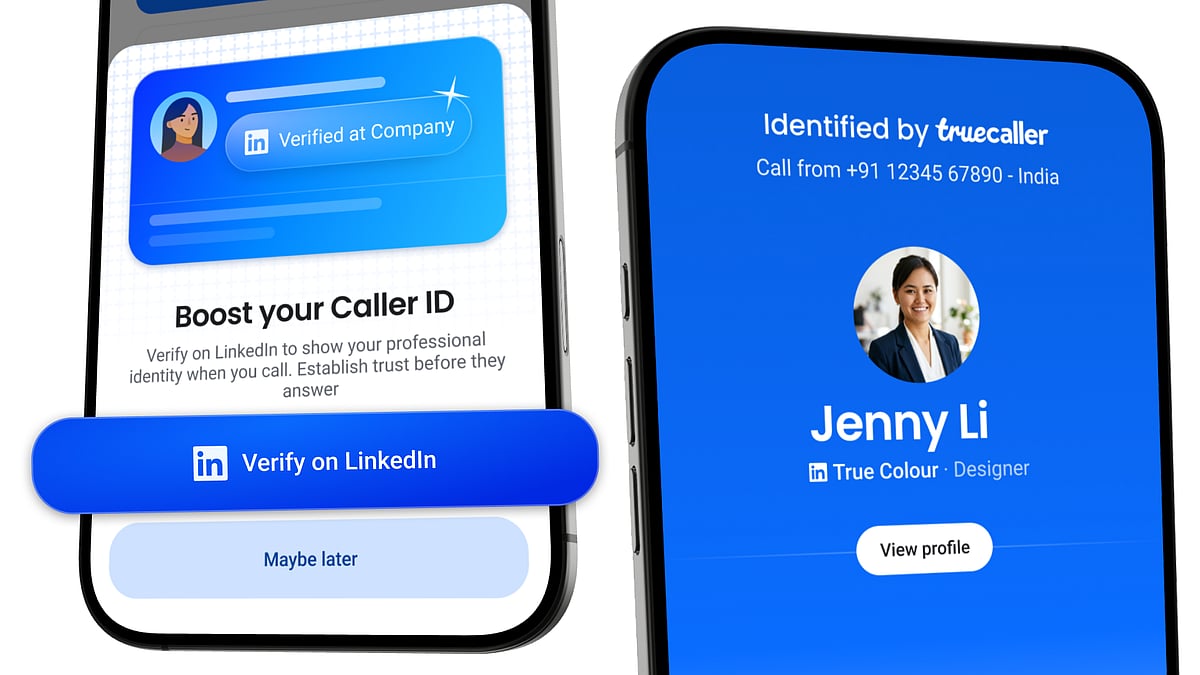
    Truecaller, the leading global platform for verifying contacts and blocking unwanted communication, has announced a worldwide partnership with LinkedIn to bring richer professional context and trusted identity to its caller ID service. The integration aims to make professional calls easier to recognize and understand by adding LinkedIn profile information directly to the caller ID screen.

    With this partnership, Truecaller users can optionally connect their LinkedIn accounts to display their job title, company, and profile picture when they call someone. Recipients will see this professional context alongside the caller’s name and photo, helping them decide whether to answer. Additionally, if the caller has verified information on LinkedIn, such as their workplace, Truecaller will show a verification indicator.

    “A phone number by itself tells you almost nothing. Truecaller’s role has always been to add the context people need to decide whether to answer. Our partnership with LinkedIn lets people add richer professional context to Truecaller Caller ID, building on the trust and verification signals LinkedIn has established around professional identity,” said Kunal Dua, Chief Product Officer at Truecaller.

    New users can sign up using “Login with LinkedIn” to pre-fill their name and profile picture. Existing users can enable the “Verified on LinkedIn” feature to add their workplace and job title to their Truecaller profile. The professional information is entirely optional and can be disconnected at any time.

    “We’re making it seamless for members to take their verified credibility to more platforms they use. Using our ‘Verified on LinkedIn’ integration, members can instantly connect their LinkedIn profiles on partner platforms and carry over relevant verification signals without separate verification processes,” said Oscar Rodriguez, VP of Trust Product at LinkedIn.

    The integration is available now on Android worldwide, with iPhone support coming soon.

  • Haier M70 Mini LED TV Brings 4K Picture, AI Enhancement, and 120Hz Gaming to Multiple Screen Sizes

    Haier M70 Mini LED TV Brings 4K Picture, AI Enhancement, and 120Hz Gaming to Multiple Screen Sizes

    The Haier M70 Mini LED TV series delivers a well-rounded package of modern television features across five screen sizes. With 4K Mini LED technology, AI-powered picture tools, 120Hz gaming support, Dolby Vision and Atmos, and Google TV integrated with Gemini, the M70 aims to be a versatile choice for movies, sports, and gaming. The 65-inch model further stands out with a 50W 2.1-channel audio system that includes a built-in subwoofer.

    Mini LED Technology Powers the Display

    The M70 series uses Mini LED backlighting, which employs smaller LEDs than conventional LED TVs, enabling finer control over brightness across the screen. This is combined with Micro Dimming technology that adjusts light levels across multiple zones. The 65-inch variant features a 3840 x 2160 4K resolution with a D-LED panel and delivers approximately 93 percent DCI-P3 color gamut coverage, ensuring vibrant and accurate colors.

    High dynamic range is supported through Dolby Vision and HDR10+, while MEMC (Motion Estimation, Motion Compensation) helps keep fast-moving scenes clear. Haier includes several AI-driven enhancements:

    • AI Picture Quality: Real-time adjustment of image details.
    • AI HDR Enhancer: Improved highlight detail and contrast.
    • AI Color Boost: Enhanced color saturation and impact.
    • AI Motion: Smoother rendering of fast sequences.
    • AI Noise Reduction: Reduction of unwanted image noise.

    Brightness Considerations

    It is important to note that Mini LED does not offer the same pixel-level black control as OLED. The 65-inch M70 has a measured peak brightness of approximately 320 nits. While not the brightest in the premium Mini LED segment, the TV focuses on color accuracy, contrast, HDR support, and AI processing to deliver a satisfying viewing experience.

    Gaming Features at 120Hz

    The M70 supports a 120Hz refresh rate along with Variable Refresh Rate (VRR), Auto Low Latency Mode (ALLM), and MEMC. These features reduce input lag and motion blur, making it suitable for fast-paced games. A dedicated Gaming Bar provides quick access to settings such as Shadow Enhancement and Crosshair Assist. The 65-inch model supports 4K at 60Hz and 1080p at 120Hz via DLG (Dual Line Gate) technology.

    Audio Performance

    The 65-inch model comes with a 50W 2.1-channel audio system that includes a built-in subwoofer and supports Dolby Atmos for an immersive soundstage. In tests, the system delivers strong volume and useful bass, potentially reducing the need for an external soundbar. At very high volumes, some harshness may appear, so moderate listening levels are recommended for optimal clarity.

    Smart Platform: Google TV with Gemini

    The M70 runs Google TV on Android 14, complete with Gemini AI assistance and Chromecast Built-in for easy content streaming from compatible devices. The 65-inch model is equipped with 2GB of RAM and 32GB of storage—sufficient for apps and games, though the interface can feel slightly sluggish at times.

    Size Options and Pricing

    Haier offers the M70 in five sizes: 43, 55, 65, 75, and 85 inches. Launch prices ranged from approximately Rs. 39,190 to Rs. 1,69,990 depending on size and configuration. The 43-inch model starts at about Rs. 40,690 on Haier’s official store. Retail prices may vary with promotions and availability.

    Conclusion

    The Haier M70 Mini LED TV series brings together a compelling mix of advanced display technology, smart features, gaming support, and robust audio. While brightness and black levels do not rival OLED or high-end Mini LED competitors, the M70 offers strong value for those seeking a feature-rich television across a range of screen sizes.

    Frequently Asked Questions

    1. What screen sizes does the Haier M70 offer?
    The M70 comes in 43-inch, 55-inch, 65-inch, 75-inch, and 85-inch sizes.

    2. Does the Haier M70 support 120Hz gaming?
    Yes. The TV supports 120Hz, VRR, ALLM, MEMC, Gaming Bar features, and 1080p at 120Hz through DLG support on the 65-inch model.

    3. Which HDR formats does the M70 support?
    The TV supports Dolby Vision and HDR10+ for compatible content.

    4. What audio system does the 65-inch M70 have?
    The 65-inch model has a 50W 2.1-channel audio system with a built-in subwoofer and Dolby Atmos.

    5. Does the Haier M70 have Google TV and Gemini?
    Yes. The M70 runs Google TV on Android 14 and includes Gemini support, along with Chromecast Built-in.

  • Haier M70 Mini LED TV Review: 4K Visuals, AI Tools, and 120Hz Gaming Across Five Sizes

    Haier M70 Mini LED TV Review: 4K Visuals, AI Tools, and 120Hz Gaming Across Five Sizes

    The Haier M70 Mini LED TV series brings a combination of 4K resolution, Mini LED backlighting, AI-powered image tools, and 120Hz gaming support to home entertainment. Available in sizes from 43 to 85 inches, the M70 aims to deliver premium-style features at a competitive price point. Here is a breakdown of what the TV offers.

    Key Takeaways

    • Mini LED display with 4K resolution, Micro Dimming, Dolby Vision, HDR10+, and AI picture tools for detailed, vibrant visuals.
    • 120Hz refresh rate, VRR, ALLM, MEMC, Gaming Bar, and 1080p 120Hz DLG support for smooth gaming.
    • Google TV with Gemini, Chromecast Built-in, 32GB storage, and 50W 2.1-channel audio on the 65-inch model.

    Mini LED Technology Enhances Picture Quality

    The M70 uses Mini LED backlights, which are smaller than traditional LEDs, allowing tighter control over screen lighting. Haier pairs this with Micro Dimming, adjusting light across multiple zones for improved contrast. The 65-inch model features a 3840 x 2160 4K D-LED panel, covering about 93% of the DCI-P3 color gamut. It supports Dolby Vision and HDR10+ for high dynamic range content, and MEMC for smoother motion.

    AI tools further refine the picture: AI Picture Quality adjusts details in real time, AI HDR Enhancer improves highlights and contrast, AI Color Boost adds vibrancy, AI Motion handles fast scenes, and AI Noise Reduction minimizes image noise.

    Brightness Considerations

    Mini LED is not OLED. The M70 uses a backlight with zones, not per-pixel control. While contrast is strong, it cannot match OLED’s black levels. The 65-inch model has a measured peak brightness of about 320 nits, focusing more on color accuracy and HDR support than extreme brightness.

    120Hz Gaming Features

    The M70 supports a 120Hz refresh rate, Variable Refresh Rate (VRR), Auto Low Latency Mode (ALLM), and MEMC. A Gaming Bar provides quick access to settings, while Shadow Enhancement and Crosshair Assist aid different game genres. The 65-inch model handles 4K at 60Hz and 1080p at 120Hz through DLG.

    Built-in Audio Performance

    The 65-inch model includes a 50W 2.1-channel audio system with a built-in subwoofer. Dolby Atmos delivers a wider soundstage. Tests show strong volume and bass, reducing the need for an external soundbar, though high volume can introduce some harshness.

    Smart Platform and Connectivity

    The M70 runs Google TV on Android 14 with Gemini integration and Chromecast Built-in. The 65-inch model has 2GB RAM and 32GB storage, offering ample app space. Interface responsiveness can sometimes lag.

    Size Options and Pricing

    Haier offers the M70 in 43-, 55-, 65-, 75-, and 85-inch sizes. Launch prices range from approximately Rs. 39,190 to Rs. 1,69,990, with the 43-inch starting at about Rs. 40,690. The 65-inch model sits as a sweet spot, combining Mini LED, 120Hz gaming, 50W audio, Google TV, Gemini, Dolby Vision, and HDR10+.

    Conclusion

    The Haier M70 delivers a comprehensive package of picture quality, gaming features, and smart functionality. Its main trade-offs are moderate brightness and zone-based backlighting compared to OLED, but for many users, the wide feature set and multiple size choices make it a compelling home electronics option.

    Frequently Asked Questions

    • What screen sizes does the Haier M70 offer? 43-inch, 55-inch, 65-inch, 75-inch, and 85-inch.
    • Does the Haier M70 support 120Hz gaming? Yes, with 120Hz, VRR, ALLM, MEMC, and 1080p at 120Hz DLG on the 65-inch model.
    • Which HDR formats does the M70 support? Dolby Vision and HDR10+.
    • What audio system does the 65-inch M70 have? A 50W 2.1-channel system with a built-in subwoofer and Dolby Atmos.
    • Does the Haier M70 have Google TV and Gemini? Yes, it runs Google TV on Android 14 with Gemini support and Chromecast Built-in.
  • FTSE 100 Opens Higher as Middle East Tensions Push Brent Above $105, Treasury Yields Climb

    FTSE 100 Opens Higher as Middle East Tensions Push Brent Above $105, Treasury Yields Climb

    The FTSE 100 opened 20.23 points higher at 10,725.49 on Thursday, as ongoing tensions in the Middle East kept oil prices elevated above $105 per barrel, while surging US Treasury yields continued to weigh on risk appetite across European markets.

    Brent crude futures rose 2.46% to $105.6 per barrel, and US West Texas Intermediate (WTI) advanced 2.20% to $94.19 per barrel. Sterling traded at $1.3243 early Thursday, slightly lower than $1.3254 at the London equities close on Wednesday. Against the euro, sterling fell to €1.1628 from €1.1636.

    Gainers and Losers

    On the upside, JD Sports Fashion rose 2.18% to 75.84p, British American Tobacco advanced 1.91% to 4,278p, and Antofagasta gained 1.50% to 3,802p. Glencore rose 1.48% to 560.70p, Bunzl added 1.28% to 2,686p, and BP increased 1.26% to 564.20p.

    On the downside, Standard Life fell 3.83% to 890.50p, Computacenter dropped 1.37% to 5,405p, and Pershing Square Holdings declined 1.20% to 3,616p. Admiral Group slipped 0.71% to 3,646p, Games Workshop Group fell 0.62% to 17,620p, and AstraZeneca edged 0.40% lower to 12,380p.

    Vistry Shares Fall After Loss and Downsizing Plans

    Vistry shares slumped after the company reported a £661 million pre-tax loss and announced plans to downsize, spooking investors. The housebuilder fell by as much as 7% to 248p in early trade.

    Adam Vettese, market analyst at eToro, commented: “This morning’s sell-off is the market calling time on another year of moving goalposts. Adam Daniels is doing the unglamorous work of shrinking Vistry to 12,000 homes, exiting South East private sales and cutting a land bank that was too big for the returns it produced. That is the right diagnosis; it does not make the next twelve months any cleaner.”

    On the Beach Posts Record Bookings

    On the Beach recorded a 9% rise in bookings, pushing total transaction value to £1.3 billion, marking the fifth consecutive year of record highs. The growth was fueled by a summer booking rebound, with volumes 4% ahead of the prior year, as more customers purchased trips closer to departure dates.

    Chief executive Shaun Morton attributed the uptick to “strategic investments” in technology and the company’s expanded product offering. The firm estimates pre-tax profit of £28 million to £35 million in the next financial year but remains “mindful” of the impact the Iran war is having on consumer confidence.

    Halma Raises Margin Outlook

    Halma raised its outlook for the annual adjusted operating profit margin, citing strong first-half progress. The health and safety device maker now expects an adjusted EBIT margin of 23.5% to 24% for the year through March 2027, up from its previous guidance of around 22.7%.

    The company maintained its forecast for low double-digit percentage organic constant-currency revenue growth, including roughly five percentage points of premium growth from its photonics business.

    Global Market Overview

    In the US, the S&P 500 dropped 0.75% to close at 7,706.03, while the Nasdaq Composite fell 1.13% to 26,936.04. The Dow Jones Industrial Average was down 352.10 points, or 0.68%.

    In Asia on Thursday, Tokyo’s Nikkei 225 gained 0.76% to 65,513.99, while China’s Shanghai Composite dipped 1.22%. Hong Kong’s Hang Seng declined 0.29%, and South Korea’s Kospi edged up by 0.9%. In India, both the Nifty 50 and the Sensex fell by 1.61% and 1.60%, respectively.

    Disclaimer: This article is for informational purposes only and does not constitute financial advice. Investing involves risk. Always conduct your own research before making any investment decisions.

  • FTSE 100 Opens Higher Amid Middle East Tensions; Brent Crude Surges Past $105

    FTSE 100 Opens Higher Amid Middle East Tensions; Brent Crude Surges Past $105

    The FTSE 100 opened 20.23 points higher at 10,725.49 as renewed geopolitical tensions in the Middle East pushed oil prices above $105 per barrel, while rising US Treasury yields continued to weigh on risk appetite across European markets.

    Brent crude futures rose 2.46% to $105.6 per barrel, and US West Texas Intermediate (WTI) advanced 2.20% to $94.19 per barrel. Sterling was quoted at $1.3243 early Thursday, slightly lower from $1.3254 at the London equities close on Wednesday. Against the euro, sterling fell to €1.1628 from €1.1636 the prior day.

    Gainers & Losers

    • Top Gainers: JD Sports Fashion rose 2.18% to 75.84p, British American Tobacco advanced 1.91% to 4,278p, Antofagasta gained 1.50% to 3,802p, Glencore rose 1.48% to 560.70p, Bunzl added 1.28% to 2,686p, and BP increased 1.26% to 564.20p.
    • Top Losers: Standard Life fell 3.83% to 890.50p, Computacenter dropped 1.37% to 5,405p, Pershing Square Holdings declined 1.20% to 3,616p, Admiral Group slipped 0.71% to 3,646p, Games Workshop Group fell 0.62% to 17,620p, and AstraZeneca edged 0.40% lower to 12,380p.

    Vistry Shares Slump After Loss and Downsizing Plan

    Vistry shares tumbled after reporting a £661 million pre-tax loss and announcing plans to downsize. The housebuilder fell as much as 7% to 248p in early trade. Adam Vettese, market analyst at eToro, commented, “This morning’s sell-off is the market calling time on another year of moving goalposts. Adam Daniels is doing the unglamorous work of shrinking Vistry to 12,000 homes, exiting South East private sales and cutting a land bank that was too big for the returns it produced. That is the right diagnosis; it does not make the next twelve months any cleaner.”

    On the Beach Posts Record Booking Increase

    On the Beach reported a 9% rise in bookings, bringing total transaction value to £1.3 billion, marking the fifth consecutive year of record highs. The summer booking rebound contributed to growth 4% ahead of the prior year, driven by customers purchasing trips closer to departure dates. Chief executive Shaun Morton attributed the uptick to strategic investments in technology and an expanded product offering. The company estimates pre-tax profit between £28 million and £35 million in the next financial year, but remains mindful of the impact the Iran war is having on consumer confidence.

    Halma Raises Margin Outlook

    Halma lifted its outlook for annual adjusted operating profit margin, citing strong first-half progress. The health and safety device maker now expects an adjusted EBIT margin of 23.5% to 24% for the year through March 2027, up from its previous guidance of around 22.7%. The company maintained its forecast for low double-digit percentage organic constant-currency revenue growth, including roughly five percentage points of premium growth from its photonics business.

    Global Market Overview

    In the US, the S&P 500 dropped 0.75% to close at 7,706.03, while the Nasdaq Composite fell 1.13% to 26,936.04. The Dow Jones Industrial Average was down 352.10 points, or 0.68%. In Asia on Thursday, Tokyo’s Nikkei 225 gained 0.76% to 65,513.99, while China’s Shanghai Composite dipped 1.22%. Hong Kong’s Hang Seng declined 0.29%, and South Korea’s Kospi edged up 0.9%. In India, both the Nifty 50 and the Sensex fell 1.61% and 1.60%, respectively.

    Disclaimer: This article is for informational purposes only and does not constitute financial advice. Always conduct your own research before making investment decisions.

  • How AI-Enhanced ERP Systems Streamline Operations and Boost User Productivity

    How AI-Enhanced ERP Systems Streamline Operations and Boost User Productivity

    ERP software has become essential for managing finance, procurement, inventory, HR, sales, manufacturing, and other core business operations. But while traditional ERP systems bring business processes together, users can still spend significant time navigating menus, searching for records, preparing reports, entering data, and following up on routine tasks.

    AI in ERP is changing how users interact with business software. Instead of making employees learn complex processes to get simple things done, AI allows them to communicate with ERP systems using natural language, automate repetitive workflows, generate reports through prompts, and access insights across departments.

    ZYNO by Elite Mindz takes this approach further with a prompt-based ERP designed to make everyday business operations simpler, faster, and more intelligent.

    What Is AI in ERP?

    AI in ERP refers to integrating artificial intelligence capabilities such as natural language processing, generative AI, machine learning, predictive analytics, and intelligent automation into enterprise resource planning systems. Traditional ERP systems generally require users to follow predefined navigation paths and workflows. AI-powered ERP systems can understand user intent, analyse business data, automate defined processes, and provide relevant information in a more conversational way.

    The difference is simple:

    • Traditional ERP: Find the module → open the screen → apply filters → retrieve information.
    • AI-powered ERP: Ask what you need → get the relevant information → take action.

    This shift can make ERP software easier to use for employees across finance, procurement, HR, operations, and management.

    How AI in ERP Makes Users’ Lives Easier

    1. Talk to Your ERP in Natural Language

    One of the biggest advantages of AI in ERP is conversational interaction. Users do not always need to remember where a particular report or record is located. With ZYNO Smart ERP Assistant, they can ask questions in simple language and receive answers based on live ERP data. For example: “Show pending purchase approvals above ₹5 lakh.” “What is our current inventory level?” “Give me a summary of this month’s expenses.”

    2. Generate Reports Through Prompts

    Report generation is an everyday requirement for business teams, but preparing customised reports can involve manual data collection, filtering, formatting, and cross-checking. ZYNO’s Report Generation Through Prompts allows users to describe the report they need in plain language. AI can then compile structured reports from real-time ERP data. For example: “Create a monthly sales report by region and highlight declining sales.”

    3. Automate Repetitive Workflows

    Approvals, notifications, status updates, and routine data-entry activities can take up a considerable amount of employees’ time. ZYNO AI Workflow Automation helps automate repetitive processes across departments based on defined business rules. This reduces the number of routine follow-ups employees need to manage.

    4. Connect Information Across Departments

    Businesses rarely operate in isolated departments. A procurement decision can affect inventory, which affects production, which affects finance. ZYNO’s Cross-Module Data Intelligence connects information across areas such as finance, inventory, HR, and procurement, allowing users to access consolidated information instead of switching between separate module-specific reports.

    5. Get Real-Time Business Insights

    AI can make ERP dashboards more than static collections of numbers. ZYNO AI-powered dashboards provide a unified view of business performance with insights that update as underlying data changes. This helps managers identify changes, monitor KPIs, and respond to operational issues more quickly.

    6. Simplify Procurement and Invoice Processing

    AI can also simplify specific ERP processes. With ZYNO Prompt-Based Purchase Requisitions, users can describe their purchasing requirements in natural language. AI converts the request into a structured requisition. Similarly, AI Invoice Verification supports invoice processing by helping verify information against relevant business records.

    Key AI Features in ZYNO ERP

    • Smart ERP Assistant: Ask questions and retrieve business information using natural language.
    • Prompt-Based Report Generation: Create structured reports by simply describing what you need.
    • AI Workflow Automation: Automate approvals, notifications, status updates, and routine processes.
    • Cross-Module Data Intelligence: Connect information across finance, procurement, HR, inventory, and other functions.
    • AI-Powered Dashboards: Get real-time visibility into business performance.
    • Prompt-Based Purchase Requisitions: Create structured purchase requests without navigating lengthy forms.
    • AI Invoice Verification: Use AI to support invoice checking and verification.
    • AI-Powered Insights: Surface relevant information from business data to support faster decisions.

    Together, these capabilities move ERP beyond traditional transaction processing toward a more intelligent and user-friendly business platform.

    The real impact of AI in ERP is not just automation. It is simplification. Employees should not need extensive system knowledge to answer a basic business question. Managers should not have to wait for manually compiled reports. Teams should not spend unnecessary hours following up on routine workflows. With ZYNO, users can interact through prompts, access connected data, generate reports, and automate workflows from a conversational interface. The future of ERP is about making powerful business technology easier to use.

  • Bitcoin Reclaims $87,000: Key Drivers Behind the Latest Crypto Rally

    Bitcoin Reclaims $87,000: Key Drivers Behind the Latest Crypto Rally

    Bitcoin has surged back above USD 87,000, reaching its highest level since late January 2026. The move marks a sharp recovery from earlier weakness, but the market structure surrounding this rally differs from Bitcoin’s previous visit to this price range. Let’s explore what has changed and what’s fueling the momentum.

    Bitcoin Hits an Eight-Month High

    Bitcoin briefly traded above USD 87,000 on September 21, peaking near USD 87,405. The broader cryptocurrency market capitalization also climbed to approximately USD 2.93 trillion. The recovery follows strong momentum since August, with Bitcoin gaining about 25% that month and nearly 11% in the last seven days, according to CoinMarketCap.

    On-chain conditions have shifted significantly. Glassnode identified USD 83,000–USD 86,000 as a major resistance zone, where roughly 1.07 million BTC had previously been acquired, predominantly by long-term holders. Breaking through this zone represents an important shift from earlier in September, when Bitcoin repeatedly traded below the ceiling.

    ETF Inflows Surge Past USD 2 Billion

    US spot Bitcoin ETFs have become a major source of renewed demand. According to SoSoValue, the funds recorded USD 998.95 million in net inflows on September 21—their largest single-day intake since October 2025. BlackRock’s IBIT led with USD 381.4 million, followed by ARKB at USD 289.1 million and Fidelity’s FBTC at USD 238.8 million.

    Inflows continued on September 22 and 23, accumulating an additional USD 1.061 billion. This is particularly notable because the ETFs had generated only USD 6.2 million in net inflows during the previous week. Bitcoin also moved above the estimated USD 81,722 average cost basis for US spot Bitcoin ETF holders, putting the average holder back in profit.

    Spot Buying and Institutional Demand Drive Momentum

    Glassnode’s September 21 Market Pulse showed Bitcoin touching USD 86,000 after gaining more than 10% from the previous Sunday’s close. Unlike rallies driven primarily by leverage, spot taker flow shifted from net selling to net buying while trading volume increased. A wave of short liquidations also accelerated the move.

    Institutional demand remains strong. Strategy added another signal by purchasing 950 BTC for USD 75.7 million. The company reported total holdings of 846,000 BTC following the acquisition. Broader altcoin strength also indicates that improving risk appetite is spreading beyond Bitcoin across the cryptocurrency market.

    Leverage Risks Remain

    Derivatives activity is increasing alongside prices. Glassnode reported futures open interest above its historical high band, with funding rates rising as long positioning became more expensive. Options open interest was also elevated near USD 41 billion. This creates a potential vulnerability: higher leverage can amplify gains, but sudden reversals can trigger liquidations and accelerate downside volatility.

    Final Thoughts

    Bitcoin’s return to USD 87,000 combines stronger spot buying, a streak of daily ETF inflows, and renewed institutional accumulation. Unlike earlier attempts, BTC has now pushed through the important USD 83,000–USD 86,000 supply zone. Sustaining the rally will depend on continued demand while derivatives leverage remains controlled.

    FAQs

    Why has Bitcoin returned above USD 87,000?

    Bitcoin’s latest rally has been supported by stronger spot buying, consecutive US spot ETF inflows, and renewed institutional accumulation. BTC also broke through the important USD 83,000–USD 86,000 on-chain resistance zone.

    How much money recently flowed into US spot Bitcoin ETFs?

    According to SoSoValue, the ETFs attracted USD 998.95 million on September 21. Inflows continued on September 22 and 23, adding another USD 1.061 billion.

    Why is the USD 83,000–USD 86,000 Bitcoin range significant?

    Glassnode identified the range as an important supply zone where approximately 1.07 million BTC had previously been acquired, predominantly by long-term holders. Breaking above it removed a notable area of potential selling pressure.

    Are institutional investors contributing to Bitcoin’s rally?

    Institutional demand remains an important factor. Alongside strong spot ETF flows, Strategy recently purchased another 950 BTC for USD 75.7 million, increasing its reported Bitcoin holdings to approximately 846,000 BTC.

    What are the main risks to Bitcoin’s current rally?

    Increasing leverage is one of the major risks. Elevated futures and options open interest can amplify upward momentum, but heavily leveraged positioning can also trigger larger liquidations and sharper declines during a market reversal.

  • The Wireless Audio Revolution: How Bluetooth Is Reshaping Everyday Listening

    The Wireless Audio Revolution: How Bluetooth Is Reshaping Everyday Listening

    Bluetooth has fundamentally changed how people experience sound, liberating audio from wired constraints and embedding it into earbuds, speakers, vehicles, and smart-home systems. From private listening on the go to shared, room-filling sound, wireless audio has become an integral part of daily life. Recent listening trends reveal a surge in audio consumption across TVs, cars, and connected speakers, signaling a permanent shift toward untethered sound.

    Earbuds Lead the Charge

    True wireless earbuds have revolutionized portable audio by eliminating cables entirely. Modern models now pack advanced features such as active noise cancellation, spatial audio, voice assistant integration, and intuitive touch controls. Premium TWS (True Wireless Stereo) products are drawing strong consumer interest as users prioritize sound quality, comfort, and seamless connectivity with their devices.

    Open-Ear Audio Takes Off

    Open-ear earbuds are carving out a new niche in wireless listening, allowing users to stay aware of their surroundings while enjoying audio. This design is ideal for outdoor activities, commuting, and casual listening where environmental awareness is crucial. Their growing popularity underscores how Bluetooth audio is transcending traditional in-ear designs to accommodate diverse lifestyles.

    Smart Speakers Change the Room

    Bluetooth speakers have evolved from simple portable gadgets into sophisticated, connected entertainment hubs. Smart speakers now bring music, podcasts, and voice-controlled functions into bedrooms, kitchens, and living rooms. This transformation marks a shift from personal listening to shared, ambient audio experiences that fill entire spaces.

    Cars Become Audio Hubs

    Wireless audio is also becoming deeply integrated into vehicles, enabling drivers and passengers to stream music, podcasts, and calls without any wires. Bluetooth connectivity has turned the car into yet another major listening environment. As smartphones, infotainment systems, and wireless accessories converge, audio increasingly follows users wherever they go.

    Bluetooth Keeps Getting Smarter

    Bluetooth technology itself is advancing rapidly, delivering more efficient and capable wireless audio. The introduction of Bluetooth LE Audio and the LC3 codec has expanded what low-energy wireless connections can support, improving battery life and sound quality. Emerging developments promise even greater data throughput and broader broadcast-style audio experiences, paving the way for more innovative use cases.

    The Future Is Wireless

    The Bluetooth audio boom is no longer confined to headphones. Earbuds, speakers, cars, TVs, and smart-home devices are converging into a connected audio ecosystem that surrounds everyday users. As wireless standards and device intelligence improve, listening is becoming more flexible, more social, and more deeply woven into daily routines. The age of untethered sound is here, and it is only accelerating.

  • The Wireless Audio Boom: How Bluetooth Is Transforming Everyday Listening

    The Wireless Audio Boom: How Bluetooth Is Transforming Everyday Listening

    Bluetooth audio has become an integral part of daily life, moving beyond traditional wired headphones into a vast ecosystem of earbuds, speakers, cars, and smart-home devices. From private listening on the go to shared sound in living rooms, wireless audio now accompanies users almost everywhere. Recent listening trends reflect a steady rise in audio consumption across TVs, vehicles, and connected speakers.

    Earbuds Lead the Charge

    True wireless earbuds have eliminated the hassle of cables, making portable audio more convenient than ever. Modern models increasingly feature active noise cancellation, spatial audio, voice controls, and intelligent assistant integration. Premium TWS products are drawing strong consumer interest as users seek better sound quality, comfort, and seamless device connectivity.

    Open-Ear Audio Gains Momentum

    Open-ear earbuds are carving out a new niche in wireless listening, allowing users to remain aware of their surroundings. Designed for outdoor activities, commuting, and casual use where environmental awareness is key, these devices highlight how Bluetooth audio is evolving beyond traditional in-ear designs.

    Smart Speakers Transform Shared Spaces

    Bluetooth speakers have evolved from simple portable gadgets into connected entertainment hubs. Smart speakers now bring music, podcasts, and voice-controlled functions into bedrooms, kitchens, and living rooms, shifting audio from personal to shared, room-filling experiences.

    Cars Become Audio Hubs

    Wireless audio is deeply integrated into modern vehicles, letting drivers and passengers stream music, podcasts, and calls without any cables. Bluetooth connectivity has turned the car into another major listening environment. As smartphones, infotainment systems, and wireless accessories converge, audio increasingly follows users wherever they go.

    Bluetooth Keeps Getting Smarter

    Bluetooth technology continues to evolve toward more efficient and capable wireless audio. Bluetooth LE Audio and the LC3 codec have already expanded what low-energy connections can support. Emerging developments promise improved data throughput and broader broadcast-style audio experiences.

    The Future Is Wireless

    The Bluetooth audio boom is no longer limited to headphones. Earbuds, speakers, cars, TVs, and smart-home devices are forming a connected audio ecosystem around everyday users. As wireless standards and device intelligence improve, listening is becoming more flexible, social, and deeply integrated into daily routines.

  • How AI Is Transforming Cybersecurity: Record Breach Costs, Behavioral Detection, and Emerging Risks to AI Systems

    How AI Is Transforming Cybersecurity: Record Breach Costs, Behavioral Detection, and Emerging Risks to AI Systems

    Artificial intelligence is reshaping cybersecurity from both sides—attackers use it to accelerate breaches, while defenders deploy it to detect anomalies faster. IBM’s 2026 Cost of a Data Breach Report reveals a record global average breach cost of USD 4.99 million, a 12% increase from the previous year. One in four malicious breaches now involves AI, marking a 56% rise from 2025. These AI-involved breaches average about USD 6 million, often leveraging deepfake impersonation or AI-enabled malware.

    Why Traditional Defenses Fall Short

    Older security tools rely on signature-based detection—matching new activity against a database of known attack patterns. This approach fails against novel malware, altered code, or stolen credentials that don’t match any existing signature. Security teams also face alert fatigue, with thousands of daily alerts that overwhelm analysts, leaving genuine threats unnoticed for hours.

    How AI Detects What Signatures Cannot

    AI-based threat detection works by learning normal behavior over time—studying logins, file access, network traffic, and device activity. Any sharp deviation from this baseline triggers an alert, a method known as anomaly detection. For example, a finance employee logging in from a new country at 3 a.m. and downloading thousands of files would raise an immediate flag, even though no signature exists for that specific action. Machine learning systems apply this same logic across email, devices, and cloud accounts.

    Key Findings from IBM’s 2026 Report

    The study analyzed 602 organizations that experienced breaches between March 2025 and February 2026. Organizations using AI and automation extensively in their security operations saw average breach costs about USD 1.93 million lower than those using none—though IBM notes this association does not prove causation. Still, one in four organizations have yet to adopt AI-powered security tools.

    AI agents are used unevenly across the security lifecycle: about half of breached organizations apply them to threat hunting, response, and containment, but only 18% use them for vulnerability management. This suggests many enterprises still deploy AI reactively, after suspicious activity emerges.

    The New Frontier: Attacks on AI Itself

    AI systems are becoming direct targets. Among breached organizations, 21% reported an incident involving an AI model or application—up from 13% a year earlier. These incidents averaged USD 5.33 million. Cloud misconfigurations and compromised connected applications, APIs, or plug-ins each appeared in 27% of AI-related breaches. Data poisoning, prompt injection, and model inversion followed at 24–26%. IBM’s analysis warns that weaknesses around a model can matter as much as attacks on the model itself.

    Access controls are a major vulnerability: 92% of organizations with an AI-related breach lacked proper AI access controls, and only 40% of all organizations report using such controls on AI models and data.

    The India Scenario

    IBM’s India data mirrors global trends. The average breach cost reached Rs. 25.5 crore, up 15.9% from Rs. 22 crore. AI-generated attacks accounted for 26% of malicious breaches in India. Only 32% of Indian organizations use AI and security automation extensively; those without such tools averaged Rs. 31.6 crore per breach, compared to Rs. 21.3 crore for extensive users.

    What Security Teams Should Do

    Effective AI security starts with clean, high-quality log data—models learn from what they receive. Phishing-resistant authentication adds a strong layer of identity control. Teams must closely monitor APIs and cloud configurations around AI workloads. Models also produce false positives, so humans should retain control over containment decisions.

    A useful benchmark is the time between first malicious activity and first actionable alert, measured using production data. This metric often reveals more than vendor accuracy scores from controlled lab environments. When paired with clear controls and human review, AI can accelerate response without sacrificing accountability.

    Final Thought

    Every new AI agent also represents a new identity with access to data and systems. IBM’s X-Force analysis found that fewer than half of organizations actively secure these non-human identities. Establishing proper access controls and accountability for AI agents is the next critical task for security teams.