Author: vitorcherulli

  • Flipkart GOAT Sale 2026: Top iPhone Discounts and Offers You Can’t Miss

    Flipkart GOAT Sale 2026: Top iPhone Discounts and Offers You Can’t Miss

    Flipkart’s GOAT Sale 2026 is back with incredible iPhone deals that make upgrading more affordable than ever. Whether you’re eyeing the latest iPhone 16 or a capable older model, this sale offers significant savings through direct discounts, exchange bonuses, bank offers, and no-cost EMI options.

    iPhone 16 Gets One of the Biggest Discounts

    The highlight of the sale is the substantial price cut on the iPhone 16. Shoppers can save even more by stacking bank offers, exchange bonuses, and opting for no-cost EMI. This is a prime opportunity for anyone planning to upgrade without paying the full retail price.

    Attractive Exchange Offers Reduce the Final Cost

    Trading in your old smartphone can slash the price of a new iPhone dramatically. Depending on the condition and model of your device, the final cost drops significantly, making premium Apple devices accessible to students, professionals, and everyday users alike.

    Bank Discounts Add More Savings

    Several leading banks are offering instant discounts on eligible credit and debit card transactions. These can often be combined with exchange deals for even greater savings. Always check the available payment offers before placing your order to maximize value.

    No-Cost EMI Makes Upgrading Easier

    For those who prefer spreading payments over time, Flipkart provides no-cost EMI options on select iPhone models. This allows you to manage your monthly budget comfortably while still getting the latest technology without paying extra interest.

    Older iPhone Models Offer Excellent Value

    The sale also features attractive prices on iPhone 15, iPhone 14, and iPhone 13. These devices still deliver strong performance, quality cameras, and long software support—perfect for buyers seeking premium features at a lower price point.

    Limited-Time Deals May Sell Out Quickly

    Some of the biggest discounts are available in limited quantities. Popular storage variants and colors often sell out fast. To secure the best offer, add your preferred model to your wishlist and complete your purchase early.

    Compare Deals Before Completing Your Purchase

    Before checking out, compare discounts across different models, storage options, and payment methods. Combining exchange offers, bank discounts, and EMI benefits can lead to the lowest possible price. A few extra minutes comparing deals ensures you make the smartest purchase during the sale.

  • 2026 Pet Tech Showdown: AI Feeders, GPS Trackers, Cameras & Health Monitors Compared

    2026 Pet Tech Showdown: AI Feeders, GPS Trackers, Cameras & Health Monitors Compared

    Technology has transformed pet care beyond basic feeding and monitoring. In 2026, AI-powered gadgets help owners track food intake, hydration, exercise, sleep, and behavior through intuitive apps. Whether you’re at work or traveling, real-time updates from cameras, GPS trackers, and fitness trackers keep you connected to your pet. These devices are practical everyday tools, not just luxuries. Our team tested the best options across feeding, tracking, monitoring, and home automation categories to help you choose wisely.

    Top Pet Tech Gadgets of 2026

    PETKIT YumShare Dual-Hopper AI Pet Feeder

    Brand: PETKIT
    Designed for cats and small dogs, this feeder combines scheduled meals with AI-powered pet recognition and a built-in camera. Control portions and monitor behavior via a Wi-Fi-enabled app (Android & iOS).

    Tractive DOG XL GPS Tracker

    Brand: Tractive
    Real-time GPS and LTE tracking for active dogs. Features location tracking, escape alerts, geofences, and activity monitoring. Rechargeable battery lasts up to one month.

    Furbo 360° Dog Camera

    Brand: Furbo
    360-degree rotating camera with two-way audio, bark alerts, and treat-tossing. AI detects key activities and sends notifications. Best for owners away long hours. Works with Android & iOS, powered by AC.

    PetPace Smart Collar 3.0

    Brand: PetPace
    Continuously tracks activity, pulse, respiration, body temperature, posture, and sleep. AI analyzes data to detect abnormal patterns for vet discussion. Battery lasts ~3 weeks. Bluetooth and LTE connectivity.

    PETKIT Eversweet Max Smart Water Fountain

    Brand: PETKIT
    Promotes hydration with constant water filtration and app tracking of water levels and filter maintenance. Wi-Fi remote alerts. For cats and small dogs.

    Litter-Robot 4

    Brand: Whisker
    Self-cleaning litter box that senses each use and automatically sifts waste. Smart sensors track litter usage and waste amounts. Wi-Fi connected app. AC powered.

    SureFlap Microchip Pet Door Connect

    Brand: Sure Petcare
    Grants entry only to registered microchipped pets. Wi-Fi remote locking and activity monitoring via app. Battery lasts about six months. Ideal for outdoor cats or small dogs.

    Comparison Table

    Device Brand Key Feature Best For
    PETKIT YumShare PETKIT AI feeding + camera Most households
    Tractive DOG XL Tractive Real-time GPS + LTE Active dogs
    Furbo 360° Furbo 360° camera + treat toss Travelers
    PetPace Collar 3.0 PetPace Health monitoring + AI Health-conscious owners
    Eversweet Max PETKIT Smart water fountain Hydration tracking
    Litter-Robot 4 Whisker Self-cleaning litter box Cat owners
    SureFlap Pet Door Sure Petcare Microchip-activated door Outdoor pets

    Which Pet Tech Gadget Is Worth Buying?

    Overall, the PETKIT YumShare offers the best blend of automatic feeding, AI monitoring, and affordability for most homes. For dog owners, the Tractive DOG XL delivers top GPS tracking and activity insights. Cat owners will love the Litter-Robot 4 for eliminating daily litter box maintenance. Travelers should consider the Furbo 360° for remote interaction. Always check subscription fees, app compatibility, battery life, and your pet’s lifestyle before buying.

    Frequently Asked Questions

    1. What is the best pet tech gadget overall?

    The PETKIT YumShare AI Pet Feeder balances automated feeding, smart monitoring, app control, and AI meal insights for everyday use.

    2. Are GPS pet trackers worth buying?

    Yes. They help locate pets in real time, set safe zones, send escape alerts, monitor activity, and improve recovery chances if a pet wanders.

    3. Do pet health monitors replace veterinary check-ups?

    No. They identify patterns and possible changes but cannot diagnose. Veterinary check-ups remain essential.

    4. Which smart gadget is best for cat owners?

    The Litter-Robot 4 automates cleaning, reduces odors, tracks usage, and minimizes daily maintenance.

    5. What should buyers consider before purchasing pet tech?

    Check pet compatibility, app support, subscription costs, battery life, connectivity, durability, ease of maintenance, and daily routine fit.

  • Blue Lock Rivals Codes (July 2026): Free Lucky Spins & Flow Rewards

    Blue Lock Rivals Codes (July 2026): Free Lucky Spins & Flow Rewards

    Blue Lock Rivals players can claim free Lucky Spins and Flow rewards this July 2026 by redeeming the latest active codes. These codes help unlock better styles, upgrades, and customization options faster, giving you a competitive edge in this popular Roblox soccer game.

    Active Blue Lock Rivals Codes (July 2026)

    Here are the currently working codes for July 2026. Redeem them quickly as they may expire without notice:

    • GAGAREWORK – 5 Lucky Spins and 5 Lucky Flow
    • ADDRESSME – 5 Lucky Spins
    • BEARCLAW – 5 Lucky Spins

    Expired Codes

    The following codes have expired and can no longer be redeemed: NELHIORI, SNOWFLAKE, HIORIREWORK, MINIUPDATE, HIORIHYPE, NELEVENT, NEL2.0, MASSIVEUPDATE, KIYORARELEASE, BREAKDANCE, REWORKW, REOSOON, WPATCH, KUNIGAMIW, WILDCARD, THEJOKER, 44PANTHER, CHIGIRIHERE, SPEEDSTER, OTOYAUPD, NINJASPINS, CHIGIRISOON, NELQUEST, NEWIMPACTS, NELTEAMSHYPE, MASTEROFALLTRADES, REORETURN, HIORISOON, MBFORDELAY, TIMETIME, NELSTYLESPINS, NELLUCKY, NELPASS, KARASUHYPE, CROWCODE, CROWFLOWCODE, NELSORRYRIPGENERATIONAL, ISAGIEVOLUTION, NAGIEVOLUTION, 3V3TIME HYP3, FLOW3V3, RAICHIHYPE, CODEANGRY, LUNARYEAR, VALENTINESDAY, HEARTSTYLE, HEARTFLOW, RINRIN, NELQUEST2, NELFLOWSPINS, NESSFLOW, AFKUPDATE, YENUPDATE, NESSMAGICIAN, ITSNESS, RABBITPULL, SHARKTIME, KURONAUNVAULTING, WHATSNESS, 2026Battlepass, 2026Crate, SnowlockIsOver, FIREWORKMONSTER, FINALFESTIVE, RIPISAGI5, NEWYEARHYPE, BUILDTHEROCKETREOHYPE, SAEW, NEWJERSEYS, ISAGITODAY, EGOISTNOW, METAVISION, NELNAGIW, NAGITHEBEST, EasterYuki, EggStyle, SORRYDELAYEASTER, RANKEDRETURN, ITSBACK.

    How to Redeem Codes in Blue Lock Rivals

    Follow these steps to claim your rewards:

    1. Reach level 5 in the game to unlock the code redemption section.
    2. Go to the in-game lobby and locate the ‘Codes’ section in the bottom-right corner.
    3. Enter the code exactly as shown in the text box (copy-paste to avoid errors).
    4. Click ‘Redeem’ to instantly receive your reward.

    Note: You must be at least level 5 to access the code redemption feature.

    What Rewards Do Blue Lock Rivals Codes Give?

    Codes typically provide Lucky Style Spins or Lucky Flow Spins, which let you reroll for stronger styles, unique builds, and better customization options. These rewards help you progress faster and test more builds without extra grinding.

    Final Words

    Promo codes are the fastest way to earn free spins and speed up your progress in Blue Lock Rivals. Since codes expire without warning, redeem them immediately. Stay updated by checking official announcements and trusted community platforms to never miss a reward.

  • How to Free Up Gigabytes of Storage on Android: 7 Simple Hacks I Tried

    How to Free Up Gigabytes of Storage on Android: 7 Simple Hacks I Tried

    Running out of storage is one of the most frustrating Android problems. Before deleting your favorite photos, videos, or apps, try these simple tricks. I tested them on my phone and managed to free up several gigabytes without sacrificing anything important. The best part? Most of these fixes take only a few minutes and require no special apps or technical knowledge.

    1. Clear Cached Data

    Apps silently accumulate cache files over weeks and months, eating up valuable storage. A quick visit to Settings > Storage let me clear unnecessary cache, instantly freeing space while keeping my apps, logins, and personal files completely safe. It’s one of the easiest storage wins.

    2. Delete Duplicate Photos

    My gallery was overflowing with duplicate screenshots, WhatsApp images, and repeated photos. Using a duplicate finder, I removed hundreds of unnecessary copies and recovered a surprising amount of storage. My photo library also became much cleaner and easier to navigate.

    3. Uninstall Unused Apps

    I discovered several games and utility apps that I hadn’t opened in months. Removing these forgotten apps instantly freed up storage while reducing background activity. The phone not only gained extra space but also felt smoother and more responsive during daily use.

    4. Move Photos and Videos to Cloud Storage

    Uploading older photos and videos to Google Photos allowed me to safely delete local copies without losing my memories. Everything remained accessible whenever I needed it, while several gigabytes of internal storage became available for newer files and apps.

    5. Clean the Downloads Folder

    My Downloads folder had turned into a digital junk drawer filled with old PDFs, APKs, ZIP files, memes, and installers. Deleting these forgotten files recovered more space than I expected. It’s worth checking this folder every few weeks.

    6. Remove Offline Downloads

    Offline Netflix episodes, Spotify playlists, YouTube videos, and maps were quietly consuming huge amounts of storage. Removing content I no longer needed instantly created more breathing room. The best part is that I can always download them again whenever required.

    7. Use Android’s Built-in Storage Manager

    Android’s Storage Manager highlighted large files, duplicate items, and apps I rarely used. With just a few taps, I reclaimed even more space without manually digging through folders. It’s a powerful built-in tool that many Android users completely overlook.

  • 6 Best AI Marketing Software Tools for Lean Startups in 2026

    6 Best AI Marketing Software Tools for Lean Startups in 2026

    Early-stage founders rarely have the luxury of a full marketing department. Budgets remain tight, timelines move quickly, and every team member typically wears several hats at once. Under these conditions, marketing tasks such as content writing, campaign planning, and customer outreach often fall behind other operational priorities.

    AI marketing software is changing that reality. Startups now access capabilities once reserved for enterprise teams, from automated content generation to predictive customer analytics. The AI marketing tool market crossed $47 billion in value last year, reflecting how widely these platforms have been adopted across company sizes. For founders trying to build brand presence without a large team, these tools have become a practical necessity.

    What Is AI Marketing Software?

    AI marketing software covers platforms that apply artificial intelligence to tasks such as content writing, campaign optimization, and audience segmentation. Rather than replacing a marketer’s judgment, these tools analyze data patterns and handle the repetitive work that once ate up entire workdays.

    The category has grown well past basic automation. Many platforms now offer brand voice training, predictive lead scoring, and performance tracking that updates in real time. Pricing structures are typically tiered, so a startup can begin on a free plan and expand usage only when growth justifies the added cost.

    Best AI Marketing Software for Startups

    The following six platforms represent the strongest options available to startups this year. Each addresses a distinct marketing function that founders commonly struggle to manage alone.

    HubSpot AI

    HubSpot AI runs through the platform’s Breeze suite, placing AI agents directly inside the CRM. It manages prospecting, drafts customer support replies, and tracks pipeline movement using actual contact history rather than generic templates. Breeze agents recently moved to outcome-based pricing, charging roughly fifty cents per resolved support conversation.

    Startups already running sales and marketing through HubSpot gain the most from this setup, since it removes the need for a separate AI tool entirely. The responses feel grounded because they draw on real customer interactions, not assumptions. Founders using a different CRM, however, will find far less value here, since the integration barely functions outside HubSpot’s own ecosystem.

    Jasper AI

    Jasper AI builds marketing content around a brand voice that founders define once and reuse repeatedly. A single campaign brief can generate blog posts, social captions, and ad copy in one pass, cutting down on the back-and-forth that content requests usually involve. The platform trains on existing brand guidelines, so output stays recognizable across different writers and channels.

    That consistency becomes valuable once a startup starts publishing content faster than it can hire writers to keep pace. Jasper pairs naturally with SEO tools like Surfer, feeding already-optimized drafts straight into the editorial pipeline. Its pricing sits above general-purpose chatbots, which can put it out of reach for a very early-stage team with a bare-bones budget.

    Surfer SEO

    Surfer SEO studies the pages currently ranking for a target keyword and turns that analysis into a working content outline. It recommends keyword placement, structure, and even image density based on what search engines are rewarding right now. Writers can edit inside Surfer’s own tool or export the outline to another platform without losing the data.

    Startups relying on organic traffic tend to find this tool worth the subscription, since it narrows the gap against competitors with bigger content budgets. Surfer connects with Jasper, WordPress, and Google Docs, so the research and writing stages stay linked instead of scattered across tabs. Companies across several industries credit it with measurable gains in search visibility over time.

    Canva AI

    Canva AI folds generative design features into the editor most teams already know how to use. A founder with no design background can produce a pitch deck, an ad creative, or a set of social graphics from a short written prompt. Magic Design and Magic Write work together, handling layout and copy in the same pass.

    That pairing keeps design spend low at a stage when hiring a dedicated designer rarely makes financial sense. Finished assets can go straight to social platforms from inside the editor, skipping the export-and-upload routine. For a startup running several campaigns in the same week, Canva AI trims production time down considerably.

    Grammarly Business

    Grammarly Business extends writing support across every channel a startup uses to talk to customers. Beyond catching typos, it flags tone problems before a message goes out, spotting language that reads as overly stiff or dismissive. That check matters more than it sounds for founders still writing their own investor updates and client emails.

    The tool sits quietly inside Gmail, Slack, and most web-based text fields, requiring no separate login to use. As the team grows past its founding members, Grammarly Business helps new hires write in a voice that still sounds like the company. Given what it offers, it remains one of the more affordable tools on this list.

    Salesforce Starter Suite

    Salesforce Starter Suite brings CRM, marketing, and service tools together in one interface built with lean teams in mind. Its built-in Employee Agent flags accounts showing strong buying signals and drafts personalized email responses without manual input. A free tier exists specifically for startups with no software budget to spare.

    The platform scales without forcing a company to migrate its data later, which removes a common source of technical debt. Customer information stays unified from day one, avoiding the departmental silos that slow larger organizations down. Founders planning for real growth tend to value this structure more once the company passes its first year.

    Why Startups Are Adopting AI Marketing Tools

    • Lean teams cannot match larger competitors through headcount alone, so software has to close that gap instead.
    • Repetitive tasks including copywriting, scheduling, and reporting are shifting to automation rather than staying manual.
    • Startups typically spend between one hundred and three hundred dollars monthly on core marketing tooling.
    • Consolidated platforms reduce the fragmented stack problem that slows down early execution.
    • Metrics like lead quality and conversion rate, not tool novelty, now guide most selection decisions.

    Quick Round-Up: Choosing the Best AI Marketing Software for Your Startup

    There is no single answer here, since the right platform depends on where the startup is actually stuck. A content-heavy team gets the most out of pairing Jasper with Surfer SEO for research and drafting together. Founders spending most of their time on customer relationships should lean toward HubSpot AI or Salesforce Starter Suite instead.

    Budget shapes this decision as much as function does. Canva AI, Grammarly Business, and Salesforce Starter Suite all offer usable free tiers before any paid plan becomes necessary. Most startups keep their marketing software spend between one hundred and three hundred dollars a month at this stage.

    Adding too many platforms at once tends to create more confusion than it solves. Marketing teams that stick to three to five integrated tools generally outperform those juggling a dozen disconnected subscriptions. A consolidated stack lets a startup move faster than one that keeps switching between systems that do not talk to each other.

    What Changed This Year?

    AI marketing software has moved well past simple content generation. Earlier versions of these tools mostly produced blog drafts or social captions on request, with little context carried between sessions. Current platforms increasingly combine strategy, execution, and measurement in one workflow, cutting down the manual handoffs that used to slow founders down.

    A few shifts define where the category stands now:

    • Workflow-first platforms are replacing standalone generators, since founders want a finished execution path rather than raw output alone.
    • Brand memory has become a real differentiator too, letting tools retain positioning and voice across sessions instead of starting fresh each time.
    • Consolidation is accelerating as well, with startups choosing integrated suites over scattered point solutions that create data silos.

    Nearly 9 in 10 marketers now use AI tools somewhere in their daily work, yet a much smaller share reports having fully integrated them into their process. That gap between casual use and real integration explains why choosing the right platform matters more than simply adding more tools.

    Final Words

    Marketing software built for startups has grown into something closer to a strategic partner than a simple automation shortcut. Each platform covered here solves a specific problem founders run into again and again, from slow content output to scattered customer data. None of it replaces the judgment a founder brings to positioning or brand direction, and it was never meant to.

    What separates the startups getting real value from these tools is restraint, not accumulation. Founders who name their biggest marketing constraint and pick software to address it directly tend to see results sooner than those chasing every new release. As this category keeps maturing, the startups treating AI software as core infrastructure, rather than a passing shortcut, will end up with the sturdier marketing foundation.

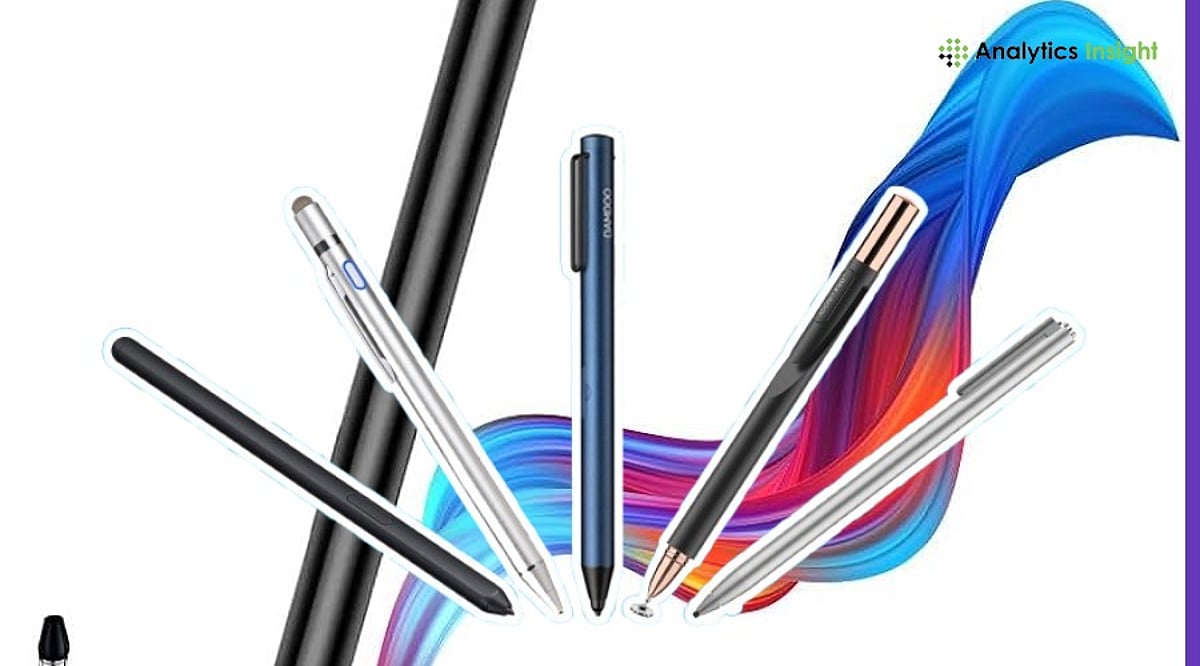
  • Top Tablet Stylus Pens of 2026: Best Picks for iPad, Android, and Windows Devices

    Top Tablet Stylus Pens of 2026: Best Picks for iPad, Android, and Windows Devices

    Overview

    Discover top tablet pens compatible with iPad, Android, and Windows devices for every budget and workflow. Compare essential stylus features including pressure sensitivity, charging methods, compatibility, and productivity-focused capabilities before purchasing. Find the ideal tablet pen for note-taking, sketching, studying, creative work, and professional productivity tasks.

    Global demand for tablets continues to rise, and so does the need for capable stylus pens. Worldwide tablet shipments reached 151.9 million units in 2025, marking a 5% year-on-year increase, according to IDC. The global stylus pen market was valued at $19.45 billion and is projected to exceed $40 billion by 2034.

    Top Stylus Pens for iPad, Android, and Windows Tablets

    With more users embracing digital note-taking, sketching, and hybrid working, selecting a compatible stylus has become as crucial as selecting the tablet itself.

    Apple Pencil Pro

    Apple Pencil Pro is the highest-performing stylus designed specifically for creators and professionals. This stylus features pressure and tilt sensing, haptics, squeezing, barrel rotation, and Find My capabilities. Apple Pencil Pro can be magnetically docked and charged to compatible iPads.

    Buy Now!

    Apple Pencil (USB-C)

    Apple Pencil (USB-C) makes for an excellent iPad stylus that does not cost a great deal if you want quality and reliability. This stylus offers pixel-level accuracy, tilt functionality, magnetic attachment, and USB-C charging. Pressure sensitivity may be missing from the list, but it works well for annotation.

    Buy Now!

    Samsung S Pen

    Samsung’s S Pen is included with many Samsung Galaxy Tab models and is among the most affordable styluses on the market. This stylus includes 4,096 pressure levels, low latency, palm rejection technology, and tilt functionality. It does not require charging to function properly.

    Buy Now!

    Xiaomi Focus Pen

    Xiaomi Focus Pen is specifically designed for Xiaomi Pad series tablets. The pen features 8,192 levels of pressure sensitivity, shortcut buttons, and USB-C charging. It gives you an accurate writing and drawing tool at an affordable price.

    Buy Now!

    Microsoft Surface Slim Pen 2

    Surface Slim Pen 2 is designed to work flawlessly with any Microsoft Surface device. The pen has 4,096 pressure levels, supports tilt, provides haptic feedback, and supports wireless charging. It has a comfortable grip and is ideal for note-taking and sketching with Windows Ink.

    Buy Now!

    Lenovo Digital Pen 2

    Lenovo Digital Pen 2 is a good choice for all compatible Lenovo tablets and Windows computers. It offers pressure sensitivity of up to 4,096 levels, tilt recognition, custom buttons, and long battery life. This ergonomic pen will suit both students and professionals.

    Buy Now!

    Tablet Pen Features Compared Side-By-Side

    When comparing these styluses, key factors include pressure sensitivity levels, tilt support, charging method, and ecosystem compatibility. The Apple Pencil Pro leads with haptic feedback and barrel rotation, while the Xiaomi Focus Pen offers the highest pressure sensitivity at 8,192 levels. The Samsung S Pen stands out for not requiring a battery for basic functions, and the Microsoft Surface Slim Pen 2 integrates haptic feedback for a more natural writing experience.

    Final Take

    The right tablet pen depends on the device you use and how you plan to use it. The use of advanced styluses with features such as pressure sensitivity and tilt may benefit artists. In contrast, affordable mid-range styluses may be more advantageous for students and professionals in terms of cost savings. One must consider the stylus’s compatibility with their tablets before purchasing.

    Frequently Asked Questions

    Which tablet pen is best for iPads in 2026?

    Apple Pencil Pro is the best choice for compatible iPads, offering pressure sensitivity, tilt support, haptic feedback, and wireless charging. Apple Pencil (USB-C) is a more affordable alternative for everyday note-taking, document annotation, and casual creative work.

    Can I use the same stylus on iPad, Android, and Windows tablets?

    Most active styluses are built for specific tablet ecosystems and may not work across different brands. Universal capacitive styluses offer broader compatibility but usually lack premium features such as pressure sensitivity, palm rejection, and tilt support.

    Is pressure sensitivity important in a tablet pen?

    Pressure sensitivity is especially valuable for artists, designers, and illustrators because it allows natural line variation while drawing. For students and professionals focused on writing or annotating documents, it is less important.

    Does the Samsung S Pen require charging?

    The Samsung S Pen does not need charging for regular writing, drawing, or navigation. However, Bluetooth-enabled Air Actions available on select Galaxy Tab models may require the stylus to be charged periodically.

    What should I consider before buying a tablet pen?

    Before purchasing, check whether the stylus is compatible with your tablet model. Also compare features such as pressure sensitivity, tilt support, palm rejection, charging method, battery life, and overall comfort for your intended use.

  • How AI Is Transforming Jobs, Leadership, and Business Strategy for the Future of Work

    How AI Is Transforming Jobs, Leadership, and Business Strategy for the Future of Work

    Artificial intelligence is reshaping business strategy, workforce planning, and leadership priorities. While many organizations have yet to realize measurable gains from AI, others are seeing significant improvements in productivity and job redesign. This article explores expert insights and the latest research on AI’s growing impact on jobs, business strategy, and the future of work.

    Two Tracks Are Opening — and They’re Pulling in Opposite Directions

    PwC’s research describes a two-track labor market. Some roles are being ‘professionalized’ by AI — made more expert, complex, and valuable. These roles are growing twice as fast as those being ‘democratized,’ made simpler and accessible to less-skilled workers. The wage gap between the two tracks has widened 42% since 2021. For business leaders, the strategic read is uncomfortable: AI is amplifying the gap between high-value and low-value work, not compressing it.

    The most striking data point from PwC: junior roles in the most AI-exposed jobs are now seven times more likely to require skills traditionally associated with senior-level work — leadership, strategic thinking, and stakeholder management. The career ladder is compressing. Entry-level roles in AI-exposed organizations are no longer genuinely entry-level in terms of the demands they entail.

    Why Most Organizations Are Getting Zero Return

    Despite the $40 billion investment in generative AI, 95% of organizations are getting zero return as of 2025. The limiting factor isn’t model quality or access to tools — it’s leadership structure. Microsoft’s Work Trend Index, surveying 20,000 workers across ten countries, found that organizational factors (culture, management support, governance) account for twice the variance in AI impact compared to any individual skill or effort.

    According to the WEF Chief Strategy Officers Dialogue 2026, the future of jobs will be shaped less by technology than by leadership choices — particularly around inclusive reskilling, responsible AI, and the ability to anticipate signals from technology, policy, and labor markets.

    What the Research Actually Agrees On

    BCG’s April 2026 workforce analysis makes a point that cuts through both optimism and alarm: task automation is not the same as job loss. Most roles will remain, but their content will shift substantially. A BCG framework distinguishes between roles where AI absorbs expert tasks (which tends to lower wages and increase employment) versus roles where AI absorbs routine tasks (which tends to raise wages and reduce headcount). The accounting clerk versus inventory clerk comparison illustrates this precisely: both roles saw routine task automation, but accountants saw wages rise and headcount fall, while inventory clerks saw wages fall and headcount grow.

    The implication for strategy: organizations that treat AI as a simple automation question — ‘what can we eliminate?’ — will get the wrong answer. The correct question, which MIT researchers frame explicitly, is whether a given task should be automated at all — and what happens to the expertise level of the remaining work if it is.

    Where the Leadership Gap Actually Sits

    Only 26% of AI users surveyed by Microsoft said their leadership is clearly aligned on AI strategy. That statistic has stayed roughly constant for two years. Leadership teams that talk about AI in strategy documents but haven’t changed performance metrics, incentive structures, or onboarding programs are experiencing what Microsoft calls the Transformation Paradox: employees ready to work differently, inside systems still rewarding the old way.

    The WEF’s blueprint is blunt on what closes this gap: connecting strategy to skills, shifting from services to IP-led value creation, and redesigning work so people and AI perform together. The organizations getting results aren’t treating AI as a cost-cutting project. They’re treating it as a capability redesign — and building the human skills that make the AI capabilities worth having.

    Why This Matters

    Artificial intelligence is no longer just a technology initiative — it has become a business transformation priority. Leaders who successfully integrate AI into strategy, talent development, and operations will be better positioned to improve productivity, strengthen competitiveness, and prepare their organizations for the evolving future of work.

    Frequently Asked Questions

    How is artificial intelligence changing the future of work?

    Artificial intelligence is changing the nature of work by automating repetitive tasks, supporting better decision-making, and increasing demand for skills such as leadership, creativity, and critical thinking. Most experts believe AI will redesign jobs rather than replace them entirely, requiring continuous learning and workforce adaptation.

    Will AI replace jobs or create new opportunities?

    Current research suggests AI is more likely to transform existing roles than eliminate them. While certain routine tasks may be automated, organizations are also creating new positions focused on AI management, governance, data analysis, and human-AI collaboration, resulting in evolving career opportunities.

    What skills will become more valuable in an AI-driven workplace?

    Leadership, communication, strategic thinking, creativity, emotional intelligence, problem-solving, and collaboration are becoming increasingly valuable. As AI automates routine work, employees who can make complex decisions, manage teams, and apply human judgment will become even more important to organizations.

    How should business leaders prepare their workforce for AI?

    Business leaders should invest in continuous learning, reskilling programs, responsible AI governance, and organizational change management. Preparing employees to work alongside AI technologies helps improve productivity while ensuring businesses remain competitive as technology continues to evolve rapidly.

    What industries are experiencing the biggest impact from AI?

    Industries including finance, healthcare, manufacturing, retail, customer service, technology, and professional services are experiencing significant AI-driven transformation. These sectors are using AI to improve operational efficiency, automate repetitive tasks, enhance customer experiences, and support better business decisions.

  • XRP Price Forecast July 2026 – Can the Downtrend Finally Reverse?

    XRP Price Forecast July 2026 – Can the Downtrend Finally Reverse?

    XRP enters July 2026 trading near $1.05 to $1.15 after a steep decline from its 2025 highs above $3.50. Traders are watching whether the $1.00 support level holds, as regulatory shifts and supply pressure continue to weigh on the asset. This article breaks down the key drivers, technical signals, and price outlook for the month.

    Why XRP Price Fell So Much

    The primary cause of XRP’s weakness is persistent supply pressure. Ripple unlocks 1 billion XRP tokens from escrow every month, and June 2026 saw another major release. Even when a portion returns to escrow, the market often reacts negatively to the increased circulating supply.

    In addition, the broader crypto market remained weak, and the introduction of California’s Digital Financial Assets Law (DFAL) on July 1, 2026 created new regulatory uncertainty for Ripple as a major U.S. blockchain firm.

    What Technical Charts Show Right Now

    XRP remains below the key 200-day moving average near $1.13–$1.14, which acts as a strong resistance. The Relative Strength Index (RSI) recently dropped near 32, indicating oversold conditions that sometimes precede a bounce.

    Positive Signs Still Exist

    Despite the price decline, spot XRP ETF inflows remain positive, showing continued institutional interest. Legislative discussions in Washington around the CLARITY Act could offer stronger legal protection for XRP as a commodity. Ripple’s international payment network expansion also supports long-term demand.

    XRP Price Forecast for July 2026

    If the market stabilizes, XRP may trade in a range of $1.10 to $1.20. More optimistic scenarios predict a rise toward $1.40–$1.60 if regulatory fears fade and buying momentum returns. Conservative estimates place the average price near $1.16–$1.18.

    Also read: Why Bitcoin, Ethereum, XRP, and Dogecoin are Falling: Will July Bring Relief?

    Key Takeaways

    • XRP trades near $1.05–$1.15, down nearly 70% from its 2025 peak.
    • The $1.00 support level is critical to prevent further declines toward $0.85.
    • Oversold RSI (32) and positive ETF inflows offer a glimmer of hope.
    • Regulatory developments (DFAL, CLARITY Act) and supply unlocks remain key risks.

    Disclaimer: This article is for informational purposes only and does not constitute financial advice. Cryptocurrency investments carry risk; always conduct your own research before investing.

  • UK’s FCA Softens Crypto Regulations While Retaining Capital and Stress Test Requirements

    UK’s FCA Softens Crypto Regulations While Retaining Capital and Stress Test Requirements

    The Financial Conduct Authority (FCA) has eased certain aspects of its planned UK crypto regulatory framework following industry feedback. However, the revised rules still require firms to hold capital against risky assets, conduct annual stress tests, and implement consumer safeguards. The regime is scheduled to take effect in October 2027 and will cover trading, custody, customer service, and risk management.

    The FCA reduced compliance thresholds and simplified reporting duties for some crypto activities after extensive consultation with market participants. Capital requirements for certain cryptoassets, including fiat-backed stablecoins, were also lowered. Industry representatives had argued that overly stringent rules could stifle growth and push operations offshore. The regulator stated that the revised framework aims to protect consumers without unduly burdening compliant businesses.

    Under the new rules, crypto firms must maintain capital reserves proportional to the risk of assets on their balance sheets. They must also design and run annual stress tests, submitting results to the FCA. Unlike the Bank of England’s approach of prescribing specific scenarios for major banks, crypto companies will calculate their own exposure and determine necessary capital levels.

    David Geale, the FCA’s executive director for payments and digital finance, described the framework as the UK’s first comprehensive crypto regulation. He noted that it applies established financial principles where crypto activities present comparable risks. The FCA expects stronger oversight to reduce misconduct and questionable practices, though consumers will still be warned that crypto investments can lose all value.

    Industry reactions have been mixed. Dan Coatsworth, head of markets at AJ Bell, said regulation can strengthen protection and reduce scams and misleading promotions, but cannot eliminate risk entirely. Following the announcement, Bitcoin and other major cryptocurrencies traded within narrow ranges, showing little immediate price reaction.

    As the October 2027 effective date approaches, crypto businesses should review the final standards and prepare their systems accordingly. The FCA’s revised approach offers more flexibility while maintaining accountability, seeking to balance innovation with consumer protection.

  • Dogecoin Approaches Make-or-Break $0.069 Support as Oversold Signals Intensify

    Dogecoin Approaches Make-or-Break $0.069 Support as Oversold Signals Intensify

    Dogecoin (DOGE) traded near $0.0714 on Tuesday, with sellers keeping the meme coin below every major moving average while oversold readings suggest downward momentum may be losing steam. The $0.069 support level now stands as the key threshold for a near-term recovery or a deeper slide.

    DOGE Remains Trapped Below Key Averages

    DOGE stayed below its 7-day, 20-day, 50-day, and 200-day moving averages, which sat near $0.07, $0.08, $0.09, and $0.10, respectively. This orderly sequence keeps the broader trend firmly bearish rather than sideways. The price has remained under the 20-day average for several weeks, limiting evidence of a sustained reversal.

    Meanwhile, the Relative Strength Index (RSI) dropped to 21.67, while stochastic readings hit 11.85 (%K) and 9.48 (%D). Bollinger %B stood at 0.12, placing the price close to the lower band. The MACD histogram moved to zero, signaling that downward momentum has started to decelerate.

    Thin Volume Exposes the Rebound Setup

    The latest intraday high reached $0.0725, marking the first recovery hurdle. Technical levels in the supplied analysis placed the 20-day average and Bollinger midline near $0.08. At the same time, Binance spot volume hovered near $53 million, while open interest declined 1.85% over 24 hours — indicating limited new leverage entering the market.

    Immediate order flow remained bearish. Sellers executed about $167 million against $128 million from buyers during the latest hour, producing a taker ratio of 0.77. Positioning data showed 68.9% of retail traders and 73.7% of top traders holding long exposure. The analysis identified this concentration as a risk if another decline triggers forced liquidations.

    Funding remained near neutral at 0.0090%. The absence of negative funding suggests the leverage reset has not yet reached full capitulation.

    $0.069 Close Shapes DOGE Recovery Targets

    CoinCodex projects DOGE at $0.1090 by year-end in a forecast published June 27 — representing a 46% increase from the stated market price. Still, the near-term setup depends on DOGE maintaining a daily close above $0.069.

    The stated entry range stands between $0.070 and $0.072, with $0.08 as the primary target. If DOGE reclaims $0.08 with stronger volume, the $0.09 (50-day average) becomes the next technical target. That move would strengthen the forecast recovery path.

    A daily close below $0.069 would invalidate the near-term bounce setup. The next cited support zone would then sit between $0.060 and $0.062.

    What’s Next?

    Dogecoin remains under bearish pressure below its major moving averages, but oversold indicators suggest selling momentum may be easing. The $0.069 support level now determines whether DOGE can rebound toward $0.08 or fall toward $0.060. Traders should monitor daily closes and maintain disciplined risk management.