Author: vitorcherulli

  • Key Government Rule Changes Effective July 1: Passport Fees, Aadhaar App Updates, and Income Tax Deadline

    Key Government Rule Changes Effective July 1: Passport Fees, Aadhaar App Updates, and Income Tax Deadline

    The start of July brings several important government regulation changes that affect passport applicants, Aadhaar users, and taxpayers. Understanding these updates can help you avoid last-minute hassles, whether you’re planning international travel, managing your digital identity, or preparing your annual tax filings.

    Passport Application Fees Revised

    The government has officially updated the service fees for passport applications, covering both Normal and Tatkaal categories for new and renewed passports.

    • A regular 36-page passport now costs Rs. 2,500 (previously Rs. 1,500).
    • A Tatkaal service for the same 36-page passport costs Rs. 5,000 (previously Rs. 3,500).
    • A normal 60-page passport is priced at Rs. 3,500 (previously Rs. 2,000).
    • The Tatkaal fee for a 60-page passport has risen to Rs. 6,000 from Rs. 4,000.

    These amendments also apply to replacements of lost or damaged passports.

    mAadhaar App Discontinued

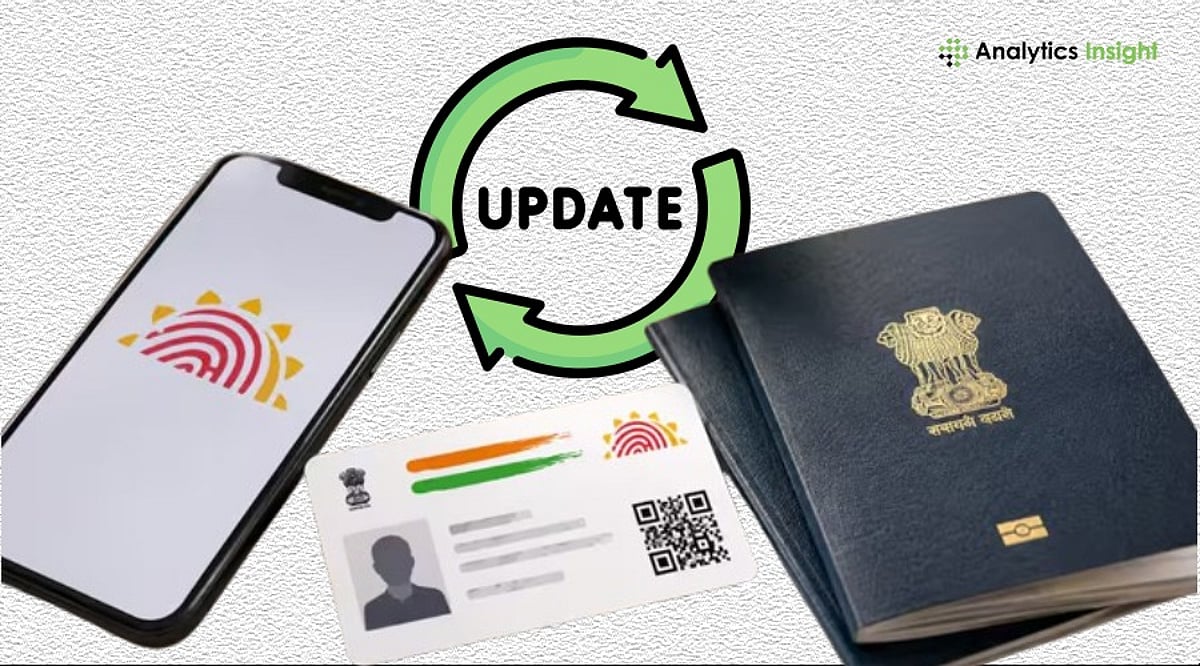
    The mAadhaar smartphone app was officially discontinued as of June 30. It has been replaced by a new version of the Aadhaar app that offers enhanced security. The new app is available for download on both the Google Play Store and Apple App Store.

    New Aadhaar App Brings Enhanced Features

    The updated Aadhaar app includes facial authentication, simplified biometric locking, and a more user-friendly interface for accessing Aadhaar services.

    Free Aadhaar Email Update for Six Months

    Users can now update their email address on the new Aadhaar app at no cost. The government has opened a limited-time window from July 1 to December 1, 2026, waiving the usual Rs. 75 fee for email updates. This offer applies to all citizens who want to add or change their email address in their Aadhaar data.

    ITR Filing Deadline: July 31

    Taxpayers who have not yet filed their income tax returns for the financial year 2025–26 must complete the process by July 31, 2026. Eligible individuals filing ITR-1 and ITR-2 can submit their returns until this date. Filing on time ensures compliance with income tax regulations and helps avoid potential penalties.

  • XRP Defends $1 Support as ETF Inflows and Network Activity Surge

    XRP Defends $1 Support as ETF Inflows and Network Activity Surge

    XRP remained near $1 after losing 1.05% during the latest session, while lower leverage and stronger network activity helped buyers defend support. The token fell from $1.0476 to $1.0366, then recovered after testing levels near $1.02. Traders now focus on whether the $1 base can support a move toward $1.08-$1.10.

    Leverage Reset Changes XRP’s Short-Term Setup

    Open interest dropped from a $1.3 billion peak to below $150 million, removing much of the leveraged positioning created during earlier rallies. Funding rates also turned negative as traders reduced long exposure. At the same time, long liquidations surged 832% above their three-month average. One candle cleared $6.7 million from leveraged positions, showing the scale of the recent market reset. Even so, XRP continued to hold above the $1 psychological level. The token traded between $1.0201 and $1.0476, while buyers repeatedly responded near the lower end of that range.

    Network Activity and RLUSD Trading Expand

    XRP Ledger activity improved during the second half of June. Daily active addresses rose from about 23,000 on June 14 to nearly 39,500 by June 27, marking a 72% increase. Meanwhile, Ripple-backed Evernorth said RLUSD has become a growth engine for XRP Ledger activity rather than a replacement for XRP. Its June 30 report ranked RLUSD among the ledger’s most-traded issued assets. RLUSD’s share of on-chain trading increased from below 1% to about 12% during 2026. The RLUSD/XRP pair also recorded about $900 million in trading volume over six months. Since launch, more than $2.5 billion has traded through RLUSD pairs on the XRP Ledger. The growth developed alongside rising address activity and continued demand for XRP-linked investment products.

    ETF Inflows Rise as Traders Watch Key Levels

    XRP spot ETFs recorded $15.34 million in inflows on June 29. The inflows extended institutional demand even as broader crypto sentiment remained weak. Selling pressure broke support near $1.0350 during the June 30 session before XRP tested $1.0249 and stabilized. Buyers then returned near the lows as trading volume increased sharply. Volume reached 92.73 million XRP at 01:00 UTC, about 134% above the 24-hour average. A later rebound lifted XRP from $1.024 to $1.038. During that rebound, volume rose to 3.88 million XRP as the price moved above resistance near $1.032. The next immediate barrier remains near $1.0460.

    XRP still trades below its major moving averages. The 20-day EMA stands near $1.11, followed by the 50-day near $1.20 and the 100-day near $1.31. The 200-day moving average remains near $1.52. Meanwhile, the 14-day RSI recovered to about 33, although momentum still sits below neutral levels. Bollinger Bands narrowed after June’s selloff, pointing to lower volatility. XRP still needs to reclaim the middle band near $1.12 before the technical structure improves. Immediate support sits between $1.0250 and $1.0350. A daily close below $1 would bring the $0.90-$0.85 area back into focus, while a break above $1.10 would strengthen recovery prospects.

    What’s Next?

    XRP continues to defend the $1 support level as leverage declines, network activity expands, and ETF inflows remain positive. However, the token must reclaim $1.08 to $1.10 to confirm stronger momentum. Traders should monitor the $1 floor closely since a sustained break could expose lower support zones.

  • Samsung’s Playful Teaser Hints at Wider Foldable Display Ahead of Galaxy Unpacked

    Samsung’s Playful Teaser Hints at Wider Foldable Display Ahead of Galaxy Unpacked

    Samsung has launched a quirky teaser campaign ahead of its upcoming Galaxy Unpacked event, using everyday objects like pizza, chocolate, a puzzle, dalgona candy, and the Taj Mahal to hint at a redesigned foldable smartphone lineup. Instead of showing the actual devices, the short videos depict these items shifting from tall, narrow shapes into shorter, wider forms—a clear nod to an expected wider foldable display.

    The campaign marks a departure from Samsung’s previous teaser strategies, which often highlighted specific features early on. This time, the company is keeping details deliberately vague, focusing on the experience and design rather than hardware specifications. The inclusion of the Taj Mahal appears to be part of Samsung’s global visual storytelling rather than a region-specific announcement.

    Industry speculation suggests the new Galaxy Z Fold and Galaxy Z Flip models will feature a slimmer design, a redesigned hinge, and a wider outer display. Samsung has not confirmed any of these details, but the teaser has generated significant buzz online.

    Galaxy Unpacked is expected to showcase not only design enhancements but also improvements in durability, screen quality, and Galaxy AI capabilities. The announcement comes amid increasing competition in the foldable segment, particularly from Chinese manufacturers that have been releasing thinner and lighter foldable devices.

    Samsung’s teaser keeps audiences guessing just before the official reveal, building anticipation for what could be a major design overhaul for its foldable lineup.

  • NVIDIA Stock Stays Below $200 Ahead of Vera Rubin Launch Amid Rising Competition and AI Spending Trends

    NVIDIA Stock Stays Below $200 Ahead of Vera Rubin Launch Amid Rising Competition and AI Spending Trends

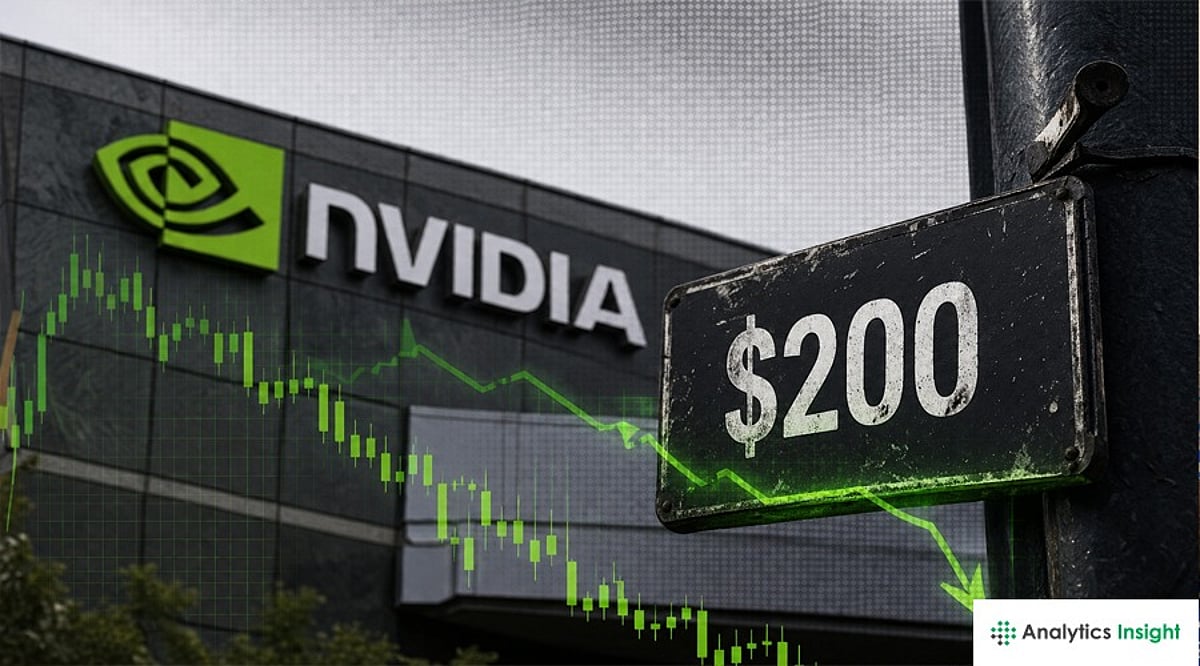
    NVIDIA shares continue to trade below the $200 mark despite a modest rebound, as investors shift their attention to the company’s upcoming Vera Rubin platform and its expanding robotics business. The stock has underperformed the broader semiconductor sector in 2026, even as demand for artificial intelligence infrastructure remains robust.

    NVIDIA Trails Semiconductor Sector Despite AI Demand

    Shares of NVIDIA rose about 1.5% to $197.96 in early Tuesday trading. However, the stock has gained only about 5% year-to-date, while the PHLX Semiconductor Index has surged approximately 94% in the same period, making NVIDIA one of the weaker performers among major chip companies. Investors have been reallocating capital to other areas of the AI supply chain, including memory chipmakers, custom chip developers, and CPU manufacturers. Intel and Advanced Micro Devices have posted significantly stronger gains in 2026, and the iShares Semiconductor ETF has also outperformed NVIDIA. Analysts point to concerns over export restrictions affecting China and questions about future growth rates as factors weighing on the stock.

    Vera Rubin Platform and Robotics Expansion

    The market is now focused on NVIDIA’s next-generation Vera Rubin platform, which could strengthen the company’s position in AI infrastructure if it delivers substantial performance improvements. Competition is intensifying as large technology companies diversify their AI spending across multiple suppliers. Meanwhile, NVIDIA is expanding beyond AI chips into robotics, having opened more than a dozen robotics-related positions in Beijing, Shanghai, and Shenzhen. The roles cover embodied intelligence, simulation, implementation, and robotics solutions. NVIDIA says the robotics team aims to build a leading platform and ecosystem for autonomous machines, speeding the transition from research to commercial use. Employees will work on Project GR00T, the Cosmos physical simulation world model, and NVIDIA’s GPU computing platform.

    Market Watches AI Spending and China Competition

    NVIDIA remains one of the world’s largest listed companies with a market valuation of about $4.696 trillion—a 1% move changes its value by approximately $47 billion. Investors are tracking broader AI capital expenditure: the Bank for International Settlements projects that the five largest hyperscalers will invest more than $1 trillion in AI capex over 2025 and 2026, while also noting funding pressure and supply constraints around power, advanced chips, and grid infrastructure. Separately, Reuters reported that Baidu’s Kunlunxin chip business targets a $50 billion Hong Kong IPO, and IDC data shows domestic suppliers now hold 41% of China’s AI accelerator server market. Despite these headwinds, NVIDIA continues to project strong growth. The company forecast fiscal second-quarter revenue of $91 billion, above analyst expectations, and announced an $80 billion share buyback. CEO Jensen Huang stated, ‘We should be growing faster than hyperscale capex.’ Analysts are monitoring whether AI investment can sustain its pace through the coming years.

  • India’s Government Scrutinizes WhatsApp Username Feature Over Privacy and Security Concerns

    India’s Government Scrutinizes WhatsApp Username Feature Over Privacy and Security Concerns

    India’s central government is evaluating the potential risks of WhatsApp’s upcoming username feature, stating that it will not compromise national security while assessing the privacy-focused update. According to government sources, authorities are examining whether the username feature could be exploited for impersonation, fraud, and other cybercrimes before its wider rollout in the country.

    WhatsApp recently introduced optional usernames, allowing users to communicate without sharing their phone numbers. This feature is designed to enhance user privacy, particularly in group chats and when interacting with unknown individuals. Users can create a personal username in the app’s account settings, while creators and brands can set usernames matching their Instagram or Facebook handles.

    However, authorities view anonymity as a potential threat that could lead to fake profiles and internet fraud. According to sources, the government is carefully weighing the implications of this feature to avoid undermining India’s digital security framework and ongoing efforts to combat cyber fraud.

    On the other hand, WhatsApp continues to tie accounts to users’ mobile numbers. Meta maintains that usernames are simply another way to connect without revealing phone numbers, aiming to balance privacy with security.

  • Ethereum on Track for Historic Three-Quarter Losing Streak as Institutional Strategies Diverge

    Ethereum on Track for Historic Three-Quarter Losing Streak as Institutional Strategies Diverge

    Ethereum is approaching its first three-quarter losing streak as prices continue to weaken, institutional strategies diverge, and staking absorbs supply amid persistent negative sentiment. The world’s second-largest cryptocurrency by market capitalization fell below $1,800 after failing to break through the key $2,400 resistance level.

    Ethereum Approaches a Historic Quarterly Decline

    CoinGlass quarterly return data shows that Ethereum closed the fourth quarter of 2025 in negative territory and has continued falling through the first and second quarters of 2026. Another negative quarterly close would mark three consecutive losing quarters for the first time, extending a downturn that has lasted longer than previous corrections. While Ethereum has faced major price declines before, recoveries typically followed within one or two quarters. This time, sustained selling has kept pressure on bullish traders for an extended period.

    BlackRock and BitMine Follow Opposite Paths

    Large institutions have not moved in unison during Ethereum’s decline. According to market updates, BlackRock sent additional Bitcoin and Ether to Coinbase Prime while reducing its Ether exposure. The asset manager sold Ether for seven consecutive trading days, with its most recent purchase occurring about two weeks before the latest report.

    In contrast, Tom Lee’s BitMine continued buying the asset despite broader market weakness. The firm added 27,084 ETH—worth approximately $42.5 million—to its corporate holdings, raising its total position to 5.7 million ETH. That holding represents about 4.72% of Ethereum’s total supply.

    Staking Absorption Complicates Market Positioning

    Analytics firm CryptoQuant notes that Ethereum now faces a collision between negative sentiment and supply absorption through staking. The firm describes this combination as a precarious environment, particularly for short-sellers. Staking reduces the amount of organic supply available for active trading, while weak sentiment can increase volatility as buyers and sellers react to changing support levels.

    The question remains: Can staking absorption contain further selling while major institutions continue taking opposite positions? Traders are watching whether Ethereum can hold key support areas after its move below $1,800. Trading volume has remained subdued during the latest phase, showing cautious participation across the market. This reduced activity adds another layer of uncertainty around Ethereum’s near-term price direction.

    What’s Next?

    Ethereum faces a possible third consecutive negative quarter as weak sentiment and selling pressure continue. BlackRock has reduced exposure while BitMine expands its holdings, and staking absorbs available supply. Market participants are advised to monitor support levels, institutional activity, and trading volume before making trading decisions.

  • India Scrutinizes WhatsApp’s New Username Feature Over Impersonation and Fraud Risks

    India Scrutinizes WhatsApp’s New Username Feature Over Impersonation and Fraud Risks

    The Indian government is closely examining WhatsApp’s upcoming username feature following concerns about fake accounts and online fraud. Sources from the Ministry of Electronics and Information Technology (MeitY) indicate that officials will thoroughly study the feature before it becomes widely available. The goal is to ensure the new capability does not introduce additional risks for users.

    WhatsApp’s username feature allows people to chat without sharing their phone numbers. Instead, users can create a unique identifier—up to 35 characters long, including letters, numbers, dots, and underscores—to communicate with new contacts, join groups, or connect with businesses. The company touts this as a privacy improvement, helping keep personal phone numbers private.

    Government Raises Safety Concerns

    While the feature enhances privacy, the government believes it could also create opportunities for abuse. For example, a malicious actor could register a username that closely resembles a real person’s name or a trusted business. Unsuspecting users might not notice the subtle difference and could end up interacting with impostors, leading to scams, fraud, or the spread of misinformation.

    Officials have stressed that user safety remains the highest priority. Every legal and security implication tied to the feature will be reviewed. If the government finds insufficient safeguards, MeitY may issue a notice to WhatsApp demanding stronger protections before the broader rollout.

    WhatsApp’s Planned Protections

    WhatsApp has already announced several measures to prevent misuse. The company will not maintain a public directory of usernames; users must know the exact username to start a conversation. Additionally, WhatsApp is introducing an optional username key—a secondary code that must be provided before a first message can be sent. This adds an extra layer of security.

    To further reduce impersonation risk, the platform plans to reserve usernames linked to government offices, public figures, celebrities, and well-known brands. WhatsApp says these steps will help keep the platform safe as the feature expands.

    Security experts caution, however, that fake accounts remain a challenge. A scammer could simply alter one letter or add a number to a legitimate username, creating a convincing impostor. Given that online fraud is already prevalent in India, robust verification mechanisms will be essential before the feature reaches millions of users.

    Why India Is Reviewing the Feature

    The government’s review is part of a broader effort to ensure that new technologies prioritize user protection. While privacy is important, strong security is equally necessary when a platform serves hundreds of millions of people daily.

    WhatsApp has already begun allowing users to reserve usernames prior to the official launch. Users can change or delete their usernames at any time. Businesses and creators can claim the same usernames they use on Instagram and Facebook.

    The Indian government has not announced a final decision yet, but the ongoing review signals that New Delhi wants stronger safeguards against online fraud, impersonation, and other digital security threats before the WhatsApp username feature goes live.

  • Analyst Projects Amazon Could Reach $1 Trillion Annual Revenue by 2028

    Analyst Projects Amazon Could Reach $1 Trillion Annual Revenue by 2028

    Amazon is on track to become the first company to generate $1 trillion in annual revenue by 2028, according to a projection from Shay Boloor, Chief Market Strategist at Futurum Equities. The forecast highlights Amazon’s diversified business model, which spans e-commerce, cloud computing, advertising, logistics, and artificial intelligence.

    Diversified Portfolio Drives Growth

    Boloor shared his outlook on social media, stating, “$AMZN is on track to become the first company to cross $1 trillion in annual revenue by 2028.” He attributed the potential milestone to Amazon’s broad portfolio rather than a single segment, calling the company “one of the most important infrastructure companies in the world compounding across commerce, cloud, logistics, ads and AI all at once.”

    Amazon’s latest quarterly results reinforce this optimism. The company reported first-quarter revenue of $181.52 billion, surpassing analysts’ expectations of $177.30 billion. Earnings per share came in at $2.78, well above the consensus estimate of $1.66. AWS posted 28% year-over-year revenue growth, its fastest expansion in over three years, while the advertising business and retail operations also delivered double-digit sales growth.

    Massive AI and Cloud Investments

    Amazon plans to invest approximately $200 billion in capital expenditures during 2026 to expand its AI and cloud infrastructure. The company noted that major customer commitments, including over $100 billion from OpenAI, support this investment plan. Its custom chip business, powered by Graviton and Trainium processors, has surpassed a $20 billion annualized revenue run rate, growing at triple-digit rates while targeting lower operating costs.

    In a move to accelerate enterprise AI adoption, AWS launched a new Forward Deployed Engineering division with an initial $1 billion commitment. The unit will embed AI engineers directly into customer organizations for about 45 days to help build and deploy AI applications. AWS Vice President of Frontier AI Engineering and Services Francessca Vasquez said, “We have a ton of demand for customers who are asking for our help to really drive agentic AI patterns in their workflows.”

    New Engineering Unit Targets Enterprise AI

    The new division plans to deploy teams of five to six engineers to customer sites, working alongside business and security teams to accelerate AI deployment. AWS expects to staff the unit with thousands of engineers through external hiring and internal transfers. Initial customers include the National Basketball Association and electronics company Ricoh. This initiative places AWS alongside companies like Palantir Technologies, Salesforce, Anthropic, and Google Cloud that already offer embedded engineering services.

    Success for the program will be measured by how quickly customers build products and gain practical AI capabilities. As analysts continue to monitor spending and profitability, Amazon’s expanding AI investments, cloud growth, advertising business, logistics network, and retail operations remain central to projections that the company could approach the $1 trillion annual revenue milestone in the coming years.

  • Bitcoin Holds Near $59K as Solana Rallies 2% Ahead of Fed Chair’s ECB Speech — Market Overview

    Bitcoin Holds Near $59K as Solana Rallies 2% Ahead of Fed Chair’s ECB Speech — Market Overview

    Bitcoin Steadies, Solana Leads Gains as Markets Await Fed Chair Warsh

    Bitcoin opened July on firmer footing, trading near $59,190 after a rough June. The cryptocurrency is up 0.30% in the past 24 hours and 5.64% over the week, as bargain hunters begin to step back in. Meanwhile, Solana outperformed major coins, surging 2.05% on renewed DeFi activity. All eyes now turn to Federal Reserve Chair Kevin Warsh’s remarks at the ECB Forum, which could set the tone for the week ahead.

    Bitcoin Price Today

    Bitcoin is currently at $59,190.41, with a market cap near $1.18 trillion and 24-hour volume of $35.11 billion. Key support sits between $58,000 and $59,000, while resistance is at $61,800–$62,500. A breakout above $62,500 could open the door to $64,000.

    Akshat Siddhant, Lead Quant Analyst at Mudrex, notes that nearly 45% of Bitcoin’s supply is now at a loss — a level not seen since 2019. He warns that a hawkish Warsh could push Bitcoin to $55,000, while a dovish tone might fuel a rally back to $60,000.

    Solana and Other Top Movers

    • Solana (SOL): Up 2.05% daily, 8.55% weekly, driven by rising decentralized finance activity.
    • TRON (TRX): Gained 0.86%, supported by steady stablecoin settlement volumes.
    • Stablecoins (USDT, USDC): Traded flat near $1.00, behaving as expected.

    Key News Driving Sentiment

    • Circle shares slide after Stripe, Coinbase, and BlackRock back a competitor stablecoin network, Open USD, threatening USDC’s dominance.
    • Strategy (formerly MicroStrategy) nears its 11th losing month out of 12, with shares down 41% in June. The firm unveiled a $2 billion buyback plan and flexibility to sell Bitcoin if needed.
    • Spot Bitcoin ETFs posted their worst month ever in June, with $4.06 billion in outflows, driven by a hawkish Fed meeting and a stronger dollar.
    • SEC opens comment period on ETF rule changes that could reshape how crypto funds operate.
    • Jefferies warns the CLARITY Act faces a make-or-break Senate test; passage could boost institutional adoption, while failure keeps regulatory fog in place.

    Market Outlook

    This week hinges on two catalysts: Fed Chair Warsh’s ECB Forum remarks and the US payrolls report. A dovish surprise from either could send Bitcoin back toward $60,000. Traders should also monitor daily ETF flows, dollar strength, and whether Solana’s momentum spreads to other altcoins.

    FAQs

    What is the Bitcoin price today?

    Bitcoin is trading at $59,190.41, up 0.30% in 24 hours and 5.64% on the week. Support is at $58,000–$59,000; resistance is $61,800–$62,500.

    Why did Bitcoin fall in June?

    A record $4.06 billion in spot Bitcoin ETF outflows, a hawkish Fed meeting, a stronger dollar, and rising Treasury yields combined to pressure Bitcoin lower.

    What’s the biggest crypto story today?

    The launch of a rival stablecoin network (Open USD) backed by Stripe, Coinbase, and BlackRock is challenging Circle’s USDC. Also, the SEC’s ETF rule review could have long-term implications.

    Which coins are leading gains?

    Solana leads with a 2.05% daily gain, followed by TRON at 0.86%. Stablecoins remain flat.

    What should traders watch this week?

    Fed Chair Warsh’s ECB speech and US payroll data will be key. Also track ETF flows and Bitcoin’s ability to hold above $59,000.

    Disclaimer: This article is for informational purposes only and does not constitute financial advice. Always do your own research before investing.

  • India’s AI Chip Push, Brekfuz Funding, and Trump’s Crypto Income: Top Tech News Today

    India’s AI Chip Push, Brekfuz Funding, and Trump’s Crypto Income: Top Tech News Today

    Today’s Tech Roundup

    From artificial intelligence and startups to cryptocurrency and employment debates, here are the key stories shaping the tech landscape today.

    India Doubles Down on AI Chips and Quantum Computing

    India is accelerating its digital transformation with a renewed focus on AI chips, semiconductors, and quantum technology. The government aims to boost domestic innovation, strengthen digital infrastructure, and support startups to position the country as a global tech leader.

    Gurugram AI Startup Brekfuz Secures Fresh Funding

    Brekfuz, an AI startup based in Gurugram, has raised $525,000 in a funding round that values the company at $7.5 million. The funds will be used to enhance its AI solutions, expand the team, and grow its customer base.

    Trump Reports $1.4 Billion in Cryptocurrency Income

    US President Donald Trump disclosed approximately $1.4 billion in earnings from cryptocurrency in a government financial filing. The report underscores the growing role of digital assets in his business portfolio and highlights crypto’s significance as a major income source.

    Delhi University Graduate’s Low Salary Sparks Campus Placement Debate

    A University of Delhi graduate’s post about receiving a monthly salary of Rs. 12,000 has ignited online discussions about the quality of campus placements and entry-level pay in India. Critics point to rising education costs and limited job opportunities for fresh graduates.

    OpenClaw Launches AI Agents for Android Smartphones

    OpenClaw has introduced an Android app that turns smartphones into personal automation hubs. The app supports voice commands, automation, and remote task management, aiming to make AI assistants more practical for everyday users while maintaining user control over permissions.

    Stay tuned for more updates on these rapidly evolving stories.