Author: vitorcherulli

  • Smart Tracker vs GPS Tracker: Key Differences, Pros, Cons, and Buying Guide (2026)

    Smart Tracker vs GPS Tracker: Key Differences, Pros, Cons, and Buying Guide (2026)

    Tracking devices have become an essential part of everyday life. People rely on them to locate lost items, protect vehicles, monitor valuable assets, and enhance security. Two popular options dominate the market: smart trackers and GPS trackers. While both help you find things, their underlying technology, functionality, and ideal use cases differ significantly. This guide breaks down everything you need to know before making a purchase.

    What Is a Smart Tracker?

    A smart tracker is a compact device that uses Bluetooth or Ultra-Wideband (UWB) technology to help locate personal belongings. Instead of relying on satellites, it communicates with nearby smartphones or connected devices to share location data. Popular examples include Apple AirTag, Samsung Galaxy SmartTag2, and Tile trackers. Attach one to your keys, wallet, backpack, or luggage, and a companion app shows you where your item is. The global smart tracker market is projected to reach nearly $4.02 billion in 2026, with annual growth exceeding 10% as connected device usage expands.

    What Is a GPS Tracker?

    A GPS tracker uses the Global Positioning System (GPS) to determine an object’s precise location via satellites. It does not depend on nearby phones; instead, it sends location data through cellular networks. GPS trackers are commonly used in cars, trucks, motorcycles, delivery fleets, security systems, child safety devices, and pet monitoring. The GPS tracking market is even larger, expected to hit approximately $6.13 billion in 2026, with annual growth of over 13% through 2033, fueled by demand from transportation and security sectors.

    Key Differences Between Smart Trackers and GPS Trackers

    Tracking Range

    Smart trackers are limited to short ranges, typically 30 to 120 meters for Bluetooth. If an item moves beyond that range, the tracker only updates when another connected device comes near. GPS trackers, by contrast, work over any distance since they connect directly to satellites. Whether your vehicle is in another city or country, you can still see its location.

    Accuracy

    Smart trackers with UWB technology can pinpoint a lost item with great precision, guiding you directly to it. GPS trackers typically offer accuracy between 3 and 10 meters outdoors, but performance may degrade inside buildings, underground garages, or dense urban areas. For indoor searches, smart trackers excel; for outdoor movement tracking, GPS trackers are superior.

    Battery Life

    Smart trackers are low-power devices. Bluetooth uses minimal energy, so many last between six months and two years before needing a battery replacement. GPS trackers consume much more power due to constant satellite and cellular communication; battery life ranges from a few days to a few months, depending on usage. If low maintenance is a priority, smart trackers are the easier choice.

    Cost Considerations

    Smart trackers generally require a single upfront payment with no monthly fees. GPS trackers often need a SIM card, data plan, cloud storage, or subscription services, adding recurring expenses. Over time, GPS trackers can be significantly more costly.

    Best Use Cases

    • Smart trackers are ideal for everyday personal items: wallets, keys, luggage, bags, and other small objects that stay within a limited range.
    • GPS trackers suit larger security needs: cars, motorcycles, fleet vehicles, expensive equipment, children’s safety devices, and pets that roam over long distances.

    Your choice depends entirely on what you need to protect and how far it may travel.

    Latest Updates in 2026

    Tracking technology continues to advance rapidly. Invoxia recently launched the GPS Tracker Pro Max, offering live location updates every second with 4G LTE-M, Wi-Fi, Bluetooth, and a nearly six-month battery life. In the smart tracker space, Urban Armor Gear released the Metropolis Tracker Card, which supports MagSafe wireless charging, reducing battery waste. Industry experts anticipate future trackers will integrate 5G, AI-driven security alerts, geofencing, and deeper smart home connectivity.

    Final Thoughts

    Both smart trackers and GPS trackers solve distinct problems. Smart trackers are affordable, long-lasting, and perfect for everyday items and short-range recovery. GPS trackers provide robust long-distance tracking, real-time updates, and advanced security but come with higher upfront and ongoing costs. As technology evolves, both categories are becoming smarter and more capable. Base your decision on budget, range needs, security requirements, and the type of item you want to track.

    Frequently Asked Questions

    1. What is the main difference between a smart tracker and a GPS tracker? Smart trackers use Bluetooth or nearby devices; GPS trackers use satellites for real-time location.
    2. Which tracker has better battery life? Smart trackers last from six months to two years; GPS trackers last from days to months.
    3. Does a GPS tracker require a monthly payment? Most GPS trackers need a SIM card or subscription, leading to monthly charges.
    4. Can a smart tracker track a car? Smart trackers are not ideal for cars due to limited range and reliance on nearby devices.
    5. Which tracker is better for daily personal items? Smart trackers are better for wallets, keys, bags, and luggage.
  • Tesla Stock Surges 8.5% to Nearly $412 After FSD Update and Strong Earnings

    Tesla Stock Surges 8.5% to Nearly $412 After FSD Update and Strong Earnings

    Tesla stock jumped 8.5% in a single trading session, pushing shares close to $412, following the release of a major Full Self-Driving (FSD) software update and fresh regulatory approvals in Europe. The rally underscores investor optimism around Tesla’s autonomous driving technology and its improving financial performance.

    Key Takeaways

    • Tesla stock surged 8.5% after the release of Full Self-Driving Version 14 Lite for older Hardware 3 vehicles.
    • Revenue reached $22.39 billion (16% annual growth), with gross margins improving to 21%.
    • Future growth hinges on robotaxi expansion, energy business development, and maintaining leadership amid rising competition.

    Stock Performance and Market Context

    As of June 30, 2026, Tesla shares traded near $409, closing the latest session at $411.84. The 8.5% daily gain ranks among the company’s largest in recent months. Tesla’s market capitalization now stands at approximately $1.55 trillion, placing it among the world’s most valuable companies.

    Over the past 12 months, Tesla’s stock has ranged from $288.77 to $498.83, highlighting persistent volatility. Despite the recent uptick, year-to-date performance remains negative at -8.4%. Daily trading volume remains high at roughly 56 million shares, reflecting sustained interest from both retail and institutional investors.

    Catalyst Behind the Rally

    The primary driver of the stock surge was the rollout of Full Self-Driving Version 14 Lite, a software update designed for older Tesla vehicles equipped with Hardware 3. The update enhances city driving support, route selection, speed control, and safety performance. Investors view autonomous driving as a transformative element of Tesla’s long-term business model, and the positive market reaction was immediate.

    Adding to the momentum, Tesla received additional regulatory approval for its self-driving software in several European markets, including Belgium. This international expansion opens new revenue opportunities and reinforces confidence in Tesla’s autonomous technology roadmap.

    Financial Performance Strengthens

    Tesla reported solid first-quarter 2026 results. Revenue reached $22.39 billion, up 16% year-over-year, demonstrating resilient demand despite intensifying competition in the electric vehicle (EV) market.

    Gross margins improved to approximately 21%, a significant recovery after earlier periods of aggressive price cuts. Operating income surged 91% to $940 million, reflecting tighter cost controls and improved operational efficiency.

    Future Growth Beyond EV Sales

    Tesla’s growth strategy now extends well beyond vehicle sales. Key initiatives include:

    • Cybercab Robotaxi Platform: Production began in early 2026 at Tesla’s Gigafactory in Texas. Success in large-scale robotaxi deployment could create an entirely new revenue stream.
    • Energy Expansion: Tesla has formed partnerships with energy providers to build virtual power plants that support AI data centers, diversifying revenue and reducing dependence on automotive sales.

    Risks to Consider

    Despite strong performance, Tesla carries significant risks. The stock trades at a price-to-earnings ratio above 340, far exceeding traditional automakers and many tech firms. Such high valuation implies extremely ambitious future growth expectations; any shortfall could trigger a sharp correction.

    Competition from Chinese EV makers is intensifying, and delays in products like the next-generation Roadster or large-scale robotaxi deployment create execution uncertainty. Regulatory hurdles for self-driving technology also remain a factor, as approvals vary by country.

    Outlook

    Tesla occupies a unique position, combining EVs, AI, robotics, autonomous driving, and energy infrastructure under one roof. Recent software developments and strong financials have boosted market confidence. However, the stock’s elevated valuation means future performance depends heavily on successful execution over the next 12–24 months.

    At current levels near $409–$412, Tesla remains financially robust with substantial long-term potential. Yet investors must weigh the high expectations embedded in the stock price against the real challenges of competition, regulation, and execution.

  • How to Choose the Best Travel Credit Card in India for 2026: A Complete Guide to Comparing and Saving

    How to Choose the Best Travel Credit Card in India for 2026: A Complete Guide to Comparing and Saving

    Airport lounges look great in credit card brochures. Priority boarding sounds impressive. Travel insurance feels like a safety net. But what nobody mentions upfront is that most people with travel credit cards don’t utilize them fully. They pay ₹5,000 annual fees for cards they barely use, chase reward points that expire before redemption, and assume their “travel insurance” covers everything—only to discover it doesn’t when they need it.

    The issue isn’t that travel credit cards are scams. It’s that people pick them based on marketing instead of math. A card that’s perfect for someone flying twice a month internationally becomes a terrible deal for someone taking one domestic trip annually. So, how do you choose the best travel credit card for yourself? This article answers that question.

    What Actually Matters When Choosing

    Travel credit cards offer a mix of features, and depending on how you travel, some matter much more than others.

    • Reward points: One card gives ₹0.20 per point. Another gives ₹0.50 for the same spending. And most expire within 2–3 years, whether you use them or not.
    • Airport lounge access: Everyone wants this feature, but entry-level cards cap you at 2–4 visits yearly. If you fly twice a year, you might use it twice. The other ten months, you’re paying for access you can’t use. Premium cards offer unlimited access, but they also charge ₹10,000+ annually. Are you going to lounges often enough to justify that?
    • Foreign currency markup: International travelers lose money quietly here. Regular cards charge 3–4% every time you swipe abroad. Travel credit cards reduce this to 1–2%, sometimes zero. On ₹2 lakh spent overseas, that’s ₹4,000–6,000 saved.
    • Travel insurance: Flight delays, lost baggage, medical emergencies, and trip cancellations are covered. But the catch is that coverage applies only if you booked that trip using the specific card.

    Types of Travel Credit Cards (and Who They’re Actually For)

    • General travel rewards cards: These cards provide flexibility. You can earn on everything, redeem for flights, hotels, or whatever.
    • Co-branded airline cards: With these, you fly with one carrier, earn miles, get free baggage, and priority boarding. Makes sense if you’re genuinely loyal. Waste of money if you switch airlines constantly based on whoever’s cheapest.
    • Premium travel credit cards: Expensive, with an annual charge of ₹10,000+. However, they offer unlimited lounge access, comprehensive insurance, concierge services, and high reward rates. These are only worth it if your annual travel spend exceeds ₹4–5 lakh.
    • Entry-level cards: Perfect for someone who wants to test the waters, cost ₹500–2,000 per year, and offer basic lounge access and moderate rewards.

    How to Compare Travel Credit Cards

    Start with your real travel spending from last year. If it’s under ₹1 lakh annually, premium cards will lose you money. Pick your top three priorities—say lounge access, low forex, and flexible redemption. You can’t optimize everything. Focus on what matches your actual travel behavior.

    Now calculate the benefit value:

    • Lounge visits you’ll realistically use: ₹600 per visit.
    • Reward points from your annual spend, multiplied by the redemption value per point.
    • Forex savings if you travel internationally.
    • Insurance value (compared to the standalone policy cost).

    Add it up. If the total value is less than the annual fee, you’re paying to lose money. Check redemption rules. Some cards make it deliberately complicated. If you can’t easily use rewards, they’re worthless.

    Quick Comparison Checklist

    • Route all travel spending through the card: flights, hotels, cabs, and parking. That’s how points accumulate fastest.
    • Track points quarterly. Set calendar reminders. Banks won’t warn you before they expire.
    • Compare redemption options. Sometimes points are worth ₹0.25 per point for flights, ₹0.50 for hotels. Same points, double the value depending on how you use them.
    • File insurance claims when eligible. Flight delayed 4+ hours? Claim it. Most people forget this benefit exists.
    • Pay balances in full monthly. Interest charges destroy any reward gains within weeks.

    Common Mistakes People Make While Choosing the Best Travel Credit Card

    • Paying high annual fees without enough travel spend.
    • Assuming all travel credit cards waive forex charges. They don’t.
    • Not reading insurance terms.
    • Letting points expire unused.
    • Overspending to hit milestone bonuses.

    Eligibility and Fees

    The application usually takes about 7–14 days. First, check eligibility, compare options, then apply with your documents (PAN, Aadhaar, and income proof).

    • Eligibility: Age 21–60. Minimum income of ₹3–5 lakh annually for basic cards (₹10 lakh+ for premium). Credit score of 750+ preferred.
    • Typical fees: Joining and annual fees ₹500–10,000 (sometimes waived for the first year). Forex markup 1–3.5%. Renewal fee may be waived with a minimum spend.

    Example: How the Best Travel Credit Card Can Save You Money

    Say you take three international trips a year and spend ₹1.5 lakh on flights, ₹1 lakh on hotels, and ₹80,000 on overseas.

    • Standard card (3.5% forex): ₹2,800 in forex charges. Rewards at 1 pt/₹100 return roughly ₹1,000–₹1,500 in value.
    • Mid-tier travel credit card (1.5% forex, 4X on travel): Forex charges drop to ₹1,200, saving ₹1,600. On ₹2.5 lakh in travel spends, you earn approximately ₹3,500–₹4,000 in redeemable value.

    That’s a clear value from forex savings and rewards: ₹5,000–₹6,000.

    The Bottom Line

    There’s no universal best travel credit card. Only the one matching your actual travel habits. Flying internationally quarterly? A premium card with zero forex and global lounge access makes sense. Two domestic trips yearly? Paying ₹5,000 annually for unused benefits is wasted money. Start with your real spending from last year. Then find the card whose benefits align with that reality, not with marketing fantasies about how you should travel.

    FAQs

    What should I prioritise when choosing the best travel credit card? Your actual travel frequency decides everything. Spending ₹2–3 lakh+ annually on travel? Prioritise reward rates, lounge access, and low forex. Only travelling occasionally? Focus on low fees and flexible redemption.

    Do all travel credit cards offer lounge access? No. Entry-level might give 2–4 visits per year. Premium cards may offer unlimited. Some only cover domestic lounges. Check which networks are included.

    What happens to unused reward points? They expire, usually after 2–3 years. Set reminders to check quarterly and redeem before they vanish.

    Is travel insurance included with all cards? No. Premium cards usually include it covering delays, lost bags, and medical emergencies. Read the actual policy terms.

    What’s the minimum income required? Entry-level cards need an annual income of ₹3–5 lakh. Premium cards need ₹10 lakh or more.

    Disclaimer: Analytics Insight does not provide financial advice or guidance on cryptocurrencies and stocks. This article is provided for informational purposes and does not constitute investment advice. You are responsible for conducting your own research (DYOR) before making any investments.

  • Nifty 50 and Sensex at Critical Juncture: Support and Resistance Levels Amid Mixed Global Signals

    Nifty 50 and Sensex at Critical Juncture: Support and Resistance Levels Amid Mixed Global Signals

    Indian equity markets are poised for a flat opening on Wednesday as global cues remain mixed. GIFT Nifty is trading near 23,994, down roughly 16 points from its previous close, signaling a lack of strong directional bias.

    On Tuesday, the Sensex slipped 249.70 points (0.33%) to close at 76,478.67, while the Nifty 50 declined 80.50 points (0.34%) to settle at 23,865.75. Midcap and smallcap indices outperformed, gaining 0.4% and 1% respectively. The rupee opened flat at Rs. 94.66 per dollar.

    Foreign institutional investors (FIIs) sold shares worth Rs. 2,556.75 crore on Tuesday, whereas domestic institutional investors (DIIs) bought stocks worth Rs. 6,842.34 crore, according to NSE data.

    Sensex Outlook

    Technically, the Sensex formed a small bearish candle on daily charts with non-directional intraday activity, indicating indecisiveness. Shrikant Chouhan, Head of Equity Research at Kotak Securities, said, “On the upside, 77,000 would act as a crucial resistance level. A successful breakout above 77,000 could push the market up to 77,500-77,700. On the flip side, if the market falls below the 50-day SMA or 76,300, selling pressure is likely to accelerate. Below the same, the market could retest levels of 75,800-75,500.”

    Nifty 50 Outlook

    The Nifty 50 ended lower for the third consecutive session and is approaching an important support zone. Bajaj Broking Research noted, “The 23,800-23,750 zone remains the immediate support area, coinciding with the previous gap region and lows recorded over the past two weeks. If the index holds above this level, it could witness a pullback towards 24,035 and subsequently 24,120 in the coming sessions.” The brokerage identifies the next major support around 23,500, with significant resistance between 24,500 and 24,600. They believe the overall bias remains positive and the current breather should be used as a buying opportunity.

    Bank Nifty Outlook

    Bank Nifty fell 184.45 points (0.32%) to close at 57,542.90, forming a small bearish candle. Bajaj Broking Research said the index is consolidating around April 2026 highs. A decisive move above last week’s peak could trigger fresh upside towards 59,200. However, failure to break resistance may keep the index range-bound between 57,000 and 58,500. The brokerage maintains a positive bias and recommends using the current breather as a buying opportunity.

    Disclaimer: This article is for informational purposes only and does not constitute investment advice. Analytics Insight does not provide financial guidance. Please conduct your own research before making any investment decisions.

  • MCX Gold Drops 0.76% to ₹1,41,444 as Strong Dollar and Rate-Hike Expectations Weigh; Brent Crude Edges Up 0.40%

    MCX Gold Drops 0.76% to ₹1,41,444 as Strong Dollar and Rate-Hike Expectations Weigh; Brent Crude Edges Up 0.40%

    Gold prices retreated on the Multi Commodity Exchange (MCX) on July 1, pressured by a stronger US dollar, rising Treasury yields, and growing expectations that the Federal Reserve will implement another interest rate hike in September. The precious metal’s decline reflects broader market uncertainty surrounding US monetary policy and global economic signals.

    August gold futures on MCX fell 0.76%, settling at ₹1,41,444 per 10 grams. July silver futures also slipped, declining 1.6% to ₹2,24,914 per kilogram. Meanwhile, Brent crude futures for August delivery edged up 0.40% to $73.24 a barrel, while US West Texas Intermediate (WTI) crude gained 0.40% to $69.78 a barrel.

    According to the CME FedWatch Tool, traders now assign a 67% probability to a rate hike by the US Federal Reserve in September, adding downward pressure on non-yielding assets like gold.

    Domestic Gold Prices

    In the Indian market, 24K gold declined by ₹126 to ₹1,40,780 per 10 grams, while 22K gold dropped by ₹115 to ₹1,29,050. Regional variations were minimal: Mumbai and Kolkata both quoted 24K gold at ₹1,40,780, Delhi at ₹1,40,930, and Chennai at ₹1,43,990.

    US Gold Prices

    In the international market, gold prices fell for a second session, hitting a seven-month low earlier this week. Spot gold was down 0.7% at $3,979.41 per ounce, while US gold futures for August delivery lost 1.1% to $3,992.70. The decline was fueled by lingering inflation concerns and uncertainty surrounding US-Iran peace talks, which continue to keep Fed rate hike expectations elevated.

    Spot silver declined 1.4% to $57.75 per ounce, platinum lost 0.6% to $1,542 (hitting its lowest since last November), and palladium edged 0.4% lower to $1,199.34.

    Key Levels to Watch

    “It looks like the pressure from higher yields is what’s getting gold lower. The US dollar is also a touch higher at the same time, which kind of confirms what’s going on,” said Ilya Spivak, Head of Global Macro at Tastylive.

    Internationally, gold has support at $3,994 and $3,955 per troy ounce, with resistance at $4,074 and $4,110. Silver support stands at $57.70 and $56, while resistance is at $61.20 and $62.80.

    On MCX, gold support levels are at ₹1,41,100 and ₹1,40,000, with resistance at ₹1,43,350 and ₹1,44,200. Silver on MCX has support at ₹2,25,500 and ₹2,22,000, while resistance lies at ₹2,31,000 and ₹2,34,400.

  • How I Made AI My Personal Productivity Assistant: A Practical Guide

    How I Made AI My Personal Productivity Assistant: A Practical Guide

    I stopped treating AI as just a chatbot and started using it as a personal work assistant. Now it helps me organize tasks, prioritize deadlines, manage information, and reduce repetitive work. Instead of replacing my decisions, AI supports them, allowing me to focus on creative thinking and high-value responsibilities every day.

    Automating Repetitive Work

    I delegated routine tasks like drafting emails, summarizing meetings, creating to-do lists, scheduling reminders, and organizing notes to AI. Automating these everyday activities saves valuable time, reduces manual effort, and helps me stay productive without feeling overwhelmed by repetitive administrative responsibilities.

    Faster Research and Better Insights

    Instead of opening multiple websites, I ask AI to summarize reports, explain complex concepts, compare products, and identify industry trends. This speeds up research while helping me understand information quickly. I still verify important facts, but AI significantly reduces the time needed for initial research.

    Creating Better Content in Less Time

    AI helps me brainstorm ideas, prepare outlines, write first drafts, improve grammar, and refine tone. Whether creating presentations, reports, blogs, or social media content, it accelerates the writing process while allowing me to focus on adding expertise, creativity, and personal insights before publishing.

    Managing Projects More Effectively

    I use AI to break large projects into manageable tasks, generate timelines, create meeting agendas, and track progress. It helps identify priorities, organize workflows, and ensure nothing important is overlooked. This structured approach keeps projects moving efficiently from planning to completion.

    Smarter Communication Every Day

    Before sending emails or presentations, I use AI to improve clarity, grammar, and professionalism. It adapts messages for different audiences while keeping communication concise and impactful. Better-written communication saves time, strengthens collaboration, and creates a more professional impression.

    AI Is an Assistant, Not a Replacement

    My biggest lesson is that AI works best as a trusted assistant rather than a replacement for human judgment. It handles repetitive tasks, organizes information, and boosts productivity, while I remain responsible for creativity, strategy, decision-making, and final quality. Together, we achieve better results faster.

  • SSD Buying Guide 2026: How to Pick the Best Solid-State Drive for Speed, Storage, and Value

    SSD Buying Guide 2026: How to Pick the Best Solid-State Drive for Speed, Storage, and Value

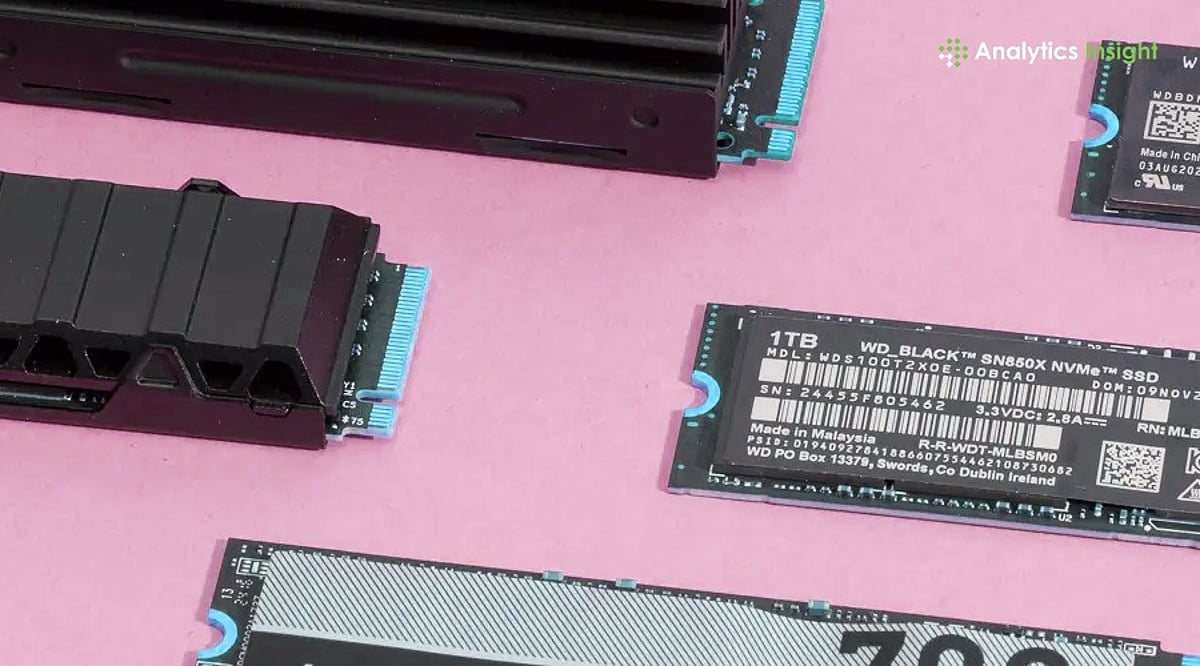
    Solid State Drives (SSDs) have become the default storage option for most modern computers, offering dramatically faster performance than traditional hard drives. However, with the rapid evolution of storage technology—including PCIe 5.0 drives, rising NAND flash prices, and growing capacity demands—choosing the right SSD requires careful consideration of speed, durability, compatibility, and long-term value. This guide will help you navigate the key factors and make an informed purchase in 2026.

    Understanding Different Types of SSDs

    Three major categories dominate the market today:

    • SATA SSDs: The most affordable option, delivering speeds up to 550 MB/s. Ideal for basic office work, web browsing, video playback, and older systems. While much faster than HDDs, they are now considered entry-level.
    • NVMe PCIe 4.0 SSDs: The mainstream choice, offering speeds between 5,000 MB/s and 7,500 MB/s. Perfect for gamers, students, professionals, and content creators who need fast file transfers and responsive system performance.
    • PCIe 5.0 SSDs: Premium drives like the WD Black SN8100 that reach read speeds up to 14,900 MB/s. Targeted at power users, video editors, AI workloads, and advanced workstations where maximum throughput is critical.

    Choosing the Right Storage Capacity

    Your capacity needs depend on your workload:

    • 500GB: Suitable for basic tasks, school projects, light software use, and web browsing.
    • 1TB: The most balanced option for average users, offering ample room for applications, files, and the operating system.
    • 2TB: Increasingly popular among gamers, as modern AAA titles regularly exceed 150GB per installation.
    • 4TB and 8TB: Best for professional creators, video editors, AI developers, and users handling huge daily file transfers. Larger SSDs often perform better due to more memory chips enabling faster internal data movement.

    Why PCIe Generation Matters

    SSD speed is limited by the motherboard’s PCIe connection. PCIe 3.0 maxes out at about 3,500 MB/s, PCIe 4.0 reaches nearly 7,500 MB/s, and PCIe 5.0 pushes toward 15,000 MB/s. However, PCIe 4.0 remains the best value for most users—PCIe 5.0 drives still command high prices, and the real-world difference for typical tasks is minimal. Consumer PCIe 6.0 SSDs aren’t expected before 2030.

    Checking the Type of NAND Memory

    The memory chips inside an SSD significantly affect speed and lifespan:

    • TLC NAND (Triple-Level Cell): The preferred choice for durability, consistent speed, and long-term reliability. Most premium SSDs use TLC memory.
    • QLC NAND (Quad-Level Cell): Focused on lowering cost. These drives are cheaper but can slow down during large file transfers and sustained heavy workloads. For long-term performance, TLC is the stronger option.

    Understanding SSD Lifespan Through TBW

    Drive endurance is measured in Terabytes Written (TBW). A budget 1TB SSD typically offers around 300 TBW, mid-range drives approach 600 TBW, and premium 2TB models often exceed 1,200 TBW. Higher endurance is important for professionals who constantly transfer large files—developers, video editors, and designers will benefit from drives with stronger ratings.

    Heat Management Has Become Important

    As SSD speeds increase, so does heat output, especially with PCIe 5.0 drives. Many premium SSDs now include built-in heatsinks or graphene cooling layers, and some motherboards offer dedicated SSD cooling. Without proper thermal management, the drive will throttle performance to protect itself. Always consider cooling when purchasing a high-speed SSD.

    SSD Prices Are Rising in 2026

    Global NAND flash shortages driven by AI infrastructure demand have pushed SSD prices sharply higher. Several high-capacity NVMe drives now cost nearly twice what they did in 2025. Analysts expect this pricing pressure to continue into 2027, making timing an important factor for buyers planning upgrades.

    Final Buying Advice for 2026

    For the majority of users, a PCIe 4.0 NVMe SSD offers the best balance of price and performance. SATA SSDs remain viable for older or low-end systems. PCIe 5.0 drives are reserved for professionals and enthusiasts who need the absolute fastest throughput. The global NVMe SSD market is projected to grow at a CAGR of about 18.9% over the next several years, driven by cloud computing, AI applications, and enterprise storage needs. Rather than waiting for the next technology leap, make your purchase decision based on required capacity, motherboard compatibility, endurance needs, and your long-term usage commitment.

    Frequently Asked Questions

    1. Which SSD is best for most buyers in 2026? A PCIe 4.0 NVMe SSD remains the best option because it delivers strong performance at a reasonable price.
    2. Is PCIe 5.0 worth buying in 2026? PCIe 5.0 is best for professionals and advanced users; high prices make it unnecessary for regular use.
    3. What SSD capacity should be chosen for gaming? A 2TB SSD works best for gaming because many modern games now exceed 150GB.
    4. Why are SSD prices increasing in 2026? Global NAND flash shortages and rising demand from AI infrastructure have pushed storage prices much higher.
    5. Does SSD cooling really matter? Yes. High-speed SSDs, especially PCIe 5.0 models, produce more heat and may slow down without proper cooling.
  • OpenMatter Network Launches Cryptographic Verification Platform for Secure AI Collaboration

    OpenMatter Network Launches Cryptographic Verification Platform for Secure AI Collaboration

    OpenMatter Network has unveiled a cryptographically verifiable platform designed to enable secure collaboration and AI governance, addressing the growing need for trustless verification in distributed computing environments. The platform, built on the principle “Don’t Trust Data. Prove It,” provides organizations with mathematical proof of data usage, computation execution, and AI behavior without relying on traditional trust assumptions.

    As enterprises increasingly deploy AI agents across heterogeneous systems they do not fully control, conventional trust-based models are proving insufficient. OpenMatter Network’s solution introduces a “Verifiable Trust Layer” that complements existing cloud, data, and AI infrastructure by adding cryptographic verification, governed execution, and secure collaboration capabilities.

    Core Platform Components

    The platform integrates three key technologies:

    • Masked Compute – enables mathematically verifiable execution for secure collaboration and computation across organizations without exposing sensitive data.
    • QuantumGuard – provides verifiable policy enforcement and governance for AI agents operating across systems and environments.
    • Datavizor – acts as the verification and visibility layer, offering insight into cryptographically provable execution, policy enforcement, and AI activity.

    These components work together to create a unified foundation for secure collaboration and governed AI execution, particularly critical as organizations face operational, regulatory, and security risks from uncontrolled AI systems.

    Industry Expert Perspectives

    “For decades, organizations have been asked to trust the systems they rely on,” said Renee Davis, CEO and Co-Founder of OpenMatter Network. “We believe the next generation of digital infrastructure will be built on proof. Organizations need the ability to mathematically verify how data is used, how computations are executed and how AI systems behave.”

    Ada Anderson, CTO and Co-Founder, added: “Organizations are quickly realizing that policy prompts and assumed compliance are not enough. If you cannot prove what happened, you cannot truly govern it.”

    Applications and Partnerships

    The platform is designed for enterprise and research applications including healthcare collaboration, secure AI model training, financial analytics, enterprise AI governance, and distributed scientific research. OpenMatter Network is already collaborating with Dara, a privacy-first health data platform, to explore verifiable collaboration infrastructure for healthcare insights while preserving individual data privacy.

    Alanna Scott Delaney, CEO of Dara, commented: “The future of healthcare depends on our ability to learn from data without compromising the privacy of the individuals behind it. By combining Dara’s privacy-first health data platform with OpenMatter Network’s secure collaboration infrastructure, we are exploring new ways to generate insights while keeping users in control of their information.”

    Headquartered in Florida’s Space Coast, OpenMatter Network is building the Verifiable Trust Layer for Secure Collaboration and AI Agents. For more information, visit www.openmatter.network.

  • How AI Can Help Startups Validate Business Ideas Before Building

    How AI Can Help Startups Validate Business Ideas Before Building

    Most startups fail because they build products nobody wants. Founders get excited about their vision, hire developers, and start building, only to discover months later that the market doesn’t care. The standard practice is based on instinct and favorable predictions—dangerous, expensive, and inefficient.

    Today, AI tools let you validate your business idea quickly by analyzing search trends, customer conversations, competitor landscapes, and market signals before you write a single line of production code.

    What Is Startup Idea Validation and Why It Matters

    Validation means testing whether real people want your product before you build it. If you bypass this step, you’re betting on chance. Many startups fail not because of poor execution, but because they create products addressing non-existent problems or uninterested markets.

    The lean startup approach emphasizes testing assumptions early with the smallest possible version of a product. You release a minimum viable product, collect user feedback, and make improvements based on your findings. AI makes this process faster and smarter by analyzing massive datasets in minutes, spotting patterns, and identifying rising demand.

    A recent IDC study projects global AI investment to reach $307 billion in 2025, more than doubling to $632 billion by 2028. Startups that integrate AI early gain a strategic edge by validating ideas faster and aligning their products with where the market is clearly headed.

    How AI Can Validate Business Ideas

    AI validation turns raw data into clear, actionable decisions. In 2025, 88% of companies are already using or testing AI in at least one business function, making it a mainstream tool for business intelligence. For startups, this means faster insight and fewer risky guesses.

    Here’s how AI helps validate ideas across four key areas.

    Analyze Market Demand Through Search Trends

    Search behavior shows what people actually want. Rising search volume signals growing demand. Flat or declining trends can warn you early. Search data from various platforms is analyzed by AI tools such as Ahrefs and SEMrush. They interpret patterns humans often miss. You can see whether interest is growing. AI discovers connected keywords and up-and-coming specialized areas. This helps you spot opportunities before competitors do. For founders who want to extract the maximum value from this data without navigating a steep learning curve, leveraging specialized AI SEO services can help translate these raw search trends into a concrete, validated go-to-market strategy.

    For example, if you’re building a tool for remote teams, AI can show whether interest in “async communication” or “remote productivity tools” is increasing or losing momentum.

    Gather Customer Insights from Real Conversations

    Customers talk freely online. Reddit, forums, reviews, and social media are full of real opinions. AI can scan thousands of conversations in minutes. It can pull out recurring pain points, common complaints, and unmet needs, which can then be cross-checked with reliable external data sources. It can also capture the exact language people use. That language matters when shaping your product and messaging. If you’re considering an AI budgeting app, AI can analyze finance communities to reveal frustrations with existing tools and features users want next.

    Conduct Competitor Research at Scale

    Manual competitor research is slow. AI makes it instant. AI tools summarize competitor features, pricing, positioning, and customer feedback across dozens of products. You quickly see what’s working and what isn’t. Examples include Crayon for competitive intelligence and Kompyte for real-time competitor tracking. This clarity helps you identify gaps and position your product more strategically.

    Test Messaging and Value Propositions

    Your value proposition must resonate fast. AI lets you test it before building anything. You can generate multiple versions of your message. Each highlights a different benefit or outcome. Generative AI helps compare what performs best. This approach is now common. Salesforce reports that 76% of marketers use generative AI for content creation, making AI-driven message testing one of the fastest ways to validate demand.

    Build an AI MVP to Test Your Idea

    Validation research gives confidence, but nothing beats putting a working product in front of real users. That’s where an AI MVP comes in.

    What Is an AI MVP?

    An AI MVP (Minimum Viable Product) is a minimal, working version of your product that uses AI to deliver some form of real value. It’s not feature-complete or polished, but it works well enough that your target users can interact with it, and you can gather meaningful feedback. The purpose is simple: test your core assumptions quickly and cheaply.

    Why Build an AI MVP as Part of Validation

    An AI MVP helps you move from theory to reality. Market research tells you what people say they want, but an MVP shows you what they actually do. You’ll discover how users interact with the AI feature, whether the intelligence you’re providing feels valuable, and what gaps exist between your vision and their experience. Building an AI MVP also prevents waste. Instead of investing months building features nobody needs, you focus on the core value proposition. If users don’t engage with your MVP, you can pivot quickly without burning through your runway.

    Step-by-Step: Build an AI MVP

    1. Define Core Value: Start by identifying the single most important job your product must perform. What’s the biggest problem you’re solving? Your AI MVP should focus exclusively on delivering that one piece of value. For example, if you’re building an AI writing assistant, your core value might be “helps marketers write engaging social media posts in half the time.”
    2. Pick the Simplest AI Feature That Delivers Value: Choose one AI capability that demonstrates your core value. This could be natural language responses, basic predictions, content generation, simple recommendations, or automated summarization. AI doesn’t need to be sophisticated. It just needs to work well enough to prove the concept.
    3. Choose Tools and Technology: Use pre-trained models and API services whenever possible. Platforms like OpenAI’s GPT-4, Anthropic’s Claude, or Hugging Face Transformers let you prototype quickly without training custom models. No-code builders like Bubble or low-code platforms help you create a simple interface without heavy development resources. One critical consideration: evaluate rate limits, context window sizes, and model latency before committing to a platform.
    4. Build a Working Prototype: Keep your prototype extremely minimal. Focus on a clean user experience and the essential features that test your hypothesis. Build just enough that someone can interact with the AI, experience the value you’re providing, and give you feedback. A simple web interface with one core workflow is often sufficient.
    5. Launch to Real Users: Ask a handful of early adopters to try out your minimum viable product. These should be people who closely match your target customer profile and genuinely experience the problem you’re trying to solve. Don’t wait for perfection. Launch when the core feature works reliably enough to gather feedback.
    6. Gather Feedback and Iterate: Collect both qualitative feedback through user interviews and quantitative data through usage metrics. Monitor engagement patterns, feature usage, error rates, and user satisfaction. The strength of an AI MVP is that it improves through iteration.

    How to Measure AI MVP Success

    Engagement and retention reveal real interest. When users test your AI but don’t come back, it signals a problem. When people keep coming back, it’s a sign you’re tackling a real problem. Furthermore, it is vital to evaluate whether this early traction aligns with your overarching organizational goals, ensuring that the product you are validating actually supports the long-term vision of your startup. Feedback quality is more important than its quantity. Clear comments about usefulness, specific frustrations, and feature suggestions provide insight into what’s working and what isn’t. Key behavioral signals include signup rates, time spent on the core feature, task completion, and user referrals. These actions show commitment, not curiosity.

    Combining AI Insights with MVP Data

    The most powerful validation comes from combining AI market analysis with real MVP usage data. Leverage AI research to create an intelligent MVP design. Use the trends, customer insights, and competitive intelligence you obtain to determine what features to build and how to market them. Then take the behavioral data generated from user interactions with your MVP and incorporate it back into your analysis. AI tools can help you identify patterns in user feedback, spot emerging feature requests, and understand which segments engage most strongly. According to McKinsey’s State of AI report, many companies struggle to achieve measurable impact from AI despite high enthusiasm. The difference between success and failure often comes down to maintaining this disciplined feedback loop rather than building AI features for novelty’s sake.

    Key Takeaways

    • AI lets you validate ideas before building. You don’t need to build a product to test demand anymore. AI helps you understand trends, customer language, and competitor landscapes so that you start with data, not guesswork.
    • An AI MVP tests core assumptions with real users. Instead of months of development, launch a minimal version that proves your idea’s value. Real engagement beats hypothetical interest every time.
    • Combine analysis with real interaction. AI helps with research, and real users validate with actions. Merge both for faster learning and smarter decisions.
  • NYT Mini Crossword Solutions for June 30, 2026 – Full Clue List

    NYT Mini Crossword Solutions for June 30, 2026 – Full Clue List

    The NYT Mini Crossword for Tuesday, June 30, 2026, delivers a compact but engaging set of clues that blend everyday vocabulary, food trivia, and a tidbit of farming knowledge. Whether you’re a daily solver or just stopping by, the answers below will help you complete the grid and keep your streak alive across the New York Times Games suite.

    Today’s Mini Crossword – June 30, 2026

    Below are the complete across and down answers, with brief explanations for each clue.

    Across Clues and Answers

    • 1-Across: Big party
      Answer: BASH
      Explanation: A bash is a large, lively celebration.
    • 5-Across: Pricey variety of beef that translates to ‘Japanese cow’
      Answer: WAGYU
      Explanation: Wagyu is a premium Japanese beef prized for its marbling and flavor.
    • 6-Across: Unwelcome sound at 7 a.m., perhaps
      Answer: ALARM
      Explanation: An alarm clock jolts you awake early—a sound many find unwelcome.
    • 7-Across: Really make excited
      Answer: REVUP
      Explanation: To rev up means to energize or excite someone.
    • 8-Across: Get ready (for)
      Answer: PREP
      Explanation: Prep is short for prepare; getting ready for an event or task.

    Down Clues and Answers

    • 1-Down: Farm machine that bundles hay
      Answer: BALER
      Explanation: A baler collects hay and compresses it into bales.
    • 2-Down: Plant used to make mezcal
      Answer: AGAVE
      Explanation: Agave is the succulent plant from which mezcal (and tequila) is distilled.
    • 3-Down: Pancake topper
      Answer: SYRUP
      Explanation: Syrup is a sweet liquid commonly poured over pancakes.
    • 4-Down: Prominent feature of a camel
      Answer: HUMP
      Explanation: The hump is the most recognizable part of a camel’s anatomy.
    • 5-Down: Bend out of shape, as wood
      Answer: WARP
      Explanation: Wood can warp when exposed to heat, moisture, or pressure.

    Puzzle Highlights

    The June 30 Mini Crossword strikes a balance between straightforward clues and a few that make you think twice. The WAGYU clue stands out as a fun vocabulary lesson—many solvers may learn that the word literally means “Japanese cow.” The mix of food, farm, and daily life terms keeps the puzzle fresh.

    After finishing the Mini, you can move on to other NYT Games like Wordle, Connections, Strands, Connections: Sports Edition, and Spelling Bee for more daily word challenges.

    Tomorrow brings a new set of clues and a fresh chance to test your word skills. Keep solving!