Author: vitorcherulli

  • SPCX Perpetual Liquidations Surpass $50 Million as SpaceX Stock Tests Nasdaq Debut

    SPCX Perpetual Liquidations Surpass $50 Million as SpaceX Stock Tests Nasdaq Debut

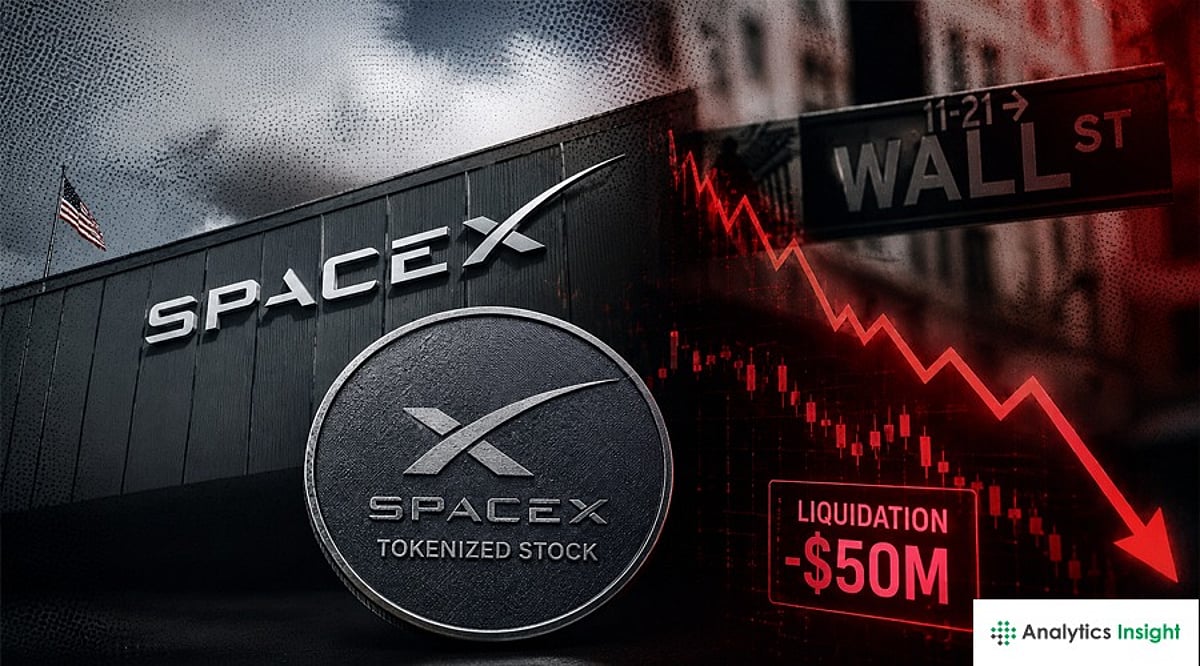
    SPCX perpetual contracts have witnessed over $50 million in liquidations within 48 hours as SpaceX shares dipped below their $150 Nasdaq opening price. The event underscores the heightened volatility and risk inherent in leveraged tokenized stock products, which can react far more aggressively than traditional equity markets.

    What Happened

    According to market data, SPCX-linked perpetual contracts recorded more than $50 million in forced closures, trailing only Bitcoin and Ethereum in liquidation volume among crypto derivatives during that period. The liquidations followed a sharp decline in SpaceX stock, which fell below its Nasdaq debut price after a major drawdown. Investors who bought shares above the company’s $135 initial public offering price are now facing losses.

    How SPCX Differs from Traditional Stock Ownership

    SPCX products are pre-IPO or equity perpetual contracts that offer leverage, cash settlement, and funding mechanisms. Unlike owning actual shares, these instruments provide price exposure without ownership rights, voting rights, or share delivery. Binance lists SPCXUSDT as a USDT-settled pre-IPO perpetual contract, while Coinbase explains that such products settle entirely in cash. Crypto.com describes a structure allowing conversion between SpaceX pre-IPO perpetuals and equity perpetuals depending on platform mechanics.

    This structure places traders in a derivatives-driven environment where margin requirements and funding rates dictate outcomes. If prices move sharply against a position, exchanges can liquidate traders automatically at any time—without waiting for a market close.

    Liquidation Pressure Builds Around Leveraged Exposure

    The $50 million liquidation figure is a notable signal because Bitcoin and Ethereum typically dominate liquidation rankings due to deep liquidity and large leveraged positions. SPCX joining that group reflects strong demand for SpaceX-linked exposure. Liquidation risk does not require a total collapse in the underlying asset—a combination of leverage, open interest, and adverse price movement can easily trigger forced exits.

    While traditional investors may still be evaluating whether the decline reflects temporary weakness or fundamental concerns, perpetual contract markets react instantly, closing positions as soon as collateral support drops.

    Tokenized Stock Perpetuals Face a Different Risk Cycle

    Tokenized stock perpetuals trade around the clock, using venue-specific mark prices and funding systems while enforcing margin requirements continuously. This continuous trading can amplify disagreements over value into sudden liquidation pressure, even as traditional investors are still assessing the stock’s outlook.

    These products may ultimately serve as effective risk-transfer markets, but that will require improved liquidity and reduced leverage. Until then, high open interest and persistent volatility will likely sustain heavy market stress.

    What’s Next

    SpaceX stock slipped below its Nasdaq opening price, triggering the $50 million liquidation wave for SPCX. The event highlights how tokenized stock perpetuals can lead to rapid forced exits when leverage and margin rules kick in. Market participants are now watching to see if the asset stabilizes and whether open interest, funding rates, and liquidation activity will flatten out.

  • Meta Relaunches Facebook Creator Studio as AI-Powered App with Smart Insights and Automated Replies

    Meta Relaunches Facebook Creator Studio as AI-Powered App with Smart Insights and Automated Replies

    Meta has relaunched Facebook’s Creator Studio as a standalone AI-powered companion app, marking the return of a platform it discontinued in 2023 when it shifted creators to Meta Business Suite. The revamped app is designed to help creators grow their audiences with AI-driven insights, engagement tools, and personalized recommendations.

    At the heart of the new experience is the AI Creator Assistant, which provides creators with performance insights, answers questions about audience engagement, suggests ways to improve reach, and recommends the best times to post. The assistant can also identify the most important audience comments and draft replies in the creator’s own tone, allowing users to review and publish responses quickly.

    The application will also feature a daily priorities feed that will show top priorities such as following up on recently published post performance and interactions. According to Meta, the application will make it easy for content creators to work without using third-party applications when coming up with ideas.

    The new Creator Studio has been tested by some selected creators while users who are willing to be part of the creators can enroll on the waitlist. Thus far, there is no update about any wider release dates by Meta. Besides the app, Meta has redesigned its creator dashboards on Facebook.

  • Sony Launches GTA 6 Pre-Order Campaign, Touts PS5 as the Ultimate Console for the Blockbuster

    Sony Launches GTA 6 Pre-Order Campaign, Touts PS5 as the Ultimate Console for the Blockbuster

    Sony has officially kicked off a major marketing campaign for Grand Theft Auto VI as pre-orders for the highly anticipated game go live on PlayStation 5 and Xbox Series X|S. The console maker is positioning the PS5 as the premier platform for Rockstar Games’ biggest release, emphasizing its hardware capabilities ahead of the game’s November launch.

    As pre-orders opened on digital storefronts, Sony rolled out promotional materials stating that GTA 6 will ‘play best’ on the PlayStation 5. The campaign is being featured across the PlayStation Store, social media channels, and other marketing assets, underscoring Sony’s long-standing partnership with Rockstar Games.

    This marketing push follows Rockstar’s confirmation that GTA 6 pre-orders would begin on June 25, marking the start of a broader promotional cycle for one of the most anticipated games in recent years.

    Sony’s aggressive push comes as PlayStation and Xbox compete head-to-head for players before GTA 6 finally drops. Although the game is set to launch on both current-gen consoles, Sony appears to be aiming for a stronger reinforcement of the PlayStation ecosystem, tying the experience more closely to the PS5.

    Sony has confirmed that GTA 6 will support the PS5 Pro. However, the company has not yet revealed any specific performance enhancements or graphical improvements for the game.

    Rockstar Games has announced that GTA VI is set to launch on November 19, 2026, for PlayStation 5 and Xbox Series X|S. The company has also revealed the release date, the official cover image, and has started pre-orders on several digital platforms.

    With pre-orders already live and Sony kicking off its promotional pushes, the countdown for one of the most-awaited games has begun. Some industry insiders even expect GTA VI to lead among console games well before the official release.

  • Ethereum Holds Key $1,500 Support; $5,100 Breakout Target Remains in Focus

    Ethereum Holds Key $1,500 Support; $5,100 Breakout Target Remains in Focus

    Ethereum traded near a critical support zone on June 24 as ETF outflows, weak momentum, and a break below the 200-day simple moving average kept pressure on the asset. The token stood at about $1,670, below $1,700 and near a level that has shaped its wider recovery since 2022.

    Key Support Defines the Near-Term Setup

    Ethereum has repeatedly bounced from the $1,500 to $1,650 area since the 2022 bear-market bottom. The zone protected every major low during the past several years. It also notes that Ethereum reached about $1,618 on the weekly chart. Earlier rebounds from this area came in 2023, late 2023, and 2025.

    According to analyst Ardi, weekly closes below $1,500 would mark a clear structural breakdown. He said that holding above that level would keep the broader support pattern intact.

    Chart Traders Compare ETH With the Russell 2000

    A separate chart view compares Ethereum with the Russell 2000. Both assets formed rounded bases after major declines, then recovered toward long-standing resistance. The Russell 2000 has already moved above its horizontal resistance near 2,500. That breakout strengthened its broader bullish structure.

    Ethereum has not matched that move. It still trades below a resistance band ranging from $4,300 to $5,100 and remains within a short-term descending channel. James Easton said the Russell 2000 pattern could offer a roadmap for Ethereum.

    If ETH breaks above the falling channel, traders would first watch the previous all-time-high region. A confirmed move above roughly $5,100 could place Ethereum in price discovery.

    The data also points to a speculative long-term path toward five-figure levels, including prices above $10,000. Even so, the outcome remains unconfirmed.

    ETF Outflows Add Pressure on Price

    Ethereum’s weakness also comes from continued ETF outflows. On June 23, Ethereum ETFs recorded $82 million in net outflows, their fourth straight day of withdrawals. Market caution has grown amid uncertainty tied to Iran and the outlook for U.S. interest rates. ETH also fell below its 200-day simple moving average, which signals short-term weakness.

    Analysts say some bulls want to see ETH break above $1,800 before momentum returns. Others point to the broader support near $1,500 as the key line to defend.

    The asset traded at an all-time high of $4,953.73 on August 24 of last year. For now, the market continues to watch whether Ethereum can reclaim nearby resistance around $1,900 to $2,000.

    What’s Next?

    Ethereum remains under pressure as ETF outflows persist and the price trades below key resistance levels. At the same time, the $1,500 support zone continues to hold, preserving the broader recovery structure. Traders now focus on whether ETH can defend support and regain momentum above $1,800 while keeping longer-term targets in view.

  • MIT’s Latest Innovations in Alternative Energy: Fusion, Geothermal, and Beyond

    MIT’s Latest Innovations in Alternative Energy: Fusion, Geothermal, and Beyond

    MIT continues to lead the charge in alternative energy research, with recent breakthroughs spanning fusion, geothermal, AI-optimized power grids, and decarbonization technologies. Below is a roundup of key developments from the MIT Energy Initiative and affiliated labs.

    Fusion Energy Advances

    • PSFC showcases technologies for fusion and geothermal: Rep. Jake Auchincloss visited the MIT Plasma Science and Fusion Center to learn about scaling geothermal energy. (Read more)
    • Championing fusion’s promising underdog: Sophia Henneberg, assistant professor in Nuclear Science and Engineering, is developing stellarators to harness fusion energy. (Read more)
    • Working to make fusion viable: George Tynan, as Norman C. Rasmussen Adjunct Professor, addresses big physics and engineering challenges of fusion plasmas. (Read more)
    • Smart handling of neutrons: Assistant Professor Ethan Peterson tackles practical issues for viable fusion power plants. (Read more)

    Geothermal Energy

    • Geothermal energy turns red hot: MIT Energy Initiative symposium maps a path to tap the planet’s heat-rich rocks for clean power at scale. (Read more)

    AI, Power Grid & Decarbonization

    • 3 Questions: How AI could optimize the power grid: Techniques can make power grids cleaner and more efficient despite AI’s growing energy demands. (Read more)
    • A faster problem-solving tool that guarantees feasibility: FSNet system helps power grid operators rapidly find feasible solutions for optimizing electricity flow. (Read more)
    • Confronting the AI/energy conundrum: MIT Energy Initiative’s annual symposium explores AI as both a problem and solution for clean energy transition. (Read more)
    • Helping students bring about decarbonization: Professor Jessika Trancik’s course helps students understand energy levers for addressing climate change. (Read more)
    • New climate chemistry model: MIT study confirms climate impacts of hydrogen, recommends leak prevention as priority. (Read more)
    • Decarbonizing heavy industry with thermal batteries: MIT spinout Electrified Thermal Solutions develops conductive firebrick for high-temperature industrial heat. (Read more)
    • Preparing Taiwan for a decarbonized economy: MIT Energy Initiative and Taiwanese consortium explore energy future. (Read more)

    Nuclear Energy

    • How to make small modular reactors more cost-effective: Youyeon Choi leverages experience from South Korea and multi-physics modeling. (Read more)
    • Aligning economic and regulatory frameworks for nuclear reactors: PhD student Liam Hines advocates for policy that keeps pace with technology. (Read more)

    Bioeconomy & Society

    • Bridging science and society: Course STS.059 explores social and political factors in biology, biotech, and biological engineering sectors. (Read more)
  • Algorithms Research at MIT: Recent Breakthroughs and Developments

    Algorithms Research at MIT: Recent Breakthroughs and Developments

    MIT Algorithms News

    Massachusetts Institute of Technology continuously pushes the boundaries of algorithm research. Below are some of the latest stories from MIT News covering breakthroughs in AI, robotics, optimization, and theoretical computer science.

    • LLMs help robots understand vague instructions and focus on key details — A new approach uses one language model to clarify instructions and another to ignore irrelevant info. (June 26, 2026)
    • Improving the speed and energy-efficiency of AI agents — The Murakkab system optimizes multistep workflows for AI applications. (June 25, 2026)
    • Computer model could enable bridges and buildings that use less material — Approach generates more buildable structures, bridging optimized design and real-world construction. (June 24, 2026)
    • Exploring the societal impacts of AI — MIT researchers examine AI’s influence on employment and democracy. (June 23, 2026)
    • New chip could help tiny robots traverse complex environments — Efficient algorithm and dedicated hardware generate 3D maps for navigation. (June 23, 2026)
    • In game theory, generalists sometimes win out over specialists — Overlooked class of algorithms performs better than expected. (June 17, 2026)
    • Could AI tell you where you left your keys? — Spatial memory system for robots captures object details. (June 17, 2026)
    • When it comes to predicting preferences, it pays to consider “the power of three” — Upgrade to random utility models. (June 11, 2026)
    • NSF renews support for MIT-led AI and physics institute — IAIFI enters second phase. (June 4, 2026)
    • Teaching AI agents to ask better questions by playing “Battleship” — Small AI model outperforms larger ones at lower cost. (June 3, 2026)
    • New research enables a robot to chart a better course — MIGHTY system streamlines disaster recovery and delivery. (May 19, 2026)
    • Researchers “reprogram” materials by quickly rearranging their atoms — Method gives rise to exotic quantum properties. (May 13, 2026)
    • Method for stress-testing cloud computing algorithms helps avoid network failures — MetaEase technique predicts scenarios causing outages. (May 6, 2026)
    • Games people — and machines — play: Untangling strategic reasoning to advance AI — Gabriele Farina mines decision-making in multi-agent scenarios. (May 5, 2026)
    • The MIT-IBM Computing Research Lab launches to shape the future of AI and quantum computing — Convergence of AI, algorithms, and quantum computing. (April 29, 2026)

    For full articles, visit the MIT News Algorithms topic page.

  • MIT’s Latest Aircraft Innovations: From Autonomous Flight to Sustainable Aviation

    MIT’s Latest Aircraft Innovations: From Autonomous Flight to Sustainable Aviation

    MIT’s ongoing research in aircraft technology spans a wide range of groundbreaking developments, from autonomous helicopters and uncrewed aircraft systems to advanced materials and climate-friendly flight strategies. This collection of stories highlights how MIT engineers, students, and faculty are pushing the boundaries of aviation.

    Autonomous and Uncrewed Aircraft Systems

    Rotor Technologies, an MIT alumni-led startup, has developed self-flying helicopters that remove human pilots from dangerous commercial missions. Meanwhile, Navy veteran and EMBA student Greg Knutson is building expertise in uncrewed aircraft systems while pursuing innovation in advanced manufacturing. The Saab 340 has also become a permanent flight-test asset at Lincoln Laboratory, supporting the development of diverse technologies for national security.

    Advanced Materials and Design

    MIT engineers have pioneered “nanostitches” using carbon nanotubes to prevent cracking in multilayered composites, leading to lighter and tougher materials for next-generation airplanes and spacecraft. Additionally, researchers have identified new routes to stronger titanium alloys with exceptional combinations of strength and ductility, ideal for aerospace applications. The passing of Professor Robert Liebeck, a giant in aviation and pioneer of the Blended-Wing Body experimental aircraft, marks a significant loss to the field.

    Climate and Environmental Impact

    A new study from MIT researchers reveals that images from geostationary satellites alone are insufficient to help planes avoid contrail-prone regions, highlighting the need for more comprehensive monitoring to reduce climate-warming contrails. New flight procedures developed in collaboration with the FAA and Massport aim to reduce aircraft noise from Boston Logan Airport while maintaining or improving fuel efficiency.

    Safety and Navigation

    A lightning-prediction tool developed at MIT maps aircraft sections most vulnerable to lightning strikes, including on experimental designs, helping protect future aircraft. In the classroom, AeroAstro students are building software for autonomous flight vehicles to navigate unknown environments as part of course 16.85 (Design and Testing of Autonomous Vehicles).

    Entrepreneurship and Education

    The Certificate in Aerospace Innovation provides students with the tools to become aerospace entrepreneurs during an inflection point in the industry. MIT students are also combating climate anxiety through extracurricular teams like the Electric Vehicle Team, Sustainable Engine Team, and Solar Electric Vehicle Team, each contributing to planetary health.

    AI and Complex Systems

    An MIT algorithm for revealing causal links in complex systems has wide implications, from forecasting climate to designing efficient aircraft. A new DARPA-funded collaboration will pursue AI-enhanced design tools and high-throughput testing methods for next-generation turbomachinery, combining artificial intelligence with “blisk” technology.

  • Breakthroughs in Sustainable Agriculture: MIT’s Latest Research and Innovations

    Breakthroughs in Sustainable Agriculture: MIT’s Latest Research and Innovations

    MIT News covers a wide range of groundbreaking research in agriculture, from climate resilience and urban farming to methane reduction and next-generation fertilizers. The following articles highlight recent discoveries and initiatives that are shaping the future of sustainable food production.

    Place-Based Pathways to a Viable Future

    The Living Climate Futures Symposium explored climate challenges and solutions at the community level, emphasizing local adaptation strategies.

    Testing Sustainable Agriculture in Barcelona

    Students in a MISTI Global Classroom confronted the challenges of climate change during farm and co-op visits in Barcelona.

    Plants Can Sense the Sound of Rain

    MIT engineers discovered that rice seeds sprout faster when exposed to the sound of rain, opening new avenues for plant communication research.

    From Idaho to MIT: Cutting Methane Emissions

    PhD student Audrey Parker studies methane mitigation in dairy farms and coal mines, aiming to reduce a potent greenhouse gas.

    Seeds of Something Different

    Kate Brown’s book Tiny Gardens Everywhere uncovers the hidden history and politics of urban farming.

    Nitrous Oxide and Soil Bacteria

    Fertilizer use increases nitrous oxide levels, which can harm beneficial soil bacteria that support plant growth.

    Designing Resilient Plants from the Cell Up

    Foray Bioscience, an MIT startup, engineers single plant cells to create novel materials and sustainable solutions.

    Bridging Science and Society in the Bioeconomy

    Course STS.059 explores the social and political factors shaping biotechnology and biological engineering.

    Regenerative Aquaculture in Arkansas

    MIT student Kiyoko Hayano worked with Keo Fish Farms to build a model for regenerative water systems.

    Post-COP30: Aggressive Climate Policies Needed

    The 2025 Global Change Outlook report highlights the need for accelerated action to cap warming at 1.5°C.

    Mind, Hand, and Harvest

    A volunteer pilot program brings low-cost organic produce to the MIT community.

    From Nanoscale to Global Scale

    MIT.nano’s cleanroom now bears the name of Robert Noyce, supporting advances in manufacturing, health, and climate.

    Returning Farming to City Centers

    Course 4.182, Resilient Urbanism: Green Commons in the City, teaches sustainable urban agriculture.

    Packard Fellows for Science and Engineering

    Darcy McRose and Mehtaab Sawhney recognized for research on antibiotics in ecosystems and agriculture.

    Engineering Next-Generation Fertilizers

    MIT postdoc Giorgio Rizzo uses plant chemistry to design sustainable fertilizers that could reshape farming.

  • Fortnite and Neopets Join Forces for a Nostalgic Gaming Crossover Event

    Fortnite and Neopets Join Forces for a Nostalgic Gaming Crossover Event

    Fortnite has announced a surprise crossover with Neopets, merging one of today’s biggest battle royale games with a beloved early internet classic. The partnership is generating excitement among fans of both franchises, bridging generations of gamers.

    Fortnite is no stranger to unexpected collaborations, having previously teamed up with superheroes, movie stars, musicians, and anime characters. This time, the game is taking a different route by partnering with the nostalgic virtual pet world of Neopets.

    The announcement has caught the attention of gamers across different age groups. For older players, Neopets brings back memories of the early internet era, while younger players get a chance to discover a brand that was once a huge part of online gaming culture.

    Fortnite and Neopets Reveal Crossover Details

    Neopets recently posted on Twitter about this unexpected collaboration with Epic Games. The post confirms that Aisha, a beloved Neopet species, will join Fortnite on July 2. As part of the event, players can collect special rewards tied to the crossover. The promotion celebrates both communities and brings renewed attention to the long-running virtual pet franchise.

    For those unfamiliar with Neopets, it was a global hit during the early 2000s. Millions of players visited the website to care for virtual pets, play games, and explore the colorful world of Neopia. Today, the brand still maintains a loyal fan base.

    Fortnite’s involvement offers Neopets a chance to reach a much larger audience. It also adds another surprising name to Fortnite’s growing list of partnerships. Additional details about the crossover are expected to be revealed soon.

    Fortnite Continues to Revive Internet Favorites

    Since Fortnite’s launch in 2017, the franchise has focused on major collaborations to expand its fanbase. In the past, Epic Games has worked with movie studios, comic publishers, and major entertainment brands. Recently, the range has expanded beyond those well-known worlds to include classic gaming icons.

    The Neopets crossover highlights this new trend. Fortnite’s partnership brings to life a franchise that many millennials grew up with. These collaborations tap into nostalgia while introducing classic names to younger players. It is a smart way to keep the game fresh while connecting with different generations of gamers.

    A New Beginning for Neopets

    This crossover could be a major opportunity for Neopets. A significant number of Fortnite players are young enough to hear about the franchise for the first time. If the collaboration generates enough interest, Neopets could see a wave of new young fans, helping the classic brand survive in a highly competitive era.

    For longtime fans, this is a fun trip down memory lane. For younger gamers, it may be the start of exploring a classic franchise that reached its peak years ago.

  • Qualcomm Stock Surges 12% on $40 Billion AI Revenue Target Beyond Smartphones

    Qualcomm Stock Surges 12% on $40 Billion AI Revenue Target Beyond Smartphones

    Qualcomm stock rose more than 12% in premarket trading on Thursday after the chipmaker raised its long-term revenue target outside smartphones. The company now expects its non-handset businesses to generate $40 billion in revenue by fiscal 2029, twice its previous goal.

    The revised target includes $15 billion from data center products and $10 billion from the automotive business. Qualcomm presented the plan at its investor day in New York, where executives outlined a broader shift into artificial intelligence infrastructure, servers, personal computers, and connected devices.

    Qualcomm Targets $15 Billion in Data Center Revenue

    Qualcomm plans to offer several products for AI data centers, including processors, server systems, software, and custom chips. The company expects these operations to generate $15 billion in annual revenue by fiscal 2029. Its strategy places the business in direct competition with NVIDIA and AMD.

    Chief Executive Cristiano Amon said cloud and AI companies have shown interest in having more chip suppliers. “I have not met a single one of those cloud and AI companies that have not said to me how excited they are,” Amon said. Nevertheless, the revenue target depends on Qualcomm winning customers in a market where established suppliers hold strong positions.

    China Forms Part of Qualcomm’s AI Expansion

    Qualcomm also plans to market its data center products in China, although US export rules may limit access to advanced technology. “Everything that we’re building for the data center, you should assume that China is going to be a target market,” Amon said.

    However, the company faces doubts over which processors it can legally sell in the country. The US government has changed its approach to AI chip exports several times over security concerns. While certain NVIDIA processors received clearance for sale, Chinese authorities have not approved all of them for import.

    Smartphone Dependence Falls Under Wider Growth Plan

    The data center push forms part of Qualcomm’s effort to reduce its reliance on mobile phone chips. The company expects its automotive business to produce $10 billion in fiscal 2029. It is also expanding its computer chip business, where it competes with Intel and AMD.

    Additionally, Qualcomm has agreed to acquire AI software company Modular. The deal gives the company access to tools that help developers build and run AI programs across different processors. Qualcomm aims to create a software system that can compete with NVIDIA’s CUDA platform, which developers widely use for GPU-based computing.

    Micron Results Support Semiconductor Stock Rally

    Qualcomm’s investor update arrived as Micron reported quarterly results that exceeded market forecasts. Micron said customers had committed about $22 billion toward chip purchases. It also reported that its high-bandwidth memory supply for 2026 had already sold out.

    Micron shares gained more than 15% in extended trading, while Qualcomm rose about 12% before Thursday’s opening bell. The updates supported gains across semiconductor stocks and helped push US stock index futures higher.

    Meanwhile, investors are assessing whether Qualcomm can meet its fiscal 2029 targets while competing with NVIDIA, AMD, and custom processors developed by large cloud companies. Its $15 billion data center forecast reflects management’s plan, but actual sales will depend on customer orders, product performance, export rules, and the pace of global AI infrastructure spending.