Author: vitorcherulli

  • AMD: Driving Innovation in Semiconductor and High-Performance Computing Solutions

    AMD: Driving Innovation in Semiconductor and High-Performance Computing Solutions

    AMD (Advanced Micro Devices) is a multinational semiconductor corporation headquartered globally, recognized as a premier supplier of high-performance computing and graphics technology. The company’s solutions, including the Ryzen and Radeon product lines, deliver commercial advantages through superior performance for PCs, gaming, data centers, and embedded systems. AMD’s mission is to enable technological innovation worldwide.

    About the Company

    As a global leader in semiconductor technologies, AMD transforms the computing and graphics experience for users across every sector. The company supplies next-generation solutions for high-performance computing and advanced processing in PC, gaming, data center, and embedded markets. AMD is renowned for its processors built from cutting-edge graphics technologies and adaptive solutions that stimulate innovation and deliver engaging digital experiences globally.

    AMD focuses on high-performance computing, continuously innovating for future generations of technology, including artificial intelligence functionality, advanced graphics, and enterprise solutions. As digital transformation evolves across industries, AMD stands as a key innovator shaping the future of technology.

    Core Leadership Team

    Note: Source material does not provide specific names or roles for the leadership team. Prominent executives include Dr. Lisa Su (CEO) and other industry leaders guiding corporate strategy.

    Revenue Streams

    AMD generates revenue through the sale of CPUs (Ryzen, EPYC), GPUs (Radeon), semi-custom chips for video game consoles, data center solutions, adaptive computing products, AI-based technologies, and licensing. These offerings address consumer, commercial, and enterprise markets worldwide.

    Client Segments

    B2B: Enterprises, governments, educational institutions, retailers, app developers, advertising agencies, content creators. Target companies include large corporations, SMBs, public sector organizations, tech startups, and e-commerce platforms.

    B2C: Age range 13–65+, covering low to high income levels, with a global presence spanning North America, Europe, Asia-Pacific, Latin America, Middle East, and Africa.

    Social Media

    Follow AMD on Facebook, Twitter, LinkedIn, YouTube, and the official website for the latest updates.

  • OnePlus Nord CE 6 Review: A Balanced Mid-Range Smartphone for 2026

    OnePlus Nord CE 6 Review: A Balanced Mid-Range Smartphone for 2026

    The OnePlus Nord CE 6 (rated 3.5 out of 5) offers an excellent balance of features for everyday smartphone use. With its slim profile, vibrant display, and reliable performance, it delivers an enjoyable user experience. The software is smooth, the battery life is long-lasting, and the touchscreen is responsive. The camera produces realistic images, and the overall design has been refined for durability and a polished feel.

    General Specifications

    While the official spec sheet is not fully detailed in this preview, the OnePlus Nord CE 6 is positioned as a well-rounded mid-ranger. Key highlights include a sleek build, a high-quality display, and efficient performance suitable for daily tasks.

    Pros and Cons

    • Pros: Smooth software, long battery life, vibrant display, durable design, realistic camera output.
    • Cons: Does not boast top-tier specs; may not satisfy power users looking for flagship-level hardware.

    Pricing and Availability

    The OnePlus Nord CE 6 is available directly from OnePlus and on Amazon. Check the links below for current pricing and offers.

    Verdict

    The OnePlus Nord CE 6 proves to be one of the best mid-range phones of 2026. It doesn’t flaunt flashy specifications, but it excels in the areas that truly matter – performance, display, software, usability, and battery efficiency. For users seeking a reliable daily driver without breaking the bank, the Nord CE 6 is a solid choice.

  • MIT Issues New Guidelines for Responsible Use of Generative AI in Communications

    In a move to maintain editorial integrity and public trust, the Massachusetts Institute of Technology (MIT) has released a set of guidelines governing the use of generative artificial intelligence (AI) across its official communications channels. The guidelines, effective December 6, 2023, were developed by the Institute Office of Communications (IOC) with input from internal communicators and MIT faculty members.

    The core principle is that human authorship remains paramount. All articles, newsletters, and video scripts published on IOC-managed platforms—including MIT News, the MIT Daily/Weekly newsletters, the MIT homepage, and Institute-level social media accounts—must be written by humans. The IOC cites the well-documented potential for inaccuracy and bias in AI-generated text as the primary reason for this restriction. While much of MIT’s content undergoes expert vetting before publication, the IOC aims to minimize any risk of disseminating incorrect or biased information.

    However, the guidelines do permit limited use of generative AI tools in a preparatory or assistive capacity. This includes generating ideas, researching background information, creating outlines, analyzing data, copyediting, cutting text, drafting headlines, image captions, alt-text, meta descriptions, and social media posts. These uses are classified as preparation and summarization, and content prepared with such assistance is allowed on IOC channels, provided that all material is thoroughly fact-checked and vetted by human communicators before submission.

    A notable change is the prohibition on publishing AI-generated images in IOC content. Previously accepted for accompanying MIT News articles, such images will no longer be used, aligning with the emphasis on human authorship. Exceptions may be made for AI-generated images used for research purposes that directly illustrate the described research. Brainstorming, planning color palettes, moodboarding, or developing an image concept using generative AI is still acceptable. AI-generated thumbnail images for links to non-IOC websites are also allowed.

    While these guidelines are mandatory for IOC platforms, other MIT departments, labs, and centers are free to adopt them or develop their own approaches. The IOC acknowledges that these guidelines will evolve as AI technology and its societal use continue to develop. Any significant changes will be communicated across the Institute.

    By adopting these principles, MIT aims to preserve the trust, accuracy, and editorial standards that its audiences expect, while responsibly integrating new technologies that can enhance communications.

  • MIT News Republishing Guidelines and Terms of Use

    MIT News, operated by the MIT News Office, provides RSS feeds for syndication. All republished stories on third-party websites must include the headline, sub-headline, author’s byline, and a citation of “MIT News” linking to the original story at the top. The bottom must feature the phrase “Reprinted with permission of MIT News” with a link to the MIT News homepage (http://news.mit.edu/).

    Images available for download on the MIT News website are offered to non-commercial entities, the press, and the general public under a Creative Commons Attribution Non-Commercial No Derivatives license. Users may crop images to size but cannot alter them otherwise. A credit line must accompany every image; if none is provided, credit the image to “MIT.”

    Print Media

    Book Publishers: Book publishers seeking to use MIT News content must obtain prior permission from the MIT News Office. Email requests to newsoffice@mit.edu with details about the photo or article and its intended use. Requests are evaluated on a case-by-case basis.

    News Organizations: Print republishing of MIT News stories requires the headline, sub-headline, author’s byline, and “MIT News” at the top. The footer must include the words “Reprinted with permission of MIT News (http://news.mit.edu/).” Images may not be reproduced without prior approval from MIT News. For press inquiries, contact the MIT News Office.

    Massachusetts Institute of Technology
    77 Massachusetts Avenue, Cambridge, MA, USA

  • MIT in the News: Financial Aid, 3D Printing, Cancer Research, and I.M. Pei Archive

    MIT continues to make headlines with groundbreaking research, innovative startups, and transformative educational initiatives. Here is a roundup of recent media coverage highlighting MIT’s impact across diverse fields.

    Free Tuition Program Gains Attention

    Fortune reporter Emma Burleigh spotlights MIT’s financial aid programs that provide free tuition to students whose parents earn less than $200,000 a year. Additionally, tuition, housing, dining, fees, books, and personal expenses for students with parental incomes of less than $100,000 are covered by MIT. “Famed research university MIT is not only footing the tuition bill of its lower-income students—it’s making ‘free college’ a reality,” writes Burleigh.

    VulcanForms to Create Over 1,000 Jobs

    For The Boston Globe, reporter Aaron Pressman features MIT startup VulcanForms, a 3D printing manufacturer expected to create over 1,000 jobs with a new 1-million-square-foot plant in Devens, MA. The facility will bring capacity for more customers in medical devices, aerospace and defense, and consumer goods industries. “MIT professor John Hart started the company with grad student Martin Feldmann [’14] as a way to bring 3D printing techniques using lasers and powdered metals to larger-scale manufacturing jobs,” writes Pressman.

    Colon Cancer Cells Can Change Identity

    MIT researchers have found that colon cancer cells can “change their identity, allowing them to travel through the body and form new tumors,” reports Daniella Gray for Newsweek. The findings could point to future treatments that can prevent metastasis—the leading cause of death for colorectal cancer patients, Gray explains.

    I.M. Pei Archive Donated to MIT Museum

    For Archinect, reporter Niall Patrick Walsh spotlights how the full archive of architect and alumnus I.M. Pei ’40 has been donated to the MIT Museum. “Among the materials are drawings and documents from some of Pei’s best-known works, including the Louvre Museum modernization project in Paris, the John F. Kennedy Presidential Library and Museum in Boston, and the Rock and Roll Hall of Fame in Cleveland,” writes Walsh. “The archive also contains records relating to four buildings designed by Pei on the MIT campus: the Green Building, Dreyfus Building, Landau Building, and Wiesner Building.”

    Schwarzman College of Computing Prepares Students for AI Era

    Chronicle of Philanthropy reporter Maria Di Mento spotlights how the creation of the MIT Schwarzman College of Computing allowed MIT to develop new “interdisciplinary programs to prepare students for an AI-saturated world and help them understand the social and ethical implications of digital technologies.” Prof. Daniel Huttenlocher, dean of the Schwarzman College of Computing, explains that: “MIT realized that effective education in the age of AI has to look different than it has in the past. Traditional siloing of expertise won’t work when AI is expected to touch nearly every part of people’s lives and is changing the way people in disciplines outside of computing are advancing their work.”

    New Robot System Describes Objects in Plain English

    Writing for Forbes, contributor Ron Schmelzer highlights Describe Anything, Anywhere, at Any Moment (DAAAM), a new system developed by MIT researchers that could enable robots to capture details of objects they see while exploring an environment. In the future, the system could allow factory workers to send robotic assistants to find items. DAAAM “lets a robot build a detailed map of a space, attach descriptions to objects in that map, and answer plain English questions later,” Schmelzer explains.

    Air-Guardian System Enhances Flight Safety

    Writing for Forbes about efforts to improve air travel safety, Tanya Eves highlights the Air-Guardian system, an eye-tracking monitor for pilots developed by CSAIL researchers that assists when attention wavers. “In tests, it reduced flight risk and improved navigation success rates,” writes Eves. “It’s a model for how the virtual co-pilot relationship should work: not replacement, but a seamless, intelligent partnership that understands when to act and when to stay silent.”

    AI’s Impact on Jobs and Economy

    Prof. Simon Johnson discusses the impact of AI on jobs in an interview with Financial Times reporters Delphine Strauss and Sam Fleming. “We are trying very hard at MIT to find ways to incorporate AI into the curriculum but to push harder on the entrepreneurship angle, the creation of new products and services, the development of critical thinking,” says Johnson.

    In a separate piece for Bloomberg, Prof. Simon Johnson and Prof. Elisabeth Reynolds describe how the U.S. can maintain its technological leadership by investing in research focused on critical minerals, semiconductors, biotechnology, quantum computing, drones and advanced manufacturing.

    In an interview with Fortune, Prof. Daron Acemoglu discusses AI’s economic impact and estimates AI will deliver roughly 0.55% in total factor productivity gains.

    Solar-Electric Boat Launches on Charles River

    For Axios Boston, reporter Steph Solis highlights “Anita,” a solar-electric boat created by alumnus James Worden ’89 that is due to launch this year. The boat was previewed at the 80th anniversary Charles River sail-a-thon. “The prototype, named ‘Anita’ after Worden’s late wife, moves silently with no fumes or exhaust and uses LiFePO4 battery cells with a battery management system (it lets you charge the batteries while they’re in use),” writes Solis.

  • Complete Guide to MIT’s Centers, Labs, and Programs

    MIT is home to a vast network of research centers, laboratories, and academic programs that drive innovation across disciplines. Below is a comprehensive directory of these entities, organized for easy exploration.

    Centers, Labs, and Programs

    • Abdul Latif Jameel Clinic for Machine Learning in Health
    • Abdul Latif Jameel Poverty Action Lab (J-PAL)
    • Abdul Latif Jameel Water and Food Systems Lab (J-WAFS)
    • Abdul Latif Jameel World Education Lab (J-WEL)
    • Admissions AgeLab
    • Arts at MIT
    • Bates Research And Engineering Center
    • Broad Institute of MIT and Harvard
    • Center for Advanced Nuclear Energy Systems
    • Center for Advanced Urbanism
    • Center for Advanced Virtuality
    • Center for Advanced Visual Studies
    • Center for Art Science and Technology (CAST)
    • Center for Biomedical Innovation (CBI)
    • Center for Bits and Atoms
    • Center for Brains Minds and Machines
    • Center for Civic Media
    • Center for Collective Intelligence
    • Center for Computational Science and Engineering
    • Massachusetts Institute of Technology

    This list represents just a sampling of the many entities at MIT. For the most current information, visit the official MIT Centers, Labs, and Programs page.

  • Vivo X300 FE Review: A Compact Flagship That Balances Features and Price

    Vivo X300 FE Review: A Compact Flagship That Balances Features and Price

    The Vivo X300 FE is a compact flagship that aims to deliver a premium experience without the premium price tag. It combines strong battery life, a vivid display, and a versatile camera system in a sleek, pocket-friendly design. While it succeeds in many areas, its pricing lands dangerously close to the Vivo X300, making it a tough choice for budget-conscious buyers.

    General Specifications

    The Vivo X300 FE packs flagship-level internals, including a high-refresh-rate AMOLED display, a capable processor, and a triple-camera setup. The device supports fast charging and offers ample storage options. Exact specs include a 6.1-inch FHD+ display, a 50MP main camera, and a 4500mAh battery with 66W wired charging.

    Pros and Cons

    • Pros: Excellent battery life, vibrant display, dependable camera performance, compact form factor.
    • Cons: Pricing too close to the standard Vivo X300, lacks a telephoto lens, no wireless charging.

    Pricing and Availability

    The Vivo X300 FE is priced competitively but sits just below the Vivo X300. It is available on Flipkart and Amazon with bank and exchange offers.

    Available on Flipkart: Click Here
    Available on Amazon: Click Here

    Verdict

    The Vivo X300 FE is a solid compact flagship that delivers a balanced experience with strong battery life, a great display, and dependable cameras. However, its pricing places it too close to the Vivo X300, making it harder to justify. It makes more sense for users who value compact design and overall usability over absolute performance gains.

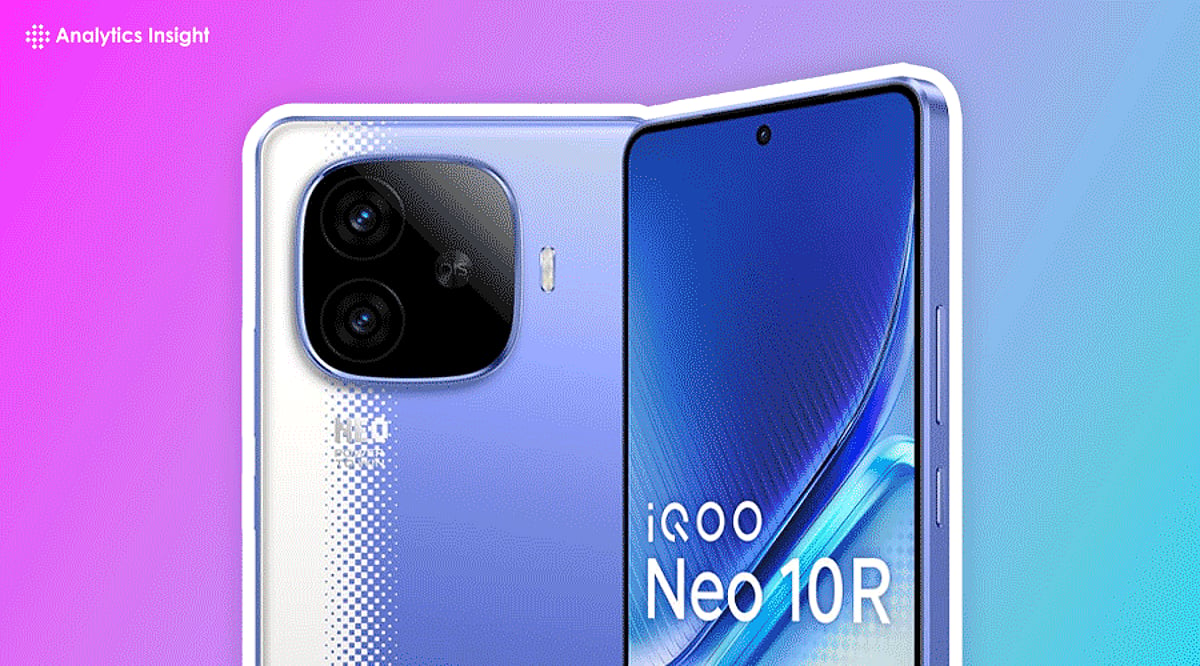
  • iQOO Neo 10 Review: A Balanced Powerhouse for Everyday Use in 2025

    iQOO Neo 10 Review: A Balanced Powerhouse for Everyday Use in 2025

    The smartphone market in 2025 is more crowded than ever, with new models launching almost daily. Some phones try to reinvent the wheel, while others simply add a feature or two. But every now and then, a device comes along that just works—no fuss, no gimmicks. The iQOO Neo 10 is exactly that kind of phone.

    It combines flagship-level performance with a midrange price, offering a vibrant AMOLED display, ultra-fast charging, a capable camera system, and strong battery life. Whether you’re a tech enthusiast or someone who just needs a reliable daily driver, the iQOO Neo 10 delivers where it counts.

    Design and Build Quality

    The iQOO Neo 10 doesn’t try to reinvent smartphone design—and that’s a good thing. Its clean, minimalist look feels premium without being flashy. The back panel resists fingerprints, and the device sits comfortably in the hand. The camera module is neatly arranged and doesn’t protrude excessively, making it easy to slip into a pocket.

    Processor and Performance

    Under the hood, the iQOO Neo 10 packs a processor that handles anything you throw at it. App switching is fluid, and even graphically intensive games run without stuttering. Video editing and long gaming sessions are smooth, and the device manages heat well—a common issue with many budget-friendly powerhouses.

    Display and Visuals

    The AMOLED display is one of the standout features. Colors are rich, blacks are deep, and sharpness is excellent. Scrolling feels buttery smooth, and the screen is bright enough for outdoor use. This level of quality is typically reserved for much more expensive flagships.

    Camera System

    The main camera captures natural colors and good detail in both bright and low-light conditions. An ultra-wide lens and macro sensor add versatility for creative shots. While not quite on par with premium flagships, the cameras are more than adequate for everyday photography. Video recording is stable, and audio capture is clear.

    Battery Life and Charging

    Battery life is a highlight. The iQOO Neo 10 easily lasts a full day of heavy use, and with moderate usage, it can stretch into a second day. When it’s time to recharge, the included fast charger takes the battery from empty to full in under an hour. The charging process remains cool and safe.

    Software Experience

    The software is clean and free of unnecessary bloatware. It’s intuitive to navigate and offers plenty of customization options. The manufacturer is known for regular updates, so your phone should stay current with security patches and new features.

    The Bottom Line

    The iQOO Neo 10 is a no-nonsense smartphone that focuses on what matters: dependable speed, long battery life, a great display, and solid cameras. It’s an excellent choice for work, gaming, content creation, or staying connected. For anyone looking for a reliable all-rounder in 2025, the iQOO Neo 10 is a top contender.

  • Perplexity AI Review 2025: Features, Pricing, and CEO Vision for AI-Powered Search

    Perplexity AI Review 2025: Features, Pricing, and CEO Vision for AI-Powered Search

    Perplexity AI is rapidly emerging as a compelling alternative to traditional search engines, blending natural language processing with real-time web data to deliver conversational, citation-backed answers. Unlike conventional search that returns a list of links, Perplexity provides direct, fact-driven responses with transparent sourcing—making it both reliable and user-friendly.

    What Is Perplexity AI?

    Perplexity is an intelligent, fast-growing AI search tool that prioritizes correctness, clarity, and speed. It processes millions of queries monthly—approximately 780 million in May 2025, with nearly 20% month-over-month growth—and stands out for its clean interface and human-like comprehension.

    Why It Stands Out

    • Transparent sourcing and citations: Every answer includes clear sources, boosting credibility.
    • Speed in response: Handles vast numbers of queries efficiently.
    • Innovative tools: The upcoming ‘Comet’ browser assistant will perform high-level tasks like article summarization and candidate sourcing from a single sidebar.

    Pricing & Plans

    Perplexity offers flexible pricing:

    • Free Plan: 5 premium-level queries plus unlimited basic searches per day.
    • Pro Plan: $20/month (~₹1,650) for 300 Pro daily queries with access to GPT-4, Claude, and other premium models.
    • Enterprise Pro: $40/month per seat (~₹3,300) for unlimited Pro queries, advanced research tools, and collaboration features.

    Notably, Airtel is offering a one-year free Perplexity Pro subscription to its 360 million users—a value of nearly ₹17,000 per user at no cost.

    Leadership & Vision

    CEO Aravind Srinivas (IIT Madras and UC Berkeley alumnus) has grown the company’s valuation from $1 billion in 2024 to over $14 billion by mid-2025. His strategy focuses on long-term AI development rather than short-term profit, with plans for the Comet browser—an AI assistant that goes beyond search to assist professionals in real time.

    Strengths & Limitations

    Strengths

    • Reliable, well-sourced answers with citations.
    • Advanced AI models available in Pro/Enterprise tiers.
    • Comet tool could redefine multitasking with real-time assistance and summarization.

    Limitations

    • Comet is still in beta, limiting access for casual users.
    • Like any AI, occasional inaccuracies require user discretion.

    Final Thoughts

    Perplexity AI introduces a new paradigm of clarity, speed, and intelligence in search. Its tiered pricing serves casual users, professionals, and enterprises alike, while partnerships like Airtel’s bring premium tools to millions. Under Aravind Srinivas, the company is evolving beyond search into a comprehensive knowledge assistant. For those seeking more control, smarter results, and a clean interface, Perplexity is worth exploring.