Author: vitorcherulli

  • iPhone Duo Too Pricey? 5 Compelling Foldable Alternatives Worth Your Money

    iPhone Duo Too Pricey? 5 Compelling Foldable Alternatives Worth Your Money

    Apple has finally entered the foldable phone market with the iPhone Duo, and the announcement has generated as much debate as excitement. The device carries a starting price of USD 1,999, which makes it the most expensive iPhone Apple has ever sold. For many buyers, this price tag raises a fair question: Is a foldable phone from Apple worth it, or would the same budget be better spent on a rival device that offers similar innovation at a lower cost?

    The foldable phone category has matured a great deal over the past few years, and several brands now offer devices that rival Apple on design, durability, and software, often at a friendlier price. This article looks at why the iPhone Duo costs so much and lists five foldable phones worth considering as alternatives.

    Why Apple’s iPhone Duo Carries a Heavy Price Tag

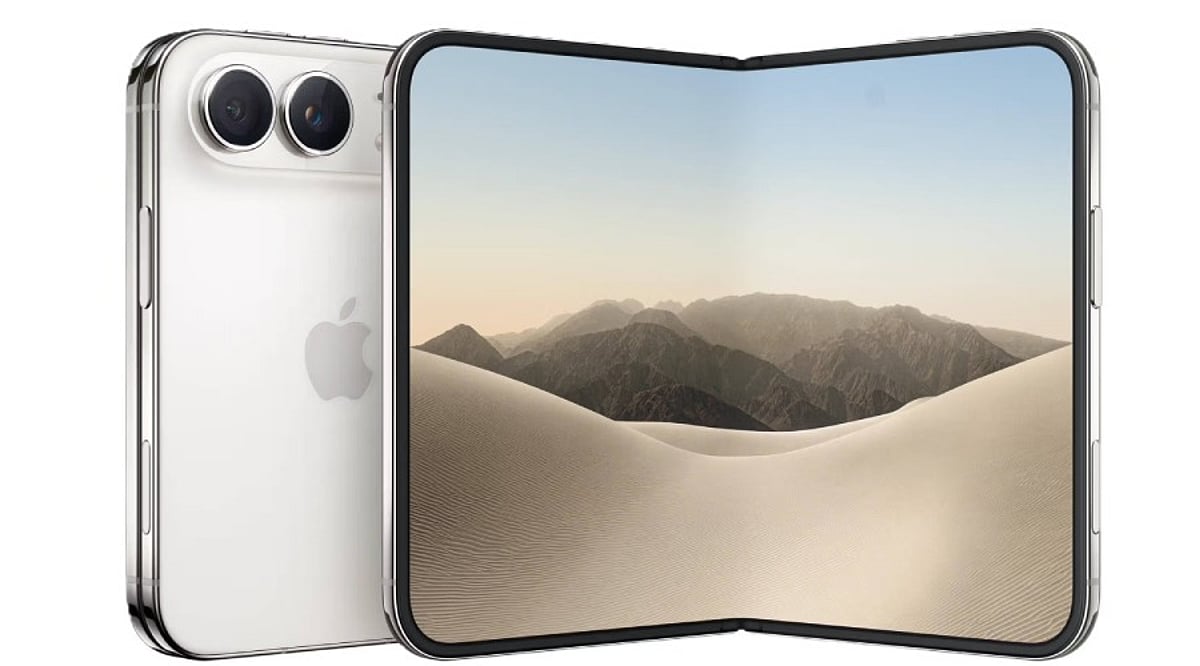
    The iPhone Duo opens like a book and reveals a 7.6-inch internal display, which Apple describes as the largest screen ever placed inside an iPhone. The cover screen measures 5.4 inches, and the device runs on Apple’s A20 Pro chip paired with a new cooling system. Apple claims this combination delivers 35% higher sustained performance compared with the iPhone 17 Pro. Battery life is rated at 31 hours of video playback, and the phone includes dual 48-megapixel rear cameras along with an under-display FaceTime camera. These components, along with the folding mechanism and reinforced hinge, add to key manufacturing costs. Foldable displays remain expensive to produce, and Apple has spent years refining the technology to avoid a visible crease, a problem that affected earlier foldables from other brands. The result is a premium device built with premium components.

    Samsung Galaxy Z Fold 7

    Samsung’s Galaxy Z Fold 7 remains one of the strongest book-style foldables on the market and starts at around USD 1,799, which is USD 200 less than the iPhone Duo. It runs on the Snapdragon 8 Elite chip, features a flagship camera system, and is noted for being one of the thinnest foldables available when closed. Samsung’s DeX mode also turns the phone into a near-laptop experience when connected to a keyboard, adding genuine productivity value beyond entertainment and browsing.

    Google Pixel 10 Pro Fold

    Pixel 10 Pro Fold is priced near USD 1,799 at launch, though it can often be found closer to USD 1,499 through retailers. What sets this device apart is durability. It carries the first IP68 water resistance rating given to a folding phone, a meaningful upgrade over earlier foldables that struggled with dust and moisture protection. Google also backs the phone with seven years of software updates, the longest commitment offered on any foldable today, which gives buyers strong long-term value for their money.

    Honor Magic V5

    Honor has positioned the Magic V5 as a direct challenger to Samsung and Apple, pricing it at EUR 1,999 in Europe, which works out to roughly 100 pounds less than the Galaxy Z Fold 7 in the UK market. The phone measures just 8.8 millimetres when folded, making it one of the slimmest foldables sold anywhere. It runs on the Snapdragon 8 Elite chipset, includes a 5,820mAh battery, and offers a triple rear camera system with a periscope telephoto lens. For buyers who want flagship specifications without paying Apple-level prices, the Magic V5 is a compelling option.

    Motorola Razr Ultra

    Not every buyer wants a large book-style device, and Motorola’s Razr Ultra 2026 caters to those who prefer a compact flip phone. Priced at USD 1,499, it features a 5,000mAh battery, dual 50-megapixel cameras suited for vlogging, and a bright cover display that supports Dolby Vision and HDR10 plus. Reviewers have noted that the price rose by 200 dollars over the previous generation, yet the phone still undercuts the iPhone Duo by USD 500 while offering a genuinely different form factor built around portability and design.

    Samsung Galaxy Z Flip 7

    For buyers who want to experience a foldable phone without spending close to USD 2,000, the Galaxy Z Flip 7 starts at around USD 999, roughly half the price of the iPhone Duo. It features a 4.1-inch cover screen that displays notifications, camera previews, and widgets without needing to open the phone. Samsung has also strengthened the hinge design in this generation, addressing a common concern among flip phone owners regarding long-term durability. It is not built for heavy multitasking the way the larger Fold models are, but it delivers the foldable experience at a price that many more people can afford.

    Foldable Phones Comparison Table

    Phone Starting Price Key Feature
    Apple iPhone Duo USD 1,999 Largest iPhone screen, A20 Pro chip
    Samsung Galaxy Z Fold 7 USD 1,799 DeX mode, thin design
    Google Pixel 10 Pro Fold USD 1,499 – 1,799 IP68 water resistance, 7-year updates
    Honor Magic V5 EUR 1,999 Slimmest foldable, 5,820mAh battery
    Motorola Razr Ultra USD 1,499 Compact flip, Dolby Vision cover display
    Samsung Galaxy Z Flip 7 USD 999 Affordable flip, 4.1-inch cover screen

    Final Thoughts

    The iPhone Duo is a genuinely impressive piece of engineering, and Apple has clearly worked to solve problems that affected earlier foldables, including screen creasing and hinge durability. However, its USD 1,999 starting price places it firmly in premium territory, and buyers now have several strong alternatives that offer comparable innovation at a lower cost. Samsung, Google, Honor, and Motorola have each built foldables that suit different needs, whether that means better software support, a slimmer design, a compact flip form, or simply a friendlier price. Choosing the right foldable ultimately depends on individual priorities such as brand ecosystem, camera quality, and long-term software support, rather than price alone. For most buyers, comparing these options carefully before committing to Apple’s most expensive iPhone yet is a sensible step.

  • Optimize Your Mobile Game Graphics for Smooth, Lag-Free Play

    Optimize Your Mobile Game Graphics for Smooth, Lag-Free Play

    Mobile games now deliver console-quality graphics, expansive worlds, and advanced features. But cranking every setting to maximum often leads to overheating, battery drain, and frustrating frame drops. The secret to a great gaming experience lies in finding the right balance between visuals and performance.

    How Mobile Gaming Has Evolved

    The mobile gaming landscape has transformed dramatically, driven by powerful new smartphones with faster processors, better GPUs, and high-refresh-rate displays. Titles like PUBG Mobile, Call of Duty Mobile, and Genshin Impact have set new standards, offering competitive multiplayer and vast open worlds that once required a PC or console. However, pushing all graphics options to their highest level doesn’t guarantee smooth gameplay. Heat buildup can throttle performance, causing stutters and sudden FPS drops — even on flagship devices.

    Best Graphics Settings for Smoother Gameplay

    The ideal settings vary by phone and game, but the following approach works as a solid starting point for most players:

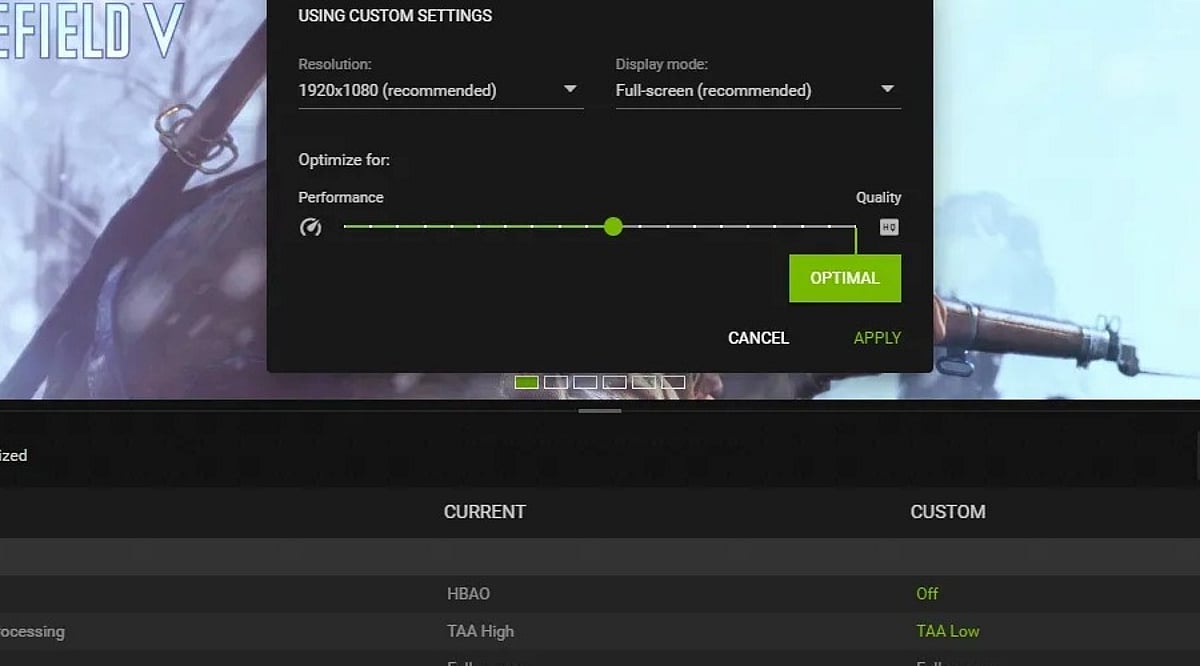
    • Prioritize frame rate: A stable 60 FPS feels much better than an unstable 90 or 120 FPS that frequently dips. If your phone supports higher refresh rates, try them but monitor heat and battery use.
    • Adjust graphics quality: Medium to High settings are often a sweet spot. Lower shadows, reflections, and effects if the game struggles.
    • Turn off motion blur: This is especially helpful in shooters and racing games — it makes quick movements easier to track.
    • Manage heat: Take short breaks, avoid direct sunlight, and consider removing a thick case during long sessions.

    Finding the Right Balance for Your Phone

    There’s no universal graphics preset that works for everyone. Competitive players should focus on stable FPS and clear visuals, while those who enjoy story-driven games may prefer richer textures and lighting. The goal isn’t to make the game look as impressive as possible — it’s to keep it smooth, responsive, and enjoyable without lag. Sometimes, the best experience comes from lowering a few settings to maintain stability.

    Frequently Asked Questions

    1. What are the best graphics settings for mobile gaming? Medium to High graphics with a stable high frame rate is a good starting point. Lower shadows and effects if the phone struggles.
    2. Is 60 FPS better than higher graphics? For fast-paced games, a stable 60 FPS often feels better than higher graphics settings that cause frame drops.
    3. Should I turn off motion blur? Yes, especially for shooting and racing games. It makes quick movements easier to follow.
    4. Do high graphics make a phone hotter? Yes, high graphics increase the workload on the phone, leading to more heat and battery drain during extended sessions.
    5. Should I use 90 FPS or 120 FPS? If your phone and game support it smoothly, higher FPS can improve gameplay — but watch for excessive heat and battery consumption.
  • Tata Chemicals Jumps 13% as Tata Sons IPO Hopes Drive Rally, Then Governance Row Sparks Selloff

    Tata Chemicals Jumps 13% as Tata Sons IPO Hopes Drive Rally, Then Governance Row Sparks Selloff

    Shares of Tata Chemicals led a sharp rally among Tata Group stocks this week, surging 13% as renewed speculation about a Tata Sons initial public offering (IPO) ignited buying interest. However, a leadership dispute between Tata Trusts and the board of Tata Sons erased nearly $4 billion in combined market value on Friday, capping a volatile period.

    RBI Decision Ignites IPO Expectations

    The rally began Tuesday after the Reserve Bank of India (RBI) reportedly rejected Tata Sons’ request to surrender its Certificate of Registration. Tata Sons had sought to be classified as an unregistered Core Investment Company, but the RBI’s decision reignited expectations that the holding company would eventually need to list its shares on the stock exchange.

    Board Reappointment Sparks Controversy

    Buying resumed on Thursday after the Tata Sons board approved a second five-year term for Chairman N. Chandrasekaran and initiated steps toward a long-awaited IPO. The optimism was short-lived. Tata Trusts, which holds a 66% stake in Tata Sons, opposed the reappointment, calling it a “legal nullity.” The dissent raised fresh uncertainty about both the listing plan and the group’s leadership succession.

    Tata Chemicals Delivers Best Weekly Performance

    Among the seven listed Tata Group companies with stakes in Tata Sons, Tata Chemicals posted the strongest gains. The stock hit the 20% upper circuit on Tuesday and rose another 6.5% on Thursday. On Friday, it tumbled approximately 11% as investors reacted to the governance dispute. Still, it managed to close the week 13% higher.

    The company owns a 2.5% stake in Tata Sons, valued at roughly Rs 30,052 crore. This holding is substantial compared with Tata Chemicals’ own market capitalization. Gaurav Garg, head of research at Lemonn, noted that “the Tata Sons listing story forms a large part of the valuation case for smaller listed companies. That cuts both ways, and today it cut one way,” he said after Friday’s decline.

    Other Group Stocks Gain, Then Fade

    Tata Investment Corporation added 8% for the week despite losing 2.5% on Friday. It holds a 0.08% stake in Tata Sons valued at about Rs 950 crore. Tata Power finished roughly 3% higher, with shares closing near Rs 375 on Friday. Tata Power owns a 1.65% stake, worth an estimated Rs 19,599 crore. The Indian Hotels Company (IHCL) gained about 2% for the week, holding a 1.11% stake valued at Rs 13,185 crore. Tata Motors Passenger Vehicles rose only 1% after a 4% gain on Thursday and a 3% drop on Friday; its 3.06% stake is worth roughly Rs 36,348 crore. Tata Steel, with a similar 3.06% stake, added about 1.4%. Tata Consumer Products ended nearly flat at a 0.5% gain, with a 0.43% holding valued at Rs 5,107.7 crore.

    Governance Row Wipes Out Billions

    On Friday, listed Tata Group companies collectively lost about Rs 38,361 crore ($4 billion) in market value. Tata Consultancy Services fell 3.88%, while Tata Chemicals dropped 11.04%. Tata Elxsi, Tata Motors, Tata Investment Corporation, and Tata Steel also closed lower.

    Analysts said investors will now monitor whether the two sides reach a compromise or take the matter to a tribunal. Until the governance dispute is resolved, news about the Tata Sons IPO is likely to keep volatility high across Tata Group stocks.

  • Top 5 LG Bluetooth Soundbars to Elevate Your Home Audio in 2026

    Top 5 LG Bluetooth Soundbars to Elevate Your Home Audio in 2026

    LG offers a range of Bluetooth soundbars that cater to different budgets and room setups. From the entry-level S40T to the premium S95TR, each model brings distinct channel layouts, power outputs, and features such as Dolby Atmos and wireless subwoofers. Here’s a breakdown of five standout options for upgrading your home audio.

    1. LG S40T: A Simple 2.1-Channel Upgrade

    The LG S40T is a budget-friendly choice for those seeking a basic TV audio boost. It delivers 300 W of power through a 2.1-channel configuration paired with a wireless subwoofer for enhanced bass. Additional features include AI Sound Pro, Dolby Digital, and a three-band equalizer. Prices in India range from approximately Rs. 13,490 to Rs. 15,990, making it ideal for smaller rooms.

    2. LG S70TY: Dolby Atmos on a Budget

    The LG S70TY steps up with a 3.1.1-channel setup and 400 W output. Its center height speaker brings Dolby Atmos effects, creating a sense of overhead sound. The soundbar supports Bluetooth 5.1, HDMI input and output, optical input, USB, and DTS:X. Priced around Rs. 21,990 to Rs. 23,990, it suits those wanting clearer dialogue and immersive audio without rear speakers.

    3. LG SQ70TY: Another 400 W Atmos Option

    Sharing the same 3.1.1-channel layout and 400 W output, the LG SQ70TY also includes Dolby Atmos, a center height channel, WOW Orchestra, and Triple Level Spatial Sound. It comes with a wireless subwoofer and Bluetooth connectivity. Current prices vary from Rs. 23,990 to Rs. 30,990, making it a solid mid-range pick for an LG ecosystem.

    4. LG S90TY: Expanded Soundstage with 5.1.3 Channels

    The LG S90TY offers a 5.1.3-channel design with 570 W output, three height speakers, and support for Dolby Atmos and DTS:X. It includes AI Room Calibration Pro, Spotify Connect, TIDAL Connect, Chromecast, and Apple AirPlay 2. Priced around Rs. 59,990 to Rs. 69,990, this model provides a wide soundstage but lacks wireless rear speakers, which are available on the S95TR.

    5. LG S95TR: Full Home Theater Experience

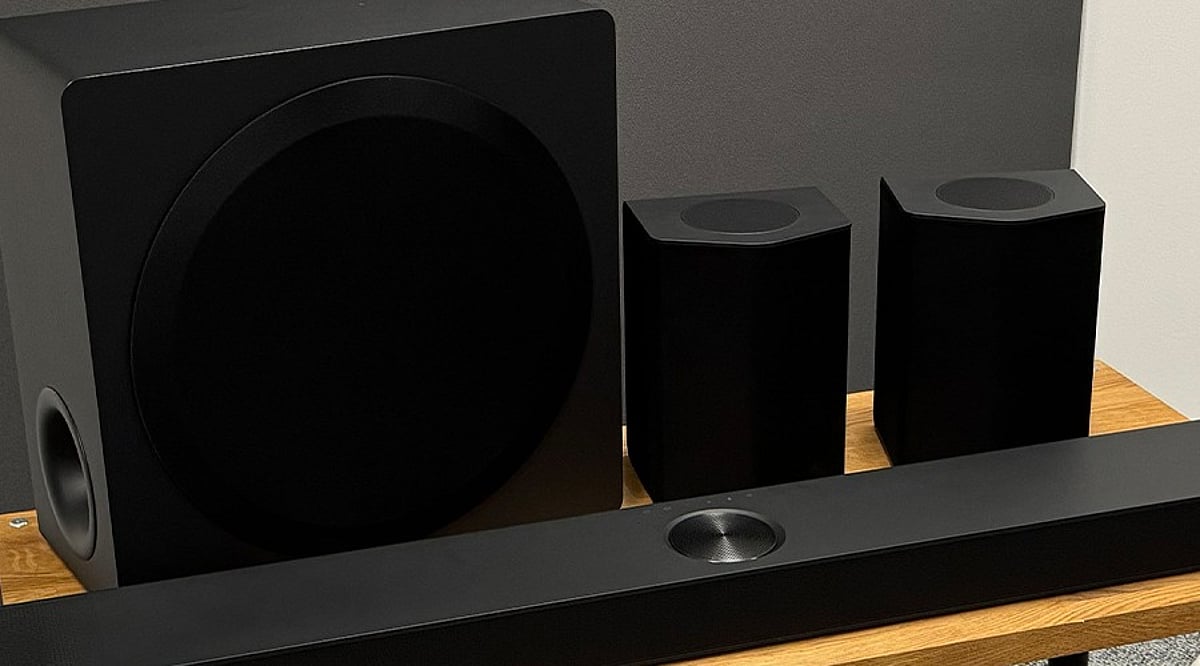
    The flagship LG S95TR delivers 9.1.5 channels and 810 W power. The package includes three height speakers, a wireless subwoofer, and wireless rear speakers for true surround sound. It supports Dolby Atmos, DTS:X, Bluetooth 5.1, 4K Dolby Vision pass-through, and Alexa. Prices range from around Rs. 65,990 to Rs. 79,990, depending on the retailer, making it the ultimate choice for large home theaters.

    Additional Considerations

    LG’s 2026 Sound Suite range introduces newer systems like the Immersive Quad Suite 7 Pro and Immersive Suite 5 Pro, which feature Dolby Atmos FlexConnect and AI Room Calibration. The S-series models cover a useful price spectrum in India, so consider room size, channel needs, and TV compatibility when choosing.

    FAQs

    1. Which LG soundbar has the lowest price? The LG S40T, starting around Rs. 13,490.
    2. Which models support Dolby Atmos? The S70TY, SQ70TY, S90TY, and S95TR.
    3. Which model offers 810 W output? The LG S95TR with 9.1.5 channels.
    4. Does the S95TR include rear speakers? Yes, wireless rear speakers are included.
    5. Which has a 5.1.3-channel setup? The LG S90TY.
  • Top 5 Party Speakers Under ₹20,000: Key Features to Consider Before Buying

    Top 5 Party Speakers Under ₹20,000: Key Features to Consider Before Buying

    When shopping for a party speaker under ₹20,000, you’ll quickly notice that wattage and battery life claims vary widely across brands. Some list RMS (continuous) output, while others advertise peak figures that can be misleading. We compared five models—from the Philips TAX5206 to the Soundcore Rave Party 2—to help you decode the numbers and choose the speaker that will actually deliver at your next event.

    Best Party Speakers to Buy

    Note: Output figures come from manufacturer or retailer listings and may follow different measurement standards. None of these five models list a formal IP water-resistance rating. Prices reflect recent listings and may vary by retailer.

    Philips TAX5206 — ₹15,990

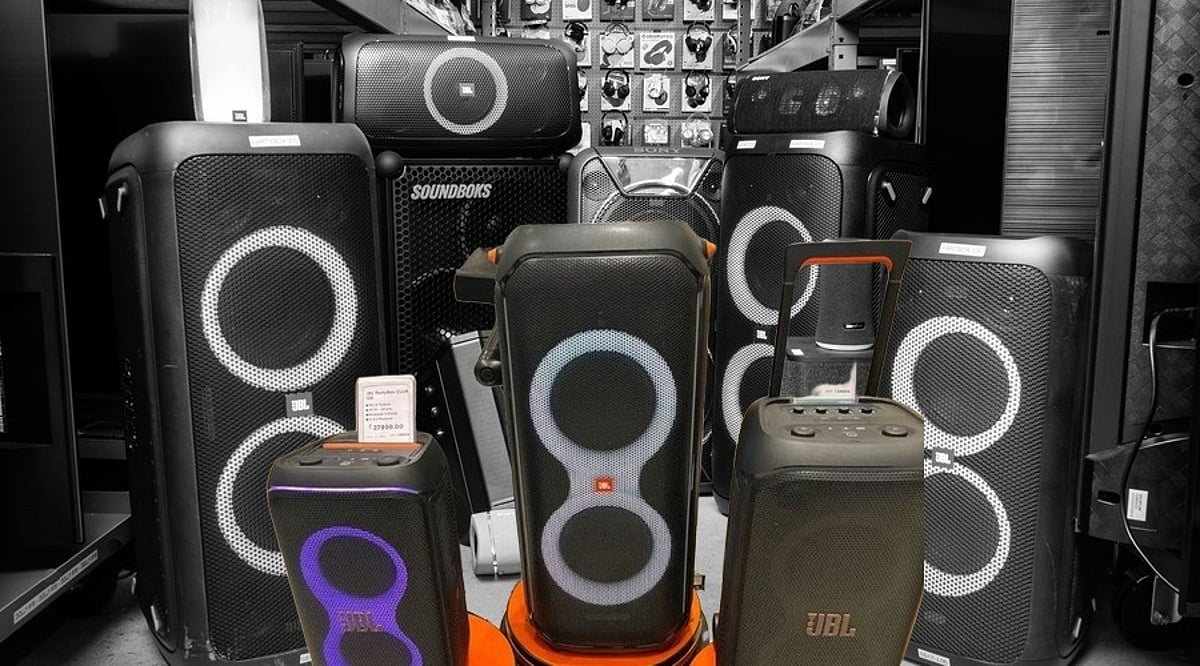
    Rated at 80W RMS with a maximum output of 160W, the TAX5206 features a trolley design with dual 8-inch woofers and dual tweeters. It includes guitar and microphone inputs with rotary controls for echo, treble, and bass, making it one of the most karaoke-ready options at this price. Its advertised 14-hour battery life is the highest on this list, though that figure is measured under standard conditions and will likely be shorter at sustained high volume.

    Zebronics Party Fyre 102 — ₹16,999

    This speaker prioritizes portability with a trolley build and a remote control for managing music and lighting from a distance. Zebronics lists 200W output on the product page, but the brand does not specify whether that figure is RMS or peak, so treat it as a rough indicator rather than a precise number. Battery life is not listed in the specifications reviewed.

    boAt PartyPal 600 — ₹16,999

    The PartyPal 600 is rated at 220W RMS, a figure confirmed as continuous output rather than peak, making it more reliable when comparing against RMS-rated rivals. It supports TWS pairing, letting two units link into a stereo pair, and comes with a wireless microphone. Its battery is rated for 7 hours, lower than the Philips TAX5206, reflecting the trade-off between higher power output and shorter runtime.

    Soundcore Anker Rave Party 2 — ₹18,899

    At a brand-listed 120W, this is the lowest-output speaker on the list, but its PartyCast feature stands out: it can link several compatible speakers together for a larger, multi-room sound setup rather than acting as a single loud unit. Battery life is not specified in the listings reviewed, so anyone planning long outdoor use should confirm it directly before buying.

    Philips TAX5509 — ₹19,499

    The TAX5509 tops the list on price and brand-listed output at 260W, with built-in DJ and karaoke sound effects. As with other brand-listed figures, it is unclear whether this number reflects RMS or peak output, so it should not be read as a direct multiple of the TAX5206’s confirmed 80W RMS rating despite the shared brand name.

    Before You Buy

    None of these specs replace hearing a speaker in person—sensitivity and cabinet design shape real-world loudness in ways a wattage number alone cannot capture. Where possible, check user reviews for reported battery life and volume at full charge, and confirm water resistance directly with the seller if outdoor or poolside use is part of the plan.

    The biggest number on the box rarely tells the full story. A party speaker’s real test is whether the sound still holds up three hours in, at full volume, with the battery draining and the crowd not slowing down. Buyers who learn to read past the marketing number and check what it’s actually measuring end up with a speaker built for the party they are actually throwing, not the one described on the box.

    FAQs

    1. What should I look for in a party speaker under ₹20,000?

    Check the output rating, battery capacity or claimed runtime, connectivity options, portability, microphone support, and any water-resistance rating.

    2. Is higher wattage always better for a party speaker?

    No. Brands may use different output measurements, so wattage figures are not always directly comparable. RMS ratings provide more useful context when available.

    3. How long can a party speaker battery last at high volume?

    Actual runtime can be shorter than the advertised figure when playing music at high volume, especially with bass-heavy tracks and other power-intensive features.

    4. Do I need a water-resistant party speaker for outdoor use?

    If you plan to use it outdoors, check for a formal IP rating. Do not assume a speaker is rain-safe simply because it is designed for outdoor or trolley-style use.

    5. Is TWS pairing useful in a party speaker?

    Yes. TWS can let two compatible speakers connect for a wider stereo setup, while technologies such as PartyCast can support larger multi-speaker configurations.

  • 10 Must-Read Indian Fiction Titles from the Crossword Book Awards 2026

    10 Must-Read Indian Fiction Titles from the Crossword Book Awards 2026

    The Crossword Book Awards 2026 have unveiled a compelling shortlist of Indian fiction titles that showcase the breadth and depth of contemporary storytelling in India. This year’s selection highlights authors—both established and emerging—who explore personal journeys, shifting relationships, social upheaval, and the complexities of modern Indian life.

    From intimate family dramas to sweeping social narratives, the ten shortlisted books traverse diverse settings, generations, and emotional landscapes. Readers will find stories that grapple with difficult choices, cultural transitions, and the enduring power of human connection.

    The awards, long recognized for spotlighting the best in Indian writing, once again provide an essential guide for anyone looking to discover notable fiction from the subcontinent. Whether you are a longtime fan of Indian literature or new to the scene, these titles offer a rich entry point into the voices shaping the country’s literary scene.

    Here is a glimpse at the variety represented in the 2026 fiction shortlist:

    • Stories set in bustling cities and remote villages
    • Characters navigating generational change and tradition
    • Narratives that blend realism with magical elements
    • Explorations of identity, class, and gender roles
    • Experimental structures and lyrical prose

    For those eager to stay current with Indian fiction, the Crossword Book Awards remain a trusted beacon. The 2026 shortlist reaffirms that Indian literature is more vibrant and diverse than ever, offering something for every reader.

  • China Accelerates Humanoid Robot Production: Can Cost Reductions Drive Widespread adoption?

    China Accelerates Humanoid Robot Production: Can Cost Reductions Drive Widespread adoption?

    China is rapidly scaling up its humanoid robot industry, moving from prototype development to automated mass production. The goal: increase output and slash manufacturing costs to make these robots accessible to commercial buyers.

    Automated Factories Set New Standards

    XPeng’s latest production lines automate more than 80% of core processes, applying automotive-grade manufacturing techniques to humanoid robots. This shift is driven by a need for higher volumes and lower per-unit costs.

    Cost Reduction Through Scale and Localization

    By ramping up production volumes and sourcing localized components, Chinese manufacturers have managed to bring prices down. Some humanoid robot models now cost less than 30,000 yuan (about $4,000), a threshold that signals rapid affordability improvement.

    Domestic Supply Chain Advantages

    China’s existing automotive and electronics supply chains already provide key components such as motors, reducers and sensors. This reduces the need for entirely new manufacturing capacity, accelerating time-to-market.

    Rapid Production Growth

    Agibot, a nowdel div, had produced 15,000 cumulative humanoid robots by June alone. That shows how quickly Chinese manufacturers are scaling up their production capabilities.

    Industrial Applications Expand

    Humanoid robots are now being deployed in automotive, electronics, logistics, aerospace and energy sectors. Industry attention is shifting toward practical, commercial use cases rather than just research exbits.

    Challenges Ahead

    Despite growing production, profitability remains uncertain. Manufacturers still need repeat orders, reliable performance and convincing returns on investment. The expanding robotics ecosystem in China may also lead to aggressive price competition, putting pressure on companies to balance affordability with sustainable margins.

  • Key Cybersecurity Trends Driving Change in the Banking Industry

    Key Cybersecurity Trends Driving Change in the Banking Industry

    Banks are increasingly turning to advanced technologies and frameworks to protect digital assets and customer data. Here are the most significant cybersecurity trends shaping the banking sector.

    AI-Powered Fraud Detection

    Financial institutions are deploying artificial intelligence to analyze transaction patterns in real time, identify anomalies, and accelerate fraud detection while reducing financial losses across digital channels.

    Zero Trust Security

    The zero-trust model is gaining traction in banking. Instead of assuming trust based on network location, organizations continuously verify every user, device, application, and access request to minimize risk.

    Biometric Authentication

    Fingerprint scanning, facial recognition, voice verification, and behavioral biometrics are replacing traditional passwords. These methods strengthen customer verification and improve overall digital banking security.

    Cloud Security

    As banks migrate workloads to the cloud, they prioritize stronger encryption, identity and access controls, continuous monitoring, and secure configurations to protect sensitive data.

    Ransomware Protection

    Banking organizations are reinforcing backup strategies, endpoint security, network segmentation, and incident response plans to limit disruption from ransomware attacks.

    API Security

    The growth of open banking expands API exposure. Robust authentication, authorization, encryption, monitoring, and vulnerability testing are essential to safeguard financial data.

    Cyber Threat Intelligence

    Banks leverage threat intelligence feeds to track emerging attack methods, identify indicators of compromise, and adapt defenses against evolving cyber threats.

    Behavioral Analytics

    By examining patterns in customer and employee behavior, banks can detect unusual activities, account takeovers, insider threats, and potentially fraudulent transactions.

    Regulatory Compliance

    Changing cybersecurity regulations require stronger data protection, incident reporting, third-party risk management, governance, and operational resilience to meet compliance standards.

  • Wordle #1918 Answer for September 19, 2026: Hints and Clues for ‘WAKEN’

    Wordle #1918 Answer for September 19, 2026: Hints and Clues for ‘WAKEN’

    The New York Times released Wordle #1918 on Saturday, September 19, 2026. Today’s answer is WAKEN, a five-letter verb meaning to wake or become awake. Players have six attempts to guess the word, and this guide provides spoiler-free hints, solving strategies, and the final answer.

    Overview of Wordle #1918

    Wordle #1918 answer is WAKEN, a familiar but slightly formal word. It begins with W, contains two vowels (A and E) in the second and fourth positions, and has no repeated letters. The word is connected with waking someone or stirring something from sleep.

    Spoiler-Free Hints for September 19, 2026

    These clues help narrow down the answer without revealing it:

    • The word has five letters.
    • It contains two vowels.
    • The vowels appear in the second and fourth positions.
    • The word begins with a consonant.
    • No letter appears twice.
    • The word is related to waking someone or becoming active from sleep.
    • It can also describe bringing something dormant back into activity.

    Players who want to solve the puzzle independently can stop here.

    Wordle Strategies Worth Trying

    Start with a strong initial guess that includes common vowels and frequent consonants to reveal important letters quickly. Pay attention to green tiles (correct letter, correct position) and yellow tiles (correct letter, wrong position). Avoid reusing discarded letters. Use all six guesses effectively by observing word patterns and eliminating possibilities.

    Spoiler Alert: Today’s Wordle Answer

    Warning: The answer is revealed below.

    The answer to Wordle #1918 for September 19, 2026, is WAKEN. It means to make someone awake or to become awake. Figuratively, it can describe stirring an old memory, feeling, or ambition back into activity. The word starts with W, has A as the second letter, K in the middle, E as the fourth, and ends with N.

    Why Today’s Puzzle May Feel Tricky

    Wordle #1918 requires careful attention to letter placement. The two vowels are separated, and the consonants create an uncommon pattern. Many players are more familiar with the related word ‘wake,’ making WAKEN less obvious. The absence of repeated letters is a helpful clue, but placing each letter correctly is key.

    How Wordle Works

    Wordle gives players six chances to guess a hidden five-letter word. After each guess, colored tiles provide feedback: green means the letter is correct and in the right spot, yellow means it’s in the word but wrong position, and gray means it’s not in the answer. The New York Times acquired Wordle from creator Josh Wardle in 2022 and publishes it daily.

    More NYT Games to Explore

    Wordle is part of a larger collection of daily puzzles from The New York Times, including Connections, Strands, the Mini Crossword, Spelling Bee, and more. Each game offers adifferent challenge for puzzle fans.

  • Warren Buffett Passes Berkshire Hathaway Chairmanship to Son Howard at Age 96

    Warren Buffett Passes Berkshire Hathaway Chairmanship to Son Howard at Age 96

    Warren Buffett, the legendary investor who transformed Berkshire Hathaway from a failing textile mill into a global conglomerate, has stepped down as chairman at the age of 96. The move, announced on Friday, ends a tenure that spanned more than five decades. Buffett will assume the title of chairman emeritus, while his son, Howard Buffett, will take over as the new chairman. However, Warren Buffett will continue to serve as a director on the company’s board.

    Howard Buffett to Lead as Chairman

    Howard Buffett, who joined Berkshire Hathaway’s board of directors in 1993, will now lead the board as chairman. He is expected to focus on preserving the company’s distinctive culture and values, ensuring continuity in the post-Warren era.

    Warren Buffett first took the helm as chairman in 1970, after he began reshaping the company in 1965. In his latest letter to shareholders, Buffett remarked, “I have been at Berkshire since 1965. I am 60+ years in and still have the best job in the world.” He also acknowledged the inevitability of time, stating, “Father Time always wins,” while expressing optimism about Berkshire’s future.

    Greg Abel Continues as CEO

    This leadership change follows Buffett’s earlier departure from the chief executive role. He stepped down as CEO at the end of 2025, with Greg Abel assuming the position on January 1, 2026. Buffett remained chairman until now. Abel will continue to oversee day-to-day operations, while Howard Buffett is expected to concentrate on the company’s long-term culture and values.

    Buffett to Remain on the Board

    Despite leaving the chairman’s position, Warren Buffett will remain a member of Berkshire Hathaway’s board. The company stated that he will continue to provide his judgment and perspective to guide the organization.

    This transition marks another milestone in Berkshire Hathaway’s carefully planned succession. Buffett’s departure as chairman comes more than six decades after he first joined the company in 1965 and nearly five decades after he became chairman in 1970.