Author: vitorcherulli

  • Ethereum Price Analysis: Can Institutional Demand and DeFi Strength Push ETH Past $2,570?

    Ethereum Price Analysis: Can Institutional Demand and DeFi Strength Push ETH Past $2,570?

    Ethereum (ETH) is attempting to extend its recovery as institutional adoption, exchange-traded funds (ETFs), staking, and tokenization strengthen its market narrative. However, ETH’s ability to break higher increasingly depends on whether institutional infrastructure translates into sustained capital flows and on-chain activity.

    ETH trades at USD 2,478.08 on September 18 after recovering from a sharp two-day pullback. Traders are watching roughly USD 2,570 as an important resistance area, with a sustained move above it potentially opening the way toward higher technical levels.

    ETF Flows Turn Volatile

    Institutional ETF demand strengthened during parts of 2026, but the latest data show that flows are not consistently positive. Ethereum ETFs attracted USD 1.75 billion in August, their strongest month since August 2025. Momentum has since reversed. US spot Ethereum ETFs recorded USD 39.24 million in net outflows on September 17, marking a third consecutive session of withdrawals. Combined outflows over those three trading days reached approximately USD 405.4 million, according to SoSoValue. The reversal shows why institutional interest alone cannot guarantee a sustained ETH rally.

    Ethereum Maintains Deep On-Chain Liquidity

    Ethereum retains a major structural advantage in decentralized finance (DeFi). According to DeFiLlama, USD 50.28 billion in Ethereum DeFi total value is locked. The ecosystem also supports about USD 172 billion in stablecoin value across mainnet and Layer 2 networks and approximately USD 21 billion in real-world assets. Ethereum’s Layer 2 ecosystem includes 102 live networks with around USD 37.5 billion in average daily TVL. These figures matter as institutional blockchain adoption increasingly involves stablecoin settlement, tokenized securities, and financial applications rather than cryptocurrency trading alone.

    Tokenization Gains Regulatory Momentum

    Institutional tokenization received another boost on September 17 when the US Securities and Exchange Commission (SEC) announced a five-year exemption framework for qualifying tokenized-stock trading platforms and liquidity providers. According to Reuters, eligible tokenized stocks must provide shareholders the same economic and governance rights as conventional shares, while synthetic tokens merely tracking stock prices are excluded. Ethereum is positioned to participate, as its institutional portal reports that 37% of on-chain real-world assets (RWAs) are deployed across Ethereum and its Layer 2 ecosystem.

    What Could Drive ETH Higher?

    A sustainable breakout would likely require several factors to align: renewed ETF inflows, resilient DeFi liquidity, increasing stablecoin and RWA activity, and supportive broader risk sentiment. Conversely, persistent ETF withdrawals or tighter financial conditions could limit upside even if institutional infrastructure continues expanding.

    Final Thoughts

    Ethereum’s institutional foundation is becoming broader, particularly across DeFi, stablecoins, and tokenization. However, recent ETF outflows show infrastructure growth and investment demand can diverge. ETH still needs sustained capital inflows and network usage to convert institutional interest into durable price momentum.

    FAQs

    1. What price is Ethereum trading at?
    Ethereum was trading around USD 2,478.08 on September 18. ETH has recovered from its recent pullback, with traders closely monitoring the USD 2,570 region as an important near-term resistance level.

    2. What is the key resistance level for Ethereum?
    The USD 2,570 area represents an important technical resistance zone. A sustained move above this level could improve ETH’s technical structure, although broader market conditions and institutional capital flows would remain important.

    3. Are institutional investors still buying Ethereum ETFs?
    ETF demand has become more volatile. Ethereum ETFs attracted around USD 1.75 billion in August, but US spot ETH ETFs subsequently recorded three consecutive sessions of outflows totaling approximately USD 405.4 million through September 17.

    4. How large is Ethereum’s DeFi ecosystem?
    Ethereum currently holds approximately USD 50.28 billion in DeFi total value locked, according to DeFiLlama data cited in the article. Its ecosystem also supports substantial stablecoin and tokenized real-world asset activity.

    5. What could help Ethereum break higher?
    A stronger ETH move could be supported by renewed ETF inflows, resilient DeFi liquidity, expanding stablecoin usage, and increased tokenized-asset activity. Conversely, persistent institutional outflows and tighter financial conditions could restrict upside momentum.

    Disclaimer: Analytics Insight does not provide financial advice or guidance on cryptocurrencies and stocks. Also note that the cryptocurrencies mentioned/listed on the website could potentially be risky, i.e., designed to induce you to invest financial resources that may be lost forever and not be recoverable once investments are made. This article is provided for informational purposes and does not constitute investment advice. You are responsible for conducting your own research (DYOR) before making any investments. Read more about the financial risks involved here.
  • Ethereum Price Outlook: Institutional Adoption Grows, but ETF Outflows Temper Breakout Hopes

    Ethereum Price Outlook: Institutional Adoption Grows, but ETF Outflows Temper Breakout Hopes

    Ethereum (ETH) is attempting to extend its recovery as institutional adoption, exchange-traded funds (ETFs), staking, and tokenization strengthen its market narrative. However, ETH’s ability to break higher increasingly depends on whether institutional infrastructure translates into sustained capital flows and on-chain activity.

    Current Price Action and Key Resistance

    ETH trades at USD 2,478.08 on September 18 after recovering from a sharp two-day pullback. Traders are watching roughly USD 2,570 as an important resistance area, with a sustained move above it potentially opening the way toward higher technical levels.

    ETF Flows Turn Volatile

    Institutional ETF demand strengthened during parts of 2026, but the latest data show that flows are not consistently positive. Ethereum ETFs attracted USD 1.75 billion in August, their strongest month since August 2025.

    Momentum has since reversed. US spot Ethereum ETFs recorded USD 39.24 million in net outflows on September 17, marking a third consecutive session of withdrawals. Combined outflows over those three trading days reached approximately USD 405.4 million, according to SoSoValue. The reversal shows why institutional interest alone cannot guarantee a sustained ETH rally.

    Ethereum Maintains Deep On-Chain Liquidity

    Ethereum retains a major structural advantage in decentralized finance (DeFi). According to DeFiLlama, USD 50.28 billion in Ethereum DeFi total value is locked. The ecosystem also supports about USD 172 billion in stablecoin value across mainnet and Layer 2 networks and approximately USD 21 billion in real-world assets. Ethereum’s Layer 2 ecosystem includes 102 live networks with around USD 37.5 billion in average daily TVL. These figures matter as institutional blockchain adoption increasingly involves stablecoin settlement, tokenized securities, and financial applications rather than cryptocurrency trading alone.

    Tokenization Gains Regulatory Momentum

    Institutional tokenization received another boost on September 17 when the US Securities and Exchange Commission (SEC) announced a five-year exemption framework for qualifying tokenized-stock trading platforms and liquidity providers. According to Reuters, eligible tokenized stocks must provide shareholders the same economic and governance rights as conventional shares, while synthetic tokens merely tracking stock prices are excluded. Ethereum is positioned to participate, as its institutional portal reports that 37% of on-chain real-world assets (RWAs) are deployed across Ethereum and its Layer 2 ecosystem.

    What Could Drive ETH Higher?

    A sustainable breakout would likely require several factors to align: renewed ETF inflows, resilient DeFi liquidity, increasing stablecoin and RWA activity, and supportive broader risk sentiment. Conversely, persistent ETF withdrawals or tighter financial conditions could limit upside even if institutional infrastructure continues expanding.

    Final Thoughts

    Ethereum’s institutional foundation is becoming broader, particularly across DeFi, stablecoins, and tokenization. However, recent ETF outflows show infrastructure growth and investment demand can diverge. ETH still needs sustained capital inflows and network usage to convert institutional interest into durable price momentum.

  • NYT Mini Crossword Answers for September 18, 2026: Complete Guide

    NYT Mini Crossword Answers for September 18, 2026: Complete Guide

    The New York Times Mini Crossword for Friday, September 18, 2026, delivers a compact yet clever five-by-five grid that mixes transit, slang, pop culture, food, and a touch of science. With clues ranging from Bay Area rail to Marvel superheroes, today’s puzzle offers a quick but satisfying mental workout.

    Overview of the Puzzle

    This Friday edition keeps the signature small format while packing in a wide variety of topics. Solvers will find references to San Francisco’s BART, the internet shorthand LMAO, and the foam on a freshly poured beer. Down clues lean into nature, food, and childhood nostalgia, with BLOOM, RAMEN, and TOY making appearances. As is typical for Fridays, the puzzle requires a bit more lateral thinking than earlier weekdays, but it remains approachable for both casual and regular solvers.

    Across Clues and Answers

    The five across answers span transit, digital slang, texture, and comic-book lore.

    • 1A: San Francisco’s rail system — BART (Bay Area Rapid Transit, a familiar four-letter abbreviation for commuters)
    • 5A: Response to a funny text — LMAO (common digital slang for laughter)
    • 6A: Like beer from the tap, often — FOAMY (describes the frothy top of a draft beer)
    • 7A: Move like honey — OOZE (a verb for slow, thick flow)
    • 8A: Group of Marvel superheroes — XMEN (the iconic mutant team from comics and films)

    Down Clues and Answers

    The five down answers shift to floral imagery, surprise, comfort food, playthings, and wildlife.

    • 1D: Open up, as a flower — BLOOM (describes petals unfurling)
    • 2D: Wow — AMAZE (a verb expressing strong surprise)
    • 3D: Noodle dish in a rich broth — RAMEN (a globally beloved Japanese soup)
    • 4D: Happy Meal inclusion — TOY (the small gift in fast-food kids’ meals)
    • 6D: Animal known scientifically as “Vulpes vulpes” — FOX (the red fox, a widespread wild canine)

    Why This Puzzle Stands Out

    Friday’s Mini packs a surprising range into its compact grid. Clues like FOAMY and OOZE rely on texture and sensory description rather than straightforward definitions, adding a layer of challenge. The mix of a rail system, digital slang, a comic team, a bowl of ramen, and a scientific name keeps the solving experience fresh and engaging. Whether you breezed through or needed a hint, the next NYT Mini Crossword arrives tomorrow with another set of clues to solve.

  • NYT Mini Crossword Answers for September 18, 2026: Full Solutions

    NYT Mini Crossword Answers for September 18, 2026: Full Solutions

    The NYT Mini Crossword for Friday, September 18, 2026, delivers a compact five-by-five puzzle packed with transit references, internet slang, pop culture, and food. This guide provides all the across and down solutions to help you complete the grid quickly.

    Across Clues and Answers

    • 1A: San Francisco’s rail system — BART
    • 5A: Response to a funny text — LMAO
    • 6A: Like beer from the tap, often — FOAMY
    • 7A: Move like honey — OOZE
    • 8A: Group of Marvel superheroes — XMEN

    Down Clues and Answers

    • 1D: Open up, as a flower — BLOOM
    • 2D: Wow — AMAZE
    • 3D: Noodle dish in a rich broth — RAMEN
    • 4D: Happy Meal inclusion — TOY
    • 6D: Animal known scientifically as “Vulpes vulpes” — FOX

    This puzzle blends everyday language, food, and animal trivia in a tight grid. Whether you needed a quick hint or the complete set, these answers will keep your streak alive. Check back tomorrow for the next NYT Mini Crossword.

  • NYT Connections Hints and Answers for September 18, 2026: Puzzle #1195 Walkthrough

    NYT Connections Hints and Answers for September 18, 2026: Puzzle #1195 Walkthrough

    Overview of Today’s Puzzle

    The New York Times Connections puzzle for September 18, 2026 (Puzzle #1195) offers a balanced mix of everyday terms and clever wordplay. Players must sort 16 words into four hidden groups, each containing four words linked by a common theme. Colors indicate difficulty: yellow for simple, green for moderate, blue for challenging, and purple for complex wordplay.

    Today’s 16 Words

    STEP, FLIGHT, STAIR, UPPER, BOARDING, CRUISE, LANDING, MEDLEY, PLATTER, SAMPLER, TAKEOFF, BRIEF, PILLOW, PHASE, ROUND, STAGE.

    Hints for Each Group

    Yellow Group: Think of terms that describe stages of a process you encounter in daily life.

    Green Group: Look for words commonly used when discussing food and drink assortments.

    Blue Group: These terms are associated with different parts of a flight.

    Purple Group: Consider words that pair well with the word ‘Case.’

    One-Word Hints

    • Yellow: PHASE
    • Green: MEDLEY
    • Blue: LANDING
    • Purple: UPPER

    Full Answers for September 18

    Yellow Group (SEGMENT OF A PROCESS): PHASE, ROUND, STAGE, STEP

    Green Group (ASSORTMENTS OF FOOD/DRINK): FLIGHT, MEDLEY, PLATTER, SAMPLER

    Blue Group (PARTS OF A FLIGHT): BOARDING, CRUISE, LANDING, TAKEOFF

    Purple Group (___CASE): BRIEF, PILLOW, STAIR, UPPER

    Final Thoughts

    This edition strikes a clean balance between food-related terms, flight segments, and case-related wordplay. The grid is easier than some previous puzzles, but the combination of themes keeps the challenge satisfying. Players will need keen observation to distinguish overlapping terms, making this a fun exercise for both beginners and experts.

  • NYT Connections Puzzle #1195 for September 18, 2026: Hints, Clues, and Full Answers

    NYT Connections Puzzle #1195 for September 18, 2026: Hints, Clues, and Full Answers

    Overview

    The New York Times Connections puzzle for September 18, 2026 (Puzzle #1195) challenges players to sort 16 words into four hidden groups. Today’s themes include stages of a process, assortments of food and drink, parts of a flight, and words that pair with “Case.” This guide provides color-coded hints and the complete answers to help you solve the puzzle.

    Today’s 16 Words

    STEP, FLIGHT, STAIR, UPPER, BOARDING, CRUISE, LANDING, MEDLEY, PLATTER, SAMPLER, TAKEOFF, BRIEF, PILLOW, PHASE, ROUND, STAGE

    Hints for Each Group

    • Yellow Group (Easiest): Think of terms associated with steps of a process we use daily.
    • Green Group (Easy): Find terms often used when talking about food and drink.
    • Blue Group (Medium): These are terms commonly used when discussing flights.
    • Purple Group (Hardest): Think of words that pair well with “Case.”

    One-Word Hints per Group

    • Yellow: PHASE
    • Green: MEDLEY
    • Blue: LANDING
    • Purple: UPPER

    Complete Answers

    Yellow Group: SEGMENT OF A PROCESS

    PHASE, ROUND, STAGE, STEP

    Green Group: ASSORTMENTS OF FOOD/DRINK

    FLIGHT, MEDLEY, PLATTER, SAMPLER

    Blue Group: PARTS OF A FLIGHT

    BOARDING, CRUISE, LANDING, TAKEOFF

    Purple Group: ___CASE

    BRIEF, PILLOW, STAIR, UPPER

    Final Thoughts

    The September 18 edition of NYT Connections offers a balanced mix of everyday terms and clever wordplay. The grid is easier than some previous puzzles, but remains engaging thanks to the purple group’s twist. Whether you’re a new player or a seasoned puzzle solver, today’s challenge is both satisfying and fun.

  • India’s Internet Growth Faces Undersea Cable Vulnerabilities

    India’s Internet Growth Faces Undersea Cable Vulnerabilities

    India’s rapid digital expansion relies heavily on a network of submarine cables that carry the vast majority of its international internet traffic. However, this critical infrastructure faces several vulnerabilities that could threaten the country’s connectivity ambitions.

    Undersea Cables: The Backbone of Global Internet

    Almost all intercontinental digital communication depends on submarine cables. For India, these cables link the country with Europe, Africa, West Asia, and Asia, enabling seamless international data flow.

    Concentration Near Mumbai Creates a Bottleneck

    At least 13 of India’s 18 intercontinental submarine cables land within roughly six kilometers of Mumbai’s Versova coast. This single landing zone handles a major share of the nation’s international bandwidth, making it a critical point of failure.

    Soaring Data Consumption

    India’s broadband subscriber base surpassed 1.06 billion in March 2026. Wireless data usage jumped from 73,324 PB to 77,953 PB in just one quarter, underscoring the relentless growth in demand.

    Aging Infrastructure

    About 11 of India’s 18 international cable systems are over 20 years old, approaching the end of their typical design life. This aging infrastructure adds strain as AI, cloud computing, and video traffic continue to surge.

    No Domestic Cable Repair Capability

    India currently lacks an Indian-flagged, Indian-owned, or India-stationed submarine cable repair vessel. Repairs depend on foreign operators and ships, leading to potential delays when faults occur.

    Risks of Cable Cuts

    A single cable fault does not immediately disrupt India’s internet—traffic can reroute through other paths. However, multiple cuts, congested alternatives, or slow repairs can degrade international connections, causing higher latency and slower speeds.

    Geopolitical Risks in the Red Sea

    Several key international routes traverse the Red Sea and Strait of Hormuz. Damage in these regions forces traffic onto longer or more congested routes, adding pressure to global connectivity.

    New Projects Offer Hope

    Emerging cable projects aim to reduce dependence on Mumbai. The I-2SEA system will connect India with Malaysia and Singapore, with planned landings at Machilipatnam and South Chennai, targeting operational status by 2029.

    Need for Enhanced Repair Capacity

    The Telecom Regulatory Authority of India (TRAI) has recommended exploring Indian-flagged repair vessels and establishing cable depots on both the eastern and western coasts. Increasing landing sites, deploying newer cables, and speeding up repair systems are essential for building resilience.

    Read more stories and join our WhatsApp Channel for the latest news, exclusives, and videos.

  • India’s Internet Growth Exposes Fragility in Submarine Cable Network

    India’s Internet Growth Exposes Fragility in Submarine Cable Network

    India’s digital revolution is surging—broadband subscriptions have crossed 1.06 billion and data usage jumped from 73,324 petabytes to 77,953 petabytes in just one quarter. Yet the backbone of this connectivity, the undersea cables that carry nearly all intercontinental internet traffic, reveals a critical weakness.

    At least 13 of India’s 18 international submarine cables make landfall within about six kilometers of Mumbai’s Versova coast. This concentration means a single geographic point bears the brunt of the country’s international bandwidth. Meanwhile, 11 of those 18 cable systems are over 20 years old—pushing beyond their typical design life just as artificial intelligence, cloud computing, and video streaming drive demand even higher.

    India also lacks its own submarine cable repair fleet. There is no Indian-flagged, Indian-owned, or India-stationed repair vessel, so the country depends entirely on foreign operators and ships for fixes. While a single cable cut does not automatically crash the internet—traffic can reroute—multiple cuts, congested alternatives, or repair delays can lead to slower international connections and higher latency. Important routes like the Red Sea and Strait of Hormuz add another layer of risk.

    New projects offer hope. The I-2SEA system, connecting India with Malaysia and Singapore via landings at Machilipatnam and South Chennai, targets 2029. But the Telecom Regulatory Authority of India (TRAI) has also recommended developing Indian-flagged repair vessels and cable depots on both coasts. More landing sites, fresher cables, and faster repair capacity are essential to keep India’s internet boom from stalling.

  • Moto Pad 70 Groove vs Standard Moto Pad 70: Which Motorola Tablet Delivers Better Audio?

    Moto Pad 70 Groove vs Standard Moto Pad 70: Which Motorola Tablet Delivers Better Audio?

    Motorola’s Moto Pad 70 Groove and the standard Moto Pad 70 may look nearly identical, but they target different user priorities. The key difference lies in audio performance: the Groove variant is engineered for richer sound, making it a stronger choice for entertainment lovers, while the regular model offers a more balanced, no-frills tablet experience.

    The Moto Pad 70 Groove puts audio front and center. Its enhanced sound system is designed to elevate music, movies, and gaming, creating a more immersive media experience. For users who frequently stream content or play audio-heavy games, the Groove model provides a noticeable upgrade in sound quality and volume.

    In contrast, the standard Moto Pad 70 takes a simpler approach. It delivers solid performance for everyday tasks such as browsing, reading, streaming, and light gaming, but does not emphasize audio as a standout feature. This makes it a more straightforward option for users who want a capable large-screen device without paying extra for specialized speakers.

    Both tablets share a similar design and are built to handle typical digital activities. Motorola’s strategy with these two variants shows how small hardware tweaks can create distinct experiences, even when the devices look alike. The Groove model appeals specifically to users who value sound quality, while the standard model caters to those who prefer a well-rounded tablet at a potentially lower price point.

    Ultimately, the decision comes down to how you use your tablet. If rich audio matters to you, the Moto Pad 70 Groove is the clear winner. If you need a reliable, all-purpose tablet without extra audio emphasis, the standard Moto Pad 70 remains a solid choice.

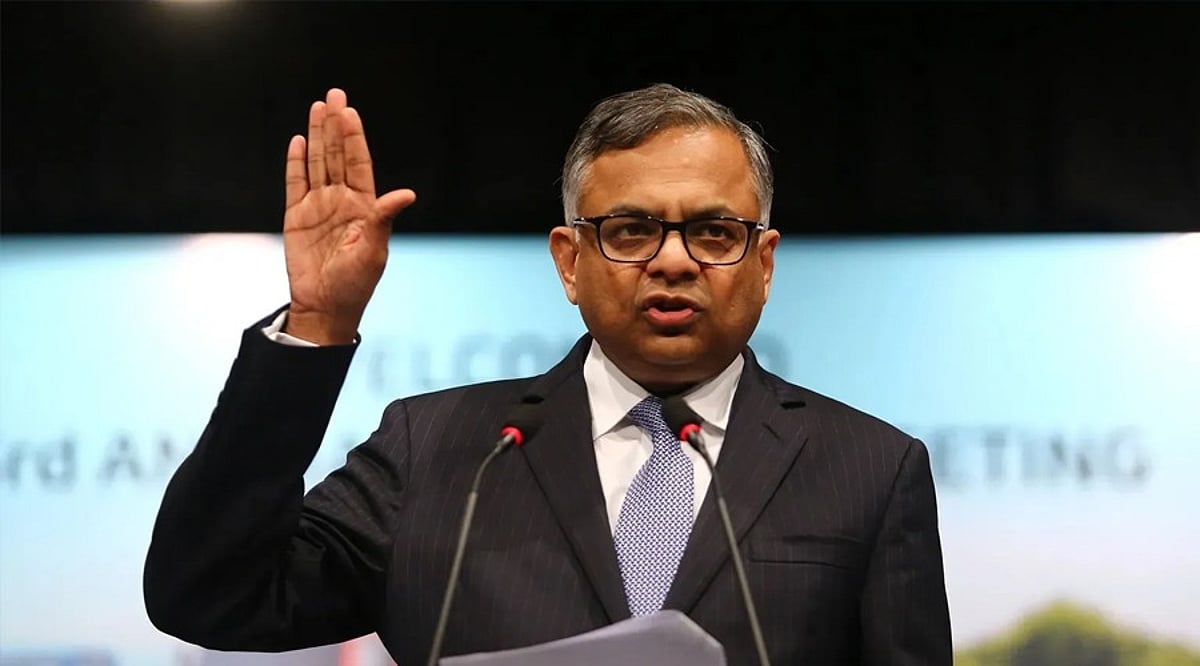
  • N Chandrasekaran Reappointed Tata Sons Chairman for Five Years in Leadership Reversal

    N Chandrasekaran Reappointed Tata Sons Chairman for Five Years in Leadership Reversal

    Tata Sons has reappointed N Chandrasekaran as chairman for a five-year term, overturning his decision to step down in August. The board approved the move on September 17 after asking Chandrasekaran to reconsider, citing the group’s broader interests during a significant corporate transition.

    Chandrasekaran, who first took the helm in 2017 following Ratan Tata, had announced on August 12 that he would not seek another term. The Nomination and Remuneration Committee later urged him to stay, highlighting his contributions and the need for continuity. He accepted, and the board confirmed the reappointment by a majority vote, effective after his current term ends on February 20, 2027.

    The leadership reversal comes as Tata Sons navigates regulatory hurdles with the Reserve Bank of India (RBI). The RBI rejected the company’s request to surrender its registration as an upper-layer nonbanking financial company, imposing enhanced compliance and potential listing obligations. Tata Sons stated it would begin compliance steps and seek guidance from stakeholders.

    The RBI dispute has deepened divisions between Tata Sons and Tata Trusts, which controls 66% of the conglomerate. Tata Trusts opposed Chandrasekaran’s reappointment and a possible public listing. Reports indicate that Noel Tata voted against the reappointment, and Tata Trusts called the decision ‘illegal’ under the company’s articles of association.

    Despite the board’s resolution, unresolved questions around succession planning, governance, and regulatory compliance continue to loom. The reappointment settles the immediate leadership question, but the broader governance challenges remain open.