Category: Architecture

  • Jeff Bezos Joins Miami’s Billionaire Bunker: A Look Inside Indian Creek’s Ultra-Luxury Enclave

    Jeff Bezos Joins Miami’s Billionaire Bunker: A Look Inside Indian Creek’s Ultra-Luxury Enclave

    Indian Creek, often called the “Billionaire Bunker,” is one of the most exclusive and secure luxury communities in the world. Now, Amazon founder Jeff Bezos has joined the ranks of its elite residents, investing hundreds of millions in waterfront properties on this private island.

    What Makes Indian Creek So Exclusive?

    • Waterfront Mansions: The island boasts sprawling estates with private docks and breathtaking views of Biscayne Bay.
    • Elite Residents: Home to celebrities, billionaires, hedge fund managers, and business moguls.
    • Private Security: Indian Creek has its own police department and 24/7 marine patrol, ensuring unmatched privacy and safety.
    • Golf Course: Residents have access to an exclusive 18-hole championship golf course reserved for members.
    • Prime Location: Despite its seclusion, the island is just minutes from South Beach and downtown Miami.
    • Real Estate Value: Property prices regularly exceed tens of millions, making it one of the most expensive ZIP codes in the U.S.

    Jeff Bezos’ significant investment in multiple properties underscores the island’s appeal as a haven for the ultra-wealthy seeking privacy, luxury, and convenience.

  • 10 Cutting-Edge Construction Gadgets Set to Revolutionize Job Sites in 2026

    10 Cutting-Edge Construction Gadgets Set to Revolutionize Job Sites in 2026

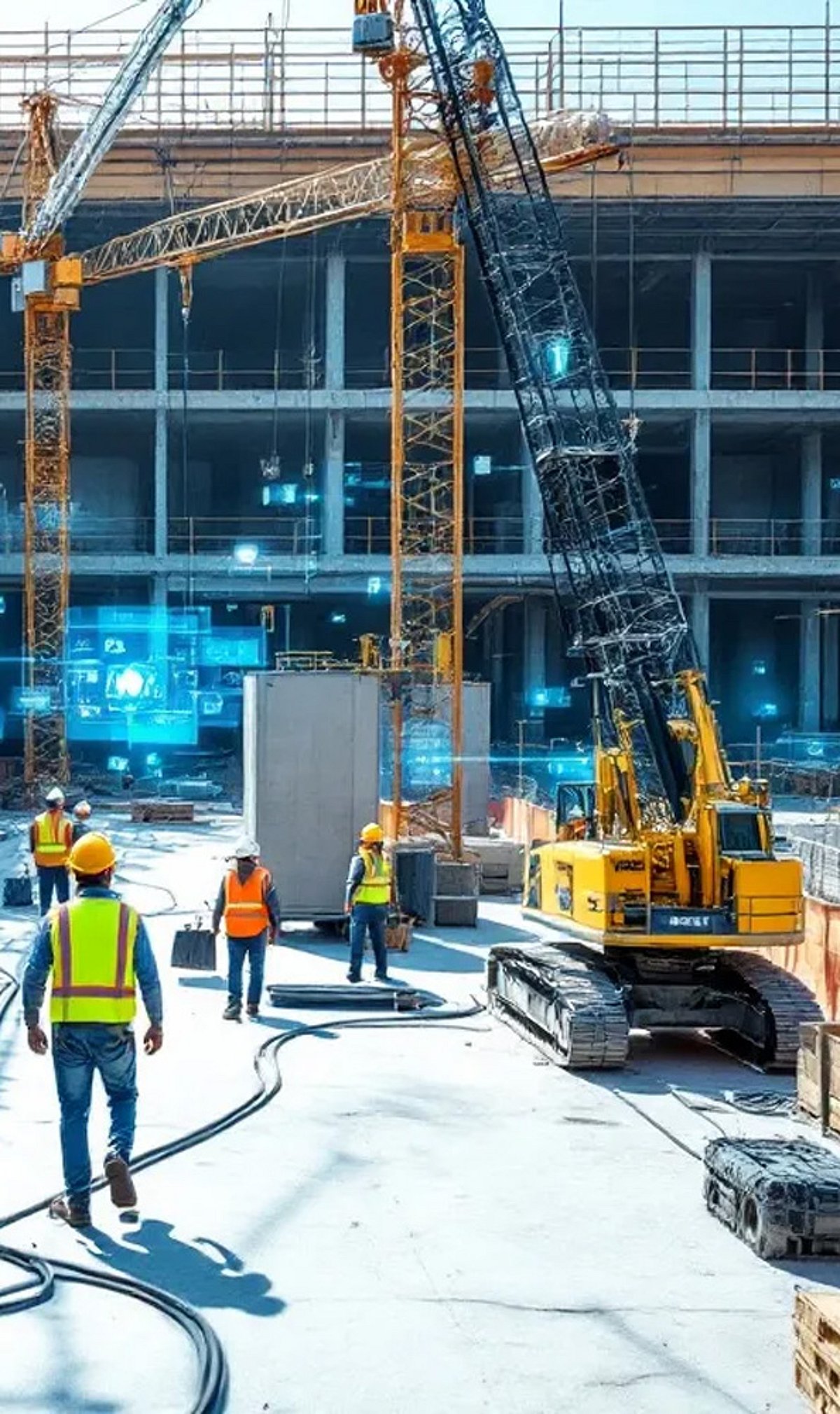
    The construction industry is embracing a wave of advanced gadgets that promise to boost safety, efficiency, and precision on job sites. From smart helmets to bricklaying robots, these innovations are transforming how projects are planned and executed. Here are the top construction site gadgets to watch in 2026.

    Smart Safety Helmets

    Equipped with sensors, cameras, and communication systems, these helmets improve worker safety by monitoring health conditions and delivering real-time hazard alerts. They provide instant feedback, helping prevent accidents before they happen.

    Autonomous Survey Drones

    Drones capture aerial site data quickly, creating accurate maps and inspecting hard-to-reach locations. They support efficient project planning with minimal manual effort, reducing time and labor costs.

    AI Laser Measuring Tools

    These tools deliver precise distance calculations instantly, reducing manual errors and accelerating layout tasks. They improve construction planning accuracy across all project phases.

    Wearable Exoskeletons

    Exoskeletons reduce worker fatigue during heavy lifting, improve posture, and minimize injury risks. They enhance productivity by supporting physically demanding construction activities comfortably.

    Robotic Bricklayers

    Automating repetitive masonry work, robotic bricklayers increase construction speed, improve consistency, and address labor shortages. They deliver high-quality building results efficiently.

    Smart Concrete Sensors

    These sensors monitor curing conditions in real time, ensuring structural integrity while reducing delays. They improve quality control and optimize project scheduling effectively.

    Portable Air Quality Monitors

    Detecting dust, pollutants, and hazardous gases, these monitors protect workers and support regulatory compliance. They maintain healthier environments throughout construction operations.

    Connected Power Tools

    Cloud-based technology tracks usage, monitors performance, prevents theft, and schedules maintenance. These tools improve equipment management seamlessly on the job site.

    Mixed Reality Smart Glasses

    Displaying digital building plans directly within workers’ vision, mixed reality glasses improve collaboration and reduce mistakes. They accelerate complex construction tasks efficiently.

  • MIT School of Architecture and Planning: Latest News, Research, and Innovations

    MIT School of Architecture and Planning: Latest News, Research, and Innovations

    The MIT School of Architecture and Planning (SA+P) is a hub for interdisciplinary research, education, and design, addressing some of the most pressing challenges in cities, technology, and society. Below are recent highlights from the school, covering breakthroughs in urban studies, augmented reality, AI ethics, climate resilience, and more.

    Jinhua Zhao Appointed Head of the Department of Urban Studies and Planning

    An expert in behavioral science and transportation, Jinhua Zhao combines these studies with AI and public policy to address urgent urban challenges. He will lead the department starting June 11, 2026.

    Augmented Reality System for Easier Medical Ultrasound Interpretation

    MIT researchers have designed an ultrasound system that creates a real-time 3D representation of the object being imaged, making it easier for clinicians to interpret scans. The breakthrough was reported on June 10, 2026.

    The Consequences of Relying on AI for Accurate News

    A Media Lab study shows that, much like GPS has weakened navigation skills, AI can reduce our ability to detect fake news. The findings were published on June 9, 2026.

    MIT SPURS Program Looks to the Future of Urban Technology and Policy

    As the international program approaches its 60th year, leaders are reshaping its curriculum to address emerging technologies and policies shaping urban planning. Announced on June 9, 2026.

    Chris Zegras Appointed Director and CEO of Singapore-MIT Alliance for Research and Technology

    The professor of mobility and urban planning will lead MIT’s research enterprise in Singapore, effective June 9, 2026.

    Innovative Projects to Deal with Extreme Heat

    Low-cost personal cooling and emissions-free air conditioning are among the ideas studied with MIT’s Climate Project seed funding, reported on June 8, 2026.

    The Crucial Human Component in Computing and AI

    The MIT Ethics of Computing Research Symposium brought together experts working on ethical and social impacts of technology, held on June 5, 2026.

    PATH Initiative to Boost AI Training and Career Opportunities

    MIT RAISE and Georgia State University announce an initiative connecting universities, community colleges, industry, and government to expand industry-aligned AI training and career pathways, dated June 4, 2026.

    Tod Machover Receives George Peabody Medal for Contributions to Music and Technology

    The George Peabody Medal, the highest honor from the Peabody Institute, was awarded to Tod Machover on June 3, 2026.

    Alejandro Aravena Urges SA+P Graduates to Lead with Kindness, Honor the Truth

    “All of us need to feel we are valuable,” said the SA+P Commencement speaker, a Chilean architect and Pritzker Prize winner, on May 29, 2026.

    Designing a Career, On and Off the Track, at MIT

    Senior Krystal Montgomery explored design courses to shape a career in web development. As a national champion in track, balancing athletics and academics was key to her success, reported on May 27, 2026.

    Bridging Real Human Movement with Digital Technology

    MIT.nano Immersion Lab collaborates with Emerson College students to advance the art of virtual production, announced on May 26, 2026.

    For more updates, visit the MIT School of Architecture and Planning news page.

  • MIT Department of Architecture: Latest News and Breakthroughs

    MIT Department of Architecture: Latest News and Breakthroughs

    MIT’s Department of Architecture remains at the forefront of design, research, and innovation. In 2026, the Institute was ranked the world’s No. 1 university by QS for the 15th consecutive year, placing first in 12 subject areas. Recent projects include low-cost personal cooling and emissions-free air conditioning as part of MIT’s Climate Project seed funding, and a speech-to-reality system that combines AI and robotics to create objects on demand.

    Architecture students are exploring new frontiers: a running shoe that adapts to the runner using granular convection, and human-machine interaction in the kitchen. The School of Architecture and Planning celebrated its Commencement with Alejandro Aravena urging graduates to lead with kindness and honor the truth. MIT also marked its first Robert R. Taylor Day with Tuskegee University, honoring the Institute’s first Black graduate.

    The Mexico City Initiative fosters cross-border collaborations to solve complex urban problems, while a new MIT course examines how buildings define regions. Graduate students like C Jacob Payne reimagine historic architecture using AI and design. John Ochsendorf was named associate dean for research, and Miho Mazereeuw’s new book explores Japan’s disaster planning in architecture.

    These stories highlight how MIT Architecture shapes the built environment and tackles global challenges through interdisciplinary work.