Category: Astronomy

  • First Telescope Guide: Smart Automation vs. Traditional Hands-On Stargazing

    First Telescope Guide: Smart Automation vs. Traditional Hands-On Stargazing

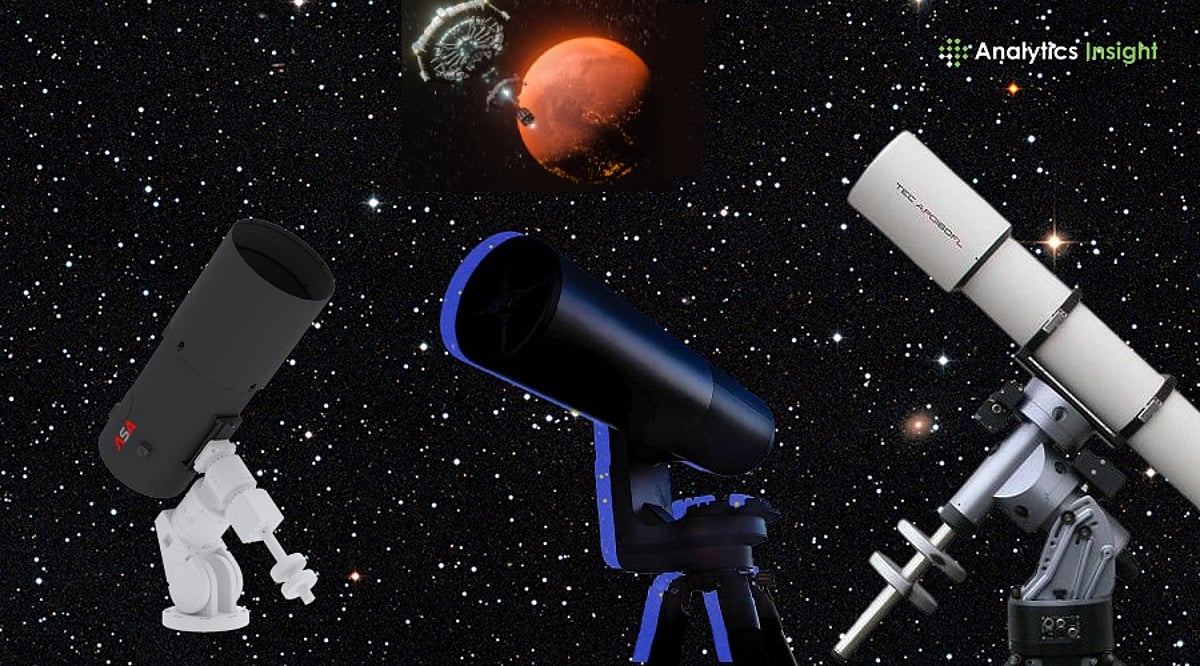
    A first telescope is less about raw specs and more about the kind of astronomy a beginner wants to practice. Smart telescopes automate target finding, tracking, and imaging through cameras, motorized mounts, and apps. Traditional telescopes keep the observer in control, teaching manual aiming, focusing, and sky navigation. Both can reveal the night sky, but they ask for different levels of effort and build different skills.

    How smart telescopes change the beginner experience

    Finding a target is often the hardest part of stargazing. Smart telescopes combine optics, a camera, a motorized mount, and companion software to locate and follow objects automatically. Many models show the view on a screen instead of an eyepiece, and some stack multiple exposures to bring out detail in faint objects. The result is a shorter path from setup to a first image, especially for beginners who want astrophotography without a steep manual learning curve.

    What traditional telescopes teach

    A manual refractor or reflector puts the beginner at the controls. The observer aims the tube, adjusts focus, and uses a finder or star chart to locate targets. The payoff is a direct eyepiece view rather than a processed screen image. Basic operation is easy to learn, but tracking down faint galaxies, nebulae, and star clusters takes practice. That practice builds real skill in sky navigation, optics, and visual observation.

    Skills develop differently

    Traditional telescopes train users to focus, track by hand, choose eyepieces, and read the night sky. Smart telescopes shift the learning toward framing shots, managing captures, using software, and understanding basic astrophotography. Neither path is skill-free; they simply develop different abilities.

    Compare the full cost, not just the price tag

    Entry-level models exist in both categories, but the sticker price is only part of the story. A traditional telescope can start simply and become more expensive as the observer adds eyepieces, filters, a sturdier mount, or a camera. A smart telescope often bundles more hardware and software at purchase, though upgrades may be tied to one manufacturer’s accessories and software ecosystem. Because prices change often, checking current listings before buying is worthwhile.

    Light pollution affects each setup differently

    Smart telescopes can stack exposures to reveal more detail in faint objects under bright city skies, but they do not erase light pollution. With a traditional telescope, the eye receives the view directly, so light pollution has a stronger impact on how much of a dim target is visible.

    Match the telescope to the target

    Target Smart telescope Traditional telescope
    Moon Captures surface detail on a screen Offers a direct eyepiece view
    Planets Can image planets, though methods differ from deep-sky work Delivers a strong visual reward through the eyepiece
    Nebulae and galaxies Strong fit because cameras gather faint light over time Visible, but faint targets demand dark skies and practice
    Star clusters Works well with automated capture Works well depending on aperture and sky conditions

    How a beginner should decide

    Choose a smart telescope if the goal is capturing deep-sky images with minimal setup and automated help. Choose a traditional telescope if the goal is learning manual observing, optics, and sky navigation. Trying both through a local astronomy club, observatory, or dealer can clarify which experience fits before spending money.

    Final takeaway

    Automation and manual observing are converging as telescope technology improves, and future models will likely borrow features from both sides. A beginner who understands what each system demands today can choose with confidence and adapt later as their interest in astronomy grows.

    Frequently asked questions

    Are smart telescopes good for beginners?

    Yes. They simplify target finding, tracking, and image capture, making them a good fit for beginners who want automated observation and astrophotography.

    Are traditional telescopes harder to use?

    They usually require more manual work. Beginners may need to learn target finding, focusing, and tracking, but those steps build practical observing skills.

    Are smart telescopes better for galaxies and nebulae?

    They are designed around imaging, so they can stack exposures to reveal more detail from faint deep-sky objects. Traditional scopes can show these objects too, but faint targets are more demanding visually.

    Can traditional telescopes be used for astrophotography?

    Yes. They can be paired with cameras and suitable mounts, though additional equipment may be needed depending on the type of imaging.

    Should a beginner choose smart or traditional?

    It depends on the desired experience. Smart telescopes suit automated imaging and easier setup; traditional telescopes suit hands-on control and visual astronomy.
  • Exploring the Universe: The Most Powerful Space Telescopes of Our Time

    Exploring the Universe: The Most Powerful Space Telescopes of Our Time

    The James Webb Space Telescope is revolutionizing astronomy with its advanced infrared imaging capabilities. It allows scientists to observe distant galaxies, analyze exoplanet atmospheres, and peer into some of the universe’s earliest cosmic structures ever discovered.

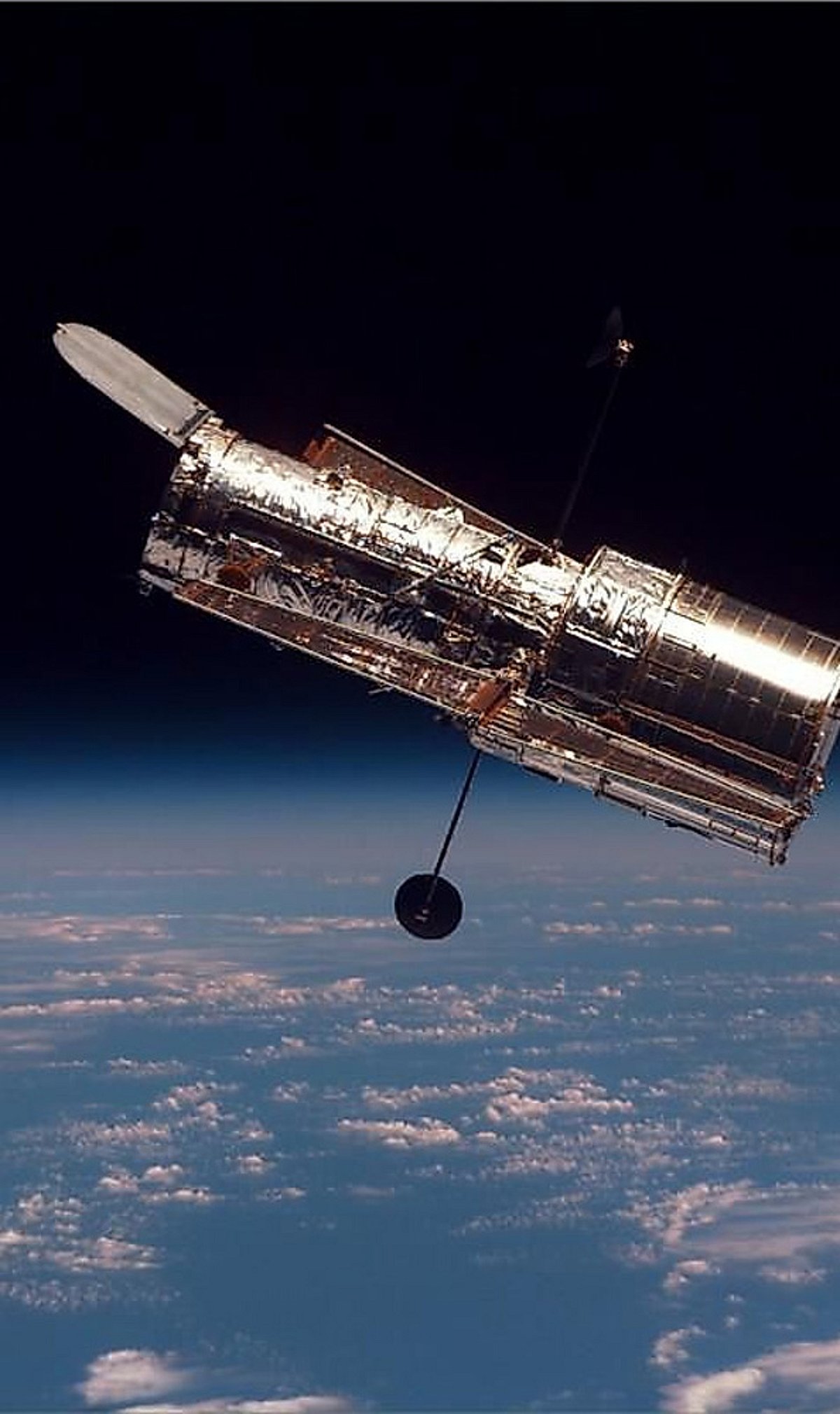
    The Hubble Space Telescope continues to deliver iconic deep-space images while contributing decades of groundbreaking discoveries across astronomy, cosmology, and planetary science research worldwide.

    The Nancy Grace Roman Space Telescope is designed to survey vast cosmic regions, helping scientists investigate dark energy, exoplanets, and galaxy formation with unprecedented observational capabilities.

    The Euclid Space Telescope maps billions of galaxies to improve our understanding of dark matter, dark energy, and the large-scale structure of the expanding universe.

    The SPHEREx Space Telescope conducts an all-sky infrared survey, studying galaxy evolution, cosmic origins, and the molecular ingredients essential for planetary system formation.

    The Chandra X-ray Observatory observes high-energy cosmic events including black holes, neutron stars, and supernova remnants through powerful X-ray detection capabilities.

    The XMM-Newton Observatory studies energetic astronomical phenomena using sensitive X-ray instruments that help scientists understand galaxy clusters and extreme cosmic environments.

    The CHEOPS Space Telescope focuses on known exoplanets, measuring their sizes accurately to improve understanding of planetary composition and habitability across nearby star systems.

    The PLATO Space Telescope searches for Earth-like exoplanets around Sun-like stars while studying stellar evolution through long-term, highly precise brightness observations.

  • Astounding Black Hole Facts That Seem Too Bizarre to Be True

    Astounding Black Hole Facts That Seem Too Bizarre to Be True

    Black holes are among the most enigmatic entities in the cosmos, defying our conventional understanding of space, time, and gravity. Ongoing scientific research continues to unveil astonishing revelations about these gravitational behemoths, many of which read like science fiction yet are grounded in rigorous observation and theory.

    Not Even Light Can Escape

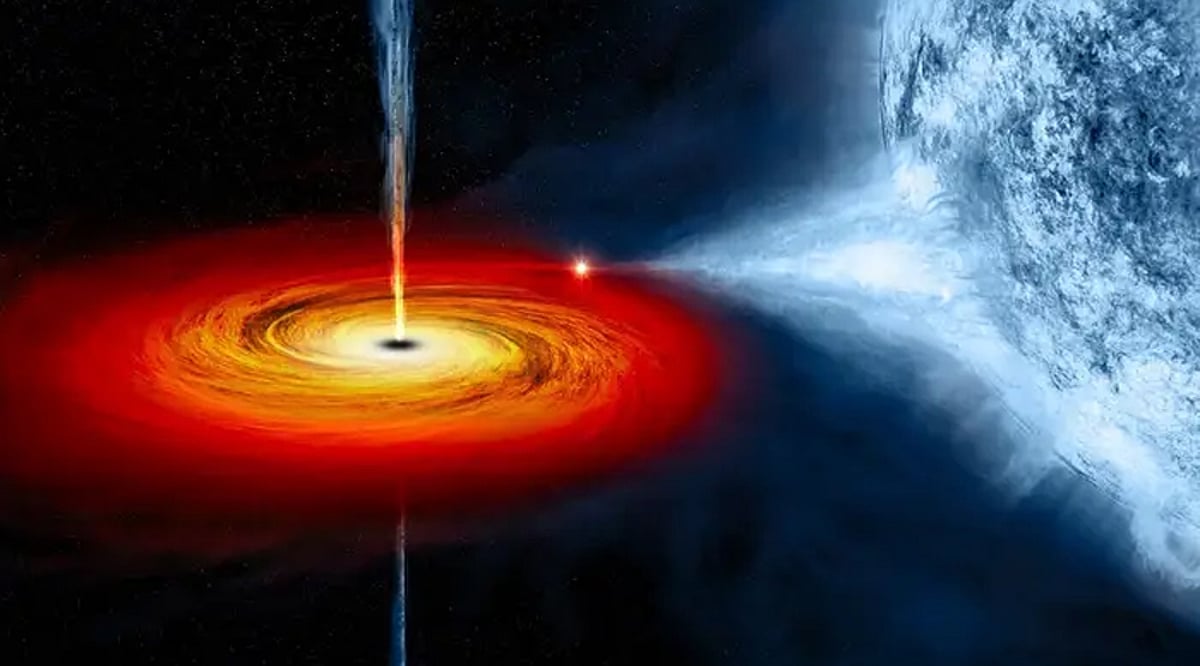
    A black hole’s gravitational pull is so immense that once anything crosses the event horizon—the point of no return—it can never escape. Even light, the universe’s fastest traveler, becomes permanently trapped. This inherent invisibility means black holes cannot be observed directly. Instead, astronomers detect them by analyzing the telltale effects on surrounding stars, gas clouds, and light patterns distorted by the black hole’s extreme gravity.

    Time Slows Down Near a Black Hole

    Einstein’s theory of general relativity predicts that time dilates in strong gravitational fields. For an observer close to a black hole, time passes much more slowly compared to someone far away. If a person were to venture near a black hole and return, they might find that decades or even centuries have elapsed on Earth—a phenomenon famously explored in the film Interstellar.

    Supermassive Black Holes Lurk at Galactic Centers

    Nearly every large galaxy, including our own Milky Way, harbors a supermassive black hole at its core. These colossal objects can weigh billions of times more than our Sun. Their gravitational influence shapes the orbits of nearby stars and is thought to play a pivotal role in galaxy formation and evolution.

    Black Holes Can Produce Powerful Jets

    Paradoxically, while black holes devour matter, they can also launch colossal jets of high-energy particles. These jets are propelled outward from the region around the black hole at speeds approaching that of light. Some extend across thousands of light-years and are detectable with advanced telescopes, offering insights into the energetic processes at work.

    Black Holes Can Slowly Evaporate

    According to Stephen Hawking’s theory of Hawking radiation, black holes are not eternal. Over unimaginably long timescales, they gradually lose mass and energy, eventually evaporating completely. This process is extraordinarily slow—a black hole with the mass of our Sun would take about 10^67 years to disappear, dwarfing the current age of the universe.

    You Would Be Stretched Like Spaghetti

    The extreme tidal forces near a black hole would subject any infalling object to a dramatic stretching effect known as spaghettification. The gravitational pull on your feet would be far stronger than on your head, causing your body to elongate and thin out as you approach the singularity. This grim fate underscores the violent nature of these cosmic objects.

    We Have Actually Seen One

    In 2019, the Event Horizon Telescope collaboration released the first-ever direct image of a black hole’s shadow, capturing the supermassive black hole at the center of galaxy M87. This historic achievement confirmed decades of theoretical predictions. Then, in 2022, scientists unveiled an image of Sagittarius A*, the black hole at the heart of our Milky Way, marking yet another milestone in observational astronomy.

  • Best Smart Telescopes of 2026: Top 7 Robotic Models for Astrophotography and Space Observation

    Best Smart Telescopes of 2026: Top 7 Robotic Models for Astrophotography and Space Observation

    Overview

    Smart telescopes now handle alignment, tracking, and image stacking automatically, allowing anyone to capture deep-sky photos within minutes of setup. Prices range from around $349 for compact beginner models to nearly $4,000 for observatory-grade astrophotography rigs. The right choice depends on your budget, travel habits, and whether you prioritize wide-aperture power or maximum portability.

    These telescopes have made astronomy more accessible than ever. Open an app, select a galaxy, nebula, or planet, and the telescope does the rest—lining up, tracking, focusing, and constructing a detailed image in just a few minutes. With improved sensors, object recognition, and automatic image stacking, today’s smart telescopes are more capable than ever before.

    To compile this list of the seven best smart telescopes for 2026, we evaluated optical performance, automation, portability, ease of use, price, and overall value.

    Comparison Table

    Prices shift often across retailers and sale events. Check the retailer link for current pricing before buying.

    1. ZWO Seestar S30 — Best for First-Time Buyers

    The Seestar S30 is one of the best entry-level smart telescopes. It fits in a small bag, sets up in minutes, and its wide-angle lens works for both daytime and night sky shots. Image quality trails larger models, but for beginners testing the hobby, it removes nearly every barrier to entry.

    2. ZWO Seestar S30 Pro — Best Budget Upgrade

    The S30 Pro adds a second wide-angle camera and an upgraded IMX585 sensor, delivering noticeably cleaner deep-sky images than the standard S30. It keeps the same compact body and simple app control, making it a strong pick for buyers who want better photos without jumping to premium pricing.

    3. Dwarflab Dwarf 3 — Best for Travel

    Dwarf 3 packs a 35mm aperture and a wide field of view into a body that fits in a jacket pocket. It handles both landscape and deep-sky imaging, and its EQ mode improves tracking accuracy for longer exposures. Frequent travelers get the most value here.

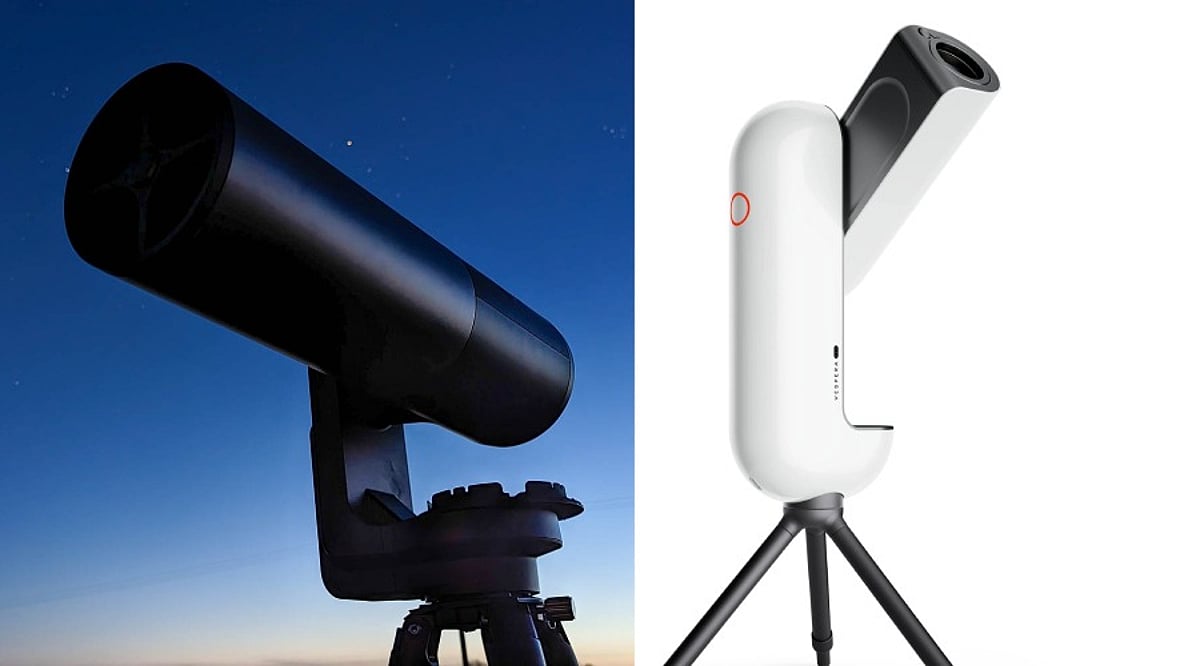
    4. Vaonis Vespera II — Best Mid-Range Value

    The Vespera II brings a sharper 8.3-megapixel sensor and a signature Mosaic mode that stitches multiple frames into wide, detailed images of large targets like the Andromeda Galaxy. It costs more than budget models, but the jump in image quality and field of view justifies the price for serious hobbyists.

    5. Unistellar eQuinox 2 — Best Aperture for the Price

    At 114mm, the eQuinox 2 gathers far more light than any model below it, pulling in fainter, more detailed deep-sky targets. It skips the eyepiece found on other Unistellar models, keeping the price down while delivering strong optical performance. It also connects owners to a citizen science network for real research contributions.

    6. Vaonis Vespera Pro — Best Resolution

    The Vespera Pro carries a 12.5-megapixel sensor—the highest resolution on this list—paired with an 11-hour battery that covers a full night of imaging without a recharge. Buyers who want the sharpest possible images from a portable smart telescope will find the price justified.

    7. Celestron Origin Mark II — Best for Astrophotography Quality

    The Celestron Origin pairs a 152mm RASA astrograph with a fast f/2.2 focal ratio and an 8.4-megapixel Sony Starvis 2 sensor, capturing detailed shots of galaxies and nebulae without long exposure times. It is the most expensive telescope in this lineup, making it ideal for enthusiasts serious about advanced astrophotography rather than casual stargazers.

    What to Look for Before Buying a Smart Telescope

    Picking the right smart telescope comes down to a handful of practical considerations. Aperture matters most, as it determines how much light reaches the sensor—turning a dim galaxy from an invisible smudge into a recognizable photo. Many modern models also include AI-powered features such as automatic object recognition, making galaxies, nebulae, and star clusters easier to locate and photograph.

    Portability and battery life matter equally in practice, since they affect where you can set up and how long a session can last. Beyond hardware, reliable tracking, quick image stacking, and an intuitive app all contribute to a smoother night outside and sharper photos at the end.

    Final Thoughts

    There is no single best smart telescope. The right choice depends on budget, experience, and what you actually want to observe. Beginners or budget-conscious buyers will likely be happiest with the ZWO Seestar S30 or S30 Pro. Those wanting a light, grab-and-go option should check out the Dwarflab Dwarf 3. The Unistellar eQuinox 2 offers a larger aperture and the bonus of contributing to real citizen science projects. For serious astrophotographers, the Vaonis Vespera Pro or Celestron Origin will handle heavier lifting. Ultimately, the best telescope matches how you plan to use it.

    Frequently Asked Questions

    What is a smart telescope?

    A smart telescope is an automated telescope that uses motors, sensors, and software to align, track, focus, and capture images of celestial objects through a smartphone app.

    Which is the best smart telescope for beginners in 2026?

    The ZWO Seestar S30 is one of the best smart telescopes for beginners in 2026 due to its affordability, portability, easy setup, and minimal manual adjustment requirement.

    Can smart telescopes capture galaxies and nebulae?

    Yes. Most smart telescopes use automatic tracking and image stacking to photograph galaxies, nebulae, and star clusters. Higher-end models generally produce better detail and low-light performance.

    Are smart telescopes good for astrophotography?

    Yes. Smart telescopes are designed for astrophotography by combining automated tracking, image processing, and smartphone control. Premium models offer larger apertures and higher-resolution sensors for more detailed deep-sky images.

    What should be considered before buying a smart telescope?

    Key factors include aperture, sensor quality, tracking accuracy, portability, battery life, software experience, and overall value. Choosing the right model depends on your budget, observing goals, and intended use.

  • Satellite Congestion Threatens Ground-Based Astronomy: A Growing Challenge for Telescopes

    Satellite Congestion Threatens Ground-Based Astronomy: A Growing Challenge for Telescopes

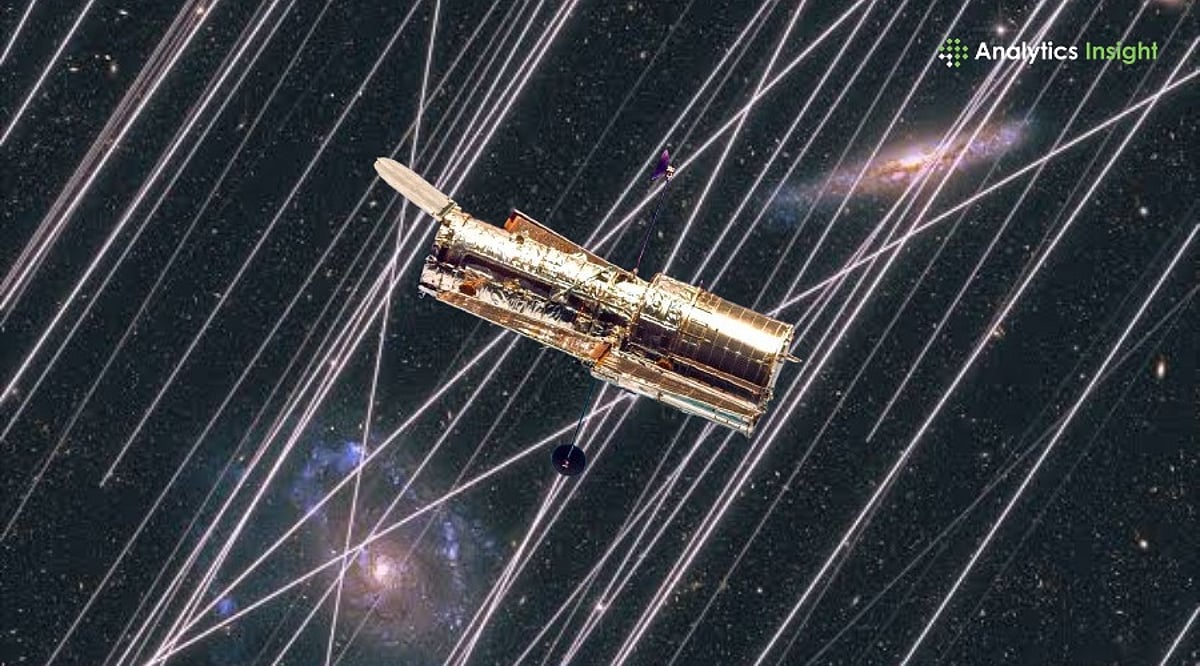
    The night sky, once a pristine canvas of stars and galaxies, is increasingly crisscrossed by artificial satellites. Thousands of these spacecraft now orbit Earth daily, providing essential services like global internet, communication, and navigation. However, this rapid proliferation is creating a significant problem for astronomers: satellite crowding is blinding telescopes and threatening our ability to explore the universe.

    While satellites have revolutionized modern life—enabling faster internet, precise GPS, weather monitoring, and emergency communications—their growing numbers come with a cost. Every satellite reflects sunlight, leaving bright streaks across telescope images. These streaks can obscure faint celestial objects, corrupting valuable data and making astronomical observations slower, more difficult, and more expensive.

    Radio telescopes face an additional challenge: satellites emit radio signals that interfere with the weak cosmic signals scientists are trying to detect. This interference can render observations useless, especially for projects studying distant galaxies, exoplanets, and the early universe.

    The problem is accelerating. Lower launch costs and the demand for global connectivity have spurred companies and governments to deploy massive satellite constellations. Without careful planning, the number of satellites in orbit could exceed 100,000, a threshold that some experts warn could make ground-based astronomy nearly impossible.

    Scientists are not opposed to satellite technology, but they advocate for a balance. Proposed solutions include using darker materials on satellites to reduce reflectivity, better coordination between satellite operators and observatories to avoid imaging conflicts, and responsible space policies that prioritize both technological progress and scientific discovery.

    The night sky belongs to everyone. Protecting it for future generations requires immediate action. By adopting smarter satellite designs, fostering collaboration, and implementing thoughtful regulations, we can preserve our ability to study the cosmos while still reaping the benefits of satellite technology.

    Key Takeaways

    • Satellite crowding creates bright streaks and radio interference that disrupt astronomical observations.
    • Modern telescopes, designed to study faint objects, are particularly vulnerable to these disruptions.
    • Proposed solutions include darker satellite materials, improved coordination, and responsible space policies.
    • Balancing technological growth with astronomical research is essential for future discoveries.
  • Top Telescopes for Stargazers: Best Picks for Beginners and Experts in 2026

    Top Telescopes for Stargazers: Best Picks for Beginners and Experts in 2026

    Looking up at the night sky is exciting, but seeing it through a telescope is a completely different experience. The Moon suddenly shows its craters, bright planets become easier to spot, and stars look far more beautiful than they do with the naked eye. Whether you are buying your first telescope or looking for a better one, choosing the right model makes all the difference.

    A good telescope helps you enjoy the Moon, planets, and stars in much greater detail. Beginners should choose simple models, while experienced users benefit from larger and more powerful telescopes. The best telescope depends on your experience, budget, and what you want to observe.

    The first time you look through a telescope, it feels like you are seeing the sky all over again. The Moon no longer looks like a bright circle. You can spot its craters and rough surface. On a clear night, even planets become easier to identify. That’s why picking the right telescope is important.

    Not every telescope is made for everyone. If you’re just getting started, a simple model is usually the better choice, but if you’re a professional who works in astronomical fields, a larger telescope that collects more light and shows finer details will be better.

    To help you choose, we compared some of the most popular telescopes available in 2026. We looked at their features, prices, and how well they suit different users.

    Best Telescopes for Beginners

    Let’s begin the list with the beginner-friendly telescope models that are easy to set up and offer users an out-of-this-world experience. These beginner-friendly models don’t take much time to set up. They are easy to carry and work well for watching the Moon, bright stars, and nearby planets. If you’re buying your first telescope, any of these can be a good place to start.

    Best Telescopes for Professionals

    The next list is for those who work in the field and want a better quality telescope for detailed analysis of everything they see in the sky. Larger telescopes collect more light, which makes distant objects appear brighter and clearer. They also let you enjoy better views of planets, star clusters, and other objects in the night sky. While these models take a little more effort to set up, the viewing experience is worth it.

    Which Telescopes Would I Recommend?

    Even after making the list short, it’s still hard to make a choice. Well, if I have to recommend models based on my testing, I would first recommend the Sounce 40X60 HD Monocular. This one is for the beginners but offers the right balance between price and performance. The model is easy to assemble and simple to use. The best part involves the clarity it offers. I think most beginners will enjoy using it from day one.

    My second choice would surely be the Pie Matrix Phoenix 60700 Refractor Telescope. I have found it to be one of the finest choices when I want to explore the night sky for longer. The larger aperture lets in more light, so planets and star clusters look brighter and more detailed. In my opinion, it will offer users room to learn and improve over time.

    The third telescope I’d recommend is the Sounce 70mm Astronomical & Sky Refractor Telescope. It sits comfortably between beginner and advanced models. It offers better image quality than basic telescopes without becoming too difficult to handle. For someone ready to move beyond a starter model, this is a solid choice.

    Final Thoughts

    A telescope is more than just another gadget. It gives you a chance to enjoy a cosmic view that many people miss. From watching the Moon on a quiet evening to spotting bright planets with family or friends, every session brings something new.

    The best choice depends on what matches your expectations and how you plan to use it. If you’re taking your first step into astronomy, keep things simple and learn as you go. If you’ve been exploring the night sky for a while, investing in a more capable telescope can open up many more sights to enjoy. No matter which one you choose, a clear night and a little curiosity are all you need to begin your journey across the stars.

    FAQs

    1. Which telescope is best for beginners?
    Ans: The Zhizuka ZH400 is one of the best options for beginners. It is simple to set up, easy to use, and offers clear views of the Moon and other bright objects.

    2. What aperture is good for a beginner’s telescope?
    Ans: A telescope with a 50mm to 70mm aperture is a good starting point. It gathers enough light for viewing the Moon, planets, and some bright stars.

    3. Can I use a telescope during the day?
    Ans: Yes. Many refractor telescopes can also be used to observe mountains, birds, and distant landscapes, making them useful beyond night-time stargazing.

    4. Does higher magnification always mean a better telescope?
    Ans: No. Good image quality depends more on the telescope’s aperture and lens quality. A clear image at lower magnification is often better than a blurry high-zoom view.

    5. Which telescope offers the best overall value?
    Ans: The Pie Matrix Pegasus 76700 is an excellent choice for experienced users, while the Zhizuka ZH400 offers great value for beginners who are just starting their astronomy journey.

  • Exploring the Extremes: MIT’s Recent Discoveries on Black Holes

    Exploring the Extremes: MIT’s Recent Discoveries on Black Holes

    MIT researchers continue to push the boundaries of black hole astrophysics, unveiling new insights into these cosmic enigmas. From the earliest flickering quasars to the echoes of gravitational waves, recent studies from MIT News highlight the relentless pursuit of understanding the most extreme objects in the universe.

    • Listening for the echoes of black holes – By analyzing X-ray reverberations, Erin Kara seeks to understand black holes’ extreme environments. (June 26, 2026)
    • MIT astronomers discover the earliest known flickering quasar – A voracious black hole was already surprisingly mature when the universe was just 850 million years old. (June 8, 2026)
    • The Haystack 37m Telescope: A new era of astrophysical research – The legendary radio astronomy telescope returns to its science and educational mission. (May 19, 2026)
    • A new way to spot signs of dark matter – Gravitational waves from colliding black holes may bear imprints of dark matter, detectable with a new model. (May 12, 2026)
    • Two physicists and a curious host walk into a studio… – MIT LIGO researchers discuss discovery science and planetary defense on GBH’s The Curiosity Desk. (March 31, 2026)
    • New catalog more than doubles the number of gravitational-wave detections – The latest crop includes heavy, fast-spinning, and lopsided colliding black holes. (March 5, 2026)
    • Could a primordial black hole’s last burst explain a mysteriously energetic neutrino? – A record-setting neutrino might be the first evidence of elusive Hawking radiation. (September 18, 2025)
    • Ten years later, LIGO is a black-hole hunting machine – LIGO, Virgo, and KAGRA verify Stephen Hawking’s black hole area theorem. (September 10, 2025)
    • Professor Emeritus Rainer Weiss dies at 92 – Weiss shared a Nobel Prize for developing LIGO and detecting gravitational waves. (August 26, 2025)
    • Astronomers discover star-shredding black holes hiding in dusty galaxies – These dormant black holes wake briefly to feast on a passing star. (July 24, 2025)
    • Viewing the universe through ripples in space – Physicist Salvatore Vitale searches for new gravitational wave sources. (February 18, 2025)
    • Study reveals the Phoenix galaxy cluster in extreme cooling – Webb Telescope observations explain the cluster’s mysterious starburst. (February 13, 2025)
    • Eleven MIT faculty receive Presidential Early Career Awards – Faculty and alumni recognized for outstanding leadership. (February 3, 2025)
    • Rare and mysterious cosmic explosion: Gamma-ray burst or jetted tidal disruption event? – Characterizing the peculiar Einstein Probe transient EP240408a. (January 29, 2025)
    • X-ray flashes from a nearby supermassive black hole accelerate mysteriously – The source could be the core of a dead star teetering at the black hole’s edge. (January 13, 2025)

    These findings represent just a glimpse of MIT’s ongoing contributions to black hole research. For the full stories, visit the MIT News Black Holes topic page.