Category: Brain and Cognitive Sciences

  • Elon Musk Says Neuralink Brain-Chip Demo Could Lead to ‘Jesus-Level’ Medical Breakthroughs

    Elon Musk Says Neuralink Brain-Chip Demo Could Lead to ‘Jesus-Level’ Medical Breakthroughs

    Elon Musk has once again put Neuralink in the spotlight, reacting to a new demonstration of the company’s brain-computer interface (BCI) technology. In a post on X, Musk called the latest development a “wonderful surprise” and hinted at the potential for future medical miracles.

    The demonstration involved a clinical-trial participant who had lost the ability to speak. Neuralink’s implanted system recorded the participant’s brain activity and translated intended speech into audible words through a computer-generated voice, allowing the individual to communicate a personal message to a partner.

    Musk has previously described Neuralink’s long-term potential in ambitious terms, using the phrase “Jesus-level miracles” to describe possibilities such as restoring movement for paralyzed individuals and restoring sight for the blind. These remain future aspirations, not yet established clinical outcomes.

    Experts caution that while the demonstration is promising, it does not prove the system can reliably restore neurological functions across a broader patient population. Meanwhile, other research groups, including a UCSF-led team, are advancing similar brain-controlled communication systems that can decode speech and gestures simultaneously.

    Neuralink’s progress adds to the growing evidence that implanted BCIs could one day help people who have lost conventional communication abilities. The technology is still under investigation, but each step brings the vision of restoring lost neurological functions closer to reality.

  • Temple Wearable by Deepinder Goyal Shows Strong Brain Blood Flow Correlation in Early Study

    Temple Wearable by Deepinder Goyal Shows Strong Brain Blood Flow Correlation in Early Study

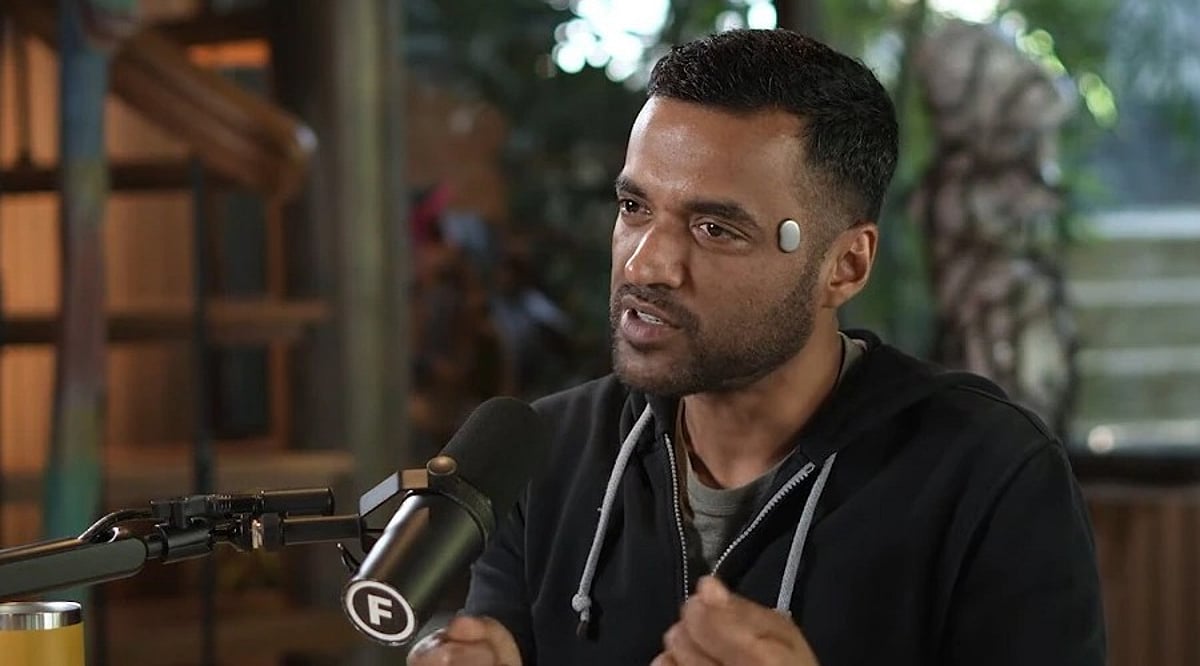
    Deepinder Goyal’s Temple wearable has released its first brain flow study, revealing promising results in tracking cerebral blood flow changes. The preprint, published on medRxiv on September 4, 2026, tested 23 healthy adults in Meerut and compared Temple’s Brain Flow index with Transcranial Doppler (TCD) during exercise and posture changes.

    Researchers found that Temple closely followed middle cerebral artery blood velocity in both tests. Median within-person correlations reached 0.795 during cycling and 0.799 during postural changes, indicating a strong relationship between the wearable’s readings and actual cerebral blood dynamics.

    The Temple device uses an optical sensor placed near the temple to generate its proprietary Brain Flow index, analyzing optical signals from tissue near the skin surface. In contrast, TCD measures blood velocity inside the middle cerebral artery using ultrasound.

    An important finding suggests the signal is not simply a reflection of heart rate. During the posture test, heart rate decreased while middle cerebral artery blood velocity increased, yet Temple’s Brain Flow index followed the cerebral blood velocity pattern during the same transition.

    Despite these promising results, several limitations prevent the Temple wearable from being considered a proven brain monitoring device. The study used normalized relative signals rather than absolute blood flow measurements. Optical readings near the temple can also capture signals from the scalp and other superficial blood vessels. The study involved a small group of young, healthy adults and remains a preprint without peer review. Temple Pvt Ltd funded the research, though authors reported no competing interests.

    Goyal called the study ‘the first step’ while sharing the findings on X. The next stage will require independent studies that separate scalp circulation from brain circulation. Larger and more diverse trials could determine whether Temple’s Brain Flow index reflects genuine cerebral activity.

  • Top 5 Brain-Training Games for Adults: Boost Memory and Cognitive Skills

    Top 5 Brain-Training Games for Adults: Boost Memory and Cognitive Skills

    Keeping the brain active is just as important as maintaining physical fitness. Whether you’re looking to sharpen memory, improve problem-solving skills, or simply keep your mind engaged, learning games can provide an enjoyable way to exercise your brain. Modern cognitive games combine science-backed challenges with interactive gameplay, making learning feel less like studying and more like entertainment.

    Why Brain Training Games Matter

    Brain activity is significant in ensuring good cognitive health throughout one’s lifetime. Although playing any specific game does not promise higher intelligence and protection against cognitive decline, studies indicate that activities such as memorizing, focusing attention, and solving problems enhance mental sharpness and learning effectiveness. Learning games also encourage consistent practice through short, engaging sessions that fit into busy schedules. Many platforms now personalize exercises based on individual performance, making them suitable for beginners and experienced learners alike.

    Learning Games as Part of a Healthy Lifestyle

    Games that promote learning have proven to be most effective when included in an overall lifestyle of ongoing learning and good brain health. Combining a daily exercise for your brain with activities like reading, playing puzzles, learning a new language or musical instrument, or even meditating will help improve your brain functions. Regularity is key rather than lengthy intervals, even 15 minutes a day counts.

    Best Learning Games for Adults at a Glance

    • Lumosity – Personalized exercises targeting memory, attention, and mental flexibility.
    • Elevate – Focuses on communication and practical skills like writing and listening.
    • Peak – Offers a variety of brain-training challenges with adaptive difficulty.
    • Duolingo – Gamified language learning that strengthens memory and cognitive flexibility.
    • Chess.com – Strategic thinking and problem-solving through classic chess gameplay.

    How to Get the Most Out of Learning Games

    Brain training apps yield maximum results when applied on a consistent basis rather than with great intensity. Working out from 15 to 20 minutes a day is usually more beneficial than working out occasionally in marathon sessions. Applying various kinds of games, including memory, languages, and strategic games, enables exercising various cognitive functions rather than repeating the practice of one and the same function. Equally important is the necessity of brain training by means of good sleep, exercise, healthy nutrition, and constant learning. Reading books, learning new skills for work, and communicating with people make up for the lack of learning through digital games.

    Choosing the Right Learning Game

    Choosing the right learning game depends on your objectives. For those seeking well-structured exercises for the brain, Lumosity and Peak can be considered good choices. People who are keen on improving their communicative and other practical skills will find the application Elevate to be more useful. For people who would like to learn a foreign language, Duolingo is recommended. Finally, those who want to think strategically will find it more suitable to use Chess.com. To know which application motivates you better, try its free version first before paying for the premium version.

    Are Premium Versions Worth It?

    The majority of learning games have free versions which are adequate for those who do not intend to use them on a regular basis, whereas the paid ones allow access to extra workouts, progress monitoring, and tailored training programs. Should you decide to use the program on a regular basis, you can choose to pay in order to enjoy added options and flexibility.

    Final Thoughts

    From simple puzzles to adaptive learning and personalized challenges, games for learning have advanced significantly since the days of puzzle games. Modern games use the principles of gaming in order to help adults develop their memory, concentration, logic, communication, and problem-solving abilities. However, despite the benefits, learning games should not take the place of practical experience in everyday learning. If you aim at improving your productivity on the job, learning a language, or just want to train your brain, consider including some brain training games into your daily schedule.

  • How Khalil Ismail’s ‘Technical Philosopher’ Role Is Shaping the Future of Mind Computing

    How Khalil Ismail’s ‘Technical Philosopher’ Role Is Shaping the Future of Mind Computing

    By Arundhati Kumar

    At Voyage, the founder of the Maison for Mind Computing is building a technical house where engineering, taste, neuroscience, and philosophy belong in the same room.

    Most technology companies know what to do with an engineer. They know what to do with a researcher, a designer, a product manager, or a strategist. The categories are familiar, clean, and useful enough for software, hardware, and much of artificial intelligence. Khalil Ismail thinks mind computing needs a different kind of person.

    At Voyage, the Maison for Mind Computing he founded, that person is called a Technical Philosopher. The title is not decorative. It is Ismail’s answer to a problem he believes has slowed the brain-computer interface field for years: too many people are solving narrow pieces of a challenge that, by its nature, refuses to stay narrow.

    “You cannot build for the mind with only one lens,” Ismail says. “The signal matters, but so does meaning. The object matters, but so does the judgment behind it. The intelligence matters, but so does the person using it.”

    Voyage is launching publicly around a category Ismail calls Mind Computing, with a long-term focus on non-invasive neural interfaces built for real-world use. The product itself is not being publicly launched yet. They are introducing the company’s identity, philosophy, and internal structure: a technology this intimate requires a company culture built to hold science, craft, ethics, and taste at the same time.

    That is why he calls Voyage a Maison. In tech, the word may sound unusual at first. Ismail uses it to describe a technical house, one built around frontier engineering, careful form, philosophical depth, and cultural judgment. His view is that neural interfaces will not become part of ordinary life because they are hidden inside existing objects or made slightly less awkward. The field needs a different operating system before it can build a different interface.

    “The Maison is how we organize the work,” he says. “It means the cultural questions are not added after the engineering. They are inside the engineering brief.”

    That thinking comes from Ismail’s own formation. Imperial College London gave him engineering discipline. The Royal College of Art sharpened his relationship to form, craft, and material expression. Apple, Microsoft, Snap Inc., MIT Media Lab, Harvard, and Oxford each exposed a different part of the same problem: intelligent systems were advancing, but the human interface was still being treated too narrowly.

    The point, for him, is not the prestige of the path. It is the collision between those rooms. At one end were the demands of sensing, computation, product architecture, and model behavior. At the other were questions that do not fit neatly on an engineering roadmap: why would someone trust this, what does the object ask of the person wearing it, how should consent work when the interface becomes more intimate, and what kind of future does the company’s taste make possible?

    “Most fields train people to separate those questions,” Ismail says. “I became interested in what happens when you refuse to separate them.”

    That refusal has become central to Voyage’s hiring language. The Technical Philosopher is the archetype Ismail wants at the center of the company. He sees the role as a builder who can engage with equations and materials, but also with ethics, perception, autonomy, restraint, and cultural meaning.

    In a field often dominated by clinical use cases, invasive implants, laboratory constraints, and science-fiction imagery, that blend is deliberate. Ismail is not dismissive of medical neurotechnology. He believes invasive systems can be incredibly important for clinical needs. His argument is different: the consumer path for neural interfaces requires a different starting point.

    “You cannot assume society will accept intimate technology because it is powerful,” he says. “The first question is not only what the system can do. The first question is what kind of relationship it creates.”

    That question changes the engineering. Non-invasive neural interfaces have long faced skepticism because of sensor quality, noisy data, and the difficulty of building systems that generalize outside controlled settings. Ismail believes the AI era has changed the shape of that problem, especially through reinforcement learning and the possibility of models improving through richer context. But the context cannot come from a lab alone.

    For Voyage, the object has to become habitual. It has to enter real environments, real choices, and real patterns of intent. That makes the company’s attention to form and adoption part of the technical architecture rather than an aesthetic layer added near the end.

    “Data is not floating in the abstract,” Ismail says. “It comes from life. If the interface does not belong in life, you never reach the depth of understanding people keep promising.”

    This is where the Maison structure becomes strategic. Ismail sees historical houses as institutions that shaped more than objects. They shaped how new materials, techniques, and forms entered culture. He points to the idea that a house can create a world around a material before the public fully knows how to name it.

    Voyage wants to do something similar for neural interfaces. The company is trying to move the field away from dystopian imagery and toward a more deliberate model of human-computer entanglement, one where the person remains the author of the interaction. Ismail’s vision is not a future where AI becomes a louder companion with a name, a face, and a personality. He wants ambient intelligence to support intent without taking over the story.

    “The machine should not become the protagonist,” he says. “The person using it should still feel like the author.”

    The early team reflects that same sensibility. Ivan Bokarev and Hiteyjit Singh Gujral joined because they shared Ismail’s impatience with narrow thinking. Their fit was not only technical. It was temperamental. Voyage was being built for people willing to question inherited assumptions about neuroscience, consumer technology, and what a technical company is allowed to value.

    That makes internal culture more than a workplace concern. At the Maison, questions about privacy, consent, trust, form, and human agency belong at the beginning of the work. The Voyage Handbooks are used by every technical philosopher. The handbooks also give space for them to write in and challenge ideas as they work through new challenges.

    “What should a neural interface never do?” Ismail says. “That question matters as much as what it can do. If you do not ask it early, the answer gets decided by accident.”

    That gives Voyage a different posture from the typical frontier technology company. It is not trying to prove that philosophy can make technology sound refined. It is trying to prove that philosophy can change what gets built, who builds it, and how carefully the company treats the human being at the center of the interface.

    Khalil Ismail’s bet is that the next computing shift will require institutions that do not look like the last generation of labs, studios, or startups. Mind computing will need engineers who understand culture, designers who can think technically, and thinkers who are willing to build. It will need people with enough discipline to work inside the hard problems and enough imagination to ask whether the hard problems have been framed correctly.

    At Voyage, that person has a name.

    The title may sound unusual now. That is partly the point. Voyage is being built for a category that does not yet have inherited roles, inherited rituals, or inherited rules. Ismail is not waiting for that language to appear after the field matures. He is putting it into the company from the beginning.


  • Voyage’s ‘Technical Philosopher’ Rethinking Mind Computing with Khalil Ismail

    Voyage’s ‘Technical Philosopher’ Rethinking Mind Computing with Khalil Ismail

    Most technology companies have clear categories for engineers, researchers, designers, and product managers. Khalil Ismail believes mind computing requires a different kind of professional — the Technical Philosopher. At Voyage, the Maison for Mind Computing he founded, this role is central to addressing what he sees as a fundamental problem in brain-computer interfaces: the field has been solving narrow pieces of a challenge that inherently refuses to stay narrow.

    “You cannot build for the mind with only one lens,” Ismail says. “The signal matters, but so does meaning. The object matters, but so does the judgment behind it. The intelligence matters, but so does the person using it.”

    Voyage is publicly introducing its identity around a category called Mind Computing, with a long-term focus on non-invasive neural interfaces designed for real-world use. The company is not launching a product yet but is unveiling its philosophy and internal structure: a technology this intimate demands a corporate culture that holds science, craft, ethics, and taste simultaneously.

    Ismail calls Voyage a Maison — a technical house built around frontier engineering, careful form, philosophical depth, and cultural judgment. His view is that neural interfaces will become part of ordinary life only when the field adopts a different operating system before building a different interface. “The Maison is how we organize the work,” he explains. “It means the cultural questions are not added after the engineering. They are inside the engineering brief.”

    Ismail’s background spans Imperial College London (engineering), the Royal College of Art (form and material expression), and roles at Apple, Microsoft, Snap Inc., MIT Media Lab, Harvard, and Oxford. Each experience illuminated a different part of the same problem: intelligent systems were advancing, but the human interface was being treated too narrowly. He became interested in refusing to separate technical questions from questions of trust, consent, and cultural meaning.

    The Technical Philosopher archetype is central to Voyage’s hiring. Ismail sees the role as a builder who can engage with equations and materials but also with ethics, perception, autonomy, restraint, and cultural meaning. In a field often dominated by clinical use cases and invasive implants, this blend is deliberate. Non-invasive neural interfaces have long faced skepticism due to sensor quality and noisy data, but Ismail believes the AI era — especially reinforcement learning — changes the problem’s shape.

    For Voyage, the object must become habitual and enter real environments. “Data is not floating in the abstract,” Ismail says. “It comes from life. If the interface does not belong in life, you never reach the depth of understanding people keep promising.”

    Voyage is trying to move the field away from dystopian imagery toward a model where the person remains the author of the interaction. “The machine should not become the protagonist,” Ismail insists. “The person using it should still feel like the author.” The early team, including Ivan Bokarev and Hiteyjit Singh Gujral, reflects this sensibility.

    The company’s internal culture embeds questions about privacy, consent, trust, form, and human agency from the start. Voyage Handbooks, used by every Technical Philosopher, allow space for challenging ideas. “What should a neural interface never do?” Ismail asks. “That question matters as much as what it can do. If you do not ask it early, the answer gets decided by accident.”

    Khalil Ismail’s bet is that the next computing shift requires institutions different from the last generation of labs, studios, or startups. Mind computing will need engineers who understand culture, designers who think technically, and thinkers willing to build. At Voyage, that person has a name — Technical Philosopher — and is part of the company’s foundation from the beginning.

  • Picower Institute for Learning and Memory: Pioneering Neuroscience Research at MIT

    Picower Institute for Learning and Memory: Pioneering Neuroscience Research at MIT

    The Picower Institute for Learning and Memory is a leading neuroscience research center at the Massachusetts Institute of Technology dedicated to understanding the mechanisms of learning and memory, and to developing new treatments for brain disorders. The institute brings together researchers from diverse fields to explore how the brain processes, stores, and retrieves information, with a focus on translating basic discoveries into clinical applications.

    Recent Breakthroughs from the Picower Institute

    These studies highlight the institute’s commitment to advancing our understanding of the brain and developing new therapies for neurological and psychiatric conditions.

  • Exploring the Mind: MIT’s Brain and Cognitive Sciences Department Advances Neuroscience Research

    Exploring the Mind: MIT’s Brain and Cognitive Sciences Department Advances Neuroscience Research

    The MIT Department of Brain and Cognitive Sciences is a hub for groundbreaking research into how the brain works, from neural circuits to cognition. Recent highlights from the department showcase a wide range of discoveries and innovations.

    Key Research Highlights

    A new study in Scientific American explores how curiosity-driven science is essential to America’s success, featuring promising young scientists and icons at MIT. Another study reveals that people expect reciprocal generosity only in interactions with friends or those of equal social status. Myriam Heiman has been named director of The Picower Institute for Learning and Memory, where she will lead research on neurodegenerative diseases like Huntington’s and Parkinson’s.

    Innovative MRI sensors developed at MIT now detect target molecules in the brain and body with greater sensitivity. Researchers have also uncovered the rules neurons follow to process visual input, shedding light on how brain cells organize thousands of circuit connections. Six MIT faculty and ten alumni were elected to the National Academy of Sciences for 2026, recognized for outstanding contributions to natural and social sciences.

    Four members of the MIT community, including computational neuroscientist Sven Dorkenwald and cell biologist Whitney Henry, were named 2026 Searle Scholars. Language development research shows that the brain’s language network is still evolving in adolescence, but by age 4, language processing is already lateralized to the left side. A powerful shrinking technique developed at MIT could enable devices that compute with light.

    Researchers are also rethinking how the brain uses categories to make sense of the world, proposing a challenge to traditional views. The MIT BrainTrust program supports neighbors living with brain injuries through a buddy program involving nearly 100 students. Rett syndrome studies using advanced human cell cultures highlight potential for personalized treatments, tracking how different mutations alter neural circuit development.

    Beacon Biosignals, founded by MIT alumni, is mapping the brain during sleep with an AI-driven platform to diagnose and treat disease. MIT senior Olivia Honeycutt investigates how language shapes our views of the world. Finally, a study in nematodes reveals how neurons sense bacteria in the gut, showing neural interaction with bacteria has important effects on animal brains.