Category: Career Advice

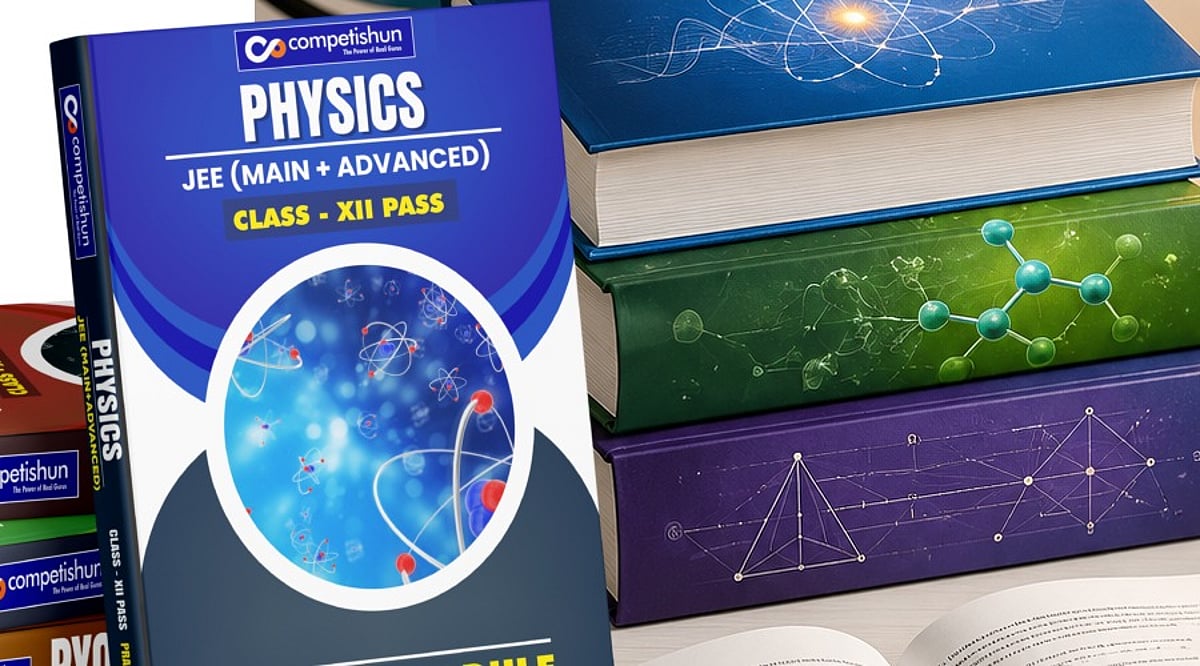
  • JEE Main 2027 Book Selection Guide: Subject-Wise Best Resources for Success

    JEE Main 2027 Book Selection Guide: Subject-Wise Best Resources for Success

    Overview

    Choose limited trusted books and revise repeatedly instead of collecting unnecessary study materials for success. Build strong concepts through NCERT before moving to advanced practice books across all subjects consistently. Maintain an error notebook and prioritize revision to improve accuracy, confidence, and final examination performance effectively.

    Most JEE aspirants face the same problem at the start of their preparation. Their study table fills up with six Physics books, four Maths books, and half-finished chapters everywhere. This scattered approach rarely works. Toppers do not win by owning the biggest book collection. They win by picking a few good books, reading them again and again. This guide breaks down the best books for JEE Main 2027, subject by subject, to remove the confusion most students face when choosing study material.

    Start with NCERT First

    NCERT deserves the first spot on every JEE aspirant’s list. Many students ignore it, thinking it is too basic for JEE Main. This is a costly mistake. A large share of Chemistry questions comes straight from the NCERT lines. Physics also draws several core concepts from it. Finish the NCERT for all three subjects before touching any reference book. NCERT works as the base layer, not a side note.

    Physics: Understanding Comes Before Speed

    Many students struggle with Physics in the early months. They memorize formulas without understanding why they exist. Their scores stay flat for weeks as a result. Things usually change once a student picks up Concepts of Physics by H.C. Verma. This book explains the logic behind each formula. It does not rush the reader. Toppers often solve both volumes slowly and revisit tricky chapters more than once. After building that base, most students move to DC Pandey’s Understanding Physics Series. This set offers structured practice with rising difficulty. Speed and confidence tend to grow together through this stage. Advanced books like Irodov work best later in preparation. Jumping into hard problems too soon only creates frustration and wastes valuable time.

    Chemistry: A Different Plan for Each Part

    Chemistry is not one subject. It has three distinct parts, each requiring its own approach. For Physical Chemistry, OP Tandon and N. Awasthi work well alongside NCERT. These books contain strong numerical sections. Solving each sum by hand, instead of jumping straight to the answer key, builds real calculation speed over time. For Organic Chemistry, M.S. Chauhan’s practice book remains a strong choice. It focuses heavily on reaction mechanisms. Practicing the same reaction types multiple times helps students recognize patterns rather than memorize them blindly. For Inorganic Chemistry, NCERT alone does most of the job. Reading it five or six times over two years builds strong recall. Advanced books can confuse students at this stage, so sticking to the NCERT revision usually pays off more.

    Mathematics: Pick One Book and Stay Loyal

    Mathematics tests patience more than any other subject. Many students collect Cengage, Arihant, and a few random guides, yet finish none of them properly. The better path is to choose one main book, such as the Cengage Mathematics Series, and solve every question inside it, from the easy ones to the tough ones. Switching books halfway through only breaks momentum. Once the main book is complete, two full revisions before adding new material work far better than jumping around. Arihant Skills in Mathematics can help later with topic-wise practice. It works best once Cengage or a similar main book is already finished.

    The One Lesson that Changes Preparation

    Buying books feels productive, but it is not the real work. The real work happens when a student sits down and solves problems from the same book repeatedly. Keeping an error log makes a real difference here. Every mistake, along with a short note on why it happened, teaches more about weak spots than any new book ever could. Revision beats variety, plain and simple. One book solved five times will always outperform five books read once each.

    Final Thoughts

    JEE success depends on discipline, not on the number of books stacked on a desk. H.C. Verma for Physics, OP Tandon for Physical Chemistry, MS Chauhan for Organic Chemistry, and Cengage for Mathematics can support serious aspirants through their preparation. Students should pick their books early and solve every problem themselves before checking the solution. Regular revision and honest tracking of mistakes matter more than adding new material. This approach has worked for countless JEE toppers, and it can work for anyone willing to follow it with discipline. Rank in JEE will depend less on the books a student owns and more on how deeply they study the ones they choose.

    FAQs

    1. Which is the best book to start JEE Main 2027 preparation? Students should begin with NCERT textbooks for Physics, Chemistry, and Mathematics. They build the basic concepts needed before moving to advanced reference books.
    2. Is NCERT enough for JEE Main 2027? NCERT is essential, especially for Chemistry, but it should be supplemented with standard reference books like H.C. Verma, DC Pandey, OP Tandon, and Cengage for complete preparation.
    3. Which Physics book is best for JEE Main 2027? Concepts of Physics by H.C. Verma is one of the best books for understanding fundamentals. Students can then practice advanced questions with DC Pandey’s Understanding Physics series.
    4. Which Mathematics book should students use for JEE Main? The Cengage Mathematics Series is a popular choice for comprehensive preparation. Completing one book thoroughly is more effective than using multiple books without finishing them.
    5. How many books are enough for JEE Main 2027 preparation? Students do not need a large collection of books. One reliable book per subject, along with NCERT and regular revision, is usually enough for effective JEE Main preparation.
  • Why a Poorly Chosen MS in Data Science Can Derail Your Career

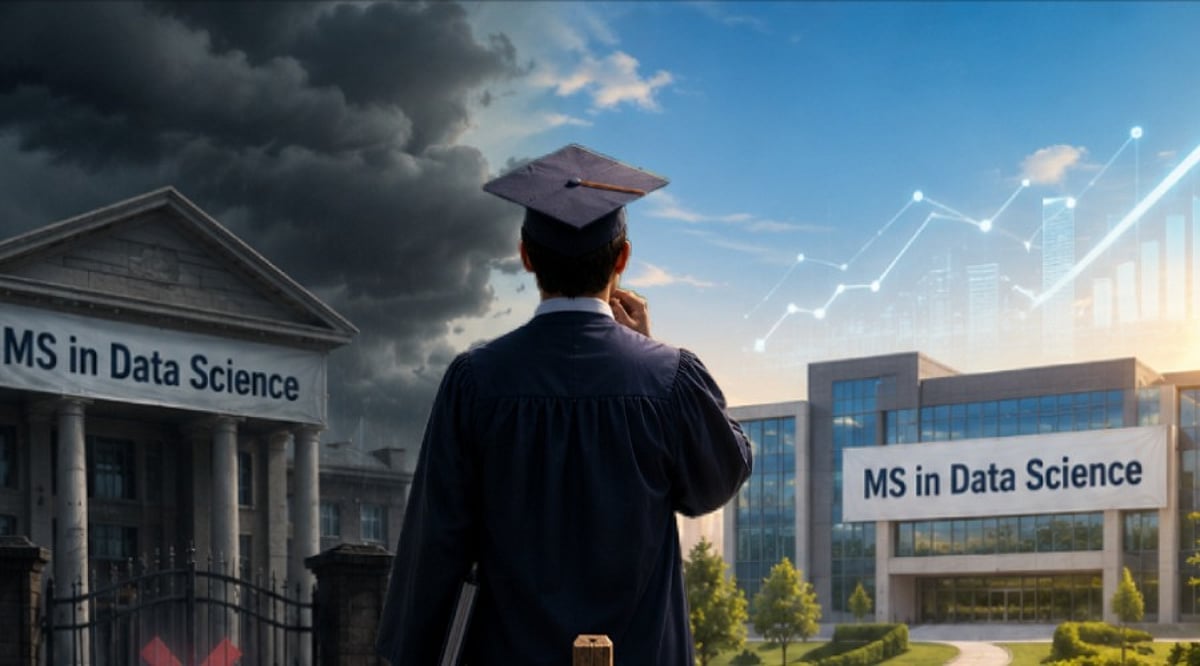
    Why a Poorly Chosen MS in Data Science Can Derail Your Career

    The boom in artificial intelligence has turned data science into one of the world’s most sought-after career paths. Universities across the globe have responded by launching hundreds of Master’s programs promising lucrative jobs, cutting-edge skills, and six-figure salaries. But not every MS in Data Science degree is built the same.

    For aspiring professionals, choosing the wrong program can have consequences that extend far beyond graduation. A poor curriculum, limited industry exposure, or weak placement support could leave graduates struggling to compete in a job market that increasingly values practical skills over academic credentials.

    As employers raise hiring standards, students are learning that the name of a degree matters far less than what they actually learn during it.

    Degree Alone No Longer Guarantees a Job

    Just a few years ago, having a master’s degree in data science was enough to grab recruiters’ attention. Today, the landscape has changed dramatically. When companies look to hire data scientists, they usually expect a certain level of programming skill, primarily in Python and SQL, plus the ability to build machine learning models. They also care that you can navigate cloud platforms without getting lost in today’s AI tools. Recruiters tend to scan your GitHub profile and want to see internships and projects from real life—stuff that quietly proves you can solve problems instead of only talking about them.

    Meanwhile, students who graduate from programs that focus largely on classroom theory often notice they’re missing the hands-on experience employers actually want. So a lot of people end up signing up for extra bootcamps or taking certification courses even though they already put a lot into a postgraduate degree.

    Outdated Curriculum Can Quickly Become Irrelevant

    Data science is one of the most rapidly changing areas of technology. Every year, new frameworks, AI model architectures, and other automation solutions completely change the industry. However, some courses still teach ideas that do not align with the present-day needs of the job market. Although basics are essential, companies demand more knowledge in cloud services, machine learning operations (MLOps), deep learning, large language models, and AI deployment. Two years of studying a curriculum that has become irrelevant may be a mistake for students, as they will enter the job market with obsolete knowledge.

    Industry Exposure Often Makes the Biggest Difference

    One of the major signs of a good data science program is industry interaction. Students get the chance to solve actual problems rather than examples through internships, projects, hackathons, collaborative research, and mentoring from the corporate world. This not only improves students’ technical skills but also their communication and analytical skills. Those programs that lack industry interaction would graduate students who know everything in theory but nothing about how data science is applied in real-world business. Experience weighs more than grades when hiring.

    Placement Support Matters More Than Rankings

    When some people select colleges based on rankings or the promise of high salaries, placements may be more complicated. A career service center, company contacts, an alum network, and recruitment days play important roles in helping people get placed. Colleges with strong industry connections give students a better chance of securing internships and on-campus placements. On the other hand, colleges without assistance in placing students face difficulty, making students’ lives difficult when entering the competitive labor market alone. In the opinion of experts, future college students need to look at the employment rates, average salaries, internships, and alum success stories.

    Financial Cost Extends Beyond Tuition Fees

    A foreign MS in Data Science costs lakhs, while a national MS in Data Science program is also substantial. Selecting a program that does not equip the candidate with valuable skills means they will have to invest money to gain those skills, either through certification courses, self-study, or low-paid jobs. Opportunity cost also becomes immense, since with each passing month, the individual becomes more employable yet earns less due to a lack of job-related skills. For some, the wrong program choice proves costlier than choosing a good course.

    What Prospective Students Need to Consider Before Applying

    Many experts advise going beyond college promotional materials when making decisions. The effective program must be characterized by modern courses and field practice, qualified lecturers, ongoing research, partnerships, and transparency concerning the placement of its alums. Prospective students should consult alums of the university, examine its programs, and find out whether its graduates work at major technology companies, rather than simply considering its placement statistics. Accreditation, faculty quality, and internship opportunities still matter.

    Final Thought

    Due to the high demand for specialists in artificial intelligence and data science, organizations have become very selective in hiring candidates with the required knowledge and competencies. MS in Data Science is an excellent choice, yet not every program provides its graduates with the required expertise. The hiring environment makes it necessary not only to earn the right degree but also to gain valuable skills and confidence and to pursue other opportunities after two years of study.

  • The 10 High-Paying Jobs with the Least Stress in 2026

    The 10 High-Paying Jobs with the Least Stress in 2026

    For years, a high salary came with long hours, tight deadlines, and constant pressure. That is changing. Many of today’s best-paying careers reward expertise more than endurance, offering stable schedules, meaningful work, and fewer high-pressure situations. Here are 10 careers that stand out in 2026 for offering both strong pay and a better work-life balance.

    1. Natural Sciences Manager

    Median annual salary: Around $161,180. Natural sciences managers ensure that research projects stay on course. They coordinate teams, handle budgets, and make sure science-related activities are on time. The position is mostly planned out and well-coordinated, which makes it one of the best-paying positions with little stress.

    2. Astronomer

    Median annual salary: Around $132,170. Astronomers spend their days researching and observing the universe. From working with telescopes to building scientific theories, everything involves patience, accuracy, and exploration. The job offers a low-stress environment at work.

    3. Actuary

    Median annual salary: Around $125,770. Every insurance and pension scheme is underpinned by the expertise of an actuary. The job requires meticulous analysis and attention to detail, yet involves well-defined steps and timelines. It remains one of the most sought-after careers today due to its stability and high salaries.

    4. Mathematician

    Median annual salary: Around $120,000. Mathematicians solve difficult questions that help companies, governments, and institutions make decisions. Most work is performed independently, giving specialists the opportunity to concentrate on analysis rather than dealing with operational stress.

    5. Physical Scientist

    Median annual salary: Around $117,960. Physical scientists operate in disciplines like physics, chemistry, and earth sciences, participating in projects that may take considerable time. Their work is motivated by experiments, not deadlines.

    6. Economist

    Median annual salary: Around $115,730. Economists examine issues like markets, inflation, unemployment, and government policies. They focus on analyzing data rather than dealing with crises, making their career mentally challenging but not overly stressful.

    7. Environmental Economist

    Median annual salary: Around $115,440. With the growing importance of climate change and sustainability, environmental economists analyze the economic effects of environmental problems by conducting research and solving real-world problems in a steady job environment.

    8. Computer Systems Analyst

    Median annual salary: Around $103,790. This job involves aiding organizations in enhancing their use of technology. Unlike other IT roles that deal with troubleshooting, the computer systems analyst evaluates systems and suggests improvements, resulting in lower stress.

    9. Statistician

    Median annual salary: Around $98,000. Statisticians make sense of information in fields including sports, technology, healthcare, and finance. Demand for these professionals keeps rising as organizations increasingly rely on data for decision-making.

    10. Research Scientist

    Median annual salary: Around $95,000. Scientific researchers deal with problems that may take months or even years to solve. From creating new drugs to enhancing industrial operations, the focus is on research and not quick fixes. This profession rewards curiosity, patience, and skills.

    More Than Just a Good Paycheck

    Salary is not the only measure of a good career. Professionals now pay closer attention to flexibility, workload, and long-term well-being. These jobs prove that earning a six-figure income does not always mean working around the clock. For those planning a career move in 2026, they offer a rare combination of financial security and a healthier way to work.

    Frequently Asked Questions

    What makes a job low stress despite offering a high salary?
    Low-stress jobs typically involve predictable schedules, fewer emergencies, manageable workloads, and greater autonomy. They often rely on specialized knowledge and long-term planning instead of constant deadlines or high-pressure decision-making.

    Which high-paying low-stress job offers the highest salary in 2026?
    Natural sciences manager ranks among the highest-paying low-stress careers in 2026, with a median annual salary of about $161,180, followed by astronomers and actuaries.

    Do low-stress jobs require advanced education?
    Many do. Careers such as astronomer, actuary, economist, and research scientist usually require a bachelor’s degree, while several positions also prefer or require postgraduate qualifications.

    Are technology careers included among low-stress high-paying jobs?
    Yes. Computer systems analysts are considered one of the least stressful technology careers because they focus on improving systems and planning solutions rather than handling constant technical emergencies.

    Why are professionals choosing low-stress careers in 2026?
    More professionals are prioritizing work-life balance, flexible schedules, mental well-being, and long-term job satisfaction alongside salary, making low-stress careers increasingly attractive across industries.