Category: Classes and Programs

  • Top Classroom Simulation Activities by Subject: Boost Engagement and Real-World Learning

    Top Classroom Simulation Activities by Subject: Boost Engagement and Real-World Learning

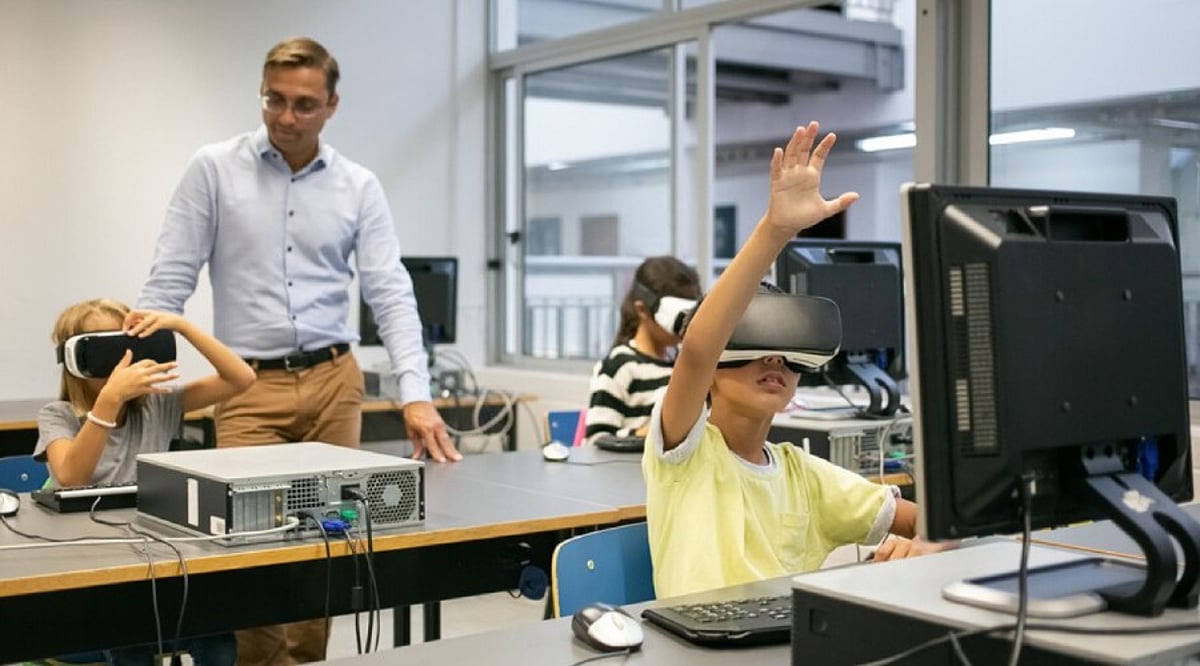
    Classroom simulations transform passive students into active decision-makers. They negotiate, defend positions, and solve problems under constraints—changing the energy of the room. The challenge is finding simulations that deliver on that promise, not just look good in a lesson plan. Below are some of the strongest classroom simulation activities, organized by subject, each giving students a real job to do.

    Mission.io – Full-Class Collaborative Simulations (All Grade Levels)

    Mission.io brings the whole class into shared problem-solving, improving engagement and retention. Instead of a few students carrying the experience, no one sits on the sidelines. Teachers select from 100+ standards-aligned Missions covering science, math, language arts, and more. A simple session code launches the entire class into the experience together—no prep, no cleanup, and it runs on any internet-connected device.

    Missions include scenarios like applying coordinate graphing to redirect an asteroid or using environmental science standards to clean up a contaminated water supply. The scenario is fictional, but the skills are real. Mission.io tracks six dimensions: Knowledge, Application, Initiative, Collaboration, Critical Thinking, and Resilience. It works for grades K–8, scaling across grade levels without needing adaptation.

    Financial Literacy and Economics

    The Classroom Economy

    Students are assigned daily jobs, earn mock currency, and pay “rent” for their desk space. Some lose money if they skip responsibilities, creating real economic stakes. Teachers can introduce taxes, loans, or charitable giving. The activity culminates in a reflection on financial decisions, teaching budgeting, scarcity, and opportunity cost.

    The Market Exchange

    The class becomes a live trading floor. The teacher introduces a scarcity event mid-session, and prices shift dramatically. Students argue prices with genuine urgency. At the end, the teacher presents new market conditions, helping students understand supply, demand, and price elasticity while building negotiation skills.

    The Checkbook Project

    Students receive a fictional monthly income and a list of real-world expenses. They track every transaction in a physical checkbook and balance it at the end of each “month.” Unexpected costs like a car repair force students to make hard choices. This project teaches financial risk anticipation and problem-solving, often leading to honest discussions about money management.

    History and Social Studies

    Mock Trial for Critical Thinking

    The classroom becomes a courtroom. Students take on roles as attorneys, witnesses, jury members, and judges to argue a historical case (e.g., trial of Socrates, a Reconstruction-era case). Preparation involves reading primary sources and organizing evidence, developing historical thinking, public speaking, and collaboration. The simulation fosters empathy and understanding of judicial processes.

    Model United Nations

    Students represent countries, research issues, draft resolutions, negotiate, and debate global topics. The structure builds critical thinking as students defend positions not necessarily their own. The simulation can be adapted to any unit—environmental disaster, refugee crisis, trade conflict—and teaches research, negotiation, and conflict resolution.

    The Explorer’s Route

    Students become historical navigators or explorers, plotting trade routes, managing resources, and making decisions under tight constraints. The activity pairs well with units on early global trade or colonization, surfacing ethical dimensions. It promotes experiential learning as students make decisions under pressure and reflect on outcomes.

    STEM and Science

    Human Molecular Builders

    Students physically arrange themselves as protons, neutrons, or electrons to form atomic structures and chemical bonds. When the teacher calls out a compound, students negotiate who goes where. This reinforces abstract concepts through movement and collaboration, helping students understand molecular geometry and bonding types.

    Cell Component Walkthrough

    The entire classroom becomes a cell. Different areas represent organelles, and students physically act out processes like transcription, translation, and energy production. This spatial activity makes the geography of the cell intuitive, fostering deeper understanding of cellular processes and interdependence.

    Digital Physics Labs with Digital Tools

    Platforms like the Smithsonian Science Education Center provide interactive simulations for when physical equipment is limited. A kinetic energy rollercoaster simulation lets students adjust variables like height and mass, observing changes in speed and energy transfer. The speed of iteration changes how students think about hypothesis testing, and digital tools support differentiated instruction and remote learning.

    A Note on What Makes These Simulations Effective

    The simulations on this list work because they create meaningful engagement, not just movement. In the Market Exchange, the student isn’t acting—they’re trying to get the best deal. In Mock Trial, they’re trying to win. That shift from performance to problem-solving is where learning happens. The true value comes in the debriefing phase, where teachers connect decisions back to course objectives and extract the biggest lessons.


  • Top Free Quantum Computing Courses for Beginners to Explore in 2026

    Top Free Quantum Computing Courses for Beginners to Explore in 2026

    Quantum computing is rapidly emerging as a transformative field, and 2026 offers an abundance of free resources for beginners eager to dive in. From industry giants like IBM, Microsoft, and Google to academic platforms such as edX and Coursera, learners can access high-quality courses without spending a dime. Below is a curated list of the best free quantum computing courses and learning platforms available this year.

    IBM Quantum Learning

    IBM’s free learning platform remains a premier starting point for newcomers. It covers the fundamentals of quantum mechanics, quantum circuits, and Qiskit programming. Learners gain hands-on experience by accessing real quantum computers through the cloud. Interactive labs and guided learning paths help bridge theory and practical skills.

    Microsoft Azure Quantum Learning

    Microsoft offers free modules that introduce quantum computing concepts, quantum algorithms, and the Azure Quantum ecosystem. The content includes quantum-inspired computing and programming fundamentals via structured tutorials. The self-paced format is ideal for students, developers, and tech enthusiasts entering the field.

    Google Quantum AI Resources

    Google provides free educational materials explaining quantum computing principles, qubits, error correction, and quantum algorithms. Resources include research articles, tutorials, videos, and open-source tools, helping learners understand how quantum differs from classical computing while staying current with cutting-edge developments.

    Qiskit YouTube Channel and Documentation

    IBM’s Qiskit documentation and YouTube tutorials offer an accessible path into quantum programming. Learners explore quantum gates, circuits, simulations, and algorithms through detailed examples. The active developer community contributes additional tutorials, projects, and troubleshooting guides for self-paced study.

    edX Quantum Computing Courses

    edX hosts several free audit courses from leading universities covering quantum mechanics, computing principles, and introductory programming. While certificates require payment, all course materials are freely accessible. These structured academic programs combine lectures, quizzes, and assignments, making them ideal for university-level instruction.

    Coursera Free Audit Courses

    Coursera allows learners to audit many introductory quantum computing courses from top universities at no cost. Topics include foundational theories, quantum algorithms, and applications in computing and cryptography. Auditing provides access to video lectures and reading materials, offering an affordable way to start learning.

    Class Central Course Directory

    Class Central aggregates free quantum computing courses from universities, educational platforms, and tech companies worldwide. Rather than offering a single course, it helps learners compare ratings, duration, difficulty, and providers. This makes it easy for beginners to find the most suitable learning path in 2026.

    Whether you’re a student, developer, or hobbyist, these free resources provide a solid foundation in quantum computing without financial barriers. Start exploring today and build skills for the next computing revolution.

  • 10 Innovative Technologies Transforming Modern Classrooms

    10 Innovative Technologies Transforming Modern Classrooms

    Technology is reshaping classrooms, making learning more interactive, personalized, and flexible. From AI-driven lessons to smartboards and e-books, these tools empower teachers to teach more effectively while offering students engaging and accessible ways to learn.

    Overview

    Modern technology is making classrooms more interactive, engaging, and easier to manage for both teachers and students. Smart tools like AI, digital learning platforms, and smartboards support different learning styles and boost classroom participation. These innovations help students learn at their own pace while equipping them with future-ready skills.

    Classrooms have evolved significantly. Not long ago, students relied on blackboards and printed books. Today, digital tools make lessons more interesting and accessible. Students can watch videos, attend online classes, and learn in ways that suit them best.

    Teachers remain central to every classroom. Technology provides them with additional tools to explain concepts and keep students engaged. Here are ten technologies that help schools create better learning experiences every day.

    AI-Driven Personalized Learning

    Students learn differently. Some grasp topics quickly, while others need more practice. AI-powered learning platforms tailor lessons to each student’s progress. They recommend additional practice when needed and allow students to move on when ready. This approach helps students learn without feeling rushed or left behind.

    Gamification of Education

    Many students find learning more enjoyable when lessons include fun activities. Schools now use quizzes, points, rewards, and badges to maintain interest. Small, achievable goals make learning exciting and less stressful. These activities also engage students in class and encourage them to do their best every day.

    Digital Pads

    Digital pads are now common in many classrooms. Students can write notes, complete homework, and draw diagrams on a single device. Everything stays organized, making it easy to find old notes. Teachers can also send worksheets and study materials in seconds.

    Smartboards

    Smartboards have made classroom teaching more dynamic. Teachers can display photos, videos, maps, and presentations with a single tap. Students can answer questions on-screen and participate in interactive activities. Everyone gets a clear view, making lessons easier to understand.

    Microlearning Platforms

    Studying for long hours can be exhausting. Microlearning platforms break lessons into short, manageable segments. Students learn one concept at a time, which simplifies learning and improves retention, especially during exam periods.

    Social-Emotional Learning Tools

    School is about more than grades. Students also need to develop collaboration, emotional management, and problem-solving skills. Social-emotional learning tools include simple activities and classroom discussions that support personal growth alongside academic achievement.

    Lifelong Learning Platforms

    Learning shouldn’t stop after school. Lifelong learning platforms allow students to acquire new skills at their own pace. Whether it’s coding, communication, or a new language, these platforms make continuous education accessible at any stage of life.

    E-Books

    E-books have become a practical choice for many schools. Students can carry numerous books on a single device instead of heavy backpacks. Features like search, highlighting, and note-taking enhance the reading experience. Some e-books also include videos and practice questions.

    Remote Learning

    Remote learning has made education more flexible. Students can attend classes from home when they can’t be at school. Live sessions, recorded lessons, and online discussions keep them connected with teachers and classmates. This flexibility means learning can happen almost anywhere.

    Document Camera

    Document cameras simplify classroom demonstrations. Teachers can place a book, worksheet, or science experiment under the camera, and it displays on a large screen. Every student gets a clear view without leaving their seat—especially useful for practical lessons.

    Personal Recommendation: Three Technologies Every Student Should Try

    If I had to choose three, they would be AI-Driven Personalized Learning, Smartboards, and Microlearning Platforms. AI-powered learning provides the extra support students need without pressure. Everyone learns at their own pace. Smartboards bring lessons to life with pictures, videos, and live examples, making tough topics easier to grasp. Microlearning platforms are perfect for busy students—bite-sized lessons fit into daily routines and make exam revision less stressful. Together, these tools make learning more fun, improve understanding, and build student confidence.

    Learning Is Becoming Better Every Day

    Technology has opened new doors for both students and teachers. Classrooms are more interactive, lessons more interesting, and learning more flexible. Information is more accessible than ever. However, teachers remain the most important part of education. Technology works best when it supports teaching, not replaces it. With more tools in schools, students can learn more, explore new ideas, and prepare for the future with confidence.

    FAQs

    1. How is technology improving today’s classrooms?
    Technology makes lessons more interactive through videos, quizzes, and digital activities. It helps teachers explain topics clearly while offering students different ways to learn based on their needs.

    2. Which classroom technology is most useful for students?
    AI-driven personalized learning is one of the most useful tools because it adjusts lessons to each student’s progress. Smartboards and microlearning platforms are also great for making learning easier and more engaging.

    3. Can technology replace teachers in the future?
    No. Technology supports teachers but cannot replace them. Teachers guide students, answer questions, and create meaningful learning experiences that digital tools alone cannot provide.

    4. Why are schools moving from printed books to e-books?
    E-books are easier to carry, simple to update, and offer features like search, bookmarks, notes, and interactive content. They provide quick access to learning materials anytime.

    5. What should schools consider before using new classroom technology?
    Schools should choose tools that are easy to use, support learning goals, and are accessible to both teachers and students. Proper training and reliable internet access are also essential for best results.

  • 7 Free AI Courses with Certificates to Boost Your Skills in July 2026

    7 Free AI Courses with Certificates to Boost Your Skills in July 2026

    Build AI skills without spending a rupee. Here are the top free AI courses offering certificates in July 2026:

    • Google AI Essentials – Learn practical AI skills and prompt engineering with beginner-friendly lessons.
    • Microsoft AI Skills Challenge – Gain hands-on experience with Azure AI tools and earn a free certificate.
    • IBM AI Fundamentals – Understand machine learning, generative AI, and business AI applications.
    • Harvard CS50 AI – A rigorous introduction to artificial intelligence using Python programming.
    • DeepLearning.AI Short Courses – Master prompting, LLMs, and generative AI through concise practical lessons.
    • Coursera AI for Everyone – Andrew Ng’s popular course explains AI concepts without coding experience.
    • NVIDIA Deep Learning Institute – Access free AI workshops focused on GPUs, deep learning, and computer vision.
    • LinkedIn Learning AI Courses – Explore workplace AI productivity, Copilot, ChatGPT, and automation topics.

    Read more stories and join our WhatsApp Channel to get the latest news, exclusives, and videos.

  • Best Data Mining Courses and Certifications to Master in 2026

    Best Data Mining Courses and Certifications to Master in 2026

    Data mining is growing fast as companies look for better ways to turn large volumes of data into useful decisions. Market estimates by Mordor put it at $1.66 billion in 2026, rising to $2.82 billion by 2031, which reflects an 11.25% CAGR. A different prediction suggests that the tools will be worth $1.2 billion by 2026, rising from $634.7 million in 2020, at a CAGR of 11.1%. Consistent growth proves high demand for skills like data cleaning, pattern detection, and predictive analysis.

    With data driving decisions across industries, the right training can help you build the skills needed to stay relevant, practical, and job-ready.

    Top 10 Courses to Build Data Mining Skills

    Professional Certificate in Data Mining: Coursera (University Specialization)

    A hands-on concentration that addresses preprocessing, association rules, clustering, classification, and modeling evaluation through Python and R. This degree involves a capstone project in which you apply what you have learned from real data sets and receive guidance from instructors.

    Data Mining and Business Intelligence: Indian Statistical Institute Certificate

    This course emphasizes statistical foundations and pattern discovery, with a strong focus on business workflows and decision support. It’s suited to analysts who want rigorous theory combined with applied business intelligence techniques.

    Advanced Data Mining Bootcamp: Simplilearn ProTrack

    A bootcamp course focused on scaling mining techniques, feature engineering, and deployment through the use of Spark and MLlib in the cloud.

    Data Mining with Python: DataMites Professional Course

    A brief, hands-on course focused on applying Python tools and packages like pandas and scikit-learn. This is an ideal choice for quick upskilling and preparation for technical interviews.

    Applied Data Mining: University Capstone on Coursera

    Hands-on project-based learning course taking students through the full process of working with raw data: cleansing, discovering patterns, making predictions, and presenting results.

    Certificate in Data Mining & NLP with R: Online Provider

    This combined course covers structured data mining plus text mining and NLP in R, including preprocessing, topic modeling, and sentiment analysis methods for unstructured datasets common in industry projects.

    Postgraduate Diploma in Big Data Science: University Programs (IIT-level)

    A diploma integrating data mining with big-data engineering and distributed algorithms. It’s tailored for professionals aiming to move into scalable analytics or data engineering roles that require both theory and systems knowledge.

    Data Mining Professional: Vendor-Neutral Certification

    A recognized credential focused on algorithmic understanding, evaluation metrics, and cross-industry case studies. This certification helps validate conceptual mastery independent of specific vendor tools.

    Full-Stack Data Science with Data Mining Specialization: Scaler / InterviewBit

    A curriculum combining software engineering best practices with mining tasks: production ML pipelines, feature stores, experiment tracking, and deployment. It’s ideal for engineers building end-to-end machine learning systems.

    Data Mining Essentials: Short Course (Knowledge Academy)

    A concise course on the basics of association rules, clustering, and classification. This will be a good starting point for those who want to go further into projects and more advanced courses.

    Choosing the Right Course

    Data mining is an essential skill for careers in data science, analytics, and machine learning. Whether you’re just starting out or looking to advance your expertise, choosing a course with hands-on projects, industry-relevant tools, and a recognized certification can help you stay competitive and prepare for real-world data challenges.

    FAQs

    Q1. What is a data mining course?

    A data mining course teaches techniques for collecting, cleaning, analyzing, and interpreting large datasets using statistical methods, machine learning, and programming tools like Python to uncover meaningful patterns and support decision-making.

    Q2. Who should enroll in a data mining certification?

    Data mining certifications are suitable for students, data analysts, software developers, business intelligence professionals, and anyone looking to build practical data analytics skills or transition into data science careers.

    Q3. Which programming language is best for learning data mining?

    Python is the most widely recommended language for data mining because of its extensive libraries, ease of use, and strong support for data analysis, visualization, machine learning, and automation.

    Q4. Are online data mining courses recognized by employers?

    Yes, reputable online courses from universities and established learning platforms are valued by many employers, especially when they include hands-on projects, industry-relevant tools, and recognized certification credentials.

    Q5. How do I choose the right data mining course?

    Choose a course based on your experience level, career goals, curriculum, practical projects, instructor expertise, certification value, and coverage of essential tools like Python, SQL, and machine learning frameworks.

  • Which Countries Are Setting the Standard for AI Education in 2026?

    Which Countries Are Setting the Standard for AI Education in 2026?

    Preparing students for an AI-powered future has become a national priority worldwide. Leading countries are introducing AI into schools, expanding university programs, and supporting digital skills. These efforts define the global leaders in AI education in 2026. Here is how the top contenders stack up—and where ambition meets reality.

    Key Takeaways

    • China and the UAE are the only nations running compulsory, national AI curricula since the 2025-26 school year.
    • India, Estonia, and South Korea reveal three different speeds of rollout—from a ten-million-teacher training push to a public reversal.
    • The nations pulling ahead are matching curriculum ambition to teacher readiness, not chasing the boldest headline.

    Every government wants to claim it leads in AI education. Few can prove it with a classroom that actually works. The gap between what gets announced and what reaches a teacher standing in front of thirty students will become the real story worth telling.

    Two Speeds of Compulsory Rollout

    China moved early, and it moved fast. By September 2025, AI had become a compulsory subject for every student from age six, sitting alongside mathematics on the timetable, not tucked away as an elective. Beijing schools now owe every student at least eight hours of AI instruction a year, and in a growing number of classrooms, platforms like Squirrel AI are already doing the adaptive teaching. What has not kept pace is everything around the technology: ethics, data privacy, and equal access. The rollout outran the guardrails.

    The UAE got there first in a different sense. A Cabinet decision in May 2025 made it the first country on record to mandate a nationwide AI curriculum for K-12 students, full stop. Close to a million children in government schools are now working through seven curriculum strands, taught by more than a thousand teachers trained specifically for this. Private schools are not required to follow suit, not yet at least, though a fair number have adopted the material on their own, without waiting to be told to.

    When Ambition Outpaces Readiness

    South Korea shows what happens when a rollout runs ahead of its teachers. Seoul planned mandatory AI textbooks from 2025, but adoption sat below 30% by March, and that August, the National Assembly stripped the textbooks of official status after unions said the pace had outrun preparation. Korea responded with a $960 million plan to build AI talent centers and vocational high schools through 2030. The setback was not proof that AI education fails. It showed that mandates without matching teacher training buckle under their own weight, even in a well-funded system.

    India is betting bigger than anyone. From 2026 to ’27, AI and computational thinking will become mandatory from Class 3 across government and private schools, backed by a Rs. 500 crore center of excellence and the Rs. 10,372 crore India AI mission. The open question is delivery: roughly 10 million teachers need training, and only 15% were AI-fluent as of a 2025 survey. Whether India becomes the largest AI-literate student population in the world depends entirely on whether that math closes in time.

    Coherence Over Scale

    Singapore’s edge is not size but order of operations. Its Smart Nation strategy targets AI leadership by 2030, with teacher training promised at every level by 2026. A government-funded research center pilots tools with the Ministry of Education before they reach classrooms, rather than after.

    Finland and Estonia are playing a different game entirely, treating AI fluency as a civic skill rather than a career pipeline. Finland’s Elements of AI course has reached hundreds of thousands of citizens; Estonia’s AI Leap gave 20,000 students and 3,000 teachers early access, with plans to scale nationwide by 2027.

    Also Read: The World Is Your Campus: Where to Study AI and Programming at the Planet’s Greatest Universities

    Research Depth, Classroom Gap

    The United States still leads in university-level AI research, and Washington has tried to close the K-12 gap too, through an executive order that created a federal task force and a student AI challenge. However, the same period saw the Department of Education shutter its Office of Educational Technology. Only four states include AI in computer science standards, and enrollment in the subject fell 11% between 2024 and 2025, even as graduate AI programs kept growing. A country can lead the world in research capacity while still trailing far smaller nations in the classroom.

    There is no single best country here, only different goals pursued at different speeds. What separates the nations worth watching is not the size of the announcement, but the honesty of the follow-through—and Korea’s public reversal is proof that admitting a gap is not the same as failing to close it.

    Also Read: Case Studies: Universities That Rebuilt Curricula for AI vs Those That Just Added It

    Final Thoughts

    The competition to be the first to educate about AI isn’t about being the loudest or the first to shout. It will be given to the people who make the often-ugly but ultimately beautiful things happen: training teachers, updating classrooms, keeping students safe, and working at it year after year, well past the news cycle. The countries leading the way in 2027 will not be those with the most impressive plan on paper. This will be where that plan has become a normal part of a school day without being noticed.

    You May Also Like:

    FAQs

    1. Which country leads AI education in 2026?

    There is no single leader. China leads in scale, the UAE in national curriculum rollout, Singapore in implementation, and the United States in AI research.

    2. Which country made AI education compulsory first?

    The UAE became the first country to introduce a nationwide mandatory AI curriculum for K-12 students in May 2025. China also made AI compulsory for school students from age six.

    3. Why is teacher training important for AI education?

    Teachers need the skills to use AI effectively in the classroom. Without proper training, even well-funded AI education policies can struggle to deliver results.

    4. Is AI now a compulsory subject in India?

    India plans to introduce AI and computational thinking as compulsory subjects from Class 3 beginning in the 2026–27 academic year, supported by the IndiaAI Mission and teacher training initiatives.

    5. What makes an AI education system successful?

    A successful AI education system combines a strong curriculum, trained teachers, ethical guidelines, digital infrastructure, and regular updates to keep pace with advances in AI technology.

  • Best Business Management Courses After 12th Grade in India: A Complete Guide

    Best Business Management Courses After 12th Grade in India: A Complete Guide

    Overview

    Business management education equips students with the knowledge and practical skills needed to succeed in today’s competitive business environment. After completing Class 12, several degree and diploma programs are available across India. Understanding how these courses differ can help students make a confident and informed decision.

    BBA, BMS, BBM, and integrated IPM programmes each serve a distinct kind of student—not just different titles for the same degree. Entrance exams such as CUET, SET, NPAT, and IPMAT have different eligibility criteria; some require Class 12 mathematics, while others do not. A comparison table and a short decision framework help match the right course to the right student before applications open.

    Not every management degree opens the same door. Some build broad business skills. Others prepare students for one specific industry, and a handful compress an entire management career into a faster track. India’s business world keeps shifting, and the course a student picks right after Class 12 ends up shaping where they land: marketing, finance, HR, entrepreneurship, or somewhere else entirely.

    Eligibility and Entrance Exams for Business Management Courses After 12th

    Here’s the baseline: most business management courses accept students from any stream after Class 12, and the usual cutoff hovers around 50%. Some colleges just look at Class 12 marks and admit candidates directly. Others require an entrance exam first. SET, CUET, NPAT, IPMAT, JIPMAT—these names come up repeatedly, though eligibility criteria change from one college to the next in ways that catch people off guard.

    For instance, Delhi University’s BMS and BBA (FIA) programs require Mathematics or Applied Mathematics on the Class 12 marksheet for anyone going the CUET route. SET doesn’t care about the stream at all—no math is needed. It’s worth checking a target college’s fine print before weeks go into prep for the wrong test.

    Top Business Management Courses After Class 12 in India: Comparison

    Here’s how the main courses stack up on duration, entrance exams, who they suit, and where they tend to lead.

    BBA (Bachelor of Business Administration)

    The BBA is India’s most widely offered business management degree, by a wide margin. It covers subjects that show up in almost every management job: marketing, finance, HR, and operations—without forcing an early commitment to one lane. For anyone still unsure what kind of business role fits best, this is usually the starting point.

    BMS (Bachelor of Management Studies)

    BMS tilts more toward theory: more research, more analytical thinking, and less of the generalist sprawl that comes with a BBA. Mumbai and Delhi universities offer it most often. The syllabus isn’t wildly different from BBA’s, but employers mostly treat both degrees as roughly the same thing on a resume.

    BBM (Bachelor of Business Management)

    BBM appears across a cluster of universities, especially in Karnataka, and leans into leadership and business operations as its core identity. Many students use it as a launchpad toward an MBA a few years down the line, and it does that job reasonably well.

    Integrated BBA-MBA (IPM)

    The integrated BBA-MBA route is a five-year program that stitches undergraduate and postgraduate management education into one continuous program. It’s not for the undecided. This suits someone who already knows, with real conviction, that management is the career and would rather walk one long path than apply twice and hope the second round goes well.

    BHM (Bachelor of Hotel Management)

    BHM takes a different turn entirely, pairing business fundamentals with hospitality and tourism training. Students learn how hotels, restaurants, and other service businesses operate day-to-day, making it an obvious pick for anyone whose interests lie in travel, hospitality, or customer-facing work.

    Specialized BBA Programs

    Specialized BBA programs have multiplied lately: business analytics, digital marketing, finance, HR, supply chain, and FinTech. The list keeps growing. These make the most sense for students who already know exactly which corner of business they’re chasing—less useful for someone still figuring that out.

    Diploma in Business Management

    One to two years, practical, skill-heavy, and cheaper. Good for anyone wanting to enter the workforce quickly or just add a specific skill set without committing to three or more years.

    How to Choose the Right Business Management Course After 12th

    The career goal should come first, not the course name. That order matters more than people think. Broad exposure and room to explore point toward BBA or BMS. A clear pull toward hospitality, finance, analytics, or digital marketing usually favors a specialized program. Genuine certainty about a long management career points toward an integrated BBA-MBA. A need for practical skills fast, with a shorter runway into work, favors a diploma. Whichever direction fits, comparing curriculum, internship access, placement track record, and institutional recognition matters more than whatever acronym ends up on the certificate.

    Final Thoughts

    There is no universal best course here, only the one that lines up with what a given student actually wants. A well-run program at a college with real industry ties and a decent placement record will usually beat a fancier-sounding degree from a weaker institution. The career direction should get sorted first. The course and the college follow from that, not the other way around.

    FAQs

    1. Which is the best business management course after Class 12?

    BBA is generally the most popular choice since it provides a broad understanding of marketing, finance, human resources, and operations. However, the best course depends on your career goals, interests, and preferred specialization.

    2. Can students from Science or Arts pursue business management courses after Class 12?

    Yes. Most BBA, BMS, BBM, and other management programs accept students from Science, Commerce, and Arts streams. Some universities, however, have specific subject requirements or entrance exam criteria, so always check the eligibility rules before applying.

    3. What are the common entrance exams for business management courses in India?

    Popular entrance exams include CUET, IPMAT, JIPMAT, NPAT, SET, UGAT, and MAH BMS-CET. The exam required depends on the university and the management program you choose.

    4. What career opportunities are available after completing a business management course?

    Graduates can pursue entry-level roles in marketing, finance, human resources, operations, sales, business development, hospitality, or entrepreneurship. Many students also continue their studies with an MBA or other postgraduate management programs.

    5. How should I choose the right business management course after Class 12?

    Choose a course based on your career interests, preferred specialization, curriculum, internship opportunities, placement support, and the reputation of the institution. Comparing these factors is more important than selecting a course based solely on its name.

  • Top Generative AI Certification Courses for 2026: From Beginner to Advanced

    Top Generative AI Certification Courses for 2026: From Beginner to Advanced

    Generative AI has become one of the most transformative technologies in today’s digital landscape. Businesses across industries are leveraging AI to enhance customer service, automate workflows, generate content, analyze data, and boost productivity. As demand for AI expertise grows, employers actively seek professionals who understand generative AI and can apply it effectively.

    Learning AI has never been more accessible. Numerous trusted platforms now offer certification programs tailored to both beginners and seasoned professionals. Some courses focus on foundational concepts, while others dive into advanced topics like large language models, prompt engineering, AI agents, and application development. Choosing the right certification depends on your career goals, current skill level, and the knowledge you need to succeed.

    Below are some of the best generative AI certification courses to consider in 2026.

    Coursera – Generative AI: Introduction and Applications

    This introductory course is ideal for anyone wanting to understand generative AI from the ground up. It explains core concepts in simple language and illustrates how different industries apply AI in real-world scenarios. Topics include popular AI tools, foundation models, prompt engineering basics, and responsible AI practices. Real-world examples make the material accessible even to non-technical learners.

    Coursera – Generative AI for Everyone Specialization

    Designed for business professionals, students, managers, and educators, this specialization emphasizes practical uses of generative AI in the workplace. It covers how organizations use AI to improve productivity and decision-making, along with prompt design, responsible AI, ethical considerations, and digital transformation. No programming knowledge is required.

    Coursera – Generative AI for Content Creation

    Content creation is one of the most common applications of generative AI. This course focuses on leveraging AI to produce blogs, marketing copy, social media posts, presentations, emails, and more. Lessons cover writing effective prompts, refining AI-generated content, maintaining quality, and the ongoing importance of human creativity.

    Udemy – Complete Generative AI Course with LangChain and Hugging Face

    This advanced, hands-on course is perfect for developers. It covers developing modern applications using LangChain and Hugging Face, including retrieval-augmented generation, vector databases, embeddings, prompt engineering, AI agents, and large language models. Numerous practical exercises help you build real AI-powered apps.

    BITS Pilani Digital – Generative AI and Agentic AI Course

    Offered by BITS Pilani Digital, this certification blends generative AI with the emerging field of agentic AI. The structured curriculum combines theory with practical business applications, covering foundation models, AI agents, autonomous workflows, prompt engineering, and enterprise AI solutions. Industry case studies and projects reinforce learning.

    FutureSkills Prime – Fundamentals in Generative AI and Machine Learning

    This beginner-friendly certification builds a solid foundation in machine learning and generative AI. It starts with simple concepts and gradually introduces more advanced topics like neural networks, foundation models, and responsible AI. The course prepares learners for future advanced certifications.

    Microsoft Learn – Generative AI for Beginners

    Microsoft provides a free, self-paced course featuring tutorials and learning materials for hands-on learners. Topics include large language models, prompt engineering, semantic search, vector databases, AI agents, and responsible AI. The course is regularly updated to reflect the latest trends.

    Great Learning – IIT Bombay Certificate in Generative AI

    This certification combines academic rigor with practical experience. It covers fundamentals before progressing to advanced topics like prompt engineering, large language models, and industry applications. Expert guidance, live sessions, and project-based learning help learners understand real-world AI use cases.

    How to Choose the Right Generative AI Certification

    The best certification depends on your career goals and background. Beginners may prefer introductory courses from Coursera, Microsoft Learn, or FutureSkills Prime. Business-oriented learners who want to understand AI’s impact may benefit from “Generative AI for Everyone.” Developers and technical professionals should consider courses covering LangChain, Hugging Face, and agentic AI. Before deciding, compare curricula, practical projects, instructor expertise, certification value, and how often content is updated.

    Final Thoughts

    Generative AI is now an essential skill across many industries. Certification programs provide a clear path to learning this technology, but hands-on projects are what truly build expertise. The demand for AI skills continues to grow, making now a great time to invest in your education.

    Frequently Asked Questions

    1. Which is the best Generative AI certification course for beginners? Courses from Coursera, Microsoft Learn, and FutureSkills Prime provide a strong foundation.
    2. Are Generative AI certifications worth it in 2026? Yes. They help build practical AI skills and improve career opportunities across many industries.
    3. Which course is best for developers? The Udemy course with LangChain and Hugging Face is a strong choice for developers seeking hands-on experience.
    4. Do these courses require coding knowledge? Not all of them. Many are suitable for non-technical learners, while others focus on programming and AI development.
    5. What should I consider before choosing a certification? Compare the curriculum, practical projects, certification value, instructor expertise, and how often the content is updated.
  • Top Data Science Bootcamps to Enroll in 2026: Expert Picks & Key Criteria

    Top Data Science Bootcamps to Enroll in 2026: Expert Picks & Key Criteria

    As the demand for data-driven decision-making continues to soar, choosing the right data science bootcamp in 2026 can set the foundation for a high-impact career. The best programs combine rigorous technical training with real-world projects and strong career support. Here are the essential criteria to evaluate and a look at leading providers.

    What to Look for in a Data Science Bootcamp

    Comprehensive Curriculum

    Select bootcamps that cover Python, SQL, machine learning, statistics, data visualization, and artificial intelligence. A broad, job-ready skill set is critical.

    Hands-On Projects

    Prioritize programs that use real-world datasets, incorporate capstone projects, and help you build a portfolio that demonstrates practical problem-solving to employers.

    Flexible Learning Options

    Choose from full-time, part-time, or self-paced formats to balance your studies with work or personal commitments.

    Expert Mentorship

    Look for instructors with industry experience and one-on-one mentoring to receive personalized guidance throughout the learning journey.

    Career Support Services

    Strong programs offer resume reviews, interview preparation, networking opportunities, and career coaching to improve your employment prospects.

    AI-Focused Training

    In 2026, the best bootcamps integrate generative AI, large language models, and modern machine learning techniques alongside traditional data science fundamentals.

    Industry Recognition

    Transparent outcomes, positive learner reviews, and a strong reputation among hiring managers add credibility and boost your career opportunities.

    Affordable Payment Plans

    Compare tuition fees, scholarships, installment options, and financing plans to find a bootcamp that fits your budget comfortably.

    Top Data Science Bootcamp Providers in 2026

    Leading choices this year include App Academy, Noble Desktop, Fullstack Academy, Le Wagon, Flatiron School, and BrainStation. Each offers a unique combination of curriculum depth, project experience, and career support.

    By evaluating these criteria and exploring these providers, you can select a data science bootcamp that aligns with your goals and sets you up for success in 2026 and beyond.

  • Your Guide to the Best AI and Programming Programs at the World’s Leading Universities

    Your Guide to the Best AI and Programming Programs at the World’s Leading Universities

    As artificial intelligence reshapes every sector, engineers who build these systems have become some of the most sought-after professionals of this century. Choosing where to study AI and programming is a pivotal decision that extends beyond the curriculum. The best programs offer access to cutting-edge research, world-class faculty, industry internships, and a global alumni network that can launch your career.

    Why Your Choice of University Matters in AI

    Not all AI education is equal. The rapid pace of the field means a top-tier program distinguishes itself through proximity to research breakthroughs, the caliber of peers, relationships with industry labs like Google DeepMind and OpenAI, and a degree that opens doors. Studying abroad adds value through language skills, cross-cultural understanding, and resilience—attributes highly prized by tech employers.

    The World’s Top Universities for AI and Programming

    Below is a curated list of institutions leading AI research and teaching, organized by region to help you decide where to build your career and life.

    North America

    • MIT (Cambridge, MA) – Home of CSAIL, one of the largest AI research labs. Offers BSc, MEng, PhD programs.
    • Stanford University (Palo Alto, CA) – Birthplace of Silicon Valley. The HAI Institute leads in AI ethics and policy.
    • Carnegie Mellon University (Pittsburgh, PA) – First dedicated School of Computer Science worldwide. Powerhouse in robotics and NLP.
    • UC Berkeley (Berkeley, CA) – BAIR lab produces landmark deep learning research. Strong ties to the Bay Area tech ecosystem.
    • University of Toronto & Mila (Toronto/Montreal) – Birthplace of deep learning. Home to pioneers Geoffrey Hinton and Yoshua Bengio.

    Europe

    • University of Oxford (Oxford, UK) – Future of Humanity Institute and Oxford Internet Institute. Deep research in AI safety.
    • Imperial College London (London, UK) – Applied ML, data science, and computing. Direct links to London’s tech scene.
    • ETH Zürich (Zürich, Switzerland) – Europe’s MIT. Exceptional in robotics, computer vision, and machine learning theory.
    • TU Munich (Munich, Germany) – Top German technical university. Close industry ties with BMW, Siemens, Google.
    • École Polytechnique (Paris, France) – Rigorous mathematical tradition. INRIA partnership positions it at the heart of French AI research.
    • TU Delft (Delft, Netherlands) – Strong in AI for engineering, autonomous systems, and responsible AI governance.

    Asia & Pacific

    • NUS & NTU (Singapore) – Asia’s gateway to global tech. World-class research, excellent industry links, English-medium instruction.
    • Tsinghua & Peking University (Beijing, China) – Massive state investment in AI. Among the top global publishers of AI research.
    • University of Tokyo (Tokyo, Japan) – Leading in robotics, cognitive computing, and human-AI interaction.
    • KAIST (Daejeon, South Korea) – Premier tech university. Globally ranked in AI, robotics, and software.
    • University of Melbourne (Melbourne, Australia) – Top-ranked for CS and AI. Strong research culture and multicultural campus.

    Program Formats to Know

    Most universities offer various entry points: 3–4 year bachelor’s degrees, 1–2 year master’s degrees (often the fastest career-change path), and fully-funded PhD positions. Many now provide hybrid or online options, but being physically present in a world-class research environment remains irreplaceable.

    What You Will Actually Study

    Today’s AI programs integrate theory and practice. Core classes cover three fundamental areas: mathematics, programming, and AI application.

    • Mathematics: Linear algebra, calculus, probability, statistics, discrete math.
    • Programming: Python, C++, data structures, algorithms, distributed systems.
    • Machine Learning/Deep Learning: Regression, decision trees, SVMs, CNNs, RNNs, transformers, diffusion models using PyTorch and TensorFlow.
    • Specialized Tracks: NLP, computer vision, robotics, reinforcement learning, generative AI, AI safety/ethics.
    • Research & Capstone Projects: Original research, industry partnerships, thesis work.

    Where an AI Degree Takes Your Career

    There is a global shortage of qualified AI workers across health, finance, energy, media, logistics, defense, and education. Graduates from top universities often receive multiple offers before graduation. Roles include machine learning engineer, research scientist, NLP engineer, computer vision engineer, data scientist, robotics engineer, AI product manager, AI safety researcher, MLOps engineer, and generative AI specialist. Many entry-level positions command six-figure salaries, and the work itself is highly rewarding.

    How to Choose the Right Program

    With so many excellent options, start by asking yourself: Do you prefer research or industry? Do you want to specialize early or keep options open? Is proximity to a specific tech ecosystem important? What language do you want to study in? What level of program are you ready for? Answers will narrow the field. For example, a student interested in robotics and willing to learn German might focus on TU Munich, while an NLP enthusiast wanting to stay Anglophone might look at Oxford or Stanford. There is no single best university—only the best one for you right now.

    Build Your Profile Now

    Strengthen your math, build Python projects, join Kaggle competitions, and read scientific papers. Top universities can tell the difference between a student who lives the subject and one who merely studied it.

    Editor’s note: Smapse Education is a recognized global service that assists students through the enrollment process for international AI and technology programs, offering everything from university selection to visa support.