Category: Deep Tech

  • CXMT Launches Fifth-Generation DRAM Platform: A Major Step in China’s Memory Chip Ambitions

    CXMT Launches Fifth-Generation DRAM Platform: A Major Step in China’s Memory Chip Ambitions

    CXMT Begins Mass Production of Next-Generation DRAM

    Chinese memory-chip manufacturer ChangXin Memory Technologies (CXMT) has officially commenced mass production of its fifth-generation DRAM platform. The announcement was made at the 2026 World Manufacturing Convention on September 20, marking a significant milestone in China’s push to strengthen its domestic semiconductor capabilities and reduce reliance on foreign suppliers.

    Key Technical Advancements

    The new platform achieves an active-area half-pitch of just 11.95 nanometers in the memory array, utilizing advanced patterning techniques to shrink cell structures. This improvement allows more memory cells per chip and increases the number of dies produced from each silicon wafer. CXMT claims the fifth-generation platform delivers over 50% higher gross die output per wafer compared to its predecessor under comparable conditions, boosting manufacturing efficiency and lowering costs.

    New LPDDR5X Memory Products

    Alongside the platform, CXMT introduced two 24-gigabit LPDDR5X memory chips. These new products offer 50% more storage capacity than previous-generation offerings, providing Chinese electronics manufacturers with a domestic source of advanced mobile memory as demand for higher-capacity chips continues to grow.

    Competing with Global Giants

    The launch intensifies the memory-chip race, as CXMT aims to challenge dominant players like Samsung Electronics, SK Hynix, and Micron Technology. DRAM serves as short-term working memory in smartphones, computers, servers, and other electronic devices. The timing is crucial amid U.S. restrictions on advanced semiconductor technology and equipment, which have accelerated China’s efforts to develop indigenous alternatives.

    CXMT’s progress reflects the broader national strategy to build a self-sufficient semiconductor ecosystem, with the new platform poised to support a wide range of applications from portable devices to data centers.

  • How Advanced Power Management Will Drive the Next Wave of Electronics

    How Advanced Power Management Will Drive the Next Wave of Electronics

    For decades, the electronics industry has focused on making devices faster, smaller, and more capable. But as technology evolves, a new engineering challenge is taking center stage: delivering power efficiently to all those increasingly complex components. Processors, sensors, wireless modules, memory—each has its own voltage, current, and timing requirements. Add the demand for longer battery life, compact form factors, and dependable performance, and power management becomes a cornerstone of product design rather than an afterthought.

    Power Management Gets More Sophisticated

    Supplying electricity to a device might seem straightforward, but managing dozens of components that need different voltages, operating states, and startup sequences is anything but simple. Engineers must regulate these requirements while minimizing energy waste and protecting sensitive circuitry. As products grow more intricate, relying on numerous discrete components for these tasks consumes valuable board space and introduces additional design complexities.

    That’s where specialized power management ICs (PMICs) come into play. Instead of treating power as a uniform requirement, these circuits address the specific needs of particular processors, applications, or system architectures. They can handle voltage regulation, power sequencing, monitoring, conversion, and protection—all in a single integrated solution.

    This approach matters because efficiency is no longer measured solely by how little electricity a device consumes. Engineers also need to weigh heat dissipation, physical space, reliability, and how effectively available power reaches each component. Better control helps designers tackle several of these goals simultaneously.

    Miniaturization Demands More

    Miniaturization has transformed both consumer and industrial electronics. Devices that once required several circuit boards now fit into packages small enough to wear on a wrist or embed inside machinery. Yet shrinking a product doesn’t necessarily reduce its computing demands—often, smaller products are expected to do more than their larger predecessors.

    This creates a fascinating engineering paradox. Every additional component takes up space, draws power, and generates heat. Designers can’t simply add more hardware without considering the knock-on effects on the entire system. Integrated power management reduces the number of discrete components needed for certain functions, freeing up precious board space. Efficient power conversion also matters because wasted energy often becomes heat—in compact electronics, there’s little room for elaborate cooling systems. Managing electricity effectively, therefore, influences not only battery life but also the size, durability, and real-world performance of the final product.

    AI Moves Beyond Data Centers

    Artificial intelligence has thrust computing power into the spotlight, but much of the conversation centers on massive data centers. Meanwhile, a quieter revolution is happening at the edge: AI processing is making its way into phones, vehicles, cameras, industrial equipment, and other devices that perform complex tasks locally.

    This shift places new demands on AI hardware. Advanced processors may require multiple voltage rails and rapid power delivery changes as workloads fluctuate. A system performing an intensive calculation one moment might drop to a low-power state the next. Managing these transitions efficiently affects energy consumption, thermal performance, and overall reliability.

    Edge computing amplifies the challenge. Devices operating away from centralized infrastructure often have limited battery capacity or strict energy budgets. Some sensors and remote equipment must function for extended periods without frequent maintenance. In these scenarios, raw computing power means little unless the supporting power architecture can sustain it. As AI spreads into more categories of electronics, designers will have to consider processing capability and power management together—not as separate decisions.

    Efficiency Becomes a Design Priority

    Consumers notice battery life, but energy efficiency matters well beyond portable gadgets. Industrial systems contain thousands of sensors and electronic controls; vehicles increasingly rely on cameras, radar, displays, processors, and communication systems; smart buildings integrate connected equipment into lighting, climate control, and security.

    Individually, small efficiency gains might seem trivial. But multiplied across millions of devices running for years, they become significant. Manufacturers also have practical incentives to cut wasted energy: lower power consumption reduces thermal stress, enables smaller batteries, and slashes cooling requirements.

    The result is a richer definition of performance. Speed will always matter, but manufacturers now must consider what that performance costs in electricity and heat. A processor that delivers impressive capability while demanding excessive supporting hardware could force compromises elsewhere in the product. Power architecture is thus becoming part of the earliest design discussions, rather than something addressed after the headline components are selected.

    The Supporting Chips Matter

    Semiconductor conversations tend to revolve around processors because their capabilities are easy to grasp. Faster chips enable better graphics, more sophisticated software, and increasingly capable AI. Yet processors can’t operate in isolation—they depend on a suite of supporting technologies that determine whether performance can be delivered efficiently and reliably.

    Power management sits near the top of that list. As processors become more sophisticated and electronics integrate more specialized components, delivering the right amount of electricity at the right moment becomes harder. Designers may also need systems that monitor conditions, protect components, and adjust power dynamically as workloads shift.

    This reality could make supporting semiconductor technologies increasingly important across consumer electronics, transportation, manufacturing, communications, and connected infrastructure. The next generation of electronics will certainly rely on better processors, sensors, and software. But it will also depend on engineers becoming much smarter about the electricity that keeps everything running.

  • China Accelerates Humanoid Robot Production: Can Cost Reductions Drive Widespread adoption?

    China Accelerates Humanoid Robot Production: Can Cost Reductions Drive Widespread adoption?

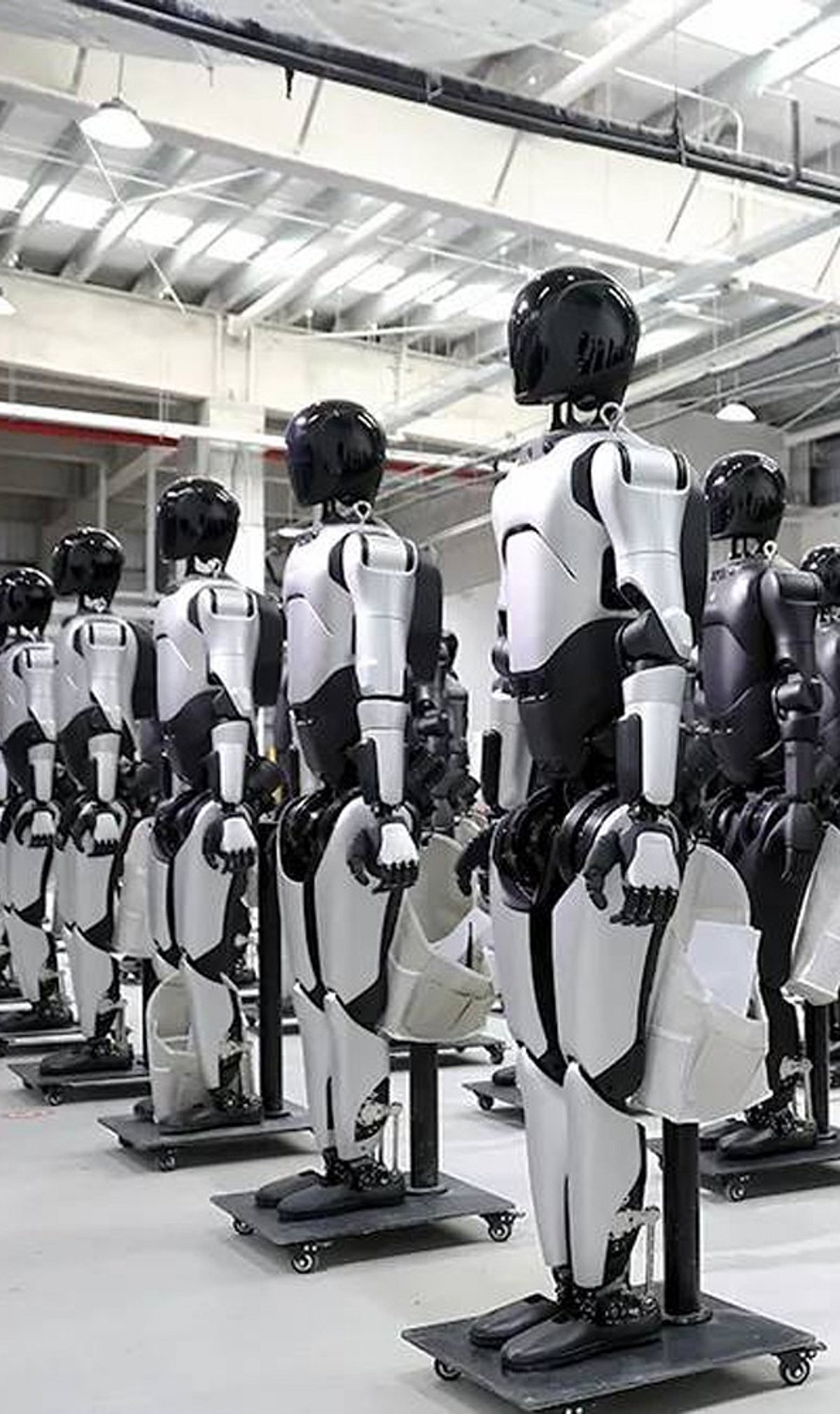
    China is rapidly scaling up its humanoid robot industry, moving from prototype development to automated mass production. The goal: increase output and slash manufacturing costs to make these robots accessible to commercial buyers.

    Automated Factories Set New Standards

    XPeng’s latest production lines automate more than 80% of core processes, applying automotive-grade manufacturing techniques to humanoid robots. This shift is driven by a need for higher volumes and lower per-unit costs.

    Cost Reduction Through Scale and Localization

    By ramping up production volumes and sourcing localized components, Chinese manufacturers have managed to bring prices down. Some humanoid robot models now cost less than 30,000 yuan (about $4,000), a threshold that signals rapid affordability improvement.

    Domestic Supply Chain Advantages

    China’s existing automotive and electronics supply chains already provide key components such as motors, reducers and sensors. This reduces the need for entirely new manufacturing capacity, accelerating time-to-market.

    Rapid Production Growth

    Agibot, a nowdel div, had produced 15,000 cumulative humanoid robots by June alone. That shows how quickly Chinese manufacturers are scaling up their production capabilities.

    Industrial Applications Expand

    Humanoid robots are now being deployed in automotive, electronics, logistics, aerospace and energy sectors. Industry attention is shifting toward practical, commercial use cases rather than just research exbits.

    Challenges Ahead

    Despite growing production, profitability remains uncertain. Manufacturers still need repeat orders, reliable performance and convincing returns on investment. The expanding robotics ecosystem in China may also lead to aggressive price competition, putting pressure on companies to balance affordability with sustainable margins.

  • Nanophotonics Could Bring Optical Computing Into the Mainstream

    Nanophotonics Could Bring Optical Computing Into the Mainstream

    Optical computing has long been hailed as a potential game-changer for data processing. Now, recent progress in nanophotonics is bringing that vision closer to real-world deployment, with implications for everything from data centers to artificial intelligence.

    What Is Nanophotonics?

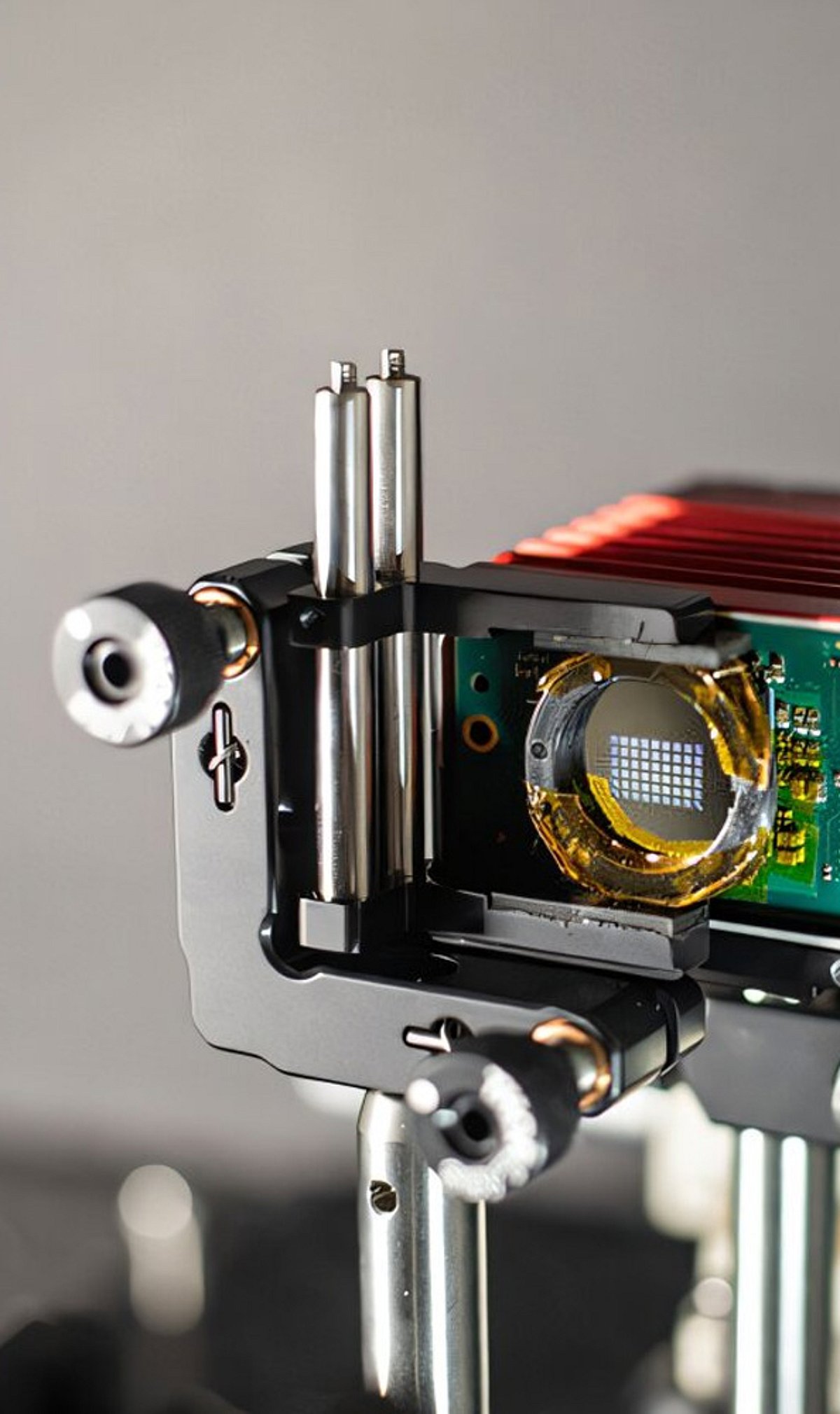
    Nanophotonics is the science of controlling light at extraordinarily small scales. By manipulating photons with nanoscale structures, researchers can create compact components that may one day integrate optical processing directly into standard computing systems.

    Why Optical Computing Matters

    Traditional computing relies on electrons to move and process data. Optical computing, by contrast, uses photons. Light can carry massive amounts of information simultaneously, offering dramatically higher bandwidth and faster data movement while reducing the electrical energy required for computation.

    Lower Energy Consumption

    One of the biggest challenges facing modern computing is the energy spent simply moving data. Nanophotonic components could cut that overhead significantly, helping address the efficiency demands of increasingly power-hungry artificial intelligence systems and large-scale computing workloads.

    Accelerating AI Workloads

    Photonic processors could speed up selected AI tasks, especially matrix operations. By performing computations through optical interference and parallel processing, these systems have the potential to outperform conventional electronic processors in training and inference workloads.

    Integrated Photonics Gains Momentum

    Advances in semiconductor fabrication are enabling researchers to pack lasers, waveguides, modulators, and detectors into increasingly compact photonic architectures. This integration is essential for building commercially viable optical processors rather than just laboratory experiments.

    Faster Data Centers

    Optical interconnects could complement or even replace electrical connections inside data centers. That would improve communication speeds, reduce transmission bottlenecks, and lower overall power requirements, making data centers faster and more sustainable.

    Toward Practical Manufacturing

    Progress in fabrication, materials science, packaging, and nanoscale integration is helping transition experimental nanophotonic technologies toward scalable commercial computing applications. These manufacturing breakthroughs will determine how quickly optical computing becomes mainstream.

    Remaining Challenges

    Despite the progress, several hurdles remain. Researchers still struggle with manufacturing complexity, optical losses, memory integration, programmability, thermal management, and the challenge of connecting photonic components with existing electronic systems. Overcoming these obstacles is the next frontier for optical computing.

    As nanophotonics continues to mature, the dream of practical optical computing is becoming increasingly tangible, promising faster, more efficient processing for generations of future systems.

  • Quantum Computing’s Next Leap: Logical Qubits, Error Correction, and Real-World Applications

    Quantum Computing’s Next Leap: Logical Qubits, Error Correction, and Real-World Applications

    The quantum computing landscape is undergoing a fundamental shift. While raw qubit counts once dominated headlines, the focus has now moved to reliability, error correction, and practical utility. Recent milestones from IBM, Google, Microsoft, Quantinuum, IonQ, and QuEra signal that the field is transitioning from laboratory experiments toward systems capable of solving real scientific and commercial problems.

    Logical Qubits Take Center Stage

    IBM and the University of Chicago demonstrated a 70-logical-qubit system in July 2026, completing a computation that IBM claims is beyond practical classical simulation. The task took about 15 minutes and emphasized performance alongside verifiability. Logical qubits, which combine multiple physical qubits to reduce errors, are now the key benchmark. IBM also introduced an error-control technique that achieves effective error rates roughly ten times lower than the base hardware.

    IBM Pushes Faster Circuits

    IBM’s Nighthawk r2 processor features 120 programmable qubits, 218 couplers, and 120 active reset elements. It delivers over 100,000 circuits per second and up to 25 times the circuit throughput of its predecessor Heron. The system has executed circuits with more than 7,500 gates while maintaining accuracy. IBM now aims for systems with hundreds of logical qubits and millions of quantum gates later this decade, signaling that circuit depth and reliability now matter more than qubit quantity alone.

    Google Targets Verifiable Quantum Advantage

    Google Quantum AI’s latest research, dubbed Quantum Echoes, aims for the first verifiable quantum advantage on a real-world-oriented algorithm. The emphasis is on producing results that classical systems can check and that have clear scientific value. This moves beyond earlier demonstrations of quantum supremacy toward useful, verifiable computation.

    Microsoft’s Topological Path

    Microsoft’s Majorana 2 processor uses topological qubits built from lead and indium-based semiconductors. The company reports a topological gap more than twice as large as its earlier processor, offering 1,000 times greater reliability. Microsoft targets a scalable quantum computer by around 2029, betting on inherent error protection at the physical level.

    Trapped Ions Scale Up

    Quantinuum received a finalized $100 million CHIPS Research and Development award from the U.S. government on September 8, 2026, focusing on low-loss integrated photonics, cryogenic semiconductors, and advanced ion traps. The company works with GlobalFoundries and Monarch Quantum for domestic production. IonQ announced Superion 256, a 256-qubit platform, with SkyWater fabricating fully integrated processors and first ions trapped. Customer deliveries are expected in 2027.

    Neutral Atoms Add Diversity

    QuEra continues advancing neutral-atom systems, with work on high-fidelity entangling gates, nonlocal circuits, quantum error correction, and neural decoders. The company also cites a 3,000-qubit coherent system from 2025. The variety of approaches—superconducting, trapped ions, neutral atoms, photonics, and topological qubits—shows that no single design has yet secured a lead.

    Government Support Accelerates Progress

    The U.S. government has intensified its quantum focus. A June 2026 White House order created the QC-ADDS initiative, calling for a national push toward quantum systems for scientific discovery. The Department of Energy’s Quantum Genesis program targets fault-tolerant systems by 2028 with low hundreds of logical qubits, covering chemistry, materials science, plasma physics, and high-energy physics. It also proposes a National Quantum Supercomputing User Facility to integrate quantum computers with HPC and AI. Proposed CHIPS incentives total about $2.013 billion for nine companies.

    What This Means for the Future

    The quantum race now has a broader measure of progress. Reliable logical qubits, deep circuits, error correction, domestic manufacturing, and useful scientific results all matter. The strongest signal from current research is clear: quantum hardware has moved past a simple race for larger qubit numbers. The next major milestone will come when reliable quantum systems solve valuable problems at a scale that classical machines cannot match—defining the real start of practical quantum computing.

    Frequently Asked Questions

    Why are logical qubits important?

    Logical qubits combine multiple physical qubits with error-correction techniques to create more reliable computational units.

    What are IBM’s latest quantum computing advances?

    IBM is pursuing larger logical-qubit systems, faster circuit execution, improved error control, and deeper quantum circuits.

    How is Google approaching quantum advantage?

    Google is focusing on verifiable quantum advantage through algorithms designed around useful, scientifically meaningful computational tasks.

    What makes Microsoft’s Majorana 2 approach different?

    Microsoft is pursuing topological qubits designed to provide stronger protection against errors at the physical-qubit level.

    Why does U.S. government support matter?

    Federal programs support fault-tolerant quantum systems, domestic manufacturing, research infrastructure, and integration with high-performance computing and AI.

  • India’s Deep-Tech Boom: 9 Defining Technologies for 2026

    India’s Deep-Tech Boom: 9 Defining Technologies for 2026

    India is entering a new era of technological innovation. By 2026, a wave of deep-tech advancements is expected to reshape industries, businesses, and public services across the country. From artificial intelligence and semiconductors to space exploration and biotech, these are the key technologies driving India’s deep-tech boom.

    AI and Generative AI

    India’s AI ecosystem continues to expand rapidly, with applications spreading across business, research, and government services. Generative AI tools and platforms are becoming central to productivity and innovation, making advanced AI one of the most significant technology drivers of 2026.

    Semiconductor Technology

    India is investing heavily in semiconductor manufacturing, chip design, and related infrastructure. New fabrication plants and design centers are being developed to reduce reliance on global supply chains and strengthen the country’s electronics ecosystem.

    Quantum Computing

    Quantum technology is gaining momentum in India, with research focused on quantum computing, secure communications, advanced sensing, and future industrial applications. These developments could unlock entirely new capabilities across healthcare, finance, and logistics.

    Space Technology

    India’s space sector is opening up to private participation, fostering innovation in launch systems, satellites, Earth observation, and commercial space services. Startups and established companies alike are exploring new ways to make space more accessible.

    Robotics and Automation

    Robotics is moving beyond factory floors. Indian startups are developing intelligent machines for healthcare, logistics, agriculture, defense, and other real-world applications, bringing automation to everyday life.

    Advanced Drones

    Drone technology is expanding into agriculture, mapping, delivery, surveillance, and infrastructure inspection. These applications are creating new opportunities for deep-tech startups and transforming traditional industries.

    Biotechnology

    India’s biotechnology sector is advancing drug discovery, genomics, medical research, and agricultural innovation. These efforts are strengthening the country’s future pipeline of high-impact technologies.

    Electric Mobility Technology

    Battery innovation, electric vehicles, and charging infrastructure are transforming mobility in India. Deep-tech companies are developing more efficient energy solutions to support the shift to electric transportation.

    Defense Technology

    India’s defense sector is embracing drones, sensors, artificial intelligence, robotics, and space systems. A renewed focus on indigenous development is helping the country build self-reliant defense capabilities.

    Together, these technologies signal a transformative period for India, positioning the country as a major player in the global deep-tech landscape.