Category: Sustainability

  • How Japan’s AI-Powered Drones Are Revolutionizing Global Reforestation

    How Japan’s AI-Powered Drones Are Revolutionizing Global Reforestation

    Japan is pioneering the use of artificial intelligence and drone technology to tackle one of the world’s most pressing environmental challenges: deforestation. By combining AI-powered drones with advanced imaging and automated systems, the country is developing a scalable, cost-effective approach to reforesting degraded landscapes, from remote mountains to disaster-stricken zones.

    At the core of this innovation is AI-driven seed planting. Drones equipped with precision seed-dispersal mechanisms can cover vast and difficult terrains far quicker than human planters, dramatically reducing both labor costs and operational expenses. This method allows millions of trees to be planted in a fraction of the time required by traditional manual efforts.

    Precision mapping plays a critical role. Drones use advanced imaging systems to identify degraded land, analyze soil conditions, and determine optimal planting locations. Real-time environmental data helps improve seed survival rates and restoration success, making every flight more effective than random scattering.

    Beyond planting, intelligent drones continuously monitor forest growth, soil health, and vegetation changes. This automated surveillance enables faster intervention when problems arise, such as pest outbreaks or water stress, and supports better long-term forest management decisions. The data collected feeds into AI models that refine future planting strategies, maximizing resource allocation and survival rates.

    The environmental impact is significant. Large-scale drone reforestation accelerates carbon capture, restores ecosystems, and protects biodiversity. It also helps countries meet ambitious climate goals by providing a practical tool for large-scale restoration. Japan’s approach could serve as a global model, demonstrating how technology can strengthen climate resilience for future generations.

    With lower operational costs and the ability to reach previously inaccessible areas, AI drones are poised to transform reforestation from a slow, labor-intensive process into a fast, data-driven conservation strategy. The future of global reforestation may well be flown by autonomous drones.

  • Key Factors for Selecting a Top Solar Panel Manufacturer

    Key Factors for Selecting a Top Solar Panel Manufacturer

    Choosing the right solar panel manufacturer is critical for long-term energy savings and system reliability. Below are the essential criteria to guide your decision.

    Manufacturer Reputation

    Research brand credibility, industry experience, customer reviews, and successful installations before selecting a manufacturer. A trusted provider ensures reliable long-term solar performance.

    Product Certifications

    Verify international quality certifications that confirm panels meet recognized safety, efficiency, durability, and environmental standards. This step is non-negotiable before making a purchase.

    Panel Efficiency

    Compare efficiency ratings to maximize electricity generation, especially when rooftop space is limited for residential or commercial installations. Higher efficiency often translates to better return on investment.

    Warranty Coverage

    Choose manufacturers offering comprehensive product and performance warranties. These protect against manufacturing defects and guarantee long-term output degradation.

    Technology Used

    Evaluate advanced technologies like TOPCon, HJT, or bifacial panels. These deliver higher efficiency, improved durability, and superior energy production capabilities.

    After-Sales Support

    Reliable technical assistance, maintenance services, and prompt warranty claims ensure hassle-free ownership throughout the solar system’s operational lifespan.

    Pricing Transparency

    Compare complete installation costs without hidden charges. Balance affordability with quality, efficiency, and long-term value for money.

    Installation Network

    Prefer manufacturers with certified installation partners. This ensures professional setup, compliance with standards, and optimal system performance after commissioning.

    Customer Reviews

    Read verified customer feedback to understand real-world performance, service quality, installation experience, and long-term satisfaction before finalizing your purchase.

  • Electric vs. Petrol Cars: A 2026 Cost Comparison for Daily Driving

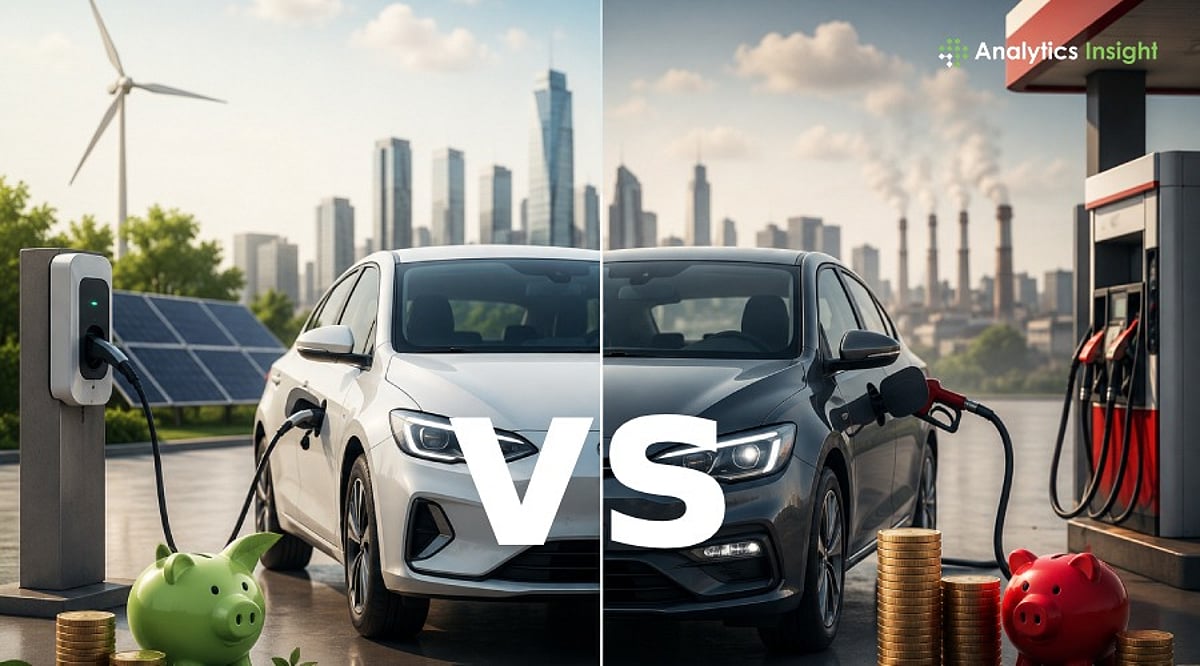
    Electric vs. Petrol Cars: A 2026 Cost Comparison for Daily Driving

    Electric cars are more expensive upfront but offer significantly lower running costs, making them cheaper than petrol cars over time, especially for daily commutes. In 2026, the gap in total ownership costs has narrowed further, with electric vehicles (EVs) recovering their price premium within three to four years.

    Daily Cost of Driving

    Petrol prices remain near Rs. 100 per litre in many parts of India. A typical petrol car delivers about 14 km per litre, translating to roughly Rs. 7 per kilometer. In contrast, electric cars consume 15–18 kWh per 100 km. At home electricity rates of around Rs. 8 per unit, the cost drops to Rs. 1.2–Rs. 1.5 per kilometer. Even using public fast chargers, the cost stays between Rs. 2.5 and Rs. 4.5 per km — a 70–80% reduction compared to petrol.

    Yearly Fuel and Charging Expenses

    For a driver covering 15,000 km annually, petrol costs about Rs. 105,000 per year. Home-charging an electric car for the same distance costs just Rs. 20,000–Rs. 25,000. That’s over Rs. 80,000 in annual savings, a gap that widens as petrol prices rise.

    Maintenance Costs Remain Lower for EVs

    Petrol cars require regular oil changes, filter replacements, spark plug service, clutch and gearbox work, and exhaust repairs — costing Rs. 12,000–Rs. 20,000 per year. Electric cars have far fewer moving parts, no engine oil, and no exhaust system, reducing annual maintenance to Rs. 4,000–Rs. 8,000. Studies show EVs cut maintenance expenses by 40–60%.

    Purchase Price Still Favors Petrol Cars

    In 2026, a compact petrol SUV in India costs around Rs. 13–14 lakh, while a comparable electric SUV ranges from Rs. 16–18 lakh — a premium of Rs. 3–5 lakh. However, manufacturers like Tata and Mahindra are introducing lower-priced EVs, gradually closing the gap.

    Charging Infrastructure Still Creates Problems

    Petrol stations are ubiquitous, but charging stations remain limited in many areas. A June 2026 survey of Uber drivers found charging availability is now a bigger concern than vehicle price for those considering switching to EVs. Fast-charging stations also cost more than home charging, reducing savings for drivers dependent on public networks.

    Five-Year Ownership Cost Comparison

    A petrol car priced at Rs. 13.5 lakh incurs about Rs. 5 lakh in fuel and Rs. 70,000 in maintenance over five years — total approximately Rs. 19.2 lakh. An electric car at Rs. 17 lakh needs only Rs. 70,000 for charging and Rs. 25,000 for maintenance, totaling about Rs. 17.95 lakh. Despite the higher upfront cost, the EV recovers the difference within three to four years.

    Final Verdict

    Electric cars clearly cost less to run. Daily expenses are much lower, yearly fuel savings are significant, and maintenance remains minimal. Petrol cars still appeal to buyers seeking a lower purchase price and easy access to fuel stations, especially for long-distance travel. However, for regular city driving and higher annual mileage, EVs offer better long-term value. The shift toward electric vehicles continues because lower running costs have become impossible to ignore.

    FAQs

    1. Are electric cars cheaper to run than petrol cars in 2026? Yes, electric cars cost much less per kilometer because electricity remains far cheaper than petrol.
    2. How much does a petrol car cost per kilometer in 2026? A petrol car costs around Rs. 7 per kilometer based on average fuel prices and mileage.
    3. How much does an electric car cost per kilometer in 2026? An electric car usually costs between Rs. 1.2 and Rs. 1.5 per kilometer with home charging.
    4. Why do electric cars have lower maintenance costs? Electric cars have fewer mechanical parts and do not require engine oil changes, exhaust repairs, or spark plug replacement.
    5. Which car type saves more money over five years? Electric cars usually save more money over five years because charging and maintenance costs stay much lower than petrol cars.
  • Tata Power-DDL and Ashoka Centre Forge Five-Year Partnership to Drive India’s Energy Transition Research

    Tata Power-DDL and Ashoka Centre Forge Five-Year Partnership to Drive India’s Energy Transition Research

    New Delhi, June 26, 2026 — The Ashoka Centre for a People-centric Energy Transition (ACPET) and Tata Power Delhi Distribution Limited (Tata Power-DDL) have signed a five-year Memorandum of Understanding (MoU) to accelerate research, innovation, and capacity building across India’s energy and power sector. The collaboration aims to create scalable solutions that support the country’s broader energy transition goals.

    The partnership unites ACPET’s expertise in research, data analysis, energy policy, and sustainable transitions with Tata Power-DDL’s operational experience as a leading Indian power distribution utility. Joint activities will include research projects, technology demonstrations, policy engagement, and knowledge-sharing initiatives designed to build a more sustainable, secure, and equitable energy future.

    This collaboration arrives at a pivotal moment for India’s power sector, which is undergoing rapid technological and regulatory transformation. Key focus areas include smart grids, electric vehicles, distributed energy resources, energy storage, demand-side management, and consumer engagement. The MoU creates a structured platform for both organizations to explore these opportunities and contribute to industry best practices.

    Specific initiatives under the partnership include joint research and learning, development of policy briefs and technical reports, expert dialogues, training programs, and the potential establishment of a Centre of Excellence to drive innovation and strengthen institutional capabilities.

    “India’s energy transition presents a unique opportunity to bring together research, policy, innovation and real-world implementation. As the sector evolves over the coming years, meaningful progress will depend on stronger collaboration between academia, industry, policymakers, startups and innovators,” said Dr. Praveer Sinha, CEO & Managing Director, Tata Power.

    “Technology alone will not deliver India’s energy transition — the human capacity to deploy, operate, and innovate around that technology is equally decisive. This partnership between Tata Power-DDL and ACPET brings together operational depth and research rigour to address both,” said Vaibhav Chowdhary, Director, ACPET.

    “India’s electricity sector is undergoing a profound transformation. We want renewable energy to scale rapidly, but we also recognise that transitions of this magnitude are shaped by historical realities, market dynamics, and technological constraints. Together, we can bridge evidence and practice to shape more effective pathways for India’s energy transition,” added Rakesh Kacker, Senior Advisor, ACPET.

    “The power sector is undergoing a fundamental transformation driven by rapid technological advancements, growing renewable energy integration, distributed energy resources, and evolving consumer expectations. Our partnership with ACPET will bring together industry experience and academic excellence to develop innovative solutions, strengthen policy and regulatory frameworks, and contribute meaningfully to India’s energy transition journey,” said Dwijadas Basak, CEO, Tata Power Delhi Distribution Limited (Tata Power-DDL).

    Under the agreement, Tata Power-DDL will support dedicated research personnel and provide infrastructure access, while both institutions will jointly design and implement research projects, consumer awareness programs, and disseminate outcomes. A Joint Steering Committee with representatives from both organizations will provide strategic oversight.

    The collaboration reflects a shared commitment to addressing the complex technological, regulatory, and societal dimensions of the energy transition, contributing to India’s vision of a sustainable and secure energy future.

    About Tata Power-DDL

    Tata Power Delhi Distribution Limited is a joint venture between Tata Power and the Government of NCT of Delhi. It distributes electricity in North Delhi, serving a population of around 9 million. The utility has been a frontrunner in power distribution reforms, achieving a record reduction in Aggregate Technical & Commercial (AT&C) losses from 53% in July 2002 to 5.42% today. It has been awarded the highest ‘A+’ rating by the Ministry of Power under the Consumer Service Rating of Discoms (CSRD) framework for FY 2024–25.

    About ACPET

    The Ashoka Centre for a People-centric Energy Transition (ACPET) supports energy transition toward a net-zero economy, addressing critical knowledge gaps for India and the Global South. ACPET builds context-responsive, people-centric frameworks and solutions that advance economic, social, and governance pillars of sustainable growth. It collaborates with industry, government, and community leaders to test and evaluate practical interventions.

    For more information, visit acpet.ashoka.edu.in.

  • MIT Civil and Environmental Engineering: Pioneering Sustainable Infrastructure and Climate Solutions

    MIT Civil and Environmental Engineering: Pioneering Sustainable Infrastructure and Climate Solutions

    The MIT Department of Civil and Environmental Engineering (CEE) continues to lead groundbreaking research that addresses some of the world’s most pressing challenges, from climate change to infrastructure resilience. Recent developments highlight the department’s commitment to innovation, sustainability, and real-world impact.

    Building Smarter, Greener Structures

    MIT researchers have developed a computer model that could enable bridges and buildings to use less material while maintaining structural integrity. This approach bridges the gap between optimized design and practical construction, promising significant cost and environmental savings.

    Climate and Environmental Breakthroughs

    In a major advance for sustainable construction, new research reveals how injecting carbon dioxide into cement paste triggers a chemical sequence that rewires how cement sets. Using real-time Raman spectroscopy, scientists captured a fleeting intermediate reaction for the first time, opening pathways to carbon-negative building materials.

    MIT is also tackling methane emissions head-on. PhD student Audrey Parker is studying mitigation strategies for dairy farms and coal mines, targeting this potent greenhouse gas. Meanwhile, ocean bacteria have been observed teaming up to break down biodegradable plastics, offering insights into natural waste decomposition processes.

    AI and Automation Innovations

    MIT engineers have designed an AI model that generates novel proteins based on their motion and vibration patterns, not just their shape. This breakthrough could lead to dynamic biomaterials and adaptive therapeutics. Another AI system learns to keep warehouse robot traffic flowing smoothly by deciding which robots get right-of-way, reducing congestion and increasing throughput.

    A parking-aware navigation system developed at MIT minimizes the need to circle for spots, saving drivers up to 35 minutes and reducing emissions by providing realistic travel time estimates.

    Energy and Sustainability

    Active Surfaces, an award-winning startup with roots at the MIT Energy Initiative, is developing peel-and-stick solar panels that are lightweight, flexible, and high-efficiency. These films can be applied to roofs, walls, and curved surfaces, making solar energy more accessible.

    Recognition and Leadership

    MIT has once again been ranked the world’s No. 1 university by QS for 2026-27, marking the 15th consecutive year at the top. The Institute also placed first in 12 subject areas. The School of Engineering recognized faculty with tenure and awards in winter and fall 2025-2026, celebrating scholarship, service, and excellence. Desirée Plata, a CEE faculty member, was appointed associate dean of engineering to advance research and entrepreneurial initiatives.

    These achievements underscore MIT Civil and Environmental Engineering’s role as a global leader in creating sustainable, intelligent solutions for the built and natural environments.

  • MIT’s Latest Innovations in Alternative Energy: Fusion, Geothermal, and Beyond

    MIT’s Latest Innovations in Alternative Energy: Fusion, Geothermal, and Beyond

    MIT continues to lead the charge in alternative energy research, with recent breakthroughs spanning fusion, geothermal, AI-optimized power grids, and decarbonization technologies. Below is a roundup of key developments from the MIT Energy Initiative and affiliated labs.

    Fusion Energy Advances

    • PSFC showcases technologies for fusion and geothermal: Rep. Jake Auchincloss visited the MIT Plasma Science and Fusion Center to learn about scaling geothermal energy. (Read more)
    • Championing fusion’s promising underdog: Sophia Henneberg, assistant professor in Nuclear Science and Engineering, is developing stellarators to harness fusion energy. (Read more)
    • Working to make fusion viable: George Tynan, as Norman C. Rasmussen Adjunct Professor, addresses big physics and engineering challenges of fusion plasmas. (Read more)
    • Smart handling of neutrons: Assistant Professor Ethan Peterson tackles practical issues for viable fusion power plants. (Read more)

    Geothermal Energy

    • Geothermal energy turns red hot: MIT Energy Initiative symposium maps a path to tap the planet’s heat-rich rocks for clean power at scale. (Read more)

    AI, Power Grid & Decarbonization

    • 3 Questions: How AI could optimize the power grid: Techniques can make power grids cleaner and more efficient despite AI’s growing energy demands. (Read more)
    • A faster problem-solving tool that guarantees feasibility: FSNet system helps power grid operators rapidly find feasible solutions for optimizing electricity flow. (Read more)
    • Confronting the AI/energy conundrum: MIT Energy Initiative’s annual symposium explores AI as both a problem and solution for clean energy transition. (Read more)
    • Helping students bring about decarbonization: Professor Jessika Trancik’s course helps students understand energy levers for addressing climate change. (Read more)
    • New climate chemistry model: MIT study confirms climate impacts of hydrogen, recommends leak prevention as priority. (Read more)
    • Decarbonizing heavy industry with thermal batteries: MIT spinout Electrified Thermal Solutions develops conductive firebrick for high-temperature industrial heat. (Read more)
    • Preparing Taiwan for a decarbonized economy: MIT Energy Initiative and Taiwanese consortium explore energy future. (Read more)

    Nuclear Energy

    • How to make small modular reactors more cost-effective: Youyeon Choi leverages experience from South Korea and multi-physics modeling. (Read more)
    • Aligning economic and regulatory frameworks for nuclear reactors: PhD student Liam Hines advocates for policy that keeps pace with technology. (Read more)

    Bioeconomy & Society

    • Bridging science and society: Course STS.059 explores social and political factors in biology, biotech, and biological engineering sectors. (Read more)
  • Breakthroughs in Sustainable Agriculture: MIT’s Latest Research and Innovations

    Breakthroughs in Sustainable Agriculture: MIT’s Latest Research and Innovations

    MIT News covers a wide range of groundbreaking research in agriculture, from climate resilience and urban farming to methane reduction and next-generation fertilizers. The following articles highlight recent discoveries and initiatives that are shaping the future of sustainable food production.

    Place-Based Pathways to a Viable Future

    The Living Climate Futures Symposium explored climate challenges and solutions at the community level, emphasizing local adaptation strategies.

    Testing Sustainable Agriculture in Barcelona

    Students in a MISTI Global Classroom confronted the challenges of climate change during farm and co-op visits in Barcelona.

    Plants Can Sense the Sound of Rain

    MIT engineers discovered that rice seeds sprout faster when exposed to the sound of rain, opening new avenues for plant communication research.

    From Idaho to MIT: Cutting Methane Emissions

    PhD student Audrey Parker studies methane mitigation in dairy farms and coal mines, aiming to reduce a potent greenhouse gas.

    Seeds of Something Different

    Kate Brown’s book Tiny Gardens Everywhere uncovers the hidden history and politics of urban farming.

    Nitrous Oxide and Soil Bacteria

    Fertilizer use increases nitrous oxide levels, which can harm beneficial soil bacteria that support plant growth.

    Designing Resilient Plants from the Cell Up

    Foray Bioscience, an MIT startup, engineers single plant cells to create novel materials and sustainable solutions.

    Bridging Science and Society in the Bioeconomy

    Course STS.059 explores the social and political factors shaping biotechnology and biological engineering.

    Regenerative Aquaculture in Arkansas

    MIT student Kiyoko Hayano worked with Keo Fish Farms to build a model for regenerative water systems.

    Post-COP30: Aggressive Climate Policies Needed

    The 2025 Global Change Outlook report highlights the need for accelerated action to cap warming at 1.5°C.

    Mind, Hand, and Harvest

    A volunteer pilot program brings low-cost organic produce to the MIT community.

    From Nanoscale to Global Scale

    MIT.nano’s cleanroom now bears the name of Robert Noyce, supporting advances in manufacturing, health, and climate.

    Returning Farming to City Centers

    Course 4.182, Resilient Urbanism: Green Commons in the City, teaches sustainable urban agriculture.

    Packard Fellows for Science and Engineering

    Darcy McRose and Mehtaab Sawhney recognized for research on antibiotics in ecosystems and agriculture.

    Engineering Next-Generation Fertilizers

    MIT postdoc Giorgio Rizzo uses plant chemistry to design sustainable fertilizers that could reshape farming.

  • J-WAFS: MIT’s Abdul Latif Jameel Water and Food Systems Lab – Latest Research and Innovations

    J-WAFS: MIT’s Abdul Latif Jameel Water and Food Systems Lab – Latest Research and Innovations

    The Abdul Latif Jameel Water and Food Systems Lab (J-WAFS) at MIT is a pioneering research initiative dedicated to addressing global challenges in water and food security. By fostering interdisciplinary collaboration, J-WAFS develops innovative solutions that range from atmospheric water harvesting to AI-driven ecosystem monitoring. Below is a selection of recent news highlights from the lab.

    Recent News

    For the full list of articles and updates, visit the J-WAFS topic page on MIT News.