
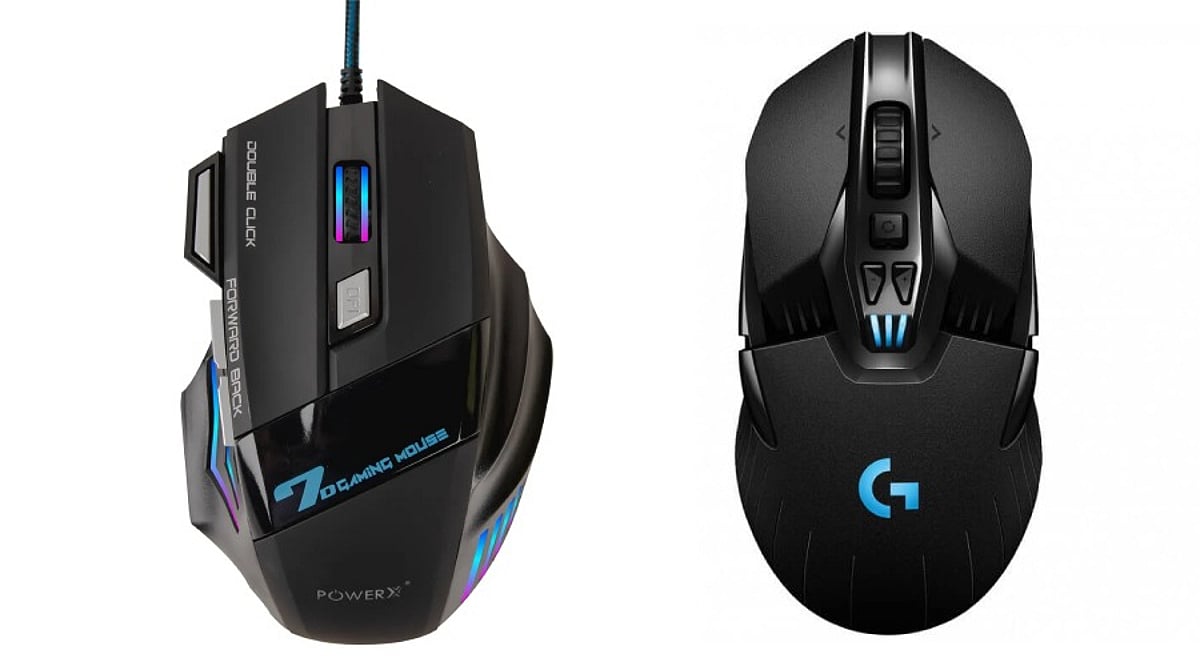
For years, gamers treated a cable as a guarantee of speed. That assumption no longer holds at the premium end of the market. Modern 2.4 GHz wireless gaming mice can match wired models on latency, sensor accuracy, and report rate. The meaningful gap is now between well-engineered wireless hardware and budget wireless hardware, not simply between a cable and no cable.
Wireless latency has nearly closed the gap
High-end wireless mice now deliver extremely low click and sensor latency. Models such as the Logitech G PRO X2 SUPERSTRIKE and Razer Viper V4 Pro have been tested with 8000 Hz polling over wireless, and their click and sensor response is close to wired counterparts. RTINGS has reported similarly strong raw results for the Razer Viper V4 Pro and BenQ ZOWIE ZA13-DW, even though the Razer reaches 8000 Hz and the BenQ reaches 4000 Hz. In that comparison, the polling-rate difference had little practical impact.
What 8000 Hz polling actually changes
Polling rate describes how often a mouse reports its position to the PC. A 1000 Hz mouse reports every 1 ms. An 8000 Hz mouse reports every 0.125 ms, which means more data per second. Razer lists 0.291 ms average latency for its HyperSpeed Wireless Gen-2 system at 8000 Hz, versus 0.090 ms for its wired 8000 Hz system in controlled tests.
Those numbers are impressive, but they are also tiny. A fraction of a millisecond is unlikely to create a clear gameplay advantage on its own. Higher polling rates also place more demand on the PC and tend to matter more with a high-refresh display than with a standard 60 Hz screen. Buyers should not choose a mouse on polling rate alone.
The cable still creates real-world drag
A cable adds physical resistance across a desk. That resistance can affect wide arm sweeps, fast flicks, and low-sensitivity aiming. A wireless mouse removes that link and can feel more natural for large movements. Weight matters too. The Razer Viper V4 Pro is listed at 48.9 grams, and the Logitech G PRO X2 SUPERSTRIKE is also in the lightweight class. For many players, a lighter mouse and a better hand fit will improve aim more than a tiny latency advantage.
Where wired mice still win
Wired mice do not need a battery, a receiver, or a radio link. That simplicity appeals to players who want a direct connection and no charging routine. Wired models can also deliver strong value at lower prices, while premium wireless models add cost for battery and radio hardware. Receiver placement matters as well: a good 2.4 GHz setup should keep the receiver close to the mouse and away from sources of radio interference. Bluetooth is a different category. It suits office work and travel, while dedicated 2.4 GHz links are better for fast games.
Modern wireless does not mean slow
Current flagship products show how far wireless has come. The Razer Viper V4 Pro supports 8000 Hz in both wired and wireless modes, and the Logitech G PRO X2 SUPERSTRIKE reaches 8000 Hz over wireless. Both are among the high-performance options tracked by RTINGS. Still, not every wireless mouse matches every wired mouse. Sensor quality, switch design, firmware, receiver stability, weight, shape, and click response all matter. A poor wireless model can feel worse than a good wired model.
How to choose
For competitive FPS play, a strong 2.4 GHz wireless mouse can deliver the response serious players need. Wired remains a solid choice for players who prefer a direct link, no battery, and simple setup. Bluetooth is better suited to general computer use than high-speed competitive play.
The old question was whether wireless could match wired. At the high end, that question is largely settled. The better question is which complete mouse fits your hand, grip, sensitivity, and budget. Shape, weight, sensor, click response, receiver, battery, and price matter more than the cable alone.
FAQ
Are wireless gaming mice as fast as wired mice?
High-end 2.4 GHz wireless mice can offer very low latency that closely matches wired models.
Does 8000 Hz polling make a big difference?
It cuts the report interval to 0.125 ms, but the practical gaming benefit can remain small.
Is Bluetooth good for competitive gaming?
Bluetooth generally has higher latency than dedicated 2.4 GHz gaming connections, so it is better for general computer use.
What matters most when choosing a gaming mouse?
Shape, weight, sensor performance, click response, connection quality, battery life, and price all deserve attention.
Does wired still have an advantage?
Wired mice offer unlimited power and a direct connection, while wireless models remove cable drag and provide greater movement freedom.