Tag: 2026 smartphones

  • Xiaomi 17T vs OnePlus 15R: Which Mid-Premium Phone Wins in 2026?

    Xiaomi 17T vs OnePlus 15R: Which Mid-Premium Phone Wins in 2026?

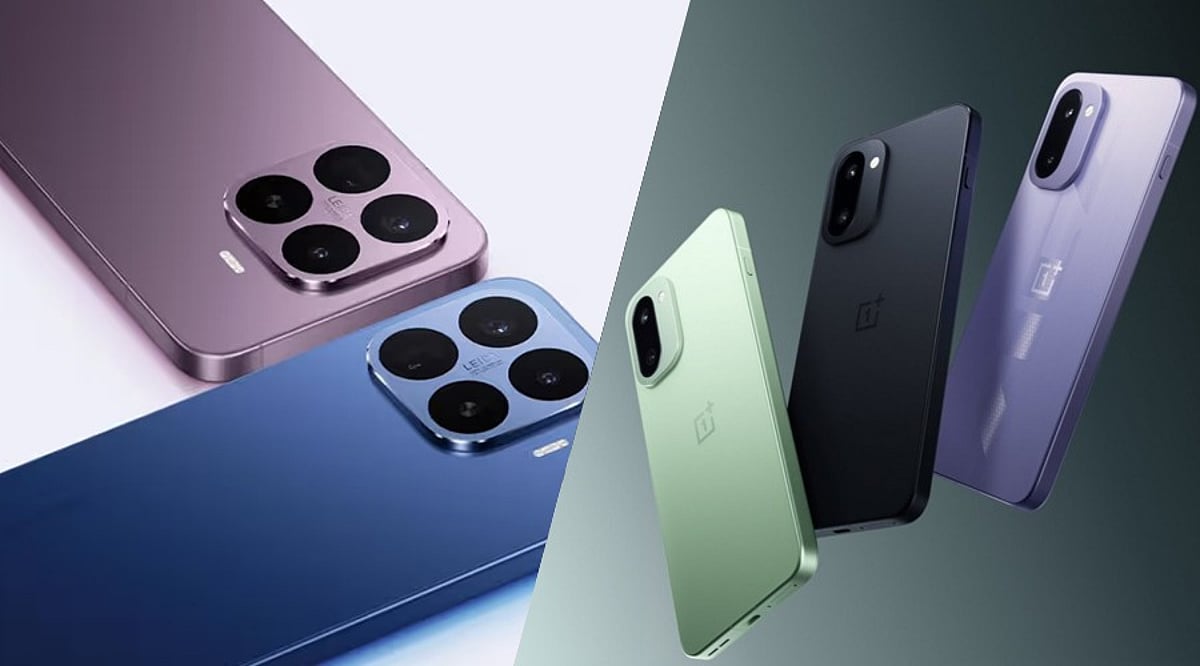
    The battle for the mid-premium smartphone segment continues in 2026 with two compelling contenders: the Xiaomi 17T and the OnePlus 15R. Both devices pack flagship-level specifications but cater to different priorities. OnePlus leans into raw performance, display fluidity, and marathon battery life, while Xiaomi focuses on optical zoom photography, screen brightness, and a compact design.

    Price Comparison

    According to listings on 91mobiles, the OnePlus 15R starts at Rs. 54,999 for the 12GB+256GB variant, while the 12GB+512GB version costs Rs. 59,999. The Xiaomi 17T’s 12GB+256GB model is priced higher at Rs. 64,999. Retail offers and bank discounts can shift these prices, so checking live rates is recommended.

    Performance

    The OnePlus 15R is powered by Qualcomm’s Snapdragon 8 Gen 5, while the Xiaomi 17T uses MediaTek’s Dimensity 8500 Ultra. In benchmark tests reported by 91mobiles, the OnePlus scored 9,363 on Geekbench multi-core versus 6,860 for the Xiaomi, and roughly 2.95 million on AnTuTu compared to 2.13 million. This gives the OnePlus a clear edge for gaming and heavy multitasking, though real-world performance also depends on thermal management and software optimization.

    Display

    The OnePlus 15R features a 6.83-inch AMOLED panel with a 165Hz refresh rate, supporting a billion colors and HDR Vivid. The Xiaomi 17T has a smaller 6.59-inch AMOLED display at 120Hz but adds Dolby Vision, HDR10+, and a claimed peak brightness of 3,500 nits. Xiaomi’s screen is better for HDR content and outdoor visibility, while OnePlus offers a smoother experience for gamers.

    Camera

    Both phones share a 50MP main sensor and a 32MP front camera. The key difference lies in the secondary lens: Xiaomi includes a 50MP periscope telephoto with 5x optical zoom and a 115mm equivalent focal length, enabling true optical zoom for distant subjects. OnePlus opts for an 8MP ultrawide lens with no telephoto. For photography enthusiasts who value zoom, the Xiaomi 17T is the clear winner.

    Battery and Charging

    OnePlus packs a massive 7,400mAh battery with 80W SUPERVOOC charging, while Xiaomi uses a 6,500mAh silicon-carbon cell with 67W charging. In PCMark battery tests, the OnePlus lasted 18 hours 13 minutes against 14 hours 45 minutes for the Xiaomi. However, real-world endurance may vary. The OnePlus also features IP69K dust/water resistance.

    Which One Should You Buy?

    The OnePlus 15R is better suited for gamers, power users, and anyone who prioritizes battery life. The Xiaomi 17T is ideal for photographers, travelers, and those who value a bright, compact display with excellent HDR support. Neither device is universally superior—the right choice depends on your personal usage patterns.

    For further reading, check out our comparisons of the Motorola Edge 70 Max vs OnePlus 15R vs iQOO 15R, and the Xiaomi 17T launch coverage in India.

  • Top Curved Display Phones Under Rs. 25,000 in 2026: Premium AMOLED on a Budget

    Top Curved Display Phones Under Rs. 25,000 in 2026: Premium AMOLED on a Budget

    Curved AMOLED displays are no longer exclusive to flagship devices. In 2026, several smartphones under Rs. 25,000 offer premium curved screens with smooth refresh rates and excellent value. Here are the best options to consider.

    Motorola Edge 60 Fusion – Best All-Rounder

    Enjoy a 6.67-inch 1.5K pOLED curved display with up to 144Hz refresh rate, Dimensity 7400 chip, IP68 protection, 5,500mAh battery, and 68W fast charging.

    POCO X7 Pro 5G – Performance Champion

    Powered by the Dimensity 8400 Ultra processor, this phone packs a 120Hz AMOLED display, 6,550mAh battery, and blazing-fast 90W charging for gamers.

    iQOO Z10R 5G – Stylish & Durable Pick

    Get a premium quad-curved AMOLED display, 120Hz refresh rate, Dimensity 7400 chipset, IP68 rating, and a large 5,700mAh battery at an attractive price.

    OnePlus Nord CE 5 – Battery Beast

    Featuring a 120Hz AMOLED display, Dimensity 8350 Apex chipset, massive 7,100mAh battery, and 80W fast charging with OxygenOS for a clean Android experience.

    Vivo T4 5G & Redmi Note 15 SE

    Vivo T4 offers a huge 7,300mAh battery with 90W charging, while Redmi Note 15 5G SE balances AMOLED visuals, cameras, and everyday performance.

    Best Budget Curved Display Phones

    Motorola G96, Tecno Pova Curve 5G, and Lava Agni 3 5G deliver curved AMOLED displays, fast refresh rates, capable processors, and excellent value under Rs. 25,000.

    Which Phone Should You Buy?

    Choose POCO X7 Pro for gaming, Motorola Edge 60 Fusion for multimedia, OnePlus Nord CE 5 for battery life, and iQOO Z10R for premium design.

    Things to Know Before Buying

    Curved displays look premium but need a protective case. Check software update policy, charger availability, battery size, and comfort before making your purchase.

  • Top 4 Flagship Smartphones Under ₹45,000 in 2026: Premium Features Without Breaking the Bank

    Top 4 Flagship Smartphones Under ₹45,000 in 2026: Premium Features Without Breaking the Bank

    Why Flagships Make More Sense Right Now

    The smartphone market has become increasingly challenging as rising memory chip costs push prices upward across nearly every segment. What was once considered a flagship bargain now often falls into premium territory. However, ongoing online discounts and exchange offers are changing the equation, making several high-end smartphones available for less than Rs. 45,000.

    Buyers can stretch their budget slightly and unlock flagship-level performance, better cameras, premium displays, and longer software support. Here are four premium smartphones offering significantly better value than many newly launched mid-range models.

    Four Flagship Phones Worth Considering

    These smartphones are designed to offer a complete flagship experience, making them attractive options for users who plan to keep their devices for several years. Among the top contenders are models from OnePlus, Samsung, Xiaomi, and iQOO, each bringing unique strengths:

    • OnePlus 13T: Offers a powerful Snapdragon processor, a triple-camera system co-developed with Hasselblad, and a 120Hz AMOLED display with lightning-fast charging.
    • Samsung Galaxy S24 FE: Features a vibrant Dynamic AMOLED 2X screen, a reliable Exynos chipset, and Samsung’s industry-leading four-year software update promise.
    • Xiaomi 14T Pro: Provides a MediaTek Dimensity chip, a Leica-tuned camera setup with excellent low-light performance, and a large battery with 120W fast charging.
    • iQOO 12: Delivers a top-tier Snapdragon processor, a dedicated gaming engine, and a high-refresh-rate screen, plus an advanced cooling system for extended gaming sessions.

    Should You Buy Now?

    If your budget is more than Rs. 35,000, this might just be the right time to go for a flagship. Following seasonal sales, exchange schemes, and bank discount offers, the price gap between flagships and mid-range phones has been temporarily bridged. Consumers can get exceptional value for their money with these high-end devices.

    Amazon is providing heavy discounts, exchange offers of up to Rs. 36,000, and No Cost EMI options on select smartphones, making it easy for consumers to buy high-end smartphones at affordable prices. This sale is happening at a time when smartphones are expensive amid increased memory costs, so now is the ideal moment to grab a flagship.

  • Best AI Camera Phones of 2026: Top 5 Smartphones Redefining Mobile Photography

    Best AI Camera Phones of 2026: Top 5 Smartphones Redefining Mobile Photography

    Artificial intelligence has become a cornerstone of modern smartphone photography. Leading manufacturers are integrating advanced AI into their flagship devices to enhance image processing, noise reduction, zoom capabilities, and scene recognition. The following five smartphones represent the cutting edge of AI-driven camera technology in 2026.

    1. Apple iPhone 17 Pro Max

    The iPhone 17 Pro Max features three 48MP Fusion rear cameras powered by an upgraded Photonic Engine. This system applies machine learning throughout the image pipeline, preserving detail, controlling noise, and adjusting color—especially in low light. It offers 4x and 8x optical-quality telephoto options, digital zoom up to 40x, and an 18MP Center Stage front camera that uses AI to widen frames for group shots and switch between portrait and landscape orientations while the phone remains vertical.

    2. Samsung Galaxy S26 Ultra

    Samsung’s Galaxy S26 Ultra boasts a 200MP main camera, a 50MP ultrawide, and two telephoto cameras. The ProVisual Engine processes image data in real time, while Galaxy AI’s Photo Assist provides generative editing tools such as object removal and adjustment. Wider apertures on the main and 5x telephoto lenses collect more light for improved low-light performance.

    3. Vivo X300 Pro

    The Vivo X300 Pro combines a 200MP ZEISS APO telephoto camera with 50MP main and ultrawide sensors. Its VS1 imaging chip handles pre-processing before the V3+ chip completes post-processing, optimizing portrait, motion, and zoom shots. AI Image Studio includes Erase, Landscape Master, and One-Shot Multi-Crop features, while AI telephoto tracking captures distant moving subjects. Stage Mode 2.0 records dual views in 4K Dolby Vision.

    4. Google Pixel 10

    Powered by the Tensor G5 chip, the Pixel 10 series offers Gemini-based camera features. Camera Coach analyzes scenes and suggests framing, angles, lighting, and modes. Ask Photos enables spoken or written image editing commands. Auto Best Take combines similar group shots for optimal results. The standard model includes a 5x telephoto with 20x Super Res Zoom, while Pro models extend the zoom range further.

    5. OPPO Find X9 Pro

    The OPPO Find X9 Pro features a 200MP Hasselblad telephoto camera, 50MP main and ultrawide sensors, and a True Color Camera. Multi-frame processing retains detail and balances colors in changing light. AI-powered zoom reaches 120x, and AI Portrait Glow adjusts lighting. Computational processing supports motion capture, burst shooting, long-range photos, and low-light portraits. It records 4K video at 120fps with Dolby Vision.

  • Android vs iPhone 2026: AI, Ecosystem, and Market Leadership Compared

    Android vs iPhone 2026: AI, Ecosystem, and Market Leadership Compared

    The rivalry between Android and iPhone has entered a new phase in 2026, where hardware specifications take a back seat to artificial intelligence, ecosystem connectivity, and software longevity. Today, consumers evaluate smartphones not just by processing power or camera specs, but by how well they integrate with other devices, how intelligently they assist daily tasks, and how long they remain secure and up to date.

    Market Share Doesn’t Tell the Full Story

    Android continues to dominate global smartphone shipments, holding more than two-thirds of the market. This broad reach comes from a wide product range—from budget to premium devices offered by Samsung, Google, Xiaomi, Oppo, and Vivo. Meanwhile, Apple carves out a different niche. Although iPhone shipment volumes are lower, Apple leads the premium segment in North America, Japan, and parts of Europe. Customer loyalty is exceptionally high, with strong retention rates and frequent upgrades. Apple’s premium pricing strategy allows it to capture a disproportionate share of industry profits despite selling fewer devices.

    AI Has Become the New Battleground

    Artificial intelligence now serves as a key differentiator. Users judge smartphones by how useful AI features are in everyday life. Apple Intelligence combines on-device and cloud processing to offer writing assistance, image creation, notification summaries, and privacy-focused recommendations. Google integrates Gemini AI into Android for conversational help, document summarization, advanced search, and multimodal interactions. Samsung Galaxy AI adds real-time language translation, intelligent photo editing, and note summarization. Real-time translation, context-aware voice assistants, and AI image generation have moved from premium to standard expectations. On-device AI capabilities also address privacy concerns and deliver faster responses.

    Ecosystem Remains Apple’s Biggest Advantage

    Apple’s strongest competitive advantage extends beyond the iPhone itself. Seamless integration across Mac, iPad, Apple Watch, and AirPods via Continuity, AirDrop, Universal Clipboard, and iCloud synchronization creates a friction-free user experience that fosters loyalty. Android offers diversity: Google’s apps integrate smoothly across devices, while Samsung enhances interoperability among Galaxy devices, wearables, and Windows PCs. Android gives customers more choice and cross-brand flexibility, while Apple benefits from a consistent, vertically integrated strategy.

    Android Wins on Choice and Innovation

    Android’s hardware variety is unmatched. Consumers can choose from entry-level models, mid-range phones, gaming devices, high-end flagships, and foldables across every price point. Manufacturers compete on camera systems, fast charging, advanced cooling, and foldable displays, driving rapid hardware innovation. This variety allows Android to adapt quickly to consumer trends compared to Apple’s single-ecosystem approach.

    Which Platform Is Better for Different Users?

    • Business professionals prefer Apple for seamless ecosystem integration across Mac, iPad, and iPhone, plus strong security and long software support.
    • Gamers often choose Android for gaming phones with high refresh rates, better cooling, and larger batteries; iPhones excel in performance optimization and developer support.
    • Content creators enjoy color consistency and video workflows on Apple, while Android manufacturers innovate in camera hardware and computational photography.
    • Students and budget buyers favor Android for its wide range of affordable options.
    • Privacy-conscious users lean toward Apple for on-device processing and data handling; Android fans value customization and flexibility.

    For more details, read our related coverage on the Samsung Galaxy M47 5G and the iPhone 18 Pro memory upgrade.

    Frequently Asked Questions

    1. Which operating system has the largest market share in 2026?
    Android holds the largest global market share because multiple manufacturers produce devices at every price point, making it accessible worldwide.

    2. Why does Apple dominate the premium smartphone market?
    Apple combines premium hardware, extended software support, strong privacy protections, and seamless ecosystem integration, resulting in high customer loyalty and profitability.

    3. How important is AI in choosing a smartphone in 2026?
    AI significantly influences buying decisions through intelligent assistants, writing tools, live translation, image generation, and on-device processing that enhance daily experiences.

    4. Which platform offers better software support?
    Apple generally delivers longer and more consistent software updates across supported models, while Android update policies vary by manufacturer.

    5. Is Android or iPhone better for different types of users?
    Android suits budget buyers, gamers, and those seeking hardware variety. iPhone appeals to professionals, privacy-focused users, and those invested in Apple’s ecosystem.