Tag: 2nm

  • Snapdragon Summit 2026: Qualcomm’s Flagship Chip Reveals Set for September 22

    Snapdragon Summit 2026: Qualcomm’s Flagship Chip Reveals Set for September 22

    Qualcomm’s Snapdragon Summit 2026 kicks off on September 22 in Maui, Hawaii, running through September 24. The opening day will focus heavily on mobile platforms and the company’s vision for the ‘agentic AI’ era.

    Two New Snapdragon 8 Elite Chips Expected

    The highlight is anticipated to be Qualcomm’s next flagship smartphone processors. Leaks indicate the Snapdragon 8 Elite Gen 6 and Snapdragon 8 Elite Gen 6 Pro, both likely built on a 2nm manufacturing process for notable gains in performance and power efficiency. The Pro variant may support faster LPDDR6 memory and UFS 5.0 storage, while the standard model could retain LPDDR5X. Upgraded graphics, including Adreno Matrix Cores and Adreno Neural Fusion for AI workloads, are also confirmed by Qualcomm.

    AI, XR and PCs Take Center Stage

    Beyond phones, the summit will emphasize agentic AI across personal computing, sound, and extended reality. Qualcomm’s Snapdragon portfolio now includes PCs, XR devices, wearables, and automotive platforms, positioning the summit as a key venue for its cross-device AI push.

    Xiaomi, iQOO and OnePlus Linked to Early Adoption

    The new chips are expected to reach smartphones swiftly. Xiaomi, iQOO, and OnePlus are among brands rumored to launch devices with the next-generation platforms, with the first wave possibly arriving in India by late 2026 or early 2027. Official specifications, performance claims, and partner announcements will be unveiled at the summit.

  • MediaTek Dimensity 9600 Pro: The Next Leap in AI-Powered Flagship Chips

    MediaTek Dimensity 9600 Pro: The Next Leap in AI-Powered Flagship Chips

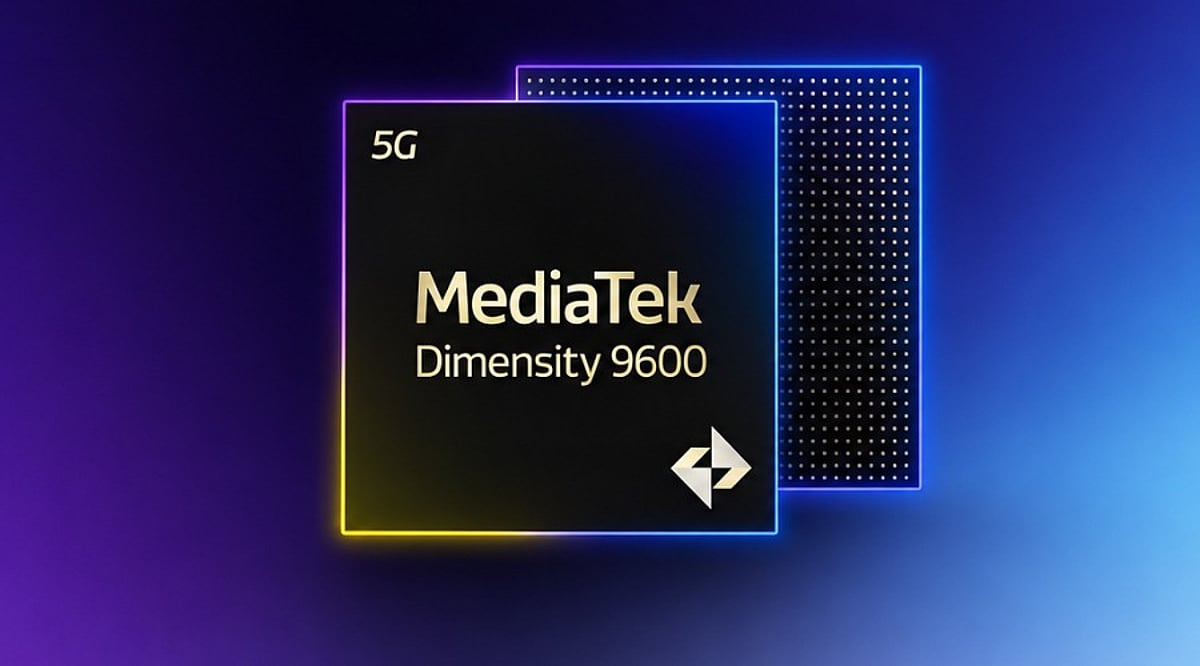
    MediaTek has unveiled its latest flagship processor, the Dimensity 9600 Pro, positioning it as a transformative step for next-generation smartphones. Built on TSMC’s 2nm process, this chip integrates a fourth-generation all-big-core CPU, a dual-NPU architecture, LPDDR6 memory support, and UFS 5.0 storage. MediaTek claims significant gains in performance, power efficiency, and on-device AI capabilities, setting a new standard for premium mobile hardware.

    Key Takeaways

    • The Dimensity 9600 Pro uses a 2nm process with an all-big-core CPU, claiming major performance and efficiency improvements.
    • Its dual-NPU design supports advanced on-device AI, handling models up to 30 billion parameters.
    • LPDDR6, UFS 5.0, stronger graphics, and advanced camera features mark a comprehensive hardware upgrade for flagships.

    A Revolutionary 2nm Design

    The Dimensity 9600 Pro is MediaTek’s first mobile chip built on a 2nm process. Its CPU configuration includes two Arm C2-Ultra cores at up to 4.55GHz, three Arm C2-Pro cores at 4.35GHz, and three additional Arm C2-Pro cores at 3.1GHz. This fourth-generation all-big-core architecture also incorporates a 21% larger L2 cache.

    MediaTek’s internal benchmarks show a 17% increase in single-core performance with 37% better power efficiency, while multi-core tasks see a 15% performance boost and a remarkable 61% reduction in power consumption. These figures, however, come from lab tests and may vary in real-world devices depending on thermal design, battery size, and software optimization.

    AI Takes Center Stage

    The chip features two neural processing units (NPUs): the NPU 1090 for heavy on-device AI tasks and the Super Efficient NPU 2.0 for low-power, always-on AI operations. MediaTek claims a 51% improvement in large language model (LLM) prefill performance and a 55% gain in token generation per watt. The platform supports on-device models with up to 30 billion parameters, aided by a compression engine that reduces memory footprint and support for Mixture of Experts (MoE) architecture.

    The Super Efficient NPU 2.0 also cuts power consumption for always-on AI by 40%, a critical factor for AI assistants that continuously access phone data, sensors, and apps.

    Memory and Storage Advancements

    With first-wave support for LPDDR6 memory and UFS 5.0 storage, the Dimensity 9600 Pro delivers substantial improvements in data throughput. UFS 5.0 offers twice the read and write speeds of its predecessor, while LPDDR6 increases effective memory bandwidth by 33% at the same frequency. A larger 34.5MB cache further enhances overall system responsiveness.

    Graphics Performance for High Frame Rates

    The new G2-Ultra NX GPU delivers up to 27% higher peak performance, 24% lower power consumption at peak, and up to 18% faster ray-tracing. The chip can support native gameplay above 185fps. MediaTek integrates the GPU with the NPU through its Neural Graphics Architecture, enabling AI-assisted graphics rendering and super-resolution tasks.

    Camera and Imaging Upgrades

    The Imagiq 1290 image signal processor (ISP) pairs with an AI Imaging Fusion Architecture to support 60fps subject focus, 4K240 slow-motion video, 4K60 AI True Color Tone, and 4K120 cinematic log. The system also handles 17EV dynamic range imaging, 4K live photo with full depth of field, H.266 hardware video decode, and MV-HEVC for spatial video—all without relying on cloud services.

    First Phones and Real-World Testing

    MediaTek has announced that the first Dimensity 9600 Pro phones will arrive this quarter. According to Reuters, Xiaomi, OPPO, and vivo are among the manufacturers collaborating with MediaTek. OPPO has confirmed the Find X10 Pro Max with this chip, slated for a September 22 launch in China.

    The true test lies in how these devices perform in the real world. MediaTek’s claims are based on its own lab tests, so independent reviews will be crucial to verify whether retail units match the stated figures.

    What the 9600 Pro Changes

    The Dimensity 9600 Pro shifts the focus from raw CPU speed to a balanced integration of CPU, GPU, NPU, memory, storage, and camera hardware. Its 2nm foundation and dual-NPU design amplify the role of on-device AI, while faster memory and storage enable a smoother user experience. For the next wave of premium smartphones, this chip signals a clear direction: high-performance processing, advanced graphics, powerful local AI, and cutting-edge camera capabilities must work as a cohesive system.

    Frequently Asked Questions

    1. What is the Dimensity 9600 Pro?

    The Dimensity 9600 Pro is MediaTek’s flagship smartphone processor featuring a 2nm design, advanced CPU and GPU hardware, dual-NPU AI, and support for LPDDR6 and UFS 5.0.

    2. How powerful is the Dimensity 9600 Pro?

    MediaTek claims up to 17% higher single-core performance, 15% higher multi-core performance, and a 61% reduction in multi-core power usage compared to its stated previous-generation baseline.

    3. What AI features does the chip offer?

    The dual-NPU system supports on-device AI models with up to 30 billion parameters, along with improved AI performance per watt and a dedicated super-efficient NPU for always-on tasks.

    4. Does the Dimensity 9600 Pro support advanced gaming?

    Yes. Its G2-Ultra NX GPU provides higher peak graphics performance, faster ray tracing, and support for native gameplay above 185fps.

    5. What memory and storage does the Dimensity 9600 Pro support?

    The platform supports LPDDR6 memory and UFS 5.0 storage, along with a generous 34.5MB cache for improved data throughput.


  • 7 Key Semiconductor Manufacturing Trends Driving the Industry in 2026

    7 Key Semiconductor Manufacturing Trends Driving the Industry in 2026

    Semiconductor manufacturing is entering a transformative era, driven by soaring demand for AI and the need for more powerful, efficient chips. In 2026, the industry is moving beyond traditional transistor scaling to embrace a broader set of innovations. Here are the seven key trends reshaping chip production.

    1. 2nm Chips and GAA Transistors

    Chipmakers are advancing toward 2nm-class process technology with gate-all-around (GAA) transistors. These designs deliver higher performance and better power efficiency, but they also increase manufacturing complexity significantly.

    2. Advanced Packaging and Chiplets

    As shrinking individual dies becomes prohibitively expensive, chiplets and 2.5D/3D packaging are gaining traction. By integrating multiple chip components into a single package, manufacturers achieve higher performance and flexibility without relying solely on node shrinks.

    3. High-Bandwidth Memory for AI

    AI workloads demand enormous amounts of fast memory. High-bandwidth memory (HBM) places stacked memory close to powerful processors, enabling faster data movement and reducing processing bottlenecks in AI systems.

    4. Silicon Photonics and Optical Data

    Electrical connections face growing bandwidth and power challenges. Silicon photonics uses light to transmit data at high speeds, making it a critical technology for future AI data centers, networking, and high-performance computing.

    5. SiC and GaN Take on New Roles

    Silicon carbide (SiC) and gallium nitride (GaN) can handle high voltage, heat, and power demands. These materials are becoming essential in electric vehicles, fast chargers, renewable energy systems, and advanced data-center infrastructure.

    6. AI-Powered Smart Factories

    AI is moving inside semiconductor fabs. Machine learning monitors equipment, detects defects, improves yields, predicts maintenance needs, and optimizes production processes in real time, making factories smarter and more efficient.

    7. Chip Supply Chains Are Going Regional

    Geopolitical tensions and supply risks are pushing companies and governments to diversify semiconductor production. New fabs and packaging capacity are being developed across multiple regions to reduce dependence on concentrated manufacturing hubs.

    The semiconductor race is no longer solely about making transistors smaller. Advanced packaging, memory, new materials, optical connectivity, AI-driven production, and regional manufacturing are becoming equally important for the industry’s future.

  • Apple A20 Pro Chip Leak: 2nm Process and WMCM Packaging Could Power iPhone 18 Pro

    Apple A20 Pro Chip Leak: 2nm Process and WMCM Packaging Could Power iPhone 18 Pro

    Apple’s next-generation A20 Pro chip could be one of the biggest upgrades coming to the iPhone 18 Pro lineup, according to a new report. While Apple has not confirmed any details, early leaks suggest the chipset will introduce two major architectural changes aimed at improving performance, battery life, and on-device AI capabilities.

    2nm Process Could Improve Speed and Efficiency

    The A20 Pro is expected to be built using TSMC’s 2nm manufacturing process. If the report is accurate, it will be the first iPhone chip to move beyond the 3nm process used in Apple’s current-generation processors. A smaller fabrication process allows more transistors to fit within the same chip area, which typically translates into better performance while consuming less power. Users could see faster app launches, smoother gaming, and improved battery life during everyday use.

    WMCM Packaging May Be the Bigger Change

    The second upgrade mentioned is the adoption of Wafer-Level Multi Chip Module (WMCM) packaging technology. Unlike traditional PoP packaging, WMCM brings important elements such as processors, memory, and the Neural Engine into close proximity. This is expected to minimize communication delays, improve memory bandwidth, and better manage heat dissipation.

    Designed for the Next Phase of Apple Intelligence

    Apple has continued to enhance its Apple Intelligence technology, and the A20 Pro is believed to include hardware to support future AI applications. By enabling quicker memory access and better processing efficiency, it would be possible to handle more AI tasks directly on the device without relying on cloud servers.

    Apple Yet to Announce the Chip

    The A20 Pro processor remains a rumor, and Apple has not announced any specifications or confirmed the iPhone 18 Pro series. If the leaks turn out to be true, it would be one of the biggest architectural advancements in Apple’s iPhone processors in recent years. More information can be expected once Apple officially reveals the iPhone 18 Pro series.