Tag: 3D printing

  • Essential 3D Printer Accessories Every Owner Should Know About

    Essential 3D Printer Accessories Every Owner Should Know About

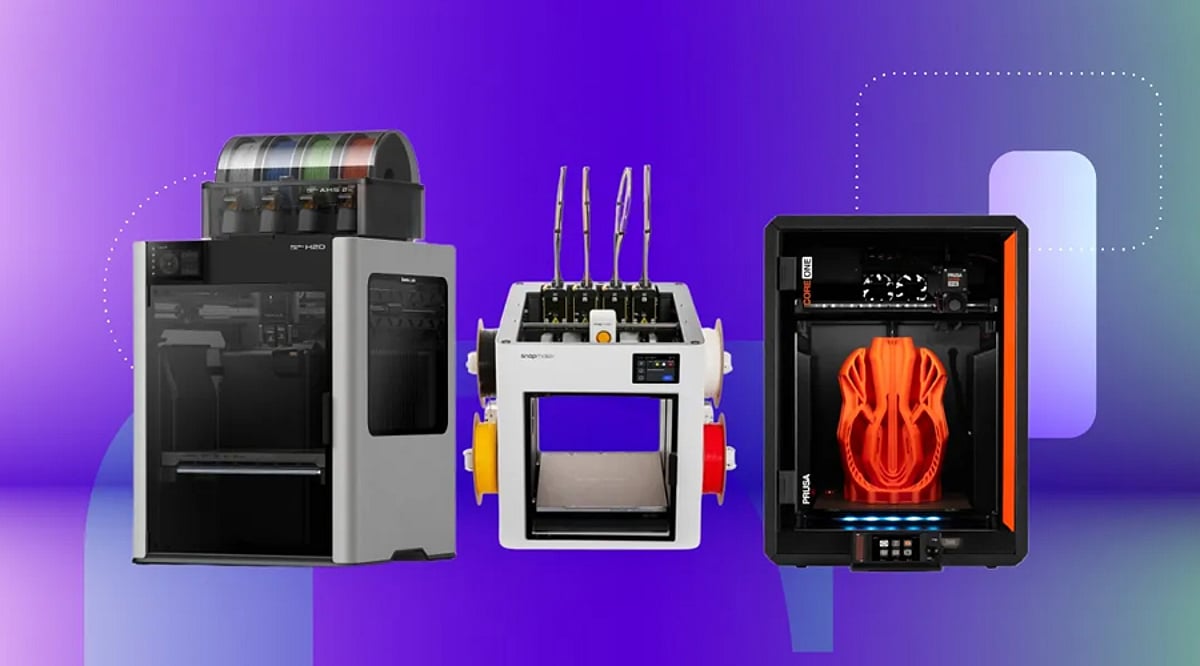
    3D printing is an exciting technology that allows you to bring digital designs to life. However, to get the best results and maintain your printer, having the right accessories is essential. This article highlights key accessories that every 3D printer owner should consider, from spare parts to cleaning tools.

    Spare Nozzles

    Spare nozzles are crucial for any 3D printer owner. Nozzles can clog, wear out, or become damaged during regular use. Keeping a set of replacements on hand minimizes printing interruptions. Different nozzle sizes also allow you to experiment with layer thickness, print speed, and material flow for various projects.

    Build Plate Accessories

    Build plate accessories improve print adhesion and make finished models easier to remove. Depending on your printer and filament, different surfaces offer specific benefits. A suitable build plate ensures consistent first layers and reduces issues like prints separating from the surface during printing.

    Digital Calipers

    Digital calipers are invaluable for precise measurements in 3D printing projects. They allow you to measure existing objects, printed parts, and design components with accuracy. This is especially important when creating replacement parts or models that must fit other assemblies or mechanical components.

    Filament Storage

    Proper filament storage is vital because many 3D printing materials absorb moisture from the environment. Moisture can lead to inconsistent printing and affect print quality. Using airtight containers, desiccants, and dedicated storage solutions helps protect your filament and keeps spools in better condition between printing sessions.

    Deburring Tools

    Deburring tools help remove unwanted edges, small imperfections, and excess material from completed prints. They clean holes, edges, and detailed sections after printing. A good finishing tool gives models a cleaner appearance and improves the fit of parts designed to connect with other components.

    Cleaning Tools

    Cleaning tools are essential for maintaining a 3D printer. They remove residue from components and surfaces. Depending on the printer, you may need brushes, scrapers, and other dedicated tools. Regular cleaning supports reliable operation and prevents accumulated material from interfering with subsequent print jobs.

    Nozzle Cleaning Kit

    A nozzle cleaning kit is useful when printing material lodges in the nozzle and causes minor blockages. Fine cleaning needles and related tools are designed for this purpose. Keeping a kit on hand simplifies troubleshooting and routine maintenance, especially for frequent users or those working with different filament materials.

    Investing in these accessories can significantly improve your 3D printing experience, ensuring consistent quality and longer printer life.
  • 10 Innovative 3D Printer Filaments to Elevate Your Projects in 2026

    10 Innovative 3D Printer Filaments to Elevate Your Projects in 2026

    Standard PLA is no longer the only option for creative 3D printing. New filament types add glow, color changes, metallic finishes, natural textures, or enhanced performance. These materials help makers produce standout prints while opening new possibilities for functional projects.

    Wood-Fill PLA

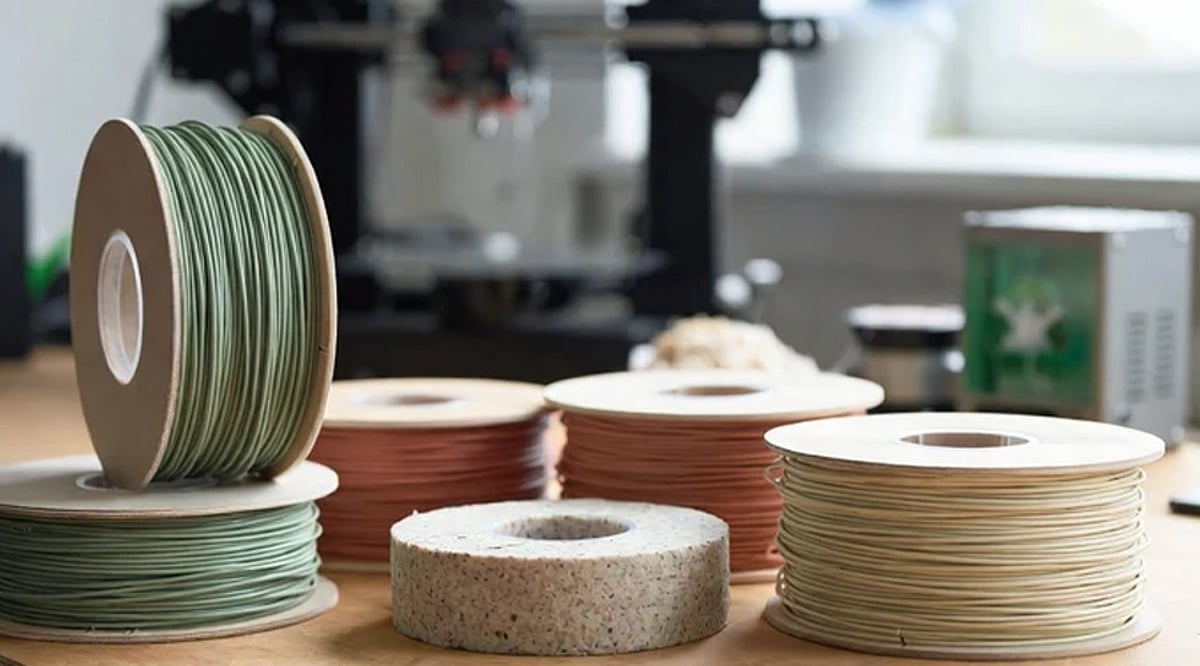
    Wood-Fill PLA blends PLA with real wood fibers or sawdust, giving prints a natural wood-like look. Finished models can be sanded, stained, or painted. It’s ideal for rustic signs, plant pots, miniature furniture, décor, and other projects needing a warm, natural finish.

    Marble and Stone PLA

    Marble and Stone PLA uses mineral-like specks to create a stone or carved-marble appearance. The textured finish hides layer lines better than many standard filaments. It suits architectural models, garden ornaments, sculptures, tabletop scenery, and decorative pieces that need a stone-like look.

    Metal-Filled Filaments

    Metal-filled filaments contain materials like copper, bronze, stainless steel, or iron powder. They give prints extra weight and a realistic metallic appearance. Many can be polished, buffed, or treated for an aged finish, making them perfect for statues, cosplay props, coins, and display pieces.

    Glow-in-the-Dark Filaments

    Glow-in-the-dark filaments absorb light and release it as a visible glow after the lights go out. They’re popular for cosplay details, safety markers, night lights, Halloween decorations, and sci-fi models. Note: these filaments can wear standard brass nozzles faster, so a hardened nozzle may be a better choice.

    Thermochromic Filaments

    Thermochromic filaments change color with temperature. Many shift around the warmth of a hand or hot water and return to their original color after cooling. They add an interactive element to toys, gadgets, educational models, phone cases, and wearable projects.

    Rainbow and Gradient PLA

    Rainbow and gradient PLA creates changing colors throughout a single spool, producing smooth transitions without manual filament changes. It works especially well for vases, sculptures, articulated toys, ornaments, and artistic models where color variation becomes part of the design.

    Bio-Based Carbon Fiber PPA

    Bio-based carbon fiber PPA combines a more sustainable polymer matrix with carbon fiber reinforcement. It offers high stiffness, dimensional stability, and heat resistance up to around 235°C. This material targets demanding automotive, aerospace, and mechanical applications where strength and heat performance matter.

    Foaming Filaments

    Foaming filaments use active foaming during printing to create lighter parts while allowing hardness to be adjusted. Some materials can reduce part weight by up to 50%. They’re useful for wearables, footwear, lightweight prototypes, and projects where reducing material weight is critical.

    Recycled PLA and PETG

    Recycled PLA and PETG offer a more sustainable option for everyday printing. High-quality recycled blends can deliver mechanical performance close to virgin material while reducing waste. For advanced projects, specialty options like continuous carbon fiber, ESD-safe, and flame-retardant filaments add functional performance beyond standard PLA and PETG.

  • How Meshy AI Is Transforming 3D Design and Content Creation in 2026

    How Meshy AI Is Transforming 3D Design and Content Creation in 2026

    Artificial intelligence has revolutionized every creative profession, from writing and image creation to video composing. But one field remained difficult to automate for years: high-resolution 3D modeling. Creating assets for games, product prototypes, architectural objects, or models for printing has always required specialized software, expertise, and hours of manual labor.

    That reality has changed dramatically. In 2026, AI-generated 3D content has emerged as a top growth market for creative technology. Designers, developers, educators, marketers, and entrepreneurs can now move from concept to completion in minutes instead of days. One driving force behind this innovation is Meshy AI, a 3D production system that has become the industry exemplar for AI-driven 3D content creation.

    Why 3D Creation Needed Reinvention

    Traditional 3D workflows come with long learning curves. Professional software offers limitless creativity, but mastering modeling, UV mapping, texturing, rigging, topology optimization, and export prep can take years. Even experienced artists spend hours polishing simple objects. For companies producing hundreds or thousands of digital assets, those bottlenecks mean higher costs and slower turnaround.

    AI flips that dynamic. It handles repetitive manual work, leaving the creative part to the creator. The latest AI tools do not replace professional artists; they act as creative assistants, delivering substantial starting points that artists can refine.

    Turning Words into Production-Ready 3D Models

    The first standout feature of Meshy is Text to 3D. Users simply type natural language, and in about a minute they get a textured 3D model ready for immediate download and use in professional software. This removes the biggest barrier for newcomers and helps professionals quickly prototype ideas instead of spending hours blocking out loose designs.

    From Reference Images to Detailed Assets

    Many creative projects begin with images—photos, sketches, or concept art. Meshy’s Image to 3D workflow generates textured 3D content from a reference image. Applications include e-commerce product visualization, industrial design from concept sketches, gaming character creation, and immersive marketing campaigns—all at massive time savings.

    The Rise of Conversational 3D Creation

    Perhaps most ambitious is Meshy’s 3D Agents feature. Instead of a simple chatbot, it acts like a creative partner: users can start from text, sketches, images, or ideas. The agent guides multiple creative directions, generates variations, answers questions, and enables real-time refinement—making the interface feel more like talking with a talented human designer than traditional software.

    Eliminating Technical Bottlenecks

    Production-ready 3D assets need proper texture sets, optimal polygon counts, and game-engine-ready topology. Meshy provides a complete integrated workflow:

    • AI Texture Generation automatically creates PBR materials (normal, metallic, roughness, ambient occlusion) without manual UVs.
    • Auto-Rigging prepares characters for animation in under 30 seconds.
    • Remeshing and Retopology ensure compatibility with game engines, editing software, and 3D printing.

    Exports in GLB, FBX, OBJ, STL, 3MF, USDZ, and Blender formats mean seamless integration with Blender, Maya, Cinema 4D, Unity, and Unreal Engine.

    Beyond Digital Creation: From Screen to Physical Object

    Meshy’s Creative Lab bridges digital and physical worlds by letting users turn 3D models into physical objects via built-in manufacturing partners. A character sketch becomes a 3D-printed figurine; a logo becomes a badge; a digital drawing becomes a keychain. This opens prototyping, merchandise testing, and limited drops to creators with minimal technical know-how.

    Hardware Partnerships That Extend the Workflow

    Meshy has integrated with leading 3D printer manufacturers like FlashForge, Bambu Lab, and Formlabs, allowing users to send models directly to printers with texture-to-filament color conversion. These partnerships—along with earlier integrations with xTool and Snapmaker—show that AI-generated models are now part of broader creative ecosystems.

    Real Creators, Real Results

    Independent game developer Jlemarchand used Meshy to create characters for Navy Island Confidential, cutting a months-long process to a fraction of the time. EvilKris used the 3D Agent mode to rapidly prototype monsters for horror game Famished. Creator cyber_fox reduced a 300-hour Blender modeling task to 5 minutes using Meshy for an educational app. Teacher Noel piloted Meshy with 8th-grade students, who created Roblox-compatible assets after one lesson. And Annie, R&D Director for the “Colorful Woven World” exhibition, cut days per model to minutes.

    The Future of AI-Powered 3D Design

    The conversation has shifted from whether AI can produce creative works to which systems best fit into production pipelines. Meshy stands out because it not only fits but provides all steps: from text or image to production-ready assets, animation, topology optimization, and manufacturing integration. With demand for immersive media, digital twins, gaming, robotics, product visualization, and additive manufacturing surging in 2026, Meshy positions itself as a next-generation platform linking creativity to production.

  • Additive Manufacturing: MIT Research and Innovations in 3D Printing

    Additive Manufacturing: MIT Research and Innovations in 3D Printing

    Additive manufacturing, commonly known as 3D printing, is revolutionizing production across industries. MIT researchers are at the forefront of developing new techniques, materials, and applications for additive manufacturing, from drug-delivery microparticles to fully 3D-printed electronics and rocket components.

  • MIT’s Latest 3D Printing Breakthroughs: From Recycled Plastic Homes to Drug-Delivery Microparticles

    MIT’s Latest 3D Printing Breakthroughs: From Recycled Plastic Homes to Drug-Delivery Microparticles

    MIT researchers continue to push the boundaries of additive manufacturing with a series of groundbreaking innovations in 3D printing. From construction-grade trusses made from recycled plastic to microscopic magnetic robots, these developments promise to transform industries ranging from healthcare to architecture.

    Key Innovations

    Sustainable Construction

    MIT engineers have developed a method to 3D print floor trusses using recycled plastic, potentially revolutionizing home construction by reducing waste and material costs. This approach could make housing more affordable and environmentally friendly.

    Medical Breakthroughs

    A new 3D-printed device streamlines the production of drug-delivery microparticles, enabling efficient creation of three-layered particles at scale. Additionally, the MagMix magnetic mixer improves 3D bioprinting for scalable tissue manufacturing.

    Advanced Materials

    Researchers have created 3D-printed metamaterials that can be designed to stretch and fail in predictable ways, opening doors for printable textiles and functional foams. The PhysiOpt system combines generative AI with physics simulations to ensure 3D-printed personal items are durable for real-world use.

    Microscopic Robotics

    A new fabrication technique produces soft, microscopic structures with magnetically activated moving parts, enabling complex maneuvers at the microscale.

    Impact and Applications

    These innovations demonstrate MIT’s commitment to solving real-world challenges through 3D printing technology. From reducing construction waste to improving medical treatments, the potential applications are vast and transformative.

  • MIT in the News: Financial Aid, 3D Printing, Cancer Research, and I.M. Pei Archive

    MIT continues to make headlines with groundbreaking research, innovative startups, and transformative educational initiatives. Here is a roundup of recent media coverage highlighting MIT’s impact across diverse fields.

    Free Tuition Program Gains Attention

    Fortune reporter Emma Burleigh spotlights MIT’s financial aid programs that provide free tuition to students whose parents earn less than $200,000 a year. Additionally, tuition, housing, dining, fees, books, and personal expenses for students with parental incomes of less than $100,000 are covered by MIT. “Famed research university MIT is not only footing the tuition bill of its lower-income students—it’s making ‘free college’ a reality,” writes Burleigh.

    VulcanForms to Create Over 1,000 Jobs

    For The Boston Globe, reporter Aaron Pressman features MIT startup VulcanForms, a 3D printing manufacturer expected to create over 1,000 jobs with a new 1-million-square-foot plant in Devens, MA. The facility will bring capacity for more customers in medical devices, aerospace and defense, and consumer goods industries. “MIT professor John Hart started the company with grad student Martin Feldmann [’14] as a way to bring 3D printing techniques using lasers and powdered metals to larger-scale manufacturing jobs,” writes Pressman.

    Colon Cancer Cells Can Change Identity

    MIT researchers have found that colon cancer cells can “change their identity, allowing them to travel through the body and form new tumors,” reports Daniella Gray for Newsweek. The findings could point to future treatments that can prevent metastasis—the leading cause of death for colorectal cancer patients, Gray explains.

    I.M. Pei Archive Donated to MIT Museum

    For Archinect, reporter Niall Patrick Walsh spotlights how the full archive of architect and alumnus I.M. Pei ’40 has been donated to the MIT Museum. “Among the materials are drawings and documents from some of Pei’s best-known works, including the Louvre Museum modernization project in Paris, the John F. Kennedy Presidential Library and Museum in Boston, and the Rock and Roll Hall of Fame in Cleveland,” writes Walsh. “The archive also contains records relating to four buildings designed by Pei on the MIT campus: the Green Building, Dreyfus Building, Landau Building, and Wiesner Building.”

    Schwarzman College of Computing Prepares Students for AI Era

    Chronicle of Philanthropy reporter Maria Di Mento spotlights how the creation of the MIT Schwarzman College of Computing allowed MIT to develop new “interdisciplinary programs to prepare students for an AI-saturated world and help them understand the social and ethical implications of digital technologies.” Prof. Daniel Huttenlocher, dean of the Schwarzman College of Computing, explains that: “MIT realized that effective education in the age of AI has to look different than it has in the past. Traditional siloing of expertise won’t work when AI is expected to touch nearly every part of people’s lives and is changing the way people in disciplines outside of computing are advancing their work.”

    New Robot System Describes Objects in Plain English

    Writing for Forbes, contributor Ron Schmelzer highlights Describe Anything, Anywhere, at Any Moment (DAAAM), a new system developed by MIT researchers that could enable robots to capture details of objects they see while exploring an environment. In the future, the system could allow factory workers to send robotic assistants to find items. DAAAM “lets a robot build a detailed map of a space, attach descriptions to objects in that map, and answer plain English questions later,” Schmelzer explains.

    Air-Guardian System Enhances Flight Safety

    Writing for Forbes about efforts to improve air travel safety, Tanya Eves highlights the Air-Guardian system, an eye-tracking monitor for pilots developed by CSAIL researchers that assists when attention wavers. “In tests, it reduced flight risk and improved navigation success rates,” writes Eves. “It’s a model for how the virtual co-pilot relationship should work: not replacement, but a seamless, intelligent partnership that understands when to act and when to stay silent.”

    AI’s Impact on Jobs and Economy

    Prof. Simon Johnson discusses the impact of AI on jobs in an interview with Financial Times reporters Delphine Strauss and Sam Fleming. “We are trying very hard at MIT to find ways to incorporate AI into the curriculum but to push harder on the entrepreneurship angle, the creation of new products and services, the development of critical thinking,” says Johnson.

    In a separate piece for Bloomberg, Prof. Simon Johnson and Prof. Elisabeth Reynolds describe how the U.S. can maintain its technological leadership by investing in research focused on critical minerals, semiconductors, biotechnology, quantum computing, drones and advanced manufacturing.

    In an interview with Fortune, Prof. Daron Acemoglu discusses AI’s economic impact and estimates AI will deliver roughly 0.55% in total factor productivity gains.

    Solar-Electric Boat Launches on Charles River

    For Axios Boston, reporter Steph Solis highlights “Anita,” a solar-electric boat created by alumnus James Worden ’89 that is due to launch this year. The boat was previewed at the 80th anniversary Charles River sail-a-thon. “The prototype, named ‘Anita’ after Worden’s late wife, moves silently with no fumes or exhaust and uses LiFePO4 battery cells with a battery management system (it lets you charge the batteries while they’re in use),” writes Solis.