Tag: Activision

  • Halo’s Next Chapter: Microsoft Transfers Development to Activision After Studio Layoffs

    Halo’s Next Chapter: Microsoft Transfers Development to Activision After Studio Layoffs

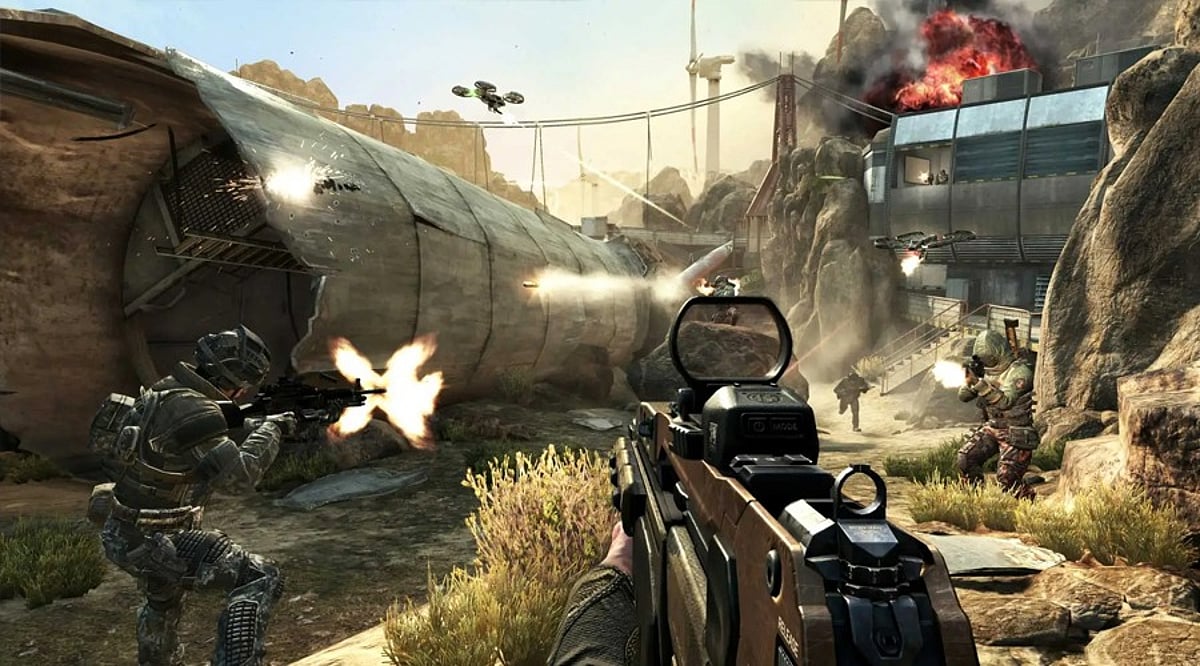
    Microsoft is reshaping its approach to the beloved Halo franchise. Following the latest round of Xbox layoffs, Halo Studios—formerly known as 363 Studios—has seen its workforce reduced to approximately 30 employees. Reports indicate this diminished team will continue to support the existing Halo community and assist with other Xbox projects, while the responsibility for developing the next mainline Halo game has been handed over to Activision, the publisher behind Call of Duty.

    According to sources, Halo Studios recently presented an updated vision for Halo 7 to Xbox executives. The proposed title was set to include a campaign, player-versus-player (PvP) and player-versus-environment (PvE) multiplayer modes, along with Forge—the iconic in-game creation tool that lets players build custom multiplayer maps and game modes. The studio was also reportedly exploring remakes of Halo 2 and Halo 3, as well as a standalone spinoff based on the novel First Strike. However, the layoffs have cast uncertainty over these projects.

    Activision is forming a dedicated Halo team rather than redirecting resources from its existing Call of Duty studios. Activision president Rob Kostich stated, “For Halo, our goal is clear: make the greatest Halo game ever, worthy of its universe and legacy, while staying true to what made players love it in the first place. It is a bold ambition, one that this franchise deserves. We have already begun assembling a purpose-built team, unique in capability and talent, ready and excited to deliver this next chapter with the community.”

    This strategic move marks a significant departure from the long-standing model where Halo Studios served as the franchise’s primary developer. For Microsoft, consolidating resources across fewer teams aligns with a broader restructuring of its AAA game development. Activision already coordinates multiple studios for Call of Duty, enabling large-scale projects to share production staff and resources—a blueprint that may now benefit Halo.

    Xbox is similarly merging other development groups: Playground Games and Turn 10 now collaborate on Forza and Fable titles, while Bethesda has assumed a larger role in major projects. The Halo transition underscores Microsoft’s new focus on shared resources and flexible studio assignments, signaling that even its most iconic franchises may no longer remain confined to a single studio throughout their lifecycle.
  • Xbox Restructuring: 268 Jobs Cut as Halo Development Shifts to Activision

    Xbox Restructuring: 268 Jobs Cut as Halo Development Shifts to Activision

    Microsoft is eliminating 268 roles across its Xbox division as part of a broader restructuring, with Halo development moving to Activision and several studios being reorganized or divested.

    Halo Development Shifts to Activision

    Activision will take on the next mainline Halo title through a newly formed team that will stay separate from its Call of Duty development groups. Halo Studios will continue in a smaller capacity, supporting the Halo community and existing games on the market. Activision is also expanding its responsibilities to include Rare, the studio behind Sea of Thieves, and World’s Edge, the team overseeing the Age of Empires franchise.

    Studio Reorganization and Divestitures

    Bethesda will take responsibility for Obsidian Entertainment, while King will add Microsoft Casual Games to its operations. Playground Games and Turn 10 Studios are being combined into a single studio focused on the Forza and Fable franchises.

    Xbox has also provided updates on previously announced studio exits. Compulsion Games and Double Fine have returned to independent ownership, and Undead Labs has transitioned out of Xbox. Its upcoming game, State of Decay 3, is expected to launch day one on Game Pass under its new publisher.

    Ninja Theory and Arkane Face Uncertainty

    Ninja Theory is facing a proposed closure after two separate agreements to sell the studio fell through. Xbox said it will begin consultation with employees regarding the proposed closure while continuing to explore other options. Consultations over the future of Arkane are also ongoing and expected to run through the end of the year.

    Broader Restructuring Context

    Xbox chief content officer Matt Booty said the changes completed since July, including studio divestitures, have taken the company roughly three-quarters of the way through the previously announced restructuring. The latest 268 cuts follow 1,600 Xbox layoffs announced in July. Microsoft has said its restructuring will affect 3,200 roles during its 2027 financial year. Xbox is expected to provide further updates during an October 6 company-wide town hall.

  • Microsoft to Keep Steam Central to Xbox’s PC Gaming Strategy, Report Confirms

    Microsoft to Keep Steam Central to Xbox’s PC Gaming Strategy, Report Confirms

    A new report indicates that Microsoft will continue to rely on Steam as a cornerstone of Xbox’s PC gaming plans, while also expanding the role of Battle.net. Contrary to earlier speculation that Xbox might pull its games from Steam, the report states that Microsoft has no such intention at this time. Instead, the company is making strategic adjustments without removing its titles from the popular platform.

    Battle.net, previously exclusive to Blizzard games, is being opened up to third-party developers. It now includes Activision titles such as Call of Duty, Obsidian’s The Outer Worlds 2, and Avowed. In the future, more third-party developers will be able to distribute their games through Battle.net. Additionally, Microsoft continues to invest heavily in its own PC app.

    Choice for Big Publishers

    Many game companies have shifted their strategies in recent years. Electronic Arts (EA) initially focused on its own launcher but later brought its games back to Steam. Ubisoft also returned many of its biggest titles to Steam after a period of exclusivity on its own platform. Blizzard has followed a similar path—while Battle.net remains important, several Blizzard games are now available on Steam.

    These moves reflect a growing preference among players for more choices and flexibility. Microsoft appears to be adopting the same approach, avoiding platform lock-in and instead focusing on making PC gaming simple and accessible. This could prove to be one of its strongest strategic moves in the coming years.

  • Call of Duty: Black Ops Re-Release Reignites Nostalgia for the Franchise’s Golden Era

    Call of Duty: Black Ops Re-Release Reignites Nostalgia for the Franchise’s Golden Era

    The return of classic Call of Duty: Black Ops games has sparked a wave of nostalgia among fans, reminding many why this era is considered the series’ peak. As excitement builds for Black Ops 7, Activision’s re-release of the original Black Ops on modern consoles has brought the community together.

    On July 9, 2026, the 2009 title was made available on PlayStation 4 and PlayStation 5. A Reddit post by user Weaponised__Autism captured the sentiment: “Say what you will about the ports, but Black Ops has reminded me how good we had it.” The post quickly went viral, with commenters unanimously agreeing that the early Black Ops years were the best time in Call of Duty.

    One player, Mission-Club-3976, noted, “The games were designed and produced to be good games, rather than to maximise player engagement to optimise the chances of said player to spend extra money on monetisation.” Many fans highlighted that Black Ops, Black Ops 2, and Black Ops 3 offered a special blend of engaging storylines, robust multiplayer, and the iconic Zombies mode. For them, these older titles remain the gold standard.

    For newcomers, Sony is offering a golden opportunity: PlayStation Plus subscribers can enjoy a 50% discount on Black Ops games until August 6, 2026.

    What Made the Black Ops Games So Special?

    The older Black Ops games excelled in several areas. Memorable campaigns featured characters like Alex Mason, Frank Woods, and Raul Menendez, who became fan favorites and gave each game a distinct identity. The Zombies mode—with maps like Kino der Toten, Origins, and Mob of the Dead—remains beloved. Multiplayer maps such as Nuketown, Raid, and Firing Range are still considered classics. The gunplay felt fair, and the progression system, including Prestige levels, kept players coming back.

    Black Ops 7 Has Big Shoes to Fill

    Looking back at the older games also serves as a reminder of how glorious that era was. Nostalgia can draw people back, but it won’t keep them playing forever. Fans want future Black Ops titles to deliver a fun campaign, a strong Zombies mode, improved multiplayer, stable servers, and regular post-launch updates. If not, many players may continue to spend their time with the older games that made Call of Duty one of the biggest names in gaming.

  • Report: Microsoft Could Hand Halo Franchise to Activision

    Report: Microsoft Could Hand Halo Franchise to Activision

    Microsoft is reportedly considering a major shift for the iconic Halo franchise, potentially placing it under the leadership of Activision. While nothing is official, the rumor has sparked widespread discussion among Xbox fans and industry observers.

    Halo has long been a flagship series for Xbox, with Halo Studios (formerly 343 Industries) at its core. However, recent changes within Microsoft’s gaming division have led to speculation that the company may be ready to hand over creative control to Activision, known for its success with large-scale franchises like Call of Duty.

    The timing of the rumor coincides with the upcoming launch of Halo Campaign Evolved. A prominent industry analyst revealed on the Xbox Two Podcast that Microsoft is exploring the idea of giving Activision the reins to accelerate Halo’s “franchise potential.” The source emphasized that the plan is still under discussion and not yet finalized.

    One likely motivation is Activision’s proven ability to manage major game series, releasing titles on a regular schedule and providing long-term post-launch support. Halo Infinite, while praised for its gameplay, suffered from delays, content gaps, and slow updates after release. Microsoft may believe that Activision’s expertise could help Halo regain its competitive edge.

    What Could Happen to Halo Studios?

    If the rumor proves true, Halo Studios could see its role diminish. Instead of leading development, it might become a support studio focused on narrative and supplemental content. Alternatively, the franchise could be split between multiple studios, with one team handling new ideas and another managing main releases. This model is common in the industry, allowing for more frequent updates and sustained development.

    Could Halo Follow the Call of Duty Model?

    Adopting Activision’s approach could mean Halo becomes a franchise built by several studios. One team might develop the campaign, another the multiplayer, and a third handle live updates and seasonal content. This strategy has worked well for Call of Duty, but Halo has a distinct identity that fans cherish. Any shift would need to preserve that essence.

    Until Microsoft makes an official statement, this remains a rumor. But the possibility of Activision taking the lead signals a potential new era for one of gaming’s most beloved series.