Tag: Adobe

  • Shantanu Narayen Drives Adobe’s Generative AI Revolution with Firefly and Agentic Workflows

    Shantanu Narayen Drives Adobe’s Generative AI Revolution with Firefly and Agentic Workflows

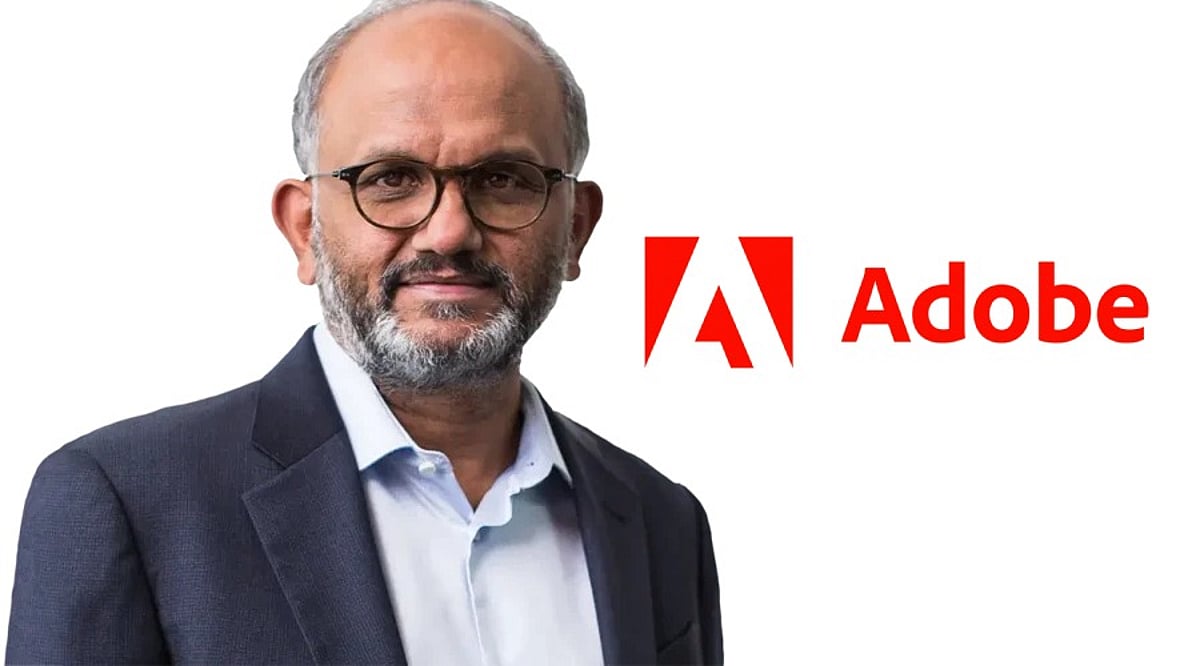
    Shantanu Narayen has guided Adobe’s transition from traditional software toward cloud-based creative services and AI. Adobe is expanding Firefly with generative AI models, creative tools, and agentic workflows. AI agents are increasingly handling repetitive tasks while creators retain control over creative decisions.

    From Creative Cloud to AI-Powered Creativity

    Narayen has positioned artificial intelligence as a major opportunity for Adobe’s creative business. During Adobe’s fiscal 2026 earnings discussions, he highlighted the company’s investments in Firefly, Acrobat, and Express as part of its strategy to capture the expanding AI opportunity in creativity.

    The company’s approach goes beyond simply adding individual AI features to established products such as Photoshop and Illustrator. Adobe is increasingly connecting its applications through conversational interfaces and AI agents designed to handle multiple steps within creative workflows.

    Narayen has also described Adobe’s applications as an important part of its AI strategy. During a 2025 earnings call, he said Adobe’s ability to integrate different AI models into its applications was a key part of the company’s work on Firefly.

    Firefly Becomes Central to Adobe’s AI Push

    Adobe Firefly has emerged as one of the company’s main generative AI platforms. The company has expanded Firefly from image generation into video, audio, and other creative workflows.

    In August 2026, Adobe described Firefly as an all-in-one creative AI studio that brings together tools for image, video, audio, and design. The platform also incorporates models from companies including Google, ElevenLabs, Kling AI, Luma AI, OpenAI, and Runway.

    Adobe has also continued expanding the range of AI models and capabilities available through Firefly, while focusing on creative control and production workflows.

    AI Agents Enter Creative Cloud

    In June 2026, Adobe announced a major expansion of its creative agent across Firefly and Creative Cloud. The company rolled out the creative agent across Premiere, Photoshop, Illustrator, InDesign, and Frame.io.

    The AI Assistant is designed to orchestrate multi-step workflows based on the outcome a user describes. Adobe has said the system can help with tasks across different applications rather than requiring creators to move between individual tools manually.

    Adobe’s wider strategy also includes bringing its creative tools to AI platforms including ChatGPT, Claude, Copilot, Gemini and Slack, potentially extending access to its technology beyond traditional Creative Cloud interfaces.

    Keeping Creators in Control

    Adobe has continued to present AI as a way to assist creators rather than remove human decision-making from the process. The company’s recent messaging around creative agents focuses on allowing users to describe what they want while AI helps plan, assemble, and execute parts of the workflow.

    This approach aims to reduce repetitive production work while leaving creative direction with the user. Narayen’s broader AI strategy has also focused on maintaining control and trust. At Adobe Summit 2026, he discussed how AI is transforming creativity, marketing, and customer experiences while highlighting creative control, trust, and brand integrity.

    Adobe’s AI Ambitions Continue Beyond Software Features

    Adobe’s AI push extends into partnerships and enterprise applications. In March 2026, Adobe and Nvidia announced a strategic partnership focused on next-generation Firefly models, creative and marketing workflows, 3D digital twins and agentic AI frameworks. Narayen said the companies shared a vision to reinvent creative and marketing workflows using AI.

    Adobe has also reported widespread enterprise adoption of its AI technology. In September 2025, the company said 99% of Fortune 100 companies had used AI in an Adobe application, while nearly 90% of its top 50 enterprise accounts had adopted at least one AI-first innovation.

    Narayen’s Next Chapter at Adobe

    Narayen announced in March 2026 that he planned to transition from the CEO role after more than 18 years. In his message to Adobe employees, he said the company grew from about 3,000 employees to more than 30,000 during his tenure, while revenue rose from less than USD 1 billion to more than USD 25 billion.

    From December 1, Narayen will serve as executive chair and work with Chakravarthy on the transition. Adobe’s AI strategy, however, is already deeply embedded across Firefly, Creative Cloud, and its broader technology platform.

    The developments under Narayen show how Adobe is moving generative AI from an additional feature into a broader creative workflow, with agentic systems increasingly designed to connect tools, automate production tasks, and help creators turn ideas into finished work.

  • Adobe Reaches 7.8 Million Students and Teachers Across India with Expanded AI and Digital Skills Programs

    Adobe Reaches 7.8 Million Students and Teachers Across India with Expanded AI and Digital Skills Programs

    Adobe is scaling up its AI and digital skills initiatives across India, aiming to reach 7.8 million students and teachers by 2026. The company is collaborating with seven state governments, UNICEF, and several learning platforms to equip learners with the skills needed for an AI-driven economy.

    The school program covers Delhi, Uttar Pradesh, Uttarakhand, Goa, Assam, Bihar, and Tamil Nadu. Adobe will provide Adobe Express for Education along with Digital Academy resources that focus on creative problem-solving and AI-assisted content creation. Teacher training is also a key component, helping educators integrate digital creativity and AI activities into everyday classroom learning.

    Adobe stated that the initiative aligns with India’s National Education Policy and the growing demand for future-ready digital skills. “Through this partnership, we’re bringing classroom-ready AI tools like Adobe Express directly into schools,” said Mala Sharma, Adobe’s Global Vice President and General Manager for Education.

    The program will extend across PM SHRI, CM SHRI, KGBV, and Kendriya Vidyalaya school networks in participating states. Adobe’s partnership with UNICEF adds another pathway for young learners seeking practical creative and AI-enabled skills.

    Nearly 400,000 young people in India have already accessed these programs through UNICEF’s Generation Unlimited partnership. More than 375,000 learners have completed Adobe’s Design Fundamentals with AI course, according to Adobe.

    Adobe also became the inaugural partner of Generation Unlimited’s Creative Academy, initially focusing on India and Brazil. The Creative Academy aims to connect digital skills training with employment, entrepreneurship, and livelihood opportunities for young people.

    Adobe Digital Academy courses are now available on Coursera, LinkedIn Learning, YouTube, and IBM SkillsBuild. IBM SkillsBuild offers self-paced courses and six-week Guided Learning Experiences with facilitator support and practical activities.

    The curriculum is expanding into digital marketing, content creation, and AI-powered creative workflows. Adobe’s wider India push includes free access to Photoshop, Acrobat, and Firefly through accredited higher education institutions.

    The company also works with NASSCOM FutureSkills Prime to provide free AI-focused courses and industry-relevant certifications. Adobe expects to reach three million learners globally during 2026 and targets 30 million learners by 2030.

    India’s program places practical creativity alongside AI literacy, creating a broader route into digital and creative careers.

  • US Stock Futures Climb Ahead of August CPI Report; Oracle Surges, Adobe Slides

    US Stock Futures Climb Ahead of August CPI Report; Oracle Surges, Adobe Slides

    US stock futures moved higher on Friday as investors prepared for the August consumer price index report. Oil prices eased from recent highs, while Treasury yields stayed close to multiyear peaks. Markets remained cautious after Wall Street recorded four straight sessions of losses.

    At 5:31 a.m. ET, Dow E-minis rose 276 points, or 0.53%. S&P 500 E-minis gained 0.54%, while NASDAQ 100 E-minis increased 0.57%. The gains followed another weak session on Thursday, when the Dow fell more than 300 points, the S&P 500 dropped 0.6%, and the NASDAQ Composite declined 0.7%.

    Investors now await the August CPI report. Economists expect consumer prices to rise 0.4% from July and 3.4% from a year earlier. Core CPI is expected to rise 0.2% monthly and 2.4% annually. The data arrives after a hotter producer price index, which increased 0.4% in August and rose 5.4% from a year earlier.

    The inflation readings come ahead of the Federal Reserve’s Sept. 15-16 meeting. Futures markets assign roughly a two-thirds to 70% chance of a 25-basis-point rate increase. Christopher Hodge, chief US economist at Natixis CIB Americas, said an inflation reading near expectations could reduce pressure on the Fed to raise rates.

    Oil prices moved lower on Friday but remained above $104 a barrel for Brent and near $100 for West Texas Intermediate. Shipping activity through the Strait of Hormuz has fallen sharply, and markets continue to monitor Middle East tensions. Bill Adams, chief US economist at Fifth Third Commercial Bank, noted that the surge in energy prices creates new upside risk for inflation.

    Treasury yields stayed elevated, with the 10-year near 4.94% after approaching 5% on Thursday. The 30-year yield reached about 5.3%. Higher bond yields can reduce demand for stocks as investors shift to lower-risk fixed-income assets.

    Oracle shares jumped about 7% in premarket trading after the company reported stronger quarterly revenue and profit. Its cloud infrastructure sales more than doubled, and it added more than $30 billion in AI cloud contracts during the quarter. Remaining performance obligations reached $664 billion. Adobe shares fell more than 2% after issuing a fourth-quarter revenue forecast below Wall Street expectations, though its adjusted earnings of $6.13 per share beat estimates.

    Nvidia gained in premarket trading, while ACV Auctions surged after Copart agreed to acquire it for nearly $1.9 billion. Friday’s market direction will depend heavily on the CPI reading as investors assess inflation, Treasury yields, oil prices, and expectations for the Federal Reserve’s next move.

  • Indian-Origin CEOs Steering Major US Companies: From Microsoft to YouTube

    Indian-Origin CEOs Steering Major US Companies: From Microsoft to YouTube

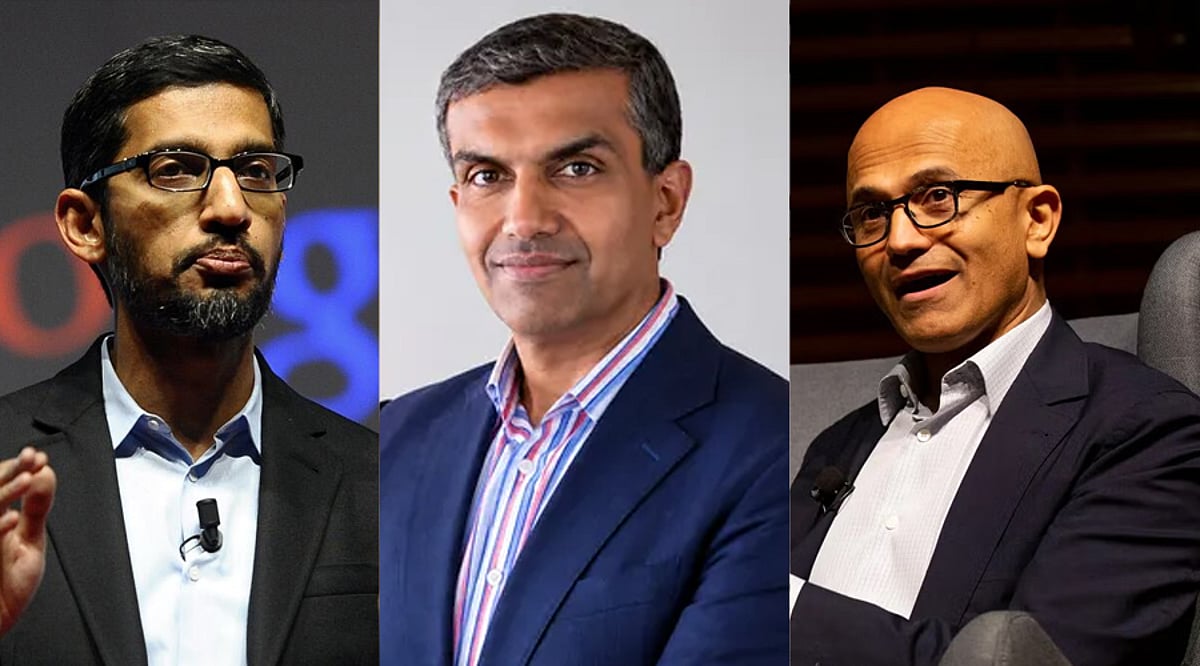
    Indian-origin entrepreneurs and executives now lead some of the most influential technology companies in the United States. Their journeys from India to the top of corporate America highlight a growing trend of global leadership rooted in Indian talent. Here are the key figures behind major US companies.

    Satya Nadella – Microsoft

    Born in Hyderabad, Satya Nadella has served as chairman and CEO of Microsoft since 2014. Under his leadership, the company has pivoted strongly toward cloud computing and artificial intelligence. Nadella played a pivotal role in expanding Microsoft Azure and continues to steer the company’s AI-first strategy.

    Sundar Pichai – Google and Alphabet

    Sundar Pichai, who grew up in Chennai, became CEO of Google in 2015 and later took the helm of Alphabet in 2019. His tenure has seen major investments in AI, cloud computing, Android, and other technologies. Pichai remains one of the most recognized Indian-origin leaders in global tech.

    Anil Chakravarthy – Adobe

    Anil Chakravarthy is set to become Adobe’s next president and CEO on December 1, 2026, succeeding Shantanu Narayen, who led the company for nearly two decades. Chakravarthy studied computer science at IIT Varanasi before earning advanced degrees from MIT. He joined Adobe in 2020 after serving as CEO of Informatica.

    Arvind Krishna – IBM

    Arvind Krishna is chairman and CEO of IBM, one of the world’s largest enterprise technology companies. With a career spanning decades at IBM, he has centered the company’s strategy on hybrid cloud and artificial intelligence.

    Nikesh Arora – Palo Alto Networks

    Nikesh Arora is chairman and CEO of Palo Alto Networks, a leading US cybersecurity firm. Under his leadership, the company has focused on digital security and AI-driven protection, capitalizing on rising corporate spending in this area.

    Neal Mohan – YouTube

    Neal Mohan is the CEO of YouTube, the world’s largest video platform. He assumed the role in 2023 after serving as chief product officer. Mohan has shaped product strategy across advertising, creators, subscriptions, and online video.

    Expanding Influence Across Industries

    Indian-origin leaders now hold top positions not only in technology but also in cybersecurity, finance, healthcare, consumer goods, and logistics. Recent 2026 reports highlight executives such as Raj Subramaniam at FedEx, Vimal Kapur at Honeywell, Revathi Advaithi at Flex, and Jayshree Ullal at Arista Networks. Their presence underscores the growing influence of Indian-origin talent in Corporate America.

  • Adobe Expands AI Capabilities Beyond Firefly With Topaz Labs Acquisition and New Enterprise Platform

    Adobe Expands AI Capabilities Beyond Firefly With Topaz Labs Acquisition and New Enterprise Platform

    Adobe is making another significant move in artificial intelligence, acquiring image-enhancement technology from Topaz Labs and launching Firefly Foundry, a platform for training enterprise-specific generative AI models. The deal underscores Adobe’s strategy to embed AI directly into its creative tools rather than offering standalone AI products.

    Topaz Labs is widely recognized for its sharpening, noise reduction, and image quality improvement tools. By integrating these capabilities into its suite, Adobe aims to help creators and businesses edit faster without sacrificing quality. This acquisition comes as the global content intelligence market is projected to reach $39.88 billion by 2035, driven largely by generative AI adoption.

    The AI Race Shifts From Models to Workflow Integration

    The initial phase of the AI race focused on building powerful models. Now the emphasis is moving toward integrating AI into everyday workflows. While OpenAI and Google continue to develop stronger models and Canva simplifies AI for everyday design, Adobe is taking a different approach: embedding AI directly into the software that photographers, designers, and video editors already rely on. This allows professionals to accelerate their work without changing their creative processes.

    With Firefly Foundry and Topaz Labs working together, Adobe intends to make editing faster and more intuitive for both individual creators and large enterprises. As AI technology continues to evolve, companies that seamlessly integrate it into existing tools may gain a competitive edge.

    Also Read: Adobe vs Salesforce Stock Analysis 2026: Which Is a Better Investment?

  • Adobe Seeks Forward Deployed Engineer (Full-Stack + AI) for Bangalore and Noida Offices

    Adobe Seeks Forward Deployed Engineer (Full-Stack + AI) for Bangalore and Noida Offices

    Job Overview

    Adobe is searching for a Forward Deployed Engineer (Full-Stack + AI) to develop and launch generative AI applications for enterprise customers. This full-time position is based in Bangalore, Karnataka, India or Noida, Uttar Pradesh, India. The role involves building complete AI solutions, testing GenAI applications, and leveraging Adobe Firefly APIs along with other AI platforms to create creative workflows and scalable AI content delivery systems.

    Key Responsibilities

    • Develop full-stack AI applications integrating generative AI models and enterprise platforms to support scalable customer solutions.
    • Collaborate with technical architects and product teams to define customer use cases and design AI-powered applications.
    • Create rapid proof-of-concept prototypes demonstrating generative AI capabilities.
    • Design and deploy microservices and APIs that integrate Adobe Firefly APIs and creative platform services.
    • Develop reusable software components and CI/CD pipelines for efficient and scalable AI solution delivery.

    Qualifications

    • Bachelor’s or Master’s Degree in Computer Science, Software Engineering, or related field.
    • 3+ years of experience in full-stack development, AI engineering, or technical consulting.
    • Full-stack development experience with React.js, Next.js, Angular, Node.js, and Java Spring Boot.
    • Practical skills in developing REST and GraphQL APIs and web applications using HTML, JavaScript, Java, and XML.
    • Experience with generative AI technology integration and research on AI-powered workflow systems.
    • Expertise in Adobe platforms including Creative Cloud APIs, Firefly Services, APIs, and Experience Cloud integrations.
    • Proficiency in cloud environments such as AWS, Azure, and Google Cloud Platform.
    • Knowledge of containerization and DevOps tools: Docker, Kubernetes, Jenkins, GitLab CI/CD pipelines.
    • Ability to create scalable applications and implement production-standard software solutions.

    Preferred Skills

    • Work experience with generative AI models and large language model applications.
    • Knowledge of AI infrastructure systems using GPUs and AI software deployment environments.
    • Ability to explain complex AI concepts to both technical and non-technical audiences.
    • Focus on customer needs while developing AI solutions that meet real business requirements.
    • Experience in high-speed work environments requiring rapid testing and product development.

    About Adobe

    Adobe is a global technology company known for its digital media and marketing solutions. It develops industry-leading platforms such as Creative Cloud, Document Cloud, and Experience Cloud. With innovations in AI, data analytics, and creative software, Adobe helps individuals and businesses create, manage, and deliver personalized digital experiences worldwide.

    Job ID: R165950. Interested candidates can apply through Adobe’s official careers page.