Tag: aerospace

  • Smart Manufacturing Drives Transformation in Aerospace and Defense

    Smart Manufacturing Drives Transformation in Aerospace and Defense

    Introduction

    Smart manufacturing is revolutionizing the aerospace and defense sectors by integrating advanced technologies such as artificial intelligence (AI), the Internet of Things (IoT), robotics, and digital twins. These innovations are creating a unified digital ecosystem that connects design teams, factories, suppliers, and maintenance systems, leading to unprecedented levels of efficiency and innovation.

    Digital Twins: Virtual Testing for Real-World Performance

    Digital twins allow engineers to simulate and test aircraft, engines, and components in a virtual environment. This capability helps identify design flaws and optimize performance before physical production begins, saving time and resources.

    IoT and AI: Predictive Maintenance and Quality Control

    Industrial IoT sensors monitor temperature, vibration, and machine performance in real time. AI algorithms analyze this data to detect potential equipment failures early, enabling predictive maintenance. AI-powered quality control systems inspect aircraft parts, welds, coatings, and composite surfaces to identify defects, reducing rework and improving safety.

    Robotics and Automation

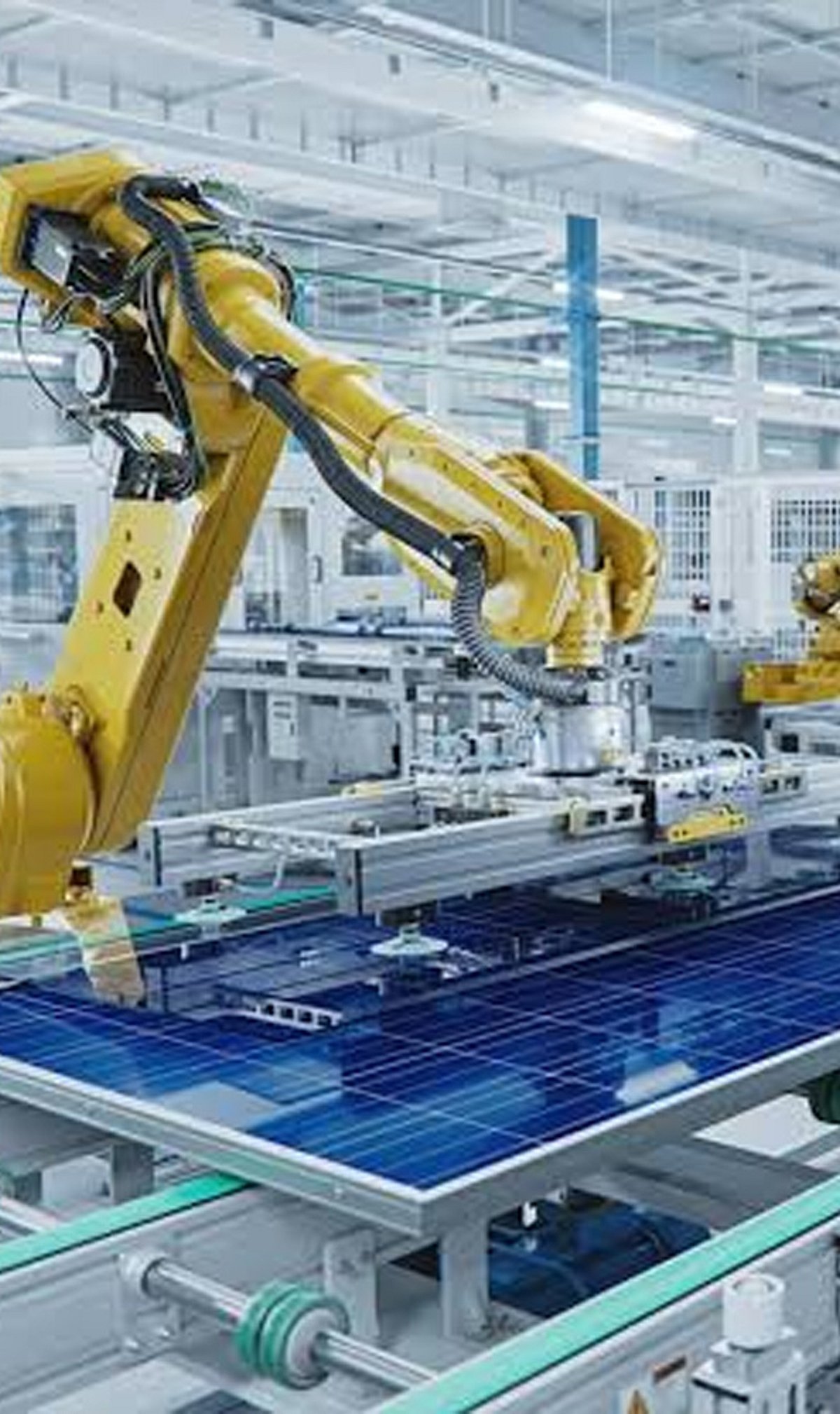
    Robots and collaborative machines handle tasks such as drilling, fastening, welding, painting, and material handling. These systems enhance precision and support human workers in complex operations, boosting productivity and consistency.

    3D Printing for Lightweight Components

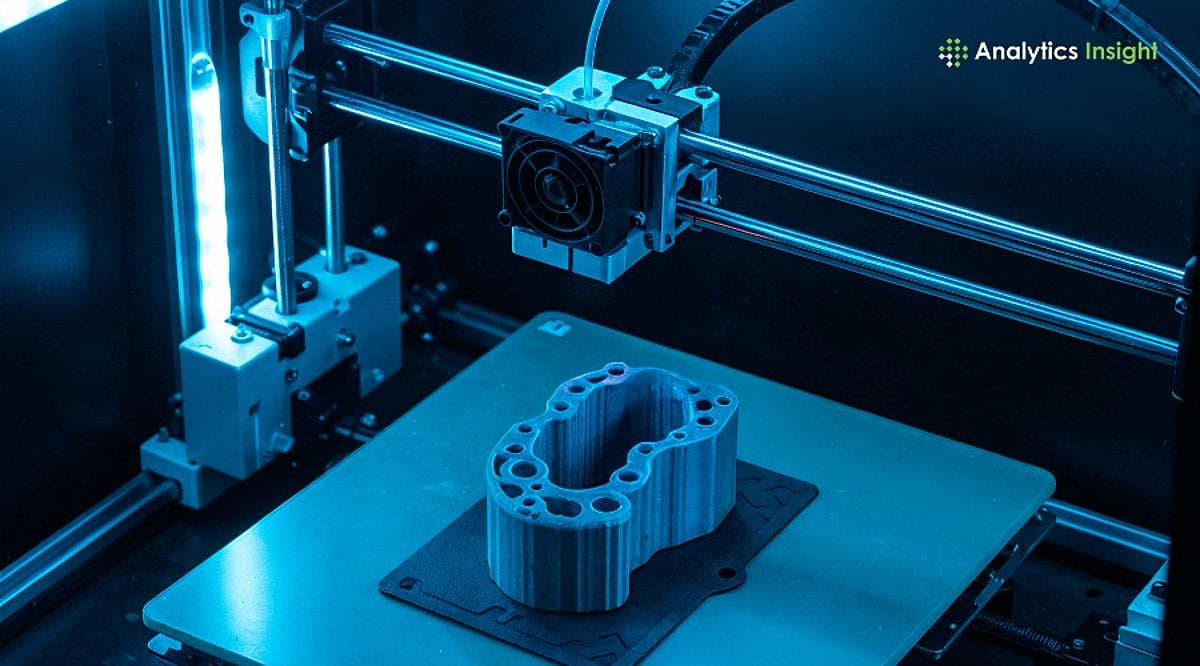
    Additive manufacturing (3D printing) enables rapid prototyping and production of lightweight parts, tooling, and complex low-volume components. This reduces material waste and simplifies assembly processes, contributing to more sustainable manufacturing.

    Augmented and Virtual Reality

    AR and VR technologies provide digital work instructions for technicians, support maintenance training, aid factory planning, facilitate design reviews, and enable remote assistance, improving accuracy and reducing errors.

    Strengthening Supply Chains

    Smart manufacturing enhances defense supply chains by improving parts visibility, predicting shortages, and enabling faster production adjustments in response to changing demand. This resilience is critical for national security.

    Challenges and Future Outlook

    The transition to smart manufacturing also brings challenges, including cybersecurity risks, certification hurdles, integration with legacy systems, and workforce upskilling. According to TCS, around 40% of aerospace manufacturing operations are expected to require minimal human intervention within five to seven years, though human oversight will remain essential.

    Conclusion

    Smart manufacturing is not just a technological upgrade but a fundamental shift in how aerospace and defense products are designed, produced, and maintained. By embracing these innovations, the industry can achieve higher efficiency, quality, and adaptability in an increasingly complex global environment.


  • Rolls-Royce Share Price Analysis: Stock Nears 1,500 Pence on Strong Momentum and Upgraded Profit Forecasts

    Rolls-Royce Share Price Analysis: Stock Nears 1,500 Pence on Strong Momentum and Upgraded Profit Forecasts

    Key Takeaways

    • Rolls-Royce shares reached 1,502.2 pence, with 1,510.0 pence as the next key resistance level.
    • The company raised its 2026 core profit target to EUR 4.7–4.9 billion, up from EUR 4.0–4.2 billion.
    • RSI at 68.70 indicates strong short-term momentum, with 1,494.2 pence as a nearby support level.

    Price Movement Reaches a Key Zone

    Rolls-Royce Holdings shares are trading near the 1,500 pence mark after a sharp rebound. A 15-minute TradingView chart taken at 11:45 a.m. India time on September 22 shows the stock at 1,502.2 pence, with an open of 1,499.0, a high of 1,502.8, a low of 1,498.4, and a gain of 3.4 pence (0.23%). The recovery from a low of 1,439.8 pence has pushed the stock through several levels: 1,472.0, 1,481.4, 1,484.0, and 1,494.2. The next notable resistance level lies at 1,510.0 pence.

    RSI Reflects Strong Momentum

    The lower chart panel shows a Relative Strength Index (RSI) of 68.70, well above its moving average of 59.33. The RSI has climbed from the low 30s to the upper 60s during the recent rally, confirming strong short-term upward force. A move above 70 would signal even stronger momentum, while a drop below 59.33 would indicate waning strength.

    Volume Adds Context

    Part-session volume stands at 411,940 shares at the time of the snapshot. Recent full-session figures include 36.28 million shares on September 18, 35.25 million on September 16, and 24.16 million on September 21, when the stock closed at 1,504.80 pence after a 3.78% gain. Final daily volume will be important to confirm the strength of the move.

    Higher 2026 Targets Support the Bull Case

    Rolls-Royce reported a 46% rise in first-half underlying operating profit to GBP 2.5 billion and free cash flow of GBP 2.0 billion. The company raised its 2026 core profit target to GBP 4.7–4.9 billion from GBP 4.0–4.2 billion, and its free cash flow range to GBP 3.8–4.0 billion from GBP 3.6–3.8 billion. The company completed GBP 1.4 billion of its planned GBP 2.5 billion 2026 share buyback by mid-year. Stronger long-term service agreement margins, contract catch-ups in Civil Aerospace, better power-generation profit, and stronger Defense aftermarket profit were cited as key drivers.

    New Aerospace and Defense Projects

    On September 18, the EU’s Clean Aviation program selected Rolls-Royce’s German unit to lead the ELEVATED project, which targets a hybrid-electric gas-turbine propulsion system for future short- to medium-range aircraft. The project aims for at least a 20% reduction in aircraft-level CO2 emissions. The company also completed a USD 1 billion investment in its Indiana facility, received U.S. Navy certification for MTU engines in autonomous naval vessels, and announced a strategic intent with Reliance Industries to develop an indigenous combat engine for India’s Advanced Medium Combat Aircraft program. The nuclear small modular reactor business continues to win competitive tenders, and the company paid an interim dividend of 6.0 pence, up from 4.5 pence a year earlier.

    Key Levels to Watch

    The immediate chart range is between 1,494.2 and 1,510.0 pence. A hold above 1,494.2 would keep the recent structure intact, while a break above 1,510.0 would bring the stock closer to its 52-week high of 1,585.20 pence. On the downside, a fall through 1,484.0 and 1,481.4 would shift focus to 1,472.0 and 1,460.2. Traders should monitor daily volume and the RSI trend for the clearest short-term signals.

    FAQs

    What is the latest Rolls-Royce share price? The TradingView snapshot shows 1,502.2 pence at 11:45 a.m. India time on September 22, 2026.

    What is the next key resistance level? The chart shows 1,510.0 pence as the next major level above the current price.

    What is Rolls-Royce’s 2026 profit target? Rolls-Royce raised its 2026 core profit target to EUR 4.7–4.9 billion.

    What does the RSI indicate? The RSI stands at 68.70, reflecting strong recent price momentum.

    What key levels should traders watch? The chart highlights 1,510.0, 1,494.2, 1,484.0, 1,481.4, and 1,472.0 pence as important reference levels.

  • India’s Next Industrial Boom: Six Sectors Powering a New Technology Economy

    India’s Next Industrial Boom: Six Sectors Powering a New Technology Economy

    India’s Technology Economy Takes Shape

    India is undergoing a major transformation in how it builds and uses technology. According to a recent Jefferies report, six key industries are driving this shift: semiconductors, electronics, space, data centers, solar equipment, and aerospace.

    The numbers underline the momentum. India’s space industry has grown fivefold and is projected to reach USD 40-45 billion by 2030. Semiconductor investments have hit around USD 20 billion, with an additional USD 13 billion incentive plan in the works. Data centers have also seen explosive growth, expanding fivefold over the past five years and expected to hit 10 gigawatts in the next half-decade.

    Solar power remains one of India’s strongest sectors. The country is the world’s second-largest photovoltaic manufacturer, and by 2030, it aims to cover 90% of the entire solar value chain.

    Dipal Dutta, CEO of RedoQ, encapsulated the shift: “By expanding deep-tech capabilities across semiconductors, space systems, and next-generation data centers, the nation isn’t just participating in the global supply chain, it is actively rewiring it.”

    From IT Services to Building Technology

    India’s traditional technology story was centered on IT services, software, and outsourcing. Companies built software for global clients and handled tech work for businesses worldwide. The new model is broader and more ambitious. India is now striving to manufacture more of the technology it uses—chip plants underpin a local semiconductor industry, electronics factories move beyond assembly, data centers support cloud and AI services, and space and aerospace firms push deeper into global markets.

    The fundamental change is clear: India is transitioning from being a provider of technology services to becoming a builder of the hardware and systems that power them. If this growth trajectory continues, these six sectors could elevate India’s role in the global technology market significantly.

  • SpaceX Software Engineer Compensation: What Top Engineers Earn in 2025

    SpaceX Software Engineer Compensation: What Top Engineers Earn in 2025

    SpaceX has become one of the most sought-after employers for software engineers, combining cutting-edge aerospace technology with competitive compensation packages. This article breaks down the salary tiers, benefits, and skills that define a career at the rocket company.

    Entry-Level Engineer

    Early-career software engineers at SpaceX earn competitive salaries while working on groundbreaking aerospace systems. The hands-on experience and exposure to mission-critical projects often outweigh the base pay for many new graduates.

    Mid-Level Engineer

    Experienced engineers receive higher compensation as they take on greater project responsibilities. Mid-level roles involve leading development of software that controls launch vehicles, satellites, and ground systems.

    Senior Software Engineer

    Senior engineers command premium salaries for overseeing mission-critical software development. They are responsible for architecture decisions and mentoring junior team members.

    Principal Engineer

    Principal engineers shape SpaceX’s software architecture and receive top-tier compensation packages. These roles influence the technical direction of the entire company.

    Stock-Based Compensation

    Employees may receive equity awards alongside their base salary and bonuses, aligning their interests with the company’s long-term success.

    Benefits

    SpaceX offers healthcare, retirement plans, paid leave, and other employee benefits that complement the total compensation package.

    Skills Required

    Strong programming skills, experience with distributed systems, embedded software development, and problem-solving abilities are highly valued. Engineers must thrive in a fast-paced, innovative environment.

    Work Environment

    The engineering culture at SpaceX is defined by rapid iteration, challenging projects, and a mission-driven focus. Employees work on technologies that push the boundaries of space exploration.

  • 9 Pioneering Companies Building the Future of Space Hotels

    9 Pioneering Companies Building the Future of Space Hotels

    The dream of spending a vacation in orbit is moving closer to reality thanks to a growing roster of ambitious companies. From rotating space stations with artificial gravity to luxury hotel modules and inflatable habitats, these nine organizations are leading the charge to make space hospitality a tangible experience.

    1. Voyager Space

    Voyager Space is developing Starlab, a commercial space station designed to support future space tourism and orbital hospitality services.

    2. Orbital Assembly Corporation

    Orbital Assembly Corporation plans to build rotating space stations with artificial gravity, aiming to create the world’s first true space hotel experience.

    3. Axiom Space

    Axiom Space is constructing private space station modules, laying the foundation for luxury stays beyond Earth in the coming years.

    4. Blue Origin

    Blue Origin is expanding private spaceflight through reusable rockets, bringing future orbital tourism and space hotel access closer to reality.

    5. SpaceX

    SpaceX’s Starship could transport large numbers of passengers, making commercial space hotels more practical and affordable for future travelers.

    6. Sierra Space

    Sierra Space develops inflatable habitat technology designed for commercial stations, supporting comfortable living spaces for future orbital visitors worldwide.

    7. Vast

    Vast is creating Haven-1, a private space station designed to host astronauts today while supporting future commercial tourism opportunities.

    8. Hilton Hotels & Resorts

    Hilton partners with Voyager Space, contributing hospitality expertise to help shape guest experiences aboard future commercial space stations worldwide.

    9. Above: Space Development Corporation

    Above: Space Development Corporation is designing artificial gravity stations that could redefine long-term stays and luxury accommodation in Earth’s orbit.

  • Elon Musk Fuels Tesla-SpaceX Merger Speculation in Q2 Earnings Call – What Investors Should Know

    Elon Musk Fuels Tesla-SpaceX Merger Speculation in Q2 Earnings Call – What Investors Should Know

    Elon Musk reignited speculation about a potential merger between Tesla and SpaceX during Tesla’s second-quarter earnings call, declining to rule out a future deal. The comments came as the two companies already share projects across batteries, artificial intelligence, and advanced manufacturing.

    “We can’t talk about combining companies on an earnings call,” Musk said, adding that any merger discussion would require a formal corporate process. Tesla General Counsel Brandon Ehrhart described SpaceX as an important business partner, noting several mutually beneficial transactions, but did not confirm any active review of a merger.

    Musk’s Comments Renew Merger Debate

    Musk acknowledged growing operational overlap between Tesla and SpaceX during the call. Investors have long debated the merits of combining the two companies. Gene Munster of Deepwater Asset Management said the remarks increased his confidence in a future combination, possibly within several years.

    JPMorgan analysts pointed to shared talent, AI infrastructure, and manufacturing knowledge, suggesting those links could reduce some operational barriers. SpaceX President Gwynne Shotwell said in June that combining Musk’s companies could simplify management.

    Existing Collaborations and Synergies

    Tesla and SpaceX already cooperate on batteries, engineering, AI, and advanced manufacturing. They are jointly developing Terafab, a semiconductor facility aimed at producing chips for AI systems. Both companies rely on large computing networks and specialized engineering teams, with Musk leading strategy across both entities.

    Some Tesla investors envision a broader technology group encompassing vehicles, robotics, energy, satellites, and AI. However, no timeline, valuation, or transaction structure has been announced.

    Tesla Q2 Earnings Mixed; Focus Shifts to Spending

    The merger discussion followed Tesla’s mixed second-quarter results. Revenue reached $28.24 billion, beating the $26.32 billion estimate. Adjusted earnings of $0.33 per share missed analyst expectations of $0.50. Tesla shares fell about 6% in premarket trading.

    Vehicle deliveries rose 25% year-over-year to 480,126 units. Energy storage deployments hit 13.5 GWh, up from 8.8 GWh in the prior quarter. Capital spending is expected to exceed $25 billion this year, funding Robotaxi, Optimus, Cybercab, and AI data centers. Free cash flow was negative $1.09 billion, better than the expected negative $3.64 billion.

    Regulatory and Governance Hurdles Remain

    Any Tesla-SpaceX merger would face intense regulatory scrutiny in the U.S. and other major markets, especially China. SpaceX’s close ties with the U.S. government and defense agencies could raise national security concerns during foreign reviews. Governance is also a key issue: Musk controls a larger voting stake in private SpaceX than in public Tesla, potentially raising questions about valuation and minority shareholder treatment. Independent directors and shareholder approval would be critical.

    For now, neither company has announced a merger process. Musk’s comments only left the possibility open while cooperation continues.

  • Metal Additive Manufacturing: Transforming Production in 2026 and Beyond

    Metal Additive Manufacturing: Transforming Production in 2026 and Beyond

    Metal 3D printing has evolved from a prototyping novelty into a mainstream production technology. In 2026, industries worldwide are leveraging it to create stronger, lighter, and more complex metal parts while drastically reducing waste and lead times. With AI-driven quality control, faster printers, and advanced materials, metal additive manufacturing is reshaping aerospace, automotive, healthcare, and defense sectors.

    Less Waste, Stronger Parts

    Traditional machining cuts away material from a solid block, generating significant scrap. Metal 3D printing builds parts layer by layer, using only the metal needed for the final component. This reduces material costs and enables intricate geometries that are impossible with conventional methods. The resulting parts are often lighter yet equally strong, improving energy efficiency in vehicles and machinery.

    Aerospace Leads Adoption

    Aircraft manufacturers are among the biggest adopters. By printing lightweight components, they cut fuel consumption and carbon emissions. Consolidating multiple smaller parts into a single printed piece enhances structural integrity and reduces failure points. Defense contractors also rely on metal 3D printing for mission-critical parts, and large-scale printing facilities are now common.

    Automotive Gains Speed and Flexibility

    Car makers use metal 3D printing for engine components, cooling systems, tools, and custom parts. This accelerates time-to-market and allows digital inventory management—companies store digital files instead of physical spare parts, printing replacements on demand and saving storage and logistics costs.

    Healthcare Personalization

    Medical applications benefit from custom implants tailored to individual patients. Titanium, favored for its strength, lightness, and biocompatibility, is widely used for dental crowns, hip and knee implants, spinal and skull implants, and surgical tools. Better-fitting implants improve patient recovery outcomes.

    Market Growth Projection

    The global metal 3D printing market is expected to grow from $15 billion in 2026 to $102 billion by 2035, a compound annual growth rate of about 24%. Factories are investing heavily in smart machinery, automation, and digital technologies.

    AI Enhances Quality and Efficiency

    Artificial intelligence checks designs before printing, optimizes build parameters, and monitors each layer in real time to detect flaws. Digital twins—virtual replicas of physical products—allow engineers to test and refine designs without material waste, saving time and money.

    New Materials Expand Possibilities

    Researchers continue developing advanced alloys, including stronger aluminum, titanium, stainless steel, nickel alloys, and cobalt-chrome. A recent breakthrough enables a single printer to combine multiple metal alloys in one print by adjusting laser parameters via software, opening the door to novel, high-performance products.

    Faster Machines and Greater Throughput

    Modern metal printers use multiple lasers, larger build volumes, and robotic post-processing. Some jobs that once took weeks or months now finish in days, making metal 3D printing viable for medium-to-large production runs.

    Environmental Benefits

    By using only necessary material and enabling localized production, metal 3D printing reduces waste and transportation emissions. Digital inventories replace vast warehouses, and longer-lasting parts mean fewer replacements—contributing to a more sustainable manufacturing ecosystem.

    Challenges Remain

    High machine and material costs persist. Many printed parts require post-processing such as polishing, heat treatment, or inspection. There is also a shortage of skilled operators. However, as technology matures and adoption scales, these barriers are gradually being overcome.

    Frequently Asked Questions

    What is metal 3D printing?

    It is an additive manufacturing process that builds metal objects layer by layer from a digital 3D model.

    Which industries use it most?

    Aerospace, automotive, healthcare, defense, energy, and industrial manufacturing are the primary adopters.

    Why is it becoming popular?

    It reduces waste, shortens production times, enables complex geometries, and supports rapid prototyping and low-volume production.

    How does AI help?

    AI optimizes designs, monitors print quality in real time, detects anomalies, and improves overall process reliability.

    What is the future outlook?

    Experts predict sustained rapid growth as costs fall, materials improve, and more manufacturers integrate metal 3D printing into mainstream production.

  • Top Defense Stocks Driving Strong Export Growth in Aerospace and Naval Sectors

    Top Defense Stocks Driving Strong Export Growth in Aerospace and Naval Sectors

    The global defense industry is witnessing a surge in export opportunities, driven by rising geopolitical tensions and modernization programs across nations. Several companies are capitalizing on this trend, leveraging indigenous technologies and strategic capabilities to expand their international footprint. Below is a curated list of defense stocks that are demonstrating robust export growth.

    Hindustan Aeronautics Limited (HAL)

    HAL is expanding its aerospace exports through helicopters and aircraft platforms, supported by strong technological capabilities and growing international demand. The company’s expertise in manufacturing and maintaining advanced aerial systems positions it well for continued export success.

    Bharat Electronics Limited (BEL)

    BEL exports advanced defense electronics and radar systems, benefiting from increasing global interest in indigenous technologies. Its portfolio of communication and surveillance solutions is gaining traction among foreign militaries seeking reliable and cost-effective alternatives.

    Bharat Dynamics Limited (BDL)

    BDL is strengthening its export opportunities through missile systems and strategic defense products. The company’s focus on developing cutting-edge weaponry has attracted interest from international customers looking for proven, high-performance solutions.

    Mazagon Dock Shipbuilders

    Mazagon Dock is expanding its naval exports by leveraging its warship and submarine expertise. Rising global maritime security requirements are driving demand for its specialized vessels and maintenance services.

    Cochin Shipyard

    Cochin Shipyard is exploring international opportunities in shipbuilding and maintenance services. Its expertise in complex marine projects, including aircraft carriers and offshore vessels, makes it a competitive player in the global market.

    Data Patterns

    Data Patterns develops indigenous defense electronics and systems, attracting export demand for advanced surveillance and aerospace technologies. The company’s focus on indigenization aligns with global trends toward self-reliance in defense capabilities.

    Astra Microwave Products

    Astra Microwave Products supplies radar and communication solutions globally. Its products are integral to defense modernization programs across countries, supporting the growing need for advanced electronic warfare and surveillance systems.

    Paras Defence and Space Technologies

    Paras Defence is expanding its export potential through optics, defense engineering, and space-related technologies. The company’s niche expertise in high-precision components is gaining recognition in international markets.

    Solar Industries India

    Solar Industries India is strengthening its defense exports with ammunition and explosives manufacturing capabilities. Increasing overseas demand for reliable ordnance and propellants is driving its growth trajectory.

    These companies represent a cross-section of the defense sector that is poised for continued export expansion. Investors and industry observers should monitor their performance as global defense spending and modernization efforts accelerate.

  • MIT’s Latest Aircraft Innovations: From Autonomous Flight to Sustainable Aviation

    MIT’s Latest Aircraft Innovations: From Autonomous Flight to Sustainable Aviation

    MIT’s ongoing research in aircraft technology spans a wide range of groundbreaking developments, from autonomous helicopters and uncrewed aircraft systems to advanced materials and climate-friendly flight strategies. This collection of stories highlights how MIT engineers, students, and faculty are pushing the boundaries of aviation.

    Autonomous and Uncrewed Aircraft Systems

    Rotor Technologies, an MIT alumni-led startup, has developed self-flying helicopters that remove human pilots from dangerous commercial missions. Meanwhile, Navy veteran and EMBA student Greg Knutson is building expertise in uncrewed aircraft systems while pursuing innovation in advanced manufacturing. The Saab 340 has also become a permanent flight-test asset at Lincoln Laboratory, supporting the development of diverse technologies for national security.

    Advanced Materials and Design

    MIT engineers have pioneered “nanostitches” using carbon nanotubes to prevent cracking in multilayered composites, leading to lighter and tougher materials for next-generation airplanes and spacecraft. Additionally, researchers have identified new routes to stronger titanium alloys with exceptional combinations of strength and ductility, ideal for aerospace applications. The passing of Professor Robert Liebeck, a giant in aviation and pioneer of the Blended-Wing Body experimental aircraft, marks a significant loss to the field.

    Climate and Environmental Impact

    A new study from MIT researchers reveals that images from geostationary satellites alone are insufficient to help planes avoid contrail-prone regions, highlighting the need for more comprehensive monitoring to reduce climate-warming contrails. New flight procedures developed in collaboration with the FAA and Massport aim to reduce aircraft noise from Boston Logan Airport while maintaining or improving fuel efficiency.

    Safety and Navigation

    A lightning-prediction tool developed at MIT maps aircraft sections most vulnerable to lightning strikes, including on experimental designs, helping protect future aircraft. In the classroom, AeroAstro students are building software for autonomous flight vehicles to navigate unknown environments as part of course 16.85 (Design and Testing of Autonomous Vehicles).

    Entrepreneurship and Education

    The Certificate in Aerospace Innovation provides students with the tools to become aerospace entrepreneurs during an inflection point in the industry. MIT students are also combating climate anxiety through extracurricular teams like the Electric Vehicle Team, Sustainable Engine Team, and Solar Electric Vehicle Team, each contributing to planetary health.

    AI and Complex Systems

    An MIT algorithm for revealing causal links in complex systems has wide implications, from forecasting climate to designing efficient aircraft. A new DARPA-funded collaboration will pursue AI-enhanced design tools and high-throughput testing methods for next-generation turbomachinery, combining artificial intelligence with “blisk” technology.