
Tag: agentic AI

  • Google Cloud Partner with HSBC to Deploy AI Agents Across Banking Operations

    Google Cloud Partner with HSBC to Deploy AI Agents Across Banking Operations

    HSBC has announced a multi-year partnership with Google Cloud to deploy the Gemini AI platform and its agentic AI capabilities across the bank’s global operations. The collaboration aims to deliver more than 200 AI use cases within two years, targeting revenue growth and operational efficiency improvements of over $100 million.

    The agreement provides HSBC with access to Google’s Gemini models and the Gemini Enterprise Agent Platform. Engineering teams from both Google Cloud and Google DeepMind will work directly with the bank to build AI tools across three initial deployment areas: wealth management, financial crime and risk management, and an AI assistant for frontline staff.

    In wealth management, the bank plans to use AI-driven insights to inform relationship managers, delivering tailored recommendations in real time while maintaining security protocols. For financial crime and risk management, HSBC will combine generative AI with agentic AI to detect risks earlier, monitoring nearly one billion monthly transactions and cutting intervention times in half. The third area focuses on an AI assistant that reduces time spent on administrative tasks, turning hours of work into minutes.

    Thomas Kurian, CEO of Google Cloud, called the partnership “a blueprint for the future of the financial services industry.” Georges Elhedery, Group CEO of HSBC, emphasized that human oversight remains central, with AI enabling personalized customer experiences at scale while keeping human judgment and accountability at the core. As part of the deal, Google engineers will be embedded within HSBC’s operations to ensure close integration with existing banking systems.

  • IBM Teams Up with ElevenLabs to Bring Natural Voice to Enterprise AI Agents

    IBM Teams Up with ElevenLabs to Bring Natural Voice to Enterprise AI Agents

    A landmark partnership between IBM and ElevenLabs is moving enterprise AI beyond text, delivering natural, secure, and scalable voice-first agents. The collaboration integrates ElevenLabs’ premium Text-to-Speech (TTS) and Speech-to-Text (STT) capabilities with IBM’s watsonx Orchestrate platform, enabling organizations to build voice-enabled AI agents that communicate with nuance, emotion, and rhythm across 70 languages.

    This strategic integration expands agentic AI from traditional text-based systems to voice-first interactions, offering enterprises the ability to replace robotic call flows with human-like conversations. The partnership addresses key enterprise needs for security and compliance, including PCI compliance for payment processing and HIPAA-compliant data handling through Zero Retention Mode.

    Industry applications span government services, banking, healthcare, insurance, and utilities, where AI phone agents can now converse in multiple languages with regional accents. Internal use cases include helping employees navigate legacy systems and retrieve complex compliance documentation via simple voice commands.

    ElevenLabs has achieved $330 million in annual recurring revenue (2025) and a valuation of $11 billion following a $500 million Series D funding round in February 2026. The company’s voice library contains over 10,000 voices.

    Nick Holda, Vice President of AI Technology Partnerships at IBM, stated: “We’re bringing a voice to AI Agents in the enterprise. As clients increasingly deploy agentic AI that interacts with their customers and employees, they want these experiences to feel intuitive, responsive and accessible.”

    Mati Staniszewski, Co-Founder of ElevenLabs, added: “AI agents are becoming central to everyday work, and voice is where AI either earns trust or loses it.”

    The collaboration underscores a shift toward human-centered AI interfaces that adapt to natural speaking habits, moving beyond rigid call flows and towards empathetic, efficient digital ecosystems that can scale globally.

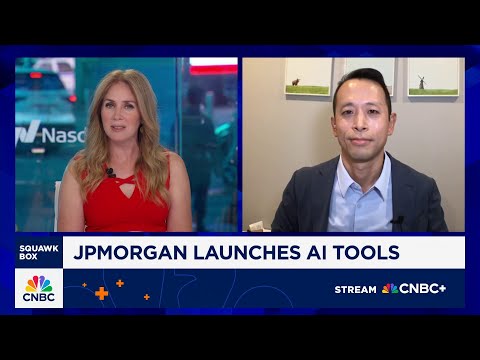
  • JPMorgan Equips 250,000 Employees with AI Assistants from OpenAI and Anthropic

    JPMorgan Equips 250,000 Employees with AI Assistants from OpenAI and Anthropic

    JPMorgan Chase is taking a major step in integrating artificial intelligence across its operations by providing 250,000 employees with access to LLM Suite, a platform that connects staff to large language models from OpenAI and Anthropic. The initiative aims to move beyond simple chatbots toward autonomous AI agents that can handle complex tasks across multiple business functions.

    Derek Waldron, Chief Analytics Officer at JPMorgan, described the vision as one where the bank becomes a fully AI-connected enterprise. In a demonstration, Waldron showed how the platform can create an investment banking presentation in 30 seconds—work that previously required hours from junior bankers.

    Launched in 2023, LLM Suite initially offered OpenAI’s models for drafting emails and summarizing documents. It now incorporates Anthropic’s Claude model as well. About half of the 250,000 employees with access use it daily, and the platform is updated every eight weeks with new data from the bank’s business units.

    Key capabilities include drafting confidential merger and acquisition documents, providing personalized AI assistants for every employee, automating routine back-office processes, and using AI agents to handle complex multi-step tasks autonomously.

    Waldron acknowledged that while AI will empower some workers, others face displacement as processes no longer require human involvement. In May, the head of JPMorgan’s consumer banking division told investors that operations staff would fall by at least 10% over five years due to AI deployment. Senior Wall Street executives have discussed changing the ratio of junior bankers to senior managers from 6-1 to 4-1 as AI handles more work.

    Despite the rapid deployment, Waldron noted it will take years to fully connect AI models with the bank’s data and software, which has an annual technology budget of $18 billion. An MIT report from July found that most corporations had not generated returns on AI projects despite over $30 billion in investments.

  • Navigating AI Development at Breakneck Speed: Lessons from Two Six Technologies

    Navigating AI Development at Breakneck Speed: Lessons from Two Six Technologies

    In the rapidly evolving landscape of artificial intelligence, development cycles have compressed to what industry experts describe as “dog years.” Software upgrades that once took a year are now shipped in two months or less. This pace forces organizations to constantly adapt, especially when major LLM releases redefine the automation capabilities of software.

    Two Six Technologies, a company specializing in national security and AI innovation, offers a compelling case study in balancing speed with stability. Their new agentic orchestrator, Helix, went from concept to operational deployment on the most sensitive and secure systems in just three months. The company serves clients like the Department of War, DARPA, and intelligence agencies, where security is paramount.

    Key lessons from their approach include:

    • Embedding security from the start: By adopting a proactive security posture and using their zero-trust solution, Trusted Keep, they safely pilot cutting-edge capabilities without sacrificing compliance.
    • Leveraging larger, well-coordinated teams: Contrary to the trend toward smaller agile teams, Two Six found that larger teams provide the bandwidth to jump from low-fidelity concepts to polished features quickly.
    • Maintaining model flexibility: Systems must avoid lock-in to any single AI model, allowing seamless transitions as algorithms evolve. This is critical for tools like Helix that connect to diverse ecosystems.
    • Deep customer intimacy: Rapid development fails if the product misses the mark. Two Six combines deep national security expertise with AI to ensure customer intent guides every iteration.

    The company demonstrates that organizations don’t have to choose between speed and security. With the right foundation, they can achieve both, delivering immediate, decisive results in high-stakes environments.