
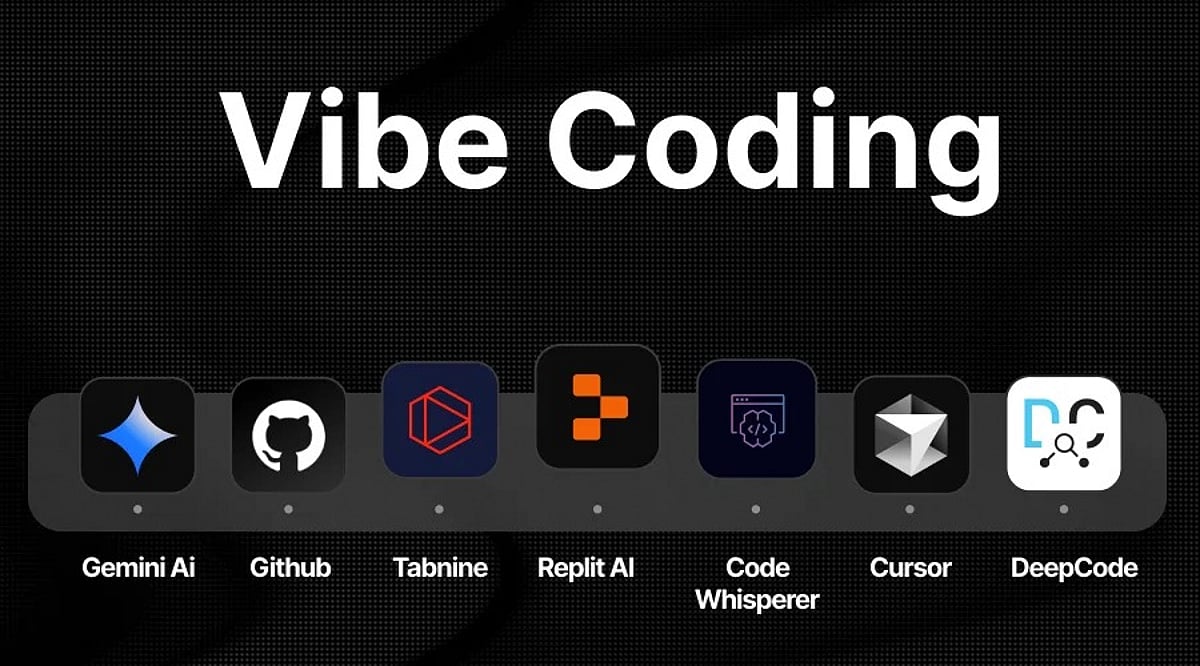
Building an app once required years of learning programming languages, debugging errors, and understanding complex logic. That barrier is fading fast. Vibe coding has changed how people approach software development, letting anyone describe an idea in plain English and watch an AI model turn it into working code.
What Vibe Coding Actually Means
Vibe coding is a method of building software where a person describes their goal in natural language, and an AI model writes, runs, and fixes the code based on that description. Instead of learning syntax or writing every function manually, a user simply says something like “build me a to-do list app with dark mode,” and the AI generates a working version.
The term was coined by AI researcher Andrej Karpathy in February 2025, when he described giving in to “the vibes” and letting AI handle the coding almost entirely. Collins Dictionary later named vibe coding its Word of the Year for 2025, officially defining it as the practice of using natural language prompts to make an AI program produce the desired code.
How the Process Actually Works
Vibe coding generally follows a simple loop: describe what you want to build, the AI interprets the request and writes the underlying code, you review the output and ask for adjustments, and the AI refines it further based on that feedback.
Tools such as Lovable, Replit, Bolt, GitHub Copilot, and Cursor have built entire platforms around this workflow, handling tasks like database setup, real-time updates, and error debugging automatically. Instead of writing a complex database query, a user might simply describe the dashboard they want, and the AI generates the required logic behind it.
Why It Matters for Non-Coders & Businesses
Vibe coding lowers the barrier to entry for building software in a way few previous tools have managed. People with no programming background can now launch functional apps, websites, and prototypes without hiring a developer or spending months learning to code. Businesses benefit too, since ideas can move from concept to a working demo in hours rather than weeks. According to reports, by mid-2026 roughly 25 percent of Y Combinator startups were building products using mostly AI-generated code, showing how quickly this shift has moved from a novelty into standard practice for early-stage teams.
The Limits & Risks Worth Knowing
Vibe coding is not without its downsides. Since users often skip reading the generated code line by line, mistakes and security gaps can slip through unnoticed. Early adopters have reported issues ranging from broken features to AI-generated content that misrepresented real data, such as fake product reviews appearing on a demo app.
Developers who understand the underlying logic can catch these problems faster, which is why many experts recommend treating AI output as a strong first draft rather than a finished product, especially for anything handling sensitive user data.
The Road Ahead for App Development
Vibe coding is reshaping who gets to build software, shifting the developer’s role from writing every line of code to guiding an AI assistant toward the right outcome. As AI models keep improving at understanding context and intent, the applications people can create this way will only grow more capable.
It is not about replacing skilled developers entirely, but about giving far more people the tools to turn their ideas into something real, faster than ever before.
Frequently Asked Questions
- What is vibe coding? Vibe coding is an approach where a person describes an idea in plain language and lets an AI assistant translate it into working software, rather than writing the code line by line.
- Does vibe coding replace developers? No, it does not replace skilled developers entirely. It gives more people the tools to turn their ideas into working applications, and experienced developers still play a key role in guiding, refining and reviewing the output.
- Can someone with no coding experience use vibe coding to build an app? Yes, vibe coding makes app building accessible to people who never learned to program, since the process relies on describing intent rather than writing syntax.
- Is AI-generated code from vibe coding safe to use directly? Experts recommend treating AI output as a strong first draft rather than a finished product, especially for anything handling sensitive user data, so a review step remains important.
- How will vibe coding evolve as AI models improve? As AI models get better at understanding context and intent, the applications people can build through vibe coding are expected to grow more capable and complex over time.