Tag: AI avatars

  • HeyGen Review: AI-Powered Video Creation with Avatars and Voice Cloning

    HeyGen Review: AI-Powered Video Creation with Avatars and Voice Cloning

    Overview

    HeyGen is an AI-driven video generation platform that enables users to create professional videos using lifelike AI avatars, voice cloning, and text-to-video technology. It supports multiple languages and is ideal for marketing materials, training content, and product demos—no recording equipment required.

    General Information

    • Founded: 2020
    • Platform Support: Web, Windows, macOS, Linux
    • Download: Available on the official website

    Key Features

    • Generates lifelike avatars using permission-based video samples and real-time verification.
    • Clones voiceovers for consistent narration across multiple projects.
    • AI Studio integrates scripts, avatars, voice, and screen recording into a single workflow.
    • Provides translation and dubbing for videos in different languages.
    • Enables scalable video creation for product demos, marketing, and helpdesk support.

    Benefits

    • Eliminates repetitive live recording once the avatar and voice are configured.
    • Accelerates video production through efficient AI-driven generation.
    • Maintains consistent branding with cloned voices and realistic avatars.
    • User-friendly dashboard simplifies onboarding for beginners.
    • Highly efficient for businesses that produce videos frequently.

    Challenges

    • Free plan limits users to one custom AI avatar.
    • Requires manual synchronization of narration and screen recordings.
    • AI may mispronounce product names or technical terms.
    • Careful script timing is necessary.
    • Avatar hand gestures can become repetitive.

    Subscription Plans

    HeyGen offers a free plan with limited AI videos and one avatar for testing. Paid subscriptions (Creator, Business, Enterprise) include additional video credits, extra avatars, collaboration tools, API access, advanced administration, and enterprise features.

    Support Options

    • Help Center: Documentation, tutorials, FAQs, product guides, community discussions, and learning resources.
    • Customer Support: Email support, enterprise customer success, technical assistance, onboarding support, and billing support.

    Conclusion

    HeyGen is a dependable AI-based video generation tool that offers features like AI avatars, voice cloning, script-to-video generation, and multilingual localization. It simplifies professional video creation for companies, marketers, educators, and content creators without the need for traditional recordings. While synchronization, meticulous script editing, and paid subscriptions for advanced features are considerations, HeyGen effectively meets its purpose.

  • How Virtual Humans Are Transforming Business and Entertainment: The Rise of AI Avatars

    How Virtual Humans Are Transforming Business and Entertainment: The Rise of AI Avatars

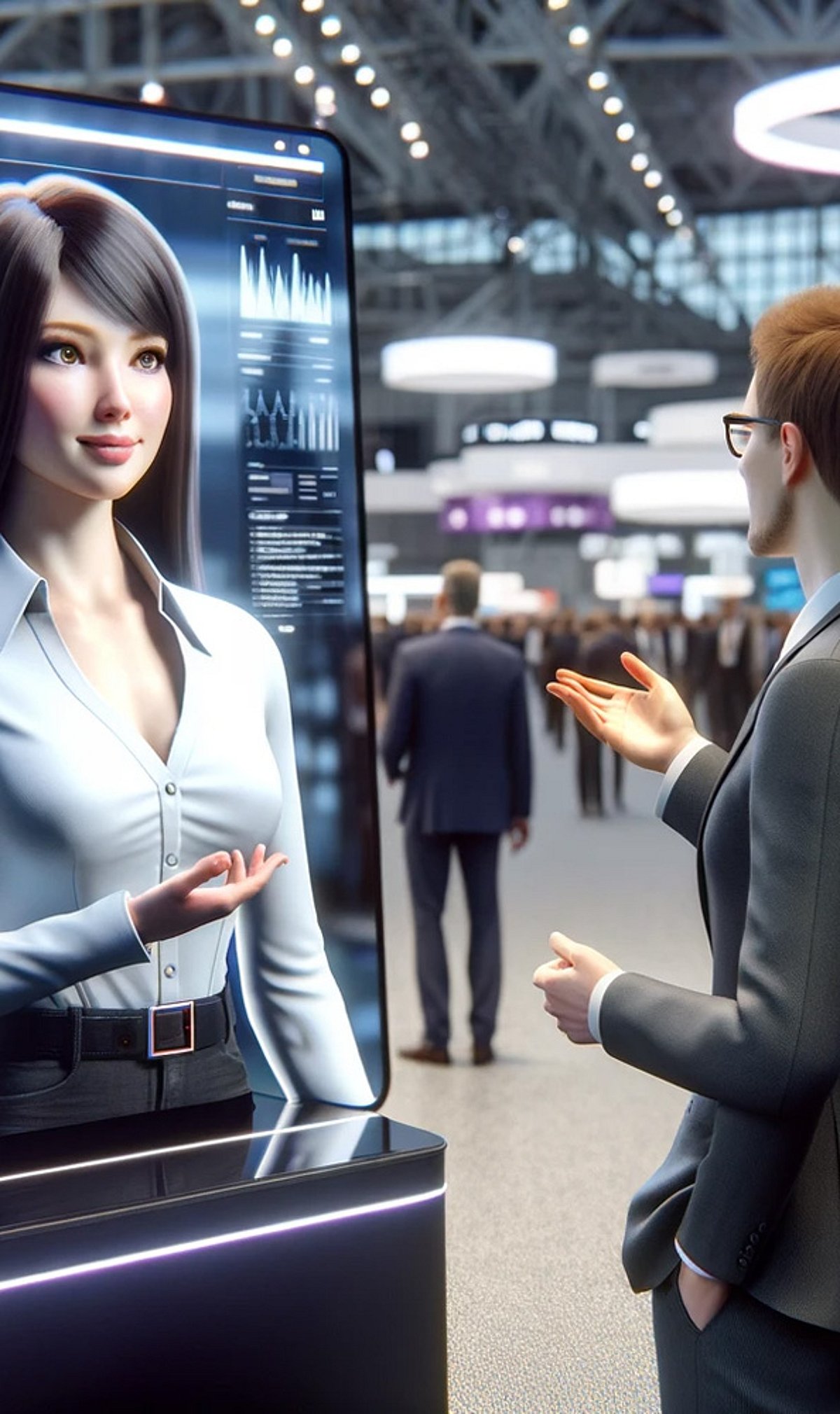
    Artificial intelligence avatars, also known as virtual humans, are rapidly becoming a cornerstone of modern business and entertainment. These AI-driven digital beings offer realistic interactions, adaptive learning, and round-the-clock availability, making them invaluable across industries. From customer service to film production, AI avatars are reshaping how companies engage with audiences, streamline operations, and create immersive experiences.

    Customer Support

    AI avatars provide instant multilingual assistance, answer customer questions, reduce waiting times, and deliver personalized support across digital platforms daily. Their ability to handle routine inquiries frees human agents to tackle more complex issues, improving overall efficiency and customer satisfaction.

    Healthcare Assistance

    Virtual humans guide patients through appointments, explain treatments, support mental wellness initiatives, and improve healthcare communication with empathy-driven interactions. They offer a consistent, non-judgmental presence that can reduce anxiety and increase patient understanding.

    Education and Training

    AI-powered tutors personalize lessons, simulate real-world scenarios, and enhance learning experiences for students and professional workforce development programs. These avatars adapt to individual learning paces, making education more accessible and effective.

    Marketing Campaigns

    Brands deploy AI avatars as digital ambassadors, creating personalized advertisements, engaging audiences, and delivering consistent messaging across multiple channels. Virtual influencers and spokespeople can be scaled quickly, reducing campaign costs while maintaining impact.

    Entertainment Industry

    Virtual performers, influencers, and digital actors appear in films, concerts, gaming, and social media, attracting millions of fans worldwide. These avatars allow for creative storytelling without the constraints of human physicality, opening new frontiers in entertainment.

    Corporate Communication

    Businesses use AI presenters for onboarding, training sessions, internal announcements, and multilingual communication, improving engagement while reducing production costs. Virtual humans can deliver consistent, on-brand messages across global teams.

    Retail Shopping

    AI shopping assistants recommend products, answer buying questions, and create interactive purchasing experiences that increase customer satisfaction and conversion rates. They provide 24/7 support, mimicking the best aspects of in-store assistance.

    Financial Services

    Banks employ AI avatars to explain financial products, assist customers securely, and simplify complex investment or banking processes through conversations. These virtual advisors help build trust and improve financial literacy.

    Metaverse Experiences

    AI avatars enable immersive virtual meetings, digital workplaces, interactive events, and social experiences, reshaping online collaboration and entertainment ecosystems. They are the key to making the metaverse feel alive and personal.

    As AI technology continues to evolve, virtual humans will become even more sophisticated, blurring the line between digital and physical interactions. Their adoption across business and entertainment is not just a trend but a fundamental shift in how we connect, learn, and engage with the world.

  • How AI-Powered Avatars Slash Enterprise Video Production Costs by 80%

    How AI-Powered Avatars Slash Enterprise Video Production Costs by 80%

    In the modern attention economy, video is the undisputed king of conversion. Whether for B2B software demonstrations, global e-commerce campaigns, or corporate communications, enterprises rely on video to drive engagement. However, as companies attempt to scale their content globally, they encounter a severe financial bottleneck: the traditional video production pipeline is fundamentally unscalable.

    For an enterprise looking to launch a marketing campaign across North America, Europe, and Asia, the logistical nightmare multiplies. Traditional video localization requires casting multi-lingual actors, securing physical soundstages, coordinating international production crews, and enduring weeks of post-production dubbing. This asset-heavy approach creates a financial black hole, limiting how quickly and efficiently a brand can react to market trends.

    But we are currently witnessing a massive paradigm shift in enterprise marketing. Driven by advancements in artificial intelligence, video production is transitioning from a physical, labor-intensive manufacturing process to an agile, data-driven computational process. At the forefront of this revolution is the rise of the “Algorithmic Influencer”—a digital avatar that is redefining enterprise ROI and slashing video production costs by upwards of 80%.

    The Paradigm Shift: From Physical Shooting to Computational Generation

    To understand the economic impact of this shift, we must look at how generative AI has evolved. Early iterations of AI video were largely experimental, plagued by issues like character inconsistency, flickering artifacts, and unnatural movements. They were unsuitable for enterprise-grade marketing.

    Today, however, the underlying architecture of diffusion models and generative adversarial networks (GANs) has matured. We have moved beyond random generation into the era of “controllable generation.” Enterprises can now create proprietary digital assets—hyper-realistic AI avatars—that maintain perfect facial consistency across hundreds of different videos, angles, and lighting environments.

    By replacing the physical camera with a rendering algorithm, brands are no longer constrained by the laws of physical production. A script is no longer a blueprint for a complex physical shoot; it is a direct input for immediate video computation.

    The Localization Breakthrough: AI Lip-Sync and Global Scale

    The most significant hurdle in global marketing has always been the language barrier. Traditional dubbing often results in a disjointed viewer experience, where the audio clearly mismatches the actor’s mouth movements, leading to a drop in viewer trust and engagement.

    The true commercial breakthrough for the algorithmic influencer is the perfection of AI-driven lip-sync technology. By utilizing advanced audio-to-video mapping, an AI avatar can speak any language fluently, with its mouth movements, facial micro-expressions, and jaw structure perfectly aligned with the target audio.

    Enterprise-grade platforms are pioneering this automated workflow. For instance, APOB.AI, a specialized platform for AI video and avatar generation, has engineered a seamless pipeline for content creators and marketing teams. Through APOB.AI’s infrastructure, a marketing team can take a single static image of their brand’s digital ambassador, upload a voiceover track (or an AI-generated voice), and instantly compute a dynamic, flawlessly lip-synced video.

    This capability fundamentally changes the localization workflow. A marketing team in New York can write a master script in English. Within hours, using tools like APOB.AI, they can deploy the exact same video featuring the exact same brand ambassador speaking fluent Spanish for the Latin American market, Japanese for the Tokyo market, and Arabic for the Middle East—all with perfect visual synchronization and zero physical reshoots.

    Decoding the 80% Cost Reduction

    When an enterprise adopts the algorithmic influencer model, the ROI calculation transforms dramatically. Industry data suggests that replacing traditional localized video production with AI automation reduces overall costs by at least 80%. Here is a breakdown of the structural savings:

    • Elimination of Physical Overhead: Studio rentals, equipment logistics, catering, and permit fees are reduced to zero. The “set” exists entirely in the cloud.
    • Human Resource Optimization: The need for specialized on-set roles—lighting technicians, makeup artists, boom operators, and on-camera talent—is replaced by a single prompt engineer or digital marketer operating a software dashboard.
    • Eradication of Reshoots: In traditional production, a flubbed line or a script change requires bringing the entire crew back to the studio at immense cost. With an AI avatar, updating a script simply means typing the new text and clicking “regenerate.”
    • Time-to-Market Acceleration: What traditionally took four to six weeks from pre-production to final multilingual delivery can now be executed in a single afternoon. This velocity allows enterprises to capitalize on fleeting social media trends and rapid news cycles.

    A/B Testing at the Speed of Data

    Beyond cost reduction, the algorithmic influencer unlocks unprecedented potential for MarTech data optimization. In traditional marketing, A/B testing video content is prohibitively expensive because producing multiple variations of a video requires multiple physical takes.

    With generative AI, a Chief Marketing Officer can generate fifty variations of a video campaign—testing different hooks, emotional tones, calls-to-action, and even avatar clothing—at marginal computing cost. These variations can be deployed simultaneously across social channels. The marketing team can then use real-time analytics to see which video performs best and dynamically allocate ad spend to the winning creative. This transforms video from a static asset into a fluid, data-responsive ecosystem.

    Conclusion: The Future of Digital Brand IP

    The integration of generative AI into B2B and B2C marketing strategies is not merely a cost-cutting tactic; it is the foundation of future digital competitiveness. As we move deeper into 2026, the most valuable assets a brand owns will not just be their physical products or real estate, but their proprietary digital intellectual property—their custom AI voices, their proprietary visual models, and their algorithmic influencers.

    By adopting platforms that enable consistent character generation and flawless multi-lingual lip-syncing, enterprises can break the traditional constraints of video production. They can communicate with global audiences authentically, rapidly, and at a fraction of the historical cost. The era of the soundstage is fading, making way for the limitless potential of the data-driven studio.

  • 7 Nano Banana Prompts to Transform Your Photos Into Video Game Avatars

    7 Nano Banana Prompts to Transform Your Photos Into Video Game Avatars

    AI-generated gaming avatars are taking over social feeds, and Google’s Nano Banana model is the engine behind many of these viral creations. With a simple prompt formula, anyone can turn a regular selfie into a GTA protagonist, a cyberpunk mercenary, or an anime RPG hero in seconds.

    This guide breaks down the exact prompt structure you need and highlights seven of the most popular gaming styles to try right now using Google Gemini.

    The Nano Banana Prompt Formula

    The key to great results is a structured prompt that includes: a base photo description, the desired game genre or art style, and any specific character traits. Nano Banana interprets these instructions to generate a stylized avatar that keeps your facial features while adopting the look and feel of your chosen game world.

    7 Viral Styles to Try

    • GTA Protagonist – Edgy, urban look with a gritty cinematic filter.
    • Cyberpunk Mercenary – Neon lights, augmented gear, and a futuristic city backdrop.
    • Anime RPG Hero – Bright colors, oversized weapons, and manga-inspired expressions.
    • Fantasy Warrior – Medieval armor, magical auras, and epic landscapes.
    • Retro Arcade Character – Pixelated aesthetics with 8-bit color palettes.
    • Sci-Fi Explorer – Space suits, alien planets, and advanced tech gadgets.
    • Horror Survivor – Dark, atmospheric scenes with distressed clothing and eerie lighting.

    To get started, upload a clear front-facing photo and use a prompt like: “Turn this person into a [style] character, Nano Banana style, keeping facial features intact.” Experiment with adjectives like “detailed, cinematic, high-resolution” for better results.

    These Nano Banana prompts make it incredibly easy to create stunning AI-powered gaming avatars. Whether you want to be the hero of your favorite game or just have fun with friends, these seven styles are the best options to explore right now.