Tag: AI certifications

  • Top-Paying AI Certifications Employers Want in 2026: Google, AWS, NVIDIA, Microsoft

    Top-Paying AI Certifications Employers Want in 2026: Google, AWS, NVIDIA, Microsoft

    Artificial intelligence continues to reshape the job market at an unprecedented pace. Across every major industry, companies are leveraging AI to enhance products, automate operations, and solve complex business challenges. To stand out, professionals increasingly seek trusted AI certifications from leading technology firms. These credentials validate practical skills in machine learning, cloud platforms, large language models, AI strategy, and business transformation — and they often lead to high-paying roles.

    Here are the top AI certifications that employers value most in 2026, along with exam fees, salary ranges, and career insights.

    Google Cloud Professional Machine Learning Engineer

    This certification focuses on designing and building production-grade machine learning systems using Google Cloud. Topics include Vertex AI, MLOps, and model deployment. The exam costs $200. Certified professionals in the U.S. earn between $160,000 and $250,000 annually.

    AWS Certified Machine Learning Engineer – Associate

    Targeting ML engineers who use Amazon Web Services, this exam covers Amazon SageMaker, data pipelines, AWS AI services, and MLOps. The fee is $150. Salaries range from $145,000 to $210,000, with experienced specialists earning more.

    NVIDIA Certified Generative AI Professional and Infrastructure

    NVIDIA certifications emphasize deep learning frameworks, large language models, CUDA, GPU clusters, and AI infrastructure. Exam fees vary from $125 to $135. U.S. professionals typically earn $160,000 to $300,000, with senior roles commanding higher compensation.

    Microsoft Certified AI Transformation Leader

    This non-technical certification targets leaders responsible for enterprise AI strategy, governance, responsible AI, and digital transformation. Pricing varies by region. The typical salary range is $140,000 to $220,000, and senior consultants can earn more.

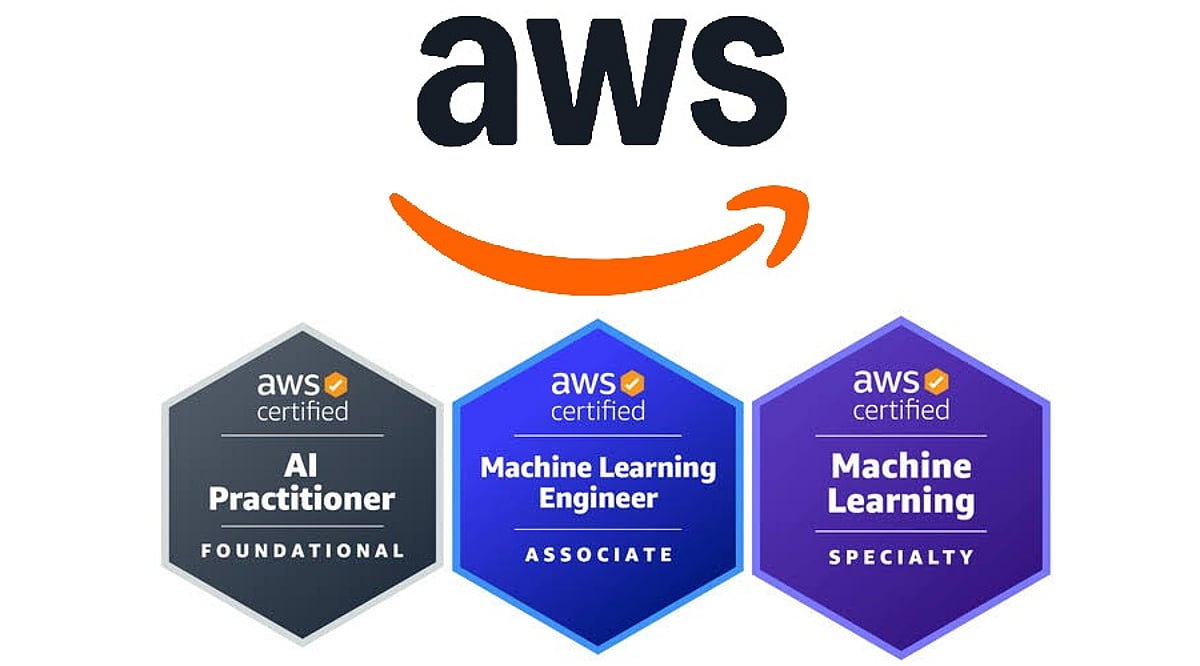
    AWS Certified AI Practitioner

    Designed for beginners without deep programming skills, this certification covers AI fundamentals, generative AI, responsible AI, and AWS AI services. The exam costs $100, making it the most affordable option. Salary range: $110,000 to $180,000 in the U.S.

    Why These Certifications Matter

    Employers across technology, healthcare, finance, retail, and manufacturing increasingly require certified professionals who can apply AI to real business problems. These high-paying AI certifications boost job prospects, enhance credibility, and open doors to senior roles in one of the fastest-growing fields globally.

    Final Thoughts

    AI certifications from Google Cloud, AWS, NVIDIA, and Microsoft validate practical knowledge and help professionals stand out in a competitive market. While a certification alone does not guarantee a high salary, it strengthens credibility and improves career opportunities in the fast-evolving AI industry.

    Frequently Asked Questions

    1. Which AI certification offers the highest salary potential? Google Cloud Professional Machine Learning Engineer and NVIDIA certifications can lead to total compensation above $300,000 for experienced professionals.
    2. Which AI certification costs the least? The AWS Certified AI Practitioner exam at $100 is the most affordable.
    3. Is coding required for every AI certification? No. Certifications like Microsoft Certified AI Transformation Leader and AWS Certified AI Practitioner focus on strategy and business knowledge.
    4. Which certification suits cloud AI careers? Google Cloud Professional Machine Learning Engineer and AWS Certified Machine Learning Engineer – Associate are ideal for cloud AI roles.
    5. Does an AI certification guarantee a high salary? No — experience, technical skills, successful projects, and location also matter.

  • AI Certification vs. AI Degree: Which Path Accelerates Your Career in 2026?

    AI Certification vs. AI Degree: Which Path Accelerates Your Career in 2026?

    Choosing between an AI certification and an AI degree comes down to your career goals and the specific role you want. Certifications offer fast, job-focused learning, while degrees provide deeper theoretical knowledge. Combining the right credential with hands-on projects and continuous learning builds the strongest foundation for long-term success in AI.

    What AI Certifications Offer

    Certifications are compressed and focused. Most run a few weeks to a few months and center on one tool, framework, or applied skill set. They suit people switching careers, professionals adding a skill, or anyone who needs proof of ability without years of study. Their value rises sharply when paired with real projects. A certificate alone signals exposure; a certificate backed by a working prototype, a deployed model, or a portfolio piece signals capability.

    What AI Degrees Offer

    Unlike a bachelor’s degree, a Master of AI requires more time but offers deeper knowledge of subjects such as mathematics, algorithms, machine learning concepts, and research methods. This is ideal for roles in AI research, high-level machine learning, and technical management. A degree also provides a solid base that remains useful as AI technologies change. Certifications are typically for a particular tool or platform, but a degree teaches the underlying concepts, helping you pick up new technologies as the industry evolves.

    Comparison at a Glance: ROI, Time, and Payoff

    Certifications cost less upfront and start paying off sooner. You can finish a certification and apply for roles within months, shortening the gap between spending and earning. Degrees cost more and take longer, but they open doors that remain closed to certification holders alone, particularly in research labs and roles requiring formal qualifications. The payoff often arrives later, though it can broaden long-term opportunities in research, leadership, and advanced technical roles. Neither path guarantees return; ROI depends on whether the credential matches the role you actually want.

    Which Path Fits Which Role?

    Role Best Credential Why
    AI Researcher / Scientist Degree (Master’s or PhD) Requires deep theoretical foundation and research methodology.
    Machine Learning Engineer Certification + Portfolio Practical skills and project work are most valued.
    Data Scientist Degree or Certification Depends on the specific role; both can be effective.
    AI Product Manager Degree + Certification Combination of business acumen and technical understanding.
    Prompt Engineer Certification Focus on applied skills with current tools.

    What Employers Actually Check

    Credentials open the first door. What happens after depends on other things entirely. Hiring managers in AI roles commonly look for a working portfolio, contributions to open-source projects, evidence of problem-solving under real constraints, and clear communication about technical decisions. Relevant internships or hands-on professional experience carry weight too, particularly for applied AI roles. A certification without any of this looks thin; a degree without any of this looks equally thin. The credential explains where someone studied; the portfolio explains what they can actually do.

    How the Two Paths Actually Combine

    There is a common misconception that AI certifications and AI degrees are mutually exclusive. In fact, they can be used in combination at different career phases. Newcomers might get a certification first to learn about AI before enrolling in a degree. Professionals with existing degrees may pursue certifications to stay updated with the newest AI tools and frameworks. For some, a certificate is the starting point for further study; for others, a degree comes first. The credential matters less than the order and the projects that accompany it. Good careers in AI are built over time with a blend of both paths.

    How to Decide

    • Choose certifications for speed, lower cost, and quick entry into applied roles.
    • Choose a degree for research depth, formal qualification requirements, or long-term technical specialization.
    • Choose both for the strongest combination of practical skill and academic depth. A common sequence is certification first, then applied projects, then a degree once a clear specialization emerges. Another common sequence reverses this: a degree for foundational depth, then a targeted certification to catch up on current tools.

    Final Thought

    Neither AI certifications nor AI degrees are universally better. Each fits a different kind of career, timeline, and depth of ambition. The strongest move is matching the credential to the actual role, then reinforcing it with real, demonstrable work.

  • Top AI Certifications to Boost Your Data Science and Machine Learning Career in 2026

    Top AI Certifications to Boost Your Data Science and Machine Learning Career in 2026

    Whether you are a beginner or an experienced professional, earning a recognized AI certification can help you build practical data science and machine learning skills, strengthen your resume, and prepare for high-demand AI careers. With the rapid adoption of AI across industries, companies are actively seeking professionals who can analyze data, improve customer service, and drive better decision-making. Fortunately, you no longer need years of formal education—many high-quality online courses now offer foundational and advanced AI training in just weeks or months.

    In recent years, Google, IBM, Amazon, Microsoft, and other reputable institutions have launched AI and machine learning courses tailored to different skill levels. Some are ideal for beginners, while others are designed for professionals looking to deepen their expertise. Below, we highlight some of the best AI certifications to consider if you want to build a career in data science or machine learning.

    AI Foundations for Everyone Specialization

    Provider: IBM
    Duration: 4 Weeks
    Fee: Free

    This course is designed for people who want to understand AI without diving into programming. It uses practical examples rather than technical jargon. You will learn how AI is transforming workplaces, what responsible AI means, and how machine learning improves everyday tasks. It is an excellent choice for business professionals, students, and managers seeking a foundational understanding of AI.

    Fundamentals of Machine Learning and Artificial Intelligence

    Provider: Amazon AWS
    Duration: Approximately 1 hour
    Fee: N/A

    This short course is for learners with some prior knowledge who want to dive deeper into machine learning concepts. It covers supervised learning, data preparation, and model testing with practical exercises. It is a solid stepping stone for anyone planning to enter data science or machine learning.

    IBM Data Science Professional Certificate

    Provider: IBM
    Duration: Approximately 4 Months
    Fee: Free

    This advanced certification is for learners who already have a grasp of AI fundamentals. It teaches the latest practical skills data scientists use daily, including Python, SQL, and other essential tools and languages. Completing this course will prepare you for real-world data science roles.

    Microsoft AI & ML Engineering Professional Certificate

    Provider: Microsoft
    Duration: Approximately 6 Months
    Fee: N/A

    This certificate is ideal for learners seeking technical depth. Over six months, it covers Python, Azure AI services, machine learning, and model deployment. The program emphasizes hands-on projects that simulate real workplace scenarios, giving you valuable experience for AI and machine learning job applications.

    Data Science Specialization

    Provider: Johns Hopkins University
    Duration: Approximately 7 Months
    Fee: Free

    This comprehensive course is essential for aspiring data scientists with long-term career goals. Over seven months, you will learn to use R for data cleaning, analysis, and visualization; manage projects with GitHub; and perform regression analysis, least squares, and inference. By the end, you will master data manipulation, statistical analysis, data visualization, version control, and regression analysis.

    Which Course Should You Pick?

    The right certification depends on your current skill level. If you are a complete beginner, start with AI Foundations for Everyone to build a solid base without technical prerequisites. If you already have some programming knowledge and want to specialize in machine learning, Fundamentals of Machine Learning and Artificial Intelligence is a logical next step. For experienced data science professionals aiming to advance their careers, Data Science Specialization offers deep project management and analytical skills.

    Final Thoughts

    Mastering AI takes time and practice, but the right certification gives you a strong start and a clear learning path. The courses listed above cover different aspects of AI—from foundational concepts to practical development. Choose one that matches your current skills rather than simply picking the longest or most popular option. With dedication and the right certification, you can unlock exciting opportunities in data science and machine learning.

  • AWS AI & ML Certifications: A Guide to Choosing the Right Path in 2026

    AWS AI & ML Certifications: A Guide to Choosing the Right Path in 2026

    AWS offers a growing range of AI and machine learning certifications for beginners, developers, data engineers, and experienced AI professionals. Each credential is designed for different skills and career goals. Understanding the certification path makes it easier to choose the right option. This guide compares the key certifications to help you decide which one best fits your career.

    Overview

    AWS offers a role-based AI and machine learning certification portfolio that supports beginners, machine learning engineers, data engineers, and developers building AI-powered applications. The certifications cover AI fundamentals, machine learning model development, MLOps, data engineering, foundation models, retrieval-augmented generation (RAG), and Amazon Bedrock.

    AWS has modernized its certification ecosystem by replacing the legacy Machine Learning – Specialty path with role-specific credentials aligned with today’s AI and generative AI workloads. AWS certifications used to funnel almost everyone toward one exam. This has changed, and the lineup now spans across four credentials, each built for a distinct kind of work. It includes a foundational exam for newcomers, an associate-level path for engineers who build and deploy models, a data-focused associate track, and a professional certification for developers shipping generative AI features.

    The Machine Learning Specialty exam was retired for new candidates on March 31, 2026. Existing holders will keep the certification until its original expiry. More than an administrative change, this shift signals AWS’s move toward role-based certifications that better match candidates’ actual job responsibilities.

    What the Current Lineup Covers

    The active AWS AI and ML certifications include:

    • AWS Certified AI Practitioner (Foundational): Covers core AI and machine learning concepts, responsible AI practices, and how AWS services support common use cases. No coding background is required.
    • AWS Certified Machine Learning Engineer – Associate: Focuses on building, tuning, deploying, and monitoring machine learning models using services such as Amazon SageMaker, Amazon S3, and Amazon CloudWatch. Built for professionals who already have hands-on ML experience.
    • AWS Certified Generative AI Developer – Professional: Validates the ability to integrate large language models into applications, build retrieval-augmented generation (RAG) architectures, and work with vector databases and Amazon Bedrock for production-ready AI solutions.
    • AWS Certified Data Engineer – Associate: Centers on designing and managing data pipelines, storage, and reliable data infrastructure that supports machine learning and generative AI workloads.

    Matching the Exam to the Job

    A newcomer pivoting into AI from another field or a business analyst who needs to speak the same language as an engineering team gets the most value from AI Practitioner. It builds a baseline in AI and ML concepts without demanding coding depth.

    Someone already training and deploying models is better served by ML Engineer – Associate, which centers on data preparation, model tuning, and running workloads in production rather than staying inside a notebook.

    Developers already working with large language models, RAG pipelines, and Bedrock fit the Generative AI Developer – Professional role. This credential expects prior implementation experience rather than theory alone, and choosing it over AI Practitioner or ML Engineer comes down to one question: is the work built around foundation models or traditional ML pipelines?

    Data engineers who feed pipelines into ML systems should look at Data Engineer – Associate, a track that rarely gets the same attention as the AI-branded exams but supports all of them underneath.

    Product managers and stakeholders overseeing AI projects without building them get more practical value from AI Practitioner than from an engineering-level exam, since the goal is informed oversight rather than hands-on implementation.

    Deciding Where to Start

    The simplest approach starts with hands-on experience, not ambition. Someone new to AWS and AI belongs in AI Practitioner first. Someone already building or deploying models can skip straight to ML Engineer – Associate. A developer working with foundation models in production is the right candidate for Generative AI Developer – Professional.

    A common progression looks like AI Practitioner, then ML Engineer – Associate or Data Engineer – Associate depending on the role, then Generative AI Developer – Professional once foundation model work becomes part of the job.

    For those already deep into machine learning specialty prep, finishing it still holds some value, given less than a year remains before it closes to new candidates. For everyone else, moving straight to ML Engineer Associate offers more current coverage and a clearer path forward.

    The strongest certification choice rarely lines up with the most advanced option available. It lines up with what the job actually requires now and with where that job is headed next.

    Final Thoughts

    AWS restructuring its AI credentials around roles rather than a single tiered ladder points to where cloud certification is heading in general. It clarifies that the exam is less about climbing a fixed hierarchy and more about proving specific, current skills tied to specific work. Candidates who treat certification as a career-mapping exercise, rather than a checklist, will likely find their credentials relevant as AWS splits its portfolio.

  • Best Generative AI Certifications to Advance Your Career in 2026

    Best Generative AI Certifications to Advance Your Career in 2026

    Demand for professionals with generative AI expertise continues to grow as organizations integrate AI into everyday operations. Earning a recognized certification helps validate your knowledge and practical abilities. The best programs combine real-world learning with credentials that employers value.

    Overview

    Generative AI certifications now span every experience level, from beginner-friendly introductions to advanced programs focused on model development, cloud AI, and enterprise strategy. Each certification serves a different purpose, with some emphasizing workplace productivity and AI governance, while others focus on hands-on engineering, large language models, or cloud deployment.

    Industry-recognized credentials paired with practical projects provide stronger career value than collecting multiple introductory certificates, making role alignment more important than certification count.

    Generative AI is now one of the most in-demand workplace skills. However, a certificate alone rarely decides a hiring call these days. Employers usually check if a person can actually use AI to fix a business problem, speed up a workflow, or show real output. With many certification options showing up every month, choosing the right one matters more than collecting several.

    The credentials that hold up combine real industry backing with hands-on experience that turns into an actual skill on the job. This comparison covers eight leading generative AI certifications on cost, depth, career fit, and long-term value, so professionals can pick a path that fits what they actually want.

    What Makes a Certification Worth the Effort

    Four factors decide whether a program earns its price tag.

    • Career relevance – Does the content map to an actual job function rather than offering broad AI trivia?
    • Hands-on depth – Programs built around real projects and labs are more valuable than those built around lecture videos.
    • Provider recognition – Some brands carry more weight in screening rooms.
    • Cost and time investment – Should match the payoff a learner expects, since a three-hour course and a six-month program solve different problems.

    Which GenAI Certificate Fits Your Path

    How the Leading GenAI Certifications Stack Up

    • Generative AI for Everyone (Coursera): Walks through core AI concepts with no coding involved. Works well as a starting point for someone with zero background.
    • Google AI Essentials: Built around real workplace tasks, shows how AI tools fit into daily work. Professionals who want quick, practical gains lean toward this one.
    • Google Generative AI Leader: For managers. Builds fluency in AI strategy and governance, skipping technical training.
    • IBM AI Engineering Professional Certificate: The most comprehensive technical program on the list, covering machine learning fundamentals through actual project work. Ideal for hands-on engineering roles.
    • NVIDIA GenAI and LLM Credentials: Training goes straight into infrastructure — GPUs, deployment, and systems running large language models. Engineers working close to that layer benefit most.
    • Microsoft Azure AI Fundamentals: Teaches AI concepts within Microsoft’s cloud ecosystem. Highest value for professionals in organizations using Microsoft’s cloud.
    • MIT xPRO Executive Programs: For senior leaders seeking strategic grounding, not technical skill. Focuses on business transformation and decision-making.
    • DataCamp AI Fundamentals: A gentler, self-paced entry point. Builds foundational understanding before moving toward something more technical.

    Matching a Certification to a Career Stage

    A learner with no AI background and limited budget starts with Generative AI For Everyone. Someone already using AI tools daily benefits more from Google AI Essentials. A manager shaping AI policy without writing code fits better with Google Generative AI Leader or an executive program.

    Anyone building or deploying models should go straight to IBM AI Engineering. A role touching infrastructure calls for NVIDIA credentials, while a Microsoft-based workplace favors Azure AI Fundamentals. DataCamp AI Fundamentals is a good first step before any of these.

    Employer recognition matters, but it rarely settles a hiring decision alone. Names like IBM, Microsoft, and Google carry weight, yet none of these certifications substitutes for a visible project or work sample. Pairing any single credential with demonstrable output remains the strongest move available to a career changer.

    Final Thoughts

    Certification programs will increase in number as generative AI tools further integrate into daily workflows. However, the real differentiator will stay the same: a certification proves potential, while applied work shows capability. Professionals who combine recognized credentials with proven experience can outpace others who only collect certificates.

    FAQs

    1. Are generative AI certifications worth it for career growth?

    Yes. A recognized certification can validate your AI knowledge and demonstrate a commitment to upskilling. However, employers typically value practical projects and real-world experience alongside certifications.

    2. Which generative AI certification is best for beginners?

    Beginner-friendly options such as AI For Everyone, Generative AI for Everyone, Google AI Essentials, and DataCamp AI Fundamentals provide a solid introduction without requiring prior coding experience.

    3. Do I need coding skills to earn a generative AI certification?

    Not always. Many entry-level and business-focused certifications concentrate on AI concepts, prompting, and workplace applications. Technical certifications, such as IBM AI Engineering, generally require programming knowledge.

    4. Which certification is best for technical professionals?

    Professionals pursuing AI engineering, machine learning, or cloud AI roles should consider IBM AI Engineering Professional Certificate, Microsoft Azure AI Fundamentals, or NVIDIA GenAI and LLM credentials, depending on their career goals and technology stack.

    5. Is one certification enough to get an AI job?

    A certification alone is rarely enough. Pairing a respected credential with hands-on projects, a portfolio, and practical experience demonstrates real capability and significantly strengthens your job prospects.

  • 5 Top AI Engineer Certifications to Land a Job in 2026

    5 Top AI Engineer Certifications to Land a Job in 2026

    Artificial intelligence is no longer confined to research labs—it now powers products, services, and operations across every industry. As companies invest heavily in generative AI, automation, and machine learning, the demand for skilled AI engineers continues to surge. Recruiters, however, are looking for more than theoretical knowledge; they want candidates who can apply AI to solve real-world problems.

    A recognized certification can strengthen your resume, validate your skills, and help you stand out during the hiring process. While it is not a substitute for practical experience, it complements a strong portfolio and improves your chances of landing interviews. Below are five industry-recognized AI certifications that can help you get hired in 2026.

    1. Google Cloud Professional Machine Learning Engineer

    The Google Professional Machine Learning Engineer certification is highly valued by employers for enterprise-scale AI roles. It covers the development, deployment, and management of machine learning models using Vertex AI and Google Cloud. Topics include model optimization, MLOps, monitoring, and responsible AI. This certification is ideal for professionals with some experience in machine learning and cloud computing.

    2. Microsoft Azure AI Engineer Associate (AI-102)

    This certification is designed for developers and cloud professionals who want to build AI-powered applications on Microsoft’s Azure platform. Learners gain hands-on skills with Azure AI services, Azure OpenAI, computer vision, speech services, and natural language processing. The course also emphasizes building secure and responsible AI applications.

    3. AWS Certified AI Practitioner

    AWS Certified AI Practitioner is an entry-level certification for those building a foundation in artificial intelligence. It introduces AI concepts, generative AI, prompt engineering, responsible AI, and AWS AI services. This is a practical starting point for IT professionals, software developers, and cloud engineers transitioning into AI roles.

    4. Databricks Certified Generative AI Engineer Associate

    As organizations deploy AI assistants and enterprise chatbots, generative AI skills have become highly sought after. This certification focuses on Retrieval-Augmented Generation (RAG), large language models, vector databases, prompt engineering, and AI agent development. It is aimed at engineers working on modern LLM-powered applications.

    5. IBM AI Engineering Professional Certificate

    IBM’s certification emphasizes project-based learning over theory. Participants learn Python, machine learning, deep learning, TensorFlow, and PyTorch through practical projects. This program is an excellent way for beginners to combine technical skills with a portfolio of AI projects.

    Final Takeaway

    Candidates are now evaluated on their ability to create rather than just their credentials. While a certification can make your profile stand out, practical experience is what gets you through the door. Recruiters prefer candidates who have built AI products, contributed to GitHub repositories, deployed models using cloud technology, and understand vector databases, prompt engineering, and MLOps. A relevant certification can give you the edge over other applicants, but remember: earning a certification is only the first step in your AI career journey.

    Frequently Asked Questions

    What is the best AI certification for beginners in 2026?

    AWS Certified AI Practitioner and IBM AI Engineering Professional Certificate are top choices for beginners. They cover AI fundamentals, generative AI, Python, and practical skills without requiring extensive machine learning experience.

    Which AI certification is most valued by employers?

    Google Cloud Professional Machine Learning Engineer and Microsoft Azure AI Engineer Associate are highly regarded, especially for enterprise AI, cloud computing, and production-scale machine learning roles.

    Do AI certifications guarantee a job?

    No. Certifications improve your resume and validate your knowledge, but employers also expect practical experience through AI projects, GitHub portfolios, cloud deployments, and problem-solving skills during technical interviews.

    Which certification is best for generative AI careers?

    The Databricks Certified Generative AI Engineer Associate is a strong choice for those interested in large language models, RAG, prompt engineering, vector databases, and enterprise AI applications.

    How should I prepare for an AI engineering role in 2026?

    Build a strong foundation in Python, machine learning, and cloud platforms. Earn a recognized AI certification, create real-world projects, and maintain an active portfolio to showcase your technical abilities.

  • Top 8 No-Code AI Certifications for Beginners in 2026

    Top 8 No-Code AI Certifications for Beginners in 2026

    Artificial intelligence has become a workplace skill rather than a technical specialty. Companies now seek people who can leverage AI without writing a single line of code. This shift has spawned numerous beginner-friendly AI certifications, making it challenging to choose the right one. Some programs focus on everyday productivity, while others emphasize business strategy, prompt engineering, or platform-specific tools. This guide categorizes certifications by use case, comparing cost, learning time, practical outcomes, and employer recognition to help you find the ideal starting point for your goals.

    Quick Match by Goal

    Coursera operates on a monthly subscription model, so treat the figures below as current estimates rather than fixed rates.

    8 Beginner-Friendly Certifications

    Google AI Essentials

    Google AI Essentials teaches practical AI skills for everyday work. You learn to summarize documents, draft content, write effective prompts, and use Google Gemini more efficiently. It consists of five modules and requires about 5 to 10 hours. Enroll on Coursera for around $49 (pricing may change). It stands out as one of the fastest and cheapest beginner AI certifications available.

    AI for Everyone (DeepLearning.AI)

    AI for Everyone covers the basics of AI without touching tools or code. Created by Andrew Ng, the course explains how AI works, where it fits in business, and its limitations. It runs about seven hours over four weeks and costs around $49 on Coursera. It is a solid choice for anyone wanting to understand AI at a conceptual level.

    Generative AI for Everyone (DeepLearning.AI)

    Generative AI for Everyone builds on basic AI knowledge, walking through how tools like GPT and image generators work. It covers real use cases, responsible usage, and core ideas—all without code. The course takes 6 to 10 hours and costs around $49 on Coursera. Best for learners who already know the basics and want to go deeper.

    IBM AI Foundations for Everyone

    IBM AI Foundations for Everyone provides the most hands-on experience on this list. Across four courses, you build and launch a simple AI chatbot without writing code. It takes about 40 hours spread over a month and costs around $49 per month on Coursera. The longer time commitment pays off with more real practice than most beginner courses offer.

    Azure AI Fundamentals (AI-900)

    Azure AI Fundamentals (AI-900) is an exam-based certification designed for beginners interested in Microsoft’s AI tools. It covers AI basics, machine learning, computer vision, and generative AI on Azure. The exam includes 40 to 60 questions and takes about an hour. At around $99, with a certificate that never expires, it holds long-term value.

    Career Essentials in Generative AI (Microsoft and LinkedIn)

    Career Essentials in Generative AI pairs AI basics with career skills. The course covers generative AI, workplace productivity, resume writing, and interview preparation. It runs through LinkedIn Learning, so the certificate appears directly on your LinkedIn profile. A strong fit for job seekers who want their AI skills visible.

    Foundations of Prompt Engineering (AWS Skill Builder)

    Foundations of Prompt Engineering is a free AWS course focused on one skill: writing prompts that work. It skips broader AI theory and goes straight to techniques that improve everyday tasks. Its short length makes it a solid pick for marketers, content creators, and other professionals seeking quick, usable AI skills.

    Anthropic AI Fluency: Framework and Foundations

    Anthropic AI Fluency: Framework and Foundations is a free course that takes about three hours. Rather than teaching tools, it focuses on using AI responsibly through a four-part decision framework. It covers when to trust AI output, when a human should intervene, and how to collaborate effectively with AI systems. Anthropic also offers free courses built on the same framework for students, teachers, and nonprofits.

    Choosing a Starting Point

    • Complete Beginners: Start with AI for Everyone or IBM AI Foundations for Everyone. Both build a solid base in core AI ideas.
    • Daily Productivity: Pick Google AI Essentials or AWS Foundations of Prompt Engineering. Both teach skills you can apply immediately on the job.
    • Job Seekers: Go with Career Essentials in Generative AI. It is built for resumes and LinkedIn profiles.
    • Formal Credential: Choose Azure AI Fundamentals (AI-900). It comes with a proper exam and a certificate that holds up.

    General Rule

    One finished certification with a small real project beats five half-done courses sitting in a browser tab.

    Final Thoughts

    The certification you use within a week of finishing beats the one that just sits on a profile. A rewritten team document, a chatbot built for practice, or a prompt library used on the job—any of these turn a course into a skill an employer can actually see. Choosing a certification that aligns with your goals and putting those skills into practice will deliver far greater value than earning multiple credentials without real-world application.

    FAQs

    1. Which AI certification is best for complete beginners with no coding experience?

    Google AI Essentials, AI for Everyone by DeepLearning.AI, and IBM AI Foundations for Everyone are among the best options because they teach AI concepts and practical applications without requiring programming skills.

    2. Do I need coding knowledge to earn an AI certification?

    No. Many beginner-friendly AI certifications are designed for non-technical learners and focus on AI fundamentals, prompt engineering, ethics, and productivity tools rather than programming.

    3. Are beginner AI certifications recognized by employers?

    Yes. Certifications from reputable providers such as Google, Microsoft, IBM, AWS, and DeepLearning.AI are widely recognized and can strengthen your resume, LinkedIn profile, and professional credibility.

    4. Which AI certification should I choose for career growth?

    Your choice depends on your goals. Google AI Essentials is ideal for workplace productivity, AI for Everyone builds foundational knowledge, while Azure AI Fundamentals (AI-900) suits those interested in Microsoft’s AI ecosystem.

    5. Can I get an AI certification for free?

    Many platforms allow you to audit AI courses for free, but obtaining an official certificate often requires a paid subscription or exam fee. Some providers also offer free learning paths and occasional certificate promotions.

  • Best AI Architecture Certifications for 2026: From Beginner to Expert

    Best AI Architecture Certifications for 2026: From Beginner to Expert

    The demand for AI architects is skyrocketing as enterprises scale generative AI, agentic AI, and automation across industries. Whether you’re just starting out or an experienced professional, earning the right AI architecture certification can validate your expertise and unlock higher-paying roles. This guide covers the top certifications for 2026, from entry-level to advanced, and offers tips on choosing the best path for your career.

    Why AI Architecture Certifications Matter Now

    AI architecture goes beyond traditional software development. It involves building end-to-end systems that integrate data pipelines, cloud services, machine learning models, APIs, security, governance, and monitoring. Employers increasingly seek professionals who not only understand how AI models work but also how to deploy and scale them responsibly. Modern certifications cover real-world scenarios like retrieval-augmented generation (RAG), AI agents, MLOps, prompt engineering, and responsible AI, making them highly relevant for hands-on roles.

    Best Certifications for Beginners

    If you’re new to AI, these foundational certifications require no prior programming experience:

    • Microsoft Azure AI Fundamentals (AI-900): Introduces machine learning, computer vision, natural language processing, and responsible AI concepts with a focus on Microsoft’s AI services.
    • AWS Certified AI Practitioner: Designed for both technical and business professionals, covering generative AI concepts, AWS AI services, and real-world use cases.
    • Google Generative AI Leader: A newer option gaining traction for professionals interested in understanding how generative AI can be applied in business contexts.

    Intermediate Certifications for AI Engineers

    After building a foundation, these certifications focus on creating and deploying practical AI applications:

    • Microsoft Azure AI Engineer Associate (AI-102): Concentrates on building AI applications using Azure AI services, cognitive services, and responsible AI practices.
    • Google Cloud Professional Machine Learning Engineer: Ideal for those working with ML pipelines, model deployment, and AI infrastructure on Google Cloud.
    • AWS Certified Machine Learning Engineer – Associate: Covers building, deploying, and monitoring models with cloud-native ML workflows.

    Advanced Certifications for AI Architects

    Experienced professionals designing enterprise-scale AI platforms should consider these advanced programs:

    • Databricks Certified Generative AI Engineer Associate: Focuses on production-grade generative AI applications using vector databases, retrieval systems, MLflow, and large language models. Ideal for organizations deploying AI copilots and enterprise search.
    • NVIDIA Deep Learning Institute (DLI) Certifications: Increasingly valuable as enterprises adopt GPU-accelerated AI. Programs cover deep learning optimization, LLM deployment, and high-performance AI computing.

    How to Choose the Right Certification Path

    Your choice should align with your career goals and experience level:

    • Non-technical professionals: Start with AI literacy certifications, then move to cloud AI engineering certifications.
    • Software developers: Choose associate-level cloud AI certifications to build on existing coding skills.
    • Data scientists: Combine cloud certifications with MLOps and generative AI credentials.

    Also consider the cloud ecosystem of your target employer. Azure is common in large enterprises, AWS dominates the infrastructure market, and Google Cloud is strong in ML and data engineering.

    Beyond Certifications: Building Real-World Skills

    Certifications validate knowledge, but employers want proof of practical experience. Work on AI systems, explore open-source LLMs, build RAG applications, and contribute to GitHub projects. Combining recognized certifications with hands-on projects will make you far more competitive. The goal is to create secure, scalable, production-ready AI systems.

    Why This Matters

    AI architecture certifications provide structured learning, validate industry-relevant skills, and keep you current with emerging technologies like LLMs, RAG, MLOps, AI governance, and cloud AI services. When paired with real-world experience, they significantly boost employability and prepare you for AI leadership roles.

  • Top AI Certifications for CEOs and Senior Executives in 2026

    Top AI Certifications for CEOs and Senior Executives in 2026

    As AI governance, board expectations, and enterprise transformation accelerate, CEOs are increasingly turning to executive-focused AI certification programs. These programs strengthen strategic decision-making, improve cross-functional leadership, and build confidence in evaluating AI investments—all without requiring technical expertise.

    Many CEOs still rely on secondhand briefings from technical teams instead of forming independent judgment on artificial intelligence. Boards now expect leaders to defend AI strategy on their own terms. This gap between passive awareness and active command has pushed senior executives toward formal certification.

    PwC recently found that 70% of CEOs expect generative AI to reshape their business models within three years. Only 28% of leadership teams feel prepared for that shift. Certification programs built for executives close this gap by turning technical concepts into usable strategic frameworks.

    AI Certifications for Executives

    Certifications built for executives differ sharply from technical bootcamps aimed at engineers or data scientists. These programs assume no coding background. Instead, they concentrate on strategic frameworks, governance structures, and organizational change management. Curricula generally cover AI capabilities, ethical risk, vendor evaluation, and communication with technical teams.

    Enrollment numbers reflect this shift in priorities. Coursera reported a 67% rise in enrollments across AI leadership courses among C-level executives. Boston Consulting Group separately found that leaders with high AI literacy report revenue outperformance at more than twice the rate of less literate peers.

    AI Certifications for CEOs and Senior Executives

    Choosing the right program depends on organizational stage, industry, and the specific leadership gap a CEO wants to close. Some executives need governance fluency to satisfy regulators. Others want applied frameworks to guide transformation projects spanning multiple business units.

    Certification providers now design separate tracks for CEOs, CFOs, and CTOs rather than a shared curriculum. Each role interacts with artificial intelligence through a different lens. A CEO typically needs a wide view of strategy, market positioning, and board-level communication around AI spending. A CFO instead focuses on cost modeling and measurable return on that spending.

    Top Programs for CEOs and Senior Leaders

    • MIT Sloan Artificial Intelligence: Implications for Business Strategy – Delivered jointly through MIT Sloan and MIT CSAIL, this six-week program pairs AI fundamentals with enterprise strategy challenges. A capstone project applies coursework directly to the participant’s own organization.
    • Stanford AI for Leaders – Senior managers and transformation leads gain a functional grasp of AI capabilities and operational risk. Structured case studies walk through how these risks play out inside real organizations.
    • Oxford Saïd Business School Executive AI Programme – Oxford applies its own strategic framework to real business problems through a personalized capstone project. CEOs, CTOs, and transformation officers learn to govern and measure AI across regulated units.
    • Wharton AI and Machine Learning for Business – Wharton’s certificate centers on data-driven methods that senior managers can apply soon after finishing the program. Vendor evaluation and cross-functional AI initiatives receive particular attention throughout the coursework.
    • Chief Executives Council AI Prompting and Automation Certificates – Built alongside Arizona State University, these certificates prioritize repeatable, hands-on AI use inside daily executive work. No coding background is required, and workflow automation sits at the center.
    • Harvard Business School Online Artificial Intelligence for Business – Harvard’s course studies how artificial intelligence reshapes entire industries, with heavy emphasis on strategy and rollout. Graduates receive a verified certificate recognized widely across corporate leadership circles.

    Why Executives Are Pursuing AI Certification

    • Boards expect leaders to explain AI strategy without depending entirely on technical staff.
    • Regulatory scrutiny around AI governance keeps expanding across most major industries.
    • Certification signals readiness to boards, investors, and prospective hires evaluating leadership credibility.
    • Companies with more AI-literate senior executives report stronger revenue outcomes overall.
    • Programs increasingly blend ethics, governance, and applied strategy instead of isolated technical modules.

    Accreditation, faculty reputation, and relevance to a specific industry deserve close attention before enrollment. Most application requirements include five to ten years of senior management experience. Prior coding knowledge rarely matters here, since the emphasis stays on functional strategic understanding.

    Final Thoughts

    AI certification for senior executives has moved well past a resume credential or a passing trend. Each program addresses a genuine gap between technical capability and confident leadership judgment. None of these credentials replaces an executive’s own strategic instinct or accountability for outcomes.

    Leaders gaining real value from these programs tend to choose deliberately rather than enroll broadly. CEOs who match certification choice to their organization’s actual AI maturity see results sooner. As adoption accelerates across every industry, executives treating certification as genuine preparation will lead with sturdier judgment and lasting credibility.