Tag: AI chips

  • Why Tech Giants Are Developing Custom AI Chips to Cut Costs and Boost Performance

    Why Tech Giants Are Developing Custom AI Chips to Cut Costs and Boost Performance

    Nvidia’s AI GPUs have become a cornerstone of the AI infrastructure boom, but their high cost is driving major technology companies to develop custom chips. Purpose-built AI silicon can be tailored for specific workloads, helping companies control expenses and improve performance at scale.

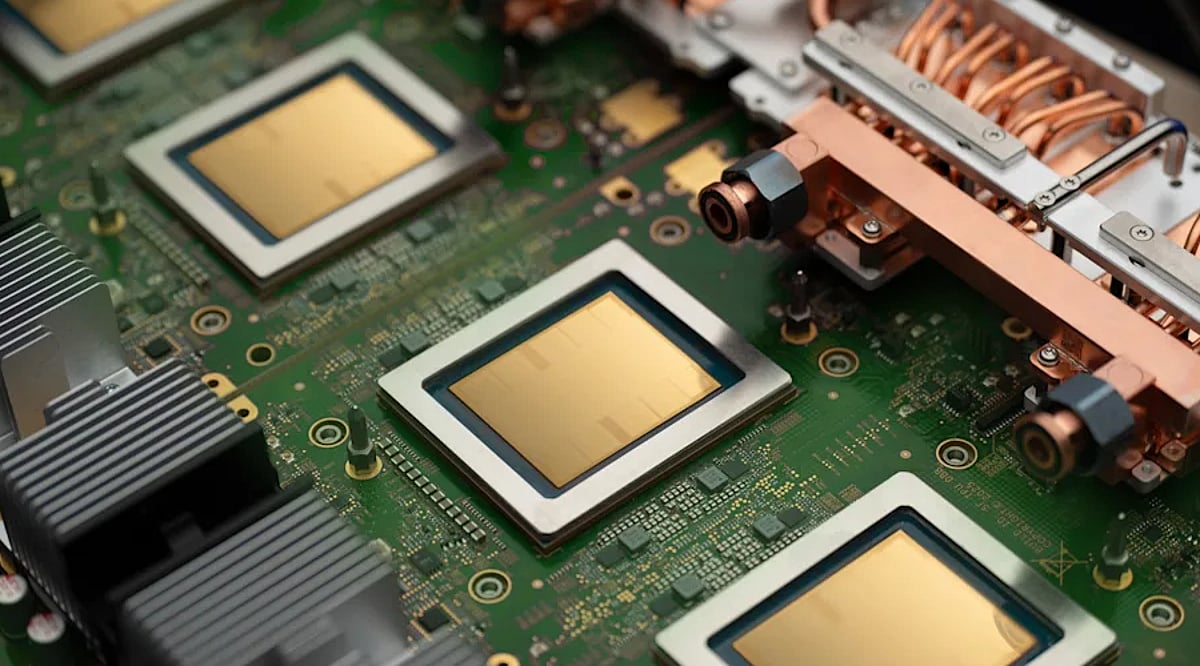
    Google, Amazon, Microsoft, and Meta are all creating their own AI accelerators to reduce reliance on merchant GPUs. Google uses TPUs, Amazon has Trainium, Microsoft develops Maia, and Meta has MTIA. These chips are designed around each company’s unique AI workloads and data center requirements.

    The primary benefit is lower inference cost. Custom ASICs can be optimized for specific AI tasks rather than supporting every possible workload. Amazon reports that its Trainium chips can enhance price-performance, while its latest Trainium3 systems target reduced operating costs for large AI workloads.

    Building custom AI chips also diversifies the supply chain. Broadcom and Marvell help turn hyperscaler chip designs into production-ready ASICs, while Arm provides CPU architecture and licensing. This process connects chip design with advanced manufacturing and packaging.

    Memory and networking are equally critical. AI accelerators require high-bandwidth memory and fast inter-chip connections. Companies such as Micron, Astera Labs, Credo, and Arista operate across memory, connectivity, Ethernet, and data-center networking needed for large AI systems.

    Manufacturing and advanced packaging remain essential parts of the AI chip ecosystem. TSMC is a major foundry for advanced AI chips, while CoWoS packaging supports high-performance accelerator systems. Samsung also provides semiconductor manufacturing capacity. The supply chain extends from wafers to HBM and packaging.

    The AI chip race does not end with the processor. Higher-density AI racks require advanced networking, optical connections, power systems, and cooling. Companies across these areas support the growing infrastructure. Custom AI silicon is therefore becoming a full ecosystem spanning chips, memory, factories, networking, power, and cooling.

  • Google’s Project Suncatcher: AI Chips Bound for Low Earth Orbit on October 1

    Google’s Project Suncatcher: AI Chips Bound for Low Earth Orbit on October 1

    Google is preparing to launch its Tensor Processing Units (TPUs) into low Earth orbit on October 1, 2026, as part of Project Suncatcher. The prototype satellite will be carried by SpaceX’s Transporter-18 rideshare mission, launching from California. Planet Labs is collaborating with Google on the spacecraft effort.

    The primary goal of Project Suncatcher is to test how AI hardware performs in the harsh environment of space. The TPUs will be subjected to radiation, extreme temperatures, and the intense vibrations of a rocket launch. Cosmic rays and solar activity can disrupt electronics and create errors known as bit flips. Google has already conducted ground tests, including proton beam radiation testing at UC Davis, where AI workloads were run while researchers monitored radiation-related errors. Vibration tests across all three satellite axes were also performed, and the hardware reportedly held up during these stress tests.

    One of the biggest challenges for space-based AI computing is cooling. In the vacuum of space, conventional fans cannot dissipate heat. Google plans to use heat pipes and radiators to transfer heat away from the TPUs, a method already tested in thermal vacuum chambers.

    Another advantage of orbital computing is access to near-constant solar power. Satellites in low Earth orbit can receive up to eight times more solar energy than ground-based installations, making space an attractive location for energy-intensive AI workloads.

    Looking ahead, Google envisions multiple satellites working together as orbital computing clusters, connected by high-bandwidth laser links. The company plans to launch two satellites in 2027 to test these laser communication systems.

    The upcoming launch is not a full-scale AI data center in space but a testbed to gather real-world data on hardware reliability and operational limits. The findings will inform the design of future space-based AI systems, with commercial deployment still a long-term possibility.

  • AI Reshapes Chip Industry: Top Semiconductor Companies by Market Cap

    AI Reshapes Chip Industry: Top Semiconductor Companies by Market Cap

    AI’s Impact on Semiconductor Valuations

    Artificial intelligence is fundamentally transforming how investors evaluate semiconductor companies. The industry now spans GPUs, memory, foundries, networking chips, manufacturing equipment, and advanced processors. Recent market-cap data underscores this shift, with several chipmakers reaching historic valuations as demand for AI infrastructure expands across data centers and increasingly complex computing workloads worldwide.

    Nvidia Leads the Pack

    Nvidia dominates the semiconductor rankings with a market capitalization of approximately $5.33 trillion. Its position reflects surging demand for accelerated computing, AI processors, and data center infrastructure. The company’s valuation is substantially larger than other listed semiconductor businesses, highlighting the financial importance of AI computing platforms and supporting technologies.

    TSMC Powers Advanced Manufacturing

    TSMC ranks second with a market cap of about $2.24 trillion. As the leading contract chip manufacturer for major technology companies, TSMC’s strategic importance has grown with the need for advanced processors — especially energy-efficient chips that can handle demanding AI workloads.

    Broadcom’s Networking Edge

    Broadcom appears among the largest with an estimated market capitalization of $1.72 trillion. Its portfolio includes networking and connectivity technologies that support large-scale computing infrastructure. As AI data centers expand, demand is rising not only for processors but also for high-speed networking and specialized components that connect complex systems.

    Memory Plays a Big Role

    Samsung and Micron hold market caps of approximately $1.20 trillion and $1.12 trillion respectively, while SK Hynix follows at around $907 billion. Their positions reflect the growing importance of memory technologies, particularly high-bandwidth memory (HBM), which is essential for demanding AI workloads and large-scale accelerated computing systems.

    Other Key Players

    AMD is shown at approximately $894 billion, ASML reaches $633 billion, CXMT stands at $565 billion, and Intel follows at about $547 billion. This ranking demonstrates that AI-related value extends beyond GPU manufacturers, encompassing processors, manufacturing equipment, and memory — all critical to producing advanced chips.

    AI Lifts the Entire Stack

    The semiconductor market is becoming increasingly interconnected as AI accelerates demand across multiple layers. Processor designers, memory manufacturers, foundries, networking companies, and equipment suppliers all support expanding AI infrastructure. The market-cap figures illustrate how investors are assigning significant value across this ecosystem, reflecting expectations for continued computing demand and technological investment.

  • Qualcomm’s Snapdragon X2 Powers New Microsoft Surface PCs and Expands to Googlebook and Linux

    Qualcomm’s Snapdragon X2 Powers New Microsoft Surface PCs and Expands to Googlebook and Linux

    Qualcomm is expanding its Snapdragon X platform beyond the initial Windows-on-Arm push, bringing the technology into new Microsoft Surface devices, Google’s emerging Googlebook category, and a wider range of PC form factors.

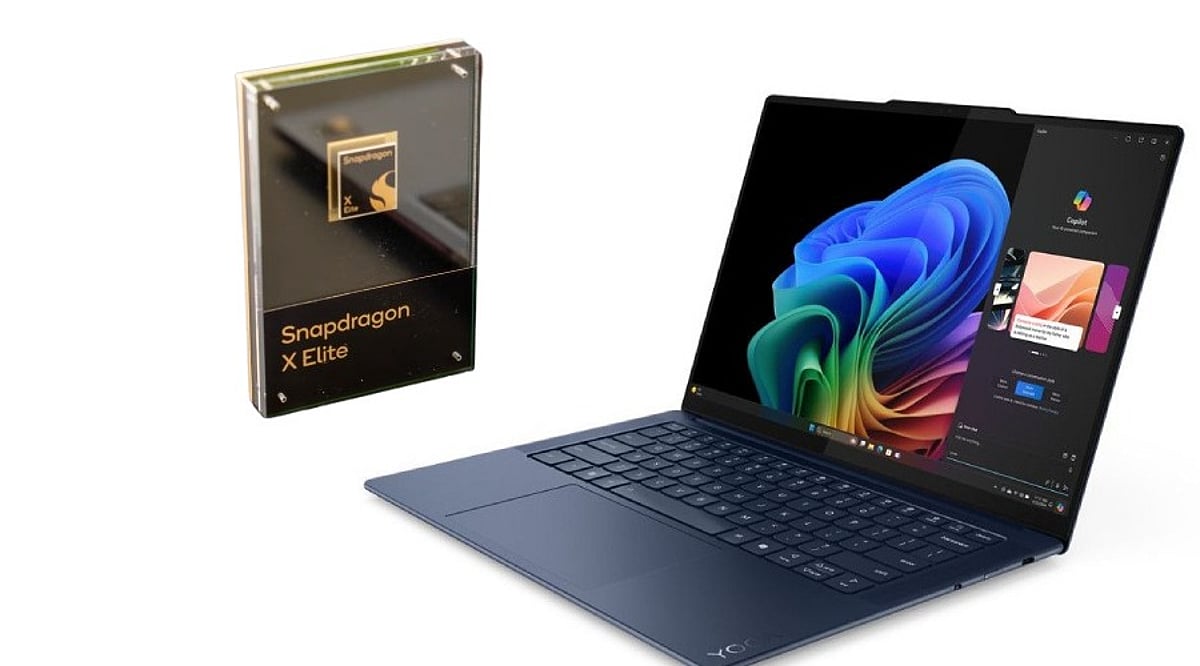
    Announcements at Snapdragon Summit 2026 reveal Qualcomm’s strategy to establish its Oryon-based platform across different operating systems and device segments. Microsoft is introducing new Surface hardware with Snapdragon X2 Plus, while Google has partnered with Qualcomm for Googlebook laptops powered by Snapdragon X Elite.

    New Surface Devices with Snapdragon X2 Plus

    Microsoft unveiled a 12-inch Surface Pro and 13-inch Surface Laptop, both powered by the six-core Snapdragon X2 Plus processor. The devices go on sale in select markets from October 13. According to Microsoft, the new machines deliver up to 17% faster Office performance, up to 18% better battery efficiency, more than 60% faster graphics, and up to 95% faster local AI inference than the previous generation. The Snapdragon X2 Plus features an 80-TOPS NPU designed to handle on-device AI workloads.

    Googlebook Takes Snapdragon Beyond Windows

    A significant development is Google’s adoption of Snapdragon X for its new Googlebook category. Unlike conventional Chromebooks, Googlebook laptops are positioned around Gemini-powered features, native Android applications, and closer integration with Android phones and tablets. The first Googlebook models from Dell and HP use Snapdragon X Elite rather than the newer X2 generation. The platform supports thousands of native Android applications and games, expanding Qualcomm’s reach beyond Microsoft’s ecosystem.

    X2 Elite Pushes Performance Boundaries

    At the high end, Snapdragon X2 Elite scales to 18 Oryon CPU cores, with selected versions reaching speeds up to 5GHz. Qualcomm lists up to 85 TOPS of NPU performance and as much as 228GB/s of memory bandwidth. The company is also extending Snapdragon X2 support to Linux, adding another operating system to its PC strategy alongside Windows and Googlebook.

    Qualcomm Faces Wider Competition

    The expansion comes as Qualcomm faces competition from Intel, AMD, and Apple across premium and AI-focused PCs. Snapdragon X must compete on battery life, software compatibility, graphics performance, AI workloads, and developer support. With Surface, Googlebook, and Linux now joining Windows in the Snapdragon ecosystem, Qualcomm’s PC strategy is becoming broader. The next test will be whether manufacturers and users adopt the platform across these different categories.

  • AMD Surpasses $1 Trillion Market Capitalization as AI Chip Demand Fuels Growth

    AMD Surpasses $1 Trillion Market Capitalization as AI Chip Demand Fuels Growth

    AMD Reaches $1 Trillion Market Cap

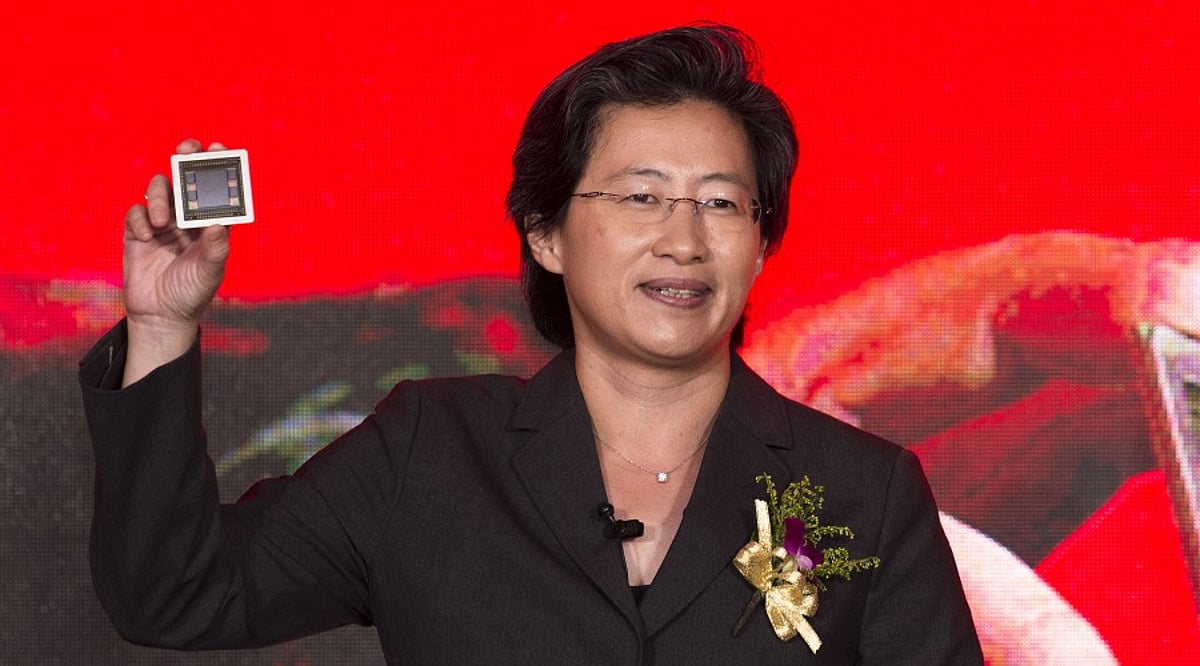
    Advanced Micro Devices (AMD) crossed the USD 1 trillion market capitalization mark for the first time, as CEO Lisa Su’s push into artificial intelligence continues to drive investor interest. AMD shares touched a record price of USD 615.52 on September 21 after rising nearly 10% in a single session. This makes the company the fourth American chipmaker to enter the trillion-dollar club after NVIDIA, Broadcom and Micron. AMD’s stock has gained 185% this year and nearly 300% over the past 12 months.

    “AI is driving a significant expansion in demand for compute across all of our markets,” Su said in AMD’s second-quarter results statement.

    Data Center Business Drives Growth

    AMD reported a 50% increase in second-quarter revenue to a record USD 11.5 billion. Data center sales rose 107% to USD 6.7 billion, accounting for 58% of total revenue. The company has guided for about USD 13 billion in third-quarter revenue and expects data center revenue to more than double in 2027. AMD also expects server revenue to grow more than 80% in the second half of 2026.

    “Demand for both accelerators and CPUs is growing well above our prior expectations,” Su told analysts on the earnings call.

    Major Deals with Anthropic, OpenAI and Oracle

    Major deals with technology companies have supported AMD’s AI strategy. Anthropic has agreed to deploy up to 2GW of AMD Instinct MI450 GPUs in Helios, with the first gigawatt expected in the first half of 2027. AMD has committed up to USD 5 billion in equity investment in Anthropic. OpenAI signed a 6GW supply agreement with AMD last October, while Oracle is building a publicly available cluster featuring 50,000 MI450 GPUs.

    AMD Still Trails NVIDIA in AI Accelerators

    NVIDIA remains far ahead in the AI accelerator market despite AMD’s rapid growth. It is currently valued at about USD 5.4 trillion and holds an estimated 81% market share, compared with AMD’s 13%. AMD’s third-quarter results will be its next major update. The company has guided for nearly USD 13 billion in revenue and a 56% non-GAAP gross margin, as investors assess whether its AI expansion can support its trillion-dollar valuation.

  • Tech Roundup: Qualcomm’s New AI Chip, Demoverse’s $600K Funding, and Key Industry Updates

    Tech Roundup: Qualcomm’s New AI Chip, Demoverse’s $600K Funding, and Key Industry Updates

    Qualcomm Launches AI-Focused Android Chip

    Qualcomm has introduced a new Android chip designed to handle rising AI workloads while addressing challenges from the global memory shortage. The processor targets smartphones with stronger on-device AI capabilities and improved efficiency. This launch comes as chipmakers face increasing demand for AI hardware and tighter memory supplies.

    Demoverse Raises $600,000 in Lumikai-Led Funding

    AI product co-creation startup Demoverse has raised $600,000 in a pre-seed round led by Lumikai. The company plans to use the funds to expand its US presence, grow its consumer creator community, and convert brand partnerships into paid campaigns. Its platform allows consumers to use AI to help design products and earn royalties.

    Laid-Off Graduate Works as Delivery Executive After TCS Job Loss

    A 2024 computer science graduate reportedly began working as a delivery executive after losing his TCS job earlier this year. The graduate is seeking opportunities to return to IT and asked a tech professional for referrals. The incident highlights the challenges facing entry-level technology workers amid a difficult hiring environment.

    Claude Opus 5.5 Targets Businesses With Lower AI Costs

    Anthropic has launched Claude Opus 5.5, intensifying competition with OpenAI. The model focuses on stronger performance and lower operating costs, with pricing reduced from its predecessor. OpenAI has also introduced cheaper GPT-6 models targeting professional workloads. These launches highlight the AI industry’s growing focus on efficiency, pricing, and enterprise adoption.

    CLARITY Act Shapes Debate Around US Crypto Rules

    The CLARITY Act is gaining attention as US lawmakers and regulators work toward clearer cryptocurrency rules. The legislation seeks to establish regulatory boundaries for digital assets and clarify oversight responsibilities. Its progress could influence how crypto companies operate, how digital assets are classified, and how future US market regulation develops.

  • AMD Reaches $1 Trillion Market Cap on Surging AI Chip Demand

    AMD Reaches $1 Trillion Market Cap on Surging AI Chip Demand

    AMD’s market value surpassed $1 trillion for the first time, driven by surging demand for AI chips and record data center sales.

    The chipmaker’s share price jumped approximately 10% on September 21, reaching a record high of $615.52. The stock gained about 25% in five trading sessions as investors focused on AMD’s AI chip and data center growth.

    Strong Financial Performance

    AMD reported second-quarter revenue of $11.54 billion, up 50% year-over-year. Data center sales reached $6.7 billion, more than double the figure from the same period last year. CEO Lisa Su stated that the company expects to double its data center sales again in 2027.

    AI Chips Drive Growth

    The growth is not just from traditional PC and server processors but increasingly from AI chips. Companies are heavily investing in AI computing, requiring more chips to run these systems. AMD is capitalizing on this demand to expand its data center business and compete for a larger share of the AI hardware market.

    AMD is shifting its strategy from selling individual chips to offering complete systems that include processors, AI accelerators, networking equipment, and other hardware. This approach provides customers with a comprehensive solution for building and running AI infrastructure.

    Market Position

    The $1 trillion milestone underscores how AI has transformed AMD’s business. However, the company still trails behind NVIDIA, which has a market valuation of over $5 trillion. AMD will need to refine its strategies to become a stronger competitor in the AI chip market.

  • AI Rally Propels Nasdaq to Record Close, AMD Joins Trillion-Dollar Chip Club

    AI Rally Propels Nasdaq to Record Close, AMD Joins Trillion-Dollar Chip Club

    Wall Street opened the week with a strong tech rally. The Nasdaq Composite jumped 2.26% to 27,122.09 points, setting a new record close and marking its first record high since June 2. The S&P 500 rose 1.49% to 7,764.70 points, while the Dow gained 0.71%.

    Notably, chip stocks led the rise. AMD jumped nearly 10% and crossed a USD 1 trillion market value for the first time. Intel gained 12.2%, Arm Holdings rose 10% and Meta climbed 11.4%.

    The gains were not limited to stocks. Bitcoin rose more than 6% to a fresh seven-month high. Falling oil prices and lower US Treasury yields also helped markets. Brent crude settled at USD 100.34 a barrel, while the 10-year Treasury yield fell below 5%. Investors are still watching US interest rates, Middle East developments and the upcoming US-China meeting.

    AMD was one of the biggest names in Monday’s rally. Its shares have gained about 25% in five trading sessions. The move shows that investor interest in AI stocks is picking up again after concerns about high AI spending had cooled the market.

    AMD now joins NVIDIA, Broadcom and Micron as the fourth US chipmaker to reach a USD 1 trillion valuation. NVIDIA remains far ahead at more than USD 5 trillion. The growing list shows how much value investors are placing on chips as AI use expands across data centers and other services.

    AMD’s milestone is another sign that AI is reshaping the chip industry. For investors, the focus is no longer only on software or AI models. Companies building the chips and systems behind them are also drawing major market attention.

  • Snapdragon Summit 2026: Qualcomm’s Flagship Chip Reveals Set for September 22

    Snapdragon Summit 2026: Qualcomm’s Flagship Chip Reveals Set for September 22

    Qualcomm’s Snapdragon Summit 2026 kicks off on September 22 in Maui, Hawaii, running through September 24. The opening day will focus heavily on mobile platforms and the company’s vision for the ‘agentic AI’ era.

    Two New Snapdragon 8 Elite Chips Expected

    The highlight is anticipated to be Qualcomm’s next flagship smartphone processors. Leaks indicate the Snapdragon 8 Elite Gen 6 and Snapdragon 8 Elite Gen 6 Pro, both likely built on a 2nm manufacturing process for notable gains in performance and power efficiency. The Pro variant may support faster LPDDR6 memory and UFS 5.0 storage, while the standard model could retain LPDDR5X. Upgraded graphics, including Adreno Matrix Cores and Adreno Neural Fusion for AI workloads, are also confirmed by Qualcomm.

    AI, XR and PCs Take Center Stage

    Beyond phones, the summit will emphasize agentic AI across personal computing, sound, and extended reality. Qualcomm’s Snapdragon portfolio now includes PCs, XR devices, wearables, and automotive platforms, positioning the summit as a key venue for its cross-device AI push.

    Xiaomi, iQOO and OnePlus Linked to Early Adoption

    The new chips are expected to reach smartphones swiftly. Xiaomi, iQOO, and OnePlus are among brands rumored to launch devices with the next-generation platforms, with the first wave possibly arriving in India by late 2026 or early 2027. Official specifications, performance claims, and partner announcements will be unveiled at the summit.

  • AI Expansion, Chip Rivalry, and Deep-Tech Funding Lead Today’s Tech Landscape

    AI Expansion, Chip Rivalry, and Deep-Tech Funding Lead Today’s Tech Landscape

    The technology world is undergoing a rapid transformation as artificial intelligence reshapes industries, business workflows, and workforce requirements. Competition is intensifying across AI infrastructure, semiconductor technology, and specialized applications. From legal services and aerospace to financial markets and engineering education, companies and institutions are adapting to a market increasingly defined by AI adoption, hardware capabilities, and changing professional needs.

    What’s New Today

    The tech world is shifting from experimenting with AI to integrating it into real-world systems. AI is moving deeper into professional workflows, while competition around the computing infrastructure needed to support these applications continues to grow. Investment is flowing into deep-tech and aerospace innovation, and education systems are adapting to changing technology-related career requirements. Financial markets are also reflecting shifting investor sentiment around digital assets. Together, these developments show how AI is influencing not just software, but the wider technology ecosystem—from chips and infrastructure to jobs, industry applications, and investment.

    New OpenAI Model Brings AI Deeper Into Legal Workflows

    OpenAI is expanding further into the legal sector with a new AI model designed specifically for law firms. The move reflects the growing use of AI for tasks such as legal research, document analysis, and drafting. For lawyers, the technology could help reduce time spent on routine work while keeping human review central to complex legal decisions.

    Avaana Capital Leads Rs. 43 Crore Funding Round in DheyaTech

    Bengaluru-based deep-tech startup DheyaTech has raised Rs. 43 crore in a funding round led by Avaana Capital, with participation from Unimech Aerospace and Manufacturing. The company will use the fresh capital to scale production, build an integrated testing facility, and accelerate customer deployments. DheyaTech develops small gas turbine engines for aerial mobility, defense, and energy applications, strengthening India’s indigenous propulsion capabilities.

    Huawei Targets Nvidia With Next-Gen AI Chip Arriving in Q1 2027

    Huawei is accelerating its AI chip ambitions, bringing the launch of its next-generation Ascend 960DT forward to the first quarter of 2027 from the previously planned third quarter. The move comes as Huawei works to strengthen its position in AI computing and compete with Nvidia. The company is also developing its Peerium Computing Architecture, designed to connect large numbers of AI chips into powerful systems for training and inference. The push highlights China’s growing focus on building domestic AI computing capabilities amid ongoing semiconductor restrictions.

    Bitcoin Gains Ground While Ether and XRP ETF Flows Turn Negative

    Bitcoin is showing resilience above USD 77,000, even as investor flows into other major crypto assets weaken. Ether and XRP ETFs are facing outflows, highlighting a shift in short-term investor demand toward Bitcoin. The divergence comes amid broader market uncertainty and changing expectations around U.S. monetary policy, leaving traders closely watching ETF flows for clues about the next move.

    Software Jobs Face AI Disruption as Universities Prepare Students for Chip Industry

    As AI reshapes traditional software engineering roles, U.S. universities are preparing students for a different opportunity: semiconductor manufacturing. The shift comes as the country expands domestic chip production and faces a projected shortage of up to 157,000 semiconductor workers by 2030. Universities including Purdue and Arizona State are expanding chip-focused programs, giving engineering graduates a new path into the growing AI hardware economy.