Tag: AI coding

  • Cut Software Costs with AI Coding: Strategies for Efficiency Without Sacrificing Quality

    Cut Software Costs with AI Coding: Strategies for Efficiency Without Sacrificing Quality

    AI coding can lower software costs by accelerating development, reducing wasted model usage, improving workflows, and strengthening testing—all while maintaining software quality, reliability, security, and performance. However, faster code generation alone does not guarantee savings. The real goal is to deliver useful software to production with less total effort while keeping quality high. As AI adoption reaches mainstream scale, this question now matters to nearly every software team.

    Key Takeaways

    • Measure total task cost: Faster code generation only creates savings when reviews, testing, fixes, and production checks remain efficient.
    • Optimize AI workflows: Better prompts, context management, and selective output can reduce model usage without sacrificing quality.
    • Match models to tasks: Use affordable models for simple work and stronger reasoning models only when complexity demands them.

    AI Code Has Become a Mainstream Tool

    JetBrains surveyed more than 15,000 professional developers for its 2026 Developer Ecosystem Survey. From May to July 2026, 90% of professional developers used AI coding agents at least once a week, while 68% used them every day. The same study found rapid growth across tools such as Codex, Claude Agent, GitHub Copilot, Cursor, OpenCode, and Google Antigravity.

    DORA found a similar shift. Its 2025 research showed that 90% of technology professionals use AI at work, while more than 80% report higher productivity. Yet the same research shows a clear trade-off. AI can speed up code creation, but teams may spend more time on checks and reviews. Higher AI use can also raise both software delivery speed and delivery instability. That gap explains why AI alone cannot guarantee lower costs.

    The Real Saving Comes From Faster Task Completion

    The cost of AI code should not depend only on token use. GitHub published new research on September 2, 2026, with a clear lesson: a shorter AI response can cost more if missing details force an agent to repeat a command or request more context. The better measure is the full task, from the first request to the final result.

    GitHub also found useful gains from better agent design. Selective output compression cut model inference cost by about 5% in offline tests. A live Copilot CLI test then cut average daily model inference cost per user by about 3%, with no material drop in quality or satisfaction.

    Another prompt change removed about 1,300 tokens per turn, which led to 1.8% fewer prompt tokens per session and 2.9% lower normalized cost per active hour. A separate change to task-result delivery cut token-related use by about 2.3%. These figures show a useful point: smart AI workflow design can cut waste without a weaker result.

    Better Checks Protect Software Quality

    Cost control also needs strong tests and reviews. AI can create code at high speed, but every change still needs proof that it works. DORA describes AI as an amplifier of existing strengths and weaknesses. Strong software practices can help teams gain more value, while weak processes can let defects spread faster.

    Small changes offer a safer path. A clear task, a focused AI change, automated tests, and a human review can limit the cost of a mistake. Strong version control, clear project documents, reliable tests, and good internal tools also give AI better context and reduce wasted work.

    Smart Model Choice Can Lower AI Bills

    Not every software task needs the most costly AI model. Simple work can use a lower-cost model, while complex design, difficult faults, or large codebases may need a stronger reasoning model.

    This approach can matter as AI use grows. McKinsey found that about two in ten organizations now scale software coding agents, with the figure at 31% among large enterprises. More strikingly, 32% of respondents said an organization had rejected at least one software purchase or feature purchase after deciding that an internal team could create the same function with agentic coding tools. That shift can create savings far beyond a smaller developer bill.

    The Next Cost Battle Will Focus on Efficiency

    AI can reduce the cost of software work when companies measure the full result rather than the amount of code an AI tool produces. The strongest measure is the cost of a successful software change after AI use, human review, tests, fixes, and production checks.

    The latest data points to a clear direction. AI already has broad use among developers, while new tools focus on lower model cost, better context, and fewer wasted steps. The real advantage will come from teams that pair AI speed with strong software controls. That combination can raise output, reduce waste, and protect performance at the same time.

    Frequently Asked Questions

    1. How can AI coding reduce software costs?

    AI can reduce development time, automate repetitive tasks, improve developer productivity, and lower the effort needed to deliver software changes.

    2. Can AI-generated code affect software quality?

    Yes. AI can introduce bugs or security issues, so automated testing, human review, version control, and strong development practices remain essential.

    3. Does using a more powerful AI model always provide better value?

    No. Simple coding tasks can often use lower-cost models, while complex architecture, debugging, and large codebases may benefit from stronger reasoning models.

    4. What is the best way to measure AI coding savings?

    Measure the total cost of a successful software change, including AI usage, developer time, reviews, testing, fixes, and production validation.

    5. How can companies get more value from AI coding tools?

    Companies should combine AI with clear tasks, good documentation, reliable tests, efficient workflows, appropriate model selection, and human oversight.

  • OpenAI vs Anthropic: Can OpenAI Regain Its AI Leadership in 2026?

    OpenAI vs Anthropic: Can OpenAI Regain Its AI Leadership in 2026?

    The AI landscape has shifted dramatically in 2026, with OpenAI losing its long-held dominance to rival Anthropic. As ChatGPT’s growth slows and enterprises prioritize practical AI coding tools, Anthropic has surged ahead, raising the question: can OpenAI fight back?

    The Rise of Anthropic and the Coding Advantage

    Anthropic’s success stems from its laser focus on developers and businesses. Its flagship product, Claude Code, has gained significant traction among developers and enterprise customers, praised for its speed and ease of use. In contrast, OpenAI’s Codex has struggled to keep pace, giving Anthropic a crucial edge in the booming AI coding market. Google’s expanding Gemini platform has also intensified competition, squeezing OpenAI from multiple fronts.

    OpenAI’s Acknowledgment and Strategic Pivot

    OpenAI CEO Sam Altman has publicly acknowledged the company’s recent struggles. In a July 16 post on X, he admitted, “We did not have our best last 12 months ever, which is mostly my fault, but we are about to have our best 12 months to date.” This candid admission signals a strategic shift. OpenAI is now redirecting its focus toward AI coding and enterprise AI products, aiming to leverage Codex and other business tools to drive growth and attract paying customers.

    Leadership and Structural Changes

    Adding to the pressure, OpenAI has undergone significant leadership reorganization. The departure of Fidji Simo has altered expectations around the company’s executive structure, further complicating its path forward.

    Can OpenAI Reclaim Its Crown?

    Despite the setbacks, OpenAI retains a massive advantage: ChatGPT’s enormous user base and a strong brand presence. The challenge lies in converting this reach into sustainable business growth while closing the gap with Anthropic in the coding sector. The AI race has entered a new phase where practical, results-driven tools matter as much as model sophistication. OpenAI’s comeback will hinge on how quickly it can translate its renewed focus into products that businesses genuinely need.

    As the competition heats up, the industry watches closely to see whether OpenAI can turn its acknowledged missteps into a powerful comeback story.

  • Moonshot AI’s Kimi K3 Tops Coding Benchmark, Intensifying US-China AI Rivalry

    Moonshot AI’s Kimi K3 Tops Coding Benchmark, Intensifying US-China AI Rivalry

    China’s Moonshot AI has unveiled its latest open-weight model, Kimi K3, which quickly climbed to the top of the Arena Frontend Code leaderboard, surpassing leading US-developed models in blind evaluations. The move signals a significant advance in China’s artificial intelligence capabilities and raises fresh concerns about the future of US dominance in frontier AI.

    Kimi K3 is a 2.8-trillion-parameter model with a 1-million-token context window, designed for complex reasoning, software development, and long-horizon agentic tasks. Moonshot AI markets it as an open-weight frontier model, though its superiority is limited to the specific benchmark; independent comparisons show it does not outperform every leading closed model across all tests.

    The release comes on the heels of DeepSeek and other Chinese AI successes, intensifying the debate around AI safety, intellectual property concerns, and model distillation. Critics question whether some Chinese models replicate behaviors from proprietary systems, while industry experts argue that knowledge transfer is a global issue. For the US AI industry, Kimi K3 is more than a new product—it is a clear indicator that China’s open-weight ecosystem is advancing rapidly, narrowing the competitive gap in frontier research, funding, and infrastructure.

  • OpenAI Unveils Codex Micro: A Programmable Macropad for AI Coding Workflows

    OpenAI Unveils Codex Micro: A Programmable Macropad for AI Coding Workflows

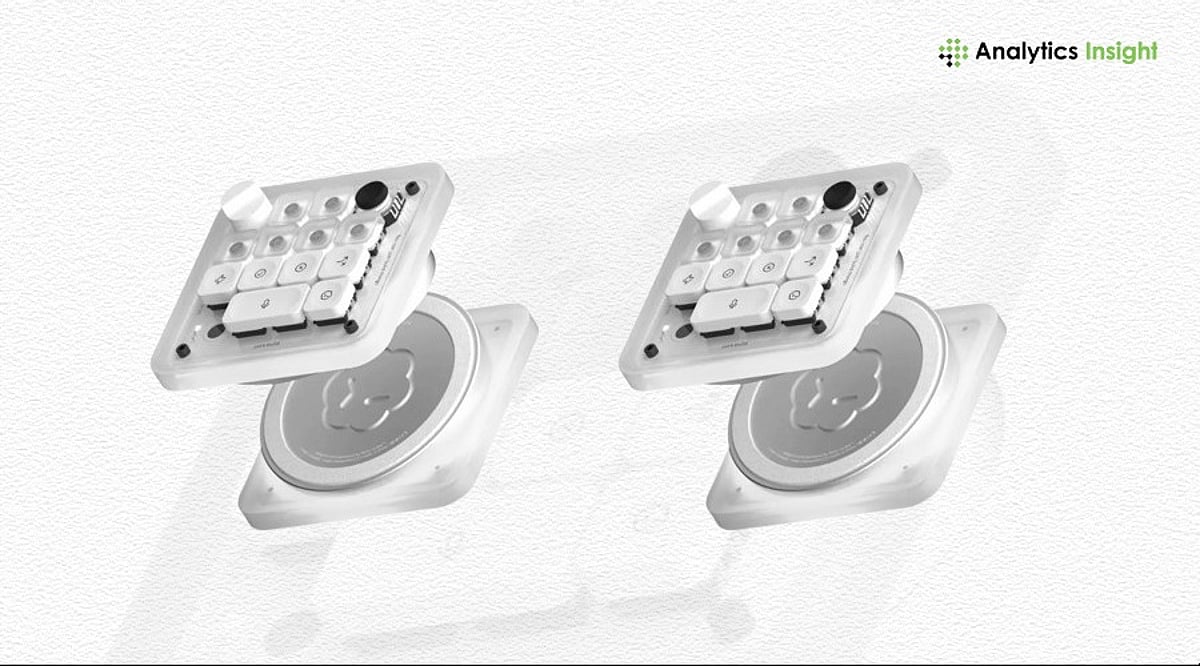
    OpenAI has launched its first branded hardware product, the Codex Micro, a programmable mechanical macropad developed in partnership with Work Louder. This strategic release moves beyond earlier speculation about a Jony Ive-designed AI device, focusing instead on developers who rely on Codex, OpenAI’s AI coding and productivity assistant.

    Priced at $230 and available in limited quantities, the Codex Micro arrives as Codex approaches 9 million users globally. The device is a niche yet targeted accessory designed to streamline AI coding workflows.

    What Is Codex Micro?

    Codex Micro is a compact mechanical macropad that enables users to monitor and control AI agents more efficiently. OpenAI describes the product as a “limited-run collaboration” with Work Louder, built on the hardware foundation of Work Louder’s Creator Micro 2 but customized with Codex-specific controls. While the standard Creator Micro 2 starts at around $144, the OpenAI version commands a higher price due to its dedicated AI-agent features.

    Key Features of Codex Micro

    The most notable addition is a row of six Agent Keys that glow in different colors to indicate the live status of Codex agents:

    • Idle: White light
    • Processing: Blue light
    • Complete: Green light
    • Error: Red light

    Double-tapping activates the agent, while a single tap selects the assigned agent. Users can customize these keys using Work Louder’s Input setting tool to map them to pinned Codex tasks, recent tasks, specific workflows, or individual agents.

    The bottom row features six programmable keys preprogrammed for functions such as accepting or rejecting code changes and branching threads. A larger key enables push-to-talk (PTT) voice control with Codex.

    Joystick, Dial, and Connectivity

    The Codex Micro also includes a joystick for navigating Codex’s composer bar and a rotary dial for selections by default, both of which are remappable. An LED-lit acrylic edge illuminates when Codex is listening and the microphone is active. Users can choose between silent and clicky switches, and the device supports USB-C, Bluetooth, and keycap swapping. Work Louder includes 32 additional keycaps, including playful options like “yolo” and “yeet.”

    Why It Matters

    Codex Micro is not a consumer AI gadget; it is a specialized AI agent management control device designed for developers to rapidly control AI agents during coding. This launch marks OpenAI’s first major step into hardware, prioritizing workflow productivity over consumer-focused AI devices.