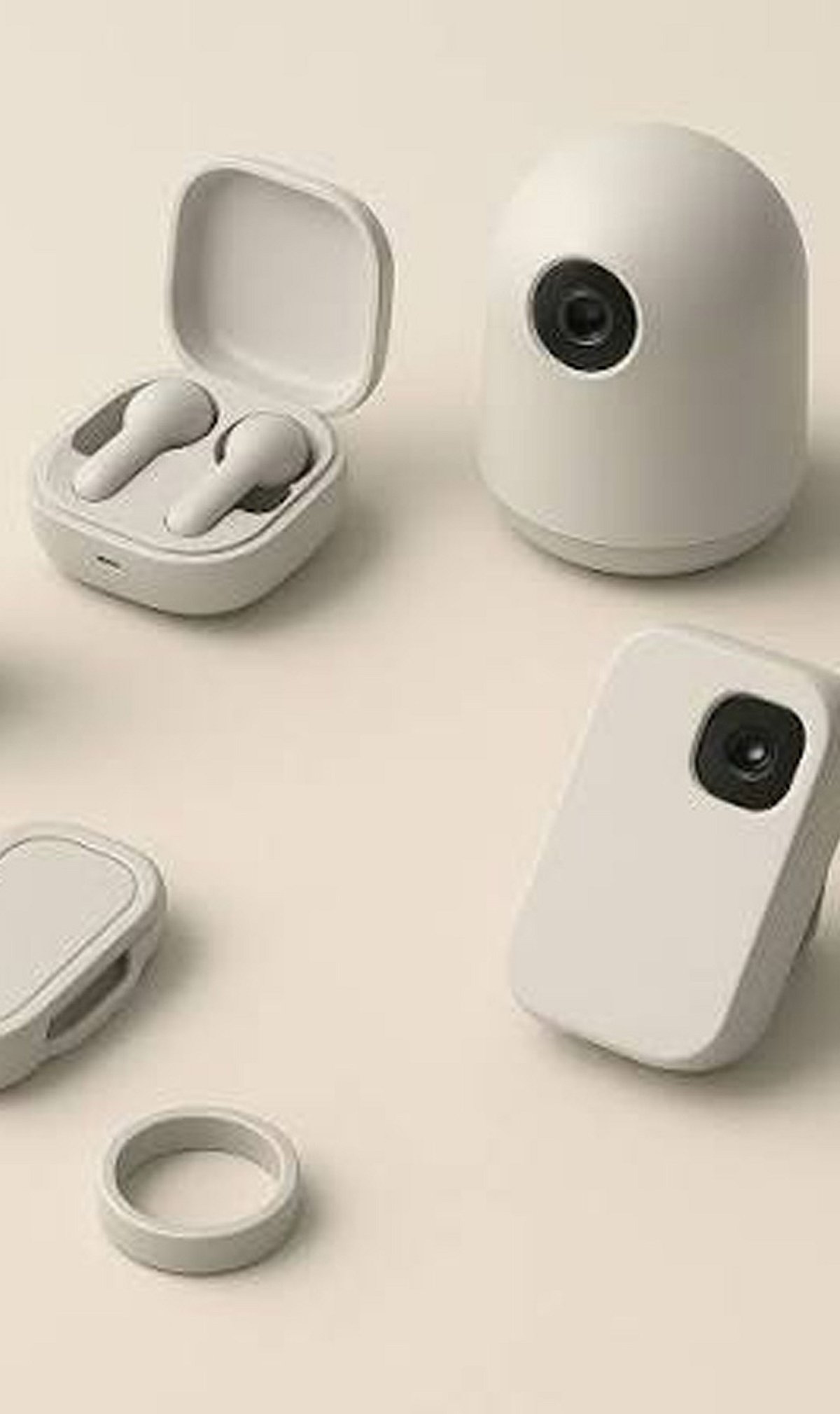
OpenAI is moving beyond ChatGPT and into the world of consumer hardware. The company is developing its first mysterious device in collaboration with former Apple design chief Jony Ive. Recent reports suggest it could be a screenless AI companion, not another smartphone or smart speaker.
1. Jony Ive Is Behind the Design
The mystery device stems from OpenAI’s partnership with Jony Ive and his design team. That connection has fueled expectations for an unusual, minimalist product. OpenAI acquired Ive’s io Products in 2025 as part of its push into hardware.
2. It Could Be a Screenless Speaker
Reports increasingly describe the first device as a portable, screenless AI speaker. Instead of relying on apps and menus, it would make conversation the primary way users interact with technology. The design is reportedly intended to feel more like a personal companion than a conventional smart speaker.
3. Think Small, Minimal, and Portable
The device has been described as roughly hockey-puck-sized, with some reports pointing to a rounded or doughnut-like form. A compact design could allow it to sit on a desk or move around the home. However, OpenAI has not publicly confirmed the final hardware design.
4. A Camera Could Give It Context
One intriguing reported feature is a built-in camera. The camera could help the device understand its surroundings and provide more context-aware responses. That would push it beyond a traditional speaker, although the exact camera capabilities and privacy controls remain unknown.
5. ChatGPT Would Be at Its Core
The gadget is expected to rely heavily on OpenAI’s AI technology and GPT-Live for natural conversations. Reports suggest it could answer questions, play media, and potentially interact with messages. The larger idea is an AI companion that understands context instead of simply waiting for commands.
6. It Could Control Your Smart Home
OpenAI’s hardware vision reportedly extends beyond answering questions. The device could control compatible smart-home accessories and become a central interface for connected devices. That could turn a small AI gadget into a hands-free control hub for everyday activities around the home.
7. A Built-In Battery Could Change Everything
Unlike a conventional home speaker, the reported device may include a rechargeable battery. That would make it easier to carry between rooms and use without keeping it permanently plugged in. Portability could therefore become one of the gadget’s defining differences from existing smart speakers.
The launch timeline may have shifted. OpenAI had previously indicated that its first hardware device was on track for 2026. More recent reporting now points to an early-2027 launch window for the speaker, showing that the timeline remains fluid. Pricing estimates have also varied, with reports putting it in the few-hundred-dollar range.