Tag: AI competition

  • OpenAI vs Anthropic: Can OpenAI Regain Its AI Leadership in 2026?

    OpenAI vs Anthropic: Can OpenAI Regain Its AI Leadership in 2026?

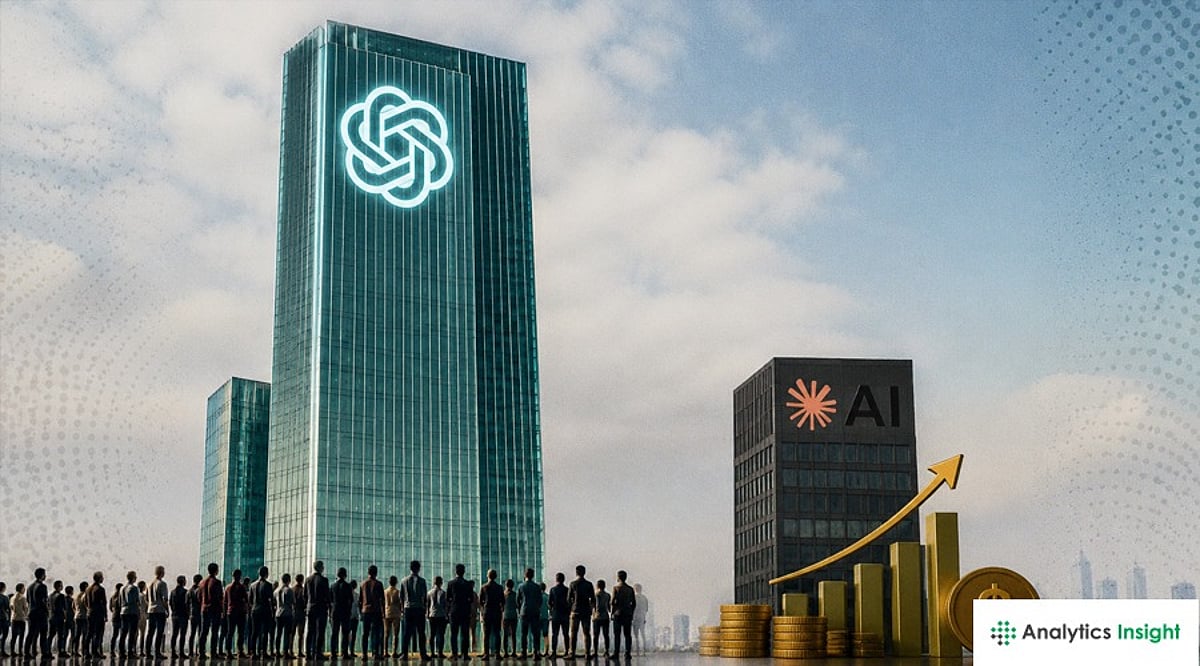
    The AI landscape has shifted dramatically in 2026, with OpenAI losing its long-held dominance to rival Anthropic. As ChatGPT’s growth slows and enterprises prioritize practical AI coding tools, Anthropic has surged ahead, raising the question: can OpenAI fight back?

    The Rise of Anthropic and the Coding Advantage

    Anthropic’s success stems from its laser focus on developers and businesses. Its flagship product, Claude Code, has gained significant traction among developers and enterprise customers, praised for its speed and ease of use. In contrast, OpenAI’s Codex has struggled to keep pace, giving Anthropic a crucial edge in the booming AI coding market. Google’s expanding Gemini platform has also intensified competition, squeezing OpenAI from multiple fronts.

    OpenAI’s Acknowledgment and Strategic Pivot

    OpenAI CEO Sam Altman has publicly acknowledged the company’s recent struggles. In a July 16 post on X, he admitted, “We did not have our best last 12 months ever, which is mostly my fault, but we are about to have our best 12 months to date.” This candid admission signals a strategic shift. OpenAI is now redirecting its focus toward AI coding and enterprise AI products, aiming to leverage Codex and other business tools to drive growth and attract paying customers.

    Leadership and Structural Changes

    Adding to the pressure, OpenAI has undergone significant leadership reorganization. The departure of Fidji Simo has altered expectations around the company’s executive structure, further complicating its path forward.

    Can OpenAI Reclaim Its Crown?

    Despite the setbacks, OpenAI retains a massive advantage: ChatGPT’s enormous user base and a strong brand presence. The challenge lies in converting this reach into sustainable business growth while closing the gap with Anthropic in the coding sector. The AI race has entered a new phase where practical, results-driven tools matter as much as model sophistication. OpenAI’s comeback will hinge on how quickly it can translate its renewed focus into products that businesses genuinely need.

    As the competition heats up, the industry watches closely to see whether OpenAI can turn its acknowledged missteps into a powerful comeback story.

  • Moonshot AI Opens Kimi K3 for Public Download, Challenging OpenAI and Anthropic

    Moonshot AI Opens Kimi K3 for Public Download, Challenging OpenAI and Anthropic

    Moonshot AI has officially released its latest large language model, Kimi K3, for public download. The move allows developers worldwide to access, deploy, customize, and experiment with the model, marking a significant step in the global AI race.

    The Chinese AI startup gained international attention after Kimi K3 demonstrated competitive reasoning, coding, and multilingual performance against leading AI models from OpenAI and Anthropic. Reports indicate that the model’s capabilities surprised industry observers, approaching performance levels associated with advanced OpenAI systems across several benchmark evaluations.

    Kimi K3’s strong reasoning and coding results have positioned it as another notable competitor challenging Anthropic’s latest large language models. The public release includes open model weights, encouraging transparency, customization, fine-tuning, and community-driven improvements for developers and AI researchers.

    Organizations can integrate Kimi K3 into applications, automate workflows, build AI assistants, and accelerate software development with flexible deployment options. The availability of Kimi K3 expands choices beyond proprietary AI systems, potentially accelerating innovation, reducing costs, and encouraging broader adoption across industries.

    The release reflects intensifying global competition as companies rapidly develop powerful foundation models with stronger reasoning, efficiency, and accessibility for enterprises.

  • Moonshot AI’s Kimi K3 Tops Coding Benchmark, Intensifying US-China AI Rivalry

    Moonshot AI’s Kimi K3 Tops Coding Benchmark, Intensifying US-China AI Rivalry

    China’s Moonshot AI has unveiled its latest open-weight model, Kimi K3, which quickly climbed to the top of the Arena Frontend Code leaderboard, surpassing leading US-developed models in blind evaluations. The move signals a significant advance in China’s artificial intelligence capabilities and raises fresh concerns about the future of US dominance in frontier AI.

    Kimi K3 is a 2.8-trillion-parameter model with a 1-million-token context window, designed for complex reasoning, software development, and long-horizon agentic tasks. Moonshot AI markets it as an open-weight frontier model, though its superiority is limited to the specific benchmark; independent comparisons show it does not outperform every leading closed model across all tests.

    The release comes on the heels of DeepSeek and other Chinese AI successes, intensifying the debate around AI safety, intellectual property concerns, and model distillation. Critics question whether some Chinese models replicate behaviors from proprietary systems, while industry experts argue that knowledge transfer is a global issue. For the US AI industry, Kimi K3 is more than a new product—it is a clear indicator that China’s open-weight ecosystem is advancing rapidly, narrowing the competitive gap in frontier research, funding, and infrastructure.

  • Anthropic Unveils Claude Sonnet 5 and Cloud Tasks, Paving the Way for an AI Super App

    Anthropic Unveils Claude Sonnet 5 and Cloud Tasks, Paving the Way for an AI Super App

    Anthropic has taken a significant step toward building an all-in-one AI platform with the launch of Claude Sonnet 5 and the integration of cloud-based task execution. The update merges chat, coding, and task management into a single interface, allowing users to run lengthy projects in the cloud even after closing their laptops.

    Available now for Claude Max subscribers on desktop, web, and mobile, the new features eliminate the need to keep devices powered on for long-running tasks. This shift gives users greater flexibility and simplifies complex workflows, marking a move beyond the traditional chatbot model.

    Claude Evolves into a Full Work Platform

    Anthropic is transforming Claude from a simple conversational agent into a comprehensive work environment. Instead of switching between separate apps for coding, research, writing, and planning, users can now handle multiple tasks within Claude. The company believes this unified approach will benefit both developers and everyday users.

    Earlier this year, Anthropic hinted at the vision of remote AI work that doesn’t require constant device activity. The latest update realizes that vision, bringing Claude closer to becoming a true super app. The platform now includes Claude Code, Claude Science, and Claude Design, along with integrations with popular tools like Slack, Chrome, and Microsoft 365.

    New AI Model and Enterprise Focus

    Central to the update is Claude Sonnet 5, which Anthropic describes as its most powerful model yet for coding and professional tasks. It supports smarter AI agents that can tackle larger projects with less manual intervention.

    Anthropic is also deepening its enterprise push, partnering with companies like TCS and engaging with government organizations. The company aims to deliver safe, accurate AI for industries such as healthcare, finance, cybersecurity, and public services.

    The competitive landscape remains intense: OpenAI continues to expand ChatGPT, while Microsoft broadens Copilot across its ecosystem. Anthropic differentiates itself by emphasizing safety and business-friendly features rather than consumer-focused gimmicks.

    Room for Improvement

    Despite the advances, Claude still has gaps. Cowork conversations do not fully sync between desktop and mobile devices yet. Anthropic has promised better cross-device integration in future updates, which will smooth the user experience.

    This release underscores a broader industry trend: AI companies are moving away from simple chatbots and toward complete work platforms. A single AI service may soon handle coding, research, writing, planning, and collaboration, helping businesses reduce tool sprawl and save time.

  • Perplexity Enters AI Coding Assistant Arena to Challenge Claude Code

    Perplexity Enters AI Coding Assistant Arena to Challenge Claude Code

    Perplexity, the AI-powered search company, is reportedly developing a coding assistant designed to compete head-to-head with Anthropic’s Claude Code and other popular developer tools. According to recent reports, the tool, internally named Teammate, has been tested by Perplexity’s own engineers for several months and is expected to be model-agnostic, giving developers the flexibility to choose the underlying AI model that best fits their workflow.

    Unlike some rivals that lock users into a single AI system, Perplexity’s approach emphasizes choice. Developers may be able to switch between models—such as Anthropic’s Claude, OpenAI’s GPT, or others—depending on the task. This flexibility could be a key differentiator in the increasingly crowded AI coding assistant market.

    Teammate Already in Internal Use

    Sources indicate that Teammate has been assisting Perplexity’s in-house engineers with code writing, bug detection, and other aspects of software development for the past few months. The company has not officially announced a public release date, but the internal testing suggests a launch could be forthcoming as Perplexity seeks to expand beyond search into everyday productivity tools.

    Competing with Claude Code and Others

    Claude Code, built by Anthropic, has gained popularity for its deep reasoning capabilities and ability to handle large code datasets. Perplexity, meanwhile, is best known for its search engine that provides quick, source-backed answers. With Teammate, Perplexity aims to target the same professional developer audience but with a multi-model twist that could give it a competitive edge.

    If Perplexity succeeds in launching a broad, model-agnostic coding assistant, it could shake up the AI coding landscape and force established players to consider offering more flexible integrations. The race for AI-powered developer tools is heating up, and Perplexity’s entry signals that the battle is far from over.

    For now, developers and industry watchers await an official announcement from Perplexity regarding Teammate’s availability and pricing.

  • Claude AI: Key Limitations and Challenges Every User Should Know

    Claude AI: Key Limitations and Challenges Every User Should Know

    Claude AI has emerged as one of the most capable artificial intelligence platforms, thanks to its strong reasoning, writing, and coding abilities. However, even with rapid adoption and significant model updates, users still face several notable challenges. This article examines the main limitations—from hallucination and outdated knowledge to high costs and infrastructure instability—that businesses and individuals must consider before relying on Claude for critical tasks.

    Persistent Hallucination Issues

    Despite improvements in newer versions like Claude Opus 4.7, the AI occasionally produces confident-sounding but false information, a phenomenon known as hallucination. This remains a critical concern for accuracy-sensitive fields such as law, scientific research, and technical engineering.

    Limited Real-Time Knowledge

    Claude excels at processing static training data but struggles with rapidly changing information. Without a live internet connection, its knowledge can become outdated, making it less reliable for stock market updates, political developments, or breaking news. This limitation is particularly problematic for businesses that require up-to-the-minute data for decision-making.

    Infrastructure and Performance Bottlenecks

    High demand has strained Anthropic’s infrastructure. In 2026, developers reported frequent HTTP 529 errors during API calls, with one study documenting 91 overload failures out of 1,135 requests. Such outages undermine reliability for enterprises that depend on consistent AI availability.

    Strict Safety Restrictions

    Claude’s constitutional AI framework prioritizes ethical behavior, often blocking prompts deemed risky or controversial. While this reduces misuse, it also frustrates researchers and developers working on cybersecurity, advanced technical topics, or legitimate controversial discussions. Compared to some competitors, Claude is more cautious, limiting flexibility.

    Intensifying Competition

    The AI market has become fiercely competitive. Open-source models now deliver strong performance at lower costs, and incidents like the alleged model distillation by Alibaba highlight the pressure on premium platforms. Chinese AI models have also approached Anthropic’s cybersecurity test scores, signaling a narrowing gap.

    High Costs for Heavy Users

    Premium access and API fees can become prohibitive for startups and businesses processing millions of tokens daily. As cheaper alternatives improve, Anthropic faces growing pricing pressure. Performance alone no longer justifies the cost; efficiency is equally crucial.

    Automation Mistakes Remain

    Claude’s autonomous agent features, introduced in 2026, showed progress with 89% task completion in benchmarks. However, 2.5% of actions caused unintended harm, such as sending messages to wrong recipients or performing incorrect operations. Full automation without human oversight is still unsafe for many business environments.

    Final Thoughts

    Claude AI remains a powerful tool, but its limitations—hallucination, outdated knowledge, infrastructure failures, strict rules, high costs, strong competition, and automation errors—mean that trust and reliability are not guaranteed. Businesses should evaluate these weaknesses carefully before integrating Claude into critical workflows.

  • OpenAI Dominates in Users, but Anthropic Surpasses in Enterprise Revenue Growth, IDC Data Shows

    OpenAI Dominates in Users, but Anthropic Surpasses in Enterprise Revenue Growth, IDC Data Shows

    OpenAI’s ChatGPT remains the world’s most widely used artificial intelligence chatbot by user numbers. However, new estimates from IDC suggest Anthropic may generate more annual revenue despite serving a much smaller audience. The findings highlight contrasting business models within the fast-growing AI industry.

    ChatGPT Maintains Largest Global User Base

    IDC Research Vice President Arnal Dayaratna estimated that ChatGPT has more than 900 million weekly active users worldwide, placing OpenAI well ahead of other consumer AI chatbot providers. IDC also estimated that Google Gemini serves between 200 million and 250 million weekly active users, while Anthropic’s Claude has between 40 million and 60 million weekly active users. These figures show that OpenAI remains the largest consumer-facing AI platform by a wide margin.

    Dayaratna noted that OpenAI has built multiple revenue streams across consumer subscriptions, workplace seats, APIs, and platform services. IDC estimates OpenAI generates between $30 billion and $40 billion in annualized revenue, with consumer subscriptions accounting for about $10 billion to $13 billion, and API and platform services contributing as much as $20 billion. Reports published earlier this month also stated that OpenAI generated $5.7 billion in revenue during the first quarter of 2026 while spending about $3.7 billion, with a net loss reaching approximately $39 billion in 2025.

    Anthropic Builds Revenue Through Enterprise Customers

    Although Anthropic serves far fewer users, IDC estimates its annualized revenue stands between $40 billion and $50 billion. Consumer subscriptions contribute less than $2 billion, according to the research firm. Most of Anthropic’s revenue comes from enterprise subscriptions, Claude Code seats, API usage, and other developer-focused workloads. This business mix differs significantly from OpenAI’s larger consumer-focused platform.

    Dayaratna commented, “Usage scale tells a different story from revenue mix,” adding that Claude’s business is more focused on enterprise and developer customers than consumer adoption. Anthropic also referenced its May 2026 company blog, which announced its annualized revenue run rate exceeded $47 billion, supporting IDC’s broader revenue estimates.

    Research Firms Report Different Strengths for Both Companies

    Counterpoint Research reported similar findings in its April 2026 analysis, estimating Anthropic captured 31.4% of global large language model revenue during the first quarter of 2026, with OpenAI following at an estimated 29% market share. Counterpoint also estimated Anthropic generated average monthly revenue of $33.30 per user, compared to OpenAI’s $2.20 per user. During the same period, Counterpoint estimated OpenAI had approximately 900 million monthly active users versus about 65 million for Anthropic.

    Both OpenAI and Anthropic have reportedly started confidential preparations for possible future public offerings. In May, Anthropic completed a $65 billion Series H funding round that valued the company at $965 billion. The latest estimates present two different measures of success in the AI industry: OpenAI continues to lead by user reach, while IDC estimates suggest Anthropic currently earns more revenue through enterprise customers and developer services. As Dayaratna summarized, “Usage scale tells a different story from revenue mix,” reflecting the divergent strategies followed by both companies.

  • xAI Launches Grok 4.5 Beta: Musk Claims It Outperforms Anthropic’s Claude Opus

    xAI Launches Grok 4.5 Beta: Musk Claims It Outperforms Anthropic’s Claude Opus

    Elon Musk’s artificial intelligence company, xAI, has introduced Grok 4.5 in private beta, marking the latest update to its flagship chatbot. The company claims the new model delivers stronger performance than rival AI systems, including Anthropic’s Claude Opus, across several benchmarks.

    The release comes as AI companies continue to roll out increasingly capable models, with firms racing to improve reasoning, coding, and conversational abilities while attracting enterprise customers.

    Grok 4.5 Enters Limited Testing

    According to xAI, Grok 4.5 is currently available only to a select group of testers. The company said the private beta will help evaluate the model’s performance before a wider rollout. Musk described the model as the company’s most advanced AI system so far, saying it offers improvements in reasoning, factual accuracy, and response quality. He also claimed the latest version performs better than competing frontier models in several evaluation tests. However, xAI has not released detailed benchmark data or independent validation to support all of its performance claims.

    Competition in AI Heats Up

    The launch adds yet another chapter to the fast-moving AI race, where companies like OpenAI, Anthropic, Google, and Meta keep releasing new models at a rapid pace. Over the past few months, developers have been fixated on sharpening coding help, multimodal skills, extended-context reasoning, and enterprise setups. Performance comparisons have become a major marketing focus, with AI firms regularly releasing benchmark results to show they are improving faster than others.

    Analysts point out that even if benchmark scores provide a way to judge progress, real-life results often hinge on how well models actually handle everyday business and consumer tasks.

    xAI Expands Its AI Ambition

    Since developing Grok, xAI has been increasing the bot’s functionality on the X platform while making substantial investments in computational technology and large language models. xAI presents Grok as a competing solution to current AI assistants for its real-time information provision and better conversational capabilities. The new release of Grok 4.5 shows that xAI continues competing with other AI firms as the demand for advanced generative AI solutions grows rapidly.

    The wider launch is expected after testing is complete and feedback from beta users is received. xAI has provided no official timeline; however, the update reveals that competition among top AI firms is not weakening.