Tag: AI courses

  • 7 Profitable AI Digital Product Ideas for Creators and Entrepreneurs in 2026

    7 Profitable AI Digital Product Ideas for Creators and Entrepreneurs in 2026

    Artificial intelligence is creating exciting income opportunities for creators and entrepreneurs. Digital products require low upfront investment and can generate recurring revenue. From templates to AI tools, demand is growing rapidly. Here are seven profitable AI product ideas to explore.

    AI Prompt Packs

    Well-crafted prompt collections help users generate better results from AI tools. Businesses, marketers, students, and developers all need specialized prompts. You can create industry-specific prompt libraries for different audiences. These products are easy to update and sell repeatedly.

    AI Resume & Career Templates

    AI-powered resume templates and job application kits remain in high demand. Include optimized prompts, cover letter formats, interview guides, and portfolio templates. Professionals appreciate ready-to-use resources that save time. This niche continues growing alongside AI adoption.

    AI Business Templates

    Entrepreneurs need AI-assisted business plans, marketing calendars, SOPs, and financial templates. These products help startups launch faster with minimal effort. Customizable templates appeal to freelancers and small businesses alike. They offer excellent long-term earning potential.

    AI Design Assets

    Create editable social media templates, presentation slides, icons, illustrations, and branding kits using AI. Designers and marketers constantly seek fresh creative assets. Sell them through marketplaces or your own website. High-quality visuals attract repeat customers.

    AI Learning Courses

    Develop beginner-friendly AI courses covering prompting, automation, content creation, or productivity. Video lessons, worksheets, and downloadable resources increase perceived value. Continuous AI innovation keeps demand strong. Educational digital products remain highly scalable.

    AI Automation Workflows

    Businesses increasingly purchase ready-made AI automation systems for content creation, customer support, and operations. Bundle workflows with guides and implementation templates. These practical solutions save companies valuable time. Automation products are expected to remain among the fastest-growing digital offerings in 2026.

  • Top 5 AI and Machine Learning Courses to Enroll in 2026

    Top 5 AI and Machine Learning Courses to Enroll in 2026

    Artificial intelligence and machine learning have become essential skills across industries, from software development and healthcare to finance, manufacturing, and cybersecurity. As organizations continue integrating AI into their products and operations, employers are actively looking for professionals who understand both the theory and practical application of these technologies.

    With hundreds of online courses available, finding one that matches your career goals can be challenging. The best programs combine strong conceptual foundations with hands-on projects, modern AI tools, and industry-recognized certifications. Here are five AI and machine learning courses worth considering in 2026.

    Why Choosing the Right AI Course Matters

    A certificate alone will not land you a job in AI. Today, recruiters seek people who can put machine learning techniques into practice, work within frameworks, and create AI solutions. A well-thought-out curriculum can give you the opportunity to improve your knowledge of math, Python, data analysis, model building, and deployment, and to develop your own projects.

    Prerequisites Before Starting an AI and Machine Learning Course

    You do not need a computer science major to start learning about AI and machine learning, but acquiring some skills beforehand will simplify the process. Basic knowledge of Python programming is very useful since it is widely used in AI platforms. A basic understanding of mathematics—including probability and statistics—will also help you understand how machine learning models operate.

    If you are a beginner, you also need some basic knowledge of handling data, such as working with simple datasets and spreadsheets. If you have no programming experience, it is better to spend a few weeks learning Python basics before starting a machine learning course.

    Top AI and Machine Learning Courses at a Glance

    Course Name Provider Best For Key Features
    Machine Learning Specialization Stanford & DeepLearning.AI Beginners Foundational concepts, hands-on projects
    IBM AI Engineering Professional Certificate IBM via Coursera Beginners to Intermediate Practical skills, industry recognition
    AI for Everyone DeepLearning.AI Non-technical professionals AI strategy, no coding required
    Deep Learning Specialization DeepLearning.AI Intermediate Neural networks, TensorFlow, PyTorch
    Professional Certificate in Machine Learning & AI MIT xPRO Advanced professionals Rigorous curriculum, real-world case studies

    What to Do After Completing Your First AI Course

    Completing the course is just the start. Employers are interested in practical knowledge, not just certifications. Begin by developing small-scale projects—movie recommendation systems, sentiment analysis tools, spam classifiers, chatbots, or image recognition apps—using publicly available datasets.

    Upload your code to GitHub and build a portfolio that showcases your projects. Participating in Kaggle competitions, contributing to open-source AI projects, and gaining experience with frameworks like TensorFlow, PyTorch, and Hugging Face will help your resume stand out.

    How to Choose the Right Course

    The most suitable route depends on your experience level and career goals. Beginners should take programs that cover Python, mathematics, and machine learning before moving to advanced topics like deep learning or large language models.

    Programmers aiming for AI engineering roles should opt for programs that include projects, deployment, cloud computing, and portfolio building. Business professionals may find more value in courses focused on AI strategy and implementation rather than coding.

    Why This Matters

    Artificial intelligence is reshaping almost every industry, but employers increasingly value practical skills over certificates alone. Choosing a course that combines strong fundamentals with hands-on projects gives learners a better opportunity to build confidence, create a portfolio, and stay competitive as AI continues to evolve.

    Final Thoughts

    The field of AI and machine learning continues to transform industries, leading to rising demand for skilled individuals. Taking a good course is a great starting point, but long-term success requires applying those skills. Whether you’re starting your AI journey or advancing your expertise, choosing a course that combines theory with practice will help you build confidence, strengthen your portfolio, and stay competitive.

    FAQs

    Which is the best AI and machine learning course for beginners?

    The IBM AI Engineering Professional Certificate and the Machine Learning Specialization by Stanford & DeepLearning.AI are among the best beginner-friendly programs because they combine foundational concepts with hands-on projects.

    Do I need programming experience before learning AI?

    Not necessarily. However, learning basic Python programming before starting an AI course makes it much easier to understand machine learning concepts and complete practical assignments.

    What prerequisites are required for machine learning courses?

    Most beginner courses recommend basic Python programming, elementary mathematics (including algebra, probability, and statistics), and familiarity with handling datasets using spreadsheets or Python libraries.

    Which AI course is best for working professionals?

    AI for Everyone by DeepLearning.AI is an excellent choice for managers, business leaders, product managers, and professionals who want to understand AI strategy without focusing heavily on coding.

    Which programming language should I learn for AI and machine learning?

    Python is the most widely used programming language for AI and machine learning because of its rich ecosystem of libraries, including TensorFlow, PyTorch, Scikit-learn, Pandas, and NumPy.

  • Top Google AI Certifications and Courses for 2026: A Comprehensive Guide

    Top Google AI Certifications and Courses for 2026: A Comprehensive Guide

    Google’s AI learning ecosystem has expanded to include professional certifications, structured courses, and hands-on learning paths. Each credential targets specific skills and career objectives, making it essential to understand the options available. This guide breaks down the eight best Google AI certifications and courses, ranked by audience and career value, to help you choose the right path for building artificial intelligence expertise.

    Certifications vs. Courses: What’s the Difference?

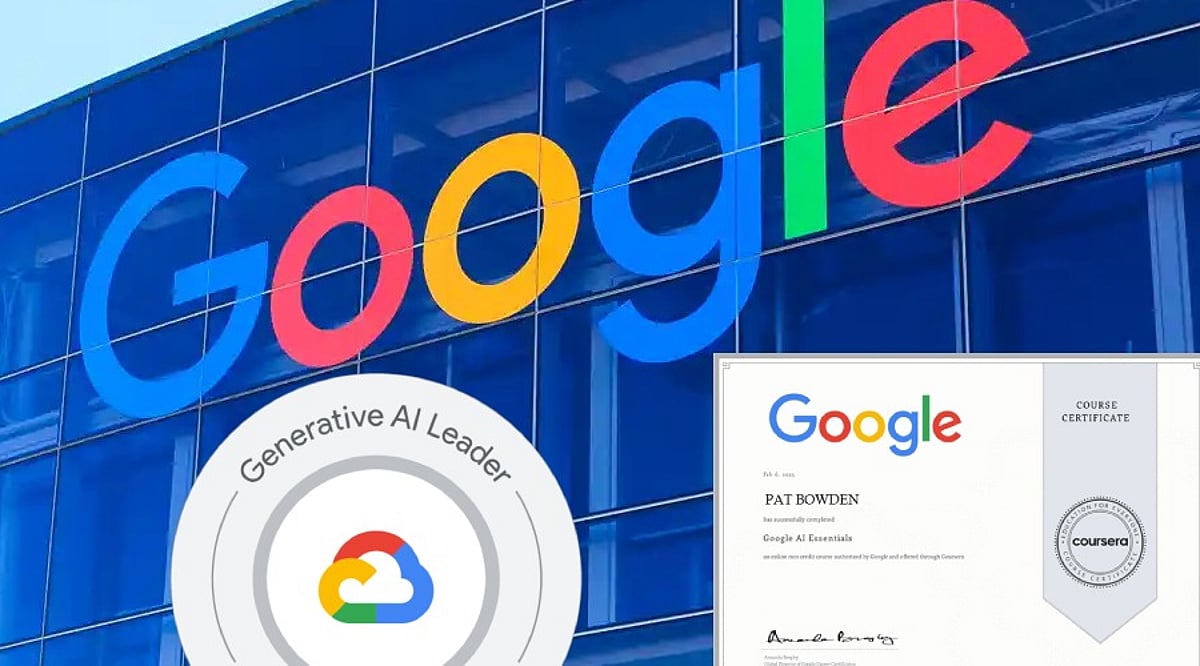
    Google Cloud offers three proctored exams: Generative AI Leader, Professional Machine Learning Engineer, and Cloud GenAI Engineer. These exams carry a pass or fail result and a fixed validity window. In contrast, courses on Coursera or Google Skills focus on building practical skills rather than resume credentials. Understanding this distinction is key to making the right investment.

    1. Google AI Essentials

    Five short courses totaling approximately five hours, priced at $49 per month with no prerequisites. This is the most enrolled generative AI course on Coursera, covering prompting, responsible use, and everyday AI fundamentals rather than technical depth. Best for: Beginners seeking workplace fluency fast.

    2. Google Prompting Essentials

    A standalone course priced at $49, focusing purely on prompt design. Google states this will not prepare anyone for a prompt engineering role. Best for: Professionals who want sharper outputs from AI tools.

    3. Google AI Professional Certificate

    Launched on Coursera in February 2026, this certificate pairs seven short courses with a capstone project, totaling about ten hours, priced at $49 per month with no prerequisites. Enrollment includes three months of free Google AI Pro access for labs. Best for: Learners past the basics who want documented, practical proof of AI work.

    4. Introduction to Generative AI (Google Skills)

    Google Cloud’s free learning path includes four short courses covering generative AI fundamentals and responsible AI, each about an hour long. It sits on the free Google Skills tier with monthly lab credits at no charge. Best for: Those planning to attempt the Generative AI Leader certification who need Google Cloud terminology first.

    5. Google Cloud Generative AI Leader

    The first proctored credential on this list, built for non-engineers. The 90-minute exam includes 50 to 60 questions and costs roughly $99, valid for three years with renewal by retake. No coding is tested. Best for: Business leaders and product managers needing a recognized credential without writing code.

    6. Generative AI for Developers (Google Skills)

    The technical counterpart to the beginner path above, requiring prerequisite courses in responsible AI. Full access requires a paid Google Skills subscription near $30 per month. Coverage includes retrieval-augmented generation and multimodal application building with Gemini. Best for: Developers heading toward the Cloud GenAI Engineer exam.

    7. Cloud GenAI Engineer

    Priced near $200, this exam focuses on building generative AI applications through the Gemini API, RAG pipelines, and agentic workflows on existing infrastructure. Best for: Developers shipping GenAI features who do not manage full ML systems.

    8. Professional Machine Learning Engineer

    The most demanding credential. Google recommends three or more years of industry experience, including at least one year on Google Cloud. The two-hour exam includes 50 to 60 questions and costs $200, valid for two years with renewal options. A recent update shifted the exam toward the Gemini Enterprise Agent Platform. Best for: Engineers with real production experience who want Google Cloud’s strongest technical signal.

    Final Thoughts

    None of these credentials serves as a shortcut. The certifications with real hiring weight—Generative AI Leader, Cloud GenAI Engineer, and Professional Machine Learning Engineer—all expect existing baseline knowledge. The smarter move is matching the credential to your current experience level, not the one that looks most impressive on paper.

  • 7 Free AI Courses with Certificates to Boost Your Skills in July 2026

    7 Free AI Courses with Certificates to Boost Your Skills in July 2026

    Build AI skills without spending a rupee. Here are the top free AI courses offering certificates in July 2026:

    • Google AI Essentials – Learn practical AI skills and prompt engineering with beginner-friendly lessons.
    • Microsoft AI Skills Challenge – Gain hands-on experience with Azure AI tools and earn a free certificate.
    • IBM AI Fundamentals – Understand machine learning, generative AI, and business AI applications.
    • Harvard CS50 AI – A rigorous introduction to artificial intelligence using Python programming.
    • DeepLearning.AI Short Courses – Master prompting, LLMs, and generative AI through concise practical lessons.
    • Coursera AI for Everyone – Andrew Ng’s popular course explains AI concepts without coding experience.
    • NVIDIA Deep Learning Institute – Access free AI workshops focused on GPUs, deep learning, and computer vision.
    • LinkedIn Learning AI Courses – Explore workplace AI productivity, Copilot, ChatGPT, and automation topics.

    Read more stories and join our WhatsApp Channel to get the latest news, exclusives, and videos.

  • 10 Best GenAI and Agentic AI Certifications to Future-Proof Your Career in 2026

    10 Best GenAI and Agentic AI Certifications to Future-Proof Your Career in 2026

    The AI job market is shifting toward professionals who can build, deploy, and manage intelligent systems instead of simply using AI tools. GenAI and Agentic AI courses provide structured learning with hands-on projects and industry-recognized credentials. The best programs can strengthen both technical expertise and long-term career prospects.

    Overview

    GenAI and Agentic AI courses develop practical skills in large language models (LLMs), AI agent frameworks, RAG, Model Context Protocol (MCP), AI governance, and autonomous AI system design for real-world applications. These programs cater to different experience levels, from beginners learning generative AI fundamentals to professionals building production-ready AI agents, enterprise workflows, and intelligent automation systems.

    University-backed and industry-recognized courses combine hands-on projects, technical expertise, and system-level thinking to prepare learners for AI engineering, product management, software development, and enterprise AI leadership roles.

    Prompt engineering got people through the door of Generative AI. Now the demand is shifting toward something bigger: professionals who can build, deploy, and govern autonomous AI systems that actually solve business problems. Certification programs are moving with that shift, leaving prompt basics behind and teaching production-ready AI skills instead.

    Generative AI courses teach people to use large language models to create content and applications. Agentic AI courses go further. They teach people to build systems that plan, use tools, maintain context, and finish tasks with little human input. That is why courses covering architecture, evaluation, and governance now carry more weight than courses built around prompting alone.

    How We Ranked the Best GenAI and Agentic AI Courses in 2026

    These ten are ranked by curriculum depth, verified hands-on project work, institutional accountability, and how directly the skills map to a real job function, from the complete beginner through the production engineer. That range is deliberate. A ‘top 10’ list that only serves engineers offers little to a product manager or executive searching for the same term.

    Top 10 GenAI and Agentic AI Courses at a Glance

    1. Learnbay – Generative AI & Agentic AI Master Program

    Most AI courses just teach tools or prompt writing. Learnbay takes a different path, helping learners apply AI directly in their existing fields. The Generative AI & Agentic AI Master Program mixes live classes, real projects, and guidance from actual industry practice. Topics covered include Generative AI, Agentic AI, RAG, LangChain, LangGraph, CrewAI, MCP, vector databases, LLMOps, AI deployment, automation, and responsible AI use. The focus stays on real work, not sample projects. Through AI Co-Lab and startup-style challenges, plus the Build Your Own Project (BYOP) program with a mentor guiding each step, learners build a portfolio worth showing employers. The projects are tailored to different fields too, including banking, healthcare, manufacturing, retail, telecom, and consulting. Classes run live on weekends, which works well for people balancing a full-time job. A three-year access period is also included, so the material stays available for future review. Career Services Pro adds further support with resume building, LinkedIn profile help, mock interviews, and placement assistance.

    2. Building AI Agents and Agentic Workflows (IBM)

    A three-course specialization that moves from LangGraph fundamentals to CrewAI multi-agent orchestration to AG2 and BeeAI, inside guided labs using real large language models such as GPT and IBM Granite. It works as a reasonable second step after a GenAI foundations course, though it remains a framework survey in nature. Learners wanting deep architecture or governance content will outgrow it fast.

    3. Full Stack Agentic AI Specialization (Coursera)

    This program moves past framework tours into ownership: RAG pipelines, the Model Context Protocol, vector databases, and backend orchestration. It suits engineers who want the whole stack under one roof rather than a single layer. The tradeoff is breadth over depth. Covering the full stack means less specialization in any one area than Cornell’s architecture-focused track offers.

    4. Master Agentic AI: Core Principles and Real-World Applications (Coursera)

    Built for people who already build ML models and need to operate agent systems at production scale: reward-signal design, CI/CD pipelines for retraining, drift detection, and threat modeling for agent security. The honest limitation is the prerequisite. Real ML fluency is assumed already. This program suits practitioners moving beyond prompting, not those starting from it.

    5. Applied Agentic AI Certificate (University of San Francisco)

    An intensive, in-person program with labs and a hackathon, built for people who need to understand agentic AI without writing code. It fills a genuine gap, since most agentic programs assume an engineering background. The cost is depth: graduates leave with strategic fluency, not implementation skill.

    6. Agentic AI Certificate Program (Johns Hopkins)

    A twelve-week, university-backed program covering Python, LLMs, RAG, and agent construction through applied projects, with weekly live sessions from faculty and industry experts. It sits between USF’s no-code approach and Coursera’s engineering-heavy tracks, a reasonable middle path for professionals wanting some hands-on coding without a pure software-engineering prerequisite.

    7. Agentic AI Architecture (eCornell)

    Four short courses over two months, focused not on building agents step by step but on designing the systems around them: LLM reliability, RAG, multi-agent workflows, and governance frameworks for responsible deployment. It suits architects, tech leads, and PMs who own decisions rather than code. Engineers wanting deep framework practice will find it thinner on implementation than IBM’s specialization.

    8. Generative and Agentic AI Certification (BITS Pilani Digital)

    A roughly 30-week program covering LLM applications, agentic systems, RAG, and deployment, built for technology professionals moving from experimenting with AI to architecting it. The length is the differentiator, for better and worse. It offers more depth than any other program on this list but demands a real-time commitment, closer to a part-time postgraduate course than a certification sprint.

    9. Agentic and Generative AI Course (IISc CCE with TalentSprint)

    An advanced program carrying IISc’s research credibility, relevant in India and among engineers who value an academic institution behind the certificate. It overlaps closely in content with BITS Pilani’s track, so the deciding factor usually comes down to institutional preference and location rather than curriculum difference.

    10. GitHub Certified: Agentic AI Developer (Microsoft)

    Four courses at 15 to 16 hours each, built for developers already working inside GitHub workflows and the software development lifecycle. It teaches agentic development inside tools people already use daily, which shortens the learning curve for that specific audience and narrows relevance for anyone outside it.

    How to Choose the Right GenAI and Agentic AI Certification

    Complete beginners fit best with Generative AI for Everyone before attempting anything agentic; every program past that point assumes basic LLM familiarity. Developers wanting hands-on framework practice suit IBM’s specialization or Coursera’s Full Stack track. Architects and technical leads gain more from Cornell’s system-design focus than from a coding-heavy specialization they will not use directly. Professionals wanting depth and university credibility should weigh BITS Pilani or IISc against the time commitment involved. Non-technical leaders get the most direct value from USF’s applied, no-code format.

    Final Thoughts

    The strongest certification is rarely the longest or the most recognizable name. It is the one that closes an actual skill gap. Whether that means understanding what generative AI even is, building production-ready agents, or governing how autonomous systems get deployed at scale.

    FAQs

    1. What is the difference between Generative AI and Agentic AI? Generative AI creates content such as text, images, code, and audio from user prompts, while Agentic AI enables systems to reason, plan, use tools, and complete multi-step tasks with minimal human intervention.
    2. Which GenAI and Agentic AI certification is best for beginners? Beginners should start with foundational Generative AI courses that teach LLMs, prompt engineering, and AI applications before advancing to Agentic AI courses focused on autonomous agents and workflow automation.
    3. Are GenAI and Agentic AI courses worth pursuing in 2026? Yes. As businesses increasingly adopt AI-powered workflows and intelligent agents, courses with hands-on projects and practical AI skills can improve employability and support long-term career growth.
    4. What skills should a good GenAI and Agentic AI certification include? A strong certification should cover prompt engineering, large language models (LLMs), retrieval-augmented generation (RAG), AI agent frameworks, workflow automation, AI governance, model evaluation, and real-world project development.
    5. How do I choose the right GenAI and Agentic AI course? Select a course based on your experience level, career goals, curriculum, hands-on learning opportunities, industry recognition, and whether it covers practical applications such as AI agent development, deployment, and enterprise AI solutions.

  • Top Generative AI Certification Courses for 2026: From Beginner to Advanced

    Top Generative AI Certification Courses for 2026: From Beginner to Advanced

    Generative AI has become one of the most transformative technologies in today’s digital landscape. Businesses across industries are leveraging AI to enhance customer service, automate workflows, generate content, analyze data, and boost productivity. As demand for AI expertise grows, employers actively seek professionals who understand generative AI and can apply it effectively.

    Learning AI has never been more accessible. Numerous trusted platforms now offer certification programs tailored to both beginners and seasoned professionals. Some courses focus on foundational concepts, while others dive into advanced topics like large language models, prompt engineering, AI agents, and application development. Choosing the right certification depends on your career goals, current skill level, and the knowledge you need to succeed.

    Below are some of the best generative AI certification courses to consider in 2026.

    Coursera – Generative AI: Introduction and Applications

    This introductory course is ideal for anyone wanting to understand generative AI from the ground up. It explains core concepts in simple language and illustrates how different industries apply AI in real-world scenarios. Topics include popular AI tools, foundation models, prompt engineering basics, and responsible AI practices. Real-world examples make the material accessible even to non-technical learners.

    Coursera – Generative AI for Everyone Specialization

    Designed for business professionals, students, managers, and educators, this specialization emphasizes practical uses of generative AI in the workplace. It covers how organizations use AI to improve productivity and decision-making, along with prompt design, responsible AI, ethical considerations, and digital transformation. No programming knowledge is required.

    Coursera – Generative AI for Content Creation

    Content creation is one of the most common applications of generative AI. This course focuses on leveraging AI to produce blogs, marketing copy, social media posts, presentations, emails, and more. Lessons cover writing effective prompts, refining AI-generated content, maintaining quality, and the ongoing importance of human creativity.

    Udemy – Complete Generative AI Course with LangChain and Hugging Face

    This advanced, hands-on course is perfect for developers. It covers developing modern applications using LangChain and Hugging Face, including retrieval-augmented generation, vector databases, embeddings, prompt engineering, AI agents, and large language models. Numerous practical exercises help you build real AI-powered apps.

    BITS Pilani Digital – Generative AI and Agentic AI Course

    Offered by BITS Pilani Digital, this certification blends generative AI with the emerging field of agentic AI. The structured curriculum combines theory with practical business applications, covering foundation models, AI agents, autonomous workflows, prompt engineering, and enterprise AI solutions. Industry case studies and projects reinforce learning.

    FutureSkills Prime – Fundamentals in Generative AI and Machine Learning

    This beginner-friendly certification builds a solid foundation in machine learning and generative AI. It starts with simple concepts and gradually introduces more advanced topics like neural networks, foundation models, and responsible AI. The course prepares learners for future advanced certifications.

    Microsoft Learn – Generative AI for Beginners

    Microsoft provides a free, self-paced course featuring tutorials and learning materials for hands-on learners. Topics include large language models, prompt engineering, semantic search, vector databases, AI agents, and responsible AI. The course is regularly updated to reflect the latest trends.

    Great Learning – IIT Bombay Certificate in Generative AI

    This certification combines academic rigor with practical experience. It covers fundamentals before progressing to advanced topics like prompt engineering, large language models, and industry applications. Expert guidance, live sessions, and project-based learning help learners understand real-world AI use cases.

    How to Choose the Right Generative AI Certification

    The best certification depends on your career goals and background. Beginners may prefer introductory courses from Coursera, Microsoft Learn, or FutureSkills Prime. Business-oriented learners who want to understand AI’s impact may benefit from “Generative AI for Everyone.” Developers and technical professionals should consider courses covering LangChain, Hugging Face, and agentic AI. Before deciding, compare curricula, practical projects, instructor expertise, certification value, and how often content is updated.

    Final Thoughts

    Generative AI is now an essential skill across many industries. Certification programs provide a clear path to learning this technology, but hands-on projects are what truly build expertise. The demand for AI skills continues to grow, making now a great time to invest in your education.

    Frequently Asked Questions

    1. Which is the best Generative AI certification course for beginners? Courses from Coursera, Microsoft Learn, and FutureSkills Prime provide a strong foundation.
    2. Are Generative AI certifications worth it in 2026? Yes. They help build practical AI skills and improve career opportunities across many industries.
    3. Which course is best for developers? The Udemy course with LangChain and Hugging Face is a strong choice for developers seeking hands-on experience.
    4. Do these courses require coding knowledge? Not all of them. Many are suitable for non-technical learners, while others focus on programming and AI development.
    5. What should I consider before choosing a certification? Compare the curriculum, practical projects, certification value, instructor expertise, and how often the content is updated.