Tag: AI demand

  • AI Demand Drives These Semiconductor Stocks: NVIDIA, TSMC, and More

    AI Demand Drives These Semiconductor Stocks: NVIDIA, TSMC, and More

    Artificial intelligence continues to reshape the semiconductor landscape, creating opportunities for investors across the chip supply chain. From GPU leaders to memory manufacturers and equipment providers, several stocks are positioned to benefit from surging AI demand. Below, we analyze the key players and the risks that accompany their growth.

    Key Takeaways

    • NVIDIA remains the dominant AI chip supplier, while Broadcom provides exposure to custom silicon and networking.
    • TSMC and Micron gain from advanced manufacturing and high-bandwidth memory demand.
    • Equipment firms like ASML, Lam Research, Applied Materials, and KLA offer indirect AI growth avenues.

    NVIDIA and Broadcom Lead the AI Chip Race

    NVIDIA’s position as the premier AI chipmaker is unshaken. With its stock near $218.36 and a market capitalization approaching $5.30 trillion, the company supplies GPUs and networking solutions for AI data centers. A 2.26% dip on September 10 reflected broader tech pressure from rising Treasury yields, but its long-term trajectory remains tied to AI deployment.

    Broadcom offers a complementary play. Trading around $360.83, it designs custom AI chips and networking hardware for large tech firms. This diversification allows investors to tap AI growth beyond the GPU market.

    AMD adds a third option. At roughly $521.10, it has gained over 143% year-to-date, competing with NVIDIA through its AI accelerators and EPYC server processors. However, such sharp gains introduce higher valuation risk.

    TSMC and Micron: Supply Chain Pillars

    TSMC is the linchpin of advanced chip fabrication. Its U.S.-listed shares trade near $435.36, valuing the company at $1.58 trillion. The foundry posted record August revenue of NT$514.806 billion, up 53.3% year-over-year, with July revenue also strong at NT$467.580 billion. TSMC forecasts Q3 revenue between $44.6 billion and $45.8 billion, and plans capital expenditure of $60–$64 billion in 2026.

    Micron focuses on high-bandwidth memory (HBM), essential for AI workloads. With shares around $1,028, the company aims to boost HBM output to 100,000 wafers per month by year-end. HBM shortages are raising chip costs, but new entrants and rapidly shifting memory markets add risk. Micron’s fiscal Q4 results on September 30 will be a key catalyst.

    Equipment Stocks Provide Alternative Exposure

    Lam Research, Applied Materials, and KLA supply tools for chip manufacturing. Lam Research trades near $301.06, Applied Materials at $469, and KLA at $177.18—each fell over 3% on September 10. Their fortunes rise with fab expansions, not AI chips directly, making them a different risk-reward proposition.

    Marvell sits at the intersection of custom silicon and connectivity, with a stock price of $235.01 and a 176.55% year-to-date gain. Its high valuation amplifies downside risk.

    ASML stands out as the sole supplier of EUV lithography systems, crucial for shrinking process nodes. Closing near $1,698 on September 10, ASML’s technology monopoly gives it a long-term edge, though its stock can swing with capital spending cycles.

    The AI Chip Trade Faces New Tests

    Strong AI demand does not immunity from broader market forces. Higher oil prices and rising Treasury yields pressured tech stocks, and the broader U.S. market fell on September 10. Yet TSMC’s sales and HBM demand underscore robust chip demand, providing a solid business foundation amid stock volatility.

    NVIDIA, Broadcom, and TSMC offer the widest AI exposure. Micron and AMD provide targeted plays on memory and GPU alternatives. Lam Research, Applied Materials, KLA, and ASML serve the equipment segment. Marvell carries higher potential but also higher risk.

    Investors should monitor chip sales, HBM supply, AI data center budgets, and capital expenditure plans. The critical question is whether supply, capacity, and profits can keep up with the lofty expectations already baked into these stocks.

    FAQs

    Which semiconductor stock has the strongest AI exposure?

    NVIDIA has the most direct AI exposure through its GPUs and data center products.

    Why is TSMC important to AI growth?

    TSMC manufactures advanced chips for major tech firms, forming the backbone of AI processor supply.

    Why has Micron gained attention?

    Micron is a key supplier of high-bandwidth memory, critical for AI data center performance.

    Which semiconductor stocks offer equipment exposure?

    ASML, Lam Research, Applied Materials, and KLA provide exposure to chip manufacturing equipment.

    Are semiconductor stocks low-risk investments?

    No. Even with strong chip demand, share prices can decline due to high valuations, market conditions, and changing expectations.

    Disclaimer: This article is for informational purposes only and does not constitute financial advice. Investing in stocks involves risk, including potential loss of principal. Always conduct your own research before making investment decisions.

  • Apple MacBook Air Hit by Supply Shortage as AI Memory Chip Demand Rises

    Apple MacBook Air Hit by Supply Shortage as AI Memory Chip Demand Rises

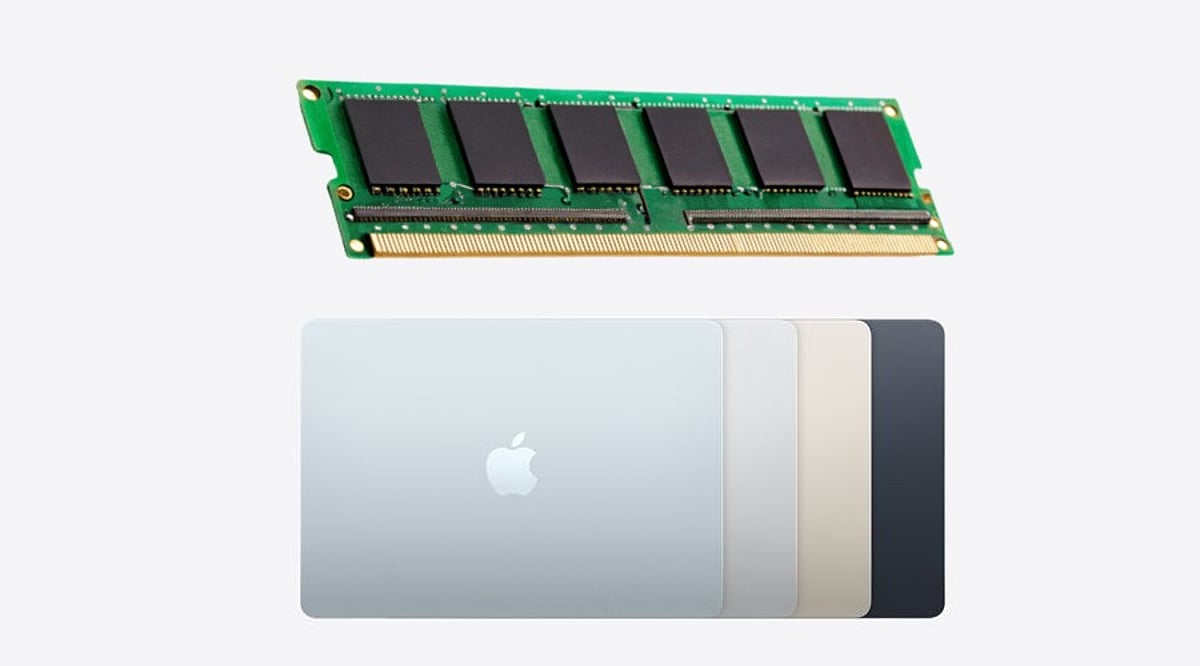
    A new report indicates that Apple is facing supply constraints for its popular MacBook Air due to a global memory chip shortage, which could delay deliveries in several markets.

    According to Bloomberg, the rising demand for memory chips from artificial intelligence companies is straining Apple’s supply chain. Mark Gurman reported that the MacBook Air is now affected, though Apple previously faced similar issues with less popular models like the Mac mini and Mac Studio.

    Customers ordering the MacBook Air through Apple’s official website are now seeing delivery dates pushed into the second half of August. Some configurations may require even longer waiting periods. While Apple has not officially confirmed the shortage, the report notes that the company is directing customers toward the MacBook Pro on its website and in retail stores. Some users have also encountered a disclaimer stating, “MacBook Air subject to availability.”

    Could the Shortage Benefit Windows Laptop Makers?

    Limited availability of MacBook Air models could create an opportunity for Windows laptop brands such as Dell, HP, Lenovo, and Asus, which already offer thin and light competitors. If MacBook Air units become harder to buy, some customers may choose those alternatives instead of waiting.

    However, Windows manufacturers may not be entirely safe. If the memory shortage worsens, they could also face production problems. The company that manages its supply chain more effectively may gain an advantage in the coming months.

    A Reminder That Hardware Still Matters

    The reported MacBook Air shortage underscores how a single missing component can disrupt an entire product line. Even the largest tech companies depend on a steady flow of parts. For Apple, keeping the MacBook Air readily available on store shelves will be crucial as competition in the laptop market continues to intensify.

  • Amazon Hits $3 Trillion Market Cap as AI Fuels AWS Revenue Surge

    Amazon Hits $3 Trillion Market Cap as AI Fuels AWS Revenue Surge

    Amazon’s market capitalization crossed the $3 trillion threshold for the first time on August 3, 2026, following a strong second-quarter earnings report that highlighted the company’s accelerating cloud growth driven by artificial intelligence demand.

    The e-commerce and cloud computing giant’s stock gained approximately 5% to reach a record near $285, pushing its 2026 gains above 23%. The rally came after Amazon reported its fastest cloud growth in more than four years, with Amazon Web Services (AWS) revenue surging 37% year-over-year to $42.2 billion—well above the market estimate of $40.5 billion.

    Amazon became the fifth company to achieve a $3 trillion market capitalization, joining Apple, Microsoft, Alphabet, and NVIDIA. NVIDIA still holds the highest market value, near $5 trillion. Amazon first reached a $2 trillion valuation in June 2024, adding another trillion dollars in just over two years as cloud sales, advertising revenue, and retail activity expanded.

    AWS Revenue Beats Forecasts

    AWS generated $42.2 billion in second-quarter revenue, up 37% from the same period last year. The result exceeded market expectations and marked AWS’s strongest growth rate in 18 quarters. Analysts had expected about $40.5 billion, leaving the cloud unit nearly $1.7 billion above the consensus forecast.

    Total Amazon revenue reached approximately $200.6 billion, rising 20% from the previous year and surpassing Wall Street forecasts near $197 billion. The AWS contract backlog increased to $496 billion from $364 billion in the previous quarter, signaling strong future demand.

    Artificial intelligence workloads drove more demand for computing power, storage, and chips. Amazon said its AI and chip businesses each passed annual revenue run rates of $25 billion. AWS has also expanded agreements with OpenAI, Anthropic, Meta, and other corporate customers.

    Outside cloud services, Amazon reported strong growth. Advertising revenue increased 26% to $19.8 billion. The retail business also benefited from Prime Day sales and faster delivery services across more locations.

    Amazon Raises 2026 Spending Plan

    Amazon raised its 2026 capital expenditure forecast to $220 billion from $200 billion. Chief Executive Andy Jassy linked the increase partly to higher memory prices and continued investment in data centers, chips, and AI systems.

    “We will still not have enough capacity to meet all the demand we have in 2026,” Jassy said, adding that demand already booked for 2028 was ‘striking,’ pointing to long-term customer commitments.

    However, the higher spending affected cash flow. Amazon reported negative free cash flow of $7.6 billion, compared with positive free cash flow of $18.2 billion one year earlier. The company spent $54.2 billion on property and equipment during the quarter.

    Amazon’s results arrived during a broad review of technology spending. Microsoft also reported strong Azure growth, while Google Cloud posted faster sales growth. Investors focused on whether rising cloud revenue could keep pace with spending on servers, chips, and data centers.

    Amazon’s $3 trillion valuation placed the company among a small group of technology firms that have reached the level. Its latest market value followed stronger AWS growth, higher company revenue, and a larger infrastructure budget for 2026.

  • Samsung Electronics Shares Slide as Tariff Concerns and Stablecoin Plans Emerge

    Samsung Electronics Shares Slide as Tariff Concerns and Stablecoin Plans Emerge

    Samsung Electronics stock fell sharply on Friday as investors weighed fresh tariff risks and the company’s announcement of native stablecoin support for Samsung Wallet. Shares dropped 7.6% to ₩249,500, joining a broader sell-off of South Korean chipmakers amid escalating trade tensions.

    Stablecoin Integration for Samsung Wallet

    During Galaxy Unpacked 2026 on July 22, Samsung announced plans to integrate stablecoin functionality into its Samsung Wallet, allowing Galaxy users to send, receive, and hold stablecoins directly within the app. The update will expand the wallet beyond payment cards, digital IDs, rewards, cash, and savings. A USDC interface was shown during the event, though Samsung did not confirm that USDC will launch with the service. Product manager Lee Dinham stated the goal to unify payments, rewards, and digital assets in one application, secured by Samsung Knox device encryption. This follows Samsung’s October 2025 partnership with Coinbase, which gave over 75 million US Galaxy users crypto access through Samsung Wallet and a three-month Coinbase One subscription.

    Tariff Pressures Weigh on Samsung Stock

    New US tariffs on imports from more than 60 economies have heightened concerns over global supply chains. Samsung, which sells consumer electronics, memory chips, displays, and other components across markets including the Americas, China, and Europe, faces direct exposure to customs costs, compliance rules, and potential trade retaliation. Higher duties could impact device pricing and component margins. The company is investing heavily in memory capacity and AI-related chips, but also faces legal disputes involving memory products and board-level changes, adding uncertainty for investors.

    Citi Maintains Buy Rating on Memory Demand

    Citi Research retained Buy ratings on Samsung Electronics and SK Hynix, calling the sell-off “unfounded fears” of a memory-cycle downturn. The bank noted that memory inventory remains “materially low” at suppliers and customers, and rising demand could keep supply below orders. Citi expects AI infrastructure to drive the next phase of memory demand, citing NVIDIA’s Vera Rubin platform as a potential driver for Samsung’s NAND and advanced DRAM businesses. The report also pointed to growing use of context memory extension systems and high-capacity SSDs near graphics processors.

    Samsung’s stablecoin plan adds a new service to its mobile ecosystem, but launch details remain unclear. Meanwhile, tariff risks and supply-chain costs persist. Citi’s positive rating reflects tight memory supply and expanding AI server demand.

  • Fractal Analytics Q1 FY27 Profit Soars 92% on Surging Enterprise AI Demand

    Fractal Analytics Q1 FY27 Profit Soars 92% on Surging Enterprise AI Demand

    Fractal Analytics reported a sharp rise in earnings for the first quarter of FY27, as growing demand for enterprise AI solutions boosted revenue and profitability. The company posted a consolidated net profit of Rs. 74.2 crore for the April-June quarter, up 92% year-on-year.

    Revenue from operations rose 20% to Rs. 912.5 crore, compared with Rs. 760.5 crore in the same quarter last year. Including Rs. 19.6 crore in other income, total income for the quarter stood at Rs. 932.1 crore.

    Margins Expand

    Fractal’s operating performance also improved during the quarter. EBITDA increased to Rs. 143 crore from Rs. 100 crore a year ago, while the EBITDA margin expanded to 15.66% from 13.50%.

    Total expenses rose to Rs. 755.6 crore, compared with Rs. 699.6 crore in the year-ago period, as the company continued to invest in growth. Revenue, however, grew faster than costs, resulting in higher margins and stronger earnings.

    Cash flow from operations increased 20% year-on-year to Rs. 103 crore. The company remained debt-free, with zero long-term debt on its books.

    Healthcare, BFSI Drive Growth

    Healthcare and financial services were the biggest contributors to growth during the quarter. The Healthcare and Life Sciences (HLS) business recorded 69% year-on-year revenue growth, making it Fractal’s second-largest industry vertical.

    The Banking, Financial Services and Insurance (BFSI) segment grew 36%, while the Consumer Packaged Goods and Retail (CPGR) business, the company’s largest vertical, reported 19% growth. The Technology, Media and Telecommunications (TMT) segment remained the only weak spot, with revenue declining 22% from a year earlier.

    Fractal highlighted that excluding the TMT business, the rest of its operations grew 35% year-on-year, reflecting broad-based demand across its enterprise AI portfolio. The quarterly performance comes as companies continue to increase spending on AI-led automation, analytics and data-driven decision-making.

  • Why Nvidia’s Forward P/E Is Falling Despite Its Rising Stock Price

    Why Nvidia’s Forward P/E Is Falling Despite Its Rising Stock Price

    Nvidia shares have climbed in 2026, yet the company’s forward price-to-earnings (P/E) ratio has dropped. This seemingly contradictory trend signals that analysts expect earnings to grow faster than the stock price, potentially leaving room for further gains.

    The stock closed the latest session at $210.96, with a forward P/E hovering near 22 to 23—well below its previous reading near 40. The decline in the valuation multiple reflects surging profit forecasts driven by robust AI demand and strategic investments.

    Earnings Growth Drives Down Forward P/E

    A forward P/E ratio divides a company’s share price by its expected earnings per share over the next year. The ratio can fall even as the stock rises when earnings estimates increase at a faster rate. Nvidia’s fiscal 2027 first-quarter revenue reached $81.6 billion, up 85% year-over-year, while GAAP net income soared 211% to $58.32 billion. Diluted earnings per share jumped 214% to $2.39, pushing future earnings estimates higher and compressing the valuation multiple.

    For the fiscal second quarter, Nvidia expects revenue of $91 billion (plus or minus 2%), indicating over 11% sequential growth. The company also projects gross margins near 75%, demonstrating that higher sales have not required a sharp decline in profitability.

    AI Demand Broadens Nvidia’s Growth Base

    Morgan Stanley maintains an Overweight rating on Nvidia with a $288 price target, calling the stock its “top semiconductor pick.” Analysts note that future growth may come from a wider customer base beyond the largest cloud companies, including AI laboratories, enterprise buyers, specialist cloud providers, industrial users, and national AI projects. Nvidia has also expanded beyond graphics processors into networking equipment and central processing units, adding more revenue opportunities inside large data centers.

    However, risks remain. Export restrictions could limit sales in China, and custom chips from major technology companies intensify competition. Nvidia has excluded China data-center computing revenue from its latest quarterly forecast, indicating that trade controls remain a factor in its planning.

    Supplier Investment Bolsters U.S. Expansion

    King Yuan Electronics, a Taiwan-based Nvidia supplier, plans to invest up to $1.4 billion in a U.S. chip-testing facility. The company said the project would expand its operations and strengthen its position in the semiconductor supply chain. Although specific location, construction schedule, and customers were not disclosed, the move follows broader investment by Taiwanese chip and electronics companies in the United States as demand for AI servers and advanced processors grows.

    Nvidia’s next quarterly report will provide a key measure of whether profit growth can continue outpacing the stock price. Revenue guidance, margins, and demand outside traditional cloud customers will shape the company’s forward P/E and its trajectory in the months ahead.

  • Micron Locks in $22 Billion AI Chip Deals with NVIDIA to Break Memory Market Cycles

    Micron Locks in $22 Billion AI Chip Deals with NVIDIA to Break Memory Market Cycles

    Memory chipmakers are rewriting their playbook. Long treated as interchangeable commodities, memory chips forced suppliers into brutal boom-bust cycles. Now, with AI demand surging, Micron Technology has secured $22 billion in multi-year commitments from customers like NVIDIA — a move designed to stabilize cash flow and shield production from market volatility.

    The agreements follow similar long-term deals by rivals SK Hynix and Samsung. Under these “take-or-pay” contracts, clients must either purchase chips or pay up anyway. Micron’s Chief Business Officer Sumit Sadana told Reuters that billions of dollars have been placed on Micron’s balance sheet as a show of confidence in the new business model.

    While the deals provide visibility and validate the AI demand narrative, analysts warn that the strategy remains a gamble. Memory stocks stay vulnerable to sudden downturns, and any cooling of AI demand could send buyers back to the negotiating table. Micron itself posted a $5.3 billion loss in 2023 when consumer electronics spending collapsed.

    Investors are watching whether Micron’s pricing power can last. The company argues that these long-term contracts push financial risk further into the future and turn chipmakers into strategic partners rather than commodity suppliers. New factory expansions will now require collaborative customer funding, keeping supplies tight until at least 2027.