

Tag: AI Engineering

  • AI Learning Roadmap: From Beginner to Advanced Skills in Four Stages

    AI Learning Roadmap: From Beginner to Advanced Skills in Four Stages

    An AI learning roadmap is a staged path that moves learners from basic literacy to advanced specialization. Rather than a random collection of courses, it provides a sequence where each level builds on the previous one. With AI skills increasingly demanded in entry-level roles, following the right progression is more important than simply accumulating knowledge.

    The Four Stages of an AI Learning Roadmap

    Stage 1: Building AI Literacy (Weeks 1–4)

    This foundation stage covers what large language models do, why they hallucinate, the difference between a model and an application built on it, and basic data and AI ethics. Employers value the ability to choose the right AI tool and verify its output over deep technical expertise. Free resources like Google’s AI Essentials, Anthropic’s documentation, and Andrew Ng’s introductory courses are excellent starting points. The goal is to be able to explain in plain terms what a model does and where its output needs a second check.

    Stage 2: Applying AI in Real Workflows (Months 2–4)

    Once the basics are set, hands-on use begins. Prompt engineering is part of this stage, but the real skill is workflow design: breaking tasks into steps, providing the right context, checking output, and automating repetitive parts. Building a pipeline that pulls data, summarizes it with AI, and flags anomalies for review is a practical achievement. A few finished workflows carry more weight than a certificate.

    Stage 3: Moving Into AI Engineering (Months 4–10)

    This is where technical depth starts. Python and SQL come first, then statistics, classical machine learning, neural networks, embeddings, and finally retrieval-augmented generation (RAG) and LLM-based applications. Each step supports the next. Learners should become comfortable with a major deep-learning framework like PyTorch or TensorFlow. Fast.ai’s practical deep learning course, DeepLearning.AI specializations, and Kaggle competitions provide strong open resources and a public portfolio.

    Stage 4: Choosing an Area of Specialization (Year 1 and Beyond)

    The field is too wide for anyone to cover all of it. This stage focuses on picking a problem to master, such as MLOps, AI security, multimodal systems, or agentic AI. Stanford’s 2026 Index shows agentic AI mentions in U.S. job postings grew over 280% in one year. Specialization turns general fluency into a defensible skill set. Advanced ability is measured by the complexity of problems solved, not the number of frameworks known.

    Why Sequence Matters

    The biggest risk in learning AI is not falling behind but learning the wrong things in the wrong order. Skipping stages explains why some self-taught learners can describe transformers but cannot ship a working chatbot. A roadmap ensures that each level builds a foundation for the next, turning scattered knowledge into practical, demonstrable skills.

    Final Thought

    The roadmap itself will shift as AI capabilities evolve—agentic AI barely existed as a hiring category two years ago. What stays fixed is the order: literacy, application, engineering, specialization. Learners who follow that sequence build something they can point to and explain, not just a list of finished courses.
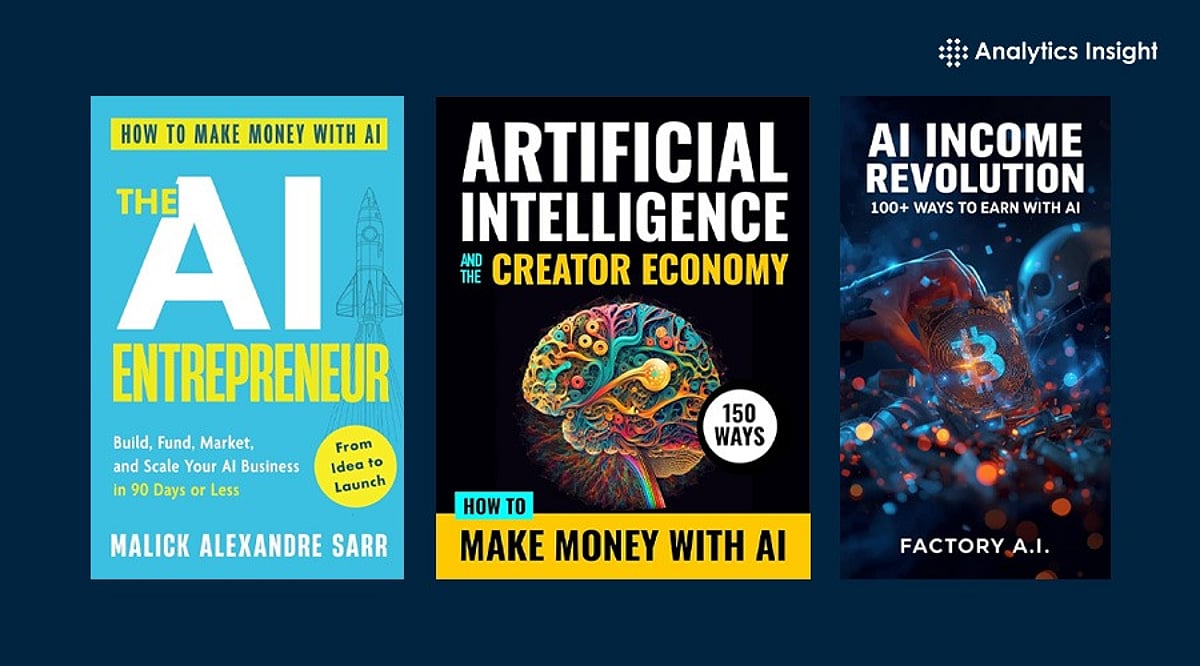
  • Top 10 AI Books to Boost Your Income in 2026: Expert Recommendations

    Top 10 AI Books to Boost Your Income in 2026: Expert Recommendations

    The world of artificial intelligence has expanded far beyond technologists and large corporations. Today, freelancers, entrepreneurs, marketers, and content creators are leveraging AI to work faster, save time, and increase their earnings. However, simply using AI tools isn’t enough—understanding how they work and how to apply them effectively is crucial.

    Reading well-chosen books remains one of the best ways to build that understanding. Whether you’re a beginner or an experienced professional, the right AI books can sharpen your skills and open new career opportunities. Here are 10 essential AI books that can help you make money in 2026.

    1. Zero to One-Person AI Agency – Abhishek Ashtekar

    This book is ideal for anyone looking to start an AI-powered business. It explains how a single individual can launch and run an AI agency without hiring employees. You’ll learn how to offer AI services, acquire clients, automate workflows, and scale operations. The focus is on practical, actionable advice for turning AI into income.

    Buy Now

    2. The AI Advantage – Thomas H. Davenport

    Davenport explores how organizations are using AI to boost efficiency, cut costs, and make smarter decisions. This book helps professionals and business owners identify where AI can create new opportunities and generate revenue.

    Buy Now

    3. Prediction Machines – Ajay Agrawal, Joshua Gans, Avi Goldfarb

    Written by economics and technology experts, this book explains that AI’s core value lies in its ability to make predictions. It shows how businesses can forecast consumer behavior, market trends, and outcomes—enabling entrepreneurs to discover profitable ventures.

    Buy Now

    4. Architects of Intelligence – Martin Ford

    A collection of interviews with leading AI researchers, this book offers insights into current advances and future developments. While not directly about making money, it helps readers anticipate AI trends that can inform career and investment decisions.

    Buy Now

    5. Machine Learning Yearning – Andrew Ng

    Ng focuses on the practical aspects of building machine learning projects, covering how to plan, refine, and manage AI initiatives. Entrepreneurs and developers will find principles here that help create commercially valuable AI solutions.

    Download Book

    6. Deep Learning – Ian Goodfellow, Yoshua Bengio, Aaron Courville

    This is a comprehensive technical guide to the technology behind modern AI tools. Though advanced, it provides a solid foundation for understanding AI, which can lead to better career opportunities and higher earning potential.

    Buy Now

    7. Superintelligence – Nick Bostrom

    Bostrom examines what might happen when AI surpasses human intelligence. The book discusses risks and benefits, encouraging readers to think about long-term AI trends that could shape business and investment strategies.

    Buy Now

    8. Life 3.0 – Max Tegmark

    Physicist Max Tegmark explores how AI could transform society and the economy. The book presents various future scenarios, helping readers understand upcoming industry changes and identify new job trends and opportunities.

    Buy Now

    9. Human Compatible – Stuart Russell

    As AI becomes more powerful, safety and ethics are critical. This book covers AI safety and its importance, a topic increasingly relevant for companies and governments. Knowledge in this area can lead to careers in AI consultancy and governance.

    Buy Now

    10. You Look Like a Thing, and I Love You – Janelle Shane

    For those who prefer a lighter read, this book explains AI in a fun, accessible way. It covers basic machine learning concepts without technical jargon, making it perfect for beginners.

    Buy Now

    Why Reading AI Books Matters

    The AI industry is growing rapidly, and while videos and online tutorials are helpful, books often provide a deeper, more structured understanding. Reading AI books helps you acquire new skills, stay current with industry trends, and discover innovative ways to leverage AI for profit.

    Final Thoughts

    AI is creating opportunities across nearly every sector. Those who understand AI are better positioned to seize these opportunities. The books listed above offer practical business advice, technical knowledge, and insights into AI’s future. For immediate action, start with Zero to One-Person AI Agency, The AI Advantage, and Prediction Machines. For deeper technical skills, Machine Learning Yearning and Deep Learning are excellent choices. These books will equip you with the skills needed to thrive in the coming years.

    Frequently Asked Questions

    1. Which AI engineering book is best for beginners?

    Beginners can start with Hands-On Large Language Models or AI Engineering: Building Applications with Foundation Models. They explain key concepts and provide hands-on guidance.

    2. Do I need coding experience to read AI engineering books?

    Some books require basic programming knowledge, while others focus on concepts. Familiarity with Python can help you follow examples and implement projects.

    3. Which books are best for learning large language models (LLMs)?

    Hands-On Large Language Models and Build a Large Language Model (From Scratch) are excellent choices, covering how LLMs work, training, and deployment.

    4. Can AI engineering books help me get a job in AI?

    Yes, they build valuable skills in machine learning, deployment, prompt engineering, and AI systems—skills highly sought by employers.

    5. What topics should AI engineers focus on?

    Focus on large language models, prompt engineering, retrieval-augmented generation (RAG), AI agents, MLOps, and deployment—these areas drive the latest AI developments.

  • Quest Global Named Leader in All Digital Engineering Categories in ISG Provider Lens 2026 Study for US Market

    Quest Global Named Leader in All Digital Engineering Categories in ISG Provider Lens 2026 Study for US Market

    Quest Global, the largest independent pure-play engineering services company, has been recognized as a Leader in every category of the ISG Provider Lens® Digital Engineering Services Midsize Providers 2026 Study for the U.S. market. The categories include Augmented Design and R&D Services, Intelligent Operations and Connected Experiences, and Integrated Platform and Application Services. This acknowledgment underscores the company’s ability to help enterprises accelerate innovation and tackle increasingly complex technology and business challenges.

    The ISG Provider Lens® research series is one of the most widely referenced analyst assessments used by enterprises to evaluate technology and engineering service providers. Companies named as Leaders are recognized for their comprehensive capabilities, strong market presence, competitive positioning, and ability to guide customers through evolving business and technology requirements.

    Shirish Kulkarni, Senior Lead Analyst at ISG, commented on Quest Global’s positioning: “Quest Global is leveraging its core strength in deep ER&D and systems engineering capabilities, which continue to resonate with global OEMs seeking outcome-led innovation. By sharpening its digital software and managed services capabilities around this engineering foundation, Quest Global is well positioned to support customers as they navigate increasingly complex transformation journeys.”

    The company’s leadership positions reflect its ability to help organizations bridge the growing convergence of engineering, software, data, and artificial intelligence. The assessment highlights strengths in engineering-led innovation, supported by expertise in AI-driven engineering, Model-Based Systems Engineering (MBSE), digital twins, and virtual validation frameworks. With capabilities spanning silicon-to-system engineering and high-fidelity virtual prototyping, Quest Global helps customers shorten development cycles, improve operational performance, and build scalable digital ecosystems.

    Rob Vatter, Executive President of Quest Global, said: “Engineering is no longer just a function of execution; it is increasingly the force that shapes innovation, resilience, and competitive advantage across industries. We believe this recognition reflects Quest Global’s ability to help customers navigate complex engineering challenges while advancing digital adoption, intelligent operations, and the development of next-generation products. As companies invest more deeply in AI, connectivity, and platform-led transformation, the real differentiator will be how effectively these technologies are engineered into scalable, meaningful business outcomes. That remains our focus.”

    According to the study, Quest Global’s differentiated position is driven by its deep engineering heritage, domain expertise, and ability to deliver integrated engineering solutions across the product lifecycle. The report highlights capabilities in AI-augmented engineering, intelligent operations, connected experiences, and integrated platform engineering, helping enterprises transform ideas into market-ready products and scalable digital solutions.

    To access and download the full report, click here.

    About Quest Global

    Quest Global is the largest independent pure-play engineering services company, operating in over 20 countries with more than 104 global delivery centers and 23,000+ employees. For over 25 years, the company has solved complex engineering problems across industries including Aerospace & Defence, Automotive, Energy, Hi-Tech, MedTech & Healthcare, Rail, and Semiconductor. They combine technology, industry expertise, and diverse talents to tackle critical challenges faster and more effectively.