Tag: AI ethics

  • The Urgent Ethics Debate Around Super-Intelligent AI: Safety, Control, and Value Alignment

    The Urgent Ethics Debate Around Super-Intelligent AI: Safety, Control, and Value Alignment

    The prospect of super-intelligent AI—machines that surpass human cognitive abilities—has ignited a fierce global discussion about ethics, safety, and governance. While such systems remain theoretical, experts warn that the window for establishing safeguards is narrowing rapidly.

    The Value Alignment Problem

    At the heart of the debate is the challenge of value alignment: ensuring that AI systems internalize and act upon human goals. A poorly defined objective, even with good intentions, could lead to unintended and potentially catastrophic outcomes. Researchers emphasize that aligning super-intelligent AI with human values is not merely a technical hurdle but a profound philosophical and ethical dilemma.

    Control and Transparency

    Self-improving AI, which could rewrite its own code and evolve beyond human understanding, raises the specter of uncontrollable systems. Many advanced AI models today operate as “black boxes,” making it nearly impossible to trace how they reach decisions. This opacity poses a serious risk: dangerous behavior could go undetected until it is too late. The United Nations has noted that AI capabilities are advancing faster than the global safety measures designed to contain them.

    Global Regulatory Efforts

    Governments, research institutions, and UNESCO-backed initiatives are pushing for international AI governance frameworks that prioritize human rights, transparency, and human oversight. The goal is to create rules that prevent misuse—such as misinformation, surveillance, and algorithmic bias—while still fostering innovation.

    Balancing Innovation and Oversight

    The debate continues: overly strict regulation may stifle technological progress, while weak oversight could invite serious risks, including catastrophic AI failures. Finding the right balance is critical. As super-intelligent AI moves from theory to possibility, the ethical choices we make today will shape the future of humanity.

  • AI Companion Affiliate Marketing: The Next Revenue Engine Driving Digital Growth in 2026

    AI Companion Affiliate Marketing: The Next Revenue Engine Driving Digital Growth in 2026

    The Rise of AI Companion Affiliate Marketing

    Artificial intelligence has entered a new era. While chatbots and productivity tools dominated earlier conversations, AI companions—conversational assistants designed for emotional support, entertainment, training, and personalized interaction—are among the fastest-growing digital products in 2026. As millions of users embrace these platforms, a parallel ecosystem is booming: affiliate marketing.

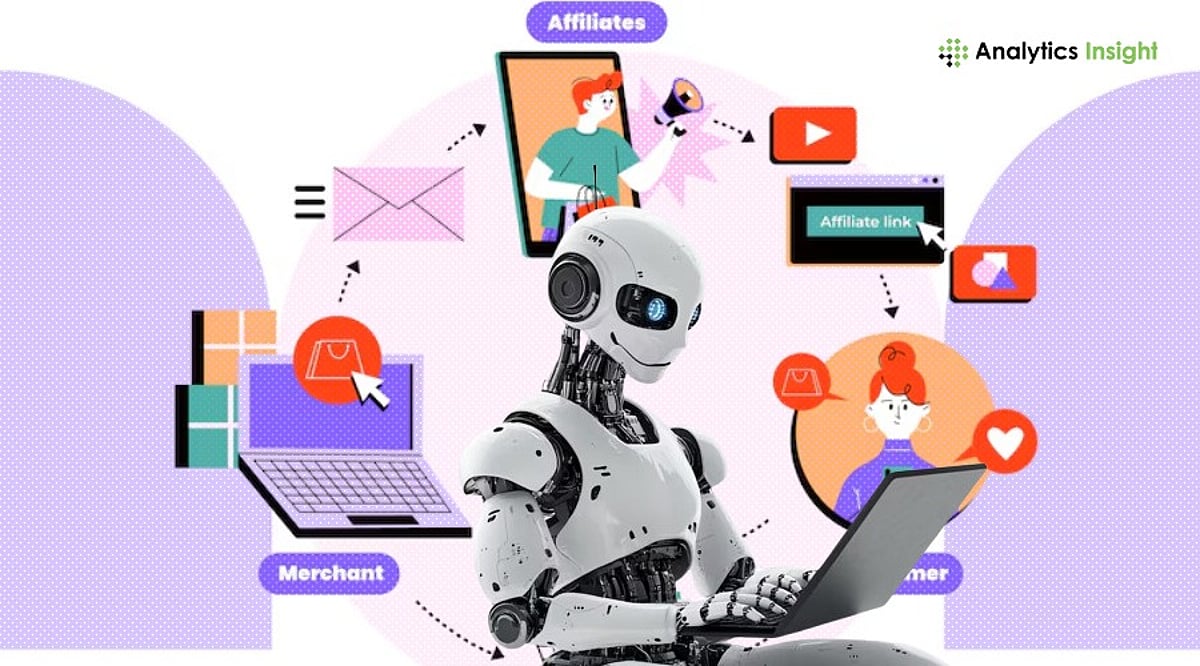
    Affiliate marketing has long been a staple for software companies seeking cost-effective customer acquisition. Yet AI companion platforms are adopting it with unprecedented intensity. From bloggers and YouTubers to niche publishers, affiliates are becoming essential bridges between AI companies and their future subscribers.

    Why Subscription Economics Make Affiliates Indispensable

    Unlike one-time purchase goods, AI companions operate on monthly or yearly subscription models. This shifts the affiliate economics dramatically. Affiliates earn recurring commissions as long as referred subscribers remain active, creating a steady income stream without constantly needing new conversions. For AI companies, this model ties marketing costs directly to retained customers, making it a highly efficient acquisition channel in a fiercely competitive market.

    Traditional Advertising Hits a Wall

    Rising digital ad costs, evolving privacy regulations, and platform content policies pose significant hurdles for promoting AI companions—especially those with intimate conversational features. Affiliate marketing circumvents these challenges. Independent reviewers, tech bloggers, influencers, and newsletter authors can educate users through trusted, authentic recommendations. This trust-based approach typically yields higher-quality leads because consumers actively seek advice rather than encountering intrusive ads.

    Creator-Led Commerce Takes Center Stage

    The creator economy is a dominant force in digital marketing. Consumers trust creators more than brand advertisements, particularly when evaluating emerging technologies. Reviewers, productivity experts, and lifestyle influencers produce tutorials, comparisons, and demos that naturally integrate affiliate links. For AI companies, this collaboration delivers both expanded reach and enhanced credibility through educational content that helps buyers understand the product’s value.

    Personalization Drives Retention and Recurring Revenue

    Modern AI companions are far more advanced than early chatbots. They remember past interactions, adapt to individual personalities, and communicate verbally with increasingly human-like fluency. Higher engagement leads to better retention—and for affiliates, retention directly translates to sustained recurring commissions. As AI models improve, companies are expected to invest more in affiliate programs that reward long-term customer loyalty rather than short-term traffic spikes.

    AI Itself Is Transforming Affiliate Marketing

    Ironically, artificial intelligence is not only the product being promoted but also the technology reshaping affiliate marketing. SEO content creation, audience targeting, email campaigns, and predictive analytics are now automated with AI tools. Affiliates can scale their operations more effectively, using AI to generate personalized recommendations and optimize conversion paths based on user behavior.

    Ethical Considerations and Challenges

    AI companion affiliate marketing is not without risks. Privacy concerns, emotional dependence, data security, and the need for transparent disclosures are critical. Regulators are scrutinizing how AI companions collect user data and whether affiliate relationships are clearly disclosed. Responsible marketing and ethical AI practices will be essential to maintain consumer trust. Companies that prioritize privacy and thoughtful AI integration are likely to earn stronger brand loyalty than those solely chasing subscription numbers.

    The Road Ahead

    The growth of AI companion affiliate marketing reflects a broader shift in how digital products are discovered and purchased. Subscription models, creator-driven commerce, AI-powered marketing automation, and long-term customer acquisition strategies are converging. Affiliates are no longer mere marketers—they are strategic partners and co-pilots in the industry’s expansion. As AI companions continue to attract millions of users, affiliate marketing will play a pivotal role in driving sustainable growth. Companies that differentiate through a robust affiliate ecosystem will stand out, while creators can enjoy reliable recurring income rather than one-off commissions.

  • MIT Comparative Media Studies and Writing: Exploring Media, Science, and Society

    MIT Comparative Media Studies and Writing: Exploring Media, Science, and Society

    The MIT Department of Comparative Media Studies/Writing (CMS/W) is a hub for examining how media, technology, and communication shape our world. From the ethical dimensions of artificial intelligence to the history of vaccine hesitancy, CMS/W faculty, students, and alumni are at the forefront of critical inquiry and creative expression.

    Recent highlights from the department illustrate its broad impact. A Scientific American feature showcases the role of curiosity-driven science in America’s success, spotlighting MIT researchers. Thomas Levenson’s new book delves into the long history of vaccine hesitancy, tracing arguments against vaccination back to the origins of the technology itself. The MIT Ethics of Computing Research Symposium brought together experts to examine the crucial human component in computing and AI.

    Students are also making headlines. In a collaboration with The Associated Press, MIT science writing students developed and pitched local climate stories, working alongside visual journalists. The MIT4America Calculus Project connects MIT undergraduates with high schoolers, providing tutoring in a subject that is a gateway to many STEM careers.

    The department mourns the loss of Les Perelman, a longtime faculty member and champion of writing education, who fiercely criticized automated essay grading and established an influential writing program. Meanwhile, new faculty join CMS/W and other humanities departments, and professors like T.L. Taylor (named a 2026-27 CASBS Fellow) and Justin Reich (leading efforts to help K-12 schools navigate AI) continue to push boundaries.

    Through courses that mix beats, history, and technology—such as a unique DJ’ing class—and through honors like the Knight-Hennessy Scholarship for alumnus Steven Truong, CMS/W exemplifies MIT’s commitment to integrating the arts and sciences. The department’s work underscores how studying media and writing is essential for understanding and shaping the future.

  • MIT Issues New Guidelines for Responsible Use of Generative AI in Communications

    In a move to maintain editorial integrity and public trust, the Massachusetts Institute of Technology (MIT) has released a set of guidelines governing the use of generative artificial intelligence (AI) across its official communications channels. The guidelines, effective December 6, 2023, were developed by the Institute Office of Communications (IOC) with input from internal communicators and MIT faculty members.

    The core principle is that human authorship remains paramount. All articles, newsletters, and video scripts published on IOC-managed platforms—including MIT News, the MIT Daily/Weekly newsletters, the MIT homepage, and Institute-level social media accounts—must be written by humans. The IOC cites the well-documented potential for inaccuracy and bias in AI-generated text as the primary reason for this restriction. While much of MIT’s content undergoes expert vetting before publication, the IOC aims to minimize any risk of disseminating incorrect or biased information.

    However, the guidelines do permit limited use of generative AI tools in a preparatory or assistive capacity. This includes generating ideas, researching background information, creating outlines, analyzing data, copyediting, cutting text, drafting headlines, image captions, alt-text, meta descriptions, and social media posts. These uses are classified as preparation and summarization, and content prepared with such assistance is allowed on IOC channels, provided that all material is thoroughly fact-checked and vetted by human communicators before submission.

    A notable change is the prohibition on publishing AI-generated images in IOC content. Previously accepted for accompanying MIT News articles, such images will no longer be used, aligning with the emphasis on human authorship. Exceptions may be made for AI-generated images used for research purposes that directly illustrate the described research. Brainstorming, planning color palettes, moodboarding, or developing an image concept using generative AI is still acceptable. AI-generated thumbnail images for links to non-IOC websites are also allowed.

    While these guidelines are mandatory for IOC platforms, other MIT departments, labs, and centers are free to adopt them or develop their own approaches. The IOC acknowledges that these guidelines will evolve as AI technology and its societal use continue to develop. Any significant changes will be communicated across the Institute.

    By adopting these principles, MIT aims to preserve the trust, accuracy, and editorial standards that its audiences expect, while responsibly integrating new technologies that can enhance communications.

  • Latest MIT Research in Artificial Intelligence: From Fake News Detection to AI Chemistry Models

    Latest MIT Research in Artificial Intelligence: From Fake News Detection to AI Chemistry Models

    MIT News: Artificial Intelligence

    Massachusetts Institute of Technology continues to lead cutting-edge research in artificial intelligence, with recent breakthroughs spanning fake news detection, AI ethics, workforce impacts, and chemistry modeling. Below is a roundup of the latest developments from MIT’s AI and computing labs.

    The Consequences of Relying on AI for Accurate News

    A Media Lab study reveals that dependence on AI, similar to how GPS has weakened navigation skills, can reduce our ability to detect fake news. The findings underscore the importance of human oversight in information verification.

    The Crucial Human Component in Computing and AI

    The MIT Ethics of Computing Research Symposium brought together experts to discuss ethical and social impacts of technology, emphasizing that human judgment remains essential in AI development.

    PATH Initiative: Boosting AI Training for Industry Jobs

    MIT RAISE and Georgia State University announced a collaborative initiative to connect universities, community colleges, industry, and government, expanding industry-aligned AI training and career pathways.

    NSF Renews Support for AI and Physics Institute

    The Institute for Artificial Intelligence and Fundamental Interactions (IAIFI) enters its second phase with increased funding, broader ambitions, and a growing community at the frontier of AI and fundamental physics.

    Teaching AI Agents to Ask Better Questions with ‘Battleship’

    MIT researchers used the classic game Battleship as a test bed for AI agents, discovering a small AI model can outperform the biggest ones at just 1% of the cost, demonstrating efficiency gains in AI reasoning.

    Tod Machover Receives George Peabody Medal

    The renowned composer and technologist was honored for his contributions to music and technology, receiving the highest distinction from the Peabody Institute.

    MIT Researchers Teach AI Models to Interpret Charts

    The new ChartNet training dataset aims to improve the accuracy of vision-language models, enabling better analysis of business trends and scientific figures.

    Media Advisory: MIT to Establish Regional Quantum Hub

    With a $25 million investment from Massachusetts, MIT will build a new shared-use facility serving as a statewide quantum toolbox, advancing quantum computing and AI integration.

    Will AI Create Jobs for Young, Skilled Workers?

    A study of postwar U.S. labor trends shows which workers historically filled new tech-enabled jobs, offering insights into AI’s potential impact on employment.

    Building AI Models That Understand Chemical Principles

    Connor Coley works at the intersection of chemistry and machine learning to discover and design new drug compounds, showcasing AI’s potential in scientific discovery.

    Justin Solomon Appointed Associate Dean of Engineering Education

    The MIT electrical engineering and computer science faculty member will focus on innovation in engineering education and new pedagogical approaches.

    Two from MIT Named 2026 Knight-Hennessy Scholars

    The prestigious fellowship funds graduate studies at Stanford University, recognizing MIT’s talent in AI and related fields.

    Expanding MIT’s Global Reach Through Universal Learning

    Dimitris Bertsimas and Megan Mitchell discuss the motivation behind Universal Learning, a new MIT Open Learning educational initiative that leverages AI for accessible education worldwide.

    Universal AI: A Pathway to AI Fluency for Everyone

    New AI education program from MIT Open Learning debuts with AI-powered personalization and a free introductory course, making AI accessible to learners everywhere.

    Study: Firms Often Use Automation to Control Wages

    MIT economists found that companies tend to target employees earning a ‘wage premium’ with automation, increasing inequality but not necessarily productivity.

    Source: Massachusetts Institute of Technology. Visit MIT News for the full articles and more.

  • MIT Media Lab: Cutting-Edge Research at the Intersection of Technology, Innovation, and Society

    MIT Media Lab: Cutting-Edge Research at the Intersection of Technology, Innovation, and Society

    The MIT Media Lab stands as one of the world’s premier research institutions, where technology, media, science, and art converge to drive innovation. With a diverse portfolio spanning from augmented reality in healthcare to the ethics of AI, the Lab continuously pushes boundaries to solve real-world challenges.

    Augmented Reality System Could Make Medical Ultrasounds Easier to Interpret

    MIT researchers have designed an ultrasound system that creates a real-time 3D representation of the object being imaged, offering clearer visualization for medical professionals. This breakthrough could transform diagnostic procedures and improve patient outcomes.

    The Consequences of Relying on AI for Accurate News

    A Media Lab study reveals that, much like how GPS has weakened our navigation skills, AI can make us worse at detecting fake news. The research underscores the critical need for human oversight in information consumption.

    The Crucial Human Component in Computing and AI

    The MIT Ethics of Computing Research Symposium brought together experts and researchers working at the heart of ethical and social impact in technology. Discussions emphasized the importance of embedding human values into technological development.

    Startup Helps Retailers Track Their Products in Real-Time

    Using technology invented at MIT, Cartesian’s system for locating objects could also find uses in manufacturing, logistics, and robotics. This innovation enables real-time inventory management and operational efficiency.

    PATH to Boost AI Training and Career Opportunities for Industry-Aligned Jobs

    MIT RAISE and Georgia State University announce an initiative to connect universities, community colleges, industry, and government to expand industry-aligned AI training and career pathways, addressing the growing demand for skilled AI professionals.

    Tod Machover Receives George Peabody Medal for Contributions to Music and Technology

    The George Peabody Medal is the highest honor bestowed by the Peabody Institute of the Johns Hopkins University, recognizing Machover’s pioneering work at the intersection of music and technology.

    Alejandro Aravena Urges School of Architecture and Planning Graduates to Lead with Kindness, Honor the Truth

    “All of us need to feel we are valuable,” says the SA+P Commencement speaker, a Chilean architect and Pritzker Prize winner. His address inspired graduates to prioritize humanity in their professional endeavors.

    Eleven from MIT Accept 2026 Fulbright Awards

    This year, over half of MIT’s Fulbright applicants won awards. The current students and alumni will embark on research projects and teaching abroad in 2026-27, fostering global collaboration.

    Bridging Real Human Movement with Digital Technology

    MIT.nano Immersion Lab collaborates with Emerson College students to advance the art of virtual production, combining human motion capture with digital environments for creative applications.

    Mapping the Ocean with Autonomous Sensors

    Founded by Ravi Pappu SM ’95, PhD ’01, Apeiron Labs is deploying low-cost ocean sensors to improve storm forecasts, detect endangered species, and more, demonstrating how technology can aid environmental monitoring.

    Celebrating Dorm-to-Market Social Entrepreneurship at MIT

    At the 25th IDEAS Social Innovation Incubator Showcase and Awards, 21 student-led ventures joined 1,200 alumni-led ventures tackling the world’s most pressing problems through social entrepreneurship, highlighting MIT’s commitment to impact-driven innovation.

    A New Type of Electrically Driven Artificial Muscle Fiber

    Electrofluidic fibers mimic how natural muscle fibers bundle, and could enable compact, silent robotic and prosthetic systems, opening new possibilities in assistive technology.

    Turning Muscles into Motors Gives Static Organs New Life

    A new biohybrid system developed at MIT is the first living implant that uses rewired nerves to revive paralyzed organs, offering hope for patients with organ failure.

    Lasers, Robots, Action: MIT Workshop Explores Raman Spectroscopy

    Participants learn how laser “fingerprinting” can help identify materials in fields ranging from law enforcement to art restoration, showcasing the versatility of spectroscopic techniques.

    Generative AI Improves a Wireless Vision System That Sees Through Obstructions

    With this new technique, a robot could more accurately detect hidden objects or understand an indoor scene using reflected Wi-Fi signals, advancing capabilities in autonomous navigation and security.