Tag: AI hardware

  • Anthropic Reportedly Discusses Custom AI Chip Development with Samsung

    Anthropic Reportedly Discusses Custom AI Chip Development with Samsung

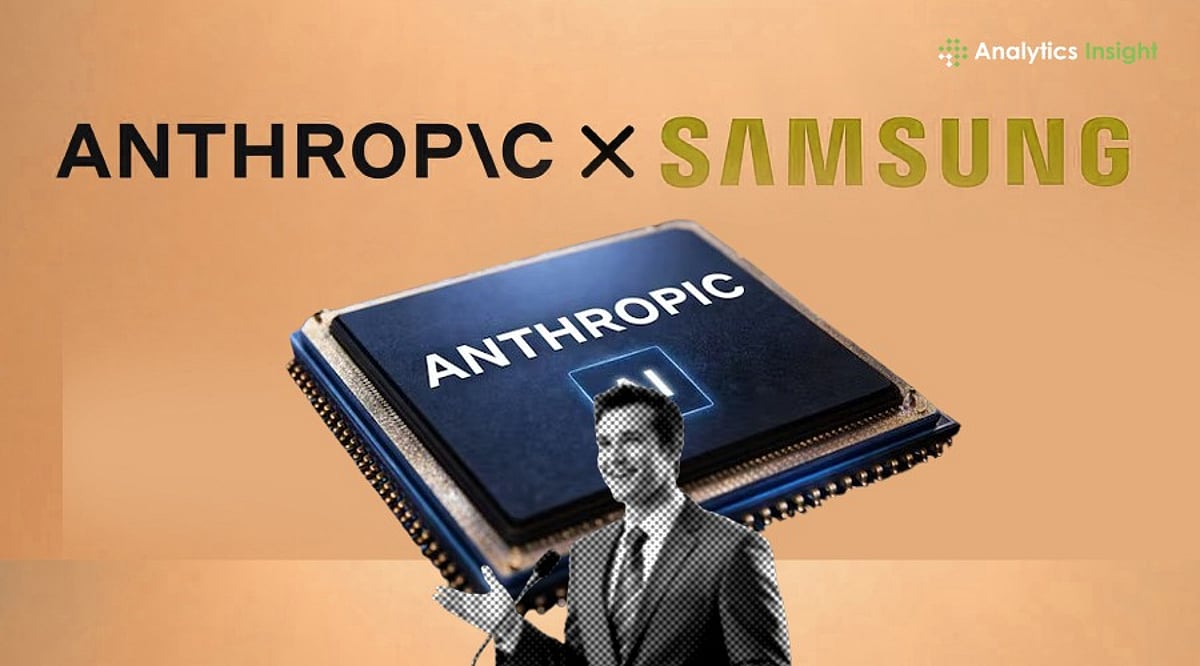
    Anthropic is reportedly exploring the development of a custom AI chip and has held discussions with Samsung over a potential collaboration, according to The Information. The move places the AI startup among a growing number of technology firms seeking greater control over hardware as demand for AI computing surges.

    Earlier reports from Reuters indicated that Anthropic was considering in-house chip design to address concerns about AI hardware availability and supply constraints. However, key details of the proposed processor—including its intended use, integration into server systems, and performance targets—remain unconfirmed.

    According to the report, Anthropic has not finalized the chip’s specifications and declined to comment on the discussions with Samsung. The company reiterated that its current infrastructure strategy continues to rely on chips from Google, Amazon, and NVIDIA, and that there are no further updates on potential collaboration talks with Samsung at this time.

    The reported move reflects a wider trend among AI companies investing in custom silicon to improve efficiency and reduce dependence on dominant chip suppliers—particularly NVIDIA, which leads the market for AI accelerators used in large-scale model training and inference. As demand for AI computing expands across industries, firms are looking for greater control over cost, performance, and supply chains.

    Anthropic’s discussions come shortly after other major technology firms advanced their custom chip efforts. OpenAI recently introduced its first custom inference chip, Jalapeno, developed with Broadcom. Amazon continues to scale its Trainium chips for AI training workloads, and Google is expanding access to its Tensor Processing Units (TPUs) via its cloud infrastructure.

    Samsung already plays a pivotal role in the global semiconductor supply chain, manufacturing advanced chips for companies like NVIDIA and exploring partnerships with others such as Google. The talks between Anthropic and Samsung underscore the increasing convergence of AI software development and semiconductor manufacturing, as firms pursue tighter integration between hardware and AI systems.


  • Elon Musk Dismisses SpaceX AI Smartphone Rumors as ‘Utterly False’

    Elon Musk Dismisses SpaceX AI Smartphone Rumors as ‘Utterly False’

    Elon Musk has publicly denied recent reports claiming that SpaceX is developing an AI-powered smartphone. The rumors, which gained traction after reports of a prototype AI device, have been firmly rejected by the billionaire entrepreneur.

    The speculation began when The Wall Street Journal reported that SpaceX was working on an AI handheld device powered by Qualcomm’s Snapdragon chipset and running a custom operating system with AI capabilities from xAI, Musk’s AI company. The report also suggested that SpaceX had shown an early prototype to investors ahead of its record-breaking IPO. Days earlier, the Financial Times reported that SpaceX COO Gwynne Shotwell had discussed launching a mobile service in the U.S. using the Starlink satellite network, further fueling the rumors.

    In response, Musk took to X (formerly Twitter) on July 1, 2026, posting a simple but definitive statement: “Utterly false.” This is not the first time he has denied such claims. Earlier this year, he refuted a Reuters report, stating that SpaceX is “not developing a phone.” During an event in Pennsylvania last year, Musk made his position clear: “The idea of making a phone makes me want to die. If we have to make a phone, we will, but we will aspire not to make a phone.”

    Despite the denial, the rumors underscore growing industry interest in dedicated AI hardware. OpenAI is also reportedly exploring purpose-built AI devices. Industry analysts believe that if OpenAI pursues such a device, Musk would want to compete. SpaceX and its sister company Tesla have the manufacturing expertise to mass-produce AI hardware, and SpaceX has signaled interest in expanding into wireless services via Starlink Mobile, potentially challenging Verizon and AT&T.

    Musk continues to focus on artificial intelligence, recently predicting that AI could surpass the combined intelligence of all humans within the next four to five years. While a SpaceX smartphone remains off the table, the broader AI hardware race is accelerating, with the potential to reshape how users interact with AI through purpose-built devices.

  • Today’s Top Tech Roundup: OpenAI Hardware, WhatsApp Privacy, Pixel Watch 5 Leaks, Google Engineer Debunks Myths, and Elon Musk on AI Risks

    Today’s Top Tech Roundup: OpenAI Hardware, WhatsApp Privacy, Pixel Watch 5 Leaks, Google Engineer Debunks Myths, and Elon Musk on AI Risks

    Top Tech News Today: OpenAI AI Device, WhatsApp Privacy Upgrade, Pixel Watch 5, Google Engineer Reveals Truth & Elon Musk on AI

    In a packed day of tech developments, OpenAI has teased its first dedicated AI hardware device, signaling a major push into consumer electronics. WhatsApp is rolling out a username-based privacy feature that lets users communicate without sharing phone numbers. Leaked details of the Pixel Watch 5 suggest it will include Satellite SOS functionality, a first for Google’s wearable line. A Google engineer has publicly debunked several viral tech myths, clarifying common misconceptions about AI and search algorithms. Meanwhile, Elon Musk has echoed Tim Cook’s recent warnings about the existential risks of advanced AI, adding his voice to a growing chorus of industry leaders calling for robust regulation.

    These stories highlight the accelerating pace of innovation and the critical conversations shaping the future of technology.

  • OpenAI Set to Launch Dedicated Codex Hardware on July 15 for AI-Assisted Coding

    OpenAI Set to Launch Dedicated Codex Hardware on July 15 for AI-Assisted Coding

    OpenAI is poised to unveil a dedicated hardware device for its Codex AI coding assistant on July 15, signaling a strategic push into developer-focused physical products. The rumored device, teased via a video on X (formerly Twitter) with the caption “Your favorite Codex shortcuts are getting an upgrade,” appears to be a compact macro pad designed to streamline AI-assisted coding workflows.

    The teaser shows a square device covered in buttons, resembling Work Louder’s existing Creator Micro 2—a macro pad featuring 13 mechanical switches, a joystick, and a touch sensor for custom shortcuts. A Codex-branded version would likely offer physical keys for common actions like running commands, accepting suggestions, or switching between coding sessions, reducing reliance on memorized keyboard shortcuts.

    Codex, OpenAI’s AI coding tool, helps developers write, debug, and navigate code using natural language prompts. The dedicated hardware suggests OpenAI sees enough repetitive usage among its developer base to justify a purpose-built product, rather than treating Codex solely as a software feature. The device was also showcased at the AI Engineer World’s Fair in San Francisco, where OpenAI spokesperson Dominik Kundel described it as a keyboard “designed to supercharge people’s Codex usage,” according to The Verge.

    Work Louder’s Creator Micro 2 currently retails for $199 in the US, offering a price benchmark for comparable hardware. OpenAI has not confirmed pricing or full specifications, but further details are expected at the July 15 launch.

    This move comes alongside OpenAI’s separate project with former Apple design chief Jony Ive and his company LoveFrom to develop an AI-focused hardware device, though that initiative remains under wraps with no confirmed timeline. If successful, dedicated AI hardware could reshape developer workflows, offering faster, more integrated interactions with AI tools and expanding OpenAI’s ecosystem beyond cloud-based services.