Tag: AI in Finance

  • Coinbase Developing AI Financial Accounts as Agentic Trading Expands

    Coinbase Developing AI Financial Accounts as Agentic Trading Expands

    Coinbase is taking a significant step toward integrating artificial intelligence into mainstream finance. CEO Brian Armstrong revealed on September 9 that the exchange is building a financial account designed specifically for AI agents, building on existing tools that already allow software to trade within controlled portfolios. The announcement came in response to a question from Ruby on Rails creator David Heinemeier Hansson about the possibility of an “agentic bank” for autonomous routine spending. Armstrong did not provide details on launch dates, product names, fee structures, or regulatory frameworks.

    Coinbase for Agents: Controlled Trading Today

    Coinbase for Agents currently enables supported AI applications to connect with Coinbase Advanced Trade through a remote Model Context Protocol (MCP) server or a local command-line interface. This setup gives agents access to designated portfolios rather than a customer’s entire account, ensuring a layer of security and control.

    Coinbase advises users to create a separate portfolio and fund it only with assets they are willing to expose. Customers can also limit an agent’s permissions to that portfolio, reducing the funds available for unexpected orders. The service supports spot trading across more than 900 cryptocurrency pairs. Eligible US customers can also access futures, S&P 500 equities, portfolio monitoring, and USDC-to-dollar conversions, subject to regulatory and account restrictions.

    Portfolio Limits Define the Current AI Model

    Agents can transfer assets between authorized Coinbase portfolios through approved API permissions, but those permissions do not allow withdrawals to external blockchain addresses. Customers can revoke an application’s access at any time through Coinbase security settings. Models such as Claude or ChatGPT can connect through a local MCP server, operating through an isolated sub-account with user-defined transaction limits rather than unrestricted access to cards or outside wallets.

    The question now is whether Coinbase will extend these controls from trading into routine payments and merchant spending. The company has not disclosed whether the planned AI financial account will support cards, bank transfers, recurring bills, refunds, or direct merchant payments.

    x402: A Payment Protocol for AI Agents

    Coinbase is also developing x402, a payment protocol designed around pay-per-request transactions. This model lets AI software pay for individual actions from a USDC balance without relying on conventional subscription flows. Currently, x402 works through Agentic Wallet rather than direct integration with Coinbase for Agents. Direct x402 support inside Coinbase for Agents represents another planned step alongside any broader financial account announcement.

    Broader AI Integration and Strategic Moves

    The company has expanded its use of AI internally and across customer products. Earlier in 2026, Armstrong cut about 14% of Coinbase’s workforce, or roughly 700 employees, while shifting toward smaller AI-native teams. In August, AI agents gained access to derivatives and S&P 500 stocks. Coinbase also tested autonomous travel planning through AWS AgentCore, including USDC hotel payments on Travala using Base.

    Meanwhile, Coinbase continued expanding beyond spot cryptocurrency trading. The exchange filed two SEC registrations for US stock perpetuals, although those filings did not establish a product launch date. The company also appointed Anthony Armstrong to its board in early September.

    As Coinbase moves forward, it has not detailed how identity checks, disputes, refunds, or legal responsibility would work when software initiates transactions. These questions remain central to the future of AI-driven finance.


  • Key CFO Challenges in 2026: Navigating Economic Uncertainty, AI, and Compliance in India and Worldwide

    Key CFO Challenges in 2026: Navigating Economic Uncertainty, AI, and Compliance in India and Worldwide

    Chief Financial Officers in 2026 face a complex landscape marked by persistent economic uncertainty, rapid technological change, and evolving regulatory demands. From inflation and geopolitical tensions to AI adoption and cybersecurity threats, CFOs must balance growth with cost discipline while ensuring financial resilience. This article explores the top challenges and trends shaping the role of CFOs in India and globally.

    Navigating Constant Economic Uncertainty

    CFOs in 2026 grapple with ongoing uncertainty driven by inflation, fluctuating interest rates, geopolitical tensions, and shifting consumer demand. Financial leaders must balance growth with cost discipline while maintaining healthy cash flow. Strategic forecasting, scenario planning, and financial resilience have become essential responsibilities for organizations worldwide, including India.

    AI Adoption Brings Opportunities and Risks

    Artificial intelligence is transforming finance through automation, predictive analytics, and smarter decision-making. However, CFOs must evaluate implementation costs, data quality, governance, and return on investment. Managing AI responsibly while ensuring compliance and workforce readiness remains a top priority for financial leadership in 2026 across industries.

    Regulatory Compliance Keeps Growing

    New financial regulations, tax reforms, ESG reporting requirements, and evolving data privacy laws demand constant attention. Indian and global CFOs must strengthen internal controls, improve reporting accuracy, and stay ahead of compliance obligations. Failure to adapt quickly can increase financial risks, penalties, and reputational damage.

    Cybersecurity Threats Impact Financial Operations

    Finance departments increasingly face ransomware, phishing attacks, and data breaches targeting sensitive financial information. CFOs now work closely with technology leaders to strengthen cybersecurity investments, business continuity plans, and incident response strategies. Protecting financial assets and maintaining stakeholder trust have become strategic business priorities in 2026.

    Managing Costs Without Hurting Growth

    Organizations continue searching for efficiency while investing in innovation and digital transformation. CFOs must identify cost-saving opportunities without reducing customer experience, operational quality, or long-term competitiveness. Careful budgeting, productivity improvements, and smarter resource allocation help businesses maintain sustainable growth despite economic challenges and market uncertainty.

    Talent Shortages Challenge Finance Teams

    Finding professionals with expertise in analytics, AI, financial planning, and digital finance remains difficult. CFOs must invest in employee training, leadership development, and technology that improves productivity. Building adaptable finance teams capable of managing modern financial systems is becoming a competitive advantage across global organizations and India.

    Strategic Leadership Defines Modern CFO Success

    Today’s CFO is no longer limited to financial reporting. Modern finance leaders influence business strategy, digital transformation, sustainability initiatives, and investor confidence. Success in 2026 depends on balancing financial discipline with innovation, embracing technology responsibly, and making informed decisions that support long-term organizational resilience and profitable growth.

  • India’s Top 10 Fintech Companies Driving Financial Inclusion in 2026

    India’s Top 10 Fintech Companies Driving Financial Inclusion in 2026

    India’s fintech revolution has transformed digital finance through UPI, AI, and mobile-first innovation. From payments and investing to insurance and lending, the country’s top 10 fintech companies are driving financial inclusion, serving millions of users, and reshaping the future of banking.

    Overview

    India processes over 13 billion UPI transactions monthly, with the fintech market expected to exceed $150 billion by 2025, highlighting its rapid digital finance growth. The top 10 fintech firms lead payments, investing, insurance, and lending, serving millions of users while reshaping India’s financial ecosystem. AI, UPI, Aadhaar, and the Account Aggregator framework power these platforms, enabling faster services, smarter lending, and greater financial inclusion across India.

    The Leaders Redefining India’s Financial Landscape

    PhonePe

    PhonePe stands as India’s largest digital payments platform. Founded in 2015 by Sameer Nigam, Rahul Chari, and Burzin Engineer, it commands the UPI ecosystem with over 600 million registered users. The company’s revenue crossed ₹5,000 crore in FY24. Its platform spans payments, insurance, digital gold, and mutual funds. An IPO targeting a valuation between $9 billion and $10.5 billion remains on the horizon.

    Paytm

    Vijay Shekhar Sharma founded Paytm in 2000, making it one of India’s oldest fintech institutions. It began as a mobile recharge tool and expanded into wallets, merchant payments, lending, and wealth management. Annual revenues hover above ₹7,000 crore. Despite regulatory headwinds in recent years, Paytm holds a deep merchant network that keeps it embedded in India’s payment infrastructure.

    Razorpay

    Harshil Mathur and Shashank Kumar launched Razorpay in 2014 to solve a clear gap: businesses needed a reliable, developer-friendly payment gateway. The company now processes over $150 billion in annual payment volume and carries a valuation of approximately $7.5 billion. Its product suite covers payment gateways, business banking, payroll automation, and lending products used by thousands of Indian startups and enterprises.

    CRED

    Kunal Shah founded CRED in 2018 around a single insight: financially responsible people deserved better rewards. The platform targets high-credit-score users, offering reward points for credit card bill payments and expanding into personal loans, rent payments, and vehicle services. CRED’s valuation stands at around $6.4 billion, with estimated revenues crossing ₹2,000 crore in FY24.

    Zerodha

    Nithin Kamath and Nikhil Kamath built Zerodha in 2010 to lower the cost of investing. Discount brokerage and a clean trading interface on the Kite platform democratized equity markets for millions of retail investors. Revenue crossed ₹6,000 crore, and the company’s valuation sits between $3 billion and $4 billion. Zerodha remains profitable without external funding, which sets it apart in a sector that often burns capital for growth.

    Groww

    Lalit Keshre, Harsh Jain, Neeraj Singh, and Ishan Bansal founded Groww in 2016 to make investing simple for first-time users. The platform covers mutual funds, stocks, ETFs, IPOs, and fixed deposits under one roof. Its clean design and financial literacy focus helped it attract millions of young investors. Groww became a unicorn and continues expanding its wealth-tech offerings across India.

    Pine Labs

    Pine Labs traces its roots to 1998, making it one of the sector’s most seasoned players. Founded by Rajul Garg, the company built a merchant payment ecosystem spanning over one million touchpoints. Its POS machines and digital finance products serve retail chains and small merchants alike. Valuations range between $5 billion and $6 billion. Pine Labs bridges the offline and online commerce divide at meaningful scale.

    PB Fintech

    Yashish Dahiya founded PB Fintech in 2008, and it operates two major platforms: Policybazaar and Paisabazaar. Policybazaar became India’s largest online insurance marketplace, while Paisabazaar helps consumers compare loans and credit products. The company reported revenue growth of 33% year-on-year in recent results. Its market capitalization ranges between $4 billion and $5 billion.

    BharatPe

    Ashneer Grover and Shashvat Nakrani launched BharatPe in 2018 to serve a neglected segment: small merchants. The company introduced zero-fee UPI QR codes for shopkeepers and followed up with merchant loans and POS solutions. Its revenue surpassed ₹1,000 crore, and its merchant network now covers millions of micro and small retailers. BharatPe remains central to financial access for India’s informal business sector.

    ACKO

    Varun Dua founded ACKO in 2016 to reinvent insurance distribution. Traditional agents and lengthy paperwork gave way to a mobile-first platform where users buy, renew, and claim policies entirely online. ACKO offers motor, health, and travel insurance with faster claim settlements. Its digital-first model has attracted a growing customer base, and the company stands among India’s most prominent insurtech names.

    What These Leaders Share

    Several common threads run through all ten companies on this list: each built its product around mobile-first access, reaching users traditional banks could not. All ten leverage UPI, Aadhaar, or the Account Aggregator framework as foundational infrastructure. AI now powers credit scoring, fraud detection, and customer support across most platforms. Financial inclusion remains a stated goal, whether the customer is a salaried professional or a street-side vendor.

    Final Words

    India’s top fintech leaders did not simply build successful businesses. They rewired how a nation of 1.4 billion people manages money. Each company on this list solved a specific friction point, whether that was payment acceptance for merchants, affordable brokerage for retail investors, or instant insurance for urban professionals. The result is a financial ecosystem that is faster, cheaper, and more accessible than it was even five years ago. The next phase will demand more: regulatory clarity, sustainable unit economics, and deeper penetration into rural markets. The foundations, however, are already strong. India’s fintech sector enters the second half of this decade not as a promising experiment but as a proven engine of economic transformation. The names above have earned their place at the forefront. Now comes the harder task of staying there.

  • How to Become a CFO in 2026: A 7-Step Career Roadmap

    How to Become a CFO in 2026: A 7-Step Career Roadmap

    The role of Chief Financial Officer (CFO) has evolved far beyond managing financial statements. Today’s CFOs are expected to lead business strategy, oversee digital transformation, manage risk, and drive long-term growth. According to the World Economic Forum’s Future of Jobs Report 2025, analytical thinking, AI literacy, financial management, and leadership are among the most sought-after skills in senior executive ranks.

    7 Foundations to Become a CFO

    1. Build a Strong Educational Foundation

    Start with a bachelor’s degree in accounting, finance, economics, or business administration. Many aspiring CFOs also earn professional credentials such as Chartered Accountant (CA), Certified Public Accountant (CPA), Chartered Financial Analyst (CFA), or an MBA in Finance to strengthen both technical and leadership skills.

    2. Gain Practical Finance Experience

    Most successful CFOs accumulate years of experience across various finance roles, including financial planning and analysis (FP&A), accounting, auditing, taxation, treasury, compliance, and corporate finance. Working with different business units provides a comprehensive understanding of the organization’s operations.

    3. Develop Leadership Skills

    Technical knowledge alone is not enough. CFOs are responsible for managing the finance department, collaborating closely with CEOs and boards, and making decisions that affect the entire company. Communication, negotiation, teamwork, and decision-making are critical for executive-level positions.

    4. Learn Digital Finance and AI Tools

    Technology drives finance in 2026. Professionals need familiarity with enterprise resource planning (ERP), business intelligence platforms, automation software, cloud accounting solutions, and AI-powered financial analytics. Gartner reports that finance leaders continue to focus on leveraging AI and automation to improve forecasting and operations.

    5. Understand Business Strategy

    Modern CFOs contribute directly to business growth by evaluating investments, managing capital allocation, assessing mergers and acquisitions, and identifying financial risks. To become a strategic business partner rather than a mere financial controller, leaders must grasp market dynamics and industry trends.

    6. Build Executive-Level Experience

    Most CFOs move through roles such as Finance Manager, Financial Controller, Head of Finance, Director of Finance, or Vice President of Finance. These positions provide experience in budgeting, investor relations, governance, compliance, and strategic planning.

    7. Continue Learning and Expand Your Network

    Finance regulations, accounting standards, tax policies, and technology change constantly. Executive education courses, advanced certifications, industry events, and networking with finance leaders can unlock new career opportunities and keep professionals competitive.

    Outlook

    Demand for skilled finance professionals remains strong as organizations navigate economic uncertainty, digital transformation, and evolving regulatory requirements. While becoming a CFO requires years of experience and continuous learning, developing a strong combination of financial expertise and technology skills can significantly accelerate the path to executive leadership.

    Frequently Asked Questions

    What qualifications are required to become a CFO?

    Most CFOs hold a bachelor’s degree in finance, accounting, economics, or business administration. Professional credentials such as CA, CPA, CFA, or an MBA in Finance can further strengthen technical and leadership capabilities.

    How many years of experience are needed to become a CFO?

    There is no fixed timeline, but most CFOs build several years of experience across accounting, FP&A, auditing, treasury, taxation, compliance, and corporate finance before moving into senior leadership roles.

    Which skills are most important for a CFO in 2026?

    Financial expertise, analytical thinking, communication, leadership, risk management, strategic planning, and decision-making remain essential. Knowledge of AI, automation, ERP systems, and financial analytics is also increasingly important.

    Which roles can lead to a CFO position?

    Common stepping-stone roles include Finance Manager, Financial Controller, Head of Finance, Director of Finance, and Vice President of Finance. These positions provide exposure to budgeting, governance, investor relations, and strategy.

    Can someone become a CFO without a CA qualification?

    Yes, a CA qualification is valuable but not mandatory in every organization. Professionals with strong finance experience, business knowledge, leadership skills, and credentials such as an MBA, CPA, or CFA can also reach CFO positions.

  • Trescon Launches Finance 2045 in Jakarta: Charting Southeast Asia’s Financial Transformation Path

    Trescon Launches Finance 2045 in Jakarta: Charting Southeast Asia’s Financial Transformation Path

    Indonesia, with its 270 million population, over 65 million MSMEs, and 77 million unbanked adults, stands as the ultimate frontier for financial evolution in Southeast Asia. The nation’s massive payments infrastructure processed over 16 billion transactions last year, and the government targets an ambitious 8% GDP growth. Yet, until now, there has been no dedicated annual global platform built around this historic financial transformation.

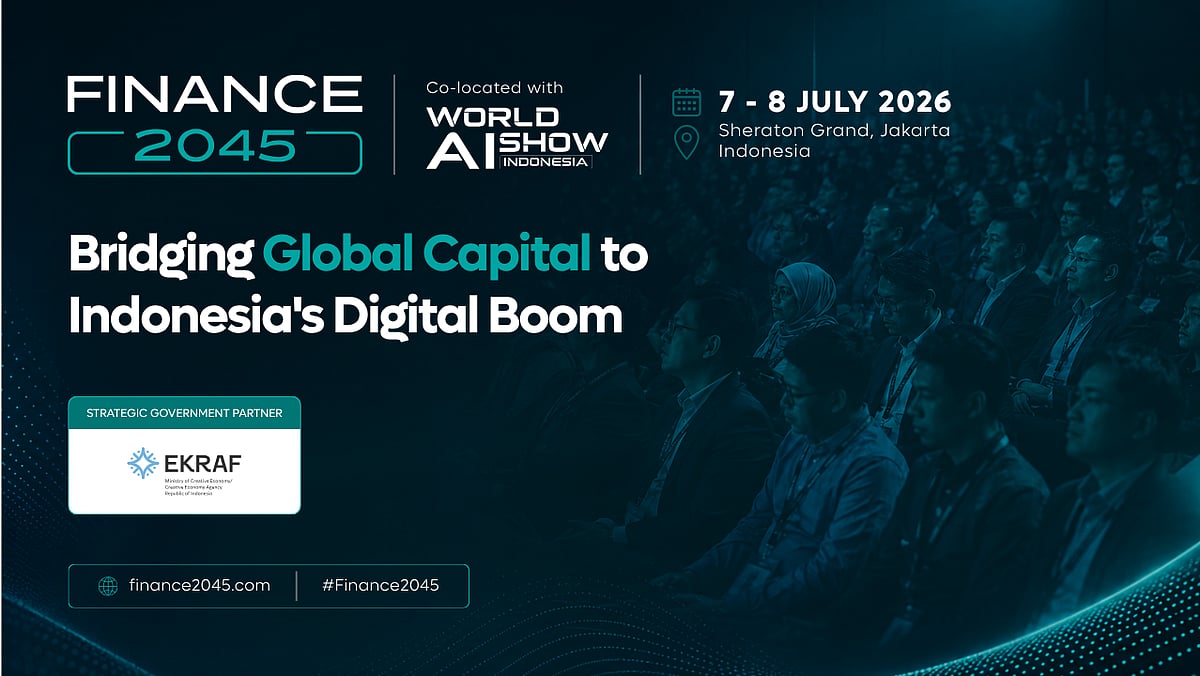
    That changes this July. On 7–8 July 2026, Trescon will officially launch the inaugural edition of Finance 2045 at the Sheraton Grand Jakarta Gandaria City. Choosing Southeast Asia’s largest economy as the launching pad for this global conference series is a deliberate strategic move to position Jakarta at the center of global financial dialogue.

    A Confluence of Finance and Frontier Tech

    The high-octane, two-day summit will gather over 1,000 banking pioneers, visionary fintech founders, enterprise finance executives, institutional investors, and key policymakers. Co-located with the 47th Global Edition of the World AI Show, the combined event brings together more than 2,000 senior leaders at the intersection of capital, regulatory policy, and next-generation technology.

    The agenda addresses core pillars shaping tomorrow’s financial architecture:

    • The Next Frontier of Banking: Digital Banking, AI in Financial Services, and next-gen Payments.
    • Inclusive & Sustainable Capital: Islamic Finance, Financial Inclusion, and SME Finance.
    • Macro-Economic Drivers: Sustainable Finance and national growth mandates.

    Elite Speakers & Strategic Government Backing

    Finance 2045 is proud to announce the strategic partnership of the Ministry of Creative Economy, Indonesia (EKRAF). Confirmed speakers include:

    • Dr. Ferry Irawan – Deputy for Coordination of Management and Development of State-Owned Enterprises, Coordinating Ministry for Economic Affairs
    • Dr. Ir. Mohammad Rudy Salahuddin – Secretary of the Ministry, Ministry of Investment and Downstream Industry
    • Nobuya Kawasaki – President Director, PT Bank Danamon Indonesia Tbk
    • Uli Agustina – Head of Financial Sector Technology Innovation, Digital Assets, and Crypto Assets Supervision Dept., OJK
    • Sylvia Lazuarni – Acting CEO, Home Credit Indonesia

    These leaders will be joined by C-suite executives from Pertamina Bina Medika, Home Credit Indonesia, McDonald’s Indonesia, and HSBC Indonesia, with more announcements coming.

    High-Stakes Innovation: The Startup World Cup

    On Day 2, the summit hosts the Startup World Cup – Indonesia Qualifiers, in partnership with Pegasus Tech Ventures (a Silicon Valley VC managing over $2 billion in assets). The winning founder secures a guaranteed slot at the Startup World Cup Grand Semi-Finale in San Francisco this November, competing for a $1 million direct investment.

    Partners and Sponsors

    Co-located sponsors include Strategic Government Partners EKRAF, Ministry of Industry, Lead Sponsor DATADOG, Platinum Sponsor Magure, Gold Sponsors Zoom, UCloud Global, PT ASIX INDONESIA CERDAS, Redis, Akamai, and many others.

    Finance 2045 is more than a conference—it is a collaborative forge for economic accessibility, technological integration, and financial sovereignty. It provides the definitive roadmap for Indonesia’s journey toward its 2045 economic vision.

    Registration for delegate passes, exhibition opportunities, and media accreditation is now open. Visit finance2045.com for details.