
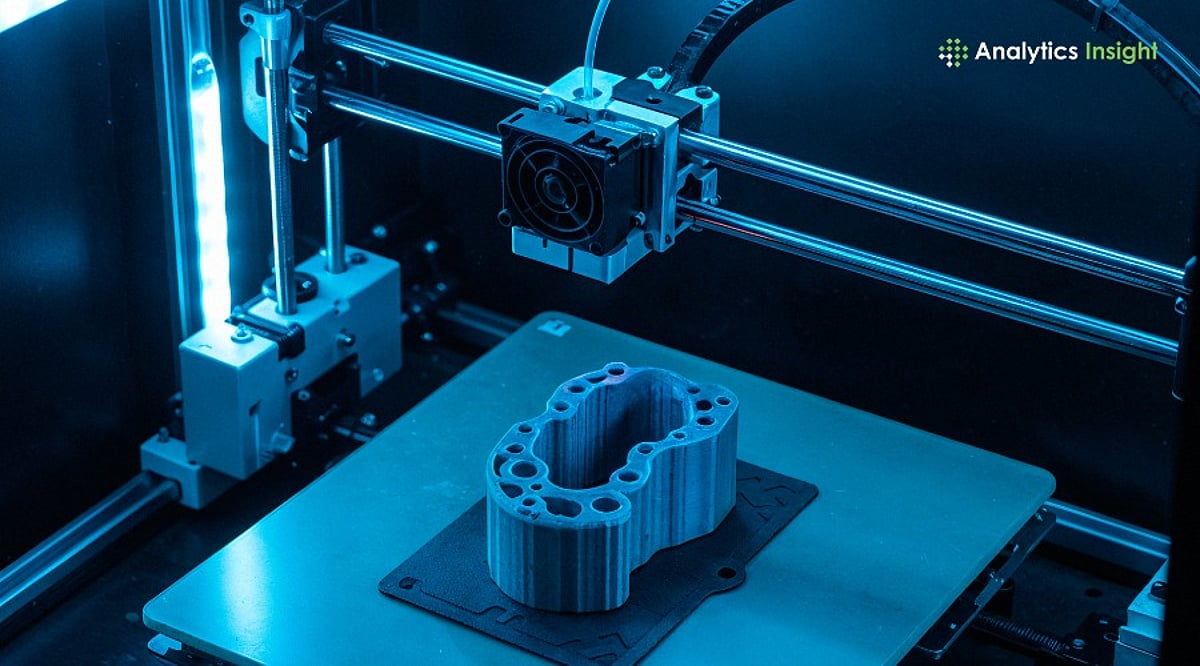
Metal 3D printing has evolved from a prototyping novelty into a mainstream production technology. In 2026, industries worldwide are leveraging it to create stronger, lighter, and more complex metal parts while drastically reducing waste and lead times. With AI-driven quality control, faster printers, and advanced materials, metal additive manufacturing is reshaping aerospace, automotive, healthcare, and defense sectors.
Less Waste, Stronger Parts
Traditional machining cuts away material from a solid block, generating significant scrap. Metal 3D printing builds parts layer by layer, using only the metal needed for the final component. This reduces material costs and enables intricate geometries that are impossible with conventional methods. The resulting parts are often lighter yet equally strong, improving energy efficiency in vehicles and machinery.
Aerospace Leads Adoption
Aircraft manufacturers are among the biggest adopters. By printing lightweight components, they cut fuel consumption and carbon emissions. Consolidating multiple smaller parts into a single printed piece enhances structural integrity and reduces failure points. Defense contractors also rely on metal 3D printing for mission-critical parts, and large-scale printing facilities are now common.
Automotive Gains Speed and Flexibility
Car makers use metal 3D printing for engine components, cooling systems, tools, and custom parts. This accelerates time-to-market and allows digital inventory management—companies store digital files instead of physical spare parts, printing replacements on demand and saving storage and logistics costs.
Healthcare Personalization
Medical applications benefit from custom implants tailored to individual patients. Titanium, favored for its strength, lightness, and biocompatibility, is widely used for dental crowns, hip and knee implants, spinal and skull implants, and surgical tools. Better-fitting implants improve patient recovery outcomes.
Market Growth Projection
The global metal 3D printing market is expected to grow from $15 billion in 2026 to $102 billion by 2035, a compound annual growth rate of about 24%. Factories are investing heavily in smart machinery, automation, and digital technologies.
AI Enhances Quality and Efficiency
Artificial intelligence checks designs before printing, optimizes build parameters, and monitors each layer in real time to detect flaws. Digital twins—virtual replicas of physical products—allow engineers to test and refine designs without material waste, saving time and money.
New Materials Expand Possibilities
Researchers continue developing advanced alloys, including stronger aluminum, titanium, stainless steel, nickel alloys, and cobalt-chrome. A recent breakthrough enables a single printer to combine multiple metal alloys in one print by adjusting laser parameters via software, opening the door to novel, high-performance products.
Faster Machines and Greater Throughput
Modern metal printers use multiple lasers, larger build volumes, and robotic post-processing. Some jobs that once took weeks or months now finish in days, making metal 3D printing viable for medium-to-large production runs.
Environmental Benefits
By using only necessary material and enabling localized production, metal 3D printing reduces waste and transportation emissions. Digital inventories replace vast warehouses, and longer-lasting parts mean fewer replacements—contributing to a more sustainable manufacturing ecosystem.
Challenges Remain
High machine and material costs persist. Many printed parts require post-processing such as polishing, heat treatment, or inspection. There is also a shortage of skilled operators. However, as technology matures and adoption scales, these barriers are gradually being overcome.
Frequently Asked Questions
What is metal 3D printing?
It is an additive manufacturing process that builds metal objects layer by layer from a digital 3D model.
Which industries use it most?
Aerospace, automotive, healthcare, defense, energy, and industrial manufacturing are the primary adopters.
Why is it becoming popular?
It reduces waste, shortens production times, enables complex geometries, and supports rapid prototyping and low-volume production.
How does AI help?
AI optimizes designs, monitors print quality in real time, detects anomalies, and improves overall process reliability.
What is the future outlook?
Experts predict sustained rapid growth as costs fall, materials improve, and more manufacturers integrate metal 3D printing into mainstream production.