Tag: AI integration

  • Understanding MCP: How Model Context Protocol Powers Modular AI Pipelines

    Understanding MCP: How Model Context Protocol Powers Modular AI Pipelines

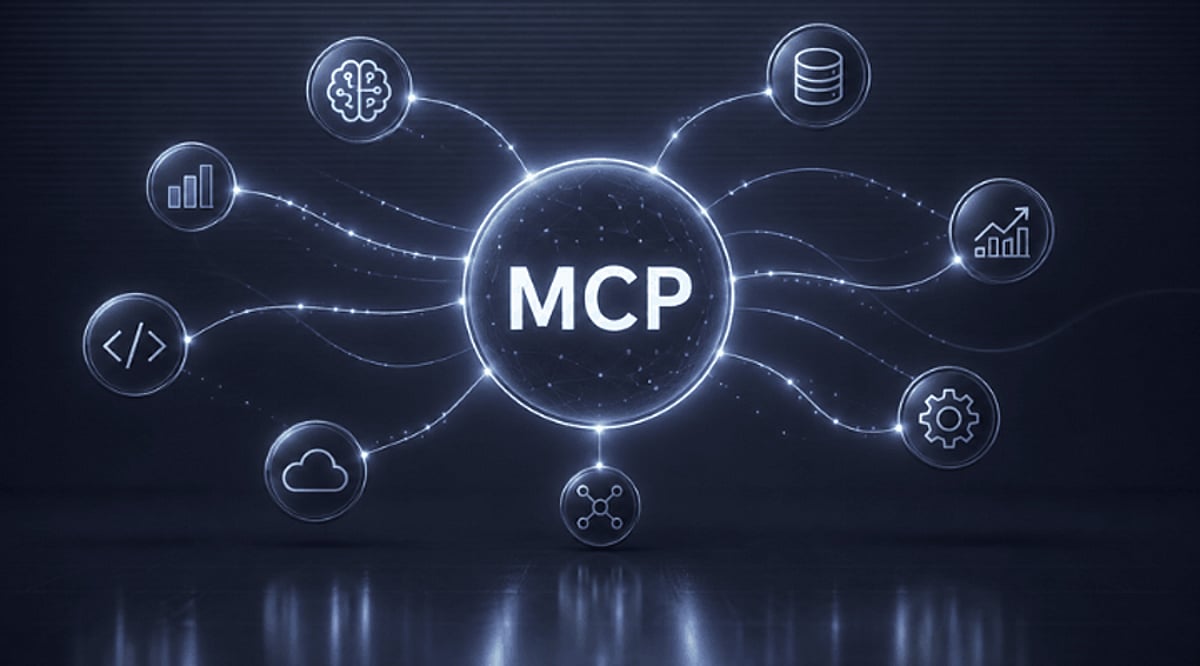
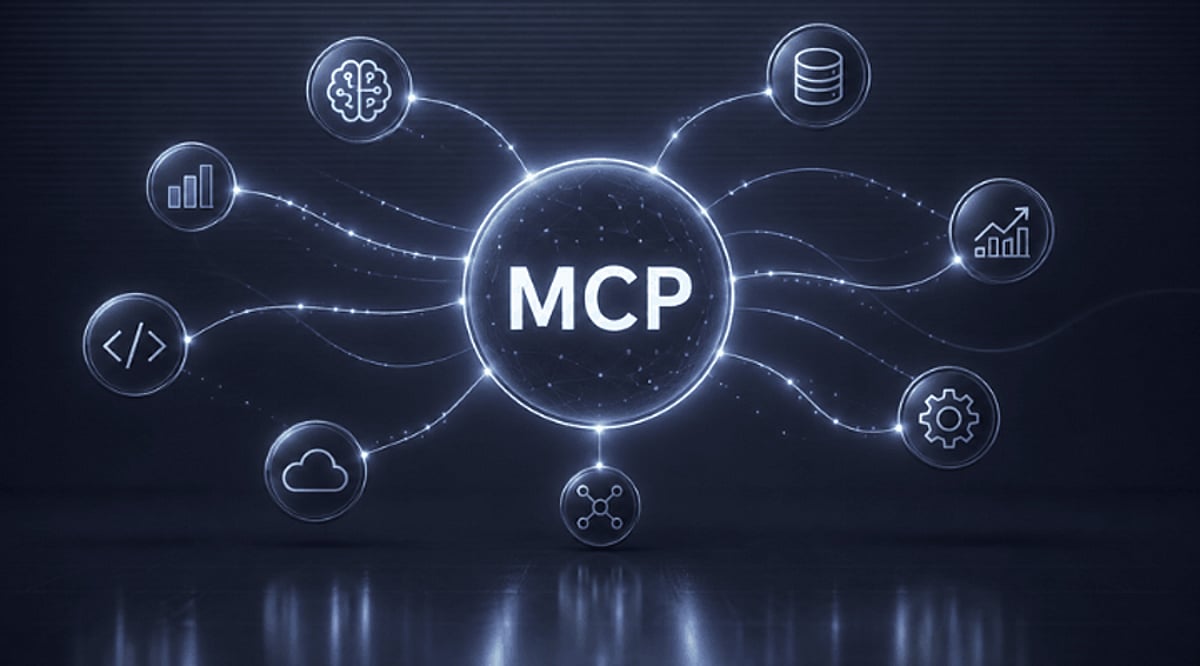
    As artificial intelligence applications become more sophisticated, they increasingly need to interact with external tools, databases, and services. The Model Context Protocol (MCP) provides a standardized way for AI systems to connect with these capabilities, enabling developers to build modular systems instead of creating separate integrations for every application.

    What Is MCP?

    MCP is an open protocol designed to connect AI applications with external tools and data sources. Rather than hard-coding every connection, developers can use a common framework for exposing capabilities. This simplifies linking models with services that provide useful context or actions, making AI systems more flexible and maintainable.

    MCP Servers Provide Capabilities

    An MCP server can expose tools, resources, and prompts that an AI application can use. For example, a server might provide access to files, databases, APIs, or business systems. This creates a modular layer between the AI application and the underlying service, allowing each component to be updated independently.

    MCP Clients Connect the Pieces

    An MCP client sits inside an AI application and communicates with MCP servers. The client can discover available capabilities and request information or actions when needed. This separation allows developers to change or add services without rebuilding the entire AI application, reducing development time and complexity.

    Modular Pipelines Become Easier

    MCP makes complex AI workflows more modular by separating the model from individual tools and services. Developers can connect different capabilities as required, simplifying experimentation, maintenance, and expansion as an AI system grows. This approach is especially valuable for projects that evolve over time.

    MCP Can Connect Enterprise Data

    Businesses can use MCP to connect AI applications with internal documents, databases, and software tools. This gives models access to relevant business context without building a completely custom integration for every system. Security and access controls remain essential when sensitive information is involved, but MCP provides a clean interface for managing those connections.

    The Future Depends on Secure Adoption

    MCP could become an important building block for tool-using AI systems and agentic workflows. Its modular approach makes AI integrations easier to build and maintain. However, organizations still need authentication, permission controls, monitoring, and careful governance before connecting AI agents to critical systems. As the protocol matures, it may become a standard component of enterprise AI infrastructure.

  • What Is MCP? A Guide to Model Context Protocol for Modular AI Pipelines

    What Is MCP? A Guide to Model Context Protocol for Modular AI Pipelines

    AI applications increasingly require access to tools, databases, and external services. The Model Context Protocol (MCP) offers a standardized way for AI applications to connect with these capabilities, enabling developers to build more modular systems instead of creating separate integrations for every application.

    What Is MCP?

    MCP is an open protocol designed to connect AI applications with external tools and data sources. Rather than hard-coding every connection, developers can use a common framework to expose capabilities, making it easier to link models with services that provide useful context or actions.

    MCP Servers Provide Capabilities

    An MCP server can expose tools, resources, and prompts that an AI application can utilize. For example, a server might grant access to files, databases, APIs, or business systems. This creates a modular layer between the AI application and the underlying service.

    MCP Clients Connect the Pieces

    An MCP client resides inside an AI application and communicates with MCP servers. The client can discover available capabilities and request information or actions when needed. This separation allows developers to change or add services without rebuilding the entire AI application.

    Modular Pipelines Become Easier

    MCP simplifies complex AI workflows by separating the model from individual tools and services. Developers can connect different capabilities as required, which streamlines experimentation, maintenance, and expansion as an AI system grows.

    MCP Can Connect Enterprise Data

    Businesses can use MCP to connect AI applications with internal documents, databases, and software tools. This gives models access to relevant business context without building completely custom integrations for every system. Security and access controls remain essential when sensitive information is involved.

    The Future Depends on Secure Adoption

    MCP could become a critical building block for tool-using AI systems and agentic workflows. Its modular approach makes AI integrations easier to build and maintain. However, organizations still need authentication, permission controls, monitoring, and careful governance before connecting AI agents to critical systems.

  • AppVerticals Unveils AIVerticals: A Comprehensive Enterprise AI Practice for Scalable Production Solutions

    AppVerticals Unveils AIVerticals: A Comprehensive Enterprise AI Practice for Scalable Production Solutions

    AppVerticals has announced the launch of AIVerticals, an expanded enterprise artificial intelligence practice designed to help organizations transform AI opportunities into secure, scalable, and production-ready solutions. The new practice consolidates AI consulting, product engineering, custom development, systems integration, intelligent automation, and governance under a single delivery model.

    Addressing the Enterprise AI Challenge

    Many enterprises struggle to move AI initiatives beyond experimentation. AIVerticals directly tackles this by embedding AI into real products, workflows, and business operations. The practice is built on two core principles: organizations need connected AI capabilities rather than isolated services, and AI systems must reflect industry-specific workflows, data environments, regulatory obligations, and customer expectations.

    What Is AIVerticals?

    AIVerticals is AppVerticals’ end-to-end enterprise AI practice covering AI strategy, product engineering, custom development, system integration, automation, and responsible AI governance. It combines consulting, engineering, integration, and governance to deliver lasting value.

    Why Enterprise AI Initiatives Stall

    While generative AI models have made experimentation easier, production deployment remains complex. Common obstacles include fragmented data, unclear business objectives, legacy-system limitations, unpredictable model behavior, and insufficient governance. AppVerticals defines enterprise AI readiness as the ability to connect a validated business case with usable data, production-grade engineering, integration, governance, and measurable operational ownership.

    The Five-Stage AI Delivery Lifecycle

    1. Advise: Assess readiness, identify valuable use cases, and establish an implementation roadmap.
    2. Engineer: Design product experience, data architecture, system controls, and technical foundation.
    3. Build: Develop AI applications, models, agents, copilots, and automation capabilities.
    4. Integrate: Connect AI with enterprise data, applications, platforms, and workflows.
    5. Govern and Scale: Monitor reliability, control risk, optimize performance, and expand successful implementations.

    This lifecycle ensures AI decisions are evaluated in a broader business and technical context, considering data privacy, integration requirements, expected usage, response accuracy, latency, and operating cost.

    AI Consulting with Implementation Focus

    AIVerticals begins with AI consulting to determine where AI can create meaningful value. Services include AI-readiness assessments, process analysis, use-case discovery, data evaluation, technology selection, risk identification, and implementation planning. The consulting stage distinguishes between use cases that require generative AI, conventional machine learning, rules-based automation, or software modernization.

    AI Product Engineering and Custom Development

    At the core of AIVerticals is AI product engineering—the complete process of designing, developing, evaluating, deploying, monitoring, and improving AI-powered software products. This includes user experience, application architecture, data pipelines, model orchestration, security controls, testing, observability, cost management, and feedback mechanisms. Development capabilities span custom AI applications, machine-learning systems, generative AI products, predictive analytics, NLP, and model-powered workflow solutions.

    AI Agents, Copilots, Chatbots, and Voice Agents

    AIVerticals covers intelligent interfaces and autonomous systems, including AI agents (autonomous task execution), AI copilots (assistive recommendations), chatbots (structured text interactions), and voice agents (conversational AI for phone and voice environments). These solutions are developed around specific workflows rather than as standalone features.

    Enterprise Integration and Intelligent Automation

    AI delivers limited value when operating separately from existing systems. AIVerticals provides AI integration services connecting AI capabilities with CRM, ERP, SaaS products, content platforms, analytics environments, internal databases, and legacy software. Additionally, robotic process automation (RPA) is combined with AI agents to automate both predictable actions and information-intensive decisions.

    AI Governance Built into the Product Lifecycle

    Governance is treated as an engineering requirement, not a final compliance exercise. AIVerticals addresses model evaluation, data privacy, access control, human oversight, output reliability, audit trails, risk classification, and continuous monitoring. The governance framework defines ownership, permitted information access, performance evaluation criteria, human review triggers, change documentation, incident handling, and user transparency.

    Industry-Specific AI Applications

    AIVerticals extends AppVerticals’ experience across healthcare, fintech, logistics, education, e-commerce, real estate, automotive, travel, restaurant, and sports sectors. Each solution accounts for the sector’s terminology, operating processes, users, data, and regulatory environment.

    Repositioning AppVerticals as an AI Engineering Partner

    The launch marks a strategic shift for AppVerticals, moving from a broad digital solutions provider to a focused enterprise AI partner. By combining consulting with product engineering and implementation, the company aims to help organizations navigate the transition from AI experimentation to scalable, governed production systems.

    Frequently Asked Questions

    What is AIVerticals by AppVerticals?

    AIVerticals is AppVerticals’ enterprise AI practice combining AI consulting, product engineering, custom development, system integration, intelligent automation, and AI governance.

    What AI services does AppVerticals provide?

    AppVerticals provides AI consulting, AI product engineering, custom AI development, generative AI consulting and development, machine-learning development, AI integration, chatbot development, RPA development, AI governance, and the development of AI agents, copilots, and voice agents.

    What is AI product engineering?

    AI product engineering is the end-to-end process of designing, building, testing, deploying, monitoring, and improving software products whose core functionality depends on artificial intelligence.

    How is AI product engineering different from AI development?

    AI development typically focuses on creating a specific model or capability. AI product engineering includes the broader product architecture, user experience, data systems, integrations, security controls, governance, monitoring, and continuous improvement required for production deployment.

    How does AppVerticals help enterprises adopt AI?

    AppVerticals supports the AI implementation lifecycle from strategy and use-case discovery through engineering, development, integration, governance, deployment, and ongoing optimization.

    What is the difference between AI agents and AI copilots?

    AI agents perform tasks with a defined level of autonomy, while AI copilots assist users within existing workflows and generally keep a person directly involved in decision-making.

    Why is AI integration important?

    Integration connects AI with the applications, data, permissions, and processes required to perform useful work. Without effective integration, an AI system often remains an isolated experiment rather than becoming part of business operations.

    Why should AI governance begin during development?

    Early governance allows privacy, security, human oversight, accuracy, and auditability requirements to influence the product architecture. Adding these controls after development can create avoidable risk and costly redesign.

  • Workflow Tools in 2026: What Teams Need for Seamless AI Integration and Reduced Context Switching

    Workflow Tools in 2026: What Teams Need for Seamless AI Integration and Reduced Context Switching

    The way knowledge workers manage their work has not changed as much as the technology around them suggests it should. A Harvard Business Review study tracking teams at three Fortune 500 companies found that knowledge workers toggle between applications roughly 1,200 times a day, losing close to four hours a week just reorienting themselves after each switch — not by choice, but because the information they need is spread across systems that were never designed to connect properly. Tasks live in a project tracker. Specifications live in a separate wiki. Status updates circulate through a messaging tool that nobody checks consistently. The AI layer, if there is one, sits in a chat panel with no access to any of it. The platforms closing this gap in 2026 are the ones redesigning their data architecture so AI has access to the same operational context people do — not bolting a chat window onto a task board.

    Workflow management software was supposed to solve this coordination problem. For basic task organization, it has. But in 2026, the category is undergoing a more significant shift — driven by AI capabilities that have matured beyond novelty, by organizations accumulating years of integration debt, and by teams that have grown tired of spending more time managing the tools than doing the work itself.

    Why Existing Workflow Tools Are Falling Short

    The standard criticism of workflow software is that it does not do enough. The more precise problem is that it does too many separate things without any of them properly connecting. A typical team in 2026 still operates across a project manager for tracking tasks, a knowledge base for documentation, a messaging platform for coordination, and increasingly a standalone AI tool for summarizing or drafting content. Each of these works in isolation. None of them knows what the others contain.

    When an engineer wants to understand the reasoning behind a task, they leave the task board to search for a specification in the wiki — which may or may not be the current version. When a manager needs to report on project status, they assemble information from multiple dashboards that were each built to answer a slightly different question. When a new hire joins, their onboarding consists of being sent a dozen links across different tools and being asked to piece together how everything fits. This coordination overhead does not appear on any single metric. It accumulates across every sprint review, every handoff, and every status meeting that exists because the tools do not surface information automatically. The cost is real — it just does not show up on a software invoice.

    What AI-Ready Workflow Management Software Actually Looks Like

    The platforms gaining ground in 2026 are the ones that treat the AI layer not as a feature to be added, but as a reason to redesign how the underlying data is organized. For AI to be genuinely useful inside a team, it needs access to actual work context — not just a text prompt. That means tasks, documents, comments, decision history, and team structure all need to live in the same operational record. An AI assistant that can only read a chat thread can answer general questions. One that reads the full workspace can summarize sprint progress, flag blockers before they escalate, draft a product requirements document from existing tasks, or surface a decision that was made three months ago and is relevant to a problem being discussed today. This is the architectural difference that separates modern workflow management software from tools that have simply added a chat interface on top of a task board.

    Vaiz is one platform built around this model: a workflow management tool that combines tasks, documents, and an AI assistant inside a single workspace. Its AI assistant has access to tasks, documents, comments, and change history across the entire workspace — which means it can help generate content, summarise projects, or identify bottlenecks without anyone manually feeding it context. The platform covers the core workflow stack — Kanban boards, Gantt charts, real-time document collaboration, and built-in automation — with tasks, docs, and comments stored in the same record so the AI layer has a complete picture of what the team is doing and why. It holds a 4.8 out of 5 rating across G2, Trustpilot, and Crozdesk, and its free plan supports up to 10 users with all core features included.

    The Capabilities That Matter Most When Evaluating Tools

    • Native documentation. Documentation that lives inside the same workspace as tasks eliminates the version-control problem that plagues teams using separate wikis. When a specification updates, the tasks connected to it can reflect that change. When a developer asks why a task exists, the answer is one click away — not three tools away.
    • AI with real context. The most important question to ask about any AI feature in workflow software is not what model it uses — it is what data the model can access. An AI assistant with full-workspace context will generally outperform one that operates in isolation, even when the underlying model is comparable.
    • Automation built into the core. Routing new requests into tasks automatically, triggering assignments when work moves between stages, generating summaries without manual input — these automations are most reliable when they run within a single unified system. Cross-tool automation via third-party connectors works until one side of the integration changes, which is a question of when, not if.
    • Free evaluation on real projects. The practical difference between workflow tools becomes clear within the first two weeks of genuine use. A free plan that allows a team to run a complete project — not a restricted sandbox — is worth more than a feature-rich trial that expires before any meaningful evaluation has happened.

    Where the Category Is Heading

    The next phase of workflow management is less about adding more features and more about reducing the distance between information and the work that depends on it. The tools that will define the category in the next two to three years are the ones where the entire operational context — objectives, tasks, documentation, decisions, history — lives in one place, and the AI layer can act on all of it. For organizations still running on fragmented stacks of loosely connected tools, the switching cost feels significant. But the ongoing cost of coordination overhead — status meetings, duplicate work, lost context, slow onboarding, manual reporting — compounds in ways that rarely get measured directly. The question for most teams in 2026 is not whether consolidation is worth it. It is whether the platform they choose is built around a coherent operational model, or whether it is a collection of features assembled around a task board that was not designed to be the center of anything.

  • Best Hadoop Platforms for Big Data in 2026: Vendors, AI Integration, and Cloud Flexibility

    Best Hadoop Platforms for Big Data in 2026: Vendors, AI Integration, and Cloud Flexibility

    As organizations race to harness artificial intelligence, predictive analytics, and real-time insights, managing large volumes of data has become more critical than ever. While cloud-native platforms have transformed the data landscape, Hadoop remains a foundational technology for processing and storing massive datasets. Today’s leading Hadoop vendors offer far more than distributed storage, combining analytics, security, machine learning, and hybrid-cloud capabilities into comprehensive data platforms.

    Leading Hadoop Vendors for 2026

    Cloudera: Enterprise-Grade Hybrid Cloud Platform

    Cloudera remains one of the most reliable brands in the Hadoop market, offering data engineering, analytics, machine learning, and AI services across private, public, and hybrid clouds. Its unified governance architecture helps businesses securely govern data across different environments. Enhanced AI solutions enable building complex models using large datasets, making Cloudera a top choice for enterprises handling complex workloads and compliance needs.

    AWS EMR: Simplified Big Data Processing

    Amazon Web Services Elastic MapReduce (EMR) has gained traction as a popular tool for firms wanting to leverage Hadoop in a managed way. Companies can create and scale workloads in an AWS environment with support for Hadoop, Spark, Hive, HBase, and Presto, handling large volumes of data without difficulty.

    Microsoft Azure HDInsight: Enterprise Analytics Strengthened

    Microsoft Azure HDInsight is a strong option for enterprises already on the Azure platform. It is compatible with Hadoop and Spark clusters, Azure Data Lake, Power BI, and Azure AI. Key advantages include security and governance capabilities, allowing enterprises to set up analytics processes compliant with regulations. Synergy with Microsoft cloud services makes HDInsight attractive for large digital transformation projects.

    Google Cloud: AI-Focused Big Data Platforms

    Google Cloud actively expands its big data services by adding Hadoop capabilities, analytics, and AI. Combined with BigQuery, it enables efficient analysis of large datasets. For custom AI solutions, Google Cloud machine learning services are available. The increasing integration of AI into big data strategies has made Google Cloud popular.

    IBM: Governance and Security at Scale

    IBM provides enterprise data management solutions relying on Hadoop and analytics, well-suited for banking, healthcare, and government sectors due to emphasis on governance, security, and compliance. IBM solutions manage both structured and unstructured data and control information assets. Its hybrid cloud enables infrastructure upgrades without removing legacy solutions. For regulated industries, IBM’s focus on trust and governance is unique.

    Oracle: Connecting Traditional Databases with Big Data

    Oracle positions itself as an intermediate solution between traditional enterprise databases and big data environments. Integration services with Hadoop technology help organizations conduct transactions and analytics simultaneously. Analytic services and data integration enable consistent analysis from different sources, especially for organizations using Oracle applications and databases, streamlining big data work without structural changes.

    Choosing the Right Hadoop Vendor

    The selection of a Hadoop provider depends on the company’s technological context, scalability needs, and data strategies. Hybrid cloud-friendly companies should choose Cloudera. Cloud-based application companies should choose AWS EMR for scalability and ease of use. Companies integrated with Microsoft should go for Azure HDInsight. AI companies should go for Google Cloud. IBM is best for governance situations, while Oracle offers competition due to its database-big data platform integration.

    The Future of Hadoop

    The Hadoop market is now different from 2006. The race no longer lies in storage and processing abilities; vendors are assessed on how well they integrate AI, cloud computing, security, governance, and deployment into their products. Given the large volumes of data businesses generate, those combining scalability with analytics and AI will dominate the big data market.

  • McKinsey Study Finds Scaling AI Across Functions Doubles Profit Margins Over Isolated Pilots

    McKinsey Study Finds Scaling AI Across Functions Doubles Profit Margins Over Isolated Pilots

    McKinsey & Company has released a report highlighting a significant performance gap between companies that scale artificial intelligence across their enterprise and those that limit AI to isolated pilots. The study, which surveyed 1,000 senior and midlevel executives across 696 manufacturing and service-sector businesses, reveals that while nearly 90% of organizations are experimenting with AI, only 7% have successfully scaled it across the entire enterprise.

    Rahul Shahani, McKinsey Partner and leader of the firm’s Manufacturing and Supply Chain Practice in North America, explains that the full value of AI is realized not through experimentation alone, but through deep integration into core operational processes. Companies with AI embedded across multiple functions generate nearly double the profit margins of peers using AI in only a few departments. The three-year return on invested capital for these firms is more than five times higher.

    The report emphasizes that operational excellence is a crucial complement to AI deployment. Leading companies combine advanced AI tools with robust management systems, clear operating principles, and disciplined execution. A notable example is Siemens’ Nanjing facility in China, a World Economic Forum Global Lighthouse Factory. By integrating digital twin capabilities with broader operational improvements, the site significantly increased throughput. The facility first tightened its operating backbone—integrating a manufacturing operations management system to govern data flows between virtual models and physical assets—before scaling the technology.

    McKinsey’s findings underscore that technology alone is not enough; the operating model around it is equally important. Companies that have built advanced technology into their operational excellence achieve higher productivity increases than those relying primarily on manual or analogue systems. The report serves as a call to action for organizations to move beyond fragmented AI pilots and pursue enterprise-wide AI integration to capture substantial performance gains.