Tag: AI jobs

  • India’s Data Science Job Market Set to Surge 34% as Generative AI Creates New Roles

    India’s Data Science Job Market Set to Surge 34% as Generative AI Creates New Roles

    India’s data science job market is entering a dynamic new phase, propelled by the rapid adoption of Generative AI, AI agents, and automation. According to the Data Science Education Report 2026, the sector is projected to grow by 34% between 2024 and 2034, with approximately 23,400 annual openings and 82,500 additional jobs over the period. Traditional roles like data analyst and machine learning engineer are being supplemented—and in some cases overtaken—by emerging positions in AI engineering, product management, governance, architecture, and domain-specific applications.

    GenAI Engineers Take Center Stage

    Generative AI is driving demand for professionals skilled in building and managing systems powered by Large Language Models (LLMs), Retrieval-Augmented Generation (RAG) pipelines, and AI agents. GenAI Engineers are responsible for developing AI applications, workflow automation, and intelligent decision-making systems. Prompt Architects, meanwhile, are evolving into “Logic Designers” focused on reducing AI hallucinations—a challenge cited by 56% of Indian companies. The report estimates that around 40% of Indian business applications could adopt AI agents by 2026.

    Bridging Technology and Business

    As AI projects move from pilots to scaled products, the AI Product Manager role is gaining prominence. These professionals understand how AI capabilities translate into business value, working across engineering and business teams to oversee adoption, track performance, and ensure commercial scalability. With 72% of Indian companies expanding Generative AI initiatives, the need for such cross-functional leaders is acute.

    AI Governance: A Trending Career Path

    The rise of AI also creates demand for governance and risk specialists who oversee ethical deployment, regulatory compliance, and risk management. According to EY India data, 51% of organizations have experienced negative outcomes from unmanaged AI systems, and there is a 53% talent gap in professionals skilled in algorithmic bias audits and Explainable AI (XAI). For data professionals, knowledge of data protection and responsible AI is becoming as essential as technical expertise.

    AI Architects Building Infrastructure

    AI Solutions Architects design the infrastructure for deploying AI across hybrid-cloud and multi-cloud environments. They build scalable systems, manage complexity, and support AI agents, distributed computing, and sovereign AI initiatives that comply with data residency regulations.

    Domain Expertise: A Key Differentiator

    The next wave of data science jobs will not be limited to tech companies. Hybrid roles combining AI skills with domain knowledge in healthcare, finance, agriculture, retail, and logistics are in high demand. Specialized positions include Foundation Model Scientists, Model Deployment Specialists, Revenue Intelligence Scientists, Product Intelligence Scientists, FinTech Analytics Scientists, retail analytics scientists, supply chain intelligence scientists, graph data scientists, risk data analysts, and experimentation scientists.

    Skills to Lead the Market

    To thrive, professionals should strengthen machine learning, Python, big data, cloud computing, real-time analytics, data engineering, deep learning, NLP, computer vision, and AI automation. Soft skills like critical thinking, debugging, and data quality management are increasingly vital. The employment outlook remains robust: data scientist roles are projected to grow 34% from 2024 to 2034, with about 23,400 annual openings.

    In summary, the future of data science belongs not only to those who can work with data, but to professionals who can build, deploy, govern, and apply AI to real business problems.

  • Infosys Co-Founder Nandan Nilekani: Applied AI Can Unlock Major Productivity Gains for India

    Infosys Co-Founder Nandan Nilekani: Applied AI Can Unlock Major Productivity Gains for India

    India could see strong productivity gains from artificial intelligence over the next decade, Infosys co-founder Nandan Nilekani said Thursday at the India Policy Forum in New Delhi. He emphasized that applied AI represents India’s biggest opportunity, not cutting-edge hardware or large language models.

    “It’s in the area of applied AI that India will become a leader,” Nilekani said, according to sources. He argued that India could become the “AI use case capital of the world” by deploying practical AI solutions to everyday problems in sectors such as healthcare, education, agriculture and financial services.

    Nilekani noted that India’s existing digital public infrastructure—including Aadhaar and UPI—provides a strong foundation to deliver AI tools to millions of people across the country, including those in remote areas.

    However, he also raised concerns about AI’s impact on employment, particularly in large organizations. “Large companies will probably be net job losers in the coming years,” he warned, as routine tasks become automated. Small businesses, he suggested, could become the primary engine for job creation in an AI-driven economy.

    To fully realize the benefits of AI, Nilekani stressed the need for improved skills training, broader digital access, and reliable systems. Wider adoption, he said, could turn AI-driven productivity into stronger economic growth and greater inclusion for all Indians.

  • Today’s Tech Roundup: CXMT’s Market Debut, AI Career Opportunities, and Stricter Crypto Regulations

    Today’s Tech Roundup: CXMT’s Market Debut, AI Career Opportunities, and Stricter Crypto Regulations

    Welcome to today’s tech roundup! From China’s growing chip ambitions and fresh AI career opportunities to tighter crypto rules in India, changing investment trends, and a challenging job market for graduates, here’s a quick look at the biggest technology stories making waves today.

    Chinese Memory Chipmaker Marks Powerful Stock Market Debut

    China’s memory chip giant CXMT made a blockbuster stock market debut, with shares soaring as investors backed its AI-driven growth story. The milestone strengthens China’s push to reduce reliance on foreign chipmakers, though challenges from U.S. export restrictions and global competition remain.

    Best Paying AI Jobs That Don’t Require a Computer Science Degree

    You don’t need to be a software engineer to build a career in AI. Roles like AI trainer, prompt engineer, AI content creator, data annotator, and AI product coordinator focus more on creativity, communication, problem-solving, and domain expertise than advanced coding skills.

    CBDT Tightens Crypto Transaction Reporting and Tax Compliance

    India’s tax authority has tightened the norms of crypto transactions, including keeping proper records and reporting these details to the concerned authority. This has resulted in increased compliance levels without any change in taxes applicable at present.

    AI Spending Reshapes Entry-Level Jobs for Fresh Graduates

    Fresh graduates are entering one of the toughest job markets in years as companies pour more money into AI than entry-level hiring. With fewer openings and rising competition, many young professionals are finding it harder to land their first full-time role, even with strong qualifications.

    France Questions UK’s Role in EU Fund

    France is challenging the UK’s plan to participate in the €5 billion EU startup fund, arguing that bloc investments should favor member countries. The dispute has reignited debates about Brexit at a time when Europe aims to boost its technological sector to rival the US and China.

    This roundup highlights how quickly technology is changing. AI is driving everything from investment decisions to hiring, China is pushing harder to become self-reliant in semiconductors, and India’s crypto regulations are becoming stricter. At the same time, graduates are adapting to a job market that increasingly values AI-ready skills.

  • Emerging AI Careers: 9 Roles That Didn’t Exist Five Years Ago

    Emerging AI Careers: 9 Roles That Didn’t Exist Five Years Ago

    The rapid evolution of artificial intelligence has created a wave of entirely new professions that were unheard of just half a decade ago. As businesses integrate AI deeper into their operations, they need specialized talent to manage, refine, and secure these systems. Below are nine AI job titles that have emerged since 2019, each playing a critical role in shaping the future of work.

    • AI Prompt Engineer: Craft detailed prompts that guide AI tools to generate accurate text, images, videos, and code for business applications.
    • AI Trainer: Improve AI models daily by reviewing outputs, correcting errors, and providing quality human feedback to teach machines.
    • Generative AI Content Specialist: Use AI platforms to produce articles, marketing copy, images, and social media content while preserving creativity and accuracy.
    • AI Ethics Consultant: Help companies build responsible AI systems by reducing bias, increasing transparency, and ensuring compliance with emerging regulations.
    • AI Data Curator: Collect, organize, clean, and label datasets that boost machine learning performance and support reliable AI models.
    • AI Video Creator: Leverage generative platforms to produce marketing videos, tutorials, animations, and short-form content with minimal manual editing.
    • AI Automation Specialist: Streamline repetitive tasks, improve workflows, and increase productivity using intelligent software and AI tools.
    • AI Security Analyst: Protect AI systems from cyber threats, prompt injection attacks, data leaks, and other emerging security challenges.
    • AI Avatar Designer: Create realistic virtual humans used in customer support, education, gaming, entertainment, and digital marketing.

    These roles highlight how AI is not just automating jobs but also generating new, specialized career paths that demand a blend of technical, creative, and ethical expertise.

  • Top 8 Fastest-Growing AI Careers to Watch in 2025

    Top 8 Fastest-Growing AI Careers to Watch in 2025

    The artificial intelligence industry is evolving at an unprecedented pace, creating a wave of new, high-demand job roles. Professionals looking to future-proof their careers should consider specializing in one of these rapidly growing AI positions. Below, we break down the key roles that are shaping the future of technology.

    AI Engineer

    AI Engineers design, develop, and deploy intelligent applications that leverage machine learning, cloud platforms, and automation. They solve complex business challenges by building scalable AI systems that drive efficiency and innovation.

    Machine Learning Engineer

    Machine Learning Engineers create predictive models and self-learning algorithms that power recommendation engines, fraud detection, automated decision-making, and operational optimization across industries.

    Generative AI Engineer

    Generative AI Engineers build chatbots, virtual assistants, content generators, and enterprise solutions using large language models, prompt engineering, and retrieval-augmented generation techniques.

    Data Scientist

    Data Scientists extract actionable insights from massive datasets using statistics, machine learning, and visualization. Their work supports strategic business decisions and drives innovation.

    AI Research Scientist

    AI Research Scientists conduct advanced research in deep learning, natural language processing, and reinforcement learning to develop next-generation AI models and technologies.

    AI Product Manager

    AI Product Managers bridge business objectives and technical development. They define product strategies, coordinate teams, prioritize features, and ensure successful AI product delivery.

    Prompt Engineer

    Prompt Engineers craft optimized prompts that improve AI-generated responses, increase model accuracy, and streamline enterprise workflows across diverse applications.

    AI Ethics Specialist

    AI Ethics Specialists ensure AI systems remain fair, transparent, secure, and compliant by implementing responsible AI practices, governance frameworks, and regulatory standards.

    Computer Vision Engineer

    Computer Vision Engineers develop AI systems that analyze images and videos, enabling breakthroughs in autonomous vehicles, healthcare diagnostics, robotics, surveillance, and industrial automation.

    As AI continues to reshape industries, these roles offer exciting opportunities for growth and innovation. Staying current with emerging skills and technologies is essential for success in this dynamic field.

  • Highest-Paying AI Jobs in Singapore: 2026 Career Guide & Salary Trends

    Highest-Paying AI Jobs in Singapore: 2026 Career Guide & Salary Trends

    Singapore has rapidly emerged as one of Asia’s leading hubs for artificial intelligence, driven by strong government backing, rising digital investment, and the presence of multinational corporations. As AI adoption accelerates across finance, healthcare, manufacturing, and logistics, the demand for skilled professionals has surged—making AI roles among the most lucrative in the country’s tech sector.

    Why AI Careers Are Booming in Singapore

    The National AI Strategy 2.0 has spurred organizations to weave AI into their daily operations. Banks use AI for fraud detection and personalized services; hospitals apply machine learning for diagnostics; factories adopt automation; and logistics, retail, cybersecurity, and government agencies all invest heavily in AI technologies. This broad adoption creates strong demand for experts who can design, implement, and maintain AI systems, driving up salaries across the board.

    Highest-Paying AI Jobs in Singapore

    Below are some of the top AI roles, with salary ranges based on experience and industry:

    • AI Research Scientist – SGD 170,000–250,000
    • AI Solutions Architect – SGD 150,000–220,000
    • Machine Learning Engineer – SGD 120,000–180,000
    • Data Scientist (AI focus) – SGD 110,000–170,000
    • NLP Engineer – SGD 120,000–175,000
    • Computer Vision Engineer – SGD 130,000–190,000
    • MLOps Engineer – SGD 130,000–185,000
    • AI Product Manager – SGD 140,000–200,000

    Actual compensation varies by employer, experience level, and technical expertise.

    Skills Employers Look For

    Technical skills remain essential, but companies increasingly value professionals who can apply AI to real business problems. Key skills include:

    • Python programming
    • TensorFlow and PyTorch
    • SQL and database management
    • Large Language Models (LLMs) and Prompt Engineering
    • Machine Learning and Deep Learning
    • MLOps
    • Cloud platforms – AWS, Azure, GCP
    • Data visualization
    • Communication and problem-solving

    Candidates with hands-on project experience often stand out more than those with certifications alone.

    Industries Paying the Highest AI Salaries

    Several sectors are competing aggressively for AI talent:

    • Banking and Financial Services – fraud detection, risk analysis, customer experience
    • Technology – AI research, product development
    • Healthcare – medical imaging, predictive diagnostics, personalized treatment
    • Manufacturing – automation, quality control
    • Cybersecurity – real-time threat detection
    • Government and Consulting – digital transformation projects

    How to Start an AI Career in Singapore

    Becoming an AI professional demands both expertise and hands-on experience:

    1. Start with Python programming and machine learning basics.
    2. Build projects showcasing your abilities and share them on GitHub.
    3. Compete on Kaggle to gain practical experience.
    4. Consider cloud computing or AI certifications, but note that employers value completed projects more.
    5. Network actively on LinkedIn, attend AI events, and apply for internships.

    Frequently Asked Questions

    Which AI job pays the highest salary in Singapore?

    AI Research Scientist and AI Solutions Architect are among the highest-paying roles, with experienced professionals earning between SGD 170,000 and SGD 250,000 annually.

    What qualifications are needed to start an AI career in Singapore?

    Most employers look for degrees in computer science, data science, AI, mathematics, or engineering. Practical experience, programming skills, AI projects, certifications, and a strong portfolio are often as important as formal degrees.

    Which industries hire the most AI professionals?

    Technology, banking, healthcare, manufacturing, cybersecurity, logistics, consulting, and government agencies are the largest employers.

    Do AI jobs require a master’s or PhD?

    Not always. Research-focused roles often need postgraduate qualifications, but many engineering and machine learning roles prioritize practical experience, coding ability, completed projects, and industry certifications.

    How can fresh graduates prepare for AI jobs in Singapore?

    Build hands-on AI projects, contribute to open-source, participate in Kaggle competitions, create a GitHub portfolio, complete internships, earn certifications, and stay updated with the latest AI frameworks.

    Why This Matters

    Singapore has positioned itself as one of Asia’s leading AI innovation hubs, creating strong demand for skilled professionals across finance, healthcare, manufacturing, logistics, and technology. Understanding salary trends, in-demand roles, and employer expectations helps professionals make informed career decisions and capitalize on one of the fastest-growing job markets in the region.

  • 10 Data Labeling Jobs That Power Modern AI: Roles, Skills, and Impact

    10 Data Labeling Jobs That Power Modern AI: Roles, Skills, and Impact

    Even though artificial intelligence may appear completely automated, human data labelers work behind the scenes to make computers smarter. These professionals train AI through data classification, annotation, and evaluation, teaching algorithms to recognize patterns, languages, images, and responses that drive future system performance.

    10 Data Labeling Jobs Driving the AI Revolution

    The rise of AI has diversified data labeling into specialized careers. Below are the ten most prominent data labeling roles supporting modern AI systems.

    1. Image Annotation Specialist

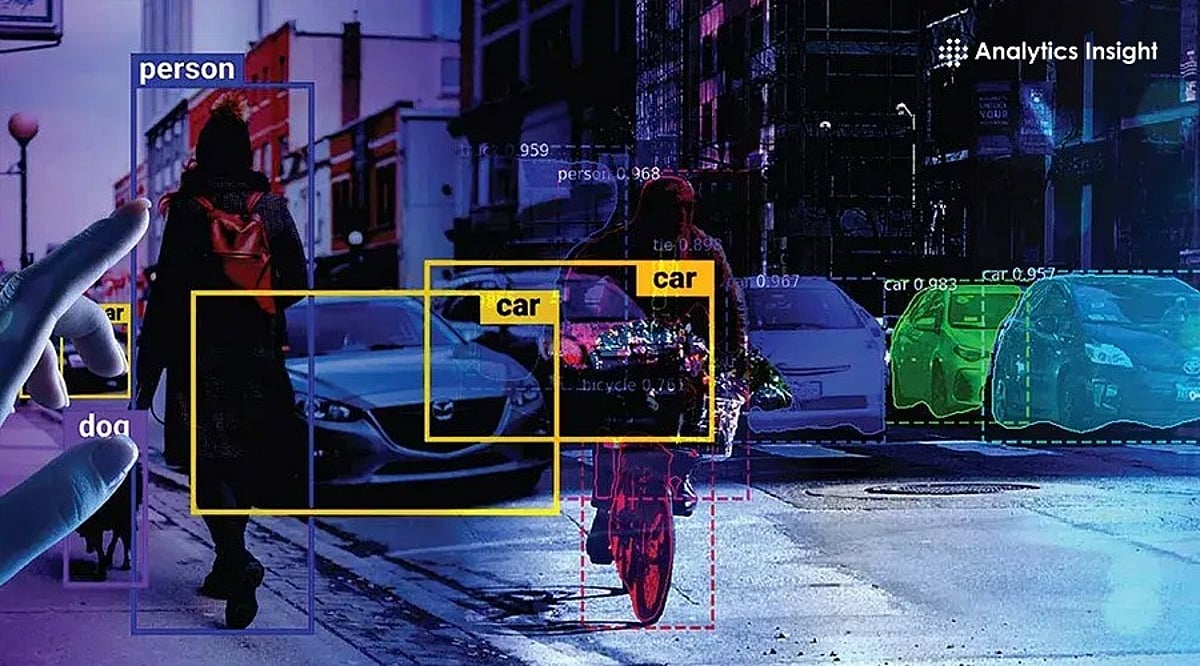
    Image annotators label objects within images using bounding boxes for cars, people, animals, and road signs. This work enables computers to identify visual elements and is critical for facial recognition, medical imaging, and autonomous driving.

    2. Video Annotation Professional

    While image annotation handles static images, video annotation tracks dynamic objects. Video annotators help computers understand motion, making them essential for autonomous driving, surveillance, and sports analytics.

    3. Text Classification Analyst

    These analysts categorize text into predefined classes—for example, distinguishing spam from legitimate emails, sorting customer reviews by topic, or grouping news articles by subject matter.

    4. Sentiment Analysis Annotator

    Businesses rely on sentiment analysis to gauge customer feelings. Annotators review text and label it as positive, negative, or neutral, enabling companies to understand public opinion at scale.

    5. Audio Transcription Specialist

    Voice‑powered AI requires vast amounts of annotated audio data. Audio transcription specialists convert spoken language into written text, capturing not only words but also speaker identity, accent, emotional tone, pauses, and background noise.

    6. AI Response Evaluator

    With generative AI on the rise, AI response evaluators assess chatbot outputs for quality, detect errors, and select the best responses to improve model performance.

    7. Content Moderation Reviewer

    These reviewers examine text, images, videos, and comments to identify harmful or rule‑breaking content. They apply labels according to platform guidelines so that automated systems can later detect unacceptable material.

    8. Data Quality Reviewer

    Annotation projects depend on quality control. Data quality reviewers verify completed annotations for accuracy and consistency, ensuring reliable training data.

    9. Domain Expert Annotator

    As AI expands into specialized fields, companies hire doctors, lawyers, engineers, financial analysts, and scientists to annotate data requiring deep subject‑matter expertise.

    10. Reinforcement Learning Trainer

    This emerging role involves crafting prompts, testing model responses, analyzing logic, and providing feedback. Such iterative human input significantly improves AI model accuracy over time.

    Required Skills for Data Labeling Jobs

    Entry‑level labeling roles may require minimal experience, but most positions demand attention to detail, consistency, and strong analytical abilities. Advanced roles often call for industry‑specific expertise or familiarity with AI workflows. Communication, critical thinking, and the ability to follow detailed guidelines are increasingly valuable as projects grow more complex.

    Why Data Labelers Are Essential to AI

    AI models require high‑quality training data to perform effectively. Human judgment provides algorithms with knowledge about objects, language structures, and correct responses. Every recommendation engine, virtual assistant, chatbot, and computer vision system rests on this human foundation. As AI evolves, data labelers move beyond simple tagging to analyze reasoning, evaluate model outputs, and apply their own expertise. Whenever a virtual assistant answers accurately or a self‑driving car identifies a pedestrian, a team of data labelers likely made it possible.